



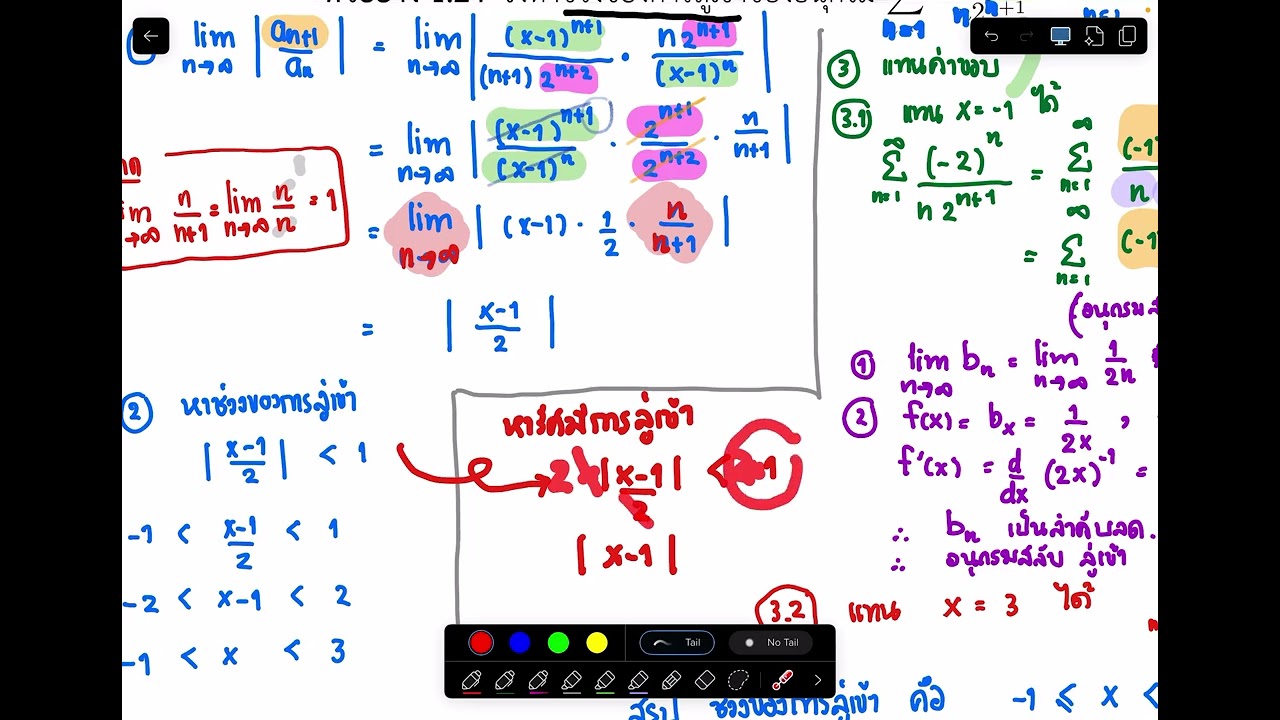

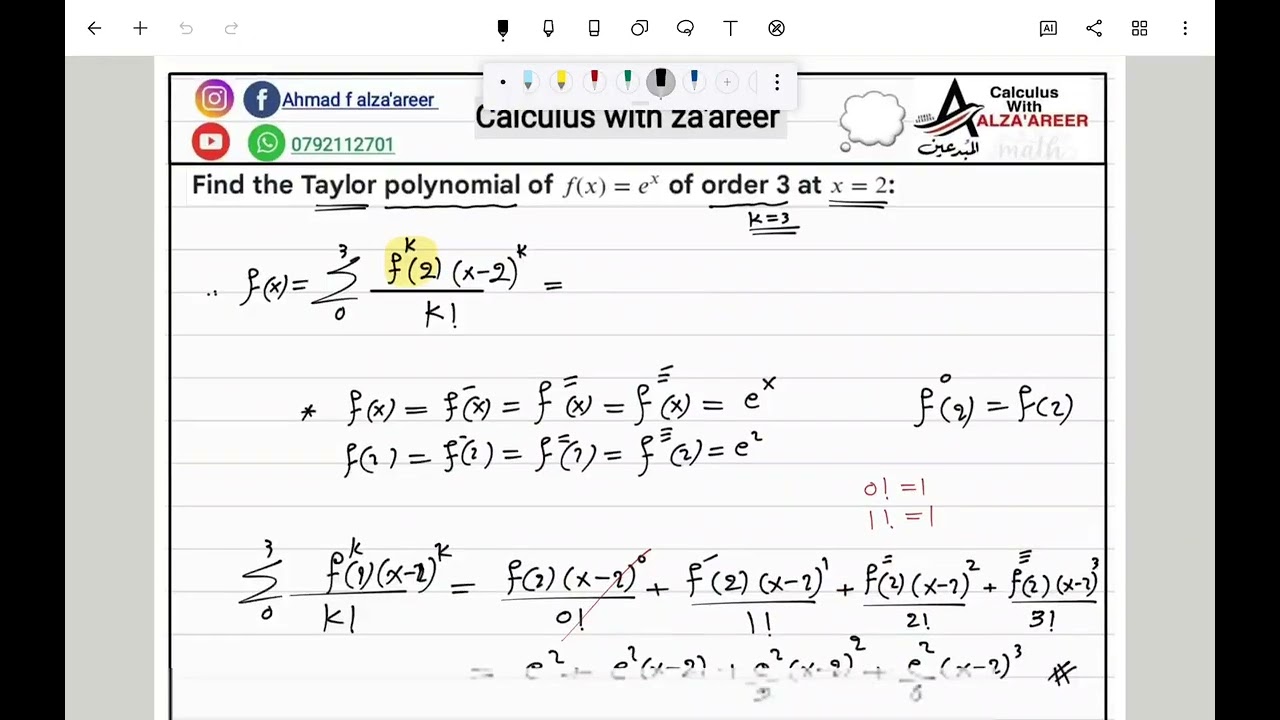





![ÁLGEBRA - Series I [CICLO FREE]](https://i.ytimg.com/vi/_ie9Eia6bPU/maxresdefault.jpg)






![[Discrete Mathematics] Integer Partitions](https://i.ytimg.com/vi_webp/XN3Vy2M5ov8/maxresdefault.webp)


![5.2 Other Familiar Examples [Lecture 5 - Applications of Rational and Meromorphic Asymptotics]](https://i.ytimg.com/vi/SLDCLSv3rn4/sddefault.jpg?sqp=-oaymwEmCIAFEOAD8quKqQMa8AEB-AHUBoAC4AOKAgwIABABGDkgRih_MA8=&rs=AOn4CLA-YcAJgR4SPkBMpr7HNxrSP-onrA)
![4.5 Meromorphic Functions [Lecture 4 - Complex Analysis, Rataional and Meromorphic Asymptotics]](https://i.ytimg.com/vi/YE7PogQr7Os/hqdefault.jpg?sqp=-oaymwEmCOADEOgC8quKqQMa8AEB-AHUBoAC4AOKAgwIABABGDggRSh_MA8=&rs=AOn4CLCFpFFWBuc5XRHlEnr7jTuQ_nXN7w)


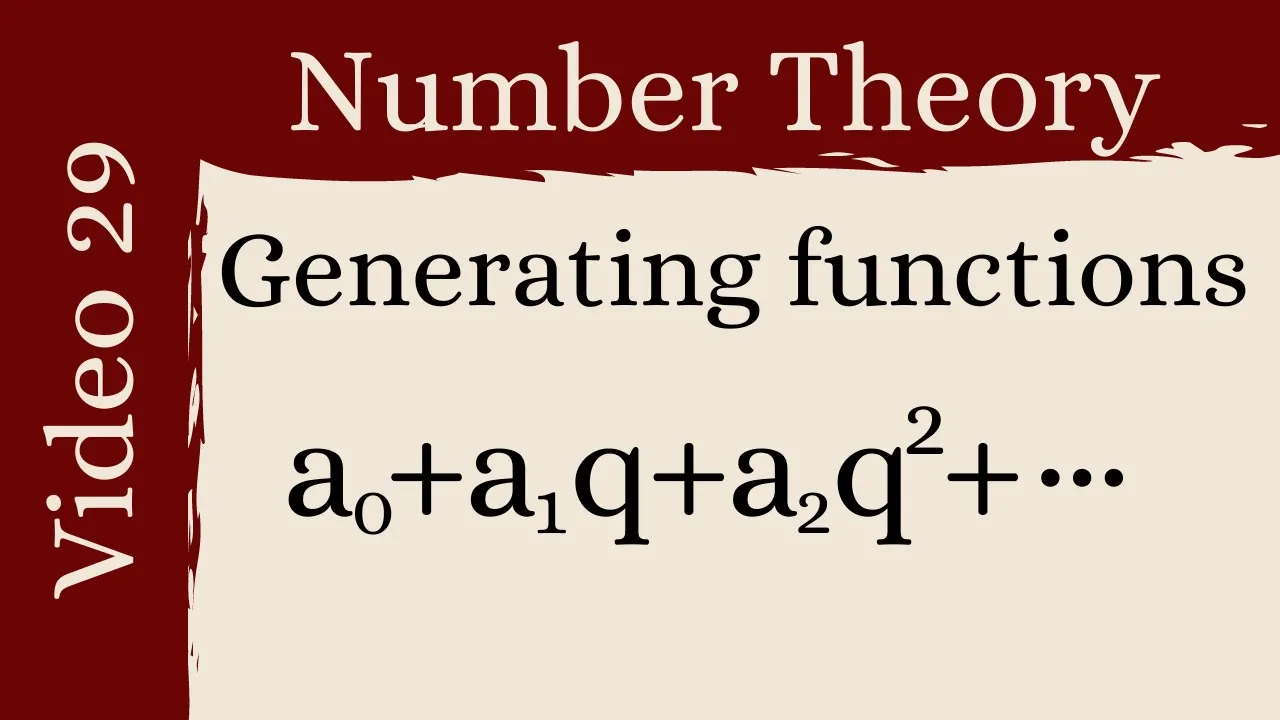
A generating function is a powerful mathematical tool that encodes an infinite sequence into a single function by using a power series, where the coefficients of the series represent the terms of the sequence; for example, the sequence 2, 3, 5, 8, ... is encoded as the generating series 2 + 3x + 5x² + 8x³ + ..., allowing mathematicians to manipulate entire sequences through algebraic operations on their corresponding functions.
Generating Functions Explained with Sequences and Power Series
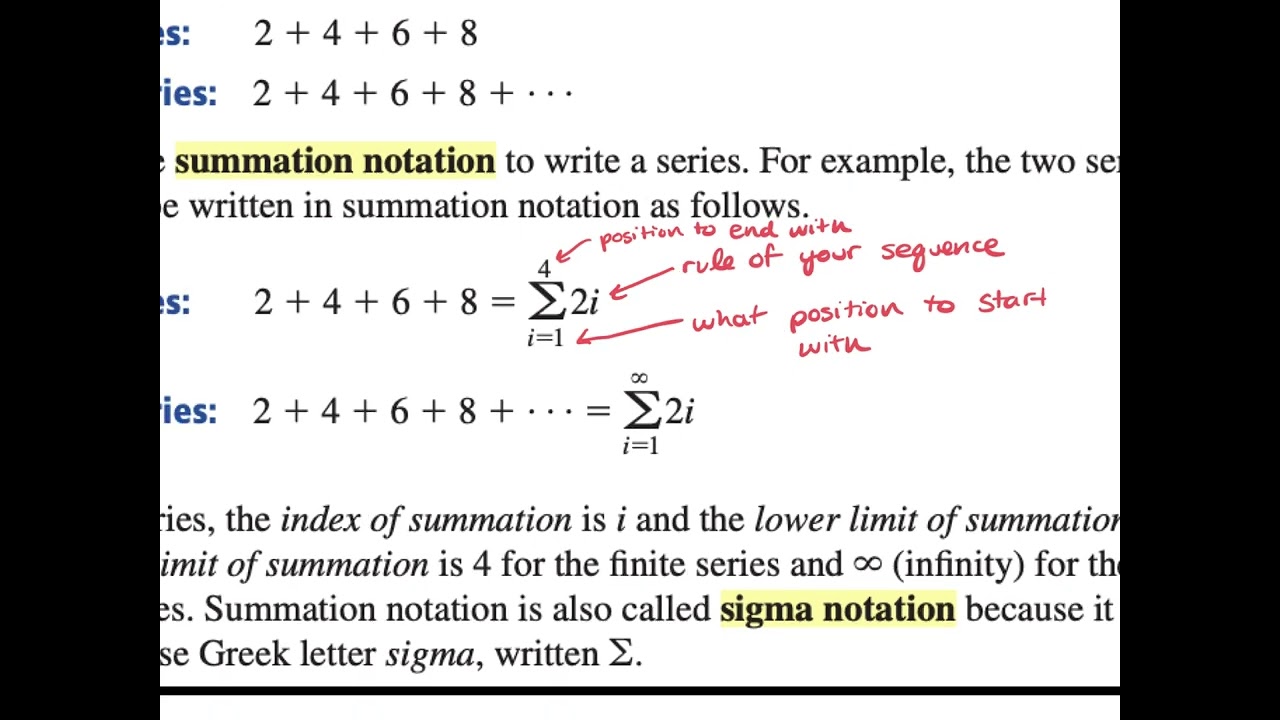
Added:Understanding of sequences and infinite series, including the use of summation notation (Sigma notation).
Familiarity with the concept of power series, including coefficients, variables, and the interval of convergence.
Knowledge of basic Maclaurin and Taylor series expansions, especially the geometric series sum formula 1/(1-x) = sum of x^n.
Basic algebraic skills for manipulating infinite series, such as factoring out terms and shifting summation indices.
Solving linear recurrence relations (such as the Fibonacci sequence) by converting them into closed-form generating functions.
Introduction to Exponential Generating Functions (EGFs) to solve combinatorial problems involving permutations and ordered structures.
Applying generating functions to solve integer partition problems and prove complex combinatorial identities.
Exploring Analytic Combinatorics to study the asymptotic behavior of sequence coefficients using complex analysis.
343 views4likes7:19Original Release: 2020-07-31
[Music] there is an extremely powerful tool in discrete math used to manipulate sequences called the generating function the idea is this instead of some infinite sequence we look at a single function which encodes the sequence but not a function which gives the nth term as an output instead a function whose power series like from calculus displays the terms of the sequence so for example we would look at the power series for 2 plus three x plus five x squared plus eight x cubed and so forth would this would display the sequence to 3 5 8 and so forth as coefficients an infinite power series is simply an infinite sum of terms of the form c n x to the n where c n is just some constant so we might write a power series like this the sum up to infinity from k equals zero of c k x to the k or expanded it would look something like this c naught plus c one x plus c two x squared plus c three x cubed and so forth when viewed in the context of generating functions we call such a power series a generating series the generating series generates the sequence c0 c1 c2 c3 and so forth it encodes that sequence the power series the generating series encodes the generating generated sequence excuse me in other words the sequence generated by a generating series is simply the secret uh sequence of coefficients of the infinite puzzle together what sequence is represented by the generating series 3 plus 8x squared plus x cubed plus x to the fifth over 7 plus a 100 x to the sixth and so on we just read off the coefficients of each x to the n term so in this case we know that a zero equals three since the coefficient of x to the zero is three x to the zero by the way is one so this is just the constant term what's a one well it is not 8 since 8 is the coefficient of x squared so 8 is the term for a 2 of the sequence to find a1 we need to look for the coefficient of x which in this case is 0 so a1 equals 0. continuing we have again a2 equals 8 a3 would be 1 a 4 would be 0 a 5 would be 1 7 so we have the sequence in this case 3 0 8 1 1 7 100 and so forth note that when discussing generating functions we always start our sequence with a0 now you might very naturally ask why would we do such a thing one reason is that encoding a sequence with a power series helps us keep track of which term is which in the sequence for example if we write the sequence one three 4 6 9 and so forth and then 24 and then 41 and so forth it's impossible to determine which term 24 is even if we agree that the first term was supposed to be a0 however if we wrote the generating series instead we would have one plus three x plus four x squared plus six x cubed plus nine x to the fourth and then plus dot dot plus 24 x to the 17th plus 41 x to the 18th and so forth now it's clear that 24 is the 17th term of the sequence meaning that this is a 17. of course to get this benefit we could have just displayed our sequence in any number of ways for example we could have written one uh in this case 1 0 3 1 4 2 6 3 9 4 24 17 4118 we could have put little subscripts there i guess but we don't do this the reason is that the generating series looks like an ordinary power series although we are interpreting it differently so we could do things with it that we ordinarily do with power series such as write down what it converges to for example from calculus we know that the power series one plus and i'm actually going to erase this all real quick 1 plus x plus x squared over 2 plus x cubed over 6 plus x to the fourth over 24 and so forth in general plus x to the n over n factorial this converges to the function e to the x so we can use e to the x as a way of talking about the sequence of coefficients of the power series for e to the x when we write down a nice compact function which has an infinite power series that we view as a generating series then we call that function a generating function in this example we would say one one one half one sixth one twenty fourth all the way up to one over n factorial has the generating function e to the x so this generates the sequence one one one half one sixth one over twenty four one over n factorial and so forth anyways thanks everyone and i'll see in the next video
Up Next
10:01
Finding Generating Functions from Recurrence Relations | Discrete Math Tutorial
@oscarlevin
108.1K views•2012-03-06

4:43
Elliptic Curve Cryptography Explained: ECC, ECDSA, ECDH
@PracticalNetworking
28.5K views•2024-10-21
10:44
Fourier Series Introduction: The Big Idea Explained
@DrTrefor
387K views•2021-05-03

6:00
The Mathematical Impossibility of Accurate World Maps
@Vox
23.3M views•2016-12-02
Related Study Plans & Knowledge Roadmaps
Structured learning paths in Mathematics
mathematics
Tensor Calculus: Vectors to Riemann Curvature
01Mathematical Foundations: Linear Algebra & Calculus
02Covectors, Dual Spaces, and Tensor Basics
03The Metric Tensor and Index Gymnastics
+ 2 more learning modules
40h5 modules
Explore Roadmap
mathematics
Gödel's Incompleteness: Logic, Proofs & Limits
01Introduction to Formal Systems & Hilbert's Dream
02Set Theory, Cardinality, and Cantor's Diagonal Argument
03Arithmetization and Gödel Numbering
+ 2 more learning modules
14h5 modules
Explore Roadmap
mathematics
Galois Theory: Fields, Groups & Solvability
01Foundations of Abstract Algebra: Groups & Fields
02Polynomials & Field Extensions
03Splitting Fields & Symmetries
+ 2 more learning modules
24h5 modules
Explore Roadmap
mathematics
Non-Euclidean Geometry: Models & Geodesics
01Euclid's Fifth Postulate and the Birth of New Geometries
02Hyperbolic Space and the Poincaré Disk Model
03Geodesics: Defining Straight Lines in Curved Spaces
+ 2 more learning modules
15h5 modules
Explore Roadmap