














Special relativity, formulated by Albert Einstein in 1905, extends the classical principle of relativity (that physical laws are the same in all inertial reference frames) by adding that the speed of light is a universal constant (c = 3×10⁸ m/s). This leads to the Lorentz transformations: x' = (x - vt)/√(1-v²/c²) and t' = (t - vx/c²)/√(1-v²/c²), which replace the Galilean transformations and predict phenomena like time dilation (moving clocks run slower) and length contraction (moving objects appear shorter). The invariant interval s² = t² - x²/c² represents the proper time between events, showing that while space and time coordinates transform differently between frames, certain quantities remain absolute.
Special Relativity Lecture 1: Einstein's Theory Explained
Added:Newtonian mechanics and Galilean relativity, including the concept of inertial reference frames and relative velocity.
Basic electromagnetism, specifically the significance of the speed of light (c) and the outcomes of the Michelson-Morley experiment.
Fundamental algebra and basic calculus, necessary for understanding coordinate systems and deriving transformation equations.
Relativistic dynamics, including the derivation of relativistic momentum, kinetic energy, and the mass-energy equivalence (E = mc²).
Four-vectors and Minkowski spacetime, including spacetime diagrams, light cones, and the invariant interval.
Relativistic electromagnetism, exploring how electric and magnetic fields transform under Lorentz transformations.
An introduction to General Relativity, starting with the Equivalence Principle and the concept of curved spacetime.
2.4M views15.1Klikes1:58:14Original Release: 2012-04-27
stanford university the subject this quarter is a collection of things but mostly special relativity and field theory we're coming back now not quantum field theory we're not prepared for quantum field theory yet we've learned classical mechanics those who have uh participated up till now classical mechanics the general structure of classical mechanics what it is how it works the action principle hamiltonians lagrangians all that kind of stuff and i assume you know it we also learned some elements of quantum mechanics i can't believe i taught a whole quarter on quantum mechanics and we never got to the harmonic oscillator that's uh that uh that's when i tell people that they say what did you do and i tell them and they say oh that's good but uh but we learned the principles of quantum mechanics but we didn't spend much time on examples in order to go forward with quantum mechanics and quantum field theory we're going to have to do some more quantum mechanics for sure but not this quarter no quantum mechanics this court or back to classical physics but now back to the relativistic end of things we've studied non-relativistic mechanics motion of particles mostly motion of particles uh f equals m a newtonian physics we have not studied anything about light and that's because light basically is a relativistic phenomenon a phenomenon that has to do with special theory of relativity and that's going to be our goal this quarter the special theory of relativity and classical field theory classical field theory means electromagnetic theory basically electromagnetic theory waves uh forces on charged particles all that sort of thing but in the context very definitely in the context of the special theory of relativity so that's where we're going to begin special relativity that's tonight um i i suspect that most of you have at some point in your lives learned the elements of special relativity how many people would not fall into that category so i'm right then just about everybody has learned special theory of relativity how many people feel that i could completely dispense with it without losing any without that is it uh do you feel that you would like to go through special relativity all right so i'm getting i'm getting the rough answer that the answer is yes and that's what i prepared to do tonight but i had also been prepared that if everybody said we really understand special relativity completely can you move on to the next thing i would have said yes but i'm glad you didn't because i i i like the idea of teaching from the beginning okay so let's uh let's come to special relativity let's first talk about relativity well let's even go back a step before relativity the idea of a reference frame the idea of a reference frame you know what i i'm not going to spend a lot of time on on the basic philosophy and everything you know what a reference frame is we talked about reference frames in classical mechanics it's a set of spatial coordinates x y and z usually based on cartesian coordinates uh to specify the coordinates you will want to specify where the origin of coordinates is there's ambiguity in that you can translate it from one place to another and you will also want to specify the orientation of the coordinates in other words my orientation i mean they're free up to some rotation you want to pick the x-axis that way the y-axis that way the z-axis that way or change it but specify it to begin with and that's part of picking a reference frame a spatial set of coordinates in addition to a set of coordinates which could be measured by meter sticks if you like if you want to think physically or or concretely about what a coordinate system means think of space as filled up with a lattice of meter sticks so that every point in space can be specified as a certain number of meters to the left certain number of meters up certain number of meters in and out and that's that's a coordinate system for space and in order also to specify when something happens not just where it happens you have to specify a time coordinate so a full coordinate system or a full reference frame consists of an x a y and a z and a t in other words a time axis and that's a reference frame now you can have different reference frames apart from the ability to rotate from one thing to another you can also consider moving reference frames reference frames that are moving relatives to some specific reference frame we could speak of our reference frame by our i mean yours and mine now let me let me not say yours and mine your reference frame you're sitting still i will assume that for the most part you will con continue to sit still tonight but i will move around from time to time i may march past you like this or i'm gonna march past you like that and we will if i think of my coordinates as a coordinate frame a set of meter sticks that i carry with me and move with me as i move so that at every instant i personally am at the center of my own coordinates then my coordinates are different than your coordinates you will specify an event by an x y z and t i will specify it by a different set of x y z's and t's to account for the fact that i may be moving past you in particular we won't agree about the x's if i'm moving along the x-axis relative to you uh my nose i will always say relative to me is six inches in front of my face i think it's probably less than that uh and i will say my nose is at x equals six you will say my nose is not at x equals six you will say my nose is moving and it's at some position that changes with time and so you'll give a different coordinate to it in ordinary pre-relativistic physics we will also specify times pre-special relativistic physics we will also specify times and in pre-relativistic physics we would assume that we all have watches our watches are synchronized we go through some operation to synchronize them we'll talk about operations to synchronize watches but we'll assume they're synchronized so that the given instant of time all of your watches agree with each other and they agree with my watch my watch agrees with your watch that was an assumption that was made in all of pre-relativistic physics that time is time is time is time and there's no ambiguity associated with moving reference frames about what the time is at a given instant uh what is relativity mean relativity means that for all coordinate systems which are related to each other by uniform velocity all reference frames related to each other by uniform motion the laws of physics are the same the laws of physics are the same in every reference frame the word is inertial reference frame you know the term inertial reference frame if one frame is inertial then any frame moving with uniform velocity relative to it is inertial what is an inertial reference frame what is the first initial reference frame that you start with let's just make it simple and say it's a frame of reference in which newton's laws are correct and in particular where particles which have no forces on them move with uniform velocity that's a reference frame every frame moving uniformly relative to it not rotating relative to it not accelerating relative to it is another inertial frame and it's a feature of newtonian mechanics that the laws of physics f equals m a that together with newton's law of attraction or coulomb's law of attraction there's the same in every reference frame so if you if you like the way i like to describe this is you know go to the proverbial railroad train moving down the x-axis with uniform velocity and think about you in the or me i'm in the train you're standing still you'll have a set of laws and the way i like to think about is laws of juggling juggling is a good thing that makes a lot of use of classical mechanics inertia forces all the good stuff and if you know how to juggle at rest you juggle exactly the same way in the moving reference frame you cannot tell another way to say it is if you're in a moving reference frame if i'm in a moving reference frame and everything is sealed so that i can't see outside i cannot tell that i'm moving i try to find out by doing some juggling and i find out that my standard laws of juggling work and i assume therefore that i'm at rest but that's not right all it tells me is that i'm in uniform motion so the principle of relativity is that the laws of physics are the same in every reference frame that principle existed before einstein it was not invented by einstein sometimes it's attributed to galileo i don't know if he said it or not newton would have recognized it uh and it is called the principle of relativity what did einstein add einstein added one law of physics the law of physics is that the speed of light is the speed of light c that the speed of light is a hundred and eighty six thousand uh miles per second or that the speed of light is three times ten to the eighth meters per second that's the law of physics now if you combine the two things together that the laws of physics are the same in every reference frame and that it's a law of physics that light moves with a certain velocity you come to the conclusion that light must move with the same velocity in every reference frame why because the principle of relativity says the laws of physics are the same in every reference frame and einstein announced that it's a law of physics that light moves with a certain velocity that is puzzling and let's let's quantify and make precise why it's so puzzling let's try to be very very almost pedantic about it let's start with a reference frame a reference frame is a coordinate axis in space now for our purposes now space is just one dimensional i don't care about y and z i care only about x so let's draw an x axis here's x and also a time axis here's t let's call this your reference frame and in your reference frame light moves with the speed of light with the standard speed of light and so if a light ray is sent out from the origin time t and x and position x it will move with a trajectory given by x equals c t that's the motion of the light beam and what does that look like on this map here on this map of space and time it looks like a straight line x equals ct it looks like a straight line like this now the faster the light moves the closer to horizontal that line will be in other words in a given amount of time the further it will move so c is some number if i actually put in 186 000 miles per second that line would be practically so horizontal that you couldn't see the difference from horizontal it would mean that this light ray goes 186 000 miles in only one second that would be a very horizontal line so i will use some other units for the speed of light units in which i can see explicitly that the light ray is moving it moves a certain distance in a certain time that's its velocity okay now let's add a second reference frame a second reference frame moving relative to the first the second reference frame has an x prime axis its axis is called x prime and the center of it just like the center of me is moving relative to you so because it's moving it means me the center of my coordinate system is moving also with a straight line it's not a very good pin let's just try another one also moving with a straight line and that straight line is x equals v t where v is my velocity relative to u okay so i'm moving with x equals v t my position relative to u keeps increasing as a function of time and that's the trajectory x equals v t now i don't call this x equals v t i just call it x equals zero that's me but i don't want to call it x equals zero let's call it x prime equals zero that's x prime i will agree that the call my coordinates primed all right i call my coordinates x prime and t prime next what about yeah what's what's the relationship between your coordinates and my coordinates well that's pretty easy x prime is equal to x minus vt this distance here is vt my coordinate is called x prime your coordinate is called x my coordinate is your coordinate less the distance between us which is v t so that's x prime equals minus v t and what about our clocks well if we make the assumption that newton made newton made the assumption that all clocks can be synchronized and that the time that a clock registers has nothing whatever to do with how it moves then we can before i even started to move we could synchronize our clocks and now i can start to move and the rule will be my time is the same as your time this would be the transformation of coordinates between your coordinates and my coordinates if i know when if you know when an event happens you can tell me and my coordinates when it happened okay now let's take this light ray the light ray that moves with x equals ct in your frame and ask how it moves in my frame all right so i want to find out how light ray moves in my frame it's going to be x prime is going to be x but along that light ray x is equal to ct all along this light all along this light ray x is equal to ct so that means along the light ray x prime is equal to ct minus vt which is the same as c minus v times t so in my ref o which is also the same as c minus v times t prime that's important that's important so according to my watches and my clocks and my measuring sticks that light ray which was emitted from here does not move with the speed of light c but moves with the speed of light c minus v that's bad something's wrong at least if einstein was right something's wrong because einstein announced the rule that all light rays move with the same speed okay what about a light ray going the other way incidentally the light ray going to the left would be x equals minus c t if you plug that in to x prime is equal to x minus v pre it's t you get x prime is equal to minus c plus v times t in other words a light ray going if i'm moving to your right a light ray going that way looks to me like it's going a little bit slower by this amount a light ray going in the other direction appears to me to be going a little bit fast that was what newton would have said and that is what galileo would have said it's what everybody would have said until the end of the 19th century when people started measuring the speeds of light extremely carefully and found out that no matter how things were moving the speed of light always appeared to be the same the only way to reconcile this is to say something is wrong with the transformation law between your coordinates and my coordinates something is wrong with this simple-minded coordinate transformation here so the first step of special relativity is to figure out how this has to change your coordinates versus my coordinates in order that the speed of light be the same in every reference frame okay we're going to i'm going to take you through that first through the steps even before that even before that we should go back and ask about perhaps assumptions that we made which were unwarranted well there's a zillion assumptions we made obviously a lot of them but the most important one and the one which is most at risk and in fact the one which is wrong is that simultaneity in every reference frame is the same that if we begin with our clocks synchronized right and now i start to move will my clocks remain synchronized with your clocks in other words is this the right transformation between moving clocks and stationary clocks and that of course in hindsight is the one that we know was wrong that the correct relationship is different and in fact that the whole idea of simultaneity is frame dependent is reference frame dependent um here's what i want you to imagine each one of you has a clock all right your clock you'll clock your clock you synchronize them by whatever means you synchronize your clocks i have an equivalent collection of friends who are spread out exactly the same way relative to me as the front row is here relative to this gentleman here each one of my friends has a clock i've made sure that our clocks are synchronized and now we're moving we're moving relative to you okay as we go past we check each other's clocks and we check whether they're still whether they are synchronized and if so if not excuse me if not how much out of whack is each clock depending on how far down the line you are equivalently we're asking what is the current we could ask the same thing incidentally about our meter sticks we could ask as i pass you is my x equals one one unit of your position relative to you if you get if you get my point and of course this is where einstein made the great leap he said we have to be more careful we have to be much more careful and define very carefully what we mean by synchronous and what we mean by lengths what we mean by times all right so he said okay look let me let me think about experimentally how i would synchronize to clocks given his postulate his postulate was the speed of light is the same in every reference frame how do you go about synchronizing your clocks and how should i go about synchronizing my clocks i say well if light goes that direction with speed c and that direction with speed c in every direction it will do a little trick a little trick is if we have two clocks let's say this gentleman at the end over here and that gentleman at the end over there and they want to synchronize their clocks they don't want to get up out of their seats they're lazy they don't want to get out of the seats they want to stay where they're sitting then they find somebody right in the middle now how do they know the person is in the middle they measure with meter sticks i'm afraid you'll have to get out of your seats if you want to do that but you measure with your meter sticks and you find that that's five meters or four meters to the center you'll find that's four meters to the center go back to your seats and now check your clocks right check your clocks by we could also have somebody sitting in the middle there if we liked we could check the clocks by when your clock reads 12 noon and when your clock reads 12 noon each send out a flash of light a flash bulb if the two flashes arrive at the center at the same time then your clocks were synchronized you each said you're going to send out your light beam when your clock reads 12 o'clock if the light at the center arrives at the same time then your clocks were synchronized that's the way einstein decided to define synchronicity now what about me me who's moving i'm moving i get to this point over here when i get to this point over here let's say that just happens to be the point that you emit your simultaneous light rays right at 12 noon according to your clocks you each emit a light ray but it doesn't quite get to the center at 12 noon it gets to the center slightly later according to your clocks by which time i'm over here since i'm over here your light ray will arrive at me a little bit late relative to your light ray okay so i will say you guys are out of synchronous you made some mistake you didn't synchronize your clocks because the light arrived at me at two different times i can either say that or i can say that the meaning of synchronicity is different in the two frames of reference okay so let's go back to our two coordinate systems and be skeptical about exactly what synchronous means in the moving reference frame and the stationary reference frame will assume that synchronous means two points on the same horizontal at the same horizontal level here all right at the same t but what about the moving frame of reference the moving frame of reference we'll find in a minute that this point is not synchronous with this point but a synchronous with some other point and in fact that the whole surface here that the moving reference frame calls synchronous not here that's the wrong place that's light it's someplace else we're going to map out what the moving observer calls synchronous and how we're going to do it we're going to do it by synchronizing the clocks according to einstein's rule okay so what we need now is a better drawing whenever you encounter a relativity problem draw a picture that's the first thing to do you first draw a picture the picture is always the same it's x and t x and t can be a reference frame that you can think of as stationary in your frame of reference the other frame of reference think of the railroad train moving down the axis but the next thing to draw in before you draw anything else draw in light rays how light rays move so draw in x equals c t and x equals minus c t in particular x equals c t we worry about x equals minus c t later but as i said if we were to use c equals 186 000 miles a second we would draw a practically horizontal line we don't want to do that so we choose the speed of light in some units where it's easier to draw the picture and in particular the natural choice of units is to make the speed of light one all right how do you make the speed of light one well you use length units which are defined relative to your time units in an appropriate way if your time units are seconds use your length units to be light seconds how big is a light second well it's 186 000 miles but never mind one light second is a unit of length and how fast does light go in units of seconds and light seconds it goes one light second per second right that means that on a diagram like this where x measures light seconds and t measure seconds light moves at 45 degrees i'm sure you've seen this before but i'm just spelling it out it moves backwards at the same 45 degrees alright so that's that's the trajectories of light rays next let's draw in another observer another reference frame a moving reference frame and again the reference frame is going to be moving x prime equals x minus vt exactly like it is here same picture superimposed on the light ray this is x equals v t what is x prime along here zero this is also x prime equals zero so let's put x prime equals zero that's because x prime is x minus v t and if x is equal to v t x prime is equal to zero all right so that's the moving reference frame and let's try to figure out where t prime is where the t prime axis is all right we begin by putting in three people the one on the end the one in the middle and the one at the other end here all right so at that initial time right over here we're going to put in a moving person a move not a stationary one i should have said not not you people my friends my friends who are separated by equal distance is me there's the one in front of me and there was the one yet in front of him let's put in the first one and he moves with the same velocity that means most parallel let's suppose that he's one unit ahead of me but measured with your meter sticks that means that this distance right over here is one unit what does that say about the equation of this second blue line here it says that it's x equals v t plus one that's one unit ahead in the stationary coordinates what about the next person who's two units ahead like that and his equation is x equals v t plus two now person one over here has a watch and as it happens his watch says time zero what is time zero that's not a time that's not a time on my watch i'll take time 0 to mean 12 noon time 0 occurs right over here along his trajectory that's time equals 0 in other words the moving observer and the stationary observer agree by assumption on what time t equals zero means the stationary observer t equals zero all along the horizontal axis that's essentially the definition of the horizontal axis all times from the stationary observer are the same along here but let's see if we can figure out where time zero is along this second axis along let's give these people names fred mary and seymour is that the way you're supposed to see more yeah all right fred all right so what the way this is going to work now is at some at this point fred is going to send out a light signal signal to mary and at some point i don't know what point yet seymour is also going to send out a light signal toward mary but they're going to send it in such a way that they arrive at mary at the same instant okay so fred sends out his light signal along here where does seymour have to send out his light signal from in order that it arrived at exactly the same time well if i start in this end and i start shooting light rays up at 45 i'm likely to miss this point so i'll be smart i'll work backward 45 degrees to here each light signal in the stationary reference frame moves at 45 degrees you can see because the second reference frame is tilted relative to the first reference frame that the point occurs above what the stationary observer calls t equals zero this point over here the moving observer will call t prime equals zero why because in the moving frame of reference these two points sent light rays to the central observer over here that arrived at the same instant of time so mary will say you guys sent me the light signal at exactly the same instant of time because it arrived at me at the same instant of time and i happen to know that you're equally spaced now it just becomes a little exercise to figure out where this point is so i'm going to take you through that exercise going to do it in detail it's very easy let's give these points names this is a and this is b and what we want to figure out is what the coordinates of this point b are because we know b is synchronous with the origin in the moving reference frame that will give us some information in other words b must be a point t prime one of the points for which t prime is equal to zero okay what about point a how do we find point a we find point a by recognizing that it's in at the intersection of two lines what is this line over here the green line that's x equals c t this line is x equals c t because it's a light ray moving to the right we've decided to set the speed of light equal to one or i decided so it's really just x equals t the motion of a light ray is just x equals t and here's the light ray that's this line and the other line along there that this point a lies on is x equals v t plus one how do we find the intersection we substitute one equation into the other and it just says t is equal to v t plus one from the first equation i just set x equal to t or t times one minus v is equal to one or even better t is equal to one over one minus v all right so we now know where the time of this point a is this is point a what about the x of this point a i would like the full set of coordinates of this point all right so let's put a box around it what's the x of that point well you can write it as vt plus one and plug in what t is but you can be smarter and you can say look this line is x equals t over here the green line is x equals t so all along the green line x is equal to t in other words x is equal to one over one minus v now let's go to line a b the next thing to do is to figure out line a b which will ultimately figure out where it intersects x equals v t plus two it's a few steps there's a few steps but they're fun to do so we'll go through them and i don't know a shortcut for this i don't know any shorter way to do this what about the line a b okay every line which is at 45 degrees but pointing downward to the right whether it's 45 degrees but going to the left or going upward to the left is a line that has the property that x plus t is constant along that line every line moving upward to the right with 45 degrees is x minus t is a constant lines which are at 45 degrees but upward to the left are lines x plus t equals a constant all right let's take this one it's x plus t is equal to something what thing well one easy way to find out what i should put on the right hand side here is just to take one point on that line and plug in the value of x plus t x plus t is the same all along this line and in particular at point a x plus t happens to be twice 1 minus v 2 over 1 minus v it's just this plus this x plus t so all along line a b a b line a b x plus t is equal to two over one minus v so we've now found line a b right we want to find point b so there's one more step and that step is to find the intersection of line a b with x equals v t plus 2. so we take x plus t equals two over one minus v and we combine it with x minus v t equals two that's this equation over here x minus v t equals 2.
and we solve the two simultaneous equations and that will tell us what the coordinates of b are all right so how do we do that well the first step we can just solve by subtracting the two equations that will get rid of the x all right so let's subtract on the right on the left hand side we have t minus minus vt which means t ah times one plus v that's equal to two over one minus v minus 2. all i've done is subtract all right i want to subtract 2 from a fraction so the best thing to do is to put them over the same common denominator see minus 2 times 1 minus v over 1 minus v i've just multiplied and divided by 1 minus v okay if you look at this carefully you'll see the 2s cancel two minus two the term with v here will become plus this whole thing becomes twice v over one minus v that's equal to t times 1 plus v one more step to calculating t it's just to divide by one plus v so what happens if you divide by one plus v well you divide by 1 plus v 1 minus v times 1 plus v too many steps i hate doing algebra on the blackboard but i don't see any way around it i could tell you to go home and do it but what's 1 minus v times 1 plus v 1 minus v squared right so we can just write this as 1 minus v squared and get rid of the 1 plus v that's t but it's not really t that i want i want x and t at this point so how do i find the x of point b this is the t of point b we could call it t b what about the x of point b well all i need to do is substitute into this equation t is equal to t b so let's see what it is x b is equal to 2 divided by 1 minus v minus tb right i'm subtracting t from this equation minus tb and tb is 2v over 1 minus v squared looks ugly but it's not it's much plus or minus 1. what's that what happens oh then uh bad things happen right um right uh when v is plus or minus one that means that the observer here is moving with the speed of light and uh we get into a kind of degenerate situation um well you just plug in what does happen let's let's see first of all this one over here when v is plus or minus one tb becomes infinite so um the uh yeah see what's happening when v gets to be plus or minus one let's say plus one this blue line is tilting over to become horizontal with a light curve and not horizontal parallel with it and when it's parallel with it they never intersect so the intersection is at infinity part of the game here of course is to realize that we we will eventually disallow things moving faster or as fast as the speed of light for the moment that's a fair question and something bad happens so it begins to smell bad to have somebody moving with the speed of light all right we can simplify this multiply by one plus v in both the top and the bottom now use the fact that 1 minus v times 1 plus v is the same as 1 minus v squared and we get everything over the same denominator and let's see what we have we have a 2v we have another 2v with a minus sign they cancel and we just have a 2.
the remaining thing is a 2. so it's not so bad xb is equal to 2 over 1 minus v squared the only difference between them is that there's an extra factor of v in tb now why did i go to all that trouble i went to all that trouble because i wanted to figure out where the surface or the line it's a surface and higher dimensions where the surface when this is when there's also other space dimensions like y and z where the line is which corresponds to being simultaneous with the origin here and it's a line which passes right through that point we could have found the other points in the line by using smaller or bigger intervals for the same argument same argument but with smaller or bigger intervals and we would have found that all the places which are simultaneous with the origin lie on the line which passes through the origin and which passes through the point b what do we know about that line we know that it has a constant slope what is the slope the slope of course is the ratio of t to x all along that line and what's the ratio of t to x it's just t b over x b which is just v the ratio of t b to x b is the ratio of this to this and it's just plain v that's all so the slope of this line here is v another way to say it is that this line is t equals v x t equals v x all along this line the moving observer says everything is simultaneous right so however the clocks however moving clocks work all the clocks along here if they're synchronized if they've been synchronized by einstein's procedure they will all read the same time they will all read t prime equals 0 all along here why because this operation here was exactly the operation to synchronize these two clocks if this one reads t prime equals 0 so does this one all along here all right now look at the at the diagram let me simplify the diagram let me make it get rid of a lot of the stuff on it we have first of all a light ray moving at 45 degrees we have x equals vt that's the moving observer the center of the moving observer and then over here we have t equals v x notice the symmetry of these two x equals v t and t equals v x the meaning of this symmetry is that this line over here is just the reflection of this line they're just related by interchanging t and x flipping about the green line here that another way to say it is that they're at the same angle this angle here is the same as this angle here on this diagram so we've discovered something interesting if einstein is right and if the speed of light is the same in every reference frame and you use light rays to synchronize clocks then what's synchronous in one frame is not the same as synchronous in the other frame that's the first thing and the second thing is we've actually found what synchronous means in the moving reference frame it corresponds to surfaces which are not horizontal but which are tilted a little bit tilted by slope v that solves the problem of what simultaneous means in different frames and they're not the same okay next can we say more about the relationship between x t and x prime and t prime let's uh all right we we don't need this oh we can just lift it up now here's what we know we know that x prime equals zero whenever x equals v t that x equals v t is the same as x prime equals zero so let's begin writing x prime is equal to x minus v t but we don't know that that's correct all we know is that when x is equal to v t x prime is equal to zero this could be incorrect by some factor let's call it f that factor could depend on the velocity of the relative velocity of the two frames of reference so let's write f of the velocity between the two frames and i mean the magnitude how fast is it going uh how fast it's going the magnitude of the velocity i use script v here to indicate the the magnitude of the velocity the velocity v can be positive or negative the two reference frames could be moving uh the moving frame could be moving backward it could be moving forward so v could be plus or minus but the function that would go here we might guess is just a function of the magnitude of the velocity let's leave let's assume that for the moment okay and that's the general answer uh for what x prime is although we don't know yet anything about what the function v is the function f of v is what about t prime well we know that t prime is equal to zero whenever t is equal to x v we knew that x prime was zero when x equals v t we know that t prime equals 0 when t equals x v just invert x and v so it must be then that this is equal to t minus v x times some other possible function of v these two equations tell us that x prime is zero whenever x equals v t and it tells us that t prime is equal to zero when t equals v x in other words it's just reflecting this relationship that t prime is 0 when this is true and x prime is equal to 0 when that's true okay now we use some physics we use the physics that einstein said that the speed of light is the phrase same in both reference frames what does that say the speed of light is one in the stationary reference frame so it must also be one in the moving reference frame what that says is that whenever x equals t x equals t is along the green line it must also be true that x prime equals t prime if we have a light ray and the light ray moves with velocity one this goes right back to the first thing that we demonstrated that when we took a light ray that went like x equals c t c ct and then we transform from one frame to another remember what we got the first time around we got c minus v and c plus v right let's do the same thing now and say supposing the light ray satisfies x equals t then it must also be true that x prime equals t prime how can we arrange that well it's actually very easy let's suppose x equals t then for that curve we can write this as x times 1 oh let's let's write it what do we have to do to make this equal to this when x is equal to t if x is equal to t these two will be the same these two will be the same so what's in the bracket here will be the same as what's in the bracket here when x is equal to t if we want x prime to equal t prime there's only one choice that's to make f equal to g that's the only way right f must be the same as g if f is not the same as g the motion of the light ray in the moving coordinates will not be with velocity one so we come to the conclusion einstein's rule tells us that whatever the connection between these coordinates is it involves the same function here what more what more do we know what more do we want to know we want to know what this function of v is we would dearly like to know what that function of v is once we know it we know completely how the coordinates and two reference frames are related to each other so we'll use one more ingredient incidentally i'm practically regurgitating einstein's first paper on the subject i haven't read it for probably 50 years but it has left obviously a very lastic impression on me this is basically what he what he did in that first paper well this and a lot more okay so now he said wait a minute who's to say which frame was moving who's to say if my frame is moving relative to you with velocity v or your frame is moving relative to me with velocity minus v whatever the relationship between the two frames of reference r they should be symmetrical we could take the entire argument and instead of starting with the x and t and drawing in x prime and t prime we could do exactly the opposite the only difference would be that as far as i'm concerned you're moving with velocity minus v as far as you're concerned i'm moving with velocity plus v so we can immediately write down what the relationship between x and t are in terms of x prime and t prime here it is i'll write it down for you let's write it over here it must be that x is equal to x prime now shall i what shall i write minus v t prime plus v t prime why because the velocity the relative velocity has the opposite sign times function of the same magnitude of the velocity the magnitudes of the velocity if i'm moving relative to you with velocity v you're moving relative to me with velocity minus v let's assume this function is just a function of the magnitude of the velocity which is the correct answer in the end and t is equal to what is it t prime plus v x prime times same function of v the question is are these two equations or these two sets of equations compatible with each other after all i didn't really need to guess the relation between x and t over here i could have just solved this equation for x these two equations for x and t right so i want to make sure that this equation and this equation are compatible with each other i'm going to do it in a fancy way i'm going to of course that will determine what f is the compatibility here's the way you would do it here's the way you do it here you have x prime and t prime in terms of x and t now supposing you take the x prime and t prime from here and plug them in over here what do you get you'll get x in terms of x and t and t in terms of x and t how can that make any sense it can only make sense if what you get is x is equal to x and t is equal to t that's going to involve choosing f carefully okay but i will show you there more than one way to do this um maybe we should just do it by plugging in yeah let's do it by brute force let's just do it by brute force i had a fancier way to do it okay let's do it x is equal to x prime which is what somebody got to read it off to me x minus vt times f of v that's this guy over here and plus v times t prime which is t minus v x also times f of v all times f of v right all times f of v so that will square f of v here right now as i told you the only way this can make sense is if it just reads x is equal to x that's the only way i can make sense and if i did the same thing for t i would do the same thing for t here plugging in t prime and x prime and i better just wind up being t t is equal to t but let's look at it what does it take let's let's uh combine things we have x x times f squared over here x times f squared over here and then we have plus v squared x times f squared that's from here and then what about the t dependence minus minus but more important is the t dependence the t dependence is minus v t here minus v t times f squared and here we have v t times f squared this is minus v t times f squared this is plus v t times good sign the t's cancel automatically okay we've done something right because the t's cancel automatically leaving only the x's and the x's have x times f squared minus v squared f squared x or in other words x times 1 minus v squared times f squared and that by dam has to be equal to x how do we arrange that well we arrange that just by choosing one minus v squared times f squared to be one in other words it tells us what f has to be and it tells us that f has to be one divided by the square root of one minus v squared those cancel out the x so we have 1 is equal to 1 minus v squared times f squared f is equal to 1 divided by the square root that's it that's it what about the other root that's probably some interchange of um of plus velocity and minus velocity let's see um so that would be minus it sounds like it's an inversion of coordinates or something it's probably an inversion of coordinates i don't know i never thought about it um uh yeah uh that's that probably corresponds to the possibility of reflecting the coordinates x goes to minus x good question i'm not sure what the answer is uh let's let's ignore it for the moment it's got two roots i'm not sure what it says okay so now we have the answer oh i know what the answer is okay square root of 1 minus v squared over square root of 1 minus v squared all right now i'll tell you what the answer is first of all which root you pick plus or minus should not depend on the velocity there shouldn't be some point in velocity at which you suddenly jump from one root to the other root that would be a very discontinuous thing to do as a function of the velocity so you say what do i know well what about for velocity v equals zero certainly for velocity v equals zero in other words when the two frames are not moving relative to each other we want the two frames to be the same so that says that x prime equals x not x prime equals minus x the two roots here would correspond to the two possibilities x prime equals x or x prime equals minus x surely when the frames of reference are rest relative to each other we want the solution to just be x prime equals x and t prime equals t so that says pick the positive root plus square root of one minus v squared okay let let me write this more completely let me write it again let's write it in the usual way and i assume you recognize this t prime is equal to t minus v x over square root of 1 minus v squared notice they have the same form except x and t interchanged x prime is x minus v t t prime is t minus v x all divided by square root of 1 minus v squared these are of course the lorentz transformations these are the lorentz transformations and they've been cooked up to make sure that in every frame of reference the speed of light is one okay what do you do if the speed of light has not been chosen to be equal to one what if it's just c where c is whatever you choose it to however you choose your units then to figure out what's going on here all you have to do is say well if i'm going to use other units i must have these equations be dimensionally consistent i must have these equations now velocity is a length over a time well an x is a length a time is a time this is a length over a time so the numerator here the two terms are consistent with each other that's fine no problem but what about the square root of one minus v squared the units of one are just one they're dimensionless the units of a velocity are a length over a time so and that does not have units one so this velocity squared here must not really be velocity squared the only way to make it dimensionally consistent is to make this v squared over c squared in other words had we kept the speed of light in everywheres this v squared really would have meant the velocity in units of the speed of light by setting the speed of light equal to one equivalently we said velocities are measured in units of the speed of light vehicles a half would mean half the speed of light so the only way to restore the dimensions and get the dimensions right in this equation is wherever you see v squared put v squared over c squared now this equation is not quite right what's wrong with this equation the left hand side is a time the denominator is okay the right hand side starts with a time but it's v times x of time you need to divide by c squared v is a length per unit time but if i multiply that by a length i get a length times a length over a time that doesn't sound right so this v must be v over c a simpler way to say it is the way i said at the moment v over c squared yeah v over c squared right the over c squared that's the only way to restore the units and now this is the recognizable lorentz transformations notice that as long as the velocity is very small compared with the speed of light so that v squared over c squared is even smaller if v is a tenth of speed of light v squared over c squared is 1 100.
if v over c is 10 to the minus 4 or 10 to the minus 5 this v squared over c squared is truly a small number and the square root just becomes 1. what do we get we get x prime is equal to x minus vt that's the good old newton version of things what about the second equation here if v over c is very small in other words let's now plug in some numbers supposing v is a hundred miles an hour let's even make it bigger let's make it a hundred miles a second c is 186 000 miles a second and c squared is uh enormously big so v over c squared is a very very tiny number and so this term here if the velocity of the reference frames is relatively slow this is negligible also 1 minus v squared over c squared this is negligible therefore the rule is t prime equals t for reference frames moving slowly relative to each other it's just the good old newtonian type formula all right this goes away this goes away v over c squared is negligible in other words wherever you see c in the denominator ignore that term because it's just too small to count so we so this is good as long as we're moving slowly compared to the speed of light we get the old answer but when we get up near the speed of light there's huge corrections when you get up near the speed of light big things happen okay those are the lorentz transformations which i assume you've seen before you may have even seen the derivation before incidentally what happens to y and z the other components of space now we've been very specific in talking about a frame of reference moving along the x-axis the motion the relative motion of the frames is along the x-axis but what happens to the y direction when uh when when you do this well physically what does it mean if you if your arm was the same length as my arm stick your arm out okay stick your arm out and we went past each other the question is when we met at this point would our arms match or would yours be longer than mine well just by symmetry just by symmetry of the problem uh we could either refer to somebody sort of moving halfway between us or it's clear that our arms are going to match because there's no reason for one to be longer than the other okay so therefore the rest of this florence transformation would involve y prime equals y and z prime equals z in other words things only happen in the plane the x-t plane where the x where the motion is along the x-axis x and t get mixed up with each other in this funny way y and z are just passive they don't do anything they just stay the same your y and my y are the same no matter how fast they're going but our x's and t's get mixed up with each other in this way that's special relativity let's talk very briefly about um time dilation and uh and space contraction while we're at it we might as well do it we have all the ingredients we need i'll just do a couple of illustrations again draw a picture let's first talk about what we're doing i have a meter stick and i'm walking past you or do i want you to be the no you're the ones holding me to stick you hold the meter stick you got your meter stick hold it down all right right now you know that that's a meter i walk past you and as i walk past i ask how long is your meter stick i measure it relative to my meter sticks but i have to be very careful what i mean by that in particular since i'm moving if i i'm not careful i will be measuring the end points of your meter sticks at different times in fact i want to be measuring the endpoints of your meter sticks at a common time which is synchronous to me why do i want to do that because that's what i mean by the length of your meter stick in my reference frame i mean the length of your meter stick relative to my meter sticks where the two end points of your meter sticks are examined at the same time in my reference frame that's the definition of what i mean by the length of your meter stick that i look at the end points of your meter sticks at a common instant of time and i measure the distance between them with my measuring rods so let's draw a picture to indicate what that means the meter stick is at rest in your reference frame it goes from x equals zero to x equals one one meter here's one end of the meter stick here's the other end of the meter stick of course they exist at all times they're standing still and so the meter sticks are just vertical the ends of the meter sticks are just vertical lines here now i want to know in my moving reference frame so again we draw in the moving reference frame this is t prime equals zero here's t equals zero this is x prime equals zero this is x equals zero and what do i want to know in my moving reference frame here's one end of the meter stick as i pass it right over here here's the other end of the meter stick at time t prime equals zero not at time t equals zero but in my moving reference frame i say that this is the two ends of the meter stick at time t prime equals zero what do i want to know i want to know what x prime is at this point i want to know what x prime is at that point at the point t prime equals zero well this is not hard to figure out first of all let's see t prime let's let's go back and set the speed of light equal to one i don't want to carry around the speed of light here's the lorentz transformations and let's look at this point right over here and see if we can figure out what its coordinates are it's x equals one and it's t prime equals zero x equals one t prime equals zero so t prime equals zero means that t equals xv right this surface is t equals xv all along here so that's the first thing i know i know that t is equal to x v and i also know that x is equal to one so let's see if we can find out what x prime is x prime is equal to x which is 1 minus v t but t is equal to x v everybody got the logic the logic is a little bit slippery here let me go back to it we're trying to figure out what the moving observer ascribes to this point at the other end of the meter stick at an instant of his time so we try to figure out what the coordinate x prime is at the end of the meter stick what do we know we know that t prime is equal to zero over here and we know that x equals one so we use the lorentz transformations no this is the meter stick at rest the meter stick is at rest your frame this has been measured from the moving frame yes we're trying to move it measure it from the moving frame which means we're trying to find out what x prime is over here so we have two pieces of information one is that t prime is equal to zero the other is x equals one first step use t prime equals zero t prime equals zero tells us that t is equal to v x right so t is equal to v x we're trying to find x prime so it's x prime is equal to x which is 1 minus v times v times x v squared x divided by square root of 1 minus v squared okay x that's just equal to one in fact i just i don't even really need to say it's equal to one i could just say it's x but let's just say it's x equals one and so what do we find we find that x prime is equal to 1 minus v squared over square root of 1 minus v squared which is just equal to square root of 1 minus v squared so the moving observer says that at an instant of time meaning to say along this surface of synchronous times here the two ends of the meter stick are separated in his frame or in the moving frame by a coordinate distance or number of meters in the moving frame which is given by square root of one minus v squared in other words the meter stick looks in the moving frame of reference to be a little short to look a little short compared to what it was at rest notice though that they're really talking about two different things the meter stick at rest we're talking about the distance between this point and this point as measured by stationary meter sticks in the moving frame we're talking about the distance between this point and this point measured by moving measuring rods they're not really the same point of space and time here so there's no real contradiction that uh that one looks shorter than the other you can do the you can do the other calculation the other calculation i'll leave it to you here's the way the other calculation the sort of opposite calculation think of the moving meter stick now here's the moving meter stick if it's one unit long what do we know about this line here is it x equals one no it's a move it's a meter stick one unit of length in the moving reference frame that means it's x prime equals one in the moving reference frame it is one meter ahead of the other end of the meter stick of the tail end of the meter stick and so it's x prime equals one not x equals one and now the observer at rest sees the meter stick the moving meter stick being this long so he has to calculate what this point is what's x at that point you can do it and you'll find out that it's also shortened by square root of 1 minus v squared the moving meter sticks look short to the stationary reference frame the stationary meter sticks look short to the moving reference frame okay there's no contradiction they're just talking about different things the stationary observer is talking about lengths measured at an instant of his time the moving reference frame is talking about lengths at an instant of the other time so they're talking about different kinds of things different different notions of what they mean by length yeah so so you say the leadership looks shorter well no forget look forget look let's be very precise about it i hold my meter stick and i move with it and at some instant of time remember you people have synchronized your clocks okay so at exactly 12 noon somebody is going to see the tail end of my meter stick past them and somebody else is going to see the front end of the meter stick move past them right so they've got their watches synchronized and they've they've instructed each other at exactly 12 noon see who along here is contiguous or adjacent to the two ends of the meter stick and then after you've done that compare notes and say how far apart were you that's exactly what you forget saying that it looks shorter you mean something very specific with synchronized watches and synchronized clocks just ask exactly where the ends of the meter stick were in your reference frame at an instant of your time i can do exactly the same thing i have all my buddies lined up they also have clocks we've also done the synchronization my synchronization is not the same as your synchronization but we've done our synchronization you hold who who was holding the stick before i was no i was holding a needle stick a second ago now one of you people is holding the meter stick and i march past and i instruct all my people at exactly our time 12 noon look at the stationary meter stick and see how far apart the ends are in both cases it will look a little bit short from the frame of reference in which the meter stick seems to be moving from each perspective it would imply an absolute reference it would indeed but since we we've established and made sure that the relationships between x's and t's and x primes and t primes are essentially the same relations except with v goes to minus v we know that that can't happen the mathematics of each half of it will look exactly the same as the the previous one so you can go through it check this out the last thing to talk about before we move on to the motion of particles uh this isn't the leadership because our units aren't meters what's that so we're not a meter stick because our units aren't meters it's a light second stick you mean this is not a meter yeah because we're we're assuming c oh indeed well of course well it depends on our choice of time uh you could use uh you could use for time the time interval that it takes light to go one meter but then right yes you're right you're right but i'm also ready good okay yeah you're right what about time dilation time dilation we can pretty much work the same way supposing we have a moving clock supposing we have a moving clock and you know for the moment i'm going to assume my clock is moving with uniform velocity in particular we have a clock that's moving with the moving observer my clock my clock i'm moving and my clock is right sitting on top of me it's not one of my friends clocks it's my clock and it is moving along a trajectory like that okay here's the question i want to ask at the instant when my clock reads to me to me personally when it reads t equals one let's say maybe we can be a little more general now let's say t equals one when it reads to me t equals one the question is at that point what is the time in your reference frame right so when i say t equals one do i mean t equals one or do i mean t prime equals one my coordinates are t prime so i have my clock it's my standard wrist watch it's been made in the rolex company it's a good watch it works well uh the guy sold it to me for 25 bucks and uh new york forgot new york right i got a new york from a guy right right they you know it works well so it's t prime equals one one second or one unit t prime equals one and i want to know what chorus what the corresponding value of t is all along the horizontal surface the horizontal surface is the surface that you call synchronous that you call an instant of time all right now what else do we know we need two things in order to pin down this we also know that x prime is equal to zero huh x prime is equal to 0 all along here and t prime is equal to 1. let's see if we can find out what t is all right so we write all the rinse transformations x is equal to x minus vt over square root of 1 minus v squared i don't think we're going to need that one and the other one is oh i'm sorry this is not the one we want we want the other one which goes x is equal to x prime plus v t prime over square root of 1 minus v squared and t is equal to t prime plus v x prime over square root of 1 minus v squared i simply used the other form of the lorentz transformation where i write x and t in terms of x prime and t prime and to do it i've replaced v minus v by v by minus v so this is the other lawrence transformation going the other way telling me the x and t coordinates in terms of x prime and t prime okay so t prime is equal to 1 x prime is equal to 0 and what i want to find out is t that's right over here let's see what it is t prime is equal to one x prime is equal to zero divided by square root of one minus v squared um right so the time over here is it bigger or smaller than one bigger the time interval over here is longer than the time interval measured by the moving observer by a factor of square root of one minus v squared this is the origin of the twin paradox the twin paradox involves reversing the motion of the twin over here two twins one at rest one moving reverse them bring them back together again and ask how much time has evolved in the two reference frames well one of these reference frames is not an inertial frame the one which bends and goes around but we've already calculated how much time there was between here and here that's 1 over square root of 1 minus v squared in other words we've found that uh that there's a little bit less time along here than along here same thing is true for the second leg of the journey the implication is that the time measured in the moving frame is a little bit less than the time measured by this factor in the frame of reference of the twin that stays at home and so the twin that stays at home is a little bit older than the one who moves we're using here a basic idea that every clock participates in this thing in exactly the same way and in particular the clock that has to do with biological aging also slows down but this is just a statement that you know whatever we said here applies to every kind of clock i yes isn't that isn't that interesting we're going to come to that yes that's right that's exactly right no it's not it's not right but i mean it's exactly something that that you might be puzzled by so now let's talk about exactly that let's talk about exactly the issue of the hypotenuse and whether it's shorter or longer than the uh than the sides of the uh yeah um you're saying that the you know the twin that goes away and comes back less time has passed for him but from his point of view we flew away no no remember these two frames are not symmetrical with respect to each other one of them underwent an acceleration they're really not symmetrical uh the twin who got sent out and sent back knew that he was the one who got the who went on the curved trajectory because he experienced an acceleration it was not that twin was not in an inertial frame is that the cause then is because the acceleration you can think of it that way you can just calculate it or you can think of it as the cause of the acceleration if you like that's a legitimate way to think about it right but you know the mathematics is pretty similar pretty similar to the statement that if you take two points in the plane ordinarily there's two points in the plane and you connect them by a straight line or you connect them by a curve don't be surprised that the length along the straight line is not the same as the length along the curve ah the curve the length along the curve is of course longer than the length along the line and in the relativity case we actually found that the time along the curve was a little bit less than the time along here so there's something going on that's different than ordinary lengths but it's a similar phenomenon that that the length along a curve is not the same as the length along the straight line the straight line is the shortest distance between two points well in fact in relativity we've erased the diagram to erase it yeah here it is the um as was mentioned the time along the hypotenuse is less than the time along uh the uh uh the vertical axis here so there's something funny going on and i want to talk about that funny thing that's going on let's uh let's just think about euclidean geometry for a minute think about the plane and let's think about different coordinate systems on the plane coordinate systems just related to each other by rotation now there's an origin of coordinates let's call this x and y this is now x prime and y prime this is not a moving reference frame now this is just the rotation of coordinates and i'm using it to make a point but um let's take a point somewhere in the space over here it's the point x y the two reference well let's let me call them reference frames i really mean coordinate systems the two coordinate systems do not ascribe the same values of x and y to this point obviously the x and y of this point here are not the same as the x prime and the y prime they're related to each other if you know x and y and you know the angle between the coordinates you can figure out x prime and y prime but they're not the same but there is something that is the same no matter how you calculate it whether you calculate it in the prime coordinates or the unprimed coordinates and you know what it is it's what the distance from the origin everybody will agree on the distance from the origin in fact they'll also agree about the square of the distance from the origin so what is the square of the distance from the origin from the point of view of the un unprimed coordinates well it's just pythagoras theorem it's just x square plus y squared that's the square of the distance what about from the point of view of the prime frame in other words the quantity x squared plus y squared for a point here is an invariant invariant means that it doesn't depend on which coordinate system you work it out in it's invariant under changes of coordinates which in this case are just rotations of the coordinates so we say then that x squared plus y squared is an invariant quantity and it's the same no matter what frame you measure it in question is there an analogous quantity associated with the lorentz transformations here which is invariant in particular here's something we might guess let's try it out let's try it out and see if there's something similar going on in tx space here's t is x this point is characterized by a t and an x but it's also characterized by a t prime and an x prime it has a t and an x or a t prime and an x prime it has coordinates in the unmoving frame and the moving frame what is the relationship between them it's the lorentz transformations but we might guess we might ask is there something similar that's invariant right let's make a guess that it's t prime squared plus x prime squared equals t squared plus x squared let's try that out and see if it's true we know in terms of x and t we know x prime and t prime so we can work it out let's see if it's true okay so t prime let's start with t prime squared we just take this equation over here t prime squared has it has t squared it has plus v squared x squared and it has minus 2 v tx divided by 1 minus v squared did i do that right that's t prime squared what about x prime squared that has x squared plus v squared t squared minus 2 v t x right question does this equal t squared plus x squared hell no it does not and in particular one thing you can see immediately is that the x t term here adds to the x t term here they do not cancel there's no x t here they can't be the same in general and they're not the same they're simply not the same but now if you look carefully at it you might notice that if we subtract them the v t x terms do cancel okay let's see what else happens so let's try subtracting them this is t prime squared minus x prime squared and let's not prejudice by what's on the right hand side here let's find out what's on the right hand side t prime squared minus x prime squared is this difference all right it contains the the cross term here disappears they cancel now because of this minus sign and how about x squared let's see what x squared has x squared has v squared minus one right v squared minus 1 and then this plus t squared and t squared has 1 minus v squared 1 minus v squared all divided by 1 minus v squared the 1 minus v squares cancel and you just get t squared minus x squared this is minus minus plus okay so we've discovered something we've discovered that there's an invariant quantity under any lorenz transformation the combination t prime squared minus x prime squared is the same as t squared minus x squared it's almost like pythagorean theorem that there's a kind of notion of distance from the origin here which is composed out of the base of the triangle namely x and the height of the triangle that stays the same if you do a lorentz transformation in other words if you use other coordinates if you use other coordinates count calculate x prime and t prime you find out that the combination t squared minus x squared is the invariant you could also take it to be x squared minus t squared incidentally x squared minus t squared and t squared minus x squared pick you take your choice okay this is an important thing to know it's very important to know what the invariants are the components of a vector or the components of a displacement are not invariant they depend on which coordinate system you're using the things which are invariant things which all observers agree upon are in this case the i'll give it a name in a moment let's call it the um the space-time distance the space-time distance which is defined with this funny minus sign is invariant all observers so it must be an important quantity okay let's see if we can figure out what what it really means in particular let's suppose that between here and here that we happen to be talking about the motion in other words let's just assume let's let's let's take a special case yeah let's take the two points to be along the motion of a moving observer okay right then for this moving observer what is t prime squared minus x prime squared well x prime at this point is just plane 0.
this is the point x prime equals 0 along here so it is just t prime squared in fact we can write immediately that t prime squared must equal t squared minus x squared why do i say that this point over here is the point t prime and x prime but it's x prime equals zero so it's distance from the origin t prime squared minus x prime squared is just plain t prime squared on the other hand because this quantity is invariant it must also be t squared minus x squared um what is this quantity t prime it's the reading of a moving clock a clock moving along here which starts at t prime equals zero over here will read t prime over here that's what it is it's the move it's the it's the reading of a clock that has moved on a straight line between one point and another point it's how many units of time have occurred in the frame in the movie well in the frame that connects these two points it's called proper time it's called the proper time and everybody will agree on what the proper time is along that trajectory they will calculate it the same way they will take the two points and calculate the square of the difference of the time interval between the two points and the space interval between the two points in any frame whatever you pick your frame and you calculate t squared minus x squared for this point and that tells you how much time evolved between the clock reading over here and the clock reading over here it's called the proper time of that clock but you can also just think of it as a measure of distance along a line connecting to points it's not a measure of ordinary distance it's a measure of space-time distance called the proper time it's this minus sign here which gives the triangles the peculiar property that the hypotenuse is shorter than the height of the triangle itself why is that the minus sign makes it smaller the minus sign makes it smaller all right but in many other ways this functions as the notion of a distance in space time between two points there any questions about that yeah so uh up there where we actually drove the lawrence transformations we used to derive some kind of transformation we used angles and slopes and matched coordinates but what this is saying is you can't you can't do geometry at least not right right but we never used any notion of lengths in this we just used coordinates we never really yeah that's right you can't you can't use ordinary notions of euclidean geometry on space-time but still we were very careful and simply defined coordinates in terms of how clocks would read how and we derove the the invariant we derove the invariant and uh that's it that's the invariant right so relativistic space-time is kind of like ordinary euclidean space-time but with a funny difference that you take the difference between uh t-squares and x-squares and that's the thing which everybody will agree on and you can think of it as a kind of length now there is one funny property of it what about the points let's take the point let's go back to this here let's take one point at the origin and let's take some other point we can just use x and t let's just use x and t now x and t another point at x and t is it possible that the distance between these two points and these are different points this one's at the origin this one's not at the origin is it possible that this notion of distance just gives zero distance between them even though they're not the same point in ordinary euclidean geometry if the distance between two points is zero the points are at the same place right good what about in this crazy kind of geometry with the minus sign supposing the distance from this point to the origin is zero what does that mean that means that x squared minus t squared is equal to zero right x squared minus t squared can be equal to zero without x and t being zero incidentally x squared plus y squared equals zero implies that both x and y are zero right x squared is positive y squared positive or zero y squared is positive or zero if the sum of these is zero it means either one of them both of them have to be zero but if x squared minus t squared is equal to zero it doesn't say any such thing what does it say it says either x is equal to t or x is equal to minus t one or the other x is equal to minus t one or the other what does x equals t mean it means a light ray it means that a light ray could go from this point to that point they're connected by a possible light trajectory same for the other one x equals minus t would be over here again light ray can go from one to the other so one of the facts here is that if the distance between two points is zero it doesn't mean the two points are the same point it means that a light ray can connect them still nevertheless it does mean that the proper time between the two of them is zero in other words if a light beam could carry a clock with it there would be zero ticks of the clock between here and here clocks that move with the speed of light simply don't tick they just stick they don't tick right well okay yeah no that's a good question um that uh that depends on whether the two points all right here are two points which could not be the path of a moving object of a clock why because the velocity in order to go from here to here would have to be greater than the speed of light if we assume nothing can go faster than the speed of light then this this can't connect these two points that that's the condition basically that x is bigger than t here x is less than t if x is less than t a light ray can get from one point to another if x is bigger than t it can't if we're talking about two points in this type of configuration they're called and there's a word for it they call the relation between those two points is called space-like space-like means that the space component is bigger than the time component or better yet that x squared plus t-square x squared minus t-squared is greater than zero if the point is up here so that a trajectory can connect those two things then t squared minus x squared is greater than zero this is called space like this distance and this one is called time like if the two points are space-like connected then you would call this quantity x square minus t squared you would call the proper distance between them if they're time like separated then you would call t squared minus x squared the proper time so yeah you can think of it also as defining a proper distance but only if the t component is larger than the x component all right we're close to the end there's only one for today uh i was going to talk about some relativity paradoxes but i don't think we have time today um what was the other thing i wanted to mention i've forgotten are there any questions yeah if the velocity of light is not one do you have to put c tonight oh yes absolutely so okay so where would you put the c in this equation we could put it here c squared t squared or we could put it in the denominator here a distance divided by a velocity is a time so this would be and this would normally be called proper time as units of time if we go up to x squared minus t squared and we put the c squared here we would call this proper distance okay but that's a pure convention it doesn't matter where you put the c squared whether you put it here or here just make that make things consistent the definition of proper time is usually taken to be t squared minus x squared over c squared where where square root where because uh the units for that would be time squared but for proper time would that be oh sorry proper time squared yeah proper time squared thank you right that would be proper time squared yeah it's square it's like a pythagorean theorem uh the notion of distance is to take the square root of of this thing most of the times you don't take the square root but yes the proper time is the square root of t squared minus x squared thank you that's important yeah is is it useful to think of the transformations of rotation well uh yeah the trouble is it's a rotation by by an imaginary angle imaginary in the sense of imaginary uh yeah it is literally a rotation by an imaginary angle so yes it is sometimes useful to think that way right at the beginning we mentioned that einstein added the fact that c was a law of physics uh was that to match the experimental data at the time or whatever well you know i know that i know the history a little bit of course i don't know the history i know whether history is told by uh by a participant i didn't know the participant of course um all right and i think there's every reason to believe him um i think einstein was motivated by maxwell's equations uh he took maxwell's equations to be a law of physics now he was almost 16 years old at the time when he started thinking about it according to himself he was 16 years old and what he knew about maxwell's equations was that they gave rise to these wave-like solutions and that the solutions are moved in a certain way and he was puzzled because he tried to figure out what would happen if you moved along with the light ray then you would see a static electric magnetic field that had a wave-like structure that didn't move and he knew somehow that that was not a solution events of um of maxwell's equations so according to him that was the motivation that he uh was puzzled by the idea of moving along with the spear with the speed of light the light ray but i think beyond that he knew maxwell's equations or at least at some point he learned maxwell's equations and took maxwell's equations to be laws of physics and maxwell's equations say lights moves with the speed of light so i i'm inclined to believe that that was the correct history that he didn't know at the time uh the michelson-morley experiment but who knows i mean according to his own historical uh testimony about it he did not know about it i think there's every reason to believe you he was truly smart enough i mean so so and uh you know the logic makes sense that um maxwell's equations uh and you know in modern terms we would say it differently we would say here are these maxwell equations and there's some symmetry of the maxwell equation some set of coordinate transformations for which if you do them maxwell's equations have the same form in every reference frame if you take maxwell's equations which contain x's and t's okay and you plug in you know the old newton rule or the galileo rule x prime is equal to x minus vt t prime is equal to t you'll find out that in new prime frame of reference maxwell's equations change their form they don't have the same form that they had originally if you plug in the max the the lorentz transformations you find out that the maxwell equations and the new coordinates are identical to what they were in the old coordinates so i i think in modern language i think what einstein did was to recognize that the symmetry structure of maxwell's equations was not these transformations but these transformations but it was all encapsulated in one principle you didn't have to really know maxwell's equations all he had to know was that maxwell's equations were a law of physics and the law of physics said that light moves with a certain velocity and from there he could just work with the motion of light rays so yeah laurence fitzgerald transformation so he presumably had thought of them earlier for some other purpose no he thought about them for the same purpose he did know about the michelson-morley experiment but he envisioned them differently same equations but he envisioned them differently he envisioned them as effects on moving objects caused by their motion through the ether so he envisioned that an object moving through the so-called ether because of various kinds of ether pressures would be squeezed and therefore shortened now was he wrong i suppose you can say in some way or another that that that he wasn't wrong but he certainly didn't have the vision that einstein had of a symmetry structure of what what is the symmetry required of space and time in order that it agree with uh with the principle of relativity of the motion of the speed of light nobody i think would say that uh that um including lorentz would have said that lorenz did what einstein did he uh and furthermore laurence didn't think it was exact he thought it was a first approximation that a thing moving through a fluid of some kind would get shortened and that the first approximation would be the lorentz contraction and in some higher orders you would see some other things happening so he fully expected that the michelson-morley experiment was not exact he thought that there would be higher corrections to higher powers of velocity over c where you would see discrepancies now einstein said look this is really a law of physics this is um this is a principle so he made a principle out of it and um not likely to go away even in italy all right next time we'll talk about the motion of particles and how relativity helps you understand how particles move and things of that nature for more please visit us at stanford.edu
Up Next

105:47
General Relativity: Tensor Analysis & Metric Tensor | Lecture 2 (Susskind)
@stanford
682.6K views•2012-10-17

12:53
21cm Hyperfine Transition in Neutral Hydrogen: Radio Astronomy Basics
@AaronRobertParsons
12.4K views•2011-10-13
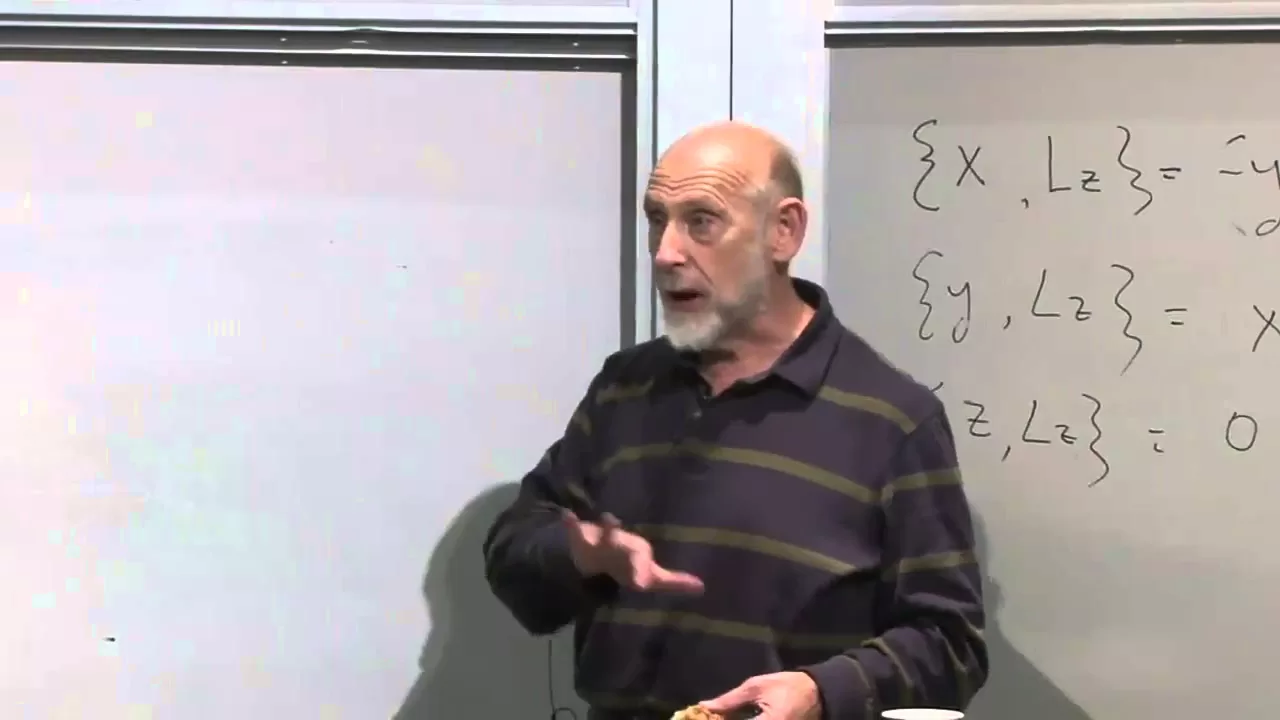
98:07
Classical Mechanics: Angular Momentum and Poisson Brackets
@stanford
139K views•2011-12-16

27:14
Entropy and the Second Law of Thermodynamics Explained
@veritasium
27.5M views•2023-07-01
Related Study Plans & Knowledge Roadmaps
Structured learning paths in Physics
physics
Nuclear Physics (Decay, Fission & Reactors)
01Atomic Structure and the Binding Force
02Radioactive Decay and Half-Life
03Nuclear Fission Mechanics and Chain Reactions
+ 2 more learning modules
12h5 modules
Explore Roadmap
physics
Soft Matter (Polymers, Colloids & Rheology)
01Foundations of Soft Matter & Thermal Forces
02Polymer Physics and Macromolecules
03Colloids, Surfactants, and Self-Assembly
+ 2 more learning modules
38h5 modules
Explore Roadmap
physics
Analytical Mechanics: Lagrangian & Hamiltonian
01Mathematical Foundations: Calculus of Variations
02From Newtonian Mechanics to Constraint Dynamics
03The Principle of Least Action & Lagrangian Mechanics
+ 3 more learning modules
28h6 modules
Explore Roadmap
physics
General Relativity (Spacetime & Cosmology)
01Foundations of Relativity: Special Relativity
02The Geometry of Spacetime: Equivalence Principle & Curvature
03Einstein's Field Equations: The Mathematics of Gravity
+ 2 more learning modules
55h5 modules
Explore Roadmap