











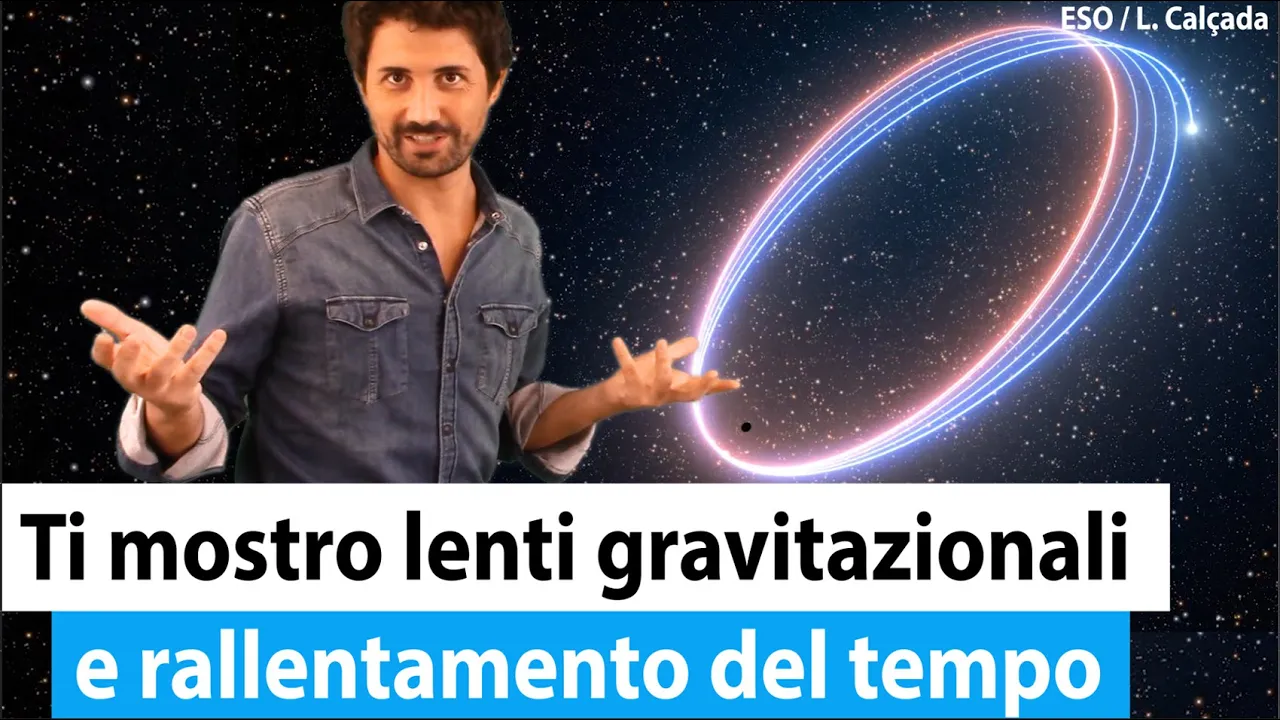

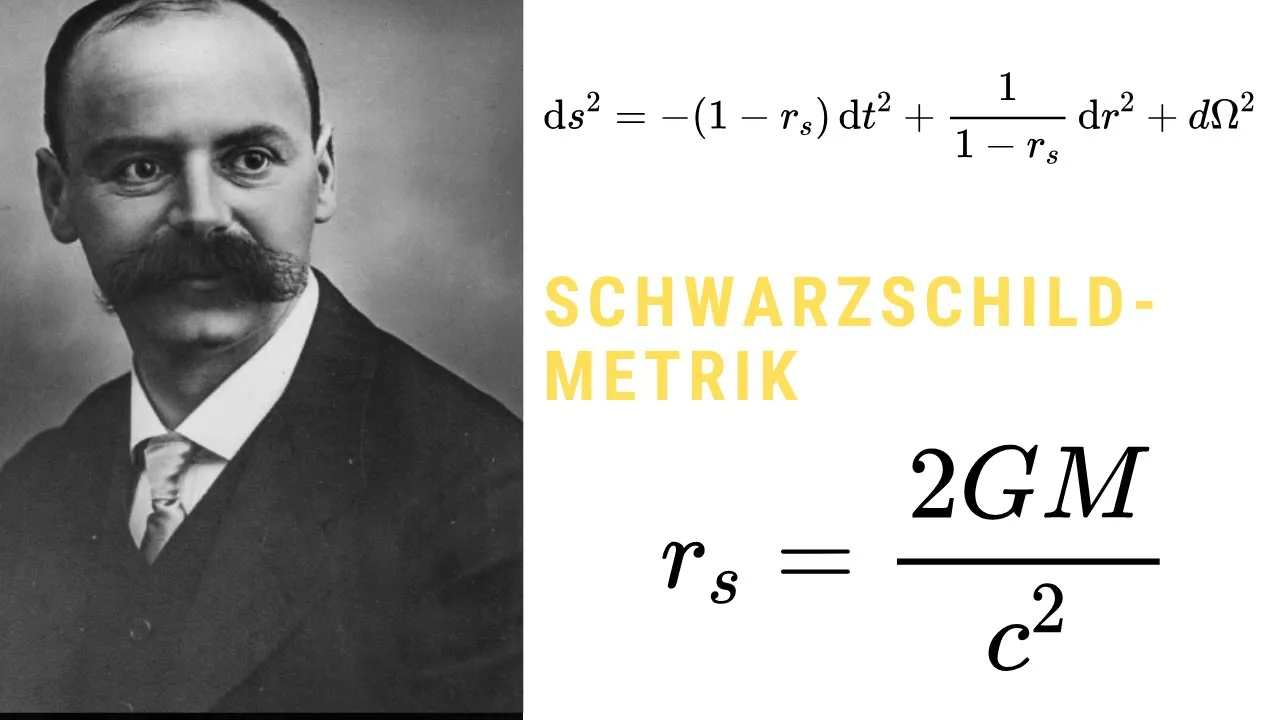


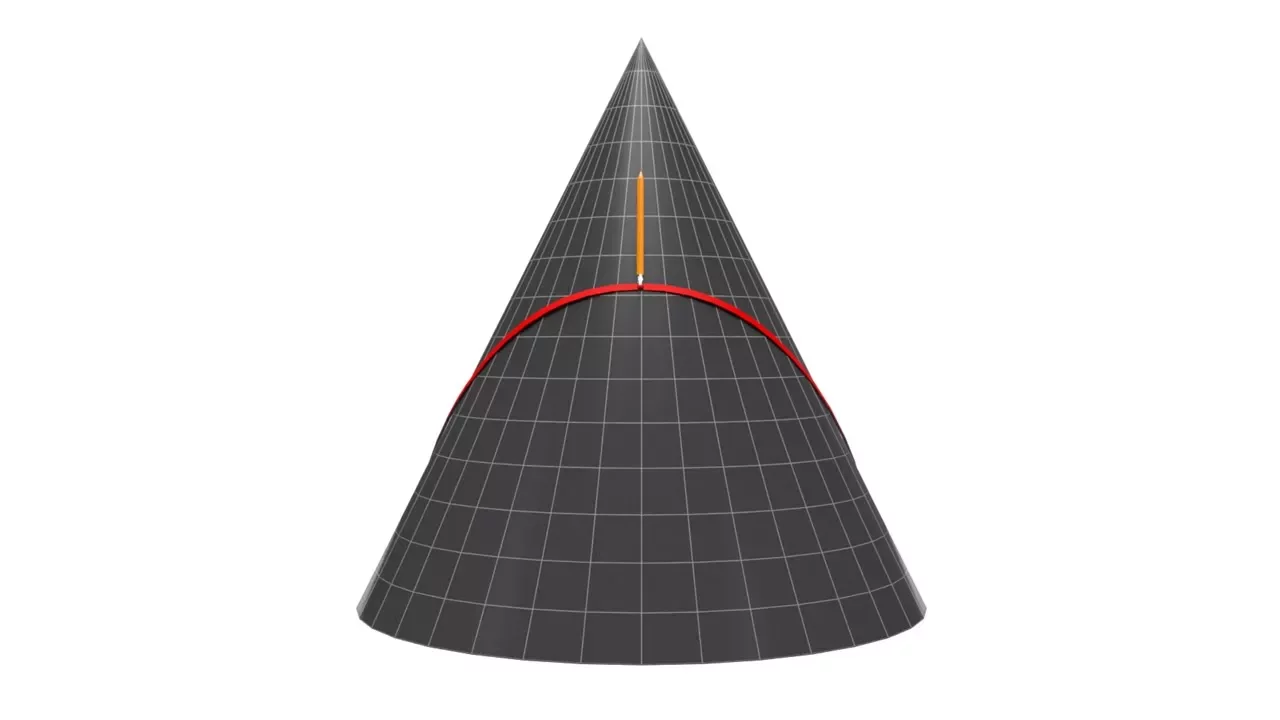





The equivalence principle states that gravitational effects are locally indistinguishable from those of an accelerated reference frame, meaning that in a small enough region of spacetime, one cannot distinguish between being stationary in a gravitational field and being in an accelerating frame; this principle leads to the understanding that gravity is fundamentally a manifestation of spacetime geometry, where the mathematical structure of general relativity requires the use of tensors and the metric tensor to describe how coordinate transformations affect physical laws, with tidal forces serving as the invariant signature of real gravitational fields that cannot be eliminated by any coordinate transformation.
General Relativity Lecture 1: The Equivalence Principle Explained
Added:Newtonian Mechanics and Gravity: Familiarity with Newton's laws of motion, particularly the distinction between inertial mass (resistance to acceleration) and gravitational mass (strength of gravitational coupling).
Inertial and Non-Inertial Reference Frames: Understanding how physical laws are described in stationary or constant-velocity frames compared to accelerating frames of reference.
Foundations of Special Relativity: Basic concepts of flat spacetime, the speed of light as a cosmic speed limit, and how observers in different inertial frames perceive space and time.
Classical Kinematics: A solid grasp of acceleration, velocity, and the concept of 'fictitious forces' (such as centrifugal or Coriolis forces) experienced in accelerating systems.
Gravitational Time Dilation and Redshift: Exploring how the equivalence principle implies that gravity affects the passage of time, causing clocks to run slower in stronger gravitational fields.
Spacetime Curvature and Geodesics: Moving from accelerating frames to the concept of curved spacetime, where freely falling particles follow paths of shortest distance (geodesics) through a deformed geometry.
The Einstein Field Equations: Studying the mathematical formulation of General Relativity that relates the geometry of spacetime to the distribution of mass, energy, and momentum.
Classical Tests of General Relativity: Investigating the physical evidence for the theory, such as the bending of starlight around the Sun, the precession of Mercury's perihelion, and gravitational lensing.
4.3M views39.1Klikes1:49:27Original Release: 2012-10-17
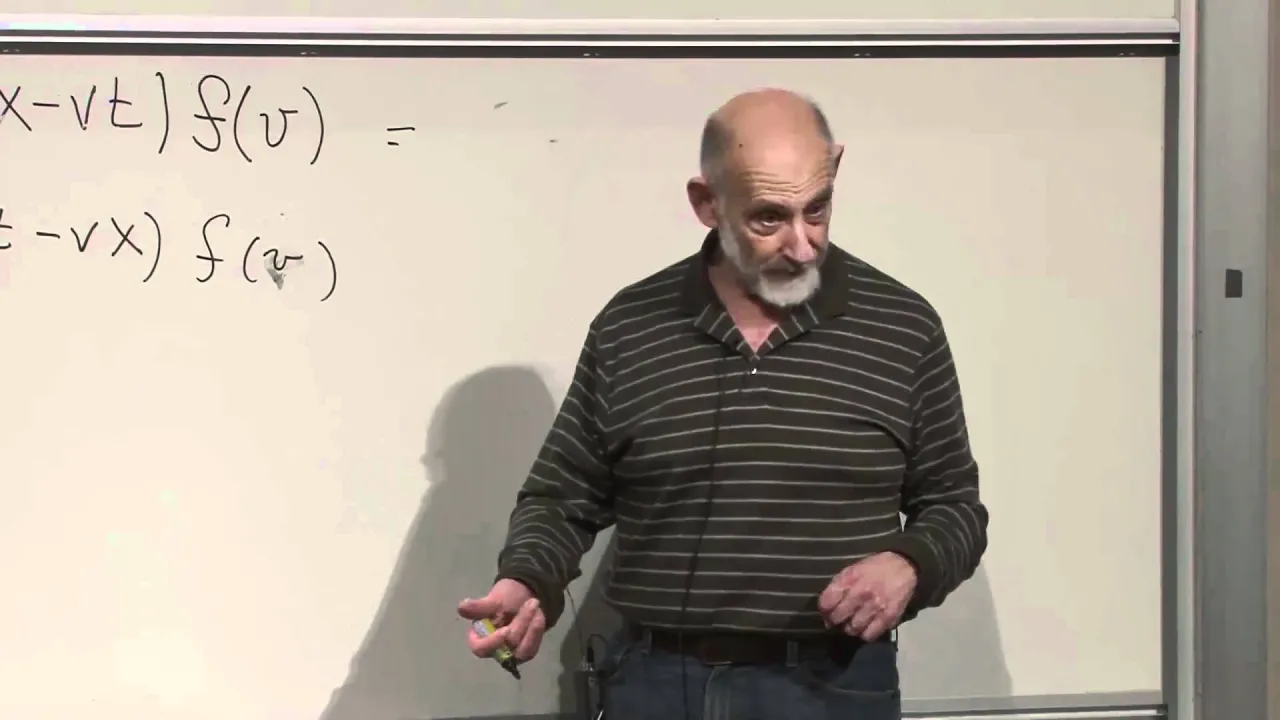
[Music] Stanford University general relativity gr for some reason that I don't know special relativity is never called Sr general relativity is often called gr my guess is a good many of you know a little bit about general relativity but I'm starting at the beginning and my own taste in the matter uh is to start pretty much where Einstein started it's not that I can't get past my love affair with Einstein it's not that it just seems to me the right way to uh to approach the subject uh to begin with the equivalence principle begin with the basic simplest facts you know I probably said this before but it was a pattern on Einstein's thinking to start with a really really simple Elementary facts that almost a child could understand and deduce these incredibly far-reaching consequences of them and uh personally I think that's uh that's the way to go about teaching it to start with the simplest things and deduce the consequences uh so I will begin with the equivalence principle what is the equivalence principle the equivalence principle is the principle that says that gravity is in some sense the same thing as acceleration so we want to get that on the table say what it means Give an example or two about how Einstein used it and then go on from there uh to asking what kind of mathematical structure does a theory have to have in order that the equivalence principle be true what uh what are the kinds of mathematics that have to describe it I'm sure most of you know that general relativity is a theory not only about gravity but it's a theory about geometry so it's kind of interesting to start at the beginning and ask what is it that led uh the man to uh to say that gravity has something to do with geometry okay so gravity equals acceleration what does that mean and I'm going to take you back we're going to go through a very Elementary derivation of what that means it's not that this derivation is important but uh but it's it's worth uh it's worth it's worth formalizing formalizing means making equations that say the words you all know that if you're in an accelerated frame of reference an elevator accelerating upward or downward you feel an effect of gravitational field children know that because they feel it um you know that you can probably even explain to me why that's true true but it's worth making a little bit of sort of Overkill but making mathematics out of it and then seeing what that mathematics is talking about okay so let's imagine the Einstein fla experiment somebody in an elevator the elevator got promoted to a rocket ship in later textbooks but uh I've never been in a rocket ship I have been in an elevator and so I know what it feels like to be in an elevator and let's think of an elevator an elevator is moving upward it may be moving downward in in which case this velocity Vector here is down is negative but let's draw just a velocity Vector this is not a cable pulling it up although it could be a cable pulling it up but it's just a velocity Vector okay the velocity Vector is up and there are two coordinate frames one coordinate frame is at rest on the earth and let's call it Z I use the Z coordinate for the vertical coordinate of space and down here some places Z equals z could be the surface of the Earth doesn't matter now in the elevator there's also a coordinate system and that coordinate system is being measured this is arbitrary but we'll do it anyway it's being measured from the floor of the elevator and so the same physical Point let's say it's a point over here has a z coordinate and it has a z Prime coordinate and Z Prime is measured from the floor now the height of the floor of the ele elephant not the elephant the elevator the floor of the elevator its height relative to Z equals z let's give a name let's call it L and L is clearly a function of time we're going to be interested the following question if we know the laws of physics in the frame Z surely we can figure out them in frame Z Prime and we're going to do that now one warning not warning but one fact about today's lecture at least in the start I'm going to ignore special relativity uh this is 10th amount to saying that we're pretending that the speed of light is infinite or we're talking about motions which are so slow that the um that the speed of light can be regarded as infinitely fast in fact you might say if general relativity is the generalization of special relativity how did Einstein get away with starting thinking without special relativity and the answer is something like this um special relativity has to do with very high velocities gravity has to do with heavy masses there's a range of situations where gravity is important where High velocities are not so Einstein start started out thinking about gravity for slow velocities and then combined it with special relativity to think about the combination of fast velocities and gravity and that's this the general theory but let's see what we know just from uh uh from slow velocities okay let's begin with inertial reference frames let's suppose that Z Prime both Z and Z Prime are inertial reference frames that means they're related by uniform velocity uniform velocity and that means that L of T can just be taken to be VT the height of the elevator relative to the floor relative to the not the floor but the relative to the ground is just given by a uniform velocity V * T I've chosen the coordinates such that a t equals Z they line up at T equals 0 both Z and Z Prime are equal to zero and now the elevator is rising and the height is proportional the height of the floor is proportional to VT and then we can write down what the connection between Z Prime and Z is z Prime this distance is just Z minus L now L is a function of time so Z minus L of t T if we know what L of T is this is a kind of coordinate transformation what about t Prime what about time in the elevator we also ought to ask how time behaves in the elevator if we're going to forget special relativity then we can just say t Prime and T are the same thing we don't have to uh think about Loren Transformations and that sort of thing so the other hand of the coordinate transformation would be T Prime is equal to T they're just the same thing and finally we could also put another coordinate in here later on we'll be interested in the coordinate X going this way there's also one coming out of the Blackboard Y and as long as the elevator is not sliding horizontally then X Prime and X can be taken to be the same it's true I've sort of offset the elevator relative to this axis but I didn't have to do that I could have put the z-axis right down the middle here in which case I would say that X Prime is the same as X that's a coordinate transformation it's a coordinate transformation of the SpaceTime coordinates it's rather trivial only one coordinate namely Z is involved in any interesting way we can if we like put a prime here because T Prime and T are the same thing okay now if I I set L of t equal to VT then this is very simple minus VT good now let's ask about a law of physics let's take the law of physics Newton's law of motion fals Ma and what is a a is z double dot the second time derivative of Z with respect to time that's called the acceleration the vertical acceleration this of course is the um is the Z component of force let's forget about the X component of force and the Y component of force they're not interesting in this context whatever force is exerted now this is the formula in the Z frame this is z we can imagine in the Z frame that there are forces acting on a particle this could be a particle over here there are forces acting on it what do those forces do due to well it could be some charge in here exerting forces on a charged object in here it could just be a force due to a rope hanging of the particle from the ceiling any number of different kinds of forces could be acting on the particle over here and we know that its equation of motion in the original frame of reference is just FAL MZ dot what is the equation of motion in the primed frame well this is very easy all we have to do is figure out what the original acceleration is in terms of the Prime acceleration what is the primed acceleration the primed acceleration is obviously Z Prime double dot and Z Prime double dot Z Prime acceleration is just gotten by differentiating this twice but if I differentiate VT twice I get nothing it's linear in t differentiate it twice you get nothing and you simply find Z Prime Z Prime dble dot is just Z double dot the acceleration in the two frames of reference are the same now I know you know this I know you know all about this but I wanted to you know sort of formalize it to bring out some points in particular the point that we're doing a coordinate transformation and we're asking how laws of physics change in going from one frame to another so now what can we say about the Newton's law in the primed frame of reference well we can now just substitute f equals m zou do Prime and what do we find we find that the law Newton's law in the prime frame is exactly the same as Newton's law in the unpre frame that's not surprising they're moving with uniform velocity relative to each other if one of them is an inertial frame the other is an inertial frame Newton taught us that the laws of physics are the same in all inertial frames so that's a sort of um formalization of the argument now let's go to an accelerated reference frame an accelerated reference frame L oft will be increasing in an accelerated way and so an accelerated way would be to put here 12 the acceleration * T * t squar excuse me and let's call the acceleration G little G for obvious reasons okay let's call the acceleration little G if you don't know what the obvious reason is you'll find out in a minute all right now this is a uniform acceleration if I differentiate L twice the first time let's do it if I differentiate it once I get l dot and that's just GT notice that this says that the velocity of the floor increases with time it's not steady velocity and lble Prime lble dot is just equal to G so this elevator is uniformly accelerated upward and the equation connecting the coordinate transformation now is different it's minus 12 GT ^2 so that's my new coordinate transformation to represent the relationship between coordinates which are accelerated relative to each other I'll continue to assume that in the Z coordinates here the laws of physics are exactly what Newton taught us let's ask what the laws of physics are now in the prime frame of reference we have to do this operation over again but we know the answer if we differentiate twice here we get this thing differentiated twice plus or minus in this case just G the second time derivative of this is just minus G all right so the primed acceleration and the unprimed acceleration differ by amount z g and now we can write Newton's equations in the primed frame of reference Z double dot if we just transpose the G to the other side G+ like this and now we can substitute and it says that f is equal to M time Z Prime dble dot plus mg so we find as expected of course nothing uh there's nothing here unexpected that in the prime frame of reference it looks like oh do I have something wrong I uh somehow I think I have the wrong sign um G minus G must be minus G what did I do did I do something wrong uh Z Prime is it h zou dot is z Prime dot plus G is that right yeah okay right oh sorry okay it's fine I right I want to shift it to the other side of the equation of course minus mg on the other side of the equation why do I want to shift it to the other side because I want to make it look like a Newton equation mass time acceleration is equal to something and that's something I call the force in the primed frame of reference and you notice as expected the force in the prime frame of reference has an extra term a sort of fictitious term which is just the mass times the acceleration of the uh of the uh elevator now what's interesting about it of course what's interesting about it is it looks exactly like the force law of a particle at the surface of the Earth or at the surface of any kind of gravitating system uniform gravitational field it looks like a uniform gravitational field but let me spell out in what sense it looks like Gravity the special feature of gravity is that gravitational forces are proportional to Mass that has a deep implication the Deep implication is since the equations of motion are fals Ma and if the force itself is somehow proportional to mass then the mass cancels and the acceleration and the total motion of the system of the object doesn't depend on its mass that's a characteristic of gravitational forces that an object moving in a gravitational force small object in gravitational force its motion doesn't depend on its mass an example for examp would just be the motion of the earth about the sun is independent of the mass of the Earth if you know where the Earth is at some instant and you know how fast it's moving then you can predict how it moves without regard of what what the masses all right so here's an example of a fictitious Force if you like if you want to call it that mimicking the effect of gravity I think most people before Einstein considered this largely a accident just uh people knew it they certainly knew that the effect of acceleration mimicked the effect of gravity but they didn't pay much attention to it it was Einstein who said look this is a principle this is a deep principle of nature that gravitational forces cannot be distinguished from the effect of an accelerated reference frame from the effect of looking at physics in an accelerated reference frame uh that physically they are are the same thing and they are indistinguishable now that uh that's we're going to have to discuss that a little bit whether we really believe that quite in as much detail as I said but before we do that let's draw some pictures of what these various coordinate transform Transformations look like let's first take the case where L is just equal to VT L equals VT that was X Prime is equal to x minus VT or Z Prime did I say x z i mean z z Prime all right here is um vertically I plot time horizontally I plot Z and that's Z not Z Prime and let's put in some guidelines here's course the vert iCal axis is zal 0 here's Z = 1 here's Z = 2 and so forth zal 3 three now let's put in and here of course is z z equal 0 now let's put in Z Prime equals 0 Z Prime equals 0 is the same as zal VT Z equals VT is a trajectory that moves upward to the right it looks like this about Z Prime equal 1 Z Prime = 1 looks like this Z Primal 2 looks like that Z Prime = 3 looks like this and this is the nature of the coordinate transformation that relates the primed and the unprimed reference frame every Point has a coordinate T and Z has a pair of coordinates T and z and also an X incidentally but I dropped it a t and a z and a y and the Z Prime and the Z coordinates are related in this way also T Prime is equal to T let put in t Prime equals T so that's called a linear transformation straight lines go to straight lines not surprising since Newton tells us that particles move in straight lines in an inertial frame of reference and and what is a straight line in one frame had therefore better be a straight line in the other frame they move in straight lines not only in space but in space time okay now let's do the same thing uh for the accelerated coordinate system where is it z z Prime is equ Al to Z - 12 GT ^2 so let's look at Z Prime equal 0 the trajectory of of the origin of the Z Prime coordinates that's the same as zal 12 GT ^2 that's a parabola okay it's a parabola lying on its side why because um I well because because it's a parabola lying on its side so it looks like it looks like this that's the trajectory it's accelerating it's going faster faster and faster incidentally I could run this back into the past a uniform accelerated acceleration upward forever and ever would correspond to something moving downward decelerating and then going up and going back back up okay so if I wanted to continue this to make a full uniformly accelerated trajectory out of it would look like this Z comes down then goes back up up and down all right what about Z Prime this is this now is z Prime equals z what about Z Prime equals 1 well that's just a shift of this Parabola which I always have trouble drawing it always I don't know it always gets cramped somehow Z Prime equals 2 looks like this these parabolas seem to be getting narrower and narrower but that's only because I'm not good at drawing them each one is just shifted relative to the previous one by one unit and the point is of course not surprisingly straight lines in one frame are not straight lines in the other frame they're curved lines and so one would say did I write the wrong thing here that was yeah one2 GT 2 G t^2 over two that's the coordinate system here um this is a curvy linear coordinate transformation so something Einstein understood very early is there's a connection between gravity and curvy linear coordinate transformations of SpaceTime that uh that special relativity was all about linear Transformations Transformations which took uniform velocity to uniform velocity Laurent Transformations are of that nature take straight lines to in space time to straight lines in space time but if we want to mock up gravitational fields through their effect on uh through the effects of acceleration we're really talking about transformations of the coordinates of SpaceTime which are curvy linear and so what Einstein realized is that if you that uh that yeah okay I I said I don't need to say it again let me just give you one example this sounded this sounds extremely trivial doesn't it sounds very trivial we all knew it and I think every physicist when Einstein said it probably also knew it and said oh yeah oh well big deal but Einstein was very clever he realized this could answer questions that nobody knew how to answer so let me give you one example I've used this in this class a number of times but we're going to do it anyway an example of a question that Einstein answered this way the question had to do is what is the influence of gravity on light now at that time in around 1907 or something when Einstein first uh thought about these things even 1905 uh he started thinking about gravity most physicists would have answered there is no effect of gravity on light light is light gravity is gravity a light wave moving near a gravitating object just moves in a straight line that's the law of light that it moves in straight lines and uh there's no reason to think that gravity has any effect on it but Einstein said no if it is true that this is a principle the equivalence between acceleration and gravity then acceleration then gravity will affect light and the argument was very simple again one of these arguments which uh you could almost explain to a child child let's start out with a light wave a light beam whatever it is this is X now not z z is vertical let's start out with a light beam that's moving horizontally starting out at t equal 0 at T equals 0 at tal 0 the velocity of the elevator is zero at Tal 0 the velocity begins to build up from tal 0 at tal 0 the two frames of reference are are matched they're both at rest relative to each other at T equals z and a flashlight beams a beam of light this way okay now in the unprimed frame of reference the Z the C frame of reference we know how the light wave moves or at least Einstein said in the in the frame of reference uh without any gravity course there is gravity on the surface of the Earth what am I talking about we shouldn't be for our purposes now the Earth is uh the Earth is so light that it doesn't uh that it doesn't make any gravity of its own all of the Gravity is due to the acceleration all of the Gravity is due to the acceleration all the apparent gravity and so he said well in the frame of reference at rest where there is no gravity we know what the light wave does the light wave just moves horizontally across here all right if we could write down again I want to write the equations just to to to illustrate what is the equation of this light beam well it's first of all X horizontal is equal to the speed of light times the time let's make this distance here L it's different L different L uh X is equal to CT that's how light moves okay and also Z is equal to zero Z doesn't change in the uh in the unprimed frame of reference it just moves horizontally okay so that's that's the equation of the light beam but now let's plug in the primed frame of reference in the primed frame of reference Z is equal to Z Prime uh plus tg^ 2 so we have that Z prime plus GT ^2 / 2 is equal to zero that's the equation of the light beam X is still just equal to CT and that's it okay so here we see what's the what the light beam is doing in the prime frame of reference namely it's moving on a curved trajectory if we were to calculate its vertical component of velocity we would discover it looks like that all right I say in the prime frame of reference gravity is pulling the light beam down you say no no it's just that the accelerate that the elevator is accelerating upward and that makes it look like the light beam moves in a curve trajectory and Einstein said they're the same thing this proved to him that the effect of a gravitational field on a light Ray was to cause it to curve was to cause it to Bend right and that uh was something that no other physicist knew at the time so clever okay but up till now what we've learned the thing what I want to abstract out of this is that it's interesting to think about curvy linear coordinate Transformations when you do think about curvy linear coordinate Transformations Newton's Laws do change or the form of Newton's laws change and one of the things that happens is apparent gravitational fields uh materialize that are physically indistinguishable from ordinary gravitational fields well are they really physically indistinguishable not really um let's talk about real gravitational fields namely gravitational fields of gravitational gravitating objects like the Sun or the Earth here's the sun of the earth and the gravitational acceleration doesn't Point vertically on this Blackboard it points toward the center so there's gravitational fields pointing radially inward it's pretty obvious that there's no way that you can do a coordinate transform like this which will remove the effect of the gravitational field yes if you're in a small laboratory here and that laboratory is allowed to Simply fall toward the Sun or whatever happens to be then you will think in that laboratory that there is no gravitational field but there is no way globally to introduce a coordinate transformation which is going to get rid of the fact that there's a gravitational field pointing inward toward the center if you make a transformation like this it might get rid of the gravity over here for this infalling object but the same transformation on this side will just increase the gravitational field so no there is no way to get rid of it we know there's no way to get rid of it and one way to understand why you can't get rid of it is because if you think of an object which is not very very small in this gravitational field Let's uh let's suppose uh it's uh okay my favorite 2,000 mile man uh the 2,000 mile man is falling in the gravitational field well let's let's let's start them out differently first let's start them out falling feet first okay because he's large not the point Mass the different parts of him feel different gravitational fields the further away you are this weaker the gravitational field is and so his head feels a weaker gravitational field than his feet okay his feet are being pulled harder than his head guess what he feels like he's being stretched right if he's freely falling he can't distinguish this from a stretching uh feeling but he knows that there's a gravitating object there that gravitating object cannot be removed by and the the sense of uh discomfort that he has cannot be removed by going to a falling reference frame these are of course tidal forces tidal forces uh cannot be removed by uh if he's very small of course if he's very small then his feet and his head feel the same gravitational force what happens if he's uh sideways falling well if you look at this gravitational field you can easily see that there's a component of the gravitational acceleration gravitational force on his feet which is pointing upward here just because this Vector has an upward component and this one has a downward component so he'll experience a sense of uh of compression and that sense of compression is again not something that you can remove by uh by coordinate trans by any coordinate transformation it's an invariant fact being squashed to death is an invariant fact it's not something you can make go away by doing a coordinate transformation so uh so it is not true that gravity is equivalent to going to an accelerated reference frame Einstein of course knew this I mean he was no fool he knew this so what he really said is that small objects for a small length of time cannot tell the difference between uh gravitational field and um and uh an accelerated frame of reference but that then raises the question if I present you with a force field for example the force field associated with uniform acceleration is just a vertical force field pointing downward and uni form everywhere it's a consequence of this nonlinear coordinate transformation but nevertheless it behaves for an for an observer using these coordinates like a gravitational field but with other kinds of coordinate Transformations you can make the gravitational field look more complicated other kinds of coordinate Transformations for example Transformations which um affect the x coordinate also for example they can make the gravitational field Bend toward the x- axis supposing you simultaneously accelerate along the z-axis while oscillating back and forth in the x-axis your frame of reference is oscillating backward and forward along the x-axis and accelerating along the z-axis what kind of gravitational field do you see a very complicated one it's got a vertical component and has a Time dependent oscillating component along the x-axis so by appropriate coordinate Transformations you can make some pretty complicated gravitational apparent gravitational fields if I tell you what the gravitational field is everywhere how do I determine if it's just a sort of fake gravitational field coming from doing a coordinate transformation using a frame of reference uh with uh with various kinds of accelerations in it or is it a real genuine gravitational field well if it's just nutonian gravity there's an easy way you just calculate the tidal forces you calculate whether that gravitational field will have an effect on an object which will cause it to squeeze and stretch if it does then it's a real gravitational field if you discover that that gravitational field has no such effect on any object no tidal Force no no tendency to distort a freely falling system a system which is in free fall then and no matter where it is drop it here drop it here drop it here wherever you drop it if it doesn't have such a tidal effect then it's not a real gravitational view yeah seems like you could simulate the title for example put put a rocket engine speed his head to have a more powerful one what that again seems like you can simulate even the title forces suppe you had a rocket engine on his feet it has a greater thrust that one on his head it doesn't matter in the unprimed frame of reference there is no gravitational field so there's no way that there can be a um a distorting effect on you or anybody else because you can calculate it in the unprimed frame and there was no gravitational field so the question then is how do you know when it's possible to make a coordinate transformation that removes the gravitational field how do you know when it's just an artifact of coordinates or when it's a real physical thing due to some gravitating mass for example that's a question question yeah just this is intuition and it's probably way off the mark But in a in a situation where you have one body creating a gravitational field what happens if you go to an angular coordinate system in terms right good of course that we don't even need to have a gravitating object there we got gravitating object and go to Polar coordinates I think that's what you're talking about right okay now that means we have two coordinates R and Theta supposing we didn't know that these were polar coordinates all we knew was there was a coordinate R and a coordinate Theta and I gave you I told you how a particle moves Theta and R as a function of Time how would the particle move meaning to say what with Theta of T and R of T how would they behave as a function of time and I would plot that I would look at it and see what kind of motion the particle had Theta and R was a function of time so let's get let's guess uh let's suppose a particle moves across here what happens to R well R starts decreasing decreasing decreasing and incidentally Theta is increasing well I get I take it back it's decreasing it's going this way but Theta is evolving and meanwhile at the same time R is decreasing decreasing decreasing till it gets to here and then it goes back out this person who was using polar coordinates and didn't know it would say there must be a repulsive Force repelling the particle away from R equals z and that repulsive force is we know what it is it's centrifugal force it's a centrifugal force of having some angular momentum but nevertheless if you didn't know where you got these coordinates from you would say my god look what's happening R is coming in and going back out effectively there is some kind of uh of repulsive force that repulsive force would be proportional to the mass in veral force is proportional to mass and you'll say this is an interesting situation there's a radial outward gravitational field in every respect it would behave as if there was a gravitational field pushing things outward from the center maybe you might think there's some matter out there that wouldn't be right but u a ring of matter out there pulling it that wouldn't be right but you would have discovered a force on an object which pulls it out and it pulls it out proportional to the m you say I found something new I've discovered kind of anti-gravity pulling me away from the center so basically any kind of coordinate transformation you do if the coordinate transformation is nonlinear doesn't take lines to lines will produce effectively some kind of effective fictitious Force what are the fictitious forces here centrifugal force coriolis force all those kinds of things and they all have the character of gravitational forces um but again again somebody in a small laboratory moving along here would not experience any sort of distorting effect clearly because we can always uh study it in the inertial frame the linear the you know the nice linear reference frame and there are no distorting effects so it follows that by a coordinate transformation you can get rid of these fictitious forces the question is if I just give you a gravitational field how do I know if I can get rid of them well the answer is calculate um things like tidal forces but isn't that only true if you're deal with two bodies exist again I don't understand think Anis so if you had c yeah cancels out the other one had a third that's where big sun is for example the two that offset cancel out here there's nothing making a gravitational field here this is just an artifact of a coordinate system no I'm trying to give you a a where I don't if you have four bodies making a gravitational field well there certainly will be tidal forces for something falling in over here as it's passing yeah I mean if there are four objects over here creating a gravitational field and one of them get and somebody gets close to one of them they can forget the other ones and they'll experience a tital force so what do you do you try all possible coordinate Transformations coordinate Transformations mean means coordinate transformations of space and time and rewrite the equations of motion and see if you can find a coordinate transformation that eliminates all of the fictitious forces if you can then you say there's no real gravitational fi there if you can't you say yes there was a real gravitational field that could not be eliminated now Einstein yeah my ignorance what do it to conf title forces oh you uh you you uh take a um a chunk a mass of some kind an object a crystal and you put the crystal into the gravitational field and you let it fall and you ask whether there are stressors and strains on the crystal which uh which squeeze it one way and stress it the other way yeah and these would be detectable things but uh so coming back to the centrifugal thing so let's say our 2,000 mile man is on a Maric R is that a mer okay this is this was not a meran this was just a use of coordinates which were not the right so I mean couldn't you kind of come up with like his feel going to be moving with that centrifugal force that is 2,000 mil away and it doesn't feel it so don't you end up with kind of something no no okay no no when I say there is no effective um tital Force I mean for a freely falling object if you have a freely falling object that's not being held in place by ropes or pulleys or anything else it's just allowed to freef fall then uh no um if there no if there was a carousel rotating here it is rotating and somebody is in freefall they will appear to move very oddly from the point of view of the person on the carousel but in the reference frame of the the uh you know at rest relative to the Earth they move in nice straight lines and they feel no uh tidle forces so if you calculated the effect of the tidal force in either frame you would find it zero in other words tidal Force means effectively distorting stresses dist distorting stresses on matter that squeeze it and pull it uh simplify it does it give you a headache or doesn't it give you a headache the answer is if you were in free W if you're if you're stuck on the if you're stuck on the uh on the carousel you might get a headache but you're not stuck on the carousel you're moving in free fall you get no headache um so going back to what you were saying about trying to transform the title forces away yeah okay I'm looking at your little picture of of a guy over there yeah so if he's facing that direction he's going to get squeezed if he's rotated 90° he's going to get stretched Could You Be Clever and maybe tilt him at 45° so we get stretched and squeezed and wait wait wait wait wait let's put okay this is not just 2,000 mile man he's also a th000 miles wide okay he gets stretched and squeezed he gets stretched and squeezed and there's simply no way to get rid of it I have to look at all directions I think you saying that because of time fores the equivalence principle doesn't hold well it means it has to be stated carefully it means it has to be stated carefully and um stating it carefully would say something like if you take a sufficiently small system small means such that the gravit the gravitational field across it doesn't vary much if the gravitational field if it's small enough that the gravitational field doesn't vary between one part of the system in another that is when the uh equivalence principle holds with accuracy right Einstein knew all of that he uh and so he asked himself the question what kind of mathematics goes in to um trying to answer this kind of question now the other element that came into it was special relativity and he knew from the work of manowski that special relativity had a geometry associated with it the geometry had the property that it had a kind of length associated with it the length was called proper time proper time or proper distance doesn't matter and I'm just going to remind you about that very quickly in special relativity there is an invariant notion of the SpaceTime difference between a pair of points or a pair of neighboring points for example we're taking a we're taking a rest now from gravity and we're coming back to special relativity and the only thing we're going to use about special relativity is that SpaceTime has a geometry the geometry is the geometry discovered by manowski and it has a length element a length element means any pair of points with x and t I'm going to use x and t now uh of course there's also two other coordinates but let's concentrate on x and t and the SpaceTime difference or distance between two points is called d s squ uh depending on who's writing the equations they will either write the s squ or D Squared and they only differ by a sign D squar is what anybody remember the D t^2 minus dx^ 2 yes where does the speed of light go into this if we wanted to put it in is it the X2 over c s or the X squ time c^2 I can never C but we can always get rid of this one over C squ by redefining X instead of calling it X call it X over C and it just becomes X squ then or just instead of x x over C and that in itself is a coordinate transformation so you can always bring this coordinate interval to this form this being called proper time and some physicists like to use the S S which is exactly the same except by sign it's the x^2 - DT ^2 Einstein knew about this geometry and he realized that this question up there what kind of coord are there coordinate Transformations which can remove the effect of tidal forces was very similar to a certain mathematics problem that had been studied at Great length by reman namely the question of deciding whether a geometry was flat or not geometry of a page is flat the geometry of a hemisphere is not flat or a sphere is not flat and he realized that there was a great deal of similarity in the two questions of whether a geometry is flat whether A Spacetime has gravit real gravitational field in it they were very similar so let's talk about that a little bit um this minus sign here REM had never dreamt about reman had not thought about geometries which have a minus sign here he was thinking about geometries which were similar to ukian Geometry what's the right formula in ukian Geometry I I think we want to start with the mathematics of UK of um of ranian geometry we're not going to spend a huge amount of time on it but we're going to spend a little bit of time on it uh what's the corresponding thing for ukian geometry and now let's just say there are a bunch of x's this could now be X1 this could be X2 there could be another X3 coming out here and supposing there's a little interval here characterized by a DX and let's call it m m represents whether it's X1 X2 or X3 this is not X1 squar this is X1 X2 and X3 and um if I prescribe for you a set of in this case three DXs three components three components of a little shift what's the differ the distance between these two points and we all know it's just um Pythagoras's theorem in any number of Dimensions it's the same the square of the distance and let's call it s now the square of the spatial distance between those two points is just equal to dx1 2ar plus dx2 squared plus dot dot dot however many there are if the space is three-dimensional and there are three of them if the space is two-dimensional there are two of them if the space is 26 dimensional there are 26 of them and so forth that is the formula for ukian distance on the ukian and the ukian space for the distance between two points now gaus had already understood that on curved surfaces the formula for the distance between two points was more complicated in general than this two-dimensional surfaces and reman generalized this to arbitrary Dimensions however many dimensions you have and what was known from the theory of surfaces is that the right formula for the distance between two points first of all before we talk about let's suppose we have some kind of surface curved surface what we mean by it being curved is not clear yet but some sort of arbitrary surface it looks like it's curved it uh uh no particular shape to it but uh but we have every reason to think it's got something that we might call curvature okay so the first thing we do with it is we put some coordinates on it we want to be able to quantify various statements and so we want to introduce some coordinates onto it we just lay out some kind of coordinates we don't worry at all about whether the coordinate axes are straight lines or not because for all we know if the surface is a real curved surface there probably won't even be things that we can call straight lines so we just lay out some coordinates and we call them X's now we take two neighboring points here's two neighboring points they're again related by a shift of the coordinates this shift over here is again called DXM but now for an arbitrary curved surface with arbitrary coordinates coordinates of arbitrary kind of complexity the formula is not as simple as this it has similarities with it but it looks any geometry curved or otherwise and incidentally this formula also applies to Flat geometries if you take curved coordinates if you take a flat geometry like the surface of the Blackboard and you introduce some curved coordinates some curvy linear coordinates and you ask what is the distance between two points then in general the distance the square of the distance between two points will be a quadratic form in these little coordinate separations a quadratic form means that you have a matrix gmn m&n could run from 1 to three for example and you just combine together gmn DX DX just as I've written it here you've seen these kind of things before and in general G will depend on position do you know an example how about distance in um how about distance on the surface of the Earth between two points characterized by longitude and latitude you know the formula for the distance between two points you have uh now it's d s squ Okay so Theta which one is which um latitude Theta is latitude squared the square of the radius of the Earth D Theta squar and then what's the other one remember well is a d^ squ but it can't just be D Squared if you look at the Earth I goes this way Theta goes this way a given amount of defi can be a big distance if you're near the equator and the same amount of defi as a small distance near the North Pole or the South Pole so there's something else that goes in here which has to do with how close to the North Pole or South Pole you are sin Theta yeah sin Theta Square s thet s not s of theta squ but sin squ of theta okay now here's an example here's an example of distance not just being the Theta 2+ d^ 2 but having some coefficient functions in front now in this case the interesting coefficient function is sin Theta squared in general if you use arbitrary coordinates on the sphere here you'll discover a more much more complicated formula but it will always be something which will involve the coordinates quadratically there'll be D Theta squ terms there'll be D squ terms there'll be D Theta time D terms there will never be dtheta Cube terms there will never be things linear everything will be quadratic like this and you'll get some general formula which will involve a matrix and the little separation of the X excuse me don't weally measure latitude from so say it again we measure we don't measure we don't measure latitude from the equator we measure sorry we do measure latitude from the equator oh I'm sorry maybe uh let's see um yeah it would probably if you measure the latitude from the equator it would be cosine squared is that what you getting at yes yeah that's correct if Latitude is measured from the equator it's cosine squar if it's measured from the North Pole it would be sin squ Theta so good point you're right but the important point is here that the formula for the distance of a differential separation involves functions which sit in front of these quadratic expressions in terms of the differential distances okay and as I said this is just a very simple example uh more General examples would have more complicated functions there might be a complicated not necessarily complicated but a function in front of D Theta squ there might be a function in front of d^ squ and there may also be a dtheta d term all possibilities all those possibilities are included by saying there's a general Matrix here an MN Matrix which are multiplies the differentials this yeah apply with to macro distances not differential distances because that that formula applies for any distance right uh which one no it applies for no no the reason it doesn't apply for arbitrary distances is because you have to specify what point Theta you're talking about and it's only good for distances nearby that point Point Theta yeah okay the answer is in general for curvy linear coordinates it only applies if you want to know first of all if you want to know the distance between two points you better Define it and take some arbitrary curved surface I don't know how to do it it's got bumps and hills and all kinds of things in it what do you even mean by talking about the distance between this point in that point over here well you could mean something you could mean the shortest distance you could mean put a peg in here and a peg here and pull a string as tight as you can between the two points and that would define one notion of a distance between the two points of course there might be two answers one might go around the hill one way and one might go around the hill the other way so in in general the but think about it for a minute even if it was only one answer unique answer it's complicated you have to know the geometry everywhere's in between you have to know the curves and the Hills uh not only to calculate the distance but to know actually where to place the string if I put another Hill in over here the string would have to go differently so the notion of the distance between two points is a complicated one but the notion of the distance between two neighboring points is not so complicated uh for small distances between the points so basically what you can imagine doing is you're building the geometry out of a sort of a bunch of tintoy erector sets tintoys or whatever a bunch of little units of given length and you're piecing them together to form a geometry if the little pieces that you're putting together are correct correct chosen you might be able to put that doesn't mean they're all of equal length but you might be able to put it together into a flat plane doesn't mean they're all the same length the fact that you can put them back together into a flat plane uh but if the pieces are chosen in some particular way in other words the lengths of the pieces which is equivalent to saying that the metric tensor here this is the metric tensor that the metric tensor has a particular property it may be that those pieces can be laid out little differential elements can be laid out and flattened onto a flat plane in that case the geometry is set to be flat we'll Define it more uh more carefully later but it may also be that the pieces are chosen in a way that you can't lay them out onto a flat plane there may be the pieces might be the little elements that you would get by uh you know by sort of triangle angulating the sphere in some way then there would be no way given their length given you know what their length is the length of each one of these and you know that they can be laid out on a sphere without stretching them without breaking them then it it's true that you cannot lay them out on a plane such a surface is not flat so the question is if I gave you the length of each little stick here without building the thing how could you tell me whether it's a flat space or whether it's an intrinsically curved space that cannot be flattened out and laid out on a flat plane let's say it more precisely given gmn of x given gmn FX given let's give it its name it's called the metric tensor as a function of position in some set of coordinates keep in mind there are many sets of coordinates and in every set of coordinates the metric tensor may look different may have different components but I give you one set of coordinates and I give you one metric tensor I tell you what it is in effect I've told you the distance between every pair of neighboring points and I ask you is this flat or is it not flat in fact what do I even mean by asking if it's flat yeah measure Pi calculate pi that's one way yeah you can do that I know what you mean that's good that's very good for a two-dimensional surface not so great for um for higher dimensional surfaces yeah that's that's right that's one way of doing it um uh actually that's not so easy to do with these differential little things here because because they're so small that the deviation from PI is going to be higher order but uh yeah all right so what's the mathematics of taking a metric tensor and asking if the space is flat now what does it mean for it to be flat what it means to be flat is that you can find a coordinate transformation a different set of coordinates in which the interval the distance formula is just the X1 2 plus the X2 S Plus the X3 S as it would be in ukian Geometry that's the definition of a flat space the space is flat not if G MN is just uh you know a bunch of zeros and ones as if it were just the Pythagorean theorem but if a coordinate transformation can make it look like that so in that sense it has a vague similarity it turned out not to be a vague similarity at all very close parallel between the question of whether you can find a coordinate transformation which removes gravitational fields question is can you find the coordinate transformation which removes the curvy character of the metric tensor here all right in order to answer that question the geometric question here we have to do some mathematics and the mathematics is Central to relativity we cannot get away without doing it you cannot understand relativity without it and the mathematics is tensor analysis tensor analysis and a little bit of differential geometry it uh it's annoying it's annoying because it got all these indices floating around and different coordinate systems so it's mildly annoying but once you get used to it it's really very simple it is really really simple and it was actually made simpler by Einstein by the famous Einstein summation convention which means you didn't have to write summation symbols all over the place question yeah yeah going back to that uh distance on the sphere the the equation where cosine of whatever it is that that assumes that that little interval is flat otherwise it's yeah it's a yeah that's right we we assume that small enough yeah that's that's exactly right in both ranian geometry in gaussian theory of surfaces it is always assumed that if you look at a small enough piece that a small enough piece looks flat the the technical statement is a small piece located at some point can be well approximated by the tangent space the tangent space would be the flat tangent uh to the to the surface but it's not they assume it's FL but but it's not FL that equation is it's a question yeah that's right but it's a question of orders of differentials it's a question of orders of differential remember differentials aren't really lengths they're limits of small lengths and they're defined in such a way that the square of a small thing is zero so there is a there is a technical mathematics the small differentials hm so is there a constraint that the function has to be continuous yeah cuz if you take two points at the edge of a crevice yeah it just you know geometry matters a lot depends on what you mean by a crevice yeah no no you're right um no the metric tensor can always be taken to be continuous it's often derivatives of the T which are not continuous but I don't know what a crevice means a crevice does not mean a crease that's of course a crease this space here is as flat as this space in fact it's exactly the same space thought of in terms of differential geometry the distance when all right let's let's be careful let's say exactly what we mean the distance between any two points on here between two neighboring points doesn't mean the distance um between these points if you go through the the page it means the distance in the surface the distance in the surface and that distance between these two points doesn't depend on whether you fold a page or not it's exactly the same with the page folded as with the page unfolded the right terminology is we're interested in the intrinsic geometry of the page the intrinsic geometry means those aspects of the geometry which only depend on what's going on inside the surface and not how the surface is embedded in three dimensions these are different embeddings of the same surface right all sorts of different embeddings of the surface same surface but the intrinsic relationships between the points on the surface are independent of how we uh bend the surface so we're talking about intrinsic geometry geometry that would be measurable by a little creature that only gets to move around on the surface and doesn't get to look out of the surface what if we try diagonalizing the metric uh what about diagonalizing it yeah you can't Diagon in general you can't diagonalize it everywhere simultaneously diagonalizes you mean find the set of coordinates that diagonalizes yeah you can't do you can do that at a point at any point you can diagonalize it but you can't diagonalize it everywhere simultaneously right that that's that's the point that's very much the point so you can't tell by looking at a point whether a surface is flat uh right looking at a point it'll always look flat one more question um could you just say again the the the determination of whether space is flat is equivalent to determining whether there's a coordin transform that takes an accelerator frame to a forget forget we're dropping now the question about gravity for the moment I started by explaining to you that there's this mathematics problem of deciding how to find out if there's a gravitational field or the gravitational field can be removed by coordinate transformation now we're talking about a problem that sounds similar and in fact this is similar how do you tell given a space whether it is flat how do you and the answer is you look for a coordinate transformation which turns gmn into into what what's what's the gmn for for cartisian coordinates and thatty mat identity Matrix yeah uh or the chronica Delta symbol yes everybody remember the chronica Delta Delta MN this is the formula for the interval in cartisian coordinates for a flat geometry remember what Delta MN is Delta MN is just a matrix diagonal matrix everywhere is equal to one off diagonal everywhere equal to zero okay so what we would say is that flat space in cartisian coordinates the metric tensor is just the chronic Delta symbol in curvy linear coordinates that's not true in curvy linear coordinates this could be more complicated so I give you a metric I give you a metric tensor and I ask you can it by coordinate transformation be reduced to this if yes the space is called Flat if no the space is called curved of course a space could have some portions which are flat and on Those portions it could be that there's a set of coordinates where in that region the metric tensor can be chosen to be the chronical Delta but it's called Flat if it's everywhere is flat everywhere's flat all right so that's a mathematics problem given a gmn of X how do you decide if there's a coordinate transformation which will change it into the chronicle symbol to answer that we have to understand better how things transform when you make coordinate Transformations and that's the subject of tensor analysis this analogy between tidal forces and curvature is not an analogy it's a very precise equivalent that in general theory of relativity the way that you diagnose tidal forces is by calculating the curvature tensor the way you define a flat space is a space where the curv a tensor is zero everywhere and so it's it's a very precise uh correspondence that gravity really is curvature but uh we'll come through it as we get to it okay so obviously the first question we would like to ask in trying to determine whether we can transform away uh gmn of X and turn it into the trivial Delta MN of X the first question to ask is how does gmn of X transform when you change coordinates so as I said for that we have to introduce Notions of tensor analysis which are rather easy sometimes they're a bit of a notational nuisance because of all the indices and you can get confused by them but I hope you won't okay okay so let's begin with a simpler thing than gmn of X let's just start let's Suppose there are two sets of coordinates there's the set of coordinates XM and I could call the other coordinates X Prime but then I'm going to have a horrible notation where we'll have X Prime M oh boy looks like x uh X Prime 1 would be X11 let's keep away from that let's not do that and let's call the two sets of coordinates X and Y it's not XYZ type y it's just X1 X2 X3 X4 however many and y1 Y2 Y3 y4 two sets of coordinates X and Y and of course they're related because if you know the coordinates of a point in one set of coordinates then in principle you know the where the point is and therefore you know its coordinates in in the other the other coordinate system so we might write that X the coordinates XM are functions of Y and what I mean by functions of Y here is I mean functions of all of the components of Y and likewise ym are assumed to be known functions of the X's X ym of X means ym of X1 X2 X3 I just don't want to write all of the uh all the labels in there we have two coordinate systems each one being a function of the other uh and let's ask the question how these differential elements here transform in other words given DXM that means given a pair of points given a pair of points neighboring to each other and a little DXM differential distance between them differential separation between them what's the corresponding differential separation of the y-coordinate this is the differential separation of the x coordinates what's the differential separation of the y-coordinates right little bit of calculus will tell you the answer [Music] Dy m is equal to the change in y m when you change any one of the x coordinates by a little bit let's call it the XP times dxp now what does this mean first of all this formula is summed over P this just says that the change in y some particular component is the sum of changes in y if you change X1 a little bit times the change in X1 plus change X2 a little bit times the change at the X2 and so forth all right so this is a standard calculus formula the differential change in a quantity uh when you change the coordinates uh from one set of coordinates to another now right here we have the first example of the transformation of a tensor d x and Dy what do they represent they represent a little Vector an an infinitesimal Vector in this sense but they represent a little Vector a vector going from one point to a neighboring Point located at some point in the space located at some point in the space a vector this is the transformation properties of the components of this Vector this is the transformation properties of the components of what is called a contravariant vector a contravariant vector simply means a thing which transforms like this I will now give you the definition of a general contravariant Vector it's a thing that has components the M which in the primed frame when I speak about the prime frame I'm speaking about the Y frame y coordinates let's let's go back for a second what are we talking about here we have two sets of coordinates let's just draw one set of coordinates and we have a little Vector someplace and we are interested in the components of that Vector along the axes perscribed by the coordinates whatever those coordinates have to be we're interested in the um in the components of the little infinitesimal Vector along specific axes the axes which are locally the axes associated with the coordinates those are these dys and DXs if I change coordinates if I change coordinates at this point here there might be some other coordinates and the components of exactly that same vector in the new coordinates will be different it's the same Vector but different components why just because the axes are different okay so this is telling you if I tell you what the DXs are for a specific Vector over here this tells you what the the Y's are this is the transformation property of the components of a vector right quick question yeah diagram of those curve coordinates each one of those lines does that represent all of the other coordinates being held constant and you're just varying yeah that's right that's right those lines represent lines in uh they represent surfaces strictly speaking they represent surfaces strictly speaking lines are surfaces of constant coordinate of some kind or another but on a two-dimensional surface they just lines yeah so if you change coordinates you change the components of a vector even though you're not changing the vector the vector is a very definite Vector you're changing its components because you're changing the coordinates uh that you're relating the vector 2 okay a thing which transforms in this way and I will now write it in the primed coordinates the m is equal to D ym by dxp times VP this is the P component of a vector this is the MTH component of Vector in the primed reference frame this is the transformation property summed over P this is the so-called transformation property of a contravariant vector we'll see why it uh why we have to call it Contra I don't know why it's called contravariant as opposed osed to uh um something else but we'll see there are two different kinds of vector indices okay so there are many many things which would transform in this way for example if this were just ordinary space of some sort we were talking about the velocity of a particle on the surface let's let's suppose this was a surface and we're talking about the components of velocity along the surface the components of velocity along the surface would transform in this way if you knew the velocity components in one set of coordinates this would tell you what the velocity was in the other set of coordinates so this is an example of transformation properties now the first thing that the Einstein's one one one of Einstein's great discoveries was that you can leave out this summation sign here and people will figure it out by looking at the equation and say oh wait a minute this side has no P this side has P's this equation doesn't make sense what do I do with it well it really means you Su over P whenever there's a repeated index like that that doesn't make sense from the left side of the equation and appears on the right side of the equation it really stands for summation over that index quick question yeah um here you're you're assuming coordinates that transform according to the rules but could could there be other ORD that don't transform that I haven't assumed anything I've just assumed there are two sets of coordinates which are functionally related to each other that's all and now you're assuming some things you're assuming a degree of continuity you're assuming that the functions are smooth enough that they can be differentiated but aside from that no we're not we're not making any uh any deep uh assumptions about the nature of these coordinates all right so this is the transformation property let's write it down over here put it up in the corner contravariant Transformations contravariant vectors are defined they're defined by the transformation properties and here it is the prime M let's right is equal to D ym by dxp VP this is V in the unprimed coordinates this is in the primed coordinates Y is really the primed coordinate and X is the unprimed coordinate as I said I've called it y instead of X Prime just to avoid uh a miserable notation with primes next to indices okay this is contravariant Vector good now let's talk about covariant vectors another creature completely different the gradient the gradient if you have a function let's suppose we have a function let's think of it as a scalar function a function uh that doesn't have to be transformed it just has some meaningful value at every point of space let's call it s then the gradient is also a kind of vector what is the gradient the gradient is the set of things the set of components derivative with respect to XM of s where s is some scalar function everybody know what a scaler is a scaler is a thing which doesn't transform it just has a value at every point it has a well- defined value at every point it could be something like the temperature it could be something like um uh the higs field whatever it is something which uh uh doesn't have components because it's just a number at every point the gradient of a scaler is also a vector it's the gradient Vector but it doesn't transform the same way as the DX is it doesn't transform as a contravariant vector and it's easy to figure out how it does transform let's ask given supposing we know this can we compute what d s by Dy let's call this P here let's call this p Just For Fun can we compute what the derivative of s with respect to the Y's is again it's an elementary calculus problem the elementary calculus problem is that the change in s when you change y m a little bit keeping the other ones fixed keeping all the other components fixed is just derivative of s with respect to x times the derivative of XP with respect to ym what is this what is this rule called some version of the chain rule that if you want to know how something changes when you change y a little bit then you first change X1 a little bit and see how much X1 changes when you change y check change X2 a little bit see how much X2 changes when you change y do the same thing with X3 and again this means sum over P I'm not going to write the sum over P anymore if there's a repeated index on this side which just doesn't show up on this side it must mean that it's summed over so that's Einstein's summation convention it uh made life a lot easier for printers and for other Publishers who didn't have to put in summation signs all over the place all right so let's see how does this compare with this this is the prime this is now some primed variable this is now in the primed coordinate system let's call the gradient here let's call it w this is W subm on the left sorry W subm on the left hand side notice I'm putting the index downstairs here this index was upstairs here I'm putting this one downstairs you'll see why you'll see that this uh makes nice sense in a minute this index is downstairs why is it downstairs well it's downstairs all right ym is equal two now this the D XP by D ym this is the primed y this is the primed gradient derivative with respect to y That's equal to D XP by D ym times now what is this thing over here this is W sub P it's the unprimed com gradient it's the unprimed gradient because it's differentiated with respect to the unprimed variable that's WP over here here we have dxp by D ym and here we have the primed gradient this is different it's different it's similar the primed contravariant Vector has components proportional to the unprimed but with Dy by DX here we have DX by Dy okay Dy by DX DX by Dy a thing which transforms this way transforms means that if you can calculate it in one frame here's how you calculate it in the other frame a thing which transforms this way is called a covariant vector so let's put that in here objects which transform this way now I can tell you right now that if you're uncomfortable with this and it doesn't ring a bell and it doesn't um it doesn't feel good to you this is what you need to understand it really is completely Central to the entire subject of general relativity where the indexes go where the indices go and how they transform that's what relativity is all about it's all about the transformation properties of different kinds of objects a vector is a special case of a tensor tensors are things which are defined by the way that they transform uh the way that they transform means the way that they change when you go from one set of coordinates to another it is uh so that is what you have to get down if you want to understand general relativity there transformation properties of vectors and other objects so here are the two covariant and contravariant M yeah lowercase M yeah oh right and they just label the different coordinates and notice there's no way in here which I've told you where I've told you whether this is two-dimensional space three-dimensional space four-dimensional space could be anything uh the dimensionality of the space of course is the number of different components uh P could run from one to four it could run from 1 to three it could run from 1 to two but the formulas are exactly the same in every dimensionality the formulas for transformation properties okay so this is the notion of covariant and contravariant Vector indices vectors Let's uh talk about tensors now or more complicated kinds of objects this is obviously complicated enough but uh we have to go a little yeah um what's the connection with the contravariant and covariant V nothing yet nothing yet nothing yet they're two different kinds of objects now later on uh we will find ways of taking any covariant object or any contravariant object and constructing from it a covariant object and a kind of onetoone Correspondence okay that's later but for the moment they're just different kinds of objects basically the gradient operation and the um this is characteristic of velocities this is characteristic of uh gradients or rates of change of things so for the moment they're different things question yeah the last time we basically if I remember correctly said when we lower the index we change a sign of the time we well at the moment we're just dealing with ukian we're not dealing with uh relativity yeah just coordinates in the in ordinary space we'll come to that sign change when we uh when we uh yeah so when you say we're talking about two different kinds of objects that means we should not be thinking in our heads oh these are the covariant components or contravariant components well if you know what the connection is yes you can but at the moment no right we'll find a way to relate every covariant to a contravariant and then you can think of basically a vector as having either covariant or contravariant represent ation but uh but we'll come to that okay all right Next Step let's talk about uh tensors with more than one index now the pattern for tensors of more than one index is just to imagine products let's Suppose there are two contravariant vectors let's start with two different contravariant vectors let's call them V and I suppose I've already called it let's an U two different ones and let's put them next to each other and take the M component of v and the N component of U and let's just call this T MN I think just for the sake of argument let's suppose we're talking about threedimensional space so that M and N run over from 1 to three how many components does VM have three right how many components does un have three how many components does tmn have nine right uh notice it matters whether uh whether you put it MN or n m they're different things V MN is not the same as v n m if you know what I mean so where you put the index here matters but there's a thing called tmn tmn is a special case of a tensor of rank two rank two means that it has two indices like that and in this case there would be nine components in four dimensions there would be 16 components and two Dimension there be four components and so forth okay how does this thing transform for example VM and un could be the components of uh these vectors in the unprimed frame of reference I think I want to yeah it's called tmn so this is T in the unprimed frame of reference and it's composed out of the components of the individual vectors also in the unprimed frame of reference well since I know how the individual components transform I can tell you how T transforms so let's see if we can figure out what T Prime MN is well first of all what is V Prime V Prime is over here and it's equal to D ym by dxp time VP that's VM or the primed version V Prime M now what about U Prime U Prime same kind of formula partial of y n with respect to let's call it x q u q just look at the two pieces separately the ym by the XP time VP that's that's V Prime m V Prime m d YN by dxq * uq that is U Prime n so I've just done this operation same operation but I've done them on the separate components but now I can just take this apart but this VP over here and what is this object what's vpq it's just tpq in the unpre frame so I found out how T transforms not surprising because it was just a combination of two uh two vectors and basically each index here transforms with a with a Dy by DX type thing here okay any anything which transforms like this is called a covariant tensor of rank two for each index there's an operation for the M index there's an operation d ym by dxp for the N index there's a dyn by dxq and then you multiply it by dpq this is co this is contravariant this is a this is a tensor with two contravariant indices okay all right if there were more indices up here MN uh I don't know R PQ what's comes after Q I've already used R MN MN l l MN L MN what comes before p no that's no good pqr and what am I missing I'm missing d y l by dxr this would be the transformation property of a rank three contravariant tensor what kind of things are there which are these kind of tensors many many things but in particular just products of vectors products of components of vectors we're going to see that this metric thing here is a tensor but it's a tensor with covariant indices so let's ask how things with covariant indices transform here is the way a single covariant index transforms let's go back and take the product of two of them again two different covariant tensors y w Prime M time W Prime in with covariant covariant means that the down downstairs here how does this object transform well we know how the individ not w w um give me another letter Z okay not coordinate Z but uh component Z all right here's the rule W Prime m is equal to D XP by D ym times WP Z Prime in same game DX Q by d y n times Z q all right so here I've discovered now a new transformation property of a thing with two covariant indices two downstairs indices let's call it tmn it's a different object just using t for tensor tensor with two lower indices it transforms this way so this is transformation property of a thing with two covariant indices I'll leave it to you to try to guess what the transformation might be if there's one upper and one lower we're not going to use it tonight uh but let's oh we're about finished well I think I think I'll just do one more simple thing here before we finish the question is how the metric tensor transforms and this is easy supposing we want the same interval except expressed in terms of the Y coordinates all we have to do is write that g well DS s is equal to G MN of X I'm simply rewriting what I have here but then what is DXM in terms of y's it's partial of XM with respect to Y uh P let's say times dyp you know I'm getting really tired I think we're going to do this next time we're going to do this next time we're going to do this next time the point however is when we work out the transformation properties of G we'll find out that it's tensor it's a tensor with two covariant indices and then comes a question given that this is the transformation property of G can we or can we not find a coordinate transformation which will turn gmn into Delta MN that's the mathematics question it's a very hard mathematics question in general but uh we we'll find the we'll find the condition for more please visit us at stanford.edu
Up Next

70:41
Einstein Rings and Gravitational Lensing: A Cosmological Tool
@InstitutdAstrophysiquedeParis
749 views•2023-11-03

12:53
21cm Hyperfine Transition in Neutral Hydrogen: Radio Astronomy Basics
@AaronRobertParsons
12.4K views•2011-10-13
98:07
Classical Mechanics: Angular Momentum and Poisson Brackets
@stanford
139K views•2011-12-16

27:14
Entropy and the Second Law of Thermodynamics Explained
@veritasium
27.5M views•2023-07-01
Related Study Plans & Knowledge Roadmaps
Structured learning paths in Physics
physics
Nuclear Physics (Decay, Fission & Reactors)
01Atomic Structure and the Binding Force
02Radioactive Decay and Half-Life
03Nuclear Fission Mechanics and Chain Reactions
+ 2 more learning modules
12h5 modules
Explore Roadmap
physics
Soft Matter (Polymers, Colloids & Rheology)
01Foundations of Soft Matter & Thermal Forces
02Polymer Physics and Macromolecules
03Colloids, Surfactants, and Self-Assembly
+ 2 more learning modules
38h5 modules
Explore Roadmap
physics
Analytical Mechanics: Lagrangian & Hamiltonian
01Mathematical Foundations: Calculus of Variations
02From Newtonian Mechanics to Constraint Dynamics
03The Principle of Least Action & Lagrangian Mechanics
+ 3 more learning modules
28h6 modules
Explore Roadmap
physics
General Relativity (Spacetime & Cosmology)
01Foundations of Relativity: Special Relativity
02The Geometry of Spacetime: Equivalence Principle & Curvature
03Einstein's Field Equations: The Mathematics of Gravity
+ 2 more learning modules
55h5 modules
Explore Roadmap