







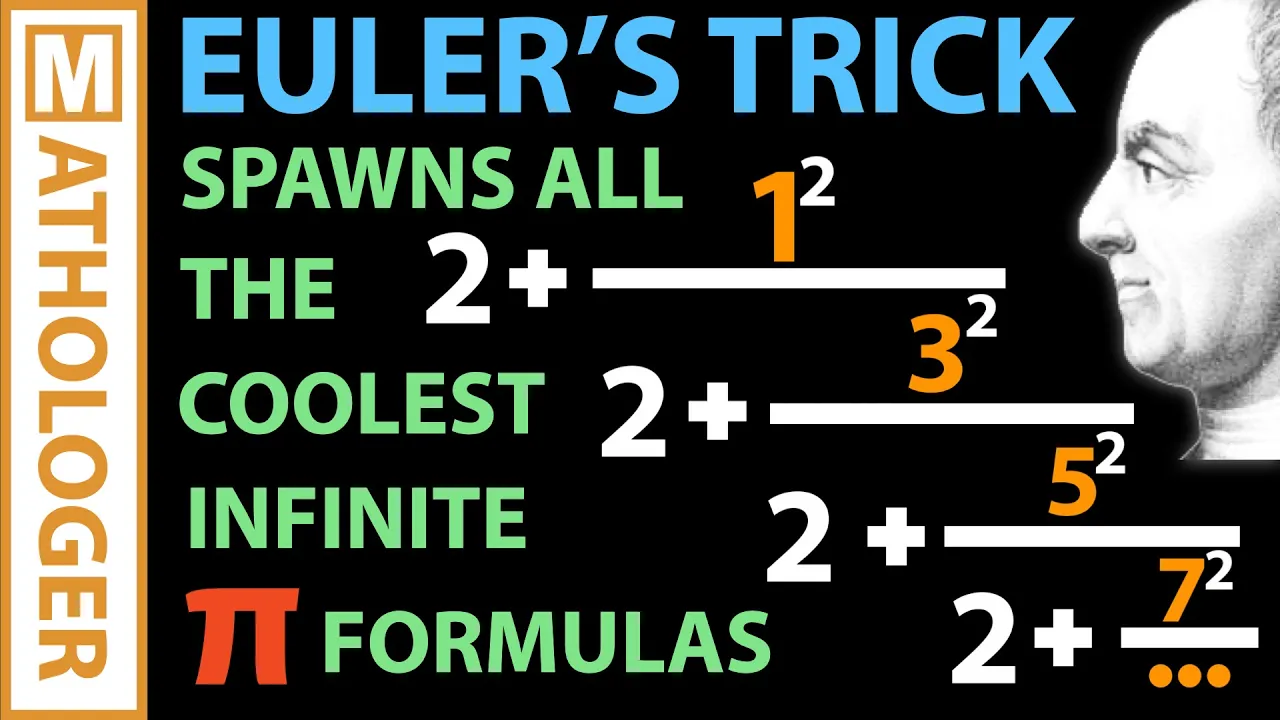






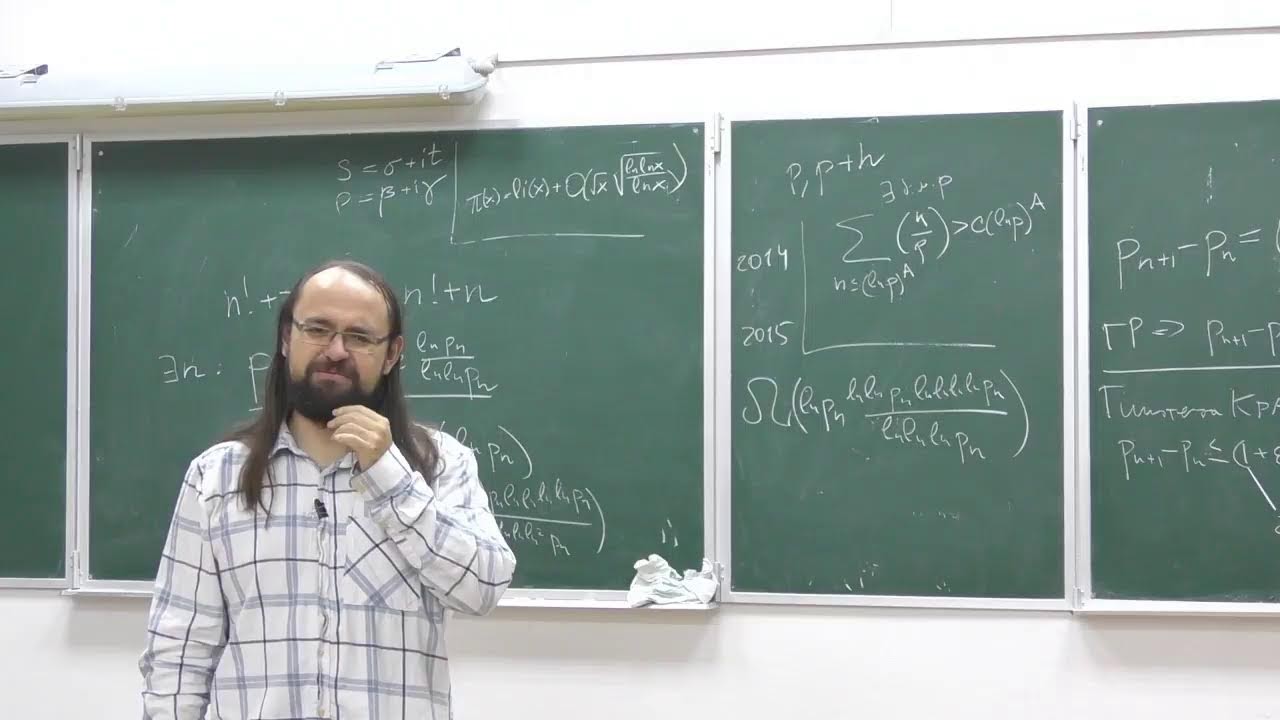


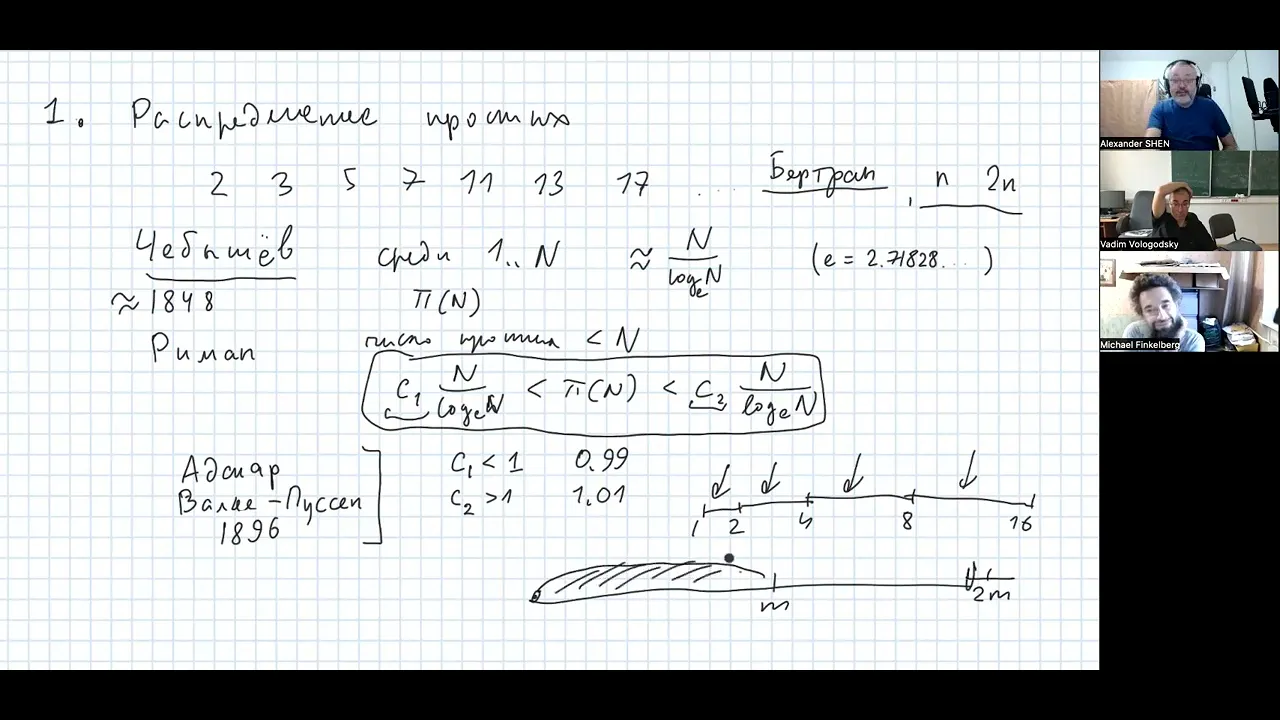
The Euler Product Formula, discovered by Leonhard Euler in 1737, establishes a profound connection between the sum of reciprocals of natural numbers raised to a power s (the Riemann zeta function ζ(s)) and an infinite product over all prime numbers, expressed as ζ(s) = ∏(p prime) 1/(1 - 1/p^s). This formula converges when the real part of s exceeds 1 and provides a powerful tool for studying prime numbers, including proving that the sum of reciprocal primes diverges (implying infinitely many primes) and serving as a foundation for analytic number theory and the famous Riemann Hypothesis.
The Euler Product Formula: A Beautiful Bridge Between Sums and Primes
Added:The Fundamental Theorem of Arithmetic, specifically how every integer greater than 1 can be uniquely factored into prime numbers.
The behavior of infinite series, including convergence, divergence, and the formula for the sum of an infinite geometric series.
The definition and basic properties of the Riemann zeta function for real numbers greater than one.
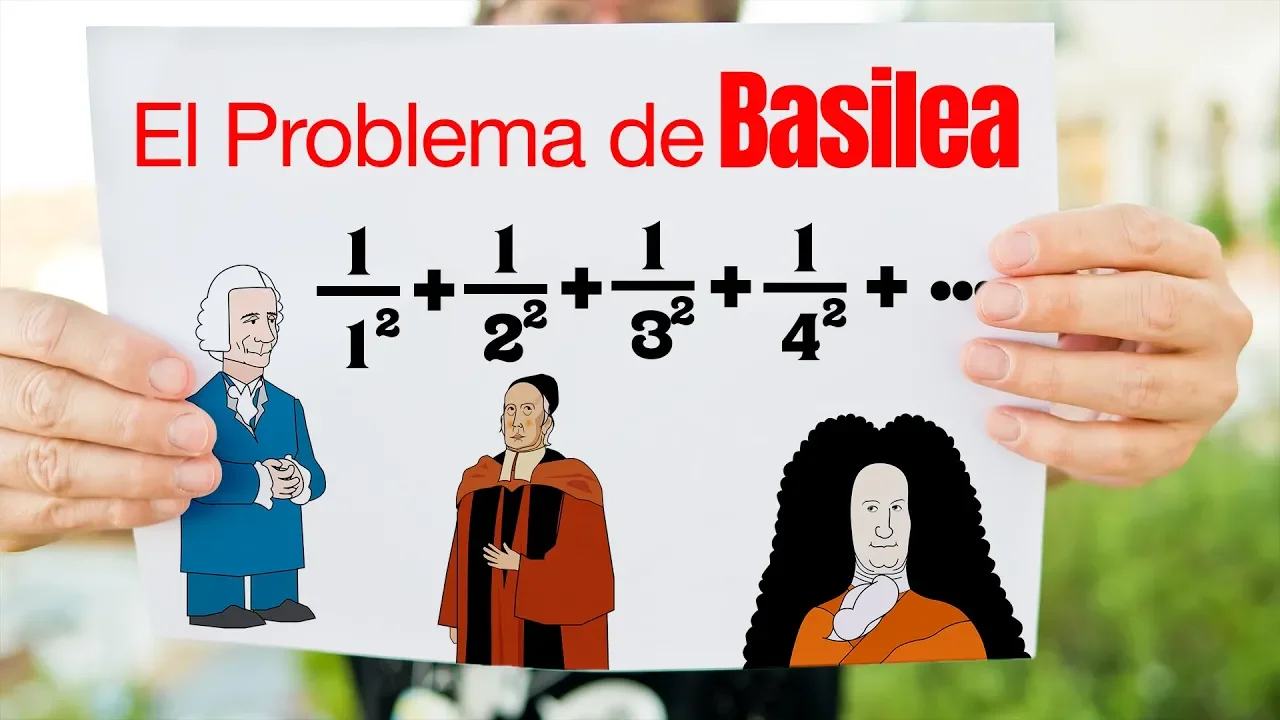
The Basel problem, including Euler's famous resolution finding the sum of the reciprocals of the squares of natural numbers.
Analytic Continuation, particularly how the Riemann zeta function is extended to the complex plane.
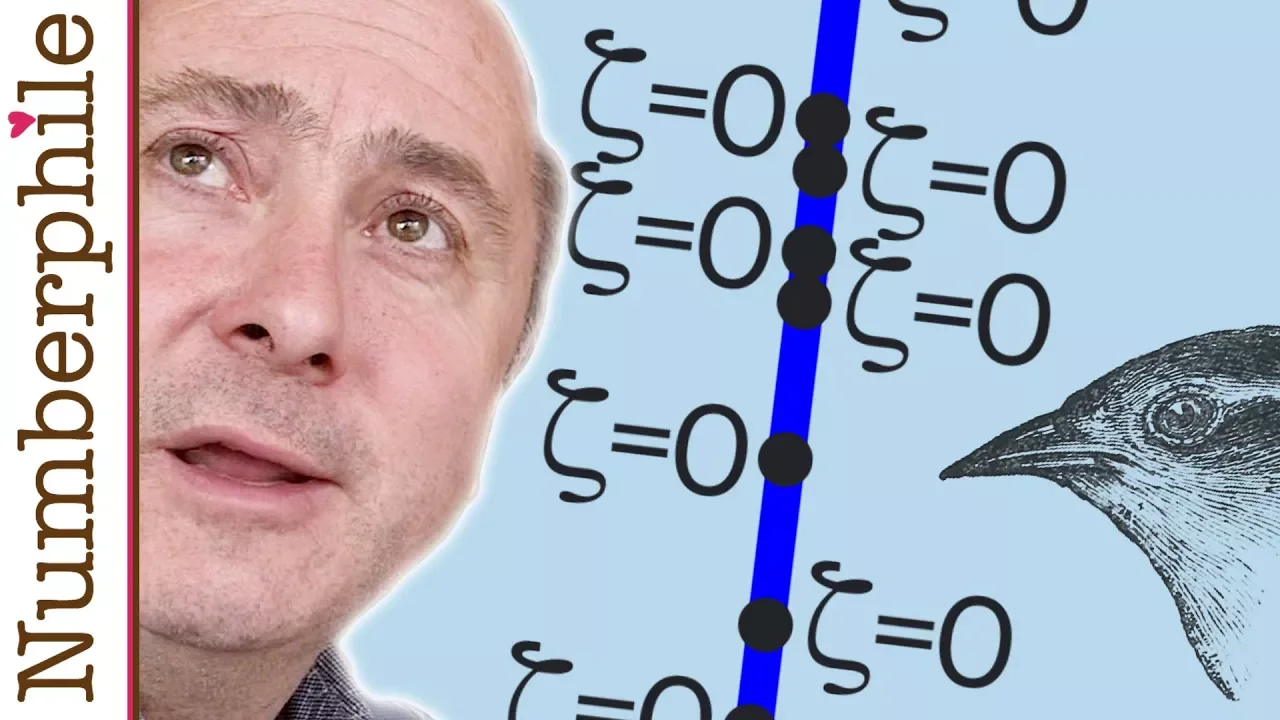
The Riemann Hypothesis, exploring the non-trivial zeros of the zeta function and their connection to prime distribution.
The Prime Number Theorem, which describes the asymptotic distribution of the prime numbers.
Dirichlet L-functions and their Euler products, which generalize these concepts to prove Dirichlet's Theorem on Arithmetic Progressions.
60.3K views2.5Klikes17:04Original Release: 2024-08-06
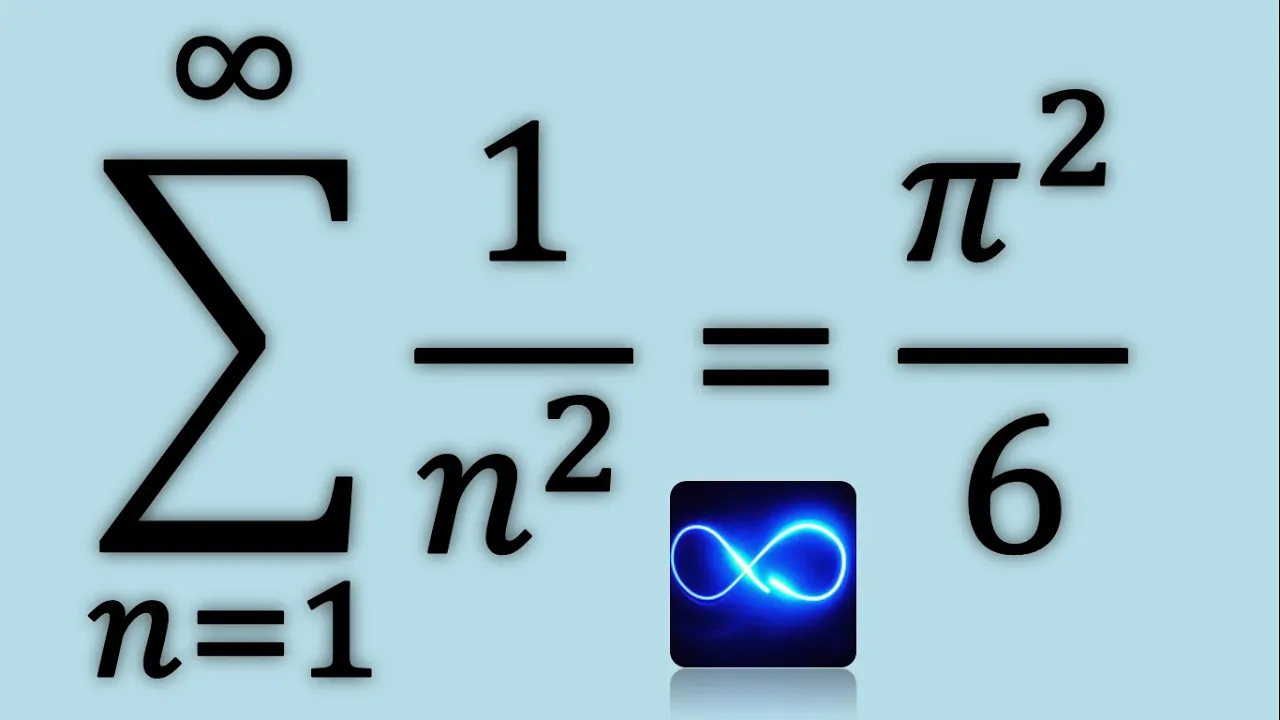
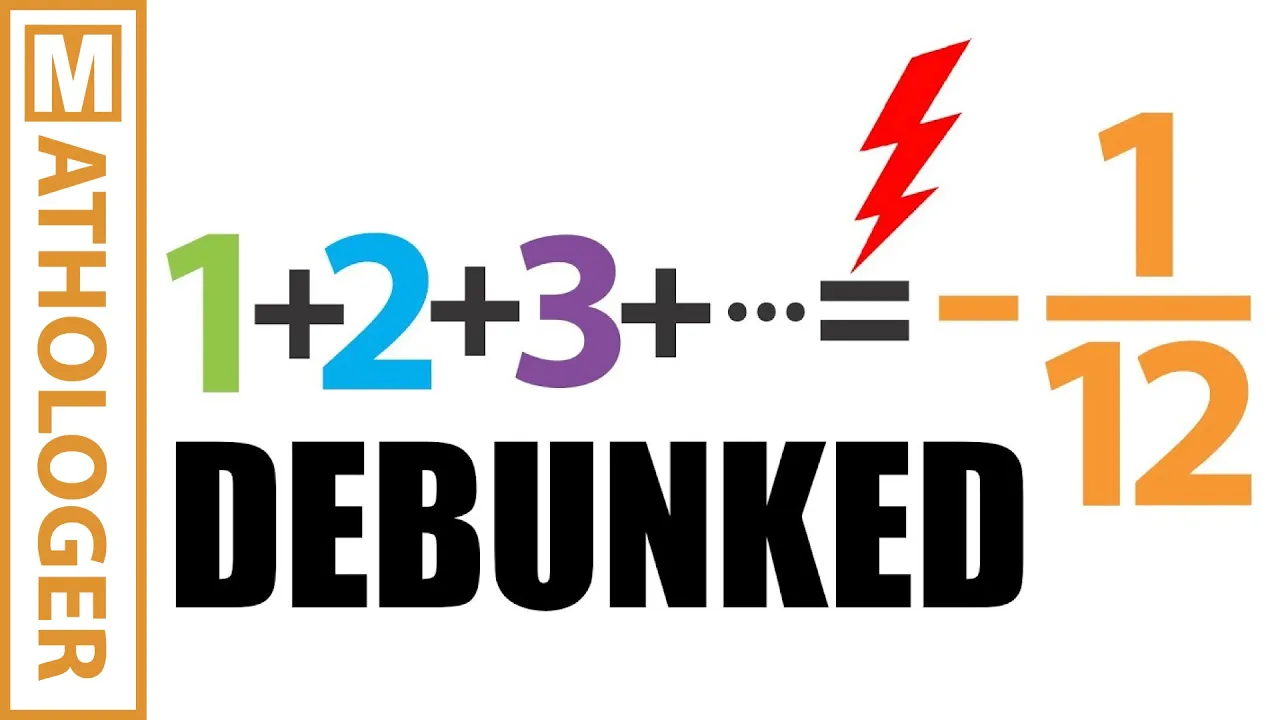
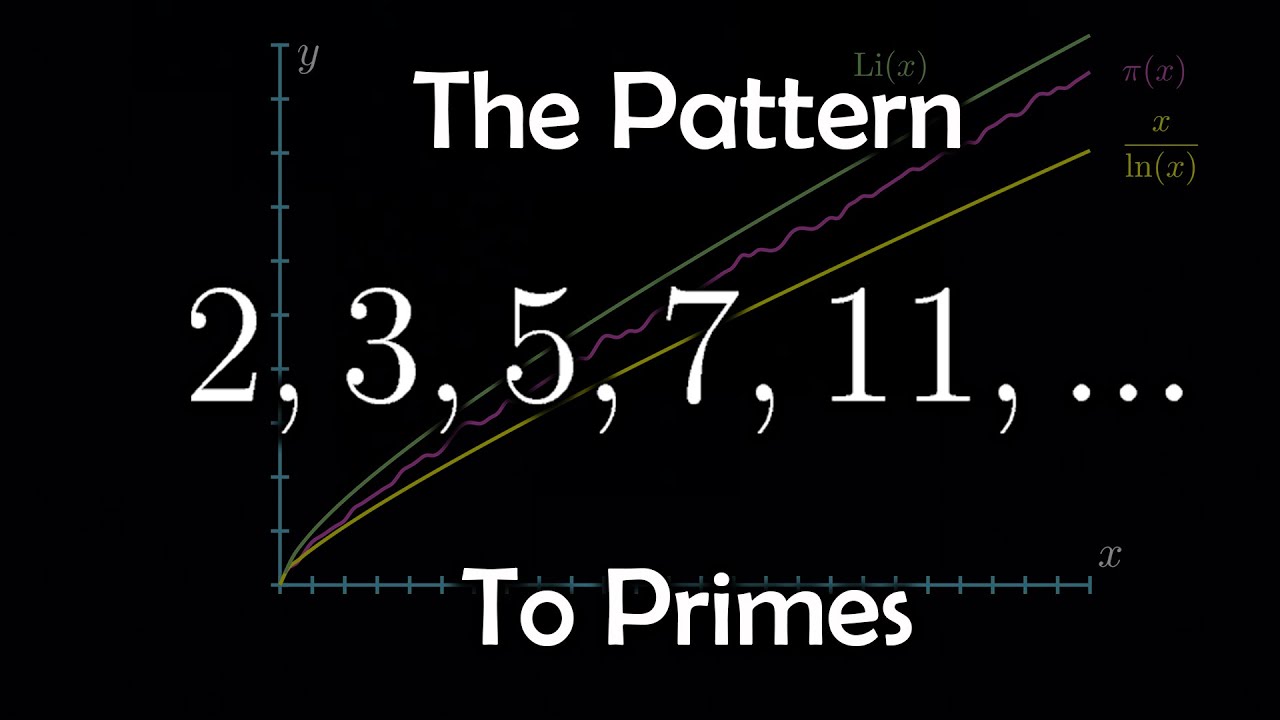
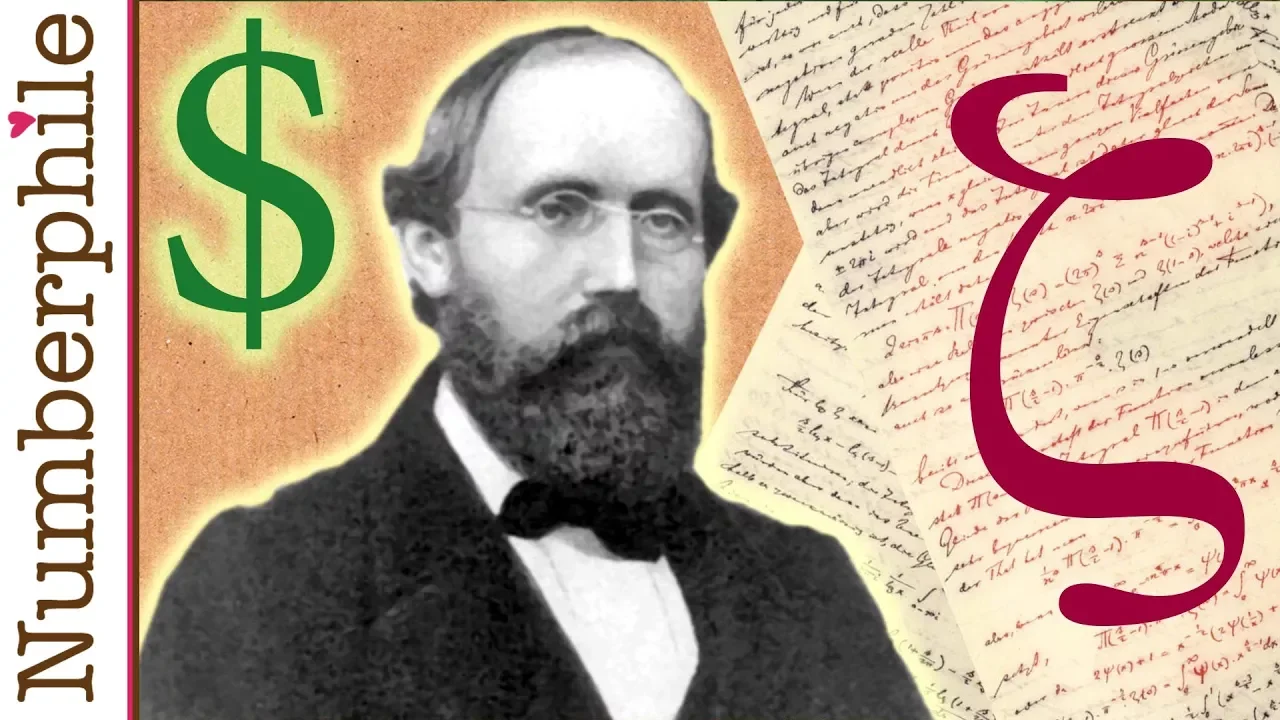
there are many beautiful equations within mathematics probably the most commonly cited one is Oilers equation Ed the Pi + 1 equal to Z that combines five of the special numbers in mathematics but in this video I want to make a case for a different equation to be on any short list for the most beautiful equation in mathematics this one is also du to Oiler it is the oiler product formula now don't let the notation scare you the big Sigma just refers to the sum of a bunch of terms the big Pi refers to the product of a bunch of terms the sum here is taken over all natural numbers 1 2 3 4 and so forth so you get terms like 1 over 1 to the S 1 over 2 to the S 1 over 3 to the S all added together however the product is multiplying for all PS that are primes 2 3 5 7 11 and so forth and so you get terms like 1 over 1 - 2 to Theus s 1 over 1 - 3 to Theus s and so forth so the first reason that I really love this formula so much is just that it's really surprising why would a product of terms only dealing with primes be related to a sum of terms that are now dealing with all of the numbers that seems very strange and that this strange relationship comes out with only very basic mathematical operations addition multiplication division and so forth makes it even more surprising now it's worth noting that this equation has a parameter s on both sides s can be many numbers like for example I could plug in the specific value of s equal to two and when I do it this equation actually adds up to something it converges to the number pi^ 2 over 6 so for any of you who think that any candidate for a beautiful math equation better have a pi in it well okay we have a pi in this one but s doesn't have to equal just two it could be many different things but it can't be anything because I'm taking an infinite sum I need to ask when does this converge and for those of you who might remember your firste Calculus this summation on the left hand side it converges precisely when s is greater than one if you plug in s equal to 1 specifically you get the harmonic series 1 plus a half plus a third plus a 4 and infamously that Series diverges so if I'm only considering real numbers and they're greater than one then it's going to converge and make sense and as we're going to see later on the video you can actually also put in complex values for S which is going to open the door to a really deep field of mathematics and there's even a million dooll Millennium problem hiding around in there which we'll get to a little bit later in the video but we're not there yet okay so my third reason that I really like this is that it just has a lovely proof you might have heard before about the Civ of ostanes let me just put up all the numbers between say two and 100 and I'm going to try and filter these first I'm going to notice that two is a prime number and I'm going to get rid of all of the multiples of two gone then I'm going to take the next number on the list that hasn't been filtered out which is three three is also Prime and if I filter out all the multiples of three three and six which was already filtered but it now filters new ones like n 9 and 15 as well so that filtered out you roughly 2/3 of the numbers the the next number that I haven't filtered already is five five is prime I can filter that out then at seven I can filter out seven and notice what happens here all the numbers between two and 10 have been filtered out and 10 is interesting because 10 is the square root of 100 if I wanted to factor some other number between 10 and 100 one of those factors would have to be less than 10 and because I filtered out everything up to the square root of the number I'm considering the square root of 100 in this case every other number that I have not shaded in is now Prime so I can come through one by one and shade all of those in as well all of those unshaded ones are going to be Prime in addition to 2 3 5 and 7 this was a Civ of aerosan so we're going to use this idea in the proof of Oilers product formula okay so where were we uh here is our summation and I'm going to give it a short hand so that I can sort of refer to this nice and cleanly I'm going to give it the shorthand Zeta of s it's a function of the parameter s and the common name for it is the the remon zeta function so I use the symbol Zeta for it this is just going to allow me to manipulate it let's imagine I'm working with an S where this thing converges I can do a little bit of trickery let me take this zeta function and multiply it by 1 over 2 to the S if I look at all the terms in my sequence and I bring in the 1 over 2 to the s this is has the effect of making everything multiplied by two so my denominators become 1 over 2 to the S 1 over 4 to the S 1 over 6 to the S all evens okay let's take the top and subtract it from the bottom in other words what I'm considering is 1 - 1 over2 to the stimes the zeta function when I took the zeta function divided it by 2 to the S this meant that everything on the bottom was even and so if I subtract this all the even ones go away like one over two to the s get subtracted from both sides one over 4 to the S and so forth so what I'm left with only his odds on the bottom 3 to the S 5 to the S and 7 to the S okay well let's keep going let's take that expression I'm going do the same kind of trickery to it I'm going to multiply now by the next prime 1 over 3 to the S so kind of like how I filtered by twos now I'm filtering by threes you do that my denominators become well multiples of three 3 9 15 21 let all the multiples of three cuz we already filtered something some of them out right so so six wouldn't be there because we already got rid of the even ones but I'm left with these multiples of three and then I'm going to do the same trick top minus bottom so this is going to give me 1 minus 1 over 3 S times this previous expression and well I filtered out all of the multiples of three from the bottom I have a 5 to the s a 7 to the S an 11 to the S but but no multiples of two no multiples of three okay I I can keep on going and and filtering along the next one will be 1us 1 over 5 to the s that gives rid of all the multiples of five and so again my my sort of picture brings us up to this spot in the Civ of osines I filtered out the twos the threes the fives my next step would be the sevens then the 11s then the 13s and so forth and so if I keep on doing this multiplying by Factor after Factor after factor and I just do that for all of the primes then what I'm going to get is that the product of all the Primes of Expressions that look like this one - one over a prime number to the S you know 2 3 5 and so forth well on the right hand side I've gotten rid of the twos the threes the fives if I keep on going getting rid of all these prime numbers the only thing that's going to survive is the value of one and so this product of primes times this zeta function is equal to one then to capture the formula it's just a matter of dividing through and so I will put this expression onto the other side and this give me that zet of s is the product of 1/ 1 minus p to Theus s and then reminding ourselves of what the zeta function was I get Oiler product formula now I want to emphasize that the proof sketch that I just gave it really only works when you have convergence so this idea only works when you have convergence and again this converges for real numbers of s greater than one okay fourth reason why I love this formula it's it's about what we can get out of it now you might remember that the fact that there's infinitely many prime numbers is something that Humanity has known for a very long time done a previous video before on ukids uh Infamous proof that there were in fact infinitely many primes going back to the time of the ancient Greeks but oil's proof of his product formula this is going back to the 1700s now actually gives us a way to not only reove that there's infin many primes but to extend beyond that and get some more glimpses of about how many primes there really are to do this I really want to imagine what's going to happen in the S equal to one case and I'll remind you that if I was just to plug in s equal to 1 as I've you know sort of naively written the formula down on the page here well this is the harmonic series and it diverges but I want to study the right hand side and see what that implies about this particular product the product of 1 over 1 minus P to the minus one what happens if you happen to plug in s equal to 1 more Faithfully what we should be doing is taking the limit as s approaches one from above I'm going to take that product formula and I'm going to take the logarithm of it and I know some of you don't like logarithms that's okay I love logarithms because they allow me to take products and convert a product into a summation the logarithm of the product of two things is the sum of the two logarithms and so using logarithms I get to convert this into a summation I've also taken an exponent to the power of minus one and brought it out the front as a minus sign Another Log R okay lovely and then there's one more cool log rule I get to exploit here which is the power series for what logarithm is so I'll remind you that we have the series expansion for the logarithm of 1 plus X it's x - x^2 2 + x Cub over 3 and so forth so looking at what I have where I've got all these logarithm terms of 1 minus P to the minus one I'm going to call that P to the minus1 that's going to be my value of x and so I can take this logarithm and expand it out as a series so if I I do that okay remember there's the negative all the front because the X I'm chosing is negative all the odd Powers bring out a negative all the even Powers already have a negative so everything's negative and with the negative up the front they're all positive nevertheless I get this sum and a common thing that you see when you're doing the kind of Aries expansions is you want to make some sort of argument the higher order terms don't matter sometimes they do sometimes they don't but in this particular case the higher order terms don't matter that that actually everything from the second term onwards you add all of those up together this is all small like you can bound it by a number like for example 1 half if you don't mind I'll leave this slightly technical point to the interested viewer who could debate about it in the comments or I'll I'll leave a link to an answer in the description if you're so interested but the point is it doesn't matter it it's irrelevant so going back to where we were at the beginning remember what we were trying to do was we had this Divergent harmonic series and at least in the limit as as was going to one from the right we were trying to compare that to the product that we're studying taking logarithm doesn't affect whether something diverges or not so ultimately if we're wanting this product to diverge it must be the case that just the sum of one over P one over the primes has to diverge and having taken that little detour we get to the big moment here which is that the sum of the reciprocal primes diverge now note this well first of all gives us that there's infinitely many primes like if there was only a finite number of primes there's no way we you this would add up to Infinity so so first of all we've captured that but it does more it tells us something about the density of primes that there's sort of enough of them to get this Divergence and for example you could compare this to something else like remember before we saw the the the reciprocal squares one over n SAR and we saw that that added up to Pi squ 6 and so the point here is that square numbers are pretty rare such that when you add up the reciprocals of them they manage to converge but primes are not that rare the sort of the density of them isn't n that bad you add up the reciprocal primes and it does diverge to Infinity so yes there's infinitely many primes and yes those primes get sparer and sparer the larger the numbers are but they never go so sparse that you don't have this Divergence now trying to understand the distribution of primes leads to some of the deepest parts of mathematics and this is where the oiler product formula is really a doorway into an entire branch of mathematics called analytic number Theory remember how earlier in the video we were talking about the the zeta function Z of s here and I noted that this only works for real numbers where s is greater than one okay what if I allowed complex values for S and one can show that the result that we knew that s had to be greater than one for real numbers extend to the complex numbers to be that the real component of s needs to be greater than one so it's okay to treat this as a complex function but but now it gets tricky what mathematicians do they say well there's a whole bunch of comp Lex numbers where the real component is not going to be greater than one wouldn't it be nice if we could have this function extended into that domain and there's an incredibly powerful trick within mathematics called analytic continuation that allows these functions to be extended into the complex plane now I'm actually not going to do in this video an entire explainer on this there's a lovely old 1x3 blue one brown that I'll put a link to down in the description you want to kind like visualize what this analytic continuation looks like but for our purposes I just want you to imagine imagine that this function which only converge in a certain range is is being extended now to apply to many other places you might for instance have heard of this infamous thing like what happens if you plug in minus one there by the way don't don't yell at me yet these these equal signs are sort of rather nebulous right here uh but if you plug in minus one into the series you would get 1 plus 2 plus 3 plus 4 plus 5 clearly something that diverges to Infinity everything is positive but if you look at the analy continuation the analytic continuation can be computed out for the value of minus one and there you get the value of minus 112th which is why the sort of this Infamous formula can sometimes be uh written down well I'm going to get rid of it uh read away so that I I don't get anyone yelling at me in the comments but for the purposes of this video all I'm really trying to say here is that this really is this launching pad for a lot more really deep mathematics and in fact it contains one of Humanity's you know one of the top and greatest unsolved problems that we have a problem that the uh the clay Institute has called a millennium problem and would give a million dollars for somebody to solve it and nobody has done that and that's called the reman hypothesis and I can state it relatively quickly here given what we've done it basically says the non-trivial zeros of the reman zeta function the the Z of s that I had in its domain of convergence but then extended via analytic continuation then the hypothesis is that this has a bunch of non-trivial zeros and all those non-trivial zeros occur when the real component has a value of a half outside of just stating it the point is that the remon hypothesis really deeply connects into questions about the distribution of the prime numbers and so knowing the answer to the rean hypothesis would really give some insight in how this distribution of prime numbers actually works and so these are the reasons why I think that the oiler product formula should be on any short list of the most beautiful equations in mathematics it's not just a surprising result that can be stated using Elementary mathematic operations it's not just that it has this beautiful proof it's not just that it extends our prior knowledge about say there being infinitely many primes it's just that it really opens this door to this entire field of analytic number Theory and some of the deepest problems in mathematics that Humanity has ever faced behind it now if you want to get better at mathematics then I would strongly recommend the sponsor of today's video which is brilliant.org brilliant helps you learn by doing it has thousands of lessons across mathematics computer science Ai and more and I'm a fan of brilliant for three main reasons firstly it's just really interactive you are the one in the driver's seat actually doing all the mathematics second it builds up learning in layers so you can be confident with your understanding on one step before you're jumping into the next one and finally it consistently is providing feedback and opportunities to self assess one of the biggest challenges that I've experienced as a professor trying to help students learn math mathematics is that it's easy to sit back and watch a YouTube video or a lecture and think that you've got it but it's not until you've had that opportunity to really self assess it and do the mathematics yourself that you can really know whether you've actually mastered it and so for these Reasons I'm very proud to be sponsored by brilliant so go to brilliant.org Trevor bazit that's me or the link is down in the description to try everything that they have for free for full 30 days or to get 20% off an annual premium subscription with that said and done I want to ask you what's your favorite math equation leave it down in the comments and we'll do some more math in the next video
Up Next

48:31
Mathvengers: Euler's Game Math Collaboration
@PapaFlammy69
74.8K views•2019-12-24

4:43
Elliptic Curve Cryptography Explained: ECC, ECDSA, ECDH
@PracticalNetworking
28.5K views•2024-10-21

17:08
Introduction to Knot Theory: Understanding Invariants and Polynomials
@DrTrefor
70K views•2022-05-09
6:00
The Mathematical Impossibility of Accurate World Maps
@Vox
23.3M views•2016-12-02
Related Study Plans & Knowledge Roadmaps
Structured learning paths in Mathematics
mathematics
Tensor Calculus: Vectors to Riemann Curvature
01Mathematical Foundations: Linear Algebra & Calculus
02Covectors, Dual Spaces, and Tensor Basics
03The Metric Tensor and Index Gymnastics
+ 2 more learning modules
40h5 modules
Explore Roadmap
mathematics
Gödel's Incompleteness: Logic, Proofs & Limits
01Introduction to Formal Systems & Hilbert's Dream
02Set Theory, Cardinality, and Cantor's Diagonal Argument
03Arithmetization and Gödel Numbering
+ 2 more learning modules
14h5 modules
Explore Roadmap
mathematics
Galois Theory: Fields, Groups & Solvability
01Foundations of Abstract Algebra: Groups & Fields
02Polynomials & Field Extensions
03Splitting Fields & Symmetries
+ 2 more learning modules
24h5 modules
Explore Roadmap
mathematics
Non-Euclidean Geometry: Models & Geodesics
01Euclid's Fifth Postulate and the Birth of New Geometries
02Hyperbolic Space and the Poincaré Disk Model
03Geodesics: Defining Straight Lines in Curved Spaces
+ 2 more learning modules
15h5 modules
Explore Roadmap