



![[MAI][Ejemplo] Dinámica del Péndulo Elástico por Euler-Lagrange](https://i.ytimg.com/vi/ZbDf1g44ANA/maxresdefault.jpg)




![МИ НАБЛИЗИЛИСЬ ДО ТЕОРІЇ ВСЬОГО [VERITASIUM]](https://i.ytimg.com/vi/FhQXcvnR-0U/maxresdefault.jpg)
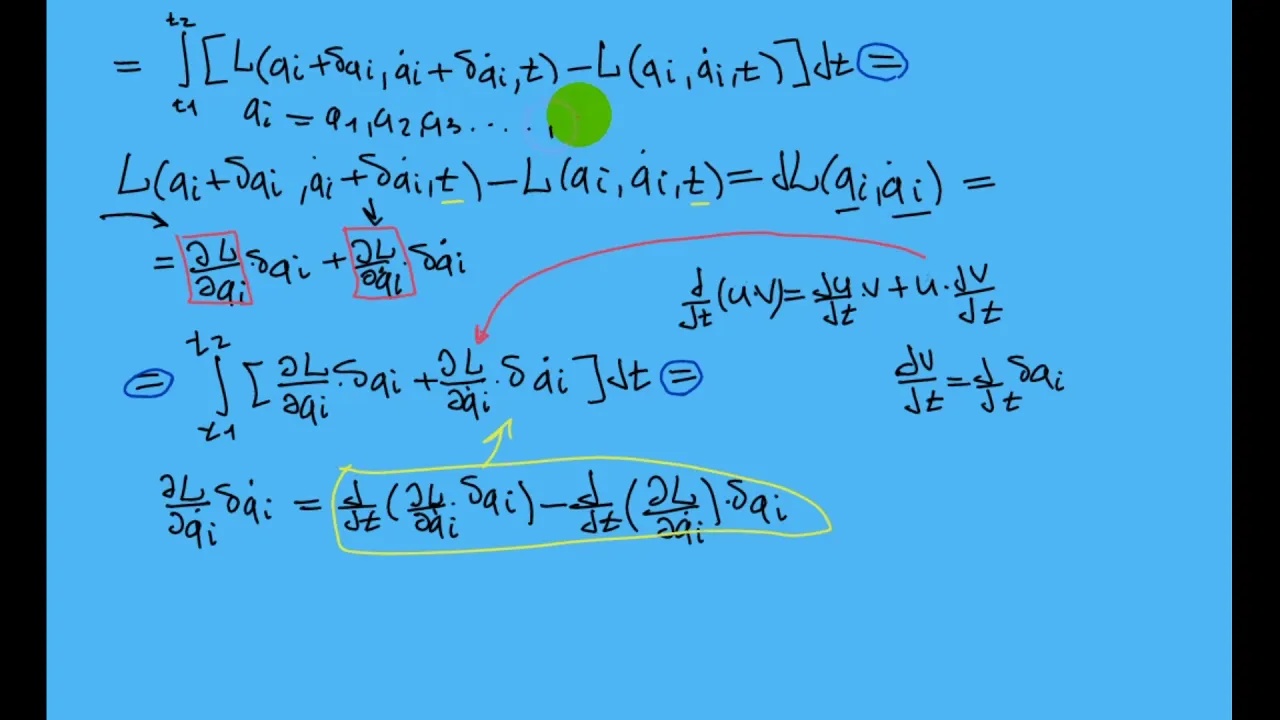

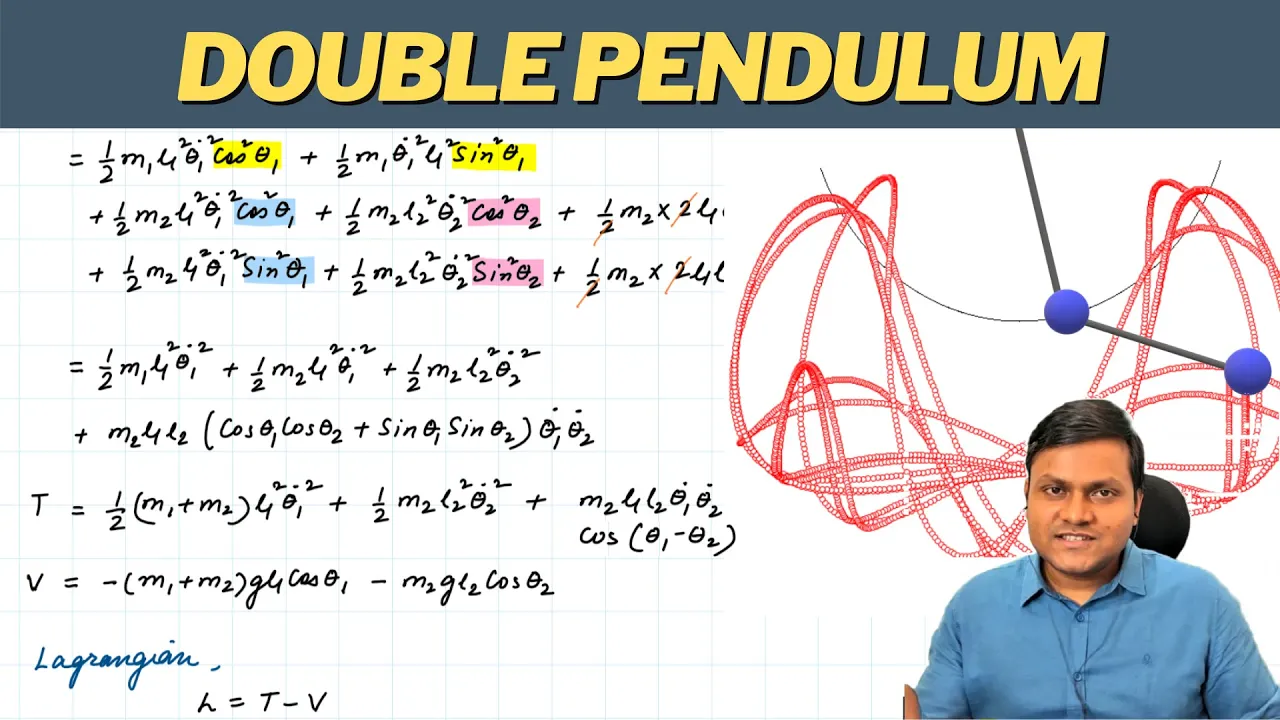





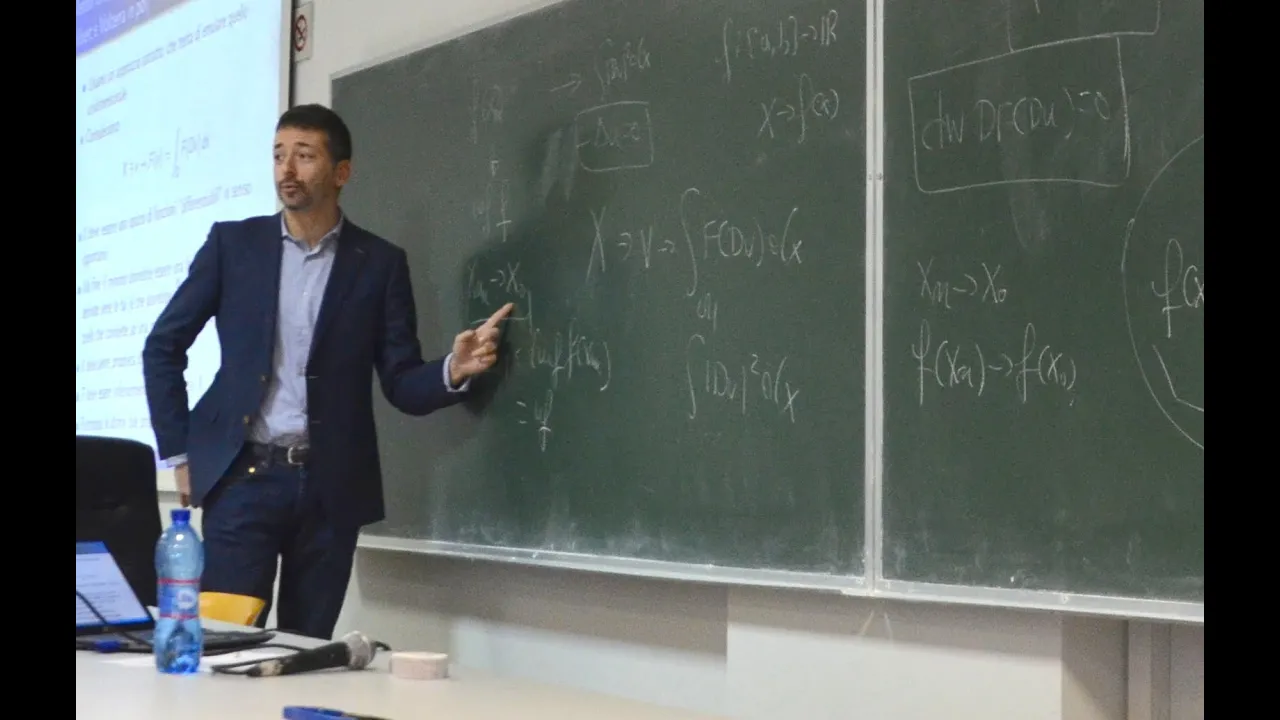


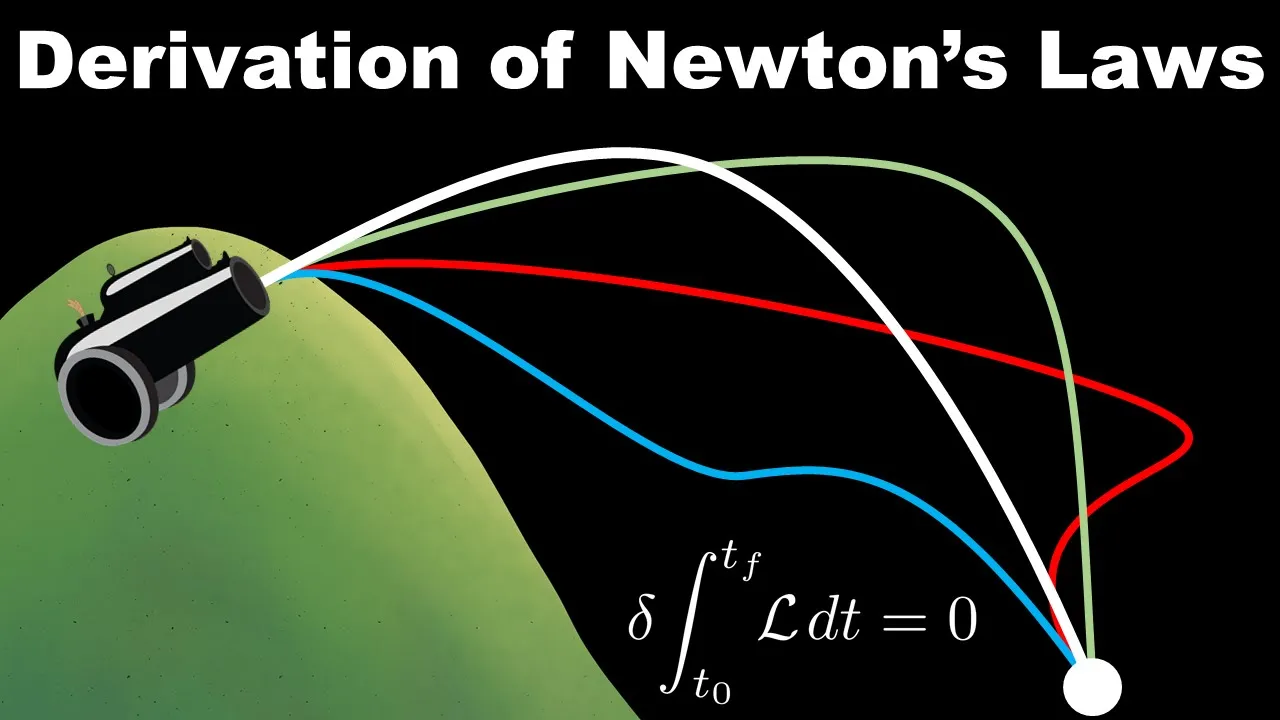
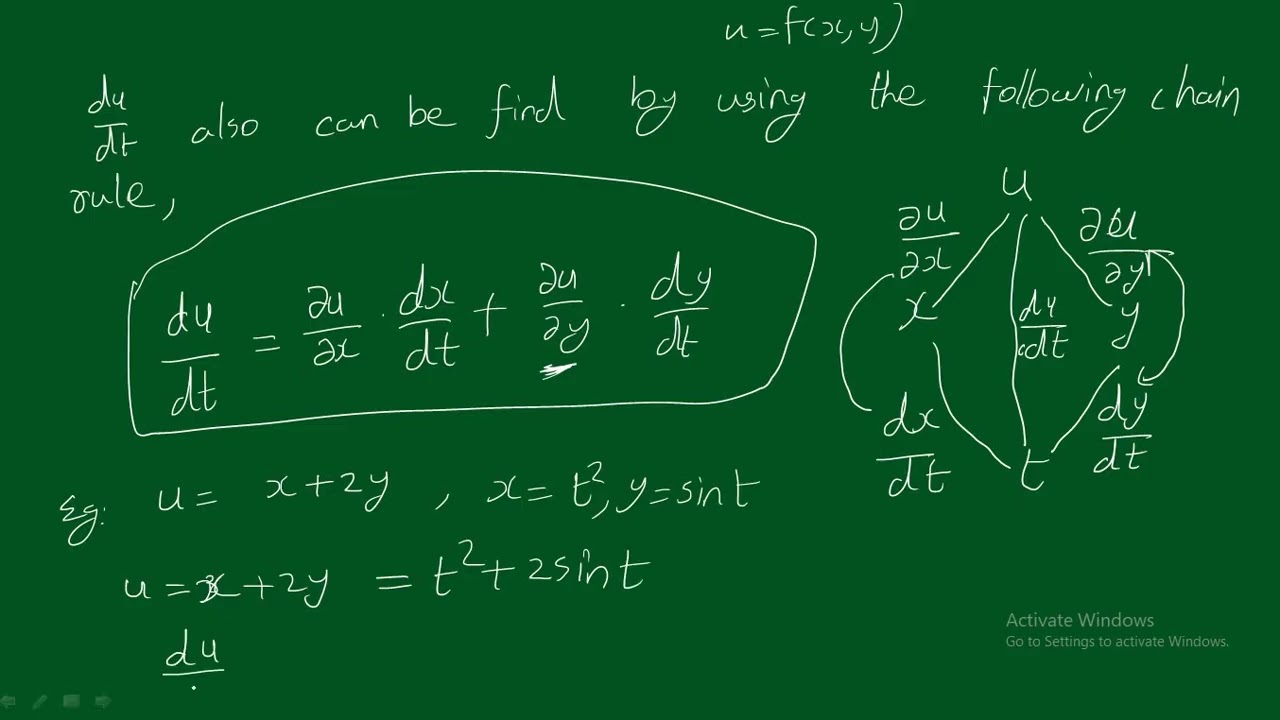
The Lagrangian equation works because it fundamentally reduces to Newton's second law (F=ma); when you compute the partial derivatives of the Lagrangian (kinetic minus potential energy) and apply the Euler-Lagrange equation, you derive the familiar force equals mass times acceleration relationship, allowing you to determine equations of motion by analyzing kinetic and potential energy rather than forces directly.
Lagrangian Mechanics: Why the Euler-Lagrange Equation Works
Added:Newtonian Mechanics, specifically Newton's Second Law (F = ma) and its application to simple motion like free-fall.
The definitions of Kinetic Energy (T) and Potential Energy (V), and the formulation of the classical Lagrangian (L = T - V).
Multivariable calculus, focusing on partial derivatives, total derivatives with respect to time, and the chain rule.
A conceptual familiarity with the Principle of Least Action (Hamilton's Principle).
Applying the Euler-Lagrange equation to solve complex systems with constraints, such as a double pendulum or a bead on a wire.
Noether's Theorem, which mathematically links physical symmetries (like rotational or translational invariance) to conservation laws.
Hamiltonian Mechanics, learning how to transition from the Lagrangian framework to Hamilton's equations using Legendre transformations.
The Calculus of Variations, exploring the rigorous mathematical proofs behind extremizing functionals.
187K views3.4Klikes6:07Original Release: 2016-03-31
Welcome to lecture online. In the previous video, we explained what the lranian equation is and how it actually works. But we didn't know why it works.
You look at this equation, you go, how can this tell you the equations of motion of any situation? Well, let's go back to the beginning. The lrenion is defined as the difference between the kinetic energy and the potential energy of an object. In this case, we use a simple example, the free fall of an object towards the ground. Also we can say that the kinetic energy which can be defined as 12 mv ^2 can be written in generalized coordinates as 12 m * x dot^ 2. Remember that x dot simply means dxdt. The first derivative of x with respect to time which is velocity. x dot means a second derivative of x respect to time which means acceleration. The potential energy which is mgy can then be written in generalized coordinates as mgx.
Now the lranjen is simply the difference between those two. We can say the lranjen is equal to the kinetic energy minus the potential energy which is equal to 12 mx dot squared. That's the kinetic energy minus mgx which is the potential energy again in generalized coordinates. Now the question was why does this equation work? Lrange claimed that the first derivative with respect to time of the partial of L with respect to X dot minus the partial derivative of L with respect to X is equal to zero.
Why can he say that? Well, actually you'd be surprised what that equation really is when you transform it. And that's what we're going to do. We're going to transform this equation so you can understand why it works and what it looks like. Well, first of all, let's take the partial of L with respect to X.
And we can do that here. the partial of L with respect to X. This means that only X is a variable. Everything else is not a variable. That means this first term can be considered a constant. The partial that is equal to zero. And here that's the only variable right here. So this would then be equal to minus M * G.
If we now take the partial derivative of L with respect to X dot the partial of L with respect to X dot in other words the partial of the lrangion with respect to velocity that is equal to here the exponent comes down 2 * a half is 1 * m X dot to the first power minus 0. I just write it there so you can see that we're not ignoring that. That actually is zero when we take the partial derivative of this respect to X dot since there's no X dot in there. And then if we take the first derivative with respect to time of this, we can then say that the ddt of the partial of l with respect to x dot is the same as the first derivative with respect to time of mx dot. And of course the derivative of this with respect to time gives you the second derivative which is x dot. So this is equal to m * x dot. Now let's try to make sense out of this equation.
We'll substitute those things back in here. And so this becomes equal to m * x dot minus the partial value with respect to x which was equal to a minus mg. So that's equal to a minus mg and that is equal to zero. Now what we're going to do is we're going to move this to the other side. So minus times a minus becomes a plus. So we have mx dot plus mg is equal to zero. Move that to the other side. we get mx dot is equal to minus mg. And I'm going to turn the equation around. There's a reason for that. So we can write that mg minus mg is equal to mx double dot.
Now you'll be surprised what that equation really will tell us. Mg is the weight of the object. The weight of the object. So let's use a different color here. So in other words, the Earth pulls on the this object with a force equal to mg. And since the direction of the force is downward, it's a negative mg. It's equal to the force of gravity pulling the object down. So this is in essence the force pulling on the object. So this can be simply be replaced by the force equals m is simply the mass of the object and x dot. What is x dot? Well, that is equal to the acceleration of the object which of course will be in a negative direction. So f= m a. In other words, the lrangeian equation the first derivative with respect to time of the partial of l with respect to x dot minus the partial of l with respect to x equals z. This equation is nothing more than f= ma. The difference is that we're able to express the motion of the object in terms of its kinetic and potential energy. Where am I? Kinetic and potential energy. And then by setting it into the equation like this, we can now derive all the equations of motion simply determined by the kinetic and potential energy rather than by the interaction of the equations of kinematics, which can be much more difficult in more complicated situations. So in other words, when you see this equation, all you really have to think about is that it means f= ma.
Quite amazing, isn't it? That he was able to take this equation and turn into this because this is much easier to work with and much more complicated situations. And I'll show you all kinds of examples. Of course, first what we should do is show you some simple examples and then slowly build up because there's a lot of mathematics, a lot of algebra, arithmetic, and differential equations that we have to weed through, wait through, so to speak.
But that's really what it means and that's why we can use it. Now you know what the lranian is and why it works.
Up Next
27:39
Noether's Theorem: How Symmetry Defines Physics
@veritasium
12.2M views•2025-04-14

12:53
21cm Hyperfine Transition in Neutral Hydrogen: Radio Astronomy Basics
@AaronRobertParsons
12.4K views•2011-10-13

8:40
Carnot Cycle Efficiency: Deriving Max Heat Engine Performance
@MichelvanBiezen
72K views•2013-07-27

27:14
Entropy and the Second Law of Thermodynamics Explained
@veritasium
27.5M views•2023-07-01
Related Study Plans & Knowledge Roadmaps
Structured learning paths in Physics
physics
Nuclear Physics (Decay, Fission & Reactors)
01Atomic Structure and the Binding Force
02Radioactive Decay and Half-Life
03Nuclear Fission Mechanics and Chain Reactions
+ 2 more learning modules
12h5 modules
Explore Roadmap
physics
Soft Matter (Polymers, Colloids & Rheology)
01Foundations of Soft Matter & Thermal Forces
02Polymer Physics and Macromolecules
03Colloids, Surfactants, and Self-Assembly
+ 2 more learning modules
38h5 modules
Explore Roadmap
physics
Analytical Mechanics: Lagrangian & Hamiltonian
01Mathematical Foundations: Calculus of Variations
02From Newtonian Mechanics to Constraint Dynamics
03The Principle of Least Action & Lagrangian Mechanics
+ 3 more learning modules
28h6 modules
Explore Roadmap
physics
General Relativity (Spacetime & Cosmology)
01Foundations of Relativity: Special Relativity
02The Geometry of Spacetime: Equivalence Principle & Curvature
03Einstein's Field Equations: The Mathematics of Gravity
+ 2 more learning modules
55h5 modules
Explore Roadmap