

























This study by Dr Winnie Zeng analyzes how economic metaphors (specifically 'free economy') are used in Hong Kong political discourse from 1997 to 2017, revealing that while fundamental changes in metaphor source domains are rare, incremental changes in how source-target mappings are applied occur frequently, particularly around significant political events like the 2003 Closer Economic Partnership Arrangement (CEPA) agreement between Hong Kong and Mainland China.
PhD Research: 'Free Economy' Metaphors in HK Political Discourse
Added:Conceptual Metaphor Theory (CMT): Understanding how metaphors are not just rhetorical devices, but cognitive tools that shape how people perceive and reason about complex topics like the economy.
Critical Discourse Analysis (CDA): Familiarity with how language, power, and ideology intersect in political texts to construct social reality and influence public opinion.
Hong Kong's Post-1997 Political History: A basic understanding of the 'One Country, Two Systems' framework and the socio-political transitions in Hong Kong following the 1997 handover.
The Closer Economic Partnership Arrangement (CEPA): Knowledge of what CEPA is (signed in 2003) and its role in economically integrating Hong Kong with mainland China.
Diachronic Linguistics: The foundational concept of studying how language, vocabulary, and semantic frameworks change and evolve over a specific historical timeline.
Applying Corpus Linguistics Tools: Learning how to use software like AntConc or Sketch Engine to systematically extract and analyze metaphorical patterns in large text corpora.
Comparative Discourse Studies: Analyzing how 'free market' or 'economic integration' metaphors differ in other post-colonial or transitional regions (e.g., Taiwan, Macau, or post-Soviet states).
Policy-Making Rhetoric: Investigating how metaphorical framing in political discourse directly translates into public policy decisions and the public acceptance of economic reforms.
Post-2017 Discourse Analysis: Exploring how political and economic metaphors in Hong Kong have shifted further in response to major post-2017 events, such as the 2019 protests and the implementation of the National Security Law.
Multimodal Metaphor Analysis: Advancing to analyze how economic metaphors are communicated not just through text, but through political cartoons, propaganda videos, and digital media.
281 views0likes31:28Original Release: 2022-09-13
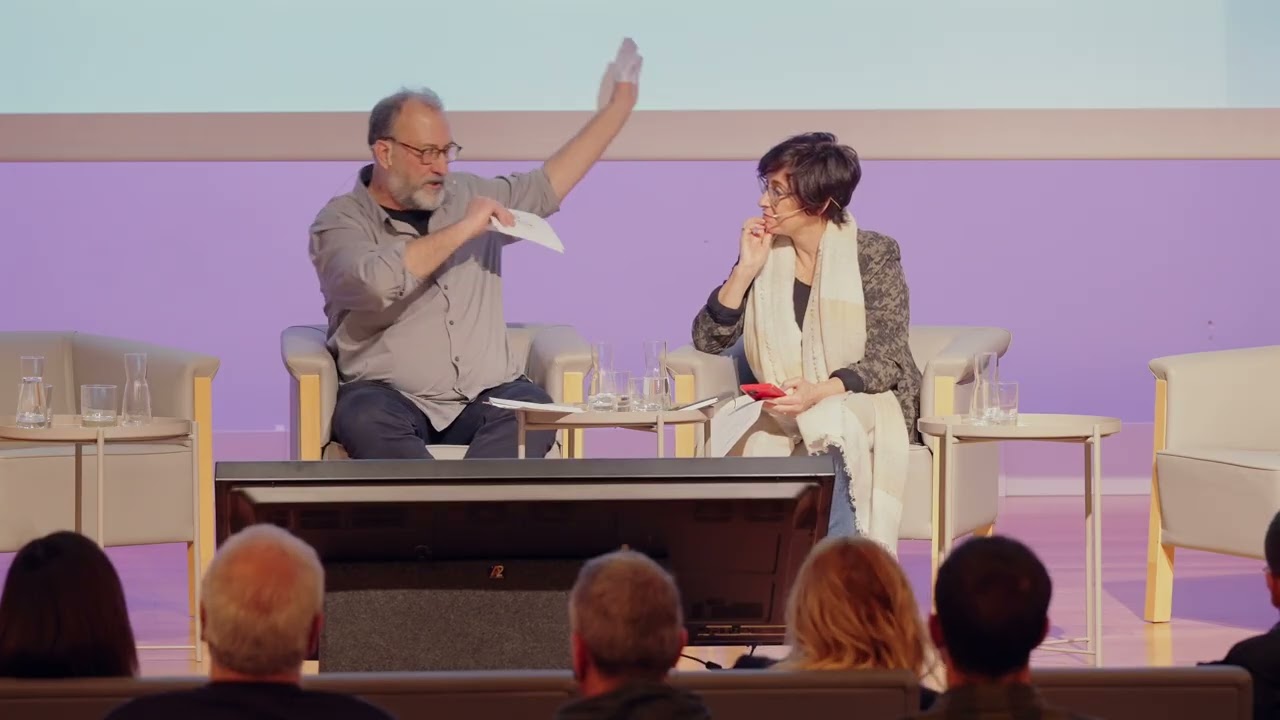
[Music] all right hello everyone thank you so much for joining us today for this information session and our research student thesis showcase um firstly could I just sort of very briefly tell you about today's rundown so we're very lucky today to have Dr Winnie Jang who's going to be presenting uh to us uh work that she has been doing in her thesis she has very recently graduated uh from the Department of English and communication and is currently a postdoctoral fellow in the department of Chinese and bilingual studies uh we're very lucky to have uh Winnie today who's going to be talking to us about framing metaphor use over time um following when he's talk you will have an opportunity to ask her uh questions uh and after that we will give you an overview of the PHD program and the Hong Kong Fellowship scheme and following that will give you an opportunity to ask me and uh Dr Kathleen arends who is the DRC chair and professor in the department any questions that you might have related to the PHD scheming program can I please request that while Winnie's giving her talk that you keep your mics muted and refrain from asking any questions till after she has completed her talk all right thanks so much uh Winnie for joining us I'm going to pass the mic over to you now okay thank you thank you Aditi I will share my screen now okay um hello everyone I'm very happy to have this opportunity to share with you one study I conducted as part of my PhD thesis my presentation will take around 15 minutes so the title of my study is framing medical use over time free economy metaphors in Hong Kong political discourse from 1997 to 2017. as you can see from the title this study focuses on die chronic metaphor analysis in political discourse focusing on the topic of free economy in the context of Hong Kong foreign so first I will show you uh two examples using metaphors to talk about the free economy issues in public speeches by Hong Kong principal officials in different time periods in the first example Donaldson the chief secretary for Administration in Hong Kong said in 2001 Netflix we've taken some significant steps to further liberalize our economy so this example conceptualized economic liberalization in terms of a journey as evidenced in the linguistic expression of taking steps two in a second example the financial secretary Johnson said in 2013 economic freedom has long been the Cornerstone of Hong Kong's stability our growth as well as our prosperity here economic freedom was understood in terms of a building as evidenced in the world Cornerstone that provides the basis of a Hong Kong's stability growth and prosperity so we see in these two examples the free economy issues we'll talk about in terms of different metaphors the junior metaphor and the building metaphors at a different points of time so the current study aims to analyze these changes in the metaphorical framing of free economy in the Corpus of public speech over the past two decades in Hong Kong some background information about the topic of free economy so according to the 2019 index of economic freedom Hong Kong has been ranked as the world's freeze economy for the past 25 consecutive years from 1995 to 2019.
so what is free economy in economically free societies government allow labor capital and goods to move freely with little or without government influence or control so in an idealized free market economy prices for goods and services are set freely by the forces of supply and demand without intervention by government policy so there's no sales taxes import or export tariffs and legal prohibition and based on my observation in the data of the current study I found that overall the free economic topic mainly focused on the economic relationship between Hong Kong and Mainland China from 1997 to 2017. so a critical point of time during this period is June 29 2003 when Milan and China and Hong Kong signed the first Free Trade Agreement the mainland and Hong Kong closer economic partnership Arrangement CPA which aims to strengthen economic cooperation and achieve full liberalization of the economies in the two regions so uh like in the data analysis I specifically focused on patterns of free economy medical use before and after this critical point of time next up the theoretical framework adopted in this study mainly uh it refers to framing from communication science and conceptual metaphor in quantitative linguistics in cognitive Linguistics conceptual medical Theory defines metaphors as cross-domain mappings in the conceptual system where more abstract Target domain for example free economy were understood in terms of more concrete Source domain for example building so in free economy it's a building metaphor here economy is the target domain which is conceptualized in terms of more concrete Source domain of building and the concept of framing has been commonly discussed in the field of communication science as defined in Ant-Man 1993 framing essentially involves selection and silence to frame is to select some aspects of a perceived reality and make them more ceiling in a communicating text it's one part of the communication process that uses language as a tool to facilitate and review various ways of understanding and reasoning in conceptual metaphor the selection of source domain highlights specific aspects of the target domain and at the same time down place other aspects so this function makes metaphor an important linguistic means or tools for framing in communication and condition so metaphorical framing refers to a use of metaphorical language to facilitate a particular understandings or evaluations of topics or situations foreign so since metaphors can be used to frame various topics or societal issues examine changes in metaphors is an effective way to reflect how conceptualizations of societal issues change over time so my study adopted this metaphor-based approach to checking changes at the two dimensions of time first the fundamental change referring to transformation of metaphor Source domains and second incremental change referring to transformation of source Target domain mappings I have three research questions first how does General attention to free economy Topic in how can political discourse change over time and second and third to what extent do free economy metaphor experience fundamental change and incremental change in Hong Kong political discourse over time so there are three main procedures of my study data collection data coding and data analysis so for data collection I built a corporate political speeches in Hong Kong and second date coding I identify all the free economy metaphors in Corpus for analysis and for data analysis and I analyzed the changes in free economy metaphors in a corpus of time I will then explain the procedures step by step foreign build includes public discourse in post-cloney Hong Kong this is the organization chart of the Hong Kong government I collected the public speech delivered by the secretary for justice Chief secretary for administration and financial secretary so in total I I manually collected more than 1 200 speechs by 11 principal officials with around 1 million eight hundred thousand words the Corpus covers around two decades spanning from July 1st to 1997 the day when Hong Kong transformed from a British colony to a special administrative region of China to December 31 2017.
foreign I started with extracting free economy instance from the Corpus and in total we obtained the um 1433 economy instances for analysis and next associate the metaphors of a free economy were identify the following MIP Vu method the metaphor identification procedure High University Armstrong in total we identified a 695 metaphorical free economy instances out of the total 1433 economy instances and the third step of data coding is identifying Source domains of free economy metaphors we identified 17 types of source domains and the top four frequently used metaphors domains are Journey living organisms building and Sport I will be focusing on these four types of metaphors or social names in a data analysis parts and two analysts completed all the data coding in my study and the integrated related test results show all the data coding are reliable next for the data analysis I analyzed the attention to free economy the fundamental changes and incremental changes in free economy metaphors in a corpus of time in response to the three research questions accordingly let's see the results first the thoughtful line in this figure shows that the attention to the topic of free economy are not significantly correlated with time in other words the topic of your economy has been constantly mentioned in the public speeches over the past two decades in addition we see a sharp rise between 2002 and 2004 in a solid line showing increased attention to the topical free economy during this period which is likely caused by the signing of the CPA on June 29 2003 based on the contextual information of my data and second in terms of the fundamental change the daughter line in this figure shows that overall the use of free economic metaphor have slightly decreased over time foreign fundamental changes in the use of the top four frequent resource domains Junior living organisms Sport and rebuilding but we got some interesting findings in terms of the incremental meaning changes in free economy metaphors we compared The Source Target mapping principles in the top four frequent metaphors before and after the signing of CPA on June 29 2003 and the results show that living organisms and Sport metaphors remained mostly constant while Junior and ability metaphors and when clear incremental changes foreign so for the two cells domains remain constant over time this table shows a lifting organism metaphor mainly refers referred to the economic growth brought by free economy and support metaphor primarily emphasized Hong Kong's competitiveness as the words of freeze economy before and after June 29 2003 I mean throughout the entire period And so we've we found a common mapping principles underlying the living organism export metaphors and some discussion about the results the pattern so by emphasizing the achievements or positive aspects brought by free economy such as economic growth competitiveness the government leaders who are able to promote Hong kong-based business and Hong Kong's economy to the world this strategy in turn helped to justify the government's agenda that continued economical growth and the commitment to the free economy should remain political goals throughout this period so the consistent use of metaphorical frames of living organisms and support metaphor can be considered as um rhetorical strategy by Hong Kong political leaders to deliver the message that the government's goal of economic levelization remains and changed from 1997 to 2017.
for the two domains and when the incremental meaning changes in the two periods and this table shows that in junior metaphor metaphors before the signing of CPA Hong Kong secretaries emphasized the initial ongoing phase of a journey to free economy indicated by by the keywords frequently occurred such as explore and step after CPA was issued they focused instead on the final goal of a journey in in expression such as achieving the goal of a full economic liberalization the meaning of beauty metaphors also changed with more emphasis being placed on free economy as a building in construction in the early phase and more emphasis placed on free economy as a completed building in a later phase so um here we found the variation patterns in mapping principles for Journey and building metaphors before and after June 29 2003.
so the changes in in the meanings of the junior Beauty metaphor suggests Hong Kong political leaders applied at the same Source domains well and emphasizing different perspectives in order to achieve particular political goals such as construct a positive self-image because both journey and ability metaphors possess the positive or connotation of progressing or moving forward or building up a long-term goals it appears um to support from the public as well to issue the free economy agreement and achieve the final goal of full economic globalization in Hong Kong so this is also an evidence that a politicians successfully renegotiate a specific metaphorical frames in public discourse and a quick summary of the main findings of this study so first the incremental change in metaphors is more preferent than fundamental change suggesting that Source Target domain pairings are fixed over time which is beneficial in terms of knowledge transmission and comprehension and this finding is in line with previous research on linguistic data of inner circle English and European languages a fundamental change when it occurs may be aligned with larger structural changes in society such as those that occur due to political changes societal Innovation or disruption also we showed that examining patterns of a metaphor mapping principles The Source Target domain mapping principles provides a principal way to quantify the incremental changes in metaphor meanings over time foreign this study has practical implications that we present how metaphors were used by Hong Kong government leaders in the framing of one specific societal issue at a different points of time for achieving particular um political gender during the first two decades of postcolony Hong Kong it also has theoretical implications in that approaching metaphors at a cognitive level and a discourse based level with framing analysis and a communication based level contributes to the development of the three dimensional model of metaphor which emphasizes metaphor analysis at the levels of a thought language and communication foreign this study has been published in the Journal of lingua feel free to to to download and and if you are interested in the more detail of the this study uh that's all for my presentation these are the reference list thank you for your attention foreign feel free to ask or unmute yourself see this you can write your questions in the chat box or just email yourself foreign what is the relationship between the use of software and my pvu and the manual coding okay um thank you for your question uh yeah sure so the first of the MIP view um it's not like a software it's a metaphor item and identification procedure um proposed by Professor Stein in 2020 and I can if you're interested in the people in in the book I can send to you um so we follow this medical identification procedure to identify metaphor manually so so uh the the metaphor identification is in my study uh we actually just manually identify the metaphor okay so MIP view it's a procedure step you can follow the procedures step by step uh for example first you you read the context involving the keywords and second you uh check the word meanings in dictionaries recommended in mipcu and then you check the contextual meaning of the keywords in the context and then compare the basic meaning and contention to find if there's a metaphorical mapping so this kind of a procedure so it's it's also a manual coding thank you a second question by David can you elaborate on how you build your Corpus sure and so for the corpse building I also manually collected all the public speeches on the official website of uh Hong Kong government there's um I think an online archive of public speeches by Hong Kong senior officials if you search public speech by Hong Kong senior officials you will see the official website and I just copy every article during this time period and and start up other articles in in Word document for uh for for analysis okay um how you collect the political Discord do you clear them online yes I I just answer this question how are the date of correlation significance analyzed okay okay that's a good question so for here and for the correlation between time for example I use the Pearson correlation test to test the association between time and free economy instance and the association between time and the free economy metaphor and also uh between time and Source domain so that's how I analyzed the correlation and you can see here I provide the the Pearson correlation results here and if you you can see so here the P value here indicates no significant Association and here we find a significant Association according to the p-value here and also no significant Association in terms of the the use of the four Source domains of time free country are they the same term economic freedom free economy and economic freedom uh in my data analysis I mean in my late coding we consider that as as uh uh the same no not the same term just we categorize them into a broader category under the free economy domain so under the free economic domain we have economic freedom and or or uh other instances such as um economy without government in intervention this kind of uh Expressions if if we find if we like identify this kind of expressions in my data uh we will We like categorize them under the broad free economy domain coding procedure after reading a paper I'm not very clear would you explain how the coding is that which types are soft okay so for senior um which step of the data coding you are interested in like uh so we have so first we identify the free economy metaphor and then we identify the source domain of free economy okay maybe I just briefly uh introduced the the coding okay so here the first step is we um we build the Corpus right and then uh we have more than one million and eight eight uh I think more than one million uh words then we need to extract free economy instance from the Corpus so I have a list of lexical items to be searched in a corpus um I searched all the lemmas under economy and the trade these two words so you need to like predetermine the lexical item you want to be searched in Corpus once you have the list of lexical items you can search in a corpus you uh using Wordsmith yes I use use the word Miss and then you you will have concurrences involving uh these keywords The Next Step it's uh so the first we we got uh more than 8 000 economic instances and then we manually identify three economy instances because not all the economy instances are related to free economy uh a lot of them are just talking about the general economy in Hong Kong so you we we uh manually uh we have we have we had a criteria to identify the free economy instances based on the definition of free economy or the specific contextual information like I just said if you saw the expression such as um economy without government influence or no sales taxes this kind of expression and there's if there's an economy or trade keywords in that in that sentence you can identify these concordance it's related to free economy and then the next step is uh first of all to so after you've got the free economy instances then you can start to identify the metaphorical free economy instance right so uh we follow the MIP Vu method you can read the book um to see the specific procedure and we also use the word nice Sumo uh long light online database to check out what the meanings and we also check the dictionaries recommended in in mipcu to further to double check what meanings of each keywords in order to further confirm if this keyword is a metaphorical or not so we got more than around 700 metaphorical free economy instances then the next step after we have the free economy metaphor uh we we started to identify the source domains the source is just like I introduced a free card for example free economy is a building so you need to find the you you have the metaphor then you have to identify the source domain which is building in the case so we followed the source main fabrication approach uh proposed by Aaron's in the John 2020 you can download this paper online to see how you can identify Source domains metaphors domains so that's basically uh about the procedures of my data coding how do you make sure that you work out all the metaphors related to the topic so um I I can say I have like uh collected or identified that 100 of the metaphors in in my data but we do have uh systematic procedure to follow and then also two analysts conducted the coding and we did the integrated reliability tests and and for those and biggest cases we actually discussed and uh proposed a new criteria and re-analyze those ambiguous cases in order to make sure that we we've already identified uh uh or the metaphors as many as possible yeah foreign how to test the different significance so I for the interrelated I just used the coins cap so how today I think of all this question um the we normally use the Kappa value for the integrator reliability test to see the results um not sure other methods okay and I think um we have to move to our next session because of time limitation so for other questions maybe you can just email me or you can read my paper it's free online you can download and just contact me for any other questions I'm very happy to share with you my experience in conducting this study or any other studies related to a corpse based on metaphor analysis thank you very much
Up Next

5:51
pH for Hydroponics 101 | Nutrient Solution | Grower Education
@Just4Growers
137.3K views•2015-02-23

26:22
Walking in the City: Urban Rituals and the Flâneur in Contemporary India
@PSBTIndia
1.9K views•2016-08-02

9:49
FastAPI vs Flask vs Django: Choosing the Right Python Web Framework
@TechWithTim
302.5K views•2024-05-26

1:42
Game of Thrones Opening Credits: A Cinematic Analysis
@gameofthrones
46.3M views•2011-04-18
Related Study Plans & Knowledge Roadmaps
Structured learning paths in General & Interdisciplinary Studies
general-studies
Artificial Light: History, Tech & Human Impact
01The Pre-Electric Era: Fire, Oil, and Gas Lighting
02The Incandescent Revolution and Grid Electrification
03Gas Discharge and Fluorescent Illumination
+ 3 more learning modules
14h6 modules
Explore Roadmap
general-studies
Elevator Engineering: History, Physics & Cities
01From Hoists to Safety Brakes: The Dawn of Vertical Lift
02Hydraulic vs. Traction: The Engineering Physics of Elevators
03Modern Speed, Safety, and Algorithms
+ 2 more learning modules
12h5 modules
Explore Roadmap
general-studies
Rubber: Material Science, History & Geopolitics
01Origins of Natural Rubber & Mesoamerican History
02The Chemistry of Natural Rubber & Vulcanization
03The Geopolitics of the Rubber Boom & Colonization
+ 2 more learning modules
12h5 modules
Explore Roadmap
general-studies
Containerization: Evolution, Logistics & Trade
01Ancient Trade & Bulk Cargo: Amphorae to Barrels
02The Industrial Revolution & Cardboard Packaging
03The Containerization Revolution: Malcom McLean
+ 2 more learning modules
12h5 modules
Explore Roadmap