



















![How To Arrange Chords into BEAUTIFUL 4-PART HARMONIES [Music Theory - Voice Leading]](https://i.ytimg.com/vi/UkatcvIuF4U/maxresdefault.jpg)







To harmonize vocally in thirds, take each note of the lead melody and add a third above it (or below for a different effect), using notes that belong to the same key; major thirds (like C to E) sound brighter and happier, while minor thirds (like D to F) sound darker and more somber, creating a sweetened and thickened sound that enhances the lead melody without distracting from it.
Vocal Harmony in Thirds: A Step-by-Step Guide
Added:Basic vocal control and pitch-matching skills to maintain a melody line independently against another voice.
Understanding of major and minor diatonic scales and how keys are structured.
Basic interval ear training, specifically the ability to aurally identify major and minor thirds.
Familiarity with the concept of harmony and the basic construction of major and minor triads.
Exploring other harmonic intervals, such as singing in perfect fourths, fifths, and sixths.
Arranging and singing three-part and four-part vocal harmonies using close and open voicings.
Introduction to vocal counterpoint, incorporating contrary motion and independent voice-leading.
Practical application of vocal arranging, recording, and layering multi-part harmonies in a Digital Audio Workstation (DAW).
520.4K views15.7Klikes15:47Original Release: 2015-10-01
Hey Saher Galt here and in my video on how to sing vocal harmony I got a lot of great questions on how to come up with the harmony part itself.
Now that's actually a really big topic but we're going to start in with a simple technique you can use to get harmonizing lines on the fly.
Let's get to it!
So a harmony part is typically thought of as a melody that song at the same time as the lead line that enhances it in some way and you know if you've ever tried to come up with your own harmony parts that you can't just choose arbitrary notes. If you do that you're liable to get something that sounds incoherent or sour and you might also have noticed that there are lots of ways to harmonize the melody. Given a melody of only nine notes long there are literally billions of choices.
So, while you can experiment with trial and error, let me give you a little bit of a head start on that. It helps to notice that when you sing a melody along with another one you create vertical relationships between the notes sounding at the same time.
We categorize this vertical relationship by the distance between the notes which we call an interval. And different intervals have distinct feelings associated with them.
Some sound tense some sweet some somber some open, pure.
and advanced harmony writing involves knowing how these intervals will behave in relation to one another, to the tonality, to the underlying chord progression and so on. But, a delightfully simple harmony technique that gets used all the time focuses on just one type of these intervals: thirds. And a third, by the way, is just the musical distance that encompasses three notes so the distance between C and E is a third because C, D and E, 3 notes are encompassed in that distance.
So C and E is a third now sing it: DADA with the piano Now sing that upper note: DA while hearing the lower note played by the piano.
Here we go: and you ought to have been singing: And that's what it feels like to harmonize a third from C.
Now let's harmonize the rest of the notes in the key.
From D: With the piano.
Now singing the upper while hearing the lower: OK you ought to have been singing this note: Did you notice how t hat one felt different from the first one?
Maybe more somber and that you're closer to the lower note?
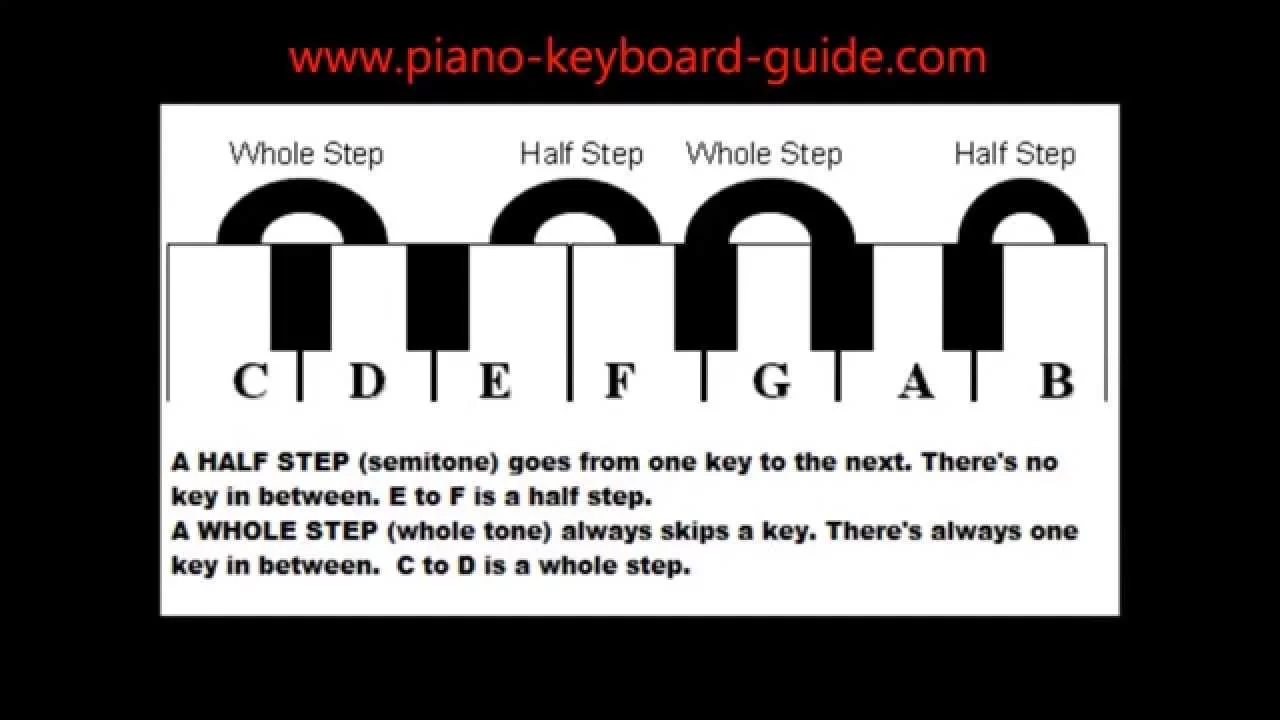
That's because D to F is a minor third, a slightly more narrow distance, having a darker sound then C to E, a major third, which has a brighter, more happy character. And those are the two kinds of thirds that are formed in a major key.
Start tuning your ear to that distinction.
OK let's keep going we're going to sing E to G, another minor third.
You and the piano: Now singing the upper while hearing the lower: And to check, here's what you should have been singing: And now we sing F to A, a major third With the piano: Upper against the lower: Check yourself.
You might notice that I'm demonstrating these acapella and that's a good benchmark to strive for.
You'll really want to have all of these intervals in your memory and be able to recall them at will and without reference.
Anyway let's keep going G to B, a major third: With the piano: Now as a harmony, singing the upper, hearing the lower: Check.
OK last 2, A to C, minor third.
You go: Now just singing the upper: and you were singing this we hope: And last one, B to D, a minor third With the piano: Harmonizing: And check it.
OK those are all the thirds in the key and to give you another angle on getting good at singing these, we're going to sing along with the scale but trailing by two notes like this: Your turn. Let the piano play the first two notes, then jump in.
The process of this is obviously copying what you heard the piano just play which is certainly easier than conjuring the sound of each third but the effect is you end up singing all the thirds. So you can build familiarity with the sound and the feeling basically right away. Because we let the piano go first, we ended up singing the third below what the piano was playing. Now let's sing first and let the piano join in after us and we'll be singing the third above what the piano's playing. It will go like this: You go starting from here: There, you sung through all the thirds in the key from above and below.
Now, there are other intervals of course. Let's quickly talk about those.
There's C to D, it's a second. C to F that's the fourth.
C to G is a fifth. C to A is a sixth.
C to B is a seventh. C to the upper C that's an octave.
And there's qualities within those interval types as we mentioned.
Like how the thirds can be major or minor and fifths, for example, can be perfect, diminished or augmented but we don't need to get into all that.
For our purposes those thirds that we sang are the only building blocks we need for this technique.
So how do we do it? Easy! You take the notes in the lead line and bump them up a third.
So, if your main melody is C, D, F, to harmonize it in thirds you go up a third from C you get E. Go up a third from D you get F. Go up a third from the F in the main melody and you get A. So your harmony line is E, F, A.
Now how come we don't go up to Eb or F# or Ab as the harmony notes?
While they are technically thirds up from those lower notes, just counting alphabetically, they wouldn't be in the key. So when you're in the key of C you go up a third to the note that's in the same key.
So C goes up to E because E is in the key of C. But, if we happen to be in the key of Bb for example, which has Ebs in it, then the third up from C we'd use in that case would be Eb because that's what's in the key.
You got it? Anyway back to our original harmonization we've got a lead melody C, D, F, harmony E, F, A. If you play those two melodies together: See you still hear the direction and character of the lead melody but it's sweetened and thickened by the harmony. And that's actually a pretty good description of what third harmony tends to do and that's why it gets used so much.
Third harmony doesn't distract from the lead melody, it just enhances it in this very particular way.
OK now that you know what it sounds like let's sing it.
Now once more against the lowers lead line.
Now just you.
OK that's enough practice. Now we're going to do it like we're singing it in a song.
Here's our backing: And our lead melody goes: Now I'm going to loop it.
And we sing the harmony: Now you do it.
In case you can't find the harmony line: Now you got it.
Last time.
OK let's do this again but with a different melody.
1 2 3 4 3 1 Now you'll notice that we're singing this on numbers instead of note names but the principal for harmonizing when we're thinking in numbers is the same.
So, a third up from one is three a third up from two is four and so on.
So take a minute, what would be the harmony line for a 1 2 3 4 3 1 in numbers.
Right: 3 4 5 6 5 3 Now let's sing it.
And now once more against the lead melody.
Alright same deal now with an accompaniment.
Now I'm going to sing that main melody we started with.
Now I'll loop that so we can harmonize with it.
And this is the harmony line up a third.
Now you sing the harmony.
Here's the harmony line in case you lost it.
One more time with no reference.
Great! So the harmony you sang here was above the main line but you can also do this harmonizing in thirds below the main line.
That would have given us a harmony of 6 7 1 2 1 6 Different feeling but it still works. If you're really paying attention you'll notice that going down a third gives you the same notes is going up a sixth just displaced by an octave.
OK, let's try that.
Here is our accompaniment.
Now we're going to sing that down a third or up six harmony like this: OK, try it by yourself to get it down.
Now with the lead.
OK just you now.
In case you lost it.
And now no reference.
So you can see how this one basic idea has a surprising amount of flexibility both in terms of what it sounds like and also where you can place it in your range. Now you might be wondering why we started with thirds and by relation sixths. Are they special in some way?
Well yeah, it turns out that of all the intervals thirds work uniquely well in continuous succession like we've been doing. To contrast string long lines of fifths in a row and you get something that sounds like organum, a style of plainchant from the Middle Ages.
String lots of sevenths in a row and you get something very dissonant.
Both of those might sound interesting but you'll probably find fewer opportunities to do that kind of harmony. Parallel thirds though, you're going to use those all the time. They work so often that you're going to want to practice this until you can do it without even thinking. Now that being said, as useful as parallel thirds are, there's a whole universe of textures and colors if we broaden our palate to include the full spectrum of intervals.
See we don't have to be locked into using a single interval for the entire harmonization. We can use the dissonances to build tension diffusing that into resolution and this gives us the power to get it deep and complex emotions.
Alright now you know how to harmonize and thirds and sixths. If you'd like me to talk about more advanced harmony techniques in a future video let me know in the comments.
Make sure you subscribe so you catch my future videos and as always, thanks for watching.
I'm Saher Galt. I'll see you next time.
Up Next
11:15
Sing Flawless 3-Part Harmony for Worship: A 7-Step Method
@WorshipRefocus
27.1K views•2023-12-09

12:54
Triumph of Orthodoxy Icon: Byzantine Art & History Explained
@BenCallan
2.1K views•2024-08-06

9:49
FastAPI vs Flask vs Django: Choosing the Right Python Web Framework
@TechWithTim
302.5K views•2024-05-26

1:42
Game of Thrones Opening Credits: A Cinematic Analysis
@gameofthrones
46.3M views•2011-04-18
Related Study Plans & Knowledge Roadmaps
Structured learning paths in General & Interdisciplinary Studies
general-studies
Elevator Engineering: History, Physics & Cities
01From Hoists to Safety Brakes: The Dawn of Vertical Lift
02Hydraulic vs. Traction: The Engineering Physics of Elevators
03Modern Speed, Safety, and Algorithms
+ 2 more learning modules
12h5 modules
Explore Roadmap
general-studies
Rubber: Material Science, History & Geopolitics
01Origins of Natural Rubber & Mesoamerican History
02The Chemistry of Natural Rubber & Vulcanization
03The Geopolitics of the Rubber Boom & Colonization
+ 2 more learning modules
12h5 modules
Explore Roadmap
general-studies
Containerization: Evolution, Logistics & Trade
01Ancient Trade & Bulk Cargo: Amphorae to Barrels
02The Industrial Revolution & Cardboard Packaging
03The Containerization Revolution: Malcom McLean
+ 2 more learning modules
12h5 modules
Explore Roadmap
general-studies
Textile Tech: Evolution, Labor & Global Impact
01Pre-Industrial Textiles: Handloom & Cottage Industry
02Mechanization: The Spinning Jenny to the Power Loom
03The Factory System & Global Labor Transformation
+ 2 more learning modules
10h5 modules
Explore Roadmap