

















UN Resolution 377 (Uniting for Peace), adopted in 1950, allows the UN General Assembly to take action when the Security Council is deadlocked by a veto from a permanent member; this resolution was invoked in 2024 when the US vetoed a resolution recommending Palestine's UN membership, leading to a General Assembly resolution demanding an end to Israel's occupation, which has been ignored despite overwhelming international support.
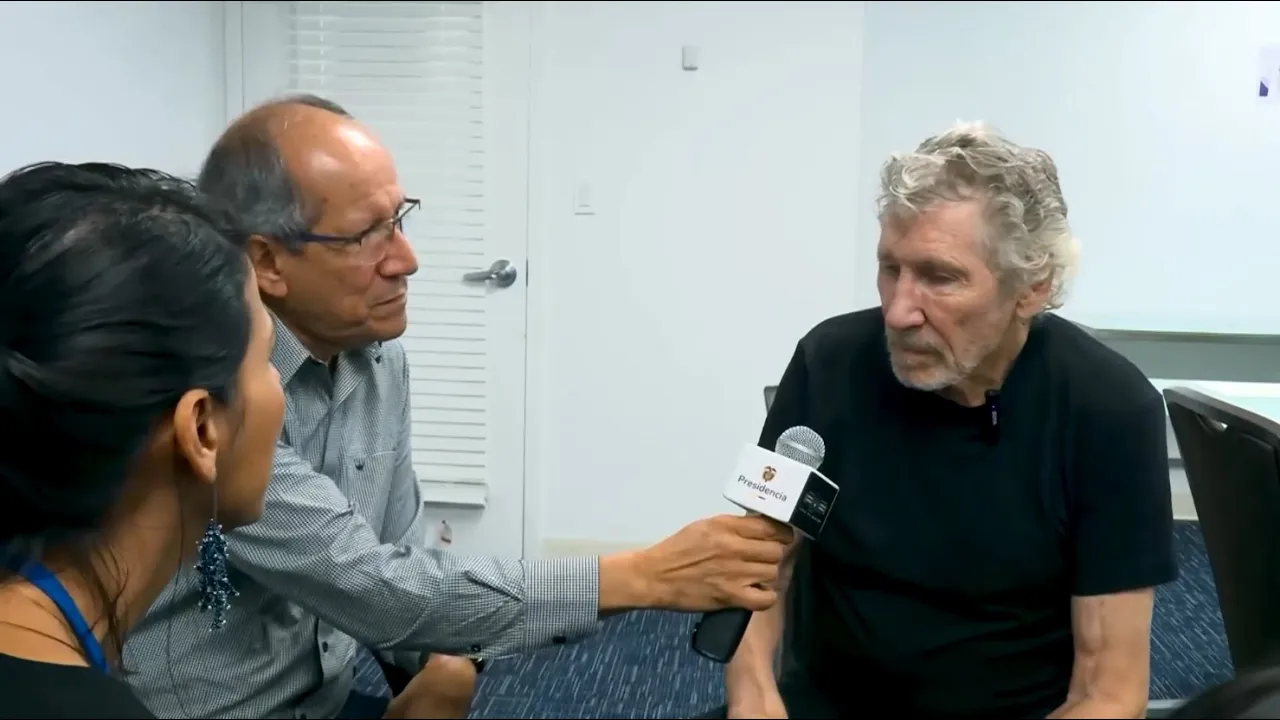
UN Resolution 377 & The Fight for Peace | Roger Waters on Gaza
Added:The organizational structure of the United Nations, specifically the distinction between the General Assembly and the Security Council.
The mechanism of the veto power held by the five permanent members (P5) of the UN Security Council and how it can lead to diplomatic deadlock.
A foundational historical overview of the Israeli-Palestinian conflict and the geopolitical context of the Gaza Strip.
The general definition and legal weight of United Nations resolutions under international law.
Historical case studies where UN Resolution 377 ('Uniting for Peace') was successfully or unsuccessfully invoked, such as the 1950 Korean War or the 1956 Suez Crisis.
The debate surrounding United Nations reform, particularly regarding the expansion or abolition of the Security Council's veto power.
An analysis of the legal and practical differences between non-binding General Assembly resolutions and binding Security Council resolutions.
The role and influence of celebrity diplomacy, art-activism, and public figures in shaping international political discourse and peace movements.
65.9K views8.2Klikes17:33Original Release: 2025-05-12
May the 10th. Does anybody remember Bob, Carol, Ted, and Ellis, that movie? I think it was D Morik at the end of it singing, "What the world needs now is love. Sweet love." Yeah, you remember that? So do I. Well, what the world needs now is bigger coahones. I'm reading this now. What the world needs now is bigger coahones.
Okay. On the 3rd of November 1950, the general assembly passed resolution 377 capital A brackets 5, uniting for peace.
I could quote it all, but it takes too long. Basically, it is a resolution that was passed because of a worry that the fact that the five permanent members of the security council all have the power to veto any security council resolution is a pain in the ass. So, Uniting for Peace says if there's something really, really bad happening in the world that threatens world peace and one of the permanent members is using its power of veto to stop the United Nations, putting a stop to the really bad thing, the peoples of the United Nations have the power to circumvent the Security Council by evoking Uniting for Peace and convening an emergency session of the general assembly to do something about the really really bad thing.
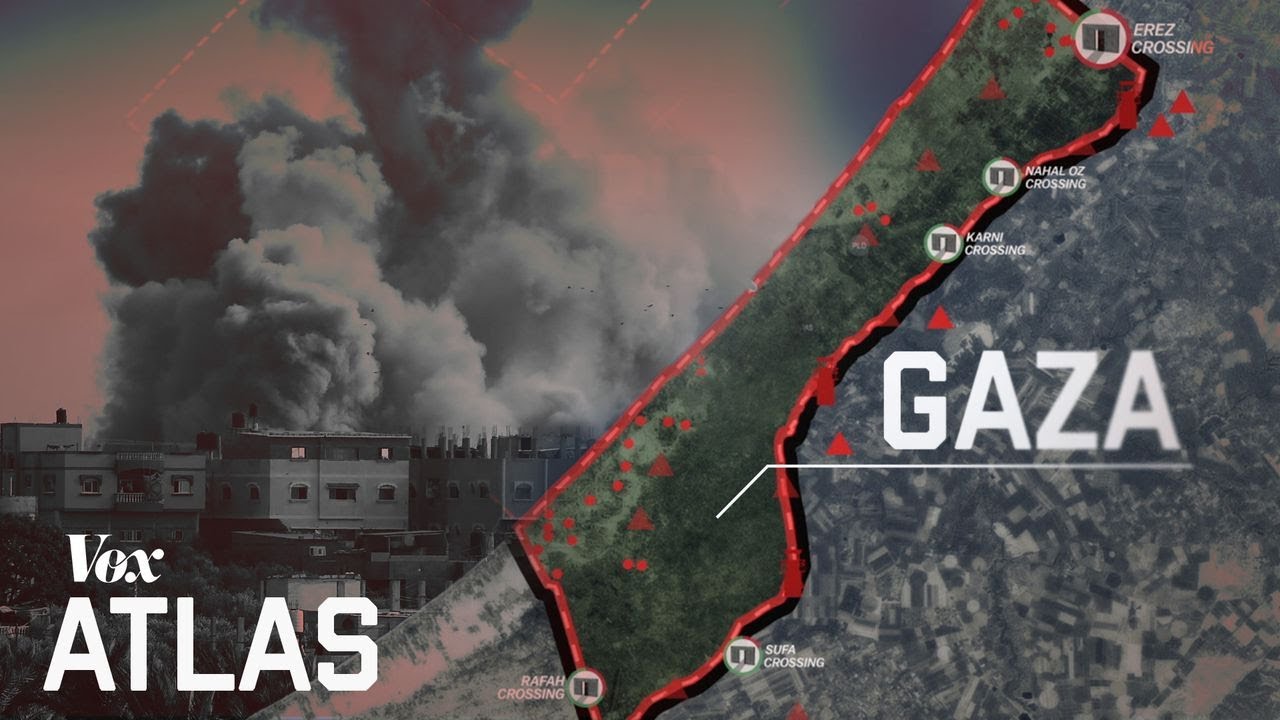
Okay. Well, something really really bad is happening in the world. Since October 2023, the rogue state of Israel has been openly and blatantly committing ethnic cleansing and genocide in Gaza. And the United States of America has been using its power of veto to support that ethnic cleansing and genocide.
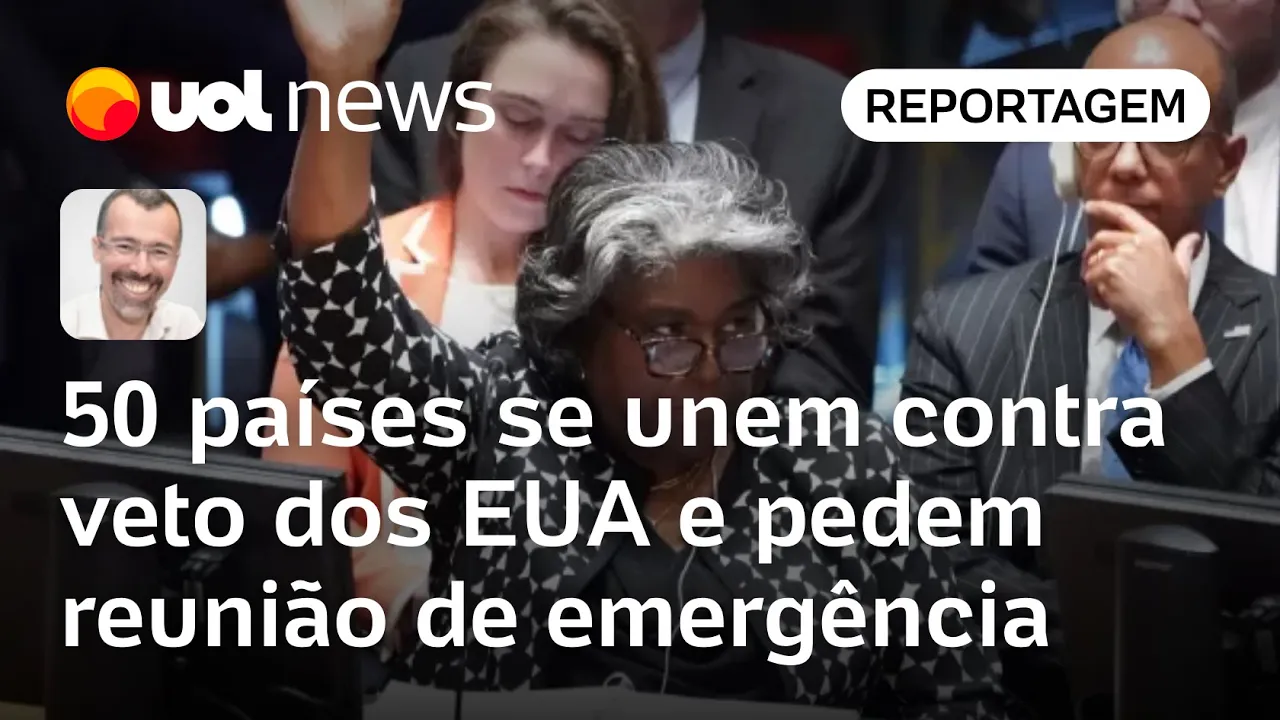
Specifically in response to this, on the 18th of April last year, when the USA vetoed a security council resolution to recommend full UN membership for the state of Palestine, it exactly created the scenario described in Uniting for Peace 377 capital A brackets 5.
Well, the General Assembly quite rightly responded and on September the 18th last year in an emergency session, the United Nations General Assembly overwhelmingly overwhelmingly passed a resolution demanding an immediate end to Israel's illegal occupation of Palestine lands with 124 nations voting in favor, 14 against and 43 obs. extensions. That is a huge majority. By the way, this resolution ES10/24 stemmed from an advisory opinion by the International Court of Justice that found Israel's occupation of Palestinian territory to be illegal.
That should have been an end of it, but it wasn't. What has happened in response?
Nothing. Not only has the rogue state of Israel ignored the general assembly resolution ES1024 for the seven months since it was adopted.
But just a few weeks ago, Benjamin Netanyahu and Donald Trump sat in the Oval Office in the White House in Washington DC. And in contravention of all existing international law, including the Geneva Conventions and the Universal Declaration of Human Rights, they announced on live TV their intention to ethnically cleanse Gaza in order to build a seaside resort.
A smugl looking Donald Trump sitting alongside his guest, the accused war criminal BB Netanyahu described Gaza as piece of prime real estate. President Trump leaned forward in his chair and suggested a choice be offered to the people of Gaza.
Either you pack your bags for the eenth time and voluntarily leave Gaza or we will kill you. Your choice. He sort of shrugged his head on one side making that little O shape with his lips. You know the one. Is this what passes for diplomacy these days?
acquies to our plans to steal your land and build a golf course or we will kill you. Has anyone who's bothered to study any of Palestine's history know? Yes, peers. Peers pay attention. This story did not start on the 7th of October 2023. No, it started long before that.
armed Zionist gangs and I can name three of them. Iran, Stern, Haga. Those gangs of terrorists started campaigns of ethnic cleansing and murder in Palestine in the immediate wake of World War II.
These campaigns culminating in a series of massacres and the expulsion of 700,000 indigenous people occasioned the violent creation of the Zionist state of Israel in May 1948.
Harry Truman, the then president of the United States, not a great scholar, I'm told, was all for it. His personal endorsement of the new state was meteoric in the speed of its delivery. It did not go unnoticed at the time. And this is a story related, by the way, by JFK and through Gidal. It did not go unnoticed at the time that Harry Truman had recently received a $2 million campaign contribution from a wealthy Zionist. Does any of this sound familiar? So there it was a fet accomply with endorsement of the USA.
But the new state needed to keep its genocidal ambitions under its hat a secret from the rest of the world. So as a matter of policy right from the start it lied through its teeth. We are going to be a democracy.
It said it boasted. In fact, we want to live in peace with all the local people.
Of course, it was a barefaced lie, a lie they've been repeating for 75 years.
generation after generation until on the 7th of October 2023 in the refugee camp called Gaza, some of the victims of 75 years of ethnic cleansing and creeping genocide in an act of armed resistance broke down the prison walls and attacked some of the prison guards.
That's what occupied people do. It is normal. It is inevitable. It is understandable. And it is also 100% legal. What is 100% illegal is the occupation of Palestinian land and laying siege and starving people. The occupying ethnosuppreist state of Israel and its main supporter of the United States of America were not best pleased by this act of resistance. So they ripped off their democratic/pacene masks and embarked on the wholesale genocidal slaughter of the remaining captive inmates of Gaza.
Men, women, children, infants, doctors, nurses, journalists, artists, everyone. We have all borne witness to the horror for the last year and a half.
So the disgusting sherad with Donald Trump and BB Netanyahu in the Oval Office a few weeks back was an open public masks off admission of the absolute total moral degradation of Western civilization. Now then people will bring this up so so will I. Israeli ci civilians were killed during the prison break on October 7th. Some of them at that music festival that Bono's always going on about. Those deaths were a war crime.
Hamas, can I say Hamas? Hamas accepts that Hamas has stated that it was not their intention to kill civilians.
Israeli civilians were also killed by Israel on that day. The Hannibal directive. Pierce, did you read about that when you were looking up Zaka after I told you? Anyway, uh Israel on that day, that was a war crime, too. We the people would like to see an independent inquiry into October the 7th to find out what really happened and who really killed who. Israel of course will not allow any such investigation. All right. Since then, Israel, with the absolute backing of the USA, as usual, and others, has been systematically pursuing its genocidal policy, murdering many tens of thousands of civilians in Gaza, particularly innocent children, often blowing them to bits with 2,000 pound bombs, the bits to be collected in plastic bags by relatives or aid work aid workers.
a war crime out of all proportion genocide. So what to do? Well, that depends on who you are.
If you're already part of the global resistance to this disgusting sherade, keep resisting.
I just watched a movie on how Palestine action in the UK has driven out Elbit systems, an Israeli arms manufacturer. Good for you, Palestine action. The rest of us must keep raising our voices and we will. We must keep occupying campuses in every university in the country all over. By the way, two days ago they went back to Colombia and occupied the library and 75 of them were arrested in their cafes and taken away by the fascist police. Well done, whoever that was in Colombia. We're with you.
Um all over the world, where was I?
Particularly Germany and the UK. What is wrong with these countries?
Criminalizing peaceful protest against a genocide.
What? Okay, back to uniting for peace. Excuse me. We must keep up our demands for adherence to international law.
What Trump and Netanyahu and Starmmer and Schulz and the rest are suggesting is not just illegal, it is criminally insane. We in this resistance movement have a moral obligation to keep raising our voices for as long as it takes.
We must take to the streets in every city, every town, every village, in every land all over the world. We must reach out to thank the people of Yemen, the Houthis, for their heroic stand against this genocide. And over there in the rogue state of Israel on the other side of the illegal wall, we stand in solidarity with the resistance. People like our friends Gideon Levy and Danna BH and Nor Ped or or organizations like Betelum or Breaking the Silence. We salute you all.
You give us hope.
If on the other hand, you are part of the majority in Israel who apparently have been supporting the illegal occupation of Palestinian land all these years, all the ethnic cleansing and genocide. Hang your head in shame. Beg humanity's forgiveness.
unlearn the lie that you are somehow better than the rest of us. You're not.
Truth and reconciliation can be a great healer.
But first, you need to wake up from your [Music] ethnosupreist nightmare. For our part, we will not be silenced. This choir is a global choir and we are not going anywhere. Our voices joined together in harmony can and will make a mighty roar.
Donald Trump and BB Netanyahu are almost certainly lost causes, but out here in the streets, the rest of us are just getting started. And it is my belief, my belief that this choir, armed as it is with love and truth, that this choir with all our voices joined in harmony can turn this ship around. Let's do it.
United for peace and sanity with love and truth in our hearts. Let's turn this ship around.
Up Next
24:27
WHO Special Envoy on COVID-19: Global Response & Future Outlook
@BBCHARDTALK
121.4K views•2020-04-20

12:54
Triumph of Orthodoxy Icon: Byzantine Art & History Explained
@BenCallan
2.1K views•2024-08-06

9:49
FastAPI vs Flask vs Django: Choosing the Right Python Web Framework
@TechWithTim
302.5K views•2024-05-26

1:42
Game of Thrones Opening Credits: A Cinematic Analysis
@gameofthrones
46.3M views•2011-04-18
Related Study Plans & Knowledge Roadmaps
Structured learning paths in General & Interdisciplinary Studies
general-studies
Elevator Engineering: History, Physics & Cities
01From Hoists to Safety Brakes: The Dawn of Vertical Lift
02Hydraulic vs. Traction: The Engineering Physics of Elevators
03Modern Speed, Safety, and Algorithms
+ 2 more learning modules
12h5 modules
Explore Roadmap
general-studies
Rubber: Material Science, History & Geopolitics
01Origins of Natural Rubber & Mesoamerican History
02The Chemistry of Natural Rubber & Vulcanization
03The Geopolitics of the Rubber Boom & Colonization
+ 2 more learning modules
12h5 modules
Explore Roadmap
general-studies
Containerization: Evolution, Logistics & Trade
01Ancient Trade & Bulk Cargo: Amphorae to Barrels
02The Industrial Revolution & Cardboard Packaging
03The Containerization Revolution: Malcom McLean
+ 2 more learning modules
12h5 modules
Explore Roadmap
general-studies
Textile Tech: Evolution, Labor & Global Impact
01Pre-Industrial Textiles: Handloom & Cottage Industry
02Mechanization: The Spinning Jenny to the Power Loom
03The Factory System & Global Labor Transformation
+ 2 more learning modules
10h5 modules
Explore Roadmap