














![[플라즈마 응용] 8. 플라즈마 소스 3 - 전북대학교 문세연 교수님](https://i.ytimg.com/vi_webp/V7z5YDDfa24/maxresdefault.webp)


![[플라즈마 Kinetic Theory] Lecture 10-a. POSTECH 윤건수교수님](https://i.ytimg.com/vi/qT4J6YdRjHQ/sddefault.jpg)


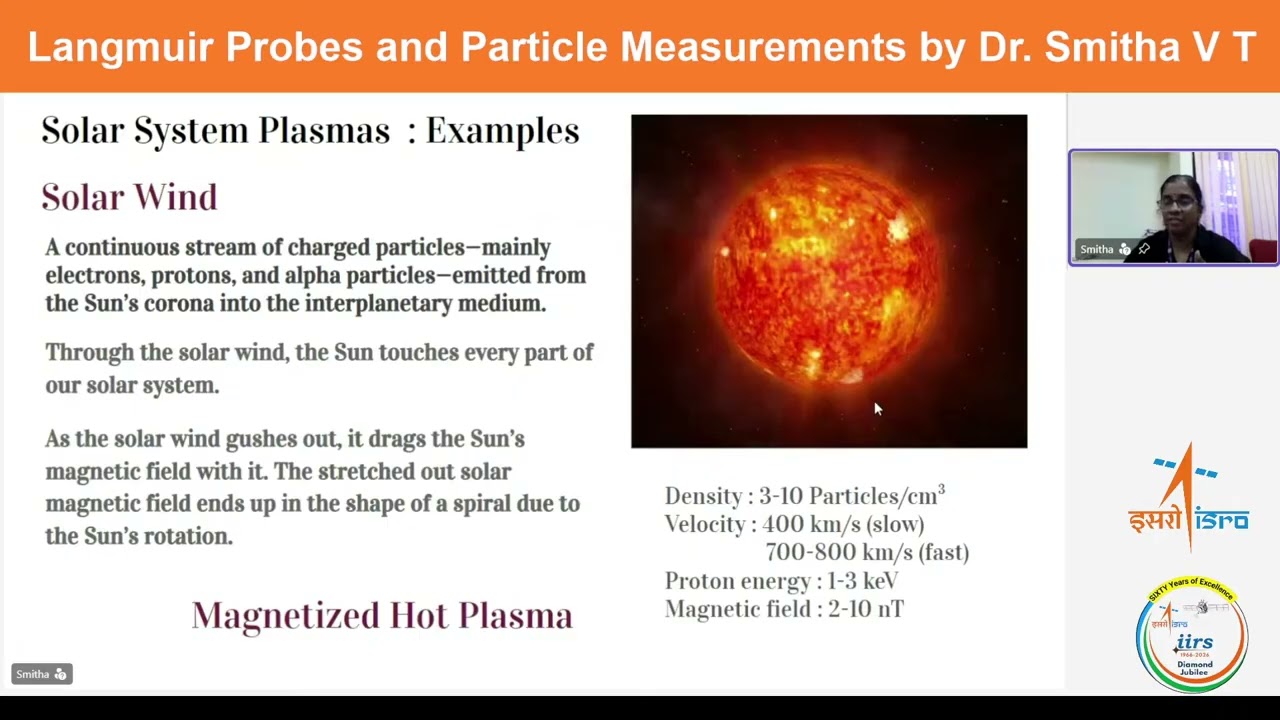
In a plasma, charged particles do not have infinite interaction ranges despite Coulomb's law suggesting otherwise; instead, the collective polarization of surrounding charged particles creates a screening effect that limits interactions to a characteristic distance called the Debye length, where the potential falls off exponentially as e^(-r/λ_D) rather than the usual 1/r Coulomb potential.
Plasma Physics: Debye Shielding & Collective Interactions
Added:Electrostatics and Gauss's Law, specifically the relationship between charge density, electric field, and electrostatic potential (Poisson's Equation).
The Boltzmann distribution from statistical mechanics, to understand how mobile charged particles distribute themselves in a potential field at a given temperature.
Fundamental plasma concepts, such as ionization, thermal velocity, and the concept of macroscopic quasi-neutrality.
Mathematical proficiency in solving second-order ordinary differential equations, which is necessary for deriving the screened Coulomb potential.
The Plasma Parameter and the collective behavior criterion, which defines whether a collection of charged particles behaves as a true plasma based on the number of particles in a Debye sphere.
Plasma Sheath Physics, exploring how a plasma interacts with physical boundaries (walls or electrodes) and the resulting potential drops.
Plasma oscillations and electrostatic waves, specifically how the Debye length relates to the plasma frequency and thermal velocity.
Practical applications in diagnostics, such as Langmuir probes, which rely on the concept of Debye shielding to measure localized electron temperature and density.
25.4K views256likes17:42Original Release: 2015-12-24
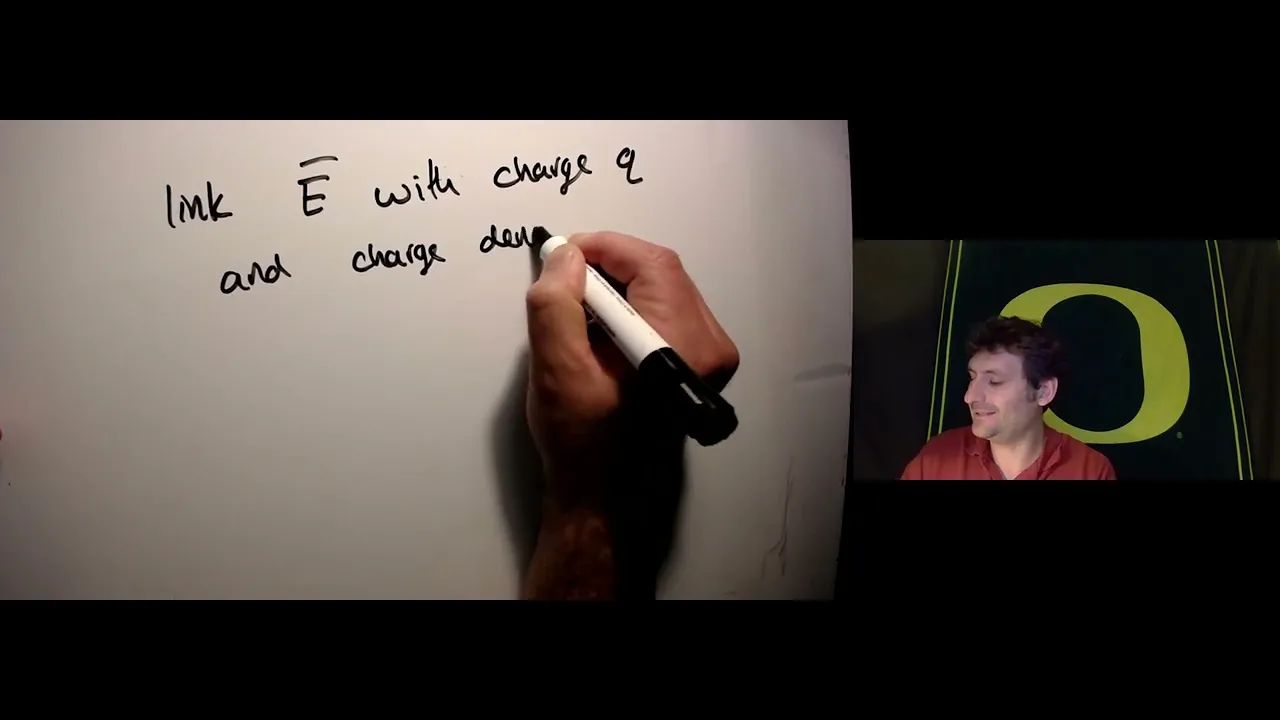
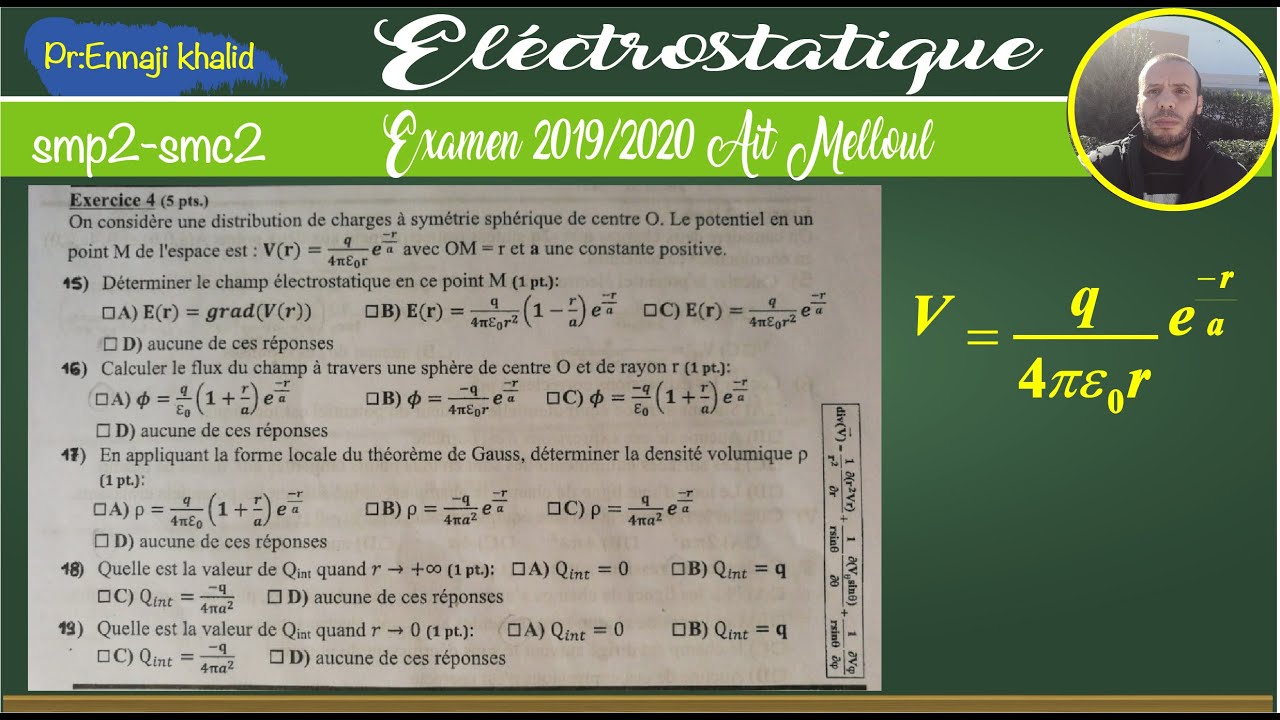
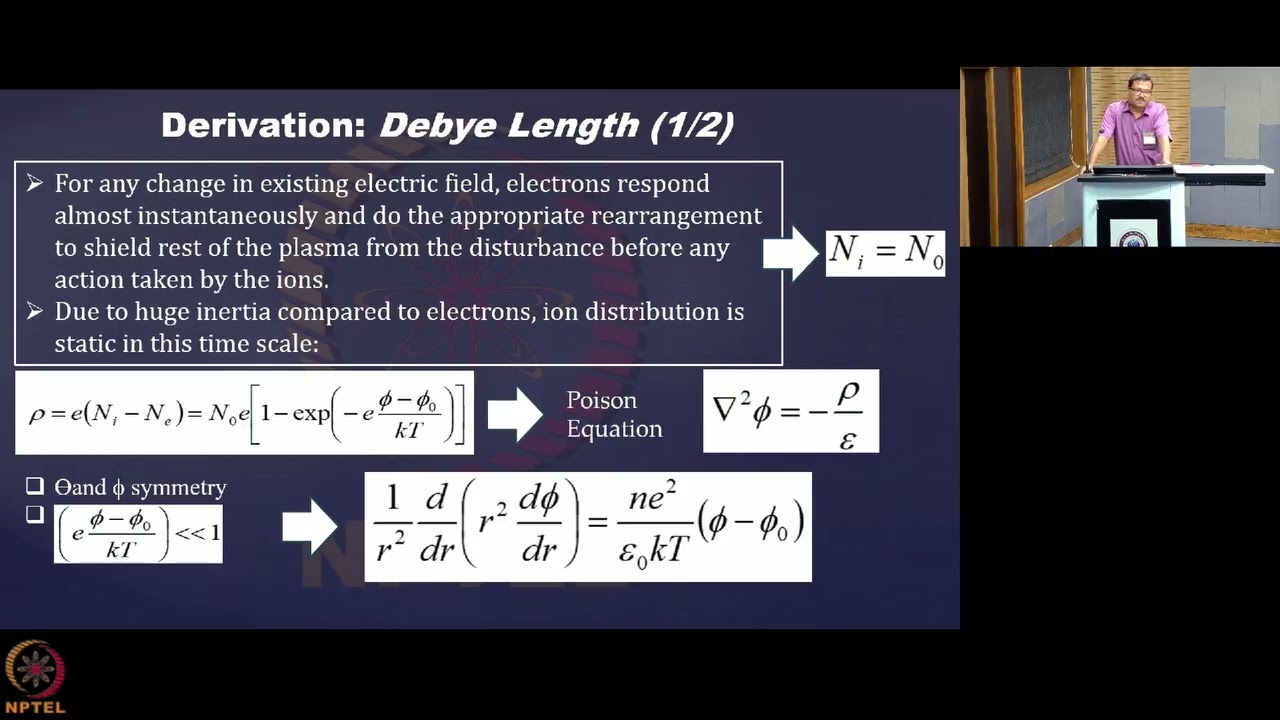
okay so we're at trying to figure out a little bit as we've said the definition of a plasma is quasi neutral gas got charged and mostly charged with some neutral particles and we want we're interested in the situation where the particle interactions are predominantly collective that is to say not just to body interactions as in a neutral gas where you going straight lines have a two body interaction another straight line and so forth but rather this situation where as any one charged particle moves along it seems to have a collective interaction with many other particles simultaneously so fundamentally the question is well the questions then that we might say for this having to do with the collective interactions is and that's what the questions of plasma physics are that's how does one describe such a medium collective interaction medium it's the collective interaction by the way which is often used to mean plasma physics when you talk about quark gluon plasmas or something like that you know fluid kinetic theory you know when it's not just two particle effects and a second one is really you know this picture gives you the feeling that gosh you know the potential falls off like 1 over R the electric field force field falls off like 1 over R squared that's not exponential or anything like that I could have particles separated by you know hundreds of meters miles I still got some interaction right kind of done sound right if you know what I mean by that so the kind of question you get into is do charged particles really have infinite interaction distances doesn't seem physically right you know two particles ten miles apart two charged particles having just a little bit of weak interaction you know and doesn't sound quite right well it turns out it's the answer's no it's limited and this is what will do the mathematics by the polarizing effects of a charged particle on all the other charged particle and this will lead to something which is called the Debye length which is the collective interaction distance and so that's that's the name and and it turns out that we won't have interactions longer than that Debye length so that's what we next want to go on and derive here is the is that collective interaction so basically what we would then like to do is is basically to calculate the potential around a charged particle around a given charged particle and we will call that particle a test particle so our physical idea is yes we have all of these charged particles that are going to be moving around and everything else all but plus minuses and so forth and so on but I'm going to pick out one particular one and I'm going to call that the test particle okay so we have so let me draw some pluses over here and then we'll have a bunch of minuses hopefully about the same number make it quasi neutral and I'm gonna pick out that one okay star this is my test particle that really matters which one it is it's just one particle in the plasma and it will have charge q that's charge q and it'll just be sitting there okay now how would I obtain the potential or electric field around that charge particle well first off we're gonna assume everything's kind of slow-moving and there's no real problems so assume electrostatics it turns out and that means that the electric field will be de Rivel from a potential and will be just given by E is equal to minus grad Phi second thing is to determine the potential around that charge we should we should consider Gauss's law or poisons equation and that is that the divergence of the electric field is just given by now here's what we finally show our true colors and say yes we're MKS namely it's Rho over epsilon naught but the del dot e itself is just minus del squared Phi if we plug in you know that the electric field is just minus grad Phi so all we need to know in order to determine the potential around that charge that given charge particle is the charge density well what is the charge density going to be due to well if that's meant to be a goof up anyway the charge density is going to be two things one is it's going to be this given test particle okay it that test particle is a charge okay so the first part is the test charge and we will make that we will say that that is composed of Q test I guess I was going to make this a Q sub T make it cute test and we're gonna make it a stationery charge we don't want to worry about things moving for a moment and it's some delta function you know it's gonna be a point charge by the way is it really a point charge not really there's quantum mechanical effects in at the Fermi radius of 10 the minus thirteen centimeters but we're gonna be lot longer than that we're gonna be you know sort of a lot longer distances than that so it's a point charge as far as we're concerned okay so but we're gonna have the test charge but now because I have this test charge here and because it creates some potential that potential will actually jiggle or move all the rest of the charged particles the presence of the one charged particle will cause a polarization of the rest of the medium okay so there will be a polarization charge which I'm gonna call Delta Rho let's see when they call it polarization due to the Phi in the plasma for an electric field but anyway so the idea is that we're going to have two sources of charge in the plasma namely the test charge and how it's going to interact directly with one particle but in fact the whole rest of the medium you know that'll create a potential the fact that I have a potential electric field will then slightly polarize the rest of the medium the rest of all the charges so that's what we want to calculate oh sorry so the idea then is that the test charge part you know that's just a delta function part that's no big deal but what we'd like to now estimate is something having to do with the polarization so how is the potential going to affect all the rest of these particles in particular imagine there's you know zillions of these particles and they're more or less uniformly distributed in space because remember we want in charge balance charge causing neutrality well what happens is there is a Gibbs distribution of particles which formerly in is F is e to the minus the Hamiltonian over KT but for us just you know the density distribution function is approximately equal to some equilibrium amount times e to the minus and the Hamiltonian is Q Phi here so we'll have minus Q Phi over T and already you see I'm dropping the KT Boltzmann's constant because again I'm continuing to use evey instead of degrees Kelvin as my measure of energy or temperature okay so with this in mind now I you know any one particle member I'm what I'm interested in here is the polarization okay around that one particle any one particle is surely gonna have an awfully small potential right so let's say I expand this as 1 and then minus Q Phi over T plus higher order terms okay so in other words to lowest order the density is that at constant density you know I've got equal temperatures throughout or a equal density distribution but to higher order a little bit I have this extra potential okay a potential distortion this is my polarization in truth so this will give me then a charge density which will be I'll have to sum running out of time here a little bit so I have to sum over the species the number of particles NJ x QJ you know times their individual charges and this will be the sum over J of QJ x and times n naught J times 1 minus Q J Phi over TJ plus and so forth now for quasi neutrality what we have to have is that the sum over J of n not j QJ had better be equal to 0 I better have approximately equal numbers of plus and minus charges throughout the plasma so that means that this one term goes away okay and so what this charge density becomes then is really just the sum over J and not j QJ actually there's a q squared in here and then a TJ and then times Phi so if we now we now then know if we come back to hear our polarization charge we have that the polarization charge is equal to the sum over J of n not j QJ squared divided by TJ all times 5 that's what we had had gotten I need a minus sign here minus signs are a little bit critical in this business and so I better put a minus sign in there so we then put this together remember what we were trying to do is calculate the potential around the charge and what we find then is that our poisons equation or Gauss's law with the equals minus grad Phi becomes minus del squared Phi is Rho over epsilon naught and the Rho was then the test charge we put in which is a facial position you know some X naught some particular X naught and then we also have minus the sum over species of n naught J and we need to be able to have Selene naught Q J squared over TJ times Phi and this is our polarization and this is our test charge well the key and we gonna have an epsilon naught the key to all this is that this is a Phi and that is a fine and so we end up defining this as the units if you look at it of some length and so we define one over a Debye length squared oh I'm sorry yes I'm down here at the bottom - yes sorry 1 over lambda Debye length is the sum over species but I'll make it just n naught Q squared over epsilon naught T and then our equation okay if I put this over here then becomes del squared minus 1 over the by length squared all times Phi is equal to our test charge - over epsilon naught times a delta function X minus X not this particular part here is very important it's our so-called Debye shielding if that wasn't there I would just get the ordinary Coulomb potential around the test charge if this wasn't there the test charge wasn't there you can see that I would get a a damping off of the potential around the charge del squared minus one over lambda 2 bi squared over a distance of a Debye length so what the sum of all this means and then we'll have to discuss it in greater detail next time is that the potential around the particle starts off falling off as one over R at short distances namely Coulomb potential but then ok it actually dies off because of this de by shielding over some distance of this order of this collective interaction polarization of the medium divide shielding and so there is no substantial interaction outside of that device shielding length I'll finish by just writing down the sort of formal solution of the equation namely you'll find that Phi of X is given by Q test over epsilon naught 4 pie epsilon-not times the magnitude of X minus X I X 0 the spatial this is just the Coulomb potential call that R the distance away and then there's e to the minus X minus X naught over the Debye length so what happens is that these interactions take place not between individual particles but they do so within some distance called the Debye length and then they don't interact over longer distances because the olla all the rest of the part nickels collectively move or are polarized and cause aided by shielding on distances long compared to the Debye length next time we'll go and talk about well you know some typical divided lengths write him out a little bit talk a little bit more about what we mean by this solution and next time we'll start at 11:30 by the way here and then we'll get back on schedule you
Up Next
7:43
Velocity Filter Explained: Class 12 Physics | Magnetic Effect of Current
@TutorialsPoint_
30.2K views•2018-02-12

12:53
21cm Hyperfine Transition in Neutral Hydrogen: Radio Astronomy Basics
@AaronRobertParsons
12.4K views•2011-10-13

51:52
Plasma Instabilities & Magnetic Diffusion | Plasma Physics
@luciusfox9508
4.8K views•2015-12-24

27:14
Entropy and the Second Law of Thermodynamics Explained
@veritasium
27.5M views•2023-07-01
Related Study Plans & Knowledge Roadmaps
Structured learning paths in Physics
physics
Nuclear Physics (Decay, Fission & Reactors)
01Atomic Structure and the Binding Force
02Radioactive Decay and Half-Life
03Nuclear Fission Mechanics and Chain Reactions
+ 2 more learning modules
12h5 modules
Explore Roadmap
physics
Soft Matter (Polymers, Colloids & Rheology)
01Foundations of Soft Matter & Thermal Forces
02Polymer Physics and Macromolecules
03Colloids, Surfactants, and Self-Assembly
+ 2 more learning modules
38h5 modules
Explore Roadmap
physics
Analytical Mechanics: Lagrangian & Hamiltonian
01Mathematical Foundations: Calculus of Variations
02From Newtonian Mechanics to Constraint Dynamics
03The Principle of Least Action & Lagrangian Mechanics
+ 3 more learning modules
28h6 modules
Explore Roadmap
physics
General Relativity (Spacetime & Cosmology)
01Foundations of Relativity: Special Relativity
02The Geometry of Spacetime: Equivalence Principle & Curvature
03Einstein's Field Equations: The Mathematics of Gravity
+ 2 more learning modules
55h5 modules
Explore Roadmap