
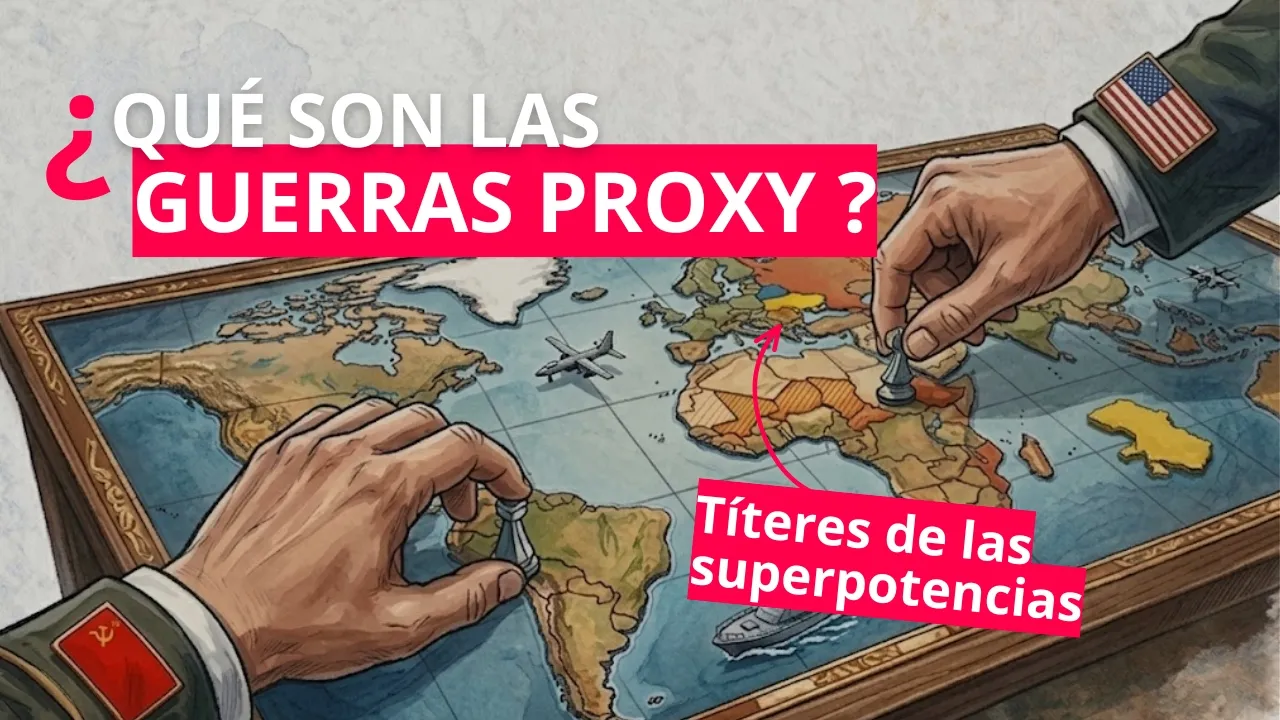



















Proxy warfare will remain a central element of great power competition, offering states plausible deniability, lower costs, and political acceptability while presenting significant control challenges; emerging technologies like drones, AI, and cyber capabilities will democratize warfare, enabling smaller states and non-state actors to threaten traditional militaries, while international law currently fails to adequately hold states accountable for their proxies' unlawful actions due to attribution difficulties.
Future of Proxy Warfare: Law, Tech, and Strategy
Added:Understanding the basic definition and historical context of proxy warfare, particularly during the Cold War (e.g., US-Soviet proxy conflicts).
Familiarity with the fundamental principles of International Humanitarian Law (IHL) and the Law of Armed Conflict (LOAC), specifically regarding state responsibility and attribution.
Core concepts of asymmetric warfare, grey-zone operations, and strategic deterrence in international relations.
A basic awareness of how modern technology—such as unmanned aerial vehicles (drones), cyber capabilities, and AI—is integrated into current military doctrines.
Deep dive into the legal frameworks of cyber attribution, such as the application of the Tallinn Manual to state-sponsored cyber proxies.
Analysis of the strategic and ethical implications of using autonomous weapon systems and artificial intelligence in surrogate warfare.
Case studies of contemporary hybrid warfare, focusing on active proxy dynamics in regions like the Middle East, Eastern Europe, or the South China Sea.
Formulating national security policy and defense strategies to counter decentralized, non-state actors and state-sponsored proxy networks.
1.2K views27likes51:55Original Release: 2021-05-05
um quick introduction my name is dr max margulies i am the research director at the modern war institute at west point and i am very happy to welcome you all to what i believe is going to be our final war council series of the year so this is uh co-hosted with the libra institute for law and land warfare i would very much like to thank the libra institute and professor rob lawless for helping make this happen and and coming to us with the idea to co-sponsor this event which is part of their ongoing highlighting of the important research and policy implications of proxy warfare so with that i will just introduce our panelists and then we can kick it off so we are joined today by major alex deep a u.s army officer and fellow at the modern war institute major matt mcdaniel a us army officer currently signed as a strategist at army futures command and major jenny maddox an officer and attorney in the british army legal services so they will discuss the operational technological and legal dimensions of the future of proxy warfare major deep i believe is going to get us started if i have that right and so without further ado uh i will turn it over to him all right thanks max really appreciate the intro and the opportunity to speak on the council here along with my fellow panelists so again my name is alex deep i'm a special forces officer having spent my special operations career in third special forces group with various deployments to afghanistan and syria and so i want to start out with a very general claim to get us going that proxy warfare will be part of our strategic competition with our adversaries as we go forward so president joe biden before he became president wrote an article on foreign affairs kind of espousing the good parts of proxy warfare and really partnered operations kind of more of a light touch to military intervention compared to large-scale deployments of our infantry or armor divisions the interim national security guidance that the national security council published since president biden took office says somewhat the same thing we have every indication that the national security strategy and national defense strategy will have a big part of it dedicated to kind of partnered operations and proxy warfare and i think some of the impetus behind that are perceived and real successes with the use of proxies both internally to the united states and with some of our adversaries so countries like russia we have this idea that russia does a good job using proxies in places like ukraine and syria but also in the disinformation space with how russia spreads this information often using proxy forces to do so and in the cyber domain as well and then iran with their use of shia militia groups and proxies in iraq syria lebanon and yemen you all pointing to how a country can be successful with a light touch military intervention that relies on proxies and even our own success in using partners and proxies in the fight against isis especially in syria with our syrian kurdish partners that we use in the northeast of the country and it's not difficult to see why proxy warfare could be attractive to national decision makers it offers a degree of plausible deniability it's low cost in terms of blood and treasure it tends to be more politically acceptable than some of our larger scale military operations it's economically sustainable it's a way of limiting escalation by keeping the competition below a certain threshold of violence that might devolve the general war and it uses folks that tend to be local and have the local knowledge that are required for any successful military campaign whether that's an understanding of terrain you know an understanding of sources of intelligence that are very important or whether it's understanding local political and social dynamics so all those things combined make a pretty attractive option when you're looking to use military force to achieve your ends and you don't necessarily want to commit you know divisions upon divisions of forces to achieve those ends but it's also really risky mainly due to the very simple principle agent problem that's inherent to any relationship of this kind where you want someone else to do your work for you you know in order for the sponsor or the principal to ensure that the agent in this case the proxy pursues the sponsor's goals and not just what the proxy wants to do has all to do with control and the best way to control proxy groups is physical presence of your own military or intelligence operatives or diplomats or whoever but therein lies the dilemma for using proxy forces because the mechanism by which you control a proxy kind of runs afoul to the very reason you want to use a proxy in the first place because you don't want to do it yourself or you want a light touch in some way and so with that dilemma that balance becomes very difficult to strike and if you don't strike it properly a proxy can get you drawn deeper into a conflict if a proxy starts pursuing its own goals rather than you rather than that of the sponsor you know if the proxy starts to commit crimes whether local or international there could be serious reputational damage for the sponsor both domestically and internationally and i know that my fellow panelists are going to talk a lot about kind of the international law consequences or risks inherent to using proxy forces but if we do choose to use a proxy or partner to achieve our ends it's also important not to have rose-colored glasses when it comes to how our adversaries use proxies because the russian and iranian models are not necessarily great when it comes to how they try to leverage proxies to achieve their ends so russia's proxies commit war crimes all the time whether it's the syrian regime during the civil syrian civil war whether it's the wagner group in syria libya in sub-saharan africa that is not a great metric and not one we should look to emulate necessarily when it comes to how we leverage proxies because after all russia started the syrian civil war with a partner that controlled the whole country and you know spoiler the syrian regime still doesn't control huge chunks of syrian territory and with the wagner group it's a very unwieldy instrument for the russian state that russia tends to control using cutouts in the oligarchy of russia you know motivated primarily by money you know not any particular adherence or commitment to russian foreign policy so that's not great and iran's isn't much better but they fall into a trap of the kind of breadth of their pitch when it comes to recruiting proxies they're limited ideologically you know to shia groups that espouse to more or less the islamic jurisprudence of the islamic republic of iran it's really hard for iran to recruit widely outside that very limited set of people so you can't really imagine iran recruiting effective proxies outside of the middle east and not even the whole middle east at that and so with both of these countries you can see some of the problems of using proxies whether it's from an international law perspective or from getting drawn deeper into a conflict because of their proxy's behavior after all the russian government in its intervention in ukraine ended up abandoning its proxies in many ways once you know the folks in the dunmaster declaring people's republics of whatever and the russian federation was not willing to commit the conventional force necessary to seize the entirety of the dumbass and that's a frozen conflict now and despite kind of our framing that maybe that's what russia wanted the whole time i doubt russia wanted to seize half of the dumbass it doesn't really seem to make sense in the same way with iran iran advised its houthi proxies in yemen not to start a civil war with the yemeni government well they did and as a result iran gets pulled into a conflict that they did not necessarily want to commit those kind of resources to so what does that mean for the united states i do think there's an american way of proxy warfare that can be more effective than that of our adversaries and the first aspect of it is that we use proxies as part of a broader strategy of irregular warfare you know whether you call the russia way the grasimov doctrine or the iranian way kind of with the irgc cuts force you know a separate doctrine we have a regular warfare where proxies are just one small part of our broader expeditionary partner operations that we conduct to achieve our ends so it's important that we kind of take proxies as one option among many when it comes to achieving our national security goals you know second we have a competitive advantage over some of you know the other folks who might use proxies namely we have this diverse country diverse military where we have connections to cultures and peoples all over the world you know our pitch kind of isn't limited to a certain ethnic group or culture or background and so with that i'm going to turn it over to my other panelists so we can hopefully you know spur some good dialogue thanks all right thank you very much major deep uh very thought-provoking comments i think next up is going to be major mcdaniel and then major maddox will take us home thanks okay uh thank you very much um good morning everyone uh thanks for having me it's really an honor to be a part of this discussion uh my job is a strategist and i'm currently assigned to the us army futures command in austin texas and my focus is on applying new and emerging technologies to the development of future us army operational concepts so i'm really excited to talk about the future which in this case means how the us army will tackle the challenges of great power competition which will undoubtedly involve future proxy warfare i'll make these remarks as brief as possible so we can have more time to answer your questions i want to highlight three important considerations that i think will help guide our conversation uh the first consideration i'll talk about is how technology will shape the future character of war and how proxy warfare will result in a greater dispersion of both lethal and non-lethal warfighting technology the second thing i'll talk about is how information will be viewed as a strategic commodity in the future and i'll talk about what that means for countries that are seeking to achieve their strategic goals through the use of proxies and then lastly i'd like to talk about how increased accessibility to lethal and non-lethal technology could allow non-state actors uh like terrorist groups and criminal organizations to act as proxies uh and which will really challenge the way that the challenge the army in ways that these groups previously couldn't so first let me address technology and the future operational environment it's hard to predict the specific trends of future technology but it's safe to say that global technological innovation will likely shape the future character warfare and while things like deterrence and international norms and economic interdependence will probably reduce the likelihood of large-scale conflict between great powers our competitors will continue to find proxies to be an attractive alternative to direct confrontation and this is primarily because proxies offer a way to achieve strategic goals with less risk to the sponsor but as technological innovation increases state sponsors will likely share their lethal technologies with their proxies and sharing technology with proxies isn't new um of course you know that the us armed the mujahideen with advanced stinger missiles to fight against the soviet invasion of afghanistan in the future though great power competition and a proliferation of new capabilities could result in a greater diffusion of technologies which allows smaller states to acquire new capabilities that were previously limited to richer countries so some specific examples of these technologies might include swarms of inexpensive drones that proxies could use to conduct attacks against armored vehicles or even disrupt air operations um the modern use of drones demonstrated in the conflict between armenia and azerbaijan kind of shows how relatively small countries might use these kinds of technology to great effect in the future and smaller states could also use next generation communications that are enabled by high-speed networks and even sponsor developed ai algorithms to coordinate their efforts and increase the speed of warfare not all of these technologies will be acquired through arms sales and transfers from external sponsors one of the interesting things about what might be likely in the future is that proxies will be able to buy commercial off-the-shelf products as these products become less expensive and the proliferation of low-cost lethal technologies could allow even low tier powers with the backing of sponsor states to present a substantial threat to traditional militaries on a future battlefield it's also worth mentioning that competitors like russia and china will probably be eager to sell new lethal technologies and this could actually escalate regional conflicts between smaller countries so the next thing that i want to talk about is information information is rapidly becoming a strategic commodity access to and control of digital information could become an important consideration in proxy warfare of the future so established countries uh that have a robust domestic manufacturing capability and technology infrastructure could help less advanced proxies use future communications and information technologies to both protect and gather information for the sponsor also proxies are valuable to their sponsors because normally they have a better local knowledge of physical terrain and non-physical environments that they operate in so in the future these proxies could improve their information gathering abilities by deploying constellations of automated sensors throughout the future operational environment on behalf of their sponsors which would give competitors an information advantage in the cyber domain malware and ransomware attacks against commercial and government targets could definitely increase you know this is because proxies provide an inexpensive and discreet way to conduct cyber attacks and inflict costs against established states without tracing the action back to the sponsor so an example of a strategic cyber attack would be like the 2007 denial of service attack on the estonian government in the future improvements in ai could allow relatively unsophisticated proxies to conduct even more sophisticated attacks with complete anonymity additionally proxies can help their sponsors shape and influence regional opinion so in the future we may see proxies generating deep fake images and videos to create confusion in a road trust to help their sponsor state achieve its strategic goals with little to no attribution or traceability back to the sponsor state so all of this really contributes to the importance of information in the future finally improvements in technology may change how we traditionally think about organized non-state groups so for the last 20 years the us has been fighting non-state actors often supported by countries that act as their principles particularly in states with weak governmental infrastructure and this trend is likely to continue in the future as competitors seek to support groups like insurgents or transnational criminal organizations and even mercenary armies as their agents so you know even private assets like commercial fishing vessels might one day be pressed into service as a proxy in the maritime domain but what's different in the future however is that advancements in technology could create or could allow these groups to become more self-sufficient technology could let them operate in ways that make them far more lethal than organized non-state actors have been in the past revolutionary weapon systems like hypersonics or supersonic missiles that could be launched from conventional platforms robotics autonomy energetics ai enabled data processing could let future non-state proxies pose significant asymmetric challenges to the u.s army and a resurgent of the use of private military companies uh may become an even more important consideration in future proxy wars and we're already seeing how private military security contractors are being used by russia you know not only do these non-state groups reduce risk to sponsors but they can sometimes be more reliable than partnering with not with state proxies and they're still cheaper than military deployments another example of non-state groups could be terrorist organizations backed by regional powers and they could use drones to disrupt critical infrastructure things of that nature that we've already seen so finally nations often choose to enlist proxies because they're easier and less costly than deploying regular forces so technological uh sustainment innovations like 3d printing could make these non-state groups even more self-sufficient giving them the ability to manufacture supplies and weapons with even less support from their sponsors so one last thing i want to mention uh is that i've used the term principles and agents um from literature to frame the conversation but has already been said uh in reality the interests of proxies and their sponsors um never align perfectly often they have different strategic goals that lead the agent to operate on its own so when we think about the future and future technologies it's important to consider how proxies that are emboldened with new technologies might seek to escalate conflicts for their own regional goals uh even in ways that their principles don't intend additionally in cases where two proxy forces are fighting each other increased use of technologies like autonomous robotics loitering munitions and of course digital disinformation um these things may cross red lines and escalate the conflict exponentially which in turn raises the stake for their sponsors so with that i'm really looking forward to your questions uh and i'll turn the conversation over to the next panelists all right thanks very much major mcdaniel major maddox take it away thank you very much and to follow him from those fascinating presentations just given by major deep and major mcdaniel i'm now going to change focus slightly to look at how international law can shape the future of proxy conflict first however i must give the usual disclaimer and make it make clear that anything i say is very much my own views and not those of the british army and or the uk ministry of defense so to address the question of how international law will influence the future of proxy conflict it's first necessary to look at how the law impacts on states use of proxies today and i mean this in terms of accountability or how international law addresses states responsibility for any unlawful acts or war crimes as major deep mentioned that their proxies might commit in the course of hostilities because clearly when states engage in conflict they're bound by international legal obligations and including the principles of the law of armed conflict that many of you will be familiar with um such as the obligation to direct attacks only against military personnel and military objectives and when states breach these obligations through the actions of their own armed forces so if for example their soldiers target civilians in the course of hostilities the state's international responsibility is engaged and certain legal consequences automatically follow the state's under an obligation to cease its wrongful conduct it must make full reparation for any injury caused and any states that are harmed by the wrongful conduct have the right to take counter-measures aimed at bringing the state back into compliance with its legal obligations but today i'm concerned with the situation when a state's legal obligations are violated not by its own military personnel but rather via a proxy and let me give an example many of you may be familiar with the turkish incursion into northern syria in october 2019 known as operation peace spring turkey conducted this operation via its own forces but the state also acted via a number of syrian militia groups and in the course of that operation these militias conducted um they committed horrific atrocities against the local kurdish population including the execution of a female kurdish um politician and another and a number of other civilians so if turkish soldiers have committed those acts then turkey would bear international responsibility for the breach of the law of armed conflict and the consequences i referred to a moment ago would follow but when the acts were concerned with in this case the unlawful killing of civilians who are not participating in hostilities when those acts are committed by a proxy rather than directly by the state the legal position is less clear clearly there might be a reputational impact on the state and also looking at it from a purely moral perspective it seems that turkey should bear some form of responsibility for the malicious behavior instead of using its own armed forces to complete the operation turkey chose to send these undisciplined militias to take control of areas of northern syria and in so doing those militias acted in a way that violated turkey's obligations under the law of armed conflict but what does international law say about this well the legal position here is governed by the law of state responsibility and a key element of this body of law is that it provides for states to bear responsibility only for their own conduct meaning conduct that is attributable to the state if conduct is not attributable to the state it remains private and the state bears no responsibility for it now this is potentially problematic why well because international law makes a clear distinction between conduct that's public for which the state bears legal responsibility and conduct that is private for which it does not but that position in law does not reflect reality particularly in situations of conflict where the lines between public and private conduct are frequently blurred this is illustrated not only by turkey's use of militias to fight on its behalf behalf in northern syria and also in libya and in nagorno-karabakh but also the many other examples of states use the proxies given by the earlier panelists russia's use of the wagner group iran's use of shia militias states tasking of private hackers to act on their behalf in the cyber domain in the reality of armed conflict it's actually very difficult to draw a clear line between public and private conduct but that's exactly what the law of state responsibility seeks to do so how does the law of state responsibility draw this line well it does so through certain rules of attribution which determine when conduct is attributable to a state and when it is not and today i don't propose to talk about these rules of attribution in any detail but what i will do is outline the main grounds on which harmful conduct perpetrated by a proxy could be attributed to a state and also highlights certain deficiencies in the law that are relevant to the topic we're focusing on today the future of proxy warfare so there are two principal reasons why proxy's conduct might be attributed to a state first because of the provisions of the state's own domestic law and second because of the factual situation that exists between the proxy and the state so taking the very clear example of a state's military personnel states domestic laws typically designate their armed forces as forming part of the state and acting on the state's behalf and this means that all military personnel are classified as state organs and their conduct committed in that capacity is attributable to the state and this basis of attribution it can be relevant to entities that start life as a proxy so the irgc for example uranium revolutionary guard corps emerged in the early days of the 1979 iranian revolution and was then formally integrated into the iranian state by a decree issued by the ayatollah in may that year so as a consequence of that decree under iranian law the irgc's conduct from may 1979 onwards is attributable to iran to give a more recent example some of the shia militia groups in iraq form part of the popular mobilization forces or pmf that were integrated into the iraqi state in 2016.
so when such groups target coalition force bases in iraq for example their conduct is attributable to the iraqi state notwithstanding the perhaps greater influence that neighbouring oahan exerts over their conduct there's also another attribution that originates in a state's own internal laws and that's when a state empowers a private entity to exercise public functions on its behalf and does so in a manner that accords with its domestic law and the classic example here is the outsourcing of public functions to a private military company in a combat zone such as base security the interrogation of detainees or even participation in combat and to give a recent example you may have seen on the news that mozambique recently contracted a south african pmc the dike advisory group to fight on its behalf in the recent conflict in cabo delgado now if this particular pmc was properly empowered to act in accordance with mozambique's domestic law it means that the alleged indiscriminate attacks that the group conducted in the course of the hostilities are potentially attributable to mozambique and potentially engage the state's responsibility in contemporary conflict today however it's actually rare for proxies to be to formally authorize uh to be formally authorized sorry to act under the state's domestic law russia doesn't empower the wagner group to act on its behalf through its domestic law in fact russian law outlaws the use of private military companies so despite moscow's regular use of the wagner group and other pmcs russian law doesn't authorize these entities activities it prohibits them iran doesn't authorize sheer militia groups to act on its behalf fire its domestic law it empowers them to act informally for example providing them with training equipment and salaries so often there is no domestic law basis for attribution and we need to look to the factual situation between the proxy and the state but here again we run into difficulties evidentially it's extremely difficult to prove that a proxy was acting on the state's instructions or under its directional control and this is likely to become yet more challenging in future for the reasons outlined by major mcdaniel if proxies increasingly act on states behalf in the cyber domain or making use of new technologies such as drone swarms in such circumstances it will become much harder to determine who exactly launched the drones or the malicious cyber attacks let alone whether those individuals are acting for a state and to exacerbate the issue further the control threshold that must be met for proxy's conduct to be attributed to a state is extremely high evidence require is required that the proxy was acting under the state's tactical control at the relevant time strategic or operational control is unlikely to suffice and this goes back to the point that major deep raised earlier with regards to uh the control exercised by states um often they can control their conduct more if they've got actually people there on the ground with them but then that makes it more likely that legal attribution will arise so applying these tests to the abuses committed by syrian militias involved in operation peace spring back in october 2019 it seems unlikely that their conduct is attributable attributable to turkey it seems that they weren't authorized to act under the provisions of turkey's domestic law and therefore the question centers on the level of influence that turkey exerted over the actual abuses that they committed but while reporting indicates that turkey made the strategic decisions relating to the wider operation turkish officials appear to have had limited if any control at the tactical level over the malicious conduct and so despite the fact that the militias were clearly acting on turkey's behalf the state is unlikely to bear international responsibility for their conduct in violation of turkey's legal obligations and a similar conclusion is likely with regard to russia and the ragna group iran and the many shia militias and the other proxy relationships that we see in contemporary conflict today it's rare for there to be sufficient evidence of state control for the proxy's conduct to be attributed to the state and the states that we see commonly acting through proxies on the battlefield like iran turkey russia are well aware of this so to conclude what does this mean for the future of proxy warfare well it means that states that choose to act through proxies can do so in the knowledge that they are unlikely to be held accountable when those proxies violate the state's international legal obligations and therefore unless the law evolves in some way to address this reality states will continue to act through proxies for all the reasons outlined earlier by major deep and major mcdaniel thank you very much all right thank you all of you for your really great comments uh from a from so many important angles on uh proxy warfare uh it looks like we already have a question from the audience so i'm actually going to just jump right to professor sean watts question and i'll save any questions i have for later so i encourage everybody else to think through questions that they might want to add either in the chat or through the hand raise feature and i'll do my best to get to them so professor sean watts asks two questions that may connect major deep and major mcdaniel's comments to major maddox's first are there are the principal agent control problems that major deep described an effective defense against the present international legal attribution scheme could a principal state cite departures from instructions or derogation by the agent to fend off or limit attribution second what is the legal significance of the technology and information transfers that major mcdaniel predicts to existing international law attribution of agent action back to principles would transfer of tech or info alone be sufficient for attribution or must the principal do more to bear responsibility major mcdaniel maybe you have some some comments first yeah absolutely thanks uh yeah the principal agent dilemma i think is important to highlight um as we've discussed before because we don't want to give the impression that it is a purely hierarchic relationship and there's a lot of complexity each each cases is unique and so when we talk about sponsors and their proxies it's important to bear that in mind but the the thing with technology and information is that it's hard to close the box once you open it if a state sponsor provides a ai algorithm uh to their proxy you know there's no telling where the proxy will take that uh technology and the same is true for information as the future of warfare becomes highly informationalized information both about the physical battlefield as well as the non-physical elements of the battlefield are going to become extremely important in that principal agent relationship i think one of the challenges is uh the attribution of uh proving the transfer of these technologies and the information because we're talking about a digital environment um and so while i think that the transfer of of this information is most definitely likely to occur it'll be very hard to prove i think going back to some of the attributional statements that major maddox made that the transfer actually took place uh at all and and therefore uh difficult to lay responsibility on the principle if i could just jump in as well on that so clearly international law what it's looking for in terms of attribution often is this principal agent relation relationship but the problem is that the thresholds are so high that attribution only arises if the the proxy is really subordinate to the state to the extent that it does its bidding and the problem is that that threshold is so high it's really rarely wet and there's such a broad spectrum of different state and proxy relationships in contemporary conflict um so when you're talking about states transferring new technologies um etc or even just you know military equipment whatever it might be to a proxy then then that's when we hit upon the problem that this public private divide that you have in the law that uh conduct is either attributable or it's not there's no middle ground and i think that's one failing in the law um so the the law of state responsibility for example it provides that when a state aids or assists another state to violate international law then that is internationally wrongful but at the moment the law doesn't seem to say the same with regard to when an aid when a state aids or assists a non-state actor a non-state proxy to do the same and i think that's one area where the law does need to develop so that if if a state facilitates a proxies uh conduct that violates international law in some way even if the proxy is not acting under the state's instructions directional control at the time there needs to be some mechanism to hold states to account for that because otherwise there's nothing stopping them doing it it's very difficult from a sort of practical factual attribution perspective in the first place but then the legal attribution becomes almost impossible and that there is no middle ground to reflect the many many different ways that states do assist proxies in conflict great thank you major maddox i think we have a couple other questions uh that you might be best situated to to answer on the legal uh legal elements of proxy warfare so michael schmidt asks if you could specify the the distinction between state state responsibility for the actions of proxies and criminal responsibility pursuant to command responsibility uh for war crimes by proxies where might criminal responsibility lie uh along those and then um elena bieberman asks um about whether we can learn any lessons from the state sponsor of terrorism framework uh how well that can be applied to thinking about um the international laws it applies to proxies um and this also kind of makes me think about not just the applications for international law but whether there'd be any avenues for um pursuit of of redress through domestic law even if international law isn't um isn't a good avenue so a lot to chew on but i'll i'll pause there so to address schmidt's point first sort of individual criminal responsibility sort of runs in parallel with state responsibility they're separate but um in a in a way complementary but the one doesn't rely on the other so it may well be that um an individual that um aids and abets a war crime for example um might be individually criminally responsibility responsible sorry um but it but that individual criminal responsibility doesn't necessarily mean that the state is also responsible um they so they sort of run in running in parallel and you can see this for example with uh war crimes prosecutions um in yugoslavia so we've got individuals that have been found guilty on an individual level um for genocide and and foreign but what you then there's a case in the international court of justice which considered serbia's state responsibility for that but because serbia didn't control uh the individuals that perpetrated the genocide there was no state responsibility so um the one can arise without the other um and i think in a way uh international criminal responsibility for in for individuals uh is encompasses it it sort of helps it holds people to account better than the law of state responsibility in a sense um moving on to the question on terrorism that's not something that i've actually looked at in any great detail so i can't answer to that particular point um but what i can say is that clearly one impression i didn't want to leave from my presentation was that state responsibility or attribution is the only way to hold states to accounts clearly they can be held responsible in other ways domestic law is is one way and also um they can be states can be held responsible for the actions of their own organs for example in um their the owner their own organs actions in aiding assisting um a proxy if that then violates international law itself for example if it violates the prohibition on the use of force or the principle of intervention um so it's not the only way but i think it's incomplete the law as it is at the moment great thank you i would like to ask a question that i think we we touched on a little bit um but it's something i've been thinking about which is um i think our our discussion and a lot of times we tend to think about proxies as as weaker actors um how likely is it that countries might be able to influence or coerce uh domestic transnational private or semi-private corporations which often have their own extensive technological and informational networks and capabilities um how likely is it that countries might be able to influence those kinds of actors in very similar ways to the way we think about armed proxies to achieve goals in the information sphere or cyber realm um what might some of the consequences of that be i'll leave that open to anybody i'm certainly happy to start i think from a technology perspective uh that question is really important we see here in the united states a great emphasis put on industry to solve a lot of the technology challenges that we have you need no look no further than companies like spacex that have taken over a large role in our innovation space and so when we talk about assistance from private companies uh i think that that from a technology perspective is a very real consideration now in other countries of course uh the relationship is different and so if we were to change uh that that paradigm and look at industry in china or russia we would likely see a different relationship between the state and the uh the the innovator um no less significant and important though because that may actually make it easier for the state to acquire uh and employ innovations uh from private sectors and so as we look at the future of technology and where we think technology is going particularly when it relates to things like robotics autonomy and artificial intelligence these are important things to keep an eye on uh and so while i won't venture into the the legal aspect i'll leave that to the expert i do think from a technology aspect that that's an important question great thank you uh major mcdaniel did um major d for major medics did either of you have anything you you wanted to add no i i just think and matt brought it up very well that it depends you know how much pressure does a state want to put on its own companies i think that there's a cost there too if you want to compel you know a multinational corporation that's based in the united states to do something well maybe that affects you know how they contribute to gdp in some way or hiring or this guy so in a country like the united states i mean you saw just like one example how much you know apple pushed back on giving a password to a phone you know to the us government because no we're not going to do that you can't make us um other countries are not like that as we know so i think it really does depend on the country as matt alluded to awesome things that's exactly the kind of example i was thinking about with my question uh so it looks like brigadier keith ebel sorry if i'm butchering anybody's name pronunciations um has a question uh given uk and us are entirely rbio proponents what are our views about how we can effectively respond and legally comply if using automated ai to address the diversity and speed of adversary proxy action um will there be a safety catch and how should we address attribution or compliance questions against some entities yeah sir thank you for that question yeah the the safety catch is definitely something that we discuss from a concept development perspective how do you design these future digital applications with potential warfighting purposes uh so that we are being safe and legally responsible to do it and i think that that kind of gets back to uh what i was talking about earlier uh the united states and the uk have very specific rules and and laws when it comes to the development of future technologies and in addition to that uh very specific uh ethics and ethical questions to consider not just with ai and automation but other things you know such as synthetic biology and and other new and emerging technologies competitors may not have those same prohibitions and so i think that it's uh important to consider this um both from our perspective and our and our competitors perspective when we design these applications with potential war fighting capabilities our adversaries may not have the same prohibitions or future adversaries may not have the same prohibitions on that and may not have safety catches to comply with international law so i don't know if that directly answers the question other than other than to say that i think that the u.s at least here from a concept development perspective are definitely thinking about those challenges and recognize that competitors likely aren't going to think about it the same way we do great thank you um for major deep uh professor watts would like to know are there political or military control measures that have been used successfully to avoid the problem of a principle being drawn into a situation deeper than it originally intended i mean yeah so i can give kind of an example from our own history and it really our own ongoing efforts in syria is a great example of this because you know our partners in syria you know the syrian kurds you know the fancy name the syrian democratic forces um we don't want the same thing in syria you know we have this kind of alignment when it comes to fighting isis but not writ large of how the syrian kurds see you know their future within a syrian state and so when we first started assisting the kurds it was to fight isis because the kurds were under pressure in kabbani you know more or less the center of syria and kurdistan and the kurds needed us to prevent a complete collapse but once the syrian kurds had taken back the territory that is traditionally kurdish we wanted to then use those same people to combat isis and other places or not kurdish like raqqa like the middle euphrates river valley and we put a lot of pressure on our proxy to do that even though it was not in their interest to do so you know the syrian kurds were perfectly happy stopping you know much further north than they ended up going in syria and we apply pressure based on making the provision of aid contingent on their continued operations against isis you know being able to link the aid we provide them with their ongoing focus on isis and not on other things like the syrian regime or on turkey you know being you know namely the two folks that we do not want our syrian partners fighting you know in northeast syria so i think just being very precise with the provision of aid or military support you know demonstrating that you're willing to you know draw lines and not provide support if your proxy starts doing something else and then a willingness to walk away and we saw that you know to kind of catastrophic result and jenny brought it up with the turkish invasion of northeast syria in 2019 you know our syrian kurdish partners proxies put a lot of pressure on the united states to do something about that intervention that turkish invasion and we decided not to you know that was a very deliberate national level decision to not intervene in what turkey was doing in northeast syria beyond rhetorical beyond telling them they ought not do it and there will be kind of consequences you know to our bilateral relationship but at the end of the day we didn't do anything to stop that and so being willing to walk away to not get drawn into a conflict you don't want and being able to say that yes you're a good partner but you're not worth messing up nato and that's hard you know when you develop those personal relationships with your partners you've been fighting alongside who have sacrificed a lot um but that's the name of the game when it comes to proxy warfare so you know i think that's a good example of how we prevent getting drawn into a deeper conflict because i could have gone a lot differently and a lot worse kind of geopolitically you know for the united states and if i could just jump in on a from a legal perspective on that as well when you're clearly acting with a proxy that doesn't necessarily share uh the state the same eight aims of the state so it means that you know even if the proxy is dependent on the state for equipment for training for salaries what it whatever it might be the proxy might then use whatever the state sponsor provides for its own purposes and not for the states and then that raises additional questions with regards to the issue of attribution so in what circumstances you know if the proxy goes off and acts um on it on its own on a whim of its own instead of doing the state's bidding uh then that can also raise complex questions from an attribution point of view which are often quite difficult to answer and equally the uh the answer that you get would potentially depend upon the basis of attribution in the first place so if it's a if it's a state organ so military personnel then even if they go off um and commit war crimes if they're acting in their capacity they're unemployed on operations then the state still bears responsibility but if you're looking at this factual situation of instructions direction and control then that's drawn a lot more narrowly so unauthorized conduct is far less likely to be attributable major medics i'm not sure if you saw um as as you started answering that question but another question came in that looks like it's um you may have addressed it already and some of the um legal standards are just over my head but it looks like professor watts would like to uh to get a a very applied take on whether major deep's description of the uh relationship to kurdish forces whether that's sufficient to establish direction and control for purposes of attribution and responsibility and forgive me if you if that was already um you know covered in in your answer no it hasn't been and it in actual fact the conflict in syria is one that i'm looking at in the course of my phd research so it's something i look at specifically um and i think in that particular case as in many others it's one where clearly the us-led coalition is providing an awful lot of support and training to the sdf the syrian democratic forces in their operations to counter isis but i think it's highly questionable whether the actual level of control exercised by the united states or its allies is sufficient to meet the thresholds within the law of state responsibility as i mentioned earlier it's really only when you've got in essence tactical control by the state that the effective control threshold as it's known is met um and although you know us forces may accompany um the sdf on some of their missions whether they're actually doing so in a command role well often the evidence simply isn't there these are covert soft operations and so even if you wanted to try and argue that they were acting under us effective control for one that's very difficult evidentially um but for too often you know with certain um certainly the more enablement aspects of the operations when they're not out on the ground i think the element of control might not be there so i think on summer company missions it could be but i think when you're looking at the sort of broader operations i don't think it would great thank you so much unfortunately we are just about out of time we have a minute left so with that i just want to really extend a sincere thank you to major deep major mcdaniel major medics and to the libra institute uh for for organizing this event um thank you so much uh and i hope to be in touch with all of you in the future from all of the folks here at the modern war institute we would like to thank you for watching our videos and invites you to explore our podcasts and our webpage linked below
Up Next

8:17
Wagner Group Revolt: Implications for Russia and Global Mercenaries
@CNBC
263.3K views•2023-07-13

24:30
BRICS Pay and de-dollarization: A New Financial Order Emerges? | 55 chars
@DannyHaiphongYT
164.6K views•2024-10-22

7:33
Government Surveillance Methods: 10 Ways You May Be Watched
@BeAmazed
1.6M views•2017-04-09
10:19
Explaining the Saudi-Iranian Proxy Conflict in the Middle East
@Vox
18.2M views•2017-07-17
Related Study Plans & Knowledge Roadmaps
Structured learning paths in Political Science
political-science
Economic Statecraft: Sanctions & Chokepoints
01Foundations of Geoeconomics and Economic Statecraft
02The Mechanics of Weaponized Interdependence
03International Sanctions: Types, Implementation, and Efficacy
+ 2 more learning modules
12h5 modules
Explore Roadmap
political-science
Central Bank Independence: Politics & Policy
01Foundations of Central Banking and Monetary Policy
02The Time Inconsistency Problem & Inflation Bias
03The Delegation Model and Designing Independence
+ 2 more learning modules
12h5 modules
Explore Roadmap
political-science
Consociationalism: Power-Sharing & Stability
01Democratic Dilemmas in Divided Societies
02Introduction to Consociational Democracy
03The Four Pillars of Consociational Design
+ 2 more learning modules
12h5 modules
Explore Roadmap
political-science
Rebel Governance: Legitimacy, Economy & State
01Foundations of Rebel Governance and Statehood
02Establishing Political Legitimacy and the Rebel Social Contract
03Wartime Economies and Rebel Resource Management
+ 2 more learning modules
14h5 modules
Explore Roadmap