






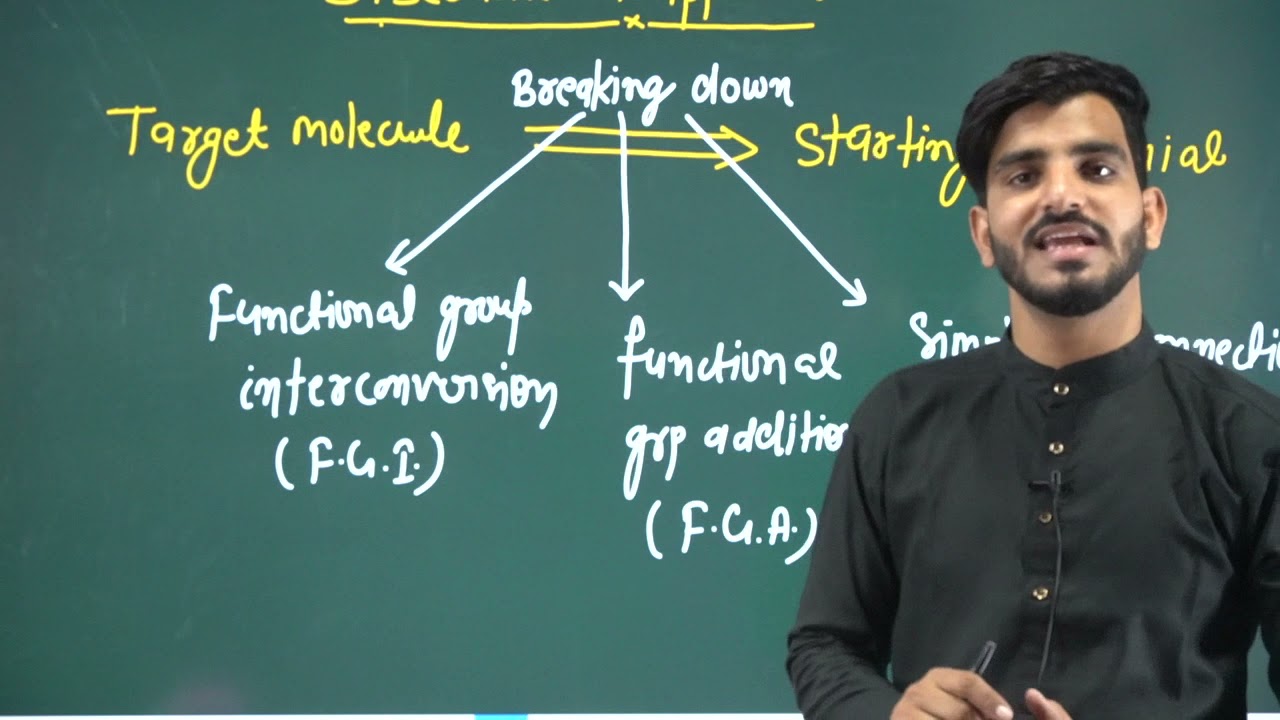




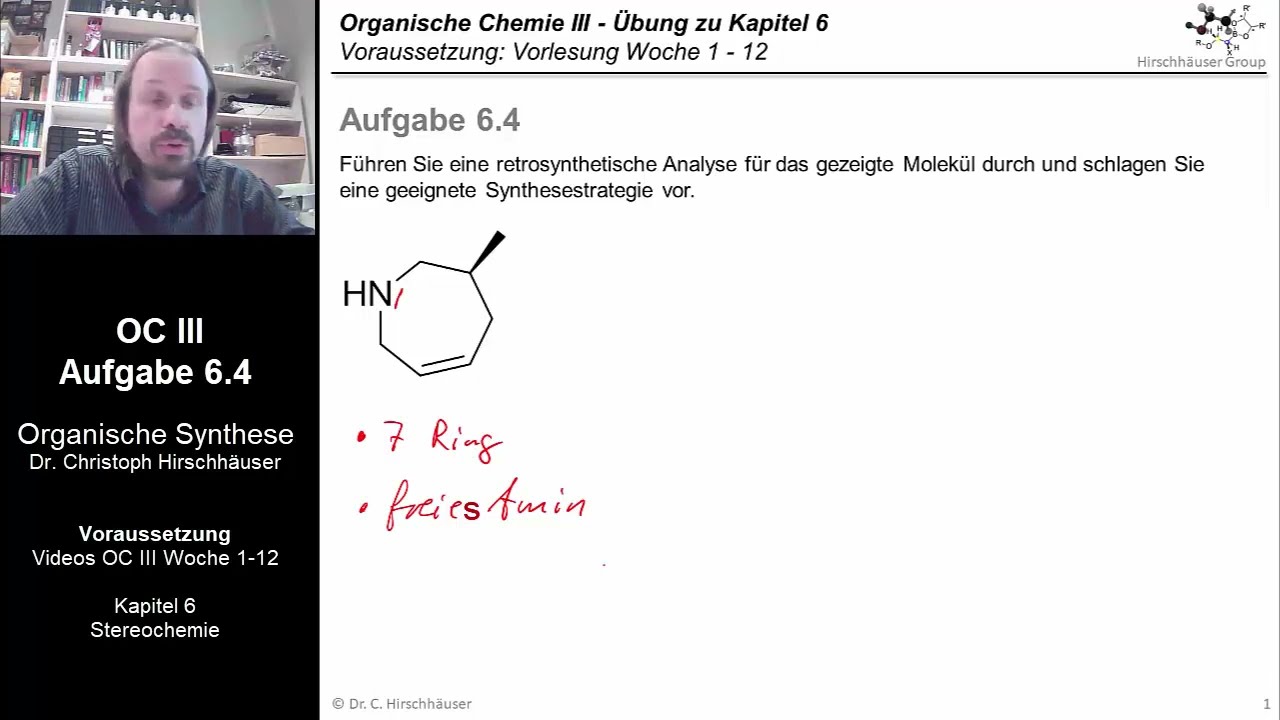
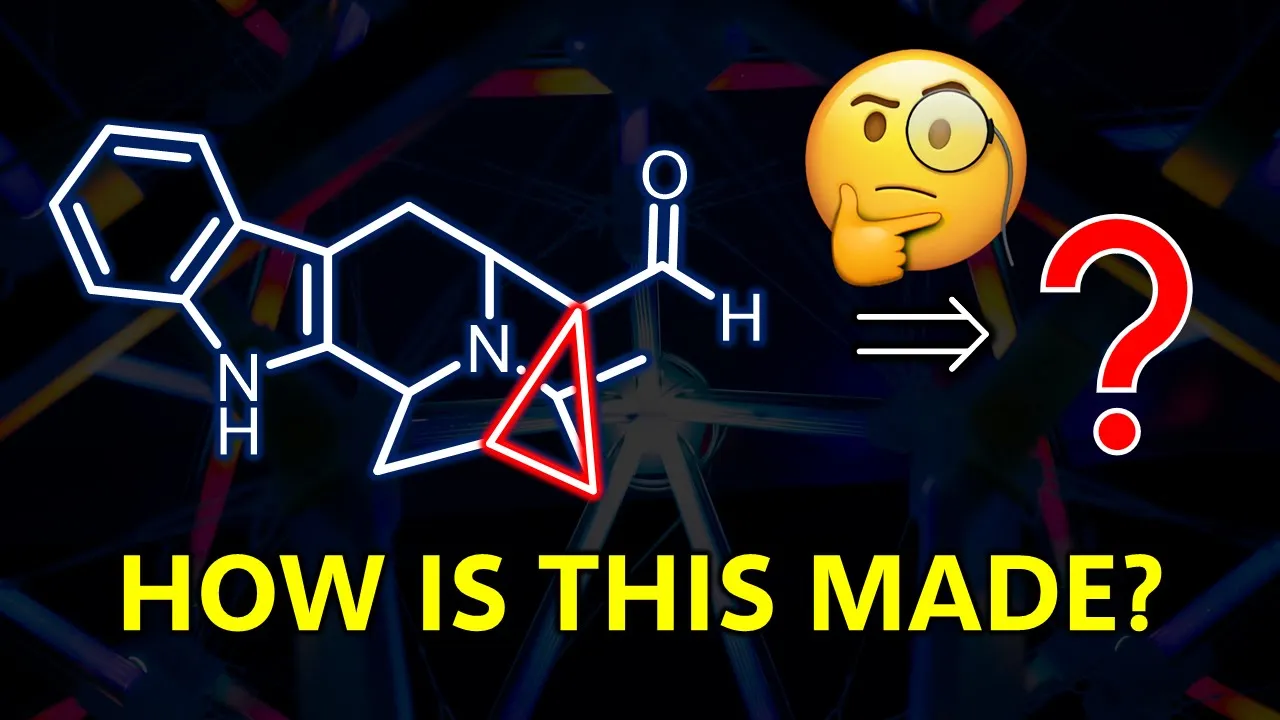
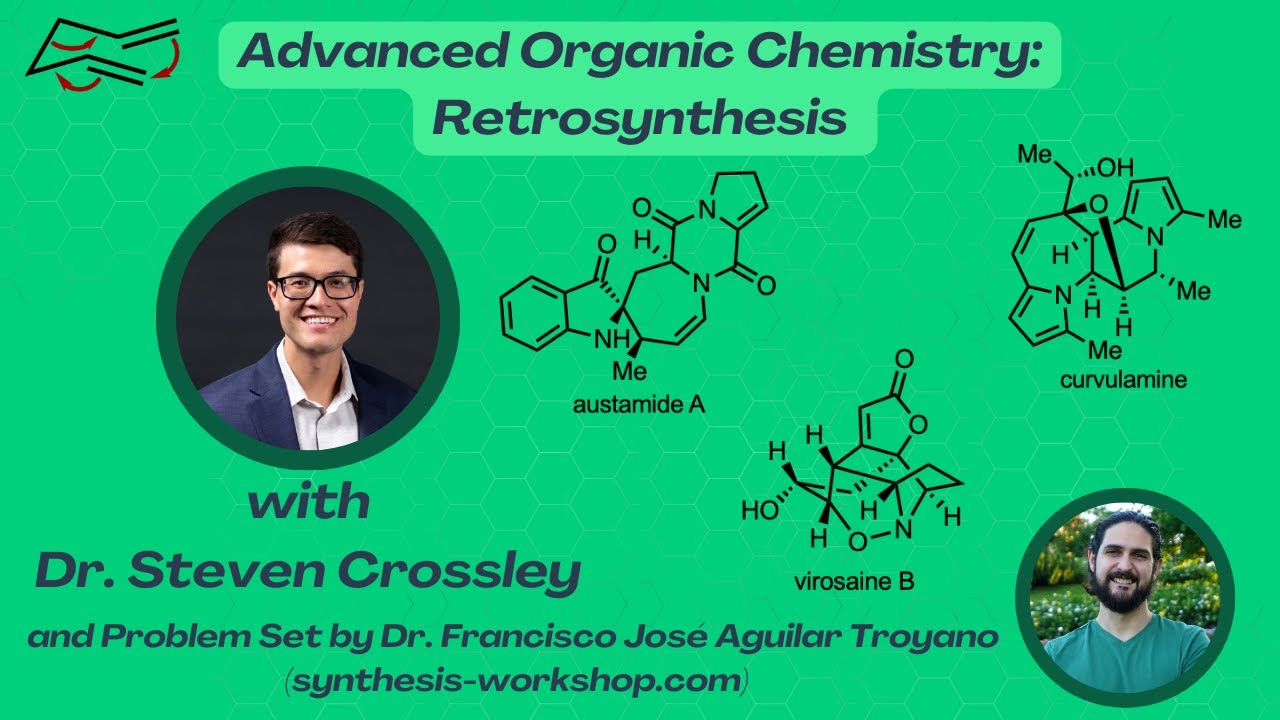
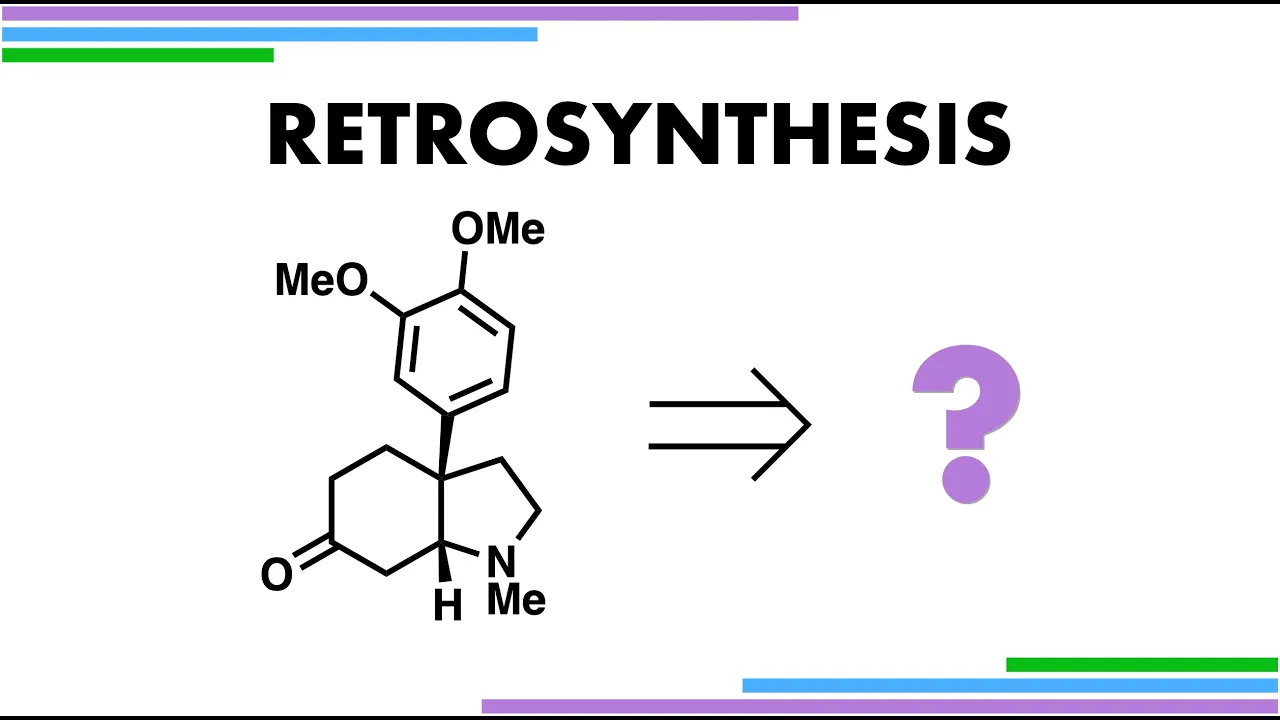


Retrosynthetic analysis is a systematic approach in organic chemistry where synthetic chemists work backward from a target molecule to identify strategic disconnection points based on known reactions, breaking the molecule into smaller fragments that can be reassembled through forward synthetic reactions; this method involves analyzing functional groups and determining which reactions could have generated them, then verifying that the pathway can be executed in the forward direction using designated starting materials.
Retrosynthetic Analysis Explained: Organic Chemistry Strategies & Examples
Added:Fundamental knowledge of organic reaction mechanisms, particularly nucleophilic addition, elimination, and pericyclic reactions.
Specific understanding of key carbon-carbon bond-forming reactions, including the Grignard reaction, the Wittig reaction, and the Diels-Alder cycloaddition.
Familiarity with functional group interconversions (FGIs) and basic stereochemistry, including R/S configurations and E/Z alkene isomerism.
Deep dive into 'synthons' and 'synthetic equivalents' to formally categorize disconnected molecular fragments and map them to real-world chemical reagents.
Study of protecting group chemistry to prevent undesired side reactions when designing multi-step organic syntheses.
Exploration of asymmetric and stereoselective synthesis to control the chiral outcomes of retrosynthetic routes.
Application of retrosynthetic strategies to the total synthesis of complex natural products and active pharmaceutical ingredients (APIs).
168K views2.3Klikes8:36Original Release: 2016-04-28
Professor Dave here let's talk about retrosynthetic analysis so we know that the task of the synthetic chemist is to build molecules and oftentimes we may go out into nature, we may find some naturally-occurring product we find has medicinal properties and we think, wow this is a great compound but you know it's only found in these tiny amounts in a sponge at the bottom of the Pacific Ocean, wouldn't it be great if we just had a ton of it? well guess what, we can build it ourselves. now the thing is we have to find a synthetic pathway to build that molecule and if it's a very complex molecule it's going to be very complicated to do but there's a method called retrosynthetic analysis, so it's basically, it's a lot like starting a maze from the finish and trying to find the start so instead of starting with some arbitrary molecule and trying to think, what can I do to this to get to the target molecule. what we do is we start with the target molecule and then we very selectively break it apart into smaller pieces in very specific ways. we will only break it apart in such a way that is feasible because we know that there is some reaction that will put it back together in the way that we just pulled it apart. and so in order to do this we need to basically look at the functional groups on the target molecule and think of what kinds of reactions can generate those functional groups, so I've drawn three examples here, say we're looking at this compound, let's say the allowed starting material is alcohols of three carbons or less. ok so we know that this is an alcohol, we need to build an alcohol from smaller pieces.
what reactions do we know that make alcohol's? well if you're in an organic 1 course the first thing that might come to your head is a Grignard reaction, so let's say we're gonna make a Grignard, now the kind of analysis that we need to do here, we're gonna be drawing these retrosynthetic arrows that do not represent reactions they represent the undoing of reactions, they mean back in time. and so what we're saying is how can we pull that molecule apart in a strategic way that represents a disassembling that creates fragments that when they react will come back together to create that.
well we know that when we do a Grignard reaction it is the carbon attached to magnesium which is the nucleophilic carbon that makes a new carbon-carbon bond with what was the carbonyl carbon of a ketone or aldehyde so this must have been the the carbonyl carbon in the substrate and then either of these can have been the carbon that attacked it. well let's look at our guidelines we need alcohols of three carbons or less so let's do ourselves a favor and split this up here so when we do retrosynthetic analysis we're either transforming functional groups or we're pulling the parent molecule apart into smaller pieces in a way that we know that we'll be able to put them back together in exactly that way so if we pull those apart, this arrow means what came before that could have been this, this is a valid retrosynthetic step, these are valid retrosynthetic precursors to this because if this Grignard reagent and this aldehyde react we will get that molecule, so that's how retrosynthetic analysis works, we're being very strategic in the way we pull apart a larger molecule. this is a very simple example if we have some giant polycyclic structure obviously this gets pretty complicated by then you're getting into PhD territory so we'll just settle on these simple ones. now over here we do need alcohols so this piece can go back to the alcohol, this is a valid retrosynthetic step because we know that from this alcohol we can get that aldehyde using an oxidizing agent like PCC. same thing goes right here, we know that with this guy this can have come from the alkyl bromide which can have come from the alcohol because we know that in the forward direction PBr3 will give us that and then reacting with magnesium will get us that so in any retrosynthetic strategy we should number one retrosynthesize all the way back to the allowed starting material, these are both alcohols of three carbons or less so that meets the criteria of what we're allowed to start with, then we have to go back in the forward direction and make sure that it's gonna work. well like we said PBr3 will give us that, magnesium will give us that, PCC will bring us from here to there, and if these two react we do get our target molecule. that's how retrosynthetic analysis works. let's take a look at these other two guys here. over here we've got an alkene and we want to make this from alcohols of four carbons or less, so again what we need to do is say what kind of molecule is this? what functional groups are present and what reactions do I know that generate those functional groups? well we know that this is an alkene, this is an alkene and what reaction do we know that makes an alkene? well, off top of our heads, in an organic 1 course we might think the Wittig reaction, so let's say we're doing a Wittig, lets retro-Wittig this thing. and we know that when we do have a Wittig reaction the negatively charged carbon on the ylide, and the carbonyl carbon end up having a double bond together so that means one of these must have been the carbonyl carbon and the other must have been the ylide, so let's arbitrarily assign one to one and the other to the other, doesn't matter which but we can say that this came from this, ok so here's the four carbon fragment, here's the three carbon fragment and this is a valid retrosynthetic step once again because if we react acetone with this with this Wittig reaction, we will get this product, so that's why this is a valid back in time kind of a step, and once again we want to go all the way back to alcohols. this guy's no problem, this can have come from isopropanol because in the forward direction we can oxidize. and then over here we know this can have come from an alkyl bromide which can have come from an alcohol so we have met the criteria, these are both alcohols of four carbons or less, and then to double check in the forward direction we know that if we react with PBr3 we're gonna get the alkyl bromide, we react with triphenylphosphine and some base, and we're gonna get the Wittig reagent this has to have a negative charge right there and we know that if we oxidized that with PCC or KMnO4, we're gonna get the ketone and then if this if this ketone and this Wittig reagent react we will get this alkene product. so this is once again a valid retrosynthetic strategy. now sometimes there is just one step, we oftentimes maybe in a quiz or something instead of saying here are some reactants what you get we might have a product and say what did they come from. so even if it's not a very large multi-step pathway it might just be one step, we still have to be able to think retrosynthetically, we have to go to think where did this come from so let's say we want to form this from six-membered rings, well what do we know that makes six-membered rings? Diels Alder reaction. so we want to take a look at this and say well here's a pi bond right there and where are the two sigma bonds? we know that any Diels Alder is gonna take three pi bonds and it's going to shuffle them around to make a pi bond and two sigma, well why don't we undo some sigma bonds that can have led to the formation of that Diels Alder product, so what we're saying is if we undo that if we do a retro Diels Alder then that must have come from these, here's our diene, here's our dienophile, and this works because we can always check, we can write the mechanism, if we try to combine these via Diels Alder we are gonna get that product. so the key thing to understand with retrosynthetic analysis is that we are always looking at a target molecule and strategically pulling it apart in ways that make sense because for everything that we undo we know of a way to redo it, and then if you have some designated starting material you really need to keep going until you get there but in general these are the basics of any retrosynthetic analysis. thanks for thanks for watching guys, subscribe to my channel for more tutorials and as always feel free to email me
Up Next

124:56
Organic Chemistry 1 Final Exam Review | Functional Groups & Reactions
@TheOrganicChemistryTutor
692.6K views•2021-04-19
83:56
Biocatalysis and Catalysis in Islatravir Synthesis | Merck Webinar
@SCIwheresciencemeetsbusiness
675 views•2020-10-08
10:54
Intermolecular Forces and Boiling Points Explained | Chemistry
@ProfessorDaveExplains
2.7M views•2015-11-05

17:31
Edible Water Bottles: A DIY Guide to Sodium Alginate Spherification
@ryan
10.5M views•2019-06-21
Related Study Plans & Knowledge Roadmaps
Structured learning paths in Chemistry
chemistry
Nuclear Chemistry: Decay, Meds & Fuel Cycle
01Introduction to Nuclear Structure and Radioactivity
02Decay Dynamics and Kinetics
03Radiation Interaction and Detection
+ 2 more learning modules
24h5 modules
Explore Roadmap
chemistry
Supramolecular Chemistry: Forces & Machines
01Foundations of Chemical Bonding and Intermolecular Forces
02Introduction to Host-Guest Chemistry
03Thermodynamics and Dynamics of Self-Assembly
+ 2 more learning modules
16h5 modules
Explore Roadmap
chemistry
Photochemistry: Excited States & Reactions
01Foundations of Light-Matter Interactions
02Molecular Orbitals and Electronic States
03Photophysical Processes and Jablonski Diagrams
+ 2 more learning modules
18h5 modules
Explore Roadmap
chemistry
Coordination Chemistry: Bonding & Properties
01Introduction to Transition Metals and Ligands
02Crystal Field Theory (CFT) and Geometry
03Magnetic Behavior and Spin States
+ 2 more learning modules
14h5 modules
Explore Roadmap