


















![[신경과] 다양한 치매 종류 / 순천향대병원 신경과 양영순](https://i.ytimg.com/vi/Y1kGgqi9fZY/maxresdefault.jpg)


Alzheimer's disease is a neurodegenerative disorder characterized by the accumulation of beta-amyloid plaques (formed when beta-secretase cleaves amyloid precursor protein, creating sticky amyloid beta monomers that clump outside neurons) and neurofibrillary tangles (formed when tau proteins become hyperphosphorylated and detach from microtubules inside neurons), leading to neuronal dysfunction, brain atrophy, and progressive cognitive decline; the disease has sporadic (late-onset, influenced by APOE-e4 allele) and familial (early-onset, caused by PSEN-1/PSEN-2 mutations or Down syndrome) forms, with no definitive cure currently available.
Alzheimer's Disease: Causes, Pathology, and Symptoms
Added:Basic neuroanatomy, specifically the structure of a neuron (axon, dendrites, synapses) and key brain regions like the hippocampus.
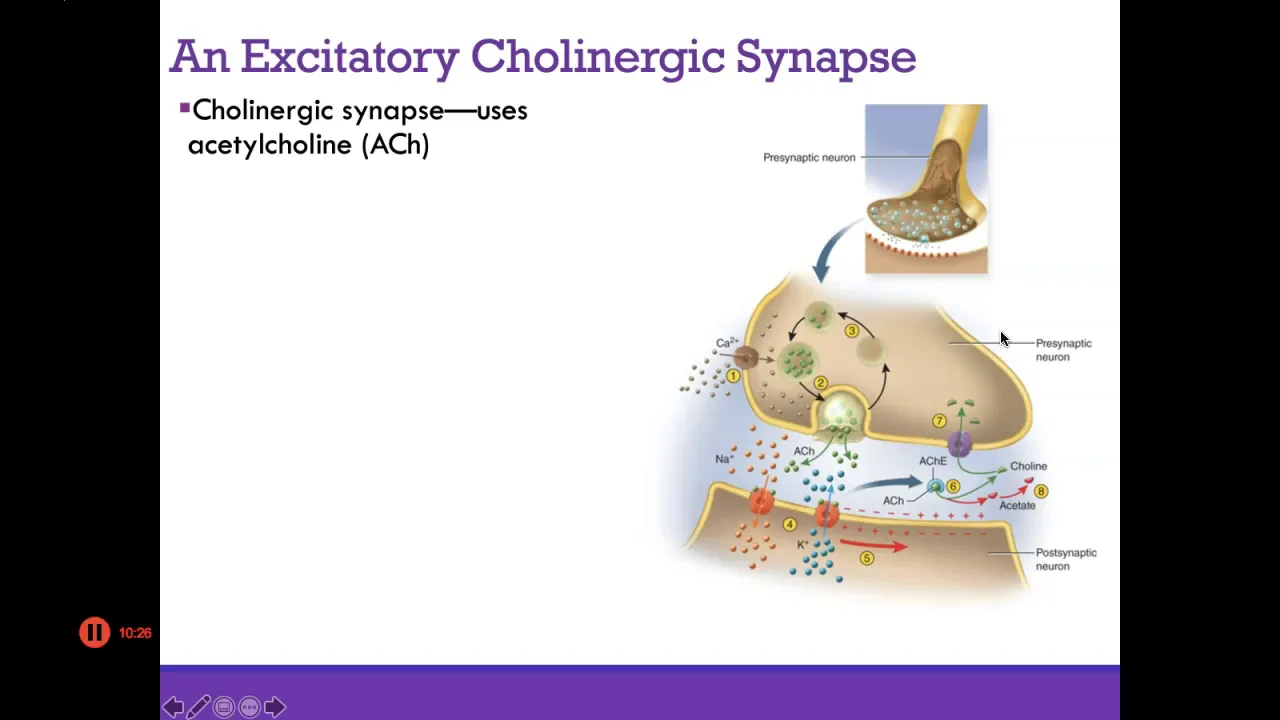
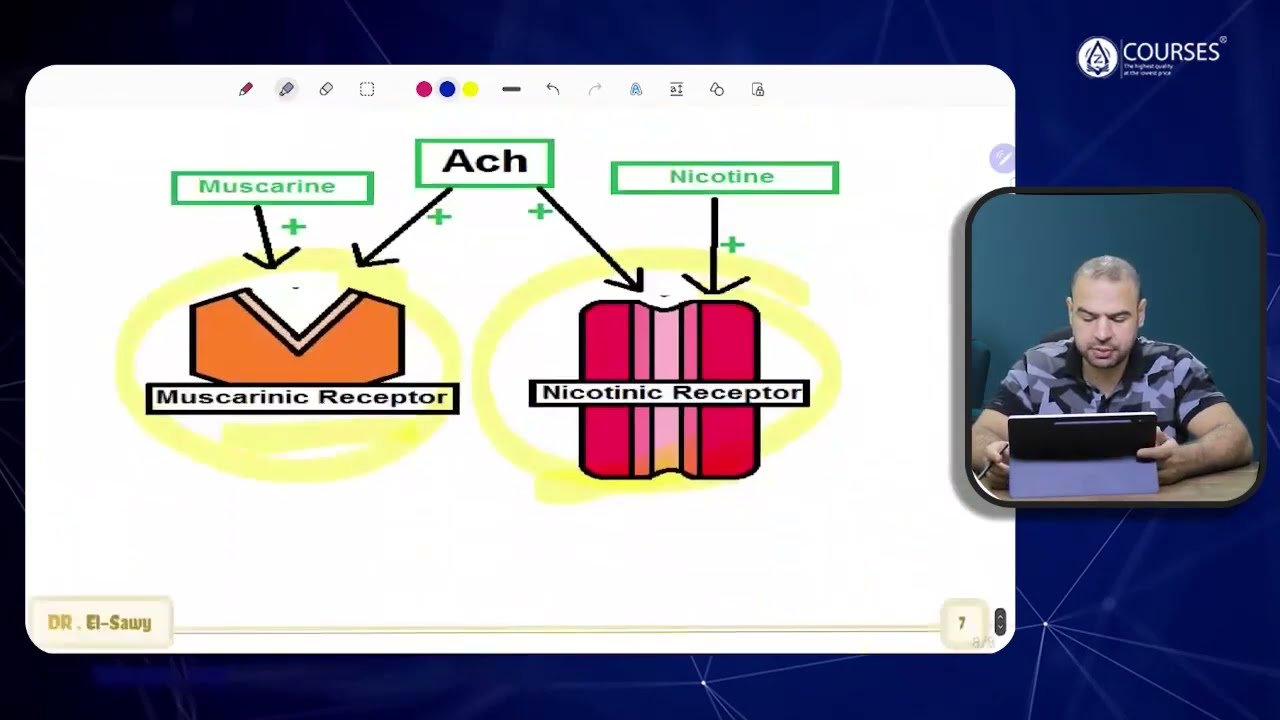
The fundamentals of synaptic transmission and how neurotransmitters (particularly acetylcholine) facilitate brain communication.
An understanding of basic protein biology, including protein synthesis, folding, and how misfolded proteins can disrupt cellular function.
Basic principles of genetics, including the difference between inherited mutations and genetic risk factors.
Modern diagnostic techniques for Alzheimer's, including cognitive testing, PET imaging, and cerebrospinal fluid (CSF) biomarkers.
Current and emerging pharmacological interventions, such as cholinesterase inhibitors and monoclonal antibody therapies targeting amyloid-beta.
Differential diagnosis of other forms of dementia, such as Vascular Dementia, Lewy Body Dementia, and Frontotemporal Dementia.
The role of lifestyle factors (diet, sleep, cognitive reserve, and cardiovascular health) in the prevention and management of cognitive decline.
1.9M views33.2Klikes8:54Original Release: 2016-03-22
Dementia isn’t technically a disease, but more of a way to describe a set of symptoms like poor memory and difficulty learning new information, which can make it really hard to function independently.
Usually dementia’s caused by some sort of damage to the cells in the brain, which can be from a variety of diseases.
Alzheimer’s disease, now referred to as Alzheimer disease, is the most common cause of dementia.
Alzheimer disease is considered a neurodegenerative disease, meaning it causes the degeneration, or loss, of neurons in the brain, particularly in the cortex.
This, as you might expect, leads to the symptoms characteristic of dementia.
Although the cause of Alzheimer disease isn’t completely understood, two major players that are often cited in its progression are plaques and tangles.
Alright, so here we’ve got the cell membrane of a neuron in the brain.
In the membrane, you’ve got this molecule called amyloid precursor protein, or APP, one end of this guy’s in the cell, and the other end’s outside the cell.
It’s thought that this guy helps the neuron grow and repair itself after an injury.
Since APP’s a protein, just like other proteins, it gets used and over time it gets broken down and recycled.
Normally, it gets chopped up by an enzyme called alpha secretase and it’s buddy, gamma secretase.
This chopped up peptide is soluble and goes away, and everything’s all good.
If another enzyme, beta secretase, teams up with gamma secretase, then we’ve got a problem, and this leftover fragment isn’t soluble, and creates a monomer called amyloid beta.
These monomers tend to be more chemically “sticky”, and bond together just outside the neurons, and form what are called beta-amyloid plaques—these clumps of lots of these monomers.
These plaques can potentially get between the neurons, which can get in the way of neuron-to-neuron signaling.
If brain cells can’t signal and relay information, then brain functions like memory can be seriously impaired.
It’s also thought that these plaques can start up an immune response and cause inflammation which might damage surrounding neurons.
Amyloid plaque can also deposit around blood vessels in the brain, called amyloid angiopathy, which weakens the walls of the blood vessels and increases the risk of hemorrhage, or rupture and blood loss.
Here’s an image of amyloid plaque on histology, these clumps are buildups of beta amyloid, and this is happening outside the cell.
Another big part of alzheimer disease are tangles, and these are actually found inside the cell, as opposed to the beta-amyloid plaques.
Just like other cells, neurons are held together by their cytoskeleton, which is partly made up of microtubules, these track-like structures essentially act like a minecart shipping nutrients and molecules along the length of the cell.
A special protein called tau makes sure these tracks don’t break apart, kind of like railway ties.
Although again, not completely understood, it’s thought that the beta amyloid plaque build-up initiates pathways inside the neuron that leads to activation of kinase, an enzyme that transfers phosphate groups to the tau protein.
The tau protein then changes shape, stops supporting the microtubules, and clumps up with other tau proteins, or gets tangled, and leads to the other characteristic finding of Alzheimer disease–neurofibrillary tangles.
Neurons with tangles and non-functioning microtubules can’t signal as well, and sometimes end up undergoing apoptosis, or programmed cell death.
Here’s an image of histology showing these neurofibrillary tangles formed inside the cell.
As neurons die, large scale changes start to take place in the brain, for one, the brain atrophies, or shrinks, and the gyri get narrower, which are the characteristic ridges of the brain.
As those get narrower, the sulci, which are the grooves between the gryi, get wider.
With atrophy, the ventricles, fluid-filled cavities in the brain, get larger.
So that’s the pathophysiology part, but why does this happen in some people and not others?
Well Alzheimer disease can be split into two groups - sporadic and familial.
Sporadic’s used to describe the late-onset type where the exact cause isn’t very well defined, and is probably a combination of genetic and environmental risk factors.
Sporadic accounts for the vast majority of cases.
With sporadic Alzheimer’s, the risk increases significantly with age, affecting around 1% of people age 60-65, and 50% of people over age 85.
In fact, a gene that’s been identified as possibly contributing to an increased risk of alzheimer disease is the e4 allele of apolipoprotein E gene, or APOE-e4.
Researchers have shown that the risk of developing alzheimer disease increases for patients that inherit one e4 allele, and increases even more for patients who inherited two e4 alleles, one from each parent.
Apolipoprotein E helps break down beta-amyloid, but the e4 allele seems to be less effective than other alleles, like the APOE-e2 allele, meaning patients are more likely to develop beta-amyloid plaques.
Familial alzheimer disease is used to describe cases where some dominant gene was inherited that speeds up the progression of the disease, so sometimes familial alzheimer disease is referred to as early onset Alzheimer’s.
Familial accounts for between 5 and 10% of cases, and can be caused by several gene mutations.
First, mutations in the PSEN-1 or PSEN-2 genes genes on chromosome 14 or chromosome 1, respectively, have been linked to early-onset Alzheimer’s.
These genes encode for presenilin-1 or presenilin-2, both protein subunits of gamma-secretase.
Mutations in these PSEN-1 or PSEN-2 genes can change the location where gamma secretase chops APP, producing different length beta amyloid molecules, which seem to be better at clumping up and forming plaques.
Another known genetic cause of Alzheimer’s is trisomy 21, or down syndrome, which involves an extra copy of chromosome 21.
It turns out that the gene responsible for producing APP is located on chromosome 21, which means that people with down syndrome have an extra APP gene, and so presumably increased expression of APP, and possibly increased amounts of amyloid plaque.
For this reason, familial Alzheimer disease often progresses by age 40.
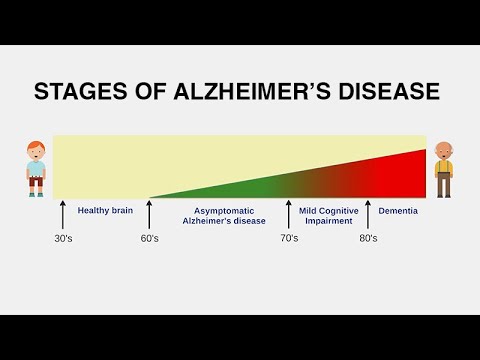
Symptoms of Alzheimer disease worsen as plaques and tangles build up, and neuronal damage accumulates.
In the early stages, symptoms may not even be detectable, as it progresses, patients lose short-term memory, like for example they may not be able to remember what they had for breakfast that morning.
They then progress to loss of motor skills, making things like eating difficult without help.
Also language becomes affected, making it more difficult to communicate.
Eventually they lose long-term memory, like forgetting the name of their spouse or even that they’re married, and progressively become more disoriented, which can be dangerous, because they might wander from home and get lost.
In late-stage, they become bedridden, and the most common cause of death is actually infection, like pneumonia.
Diagnosis of Alzheimer disease is really tough, because the only way to definitively show that a person had Alzheimer’s is by performing a brain biopsy after autopsy.
Usually a clinician will therefore make a diagnosis after excluding other causes of dementia.
Currently, there isn’t any cure for Alzheimer disease, some medications exist, but the benefits are small and there haven’t been any medications that clearly and definitively halt the progression of Alzheimer’s.
Up Next

5:59
Parkinson's Disease Pathophysiology: Dopamine Pathways Explained
@emmagiles1411
155.1K views•2015-02-24

48:47
Graphic Medicine: Comics for Collaborative Healthcare Communication
@nationalpatientadvocate
189 views•2023-12-04
11:10
Understanding Systemic Lupus Erythematosus: Causes, Symptoms, and Diagnosis
@osmosis
2.7M views•2016-05-23
3:05
Stages of Labor and Vaginal Birth | Childbirth Animation
@nucleusmedicalmedia
52.1M views•2017-08-18
Related Study Plans & Knowledge Roadmaps
Structured learning paths in Medicine
medicine
Abnormal LFTs: Diagnostic Workup & Pathology
01Liver Anatomy and Basic Physiology
02Introduction to Liver Function Tests (LFTs)
03Hepatocellular vs. Cholestatic Patterns
+ 3 more learning modules
12h6 modules
Explore Roadmap
medicine
Analyzing Blood Smears: RBC, WBC & Platelets
01Introduction to Blood Components & Smear Preparation
02Normal Morphology of Blood Cells
03Erythrocyte Pathologies & Morphological Variants
+ 2 more learning modules
12h5 modules
Explore Roadmap
medicine
Mechanical Ventilation: Waveforms & Alarms
01Anatomy and Physiology of Breathing
02Introduction to Mechanical Ventilation & Core Modes
03Ventilator Settings and Waveform Interpretation
+ 2 more learning modules
12h5 modules
Explore Roadmap
medicine
Neuro Exam: Localization & Stroke Syndromes
01Foundations of Neuroanatomy and Vascular Supply
02The Neurological Examination: Step-by-Step
03Principles of Neurological Localization
+ 3 more learning modules
18h6 modules
Explore Roadmap