











![Vektörler-1 [Temel Kavramlar]](https://i.ytimg.com/vi_webp/5EpXmysicZA/maxresdefault.webp)




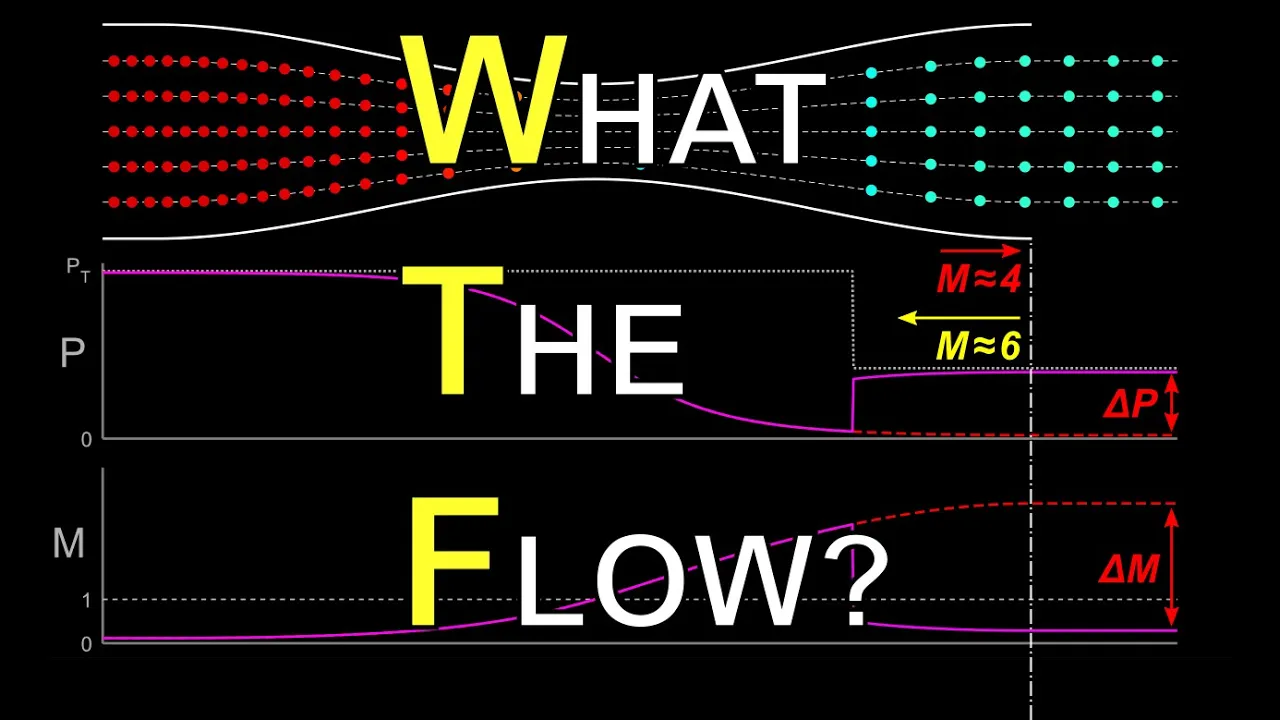
![Normal shock waves [Aerodynamics #18]](https://i.ytimg.com/vi/GwNgymwwFAQ/maxresdefault.jpg)




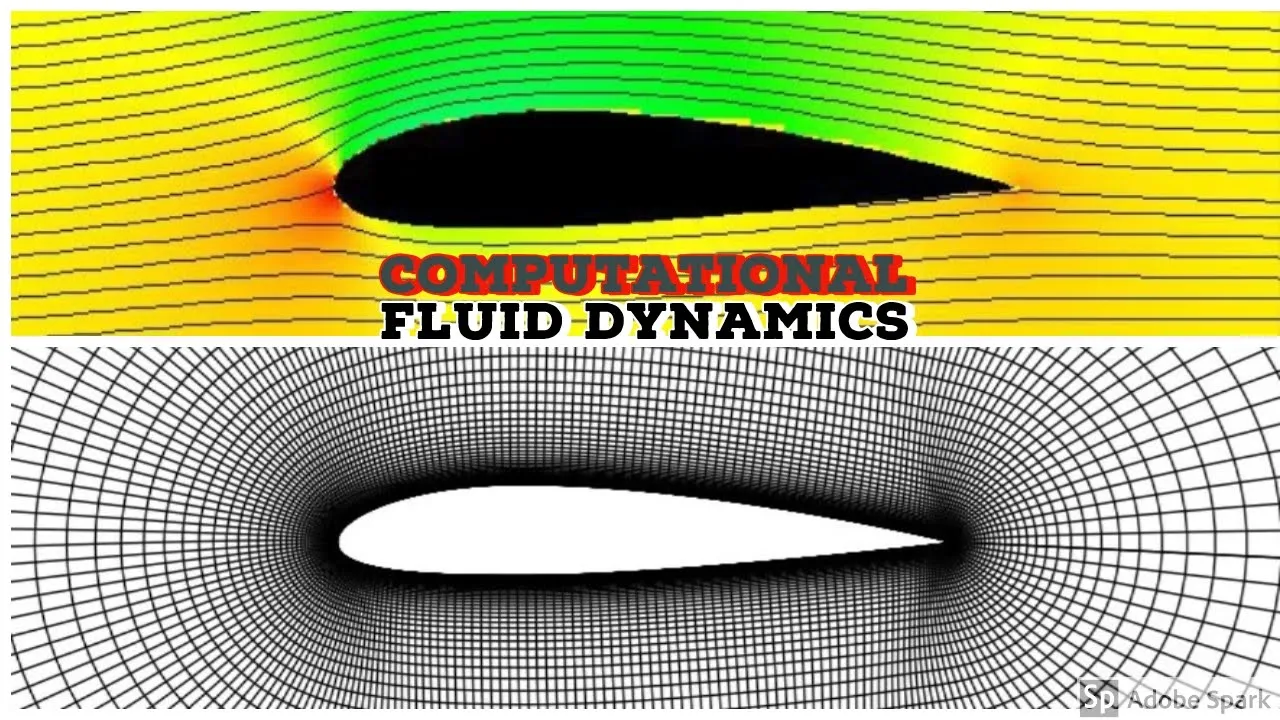

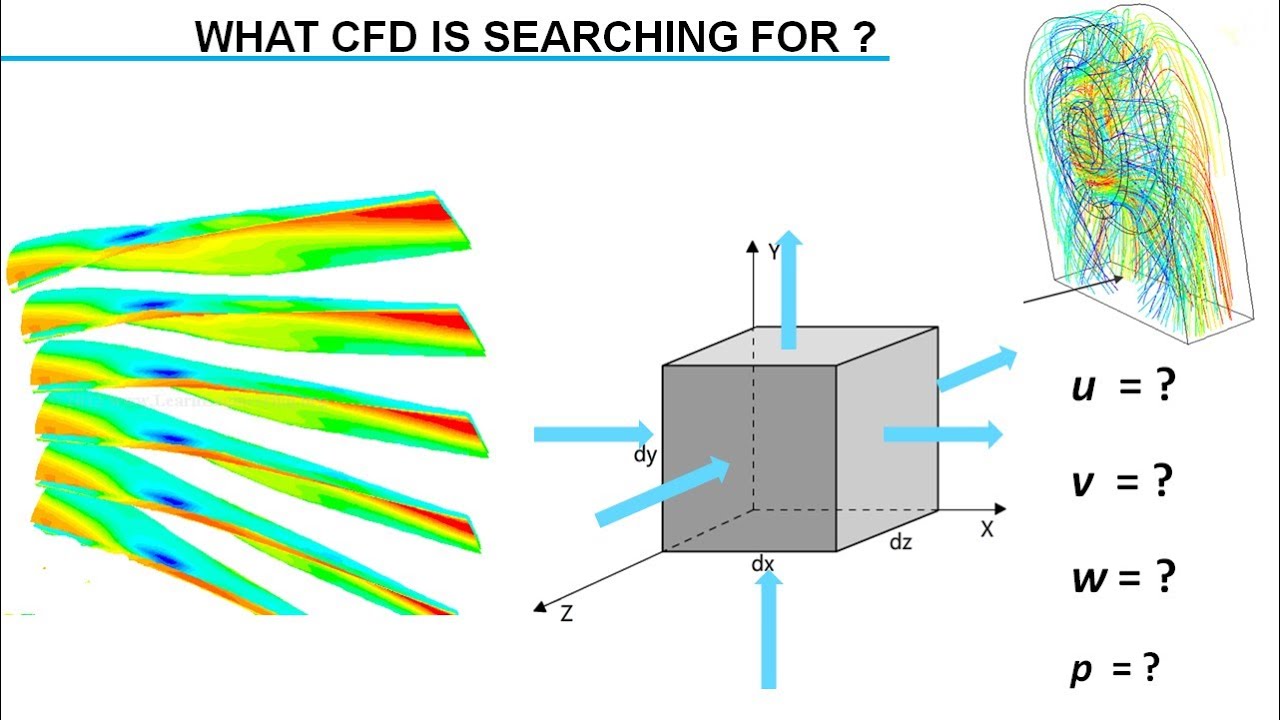
![1 - Introduction à la dynamique des fluides numérique [CFD]](https://i.ytimg.com/vi/0eiS1J8DFS8/hqdefault.jpg)
Aerodynamics is the study of air motion around moving objects, governed by fundamental principles including the continuity equation (mass flow rate in equals mass flow rate out) and Bernoulli's equation (total pressure equals static pressure plus dynamic pressure). These principles explain how wings generate lift through pressure differentials created by airflow over curved surfaces, with lift calculated as L = q × S × CL and drag as D = q × S × CD, where q is dynamic pressure, S is wing area, and CL/CD are dimensionless coefficients dependent on angle of attack, Mach number, and Reynolds number. The four main forces acting on aircraft are lift (upward), drag (opposing motion), thrust (forward from engines), and weight (downward gravitational force).
Aerospace Engineering: Aerodynamics Fundamentals Explained
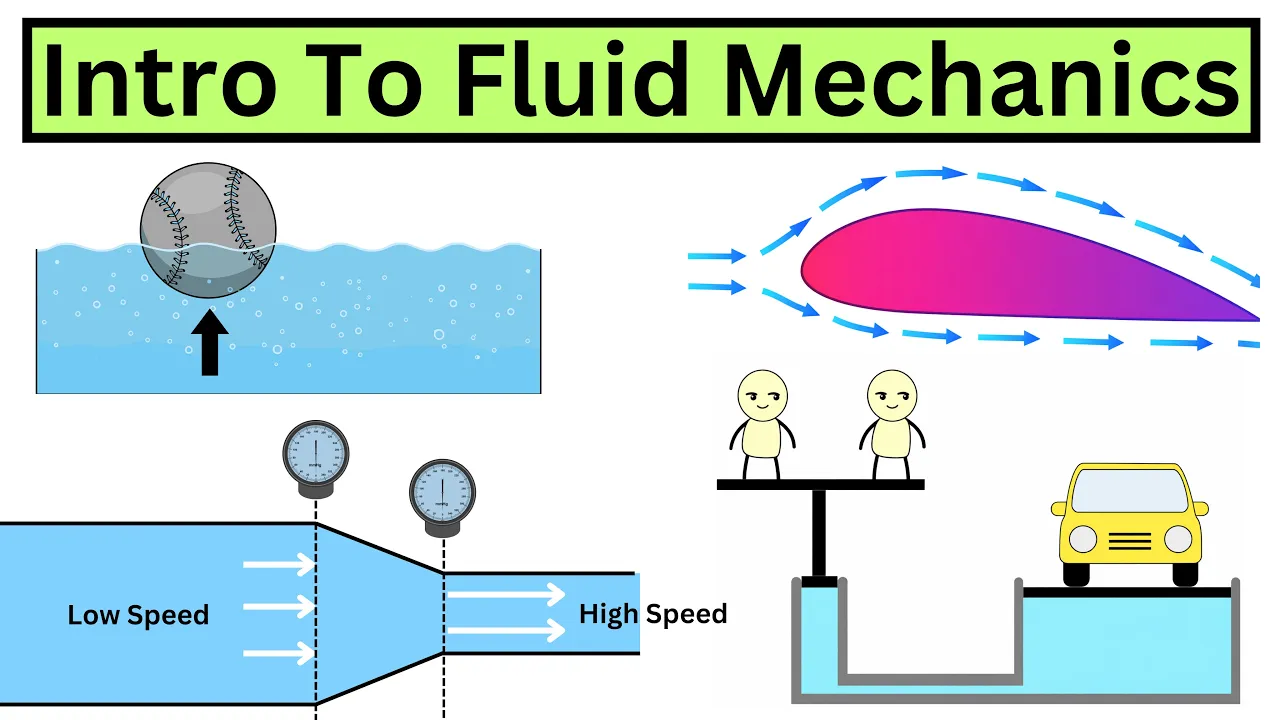
Added:okay hello everyone and welcome to introduction to aerospace engineering my name is Andrea and I will be a teaching assistant for this course this is the first time I'm teaching this course so if something is unclear during the lecture or you have a question feel free to call my name and ask it okay we'll see our agenda for today today I will talk about what aerospace engineering is what it consists of and from the rest of the class we will focus on aerodynamics which is one of the main disciplines of aerospace engineering so what is aerospace engineering it is a branch of engineering that deals with design development building and testing of aircraft and spacecraft here I highlighted just a few other projects that are going on today in aerospace engineering and I will talk about them a little bit more so that they could have an idea of what it was based engineering is let's start with Airbus a380 this is the largest passenger aircraft ever built and it can carry about more than 500 people at a time and you can see the sitting configuration here so it fits ten people in there oh and also there are it is a double deck so you can imagine how many people can fly in one flight it weighs around 600 tons so you would wonder how this heavy machine can go up in the air the answer is in your space engineering next is dragon capsule this is remarkable because it is the first private spacecraft to dock the international space station it delivered the necessary supplies to us or not but SpaceX is working on the next model of Dragon that will be able to deliver people to international space station and you've probably heard about this one in the news it is curiosity Mars rover from NASA it is Mark Science Laboratory that will investigate the surface of Mars and and find out if it's possible to support microbial life there so you would question how is car-sized object was delivered millions of miles away and there was a seven million communication in the way but it was still possible and is there on Mars and the answer is aerospace engineering also you've probably heard about this guy Felix Baumgartner who jumped from 24 miles above the Earth's surface he was the first person to achieve supersonic speed that is the speed higher than the speed of sound and he was not in the vehicle at the moment so he broke a world record and achieved a speed of 840 miles per hour what it made it possible for him is his pressurized pressurized suit from David Clark company which he nears in designing protect protective equipment for pilots and astronauts so one of the World Records because of aerospace engineering next is boring anthem i it is a reconnaissance drone and drone means that it does not have a pilot inside it can fly autonomously or it is controlled from ground station and phantom eye is remarkable because it runs on liquid hydrogen instead of conventional fuel so it can stay up with liquid hydrogen is more efficient than ordinary fuel so this aircraft can stay up in the air for four days without refueling which makes it a pretty good deal for defense industry that can make surveillance for more time now next one is Lockheed Martin as our 72 aircraft it isn't development currently but a lot of kid Martin claims that when it's ready this aircraft will be able to achieve speed that is six times higher than the speed of sound and in order to do that the engines should be modified should be ready site redesigned completely because conventional turbo jets are not capable of achieving low speeds and here you can see NASA's Flying Saucer spacecraft it really looks like a flying saucer and it is actually ready for its first flight but weather conditions were not optimal so the first flight test wasn't the way but this spacecraft is designed to test heavy payload landing on Mars and why do we need heavy payload because NASA hopes to put humans on Mars and human habitation module weighs a lot and the final project that I want to highlight today is space X Falcon heavy rocket it is also in development currently but when it's ready it will be the most powerful rocket that was ever built after Saturn 5 that was used to deliver people on moon but space X's goal is even more challenging to put people on Mars so Falcon Heavy will be one step on achieving that goal so I've covered just a small part of aerospace engineering but you can see that it pushes the boundaries of impossible further and further everyday and if you decide to pursue aerospace engineering hopefully one day you'll be part you'll take part of the project language aerospace engineering is divided into several disciplines you cannot call yourself just an aerospace engineer you need to have expertise in one or the fields below but also you need to know other fields so that you can communicate with other people in your team so some of the main disciplines of aerospace engineering are aerodynamics which studies the motion of objects in here propulsion which is how you choose the engine and a few you use to push your knee comes forward structural analysis is how you build something that is capable of achieving the goals of the mission and that can meet the requirements on the loads that will be put on aircraft or spacecraft material science is which material to choose so that your mission can be accomplished and stability and control this is how you control your in your craft of spacecraft and make it going with where it needs to go and today we will focus on aerodynamics we will talk about what is it and where it's used and also we will learn basic principles of aerodynamics such as what makes the airplanes by and what forces affect the flight what are some of the basic performance and flow parameters and also how you real-life things are more difficult than described in theory so let's start aerodynamic studies motion of air around moving objects aerodynamics is applied not only in aerospace industry but also in automobile industry and even sports yoga dynamics is mainly used for design of better-performing aircraft spacecraft and in other industries as well today we will focus on the aircraft so for example using aerodynamics these engineers can test a model of aircraft in the wind tunnel and later they can modify this model so that it will be become the optimal one another example it is how you make better design decisions for spacecraft so why reentry vehicle is and not sharp-pointed you would logically conclude that sharp-pointed objects have less drag but aerodynamics can explain this so you will learn if you pursue your space engineering you will learn a lot more about this later but for now just believe me so when objects travel with speed of greater than speed of sound their shock waves occur so in the first example you see that the object is sharp pointed and the shock wave is attached to it that makes it this shockwave weaker than the other shock wave that occurred here with what shape body so in the first case the temperature behind the shock wave that is here will be lower than the temperature behind this shock wave and that means the object in the first case will heat up more than the object in the second case and this makes it better because we can come up with materials that will withstand the temperatures on the Descent on this capsule with astronauts for example all right so now let's learn the basic basic principles of aerodynamics and we will proceed okay so before we start let us review some variables that we know from physics already but these variables are used a lot in aerodynamics the mental rivals the first one is pressure and pressure is normal force acting on the surface of a unit area so let me define it here as force divided by area and so if you have a surface like this which is of unit area the pressure will be the force that acts on this area and if the force should act perpendicular in order to measure pressure correctly so pressure is measured in Newtons per meter squared squared or in English units it will be force per feet square so I hope you remember this from your physics this is just a quick review the next variable is density and density is how much substance you have in a unit volume so density equals to mass divided by volume if you have a volume a unit volume like this cube for example then the density of the substance inside this cube will be equal to mass of the substance divided by the volume all right and then sitting is measured in kilograms per meter square meter cube sorry or in English units it will be slugs per feet cute all right and the final variable that we will use a lot today is velocity and I will write it down like a smoothie here so that we will not confuse it with volume so velocity is the rate of change of position in time so if we have position denoted by X right here velocity will be derivative of X with respect to time and velocity has a magnitude which means that you can have high speed on low speed and what we denoted here as small vector small arrow and big arrow but also velocity has a direction which means you can go in this direction over in the other direction and that makes velocity a vector quantity so that means if either of them changes velocity changes and if your speed is speed stays the same but direction changes that won't change the velocity okay review that but now since we will study aircraft you need to learn some of the terminology on the aircraft regions it will be just wing terminology because we will cover just basics today so let's look at the wind from the top so first of all we define this distance from one one end of the wing to the other end it is denoted as B and it's called a wingspan that's right all right next one is the area of the Moon so wings can be different shapes but area is measured without taking into account the shape so lets you know that has s also it can come and it can be called platform area next we have some air coming and we travel at some speed that will be known as the infinity which means free stream velocity that is the velocity far from the wind let's write it down as well next is this edge of the moon it is called the leading edge because it's the first one to meet the flow of air and obviously we'll also be on the edge of the loop which is called a trailing edge and it's the last one to go into the fourth air okay and the last varietal that we will use today is the distance between the leading edge and the trailing edge it is called chord and denoted by C so C is called all right so this is the top view of the wing but let's look at the wing from the side if we cut out a section of the wing we will have a shape like this and you will learn today white wings are shaped like this so if we look from the side we still have the core but also there's one more important variable that is angle of attack which is how much the air form so this shape is called a careful or profile over me so angle of attack is denoted by alpha and it is how much the earphone is inclined with respect to the freestream all right so this will be good enough for today's lecture for wing terminology now let's actually learn why the wing flights let me erase this partner so in order to understand why wings fly let's start with airfoil in the wind tunnel let's draw it here so this is our air fall so wind tunnel basically just imitates the flow of air as if the air phone was actually flying in so if we follow one particle into the wind tunnel let's see what we have one air particle comes here and going around the airflow and exits of it at the other side and if we follow another particle it will do exactly the same so what can we conclude from here we can say that whatever mass enters in the wind tunnel also exits at the other side because the walls of the wind tunnel cannot make any particles with the wind tunnel so this is called principle of continuity so that means mass flow in equal to mass flow out let's write it down okay let's introduce some numbers here so that we can mathematically put it write it down so let's name the inlet as one and the outlet is to the area of the inlet will be a 1 and the area of the outlet will be a 2 so first of all continuty will tell us then + 1 + 1 dot is equal to m2 dot dot means the derivative with respect to time so mass flow how much mass is entering the wind tunnel per second is equal to the same mass exiting the tunnel okay now let's remember what mass is mass is equal mass equals density multiplied by volume right and what is volume well is area multiplied by distance for which that areas transferred so area is a row with distance and let's say X is the distance so now we have this equation let's substitute this expression into this equation that will give us so we said that dot means the derivative with respective time let's write it down as and dot equals derivative of mass whole how much mass enters the wind tunnel by the time in one second so if we substitute now this expression here we can say a derivative a third time DT and now it's time to make some assumptions so let's say that the air that enters the wind tunnel is the same air that exits that means the density of this air will stay the same if we assume not the supersonic flow so that means the density is constant and in this case it will be incompressible flow so we can take density out of this expression of relief and then area obviously stays the same by geometry so that will give us the relative of distance with respect to time and we remember that this expression is equal to velocity and that means that mass flow rate is equal to density multiplied by area multiplied by velocity so now we can substitute this expression for MDOT in this equation so what can we conclude from this expression if density stays the same we can cross it out from both sides of the equation the areas are the same by geometry so we can cross them out and that will give us that V 1 is equal to V 2 that is the speed at which the inner enters the winter will be the same as the speed at which the air exits the winter so it's pretty logical but now let's see what happens if we change our window a little bit and put the exit right here about the air flow let's call this area a 3 so the same mass should still go through here through this part which is a 3 but principle of continuity still applies so we can say that m1 dot whatever enters in the wind tunnel should be equal whatever is passing through this point here which is equal to an 3 dot and then if we substitute the same expression for mass flow rate this will give us Rho 1 a 1 V 1 equal to Rho 3 a 3 and we can make the same assumption for the density we assume that incompressible flow at low velocities and this will leave us with a1 v1 equals to the a3 b3 but we know that a 3 is a lot smaller than a 1 small and this will from this equation we can conclude that v3 should be greater than v1 for the equation to hold so this will give us our first conclusion and the velocity of the air in the section with smaller area is larger than the velocity of the air who is a section in the section with larger area okay so let's memorize this we will use it later as you will see and now let's derive the Bernoulli's equation so in order to derive Bernoulli's equation we apply basic physics principle that energy can be neither created nor destroyed so that means that total energy is always conserved but what makes total energy it is a sum of kinetic energy and potential energy total energy is equal to potential but this is for large objects and it's mainly used in physics but in our case we're concerned concerned with volumes of more than any other study so let's find out what the energy is per unit volume energy now let's remember what kinetic energy is kinetic energy is one-half mass multiplied by velocity squared let's substitute this expression into an equation let me put potential energy first here and we want to substitute the expression for kinetic energy which is one-half mass and divided by one and we can see here we know this quantity mass of substance per unit volume it is equal to density so we can substitute density into this equation all right so we know one point one part of the equation here but what is potential energy per unit volume let's think about it for a bit can I erase here okay so let's imagine we have a unit volume of some gas in the cube and this gas has some pressure inside now potential energy is the ability to do work so what kind of work can gas in the Box do let's think about it so if we open up the box open one side of the box same but this side so if we let the side of the box move what will happen the gas inside will move this side of the box for some distance because of the pressure that was inside and it will move this side until the pressure of the gas will equal the pressure outside the box until the equilibrium but that means pressure can do work on the side of the box when moving it for some distance so that means that pressure is a potential energy per volume of a gas but since the gas is inside and it's static we call it static pressure so let's rewrite this equation with our conclusion from here so total energy per volume will be just total pressure and potential energy per volume will be static okay now so if this is this is total pressure and this is static pressure this quantity should be some kind of pressure as well for the equation to equal so since it has velocity we will call it dynamic pressure because it's moving and we denote it as Q and this is alright now let's write down this equation with substituting dynamic pressure so total pressure will equal the static pressure plus dynamic pressure and this equation is called Bernoulli's equation and using this equation we'll learn why the wing is able to fly all right now let's apply this equation to our wind tunnel so for in that one before apply Bernoulli's equation we will get total pressure should be equal everywhere inside the wind tunnel but for inward one we will get P static one static pressure and inward 1 + dynamic pressure at inlet one but let's substitute the expression for dynamic pressure it will give us one half and this should be equal to total pressure it's still equal inside the wind tunnel and this will if we consider area three we will have that piece tatak 3 plus one half now let's rearrange and we assume that this is incompressible flow which means the density is constant so we can assume density before to roll everywhere but remember that the three was greater than v1 for what we found out before so that means if we subtract V 1 from v3 it should be greater than zero but that that means that this side of the equation should be greater than zero as well and that will give us that piece panic is greater than these tank food now let's think about this for a little bit so P static one is pressure here but also if we have if you had a wind tunnel straight whatever pressure the air enters here will be the same while it's moving through the wind tunnel so if P static one is greater than P static three what will happen to our airfoil it will tend to move to the air here that is less pressure so it will tend to move where you know upwards it will have a force that acts to the area with lower pressure in this K that will be upwards since velocity of air above the air full is greater than the velocity of air below the air force and what is this force so this is our famous lift force it is denoted as L and this is why air fall and wing and aircraft is able to fly so let's write down then lift is an aerodynamic force that results from pressure distribution on the surface of your dynamic force due to pressure distribution all right now it's time to define other forces that act on the aircraft there's also drag the results from pressure distribution but it's a lot smaller for them for good design well-designed air foam drag should be a lot smaller than the lift we found out that it has lift upwards and then drag is of course that occurs for the same reasons as lift but it should be less and it opposes the motion of the aircraft what enables the aircraft fly is thrust that occurs from the engines thrust is denoted as T and there is obviously weight that acts on everything on our planet and it's denoted by V so you can see that there are four forces main forces that act on the aircraft during flight all right now let's proceed on to how lift is calculated all right so lift is equal to dynamic pressure multiplied by the platform area multiplied by CL this formula was determined theoretically but also proven experimental many times and let's define drag at the same time these are two main aerodynamic forces drag is equal to dynamic pressure multiplied by platform area it's almost the same but the coefficient is CD so what are these coefficients CL is called lift coefficient and CD is called drag coefficient now so imagine if we had two airplanes one very small that fits into wind tunnel and the other one is Airbus a380 if we calculate lift they will be drastically different from each other so we cannot make any conclusions by just looking at the value of lift but CL is a coefficient so that means if it is dimensionless and these two coefficients enable us to understand how how good the airfoil performs so these are called performance parameters and it was determined that see Alan see with coefficient and drag coefficient depend on angle of attack and also on two other dimensionless numbers which are mark and Reynolds number so let me define them let's write it down that CL and CD functions all and we'll attack alpha Mach number and CD but let's see what Mach number is Mach number is the ratio of the speed on the flow to the speed of the sound let's define in here as velocity to eight so this is and eight is speed of sound and what is green olds number Reynolds number is a measure of viscosity of the flow Reynolds number is defined as density multiplied by velocity multiplied by cold over the earphone and divided by this custody so this is called Reynolds number and U is viscosity so Hainan high Reynolds number means that viscosity is low so we can assume that the flow is inviscid this is true for low velocity flows and long rayless numbers mean that it is high viscosity flow so it's called compressible flow and you will learn about that more if you pursue space engineering you will learn more about it in your following in your courses and depending on Mach number flows can be supersonic subsonic or transonic so if Mark is less than one this will be a subsonic flow which means flows with vanilla speeds lower than the speed of sound and supersonic is the speed greater than the speed of sound so with coefficient and drag coefficient they depend on these numbers and let's see how with coefficient depends on angle of attack was determined that with coefficient the graph with dependence looks somehow like this shall we see that as we increase the angle of attack the lift coefficient increases so that means the air fall will produce more with partners at some point it will stop producing more lift it is called a critical angle of attack and see and after that stalling a cruise that means there is less and less lift as you increase the angle of attack so I think this is good for today but this we when we talk about air Falls we consider the wing from the side so that means we considered a two dimensional flow we assume that the wing was infinite but in reality so that means the physics are a little bit different and if we consider a finite wing and 3d flow we will see that an effect like this occurs it is called vortices and if you when large aircraft flies you can see after that a spiraling flow on the air this occurs because pressure below the wing is larger than pressure following today so when they meet at the end flow the world.we wants to go up since it has less pressure here and this makes this effect of spiraling and this is cortices and that is why aircraft use leds this decreases gorgeous vortex effect drastically and when the vortexes are small this decreases drag as well and that is what women's are used in commercial airliners to make them more efficient so this concludes my presentation for today and if you have any quick like next time we will cover propulsion and if you have any questions this is time to ask thank you for your attention see you next class
Up Next
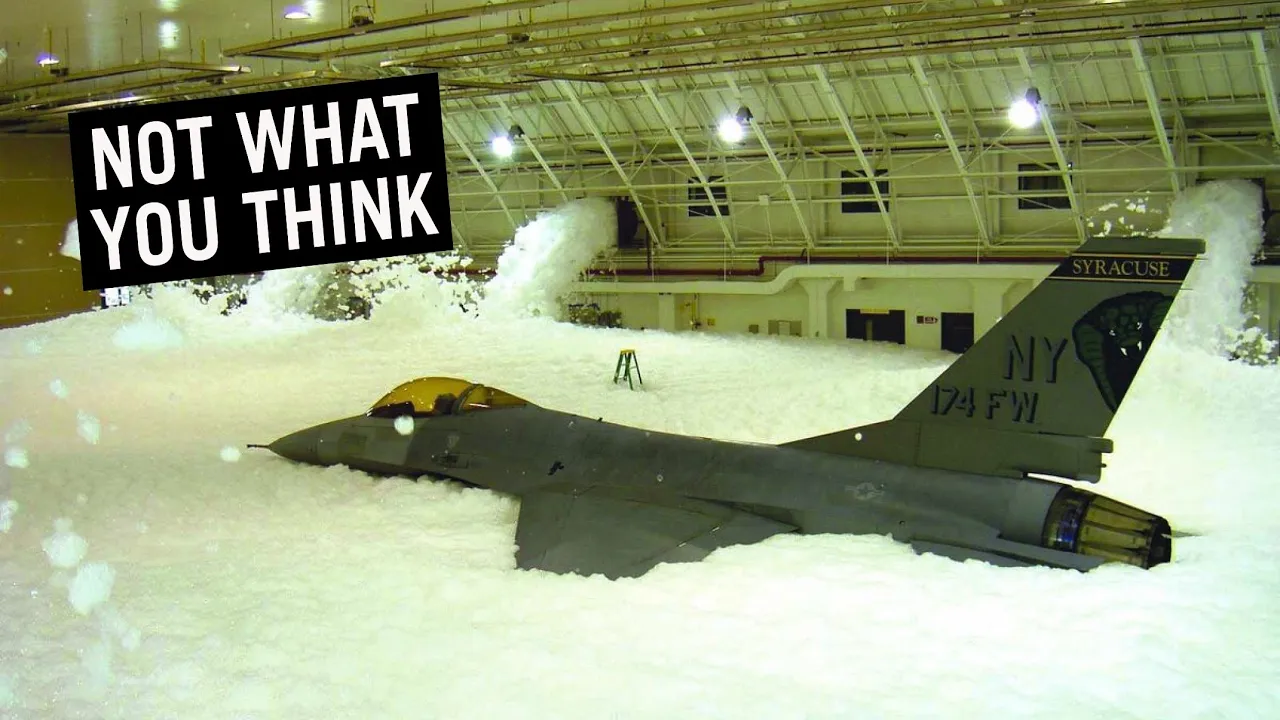
F-16 Fighting Falcon: Designed for Aerodynamic Instability
@NotWhatYouThink
1.1M views•2023-04-21

Ultrasonic Transducers: Resonant Frequency Measurement and Horn Design
@imajeenyus42
229.9K views•2017-02-22
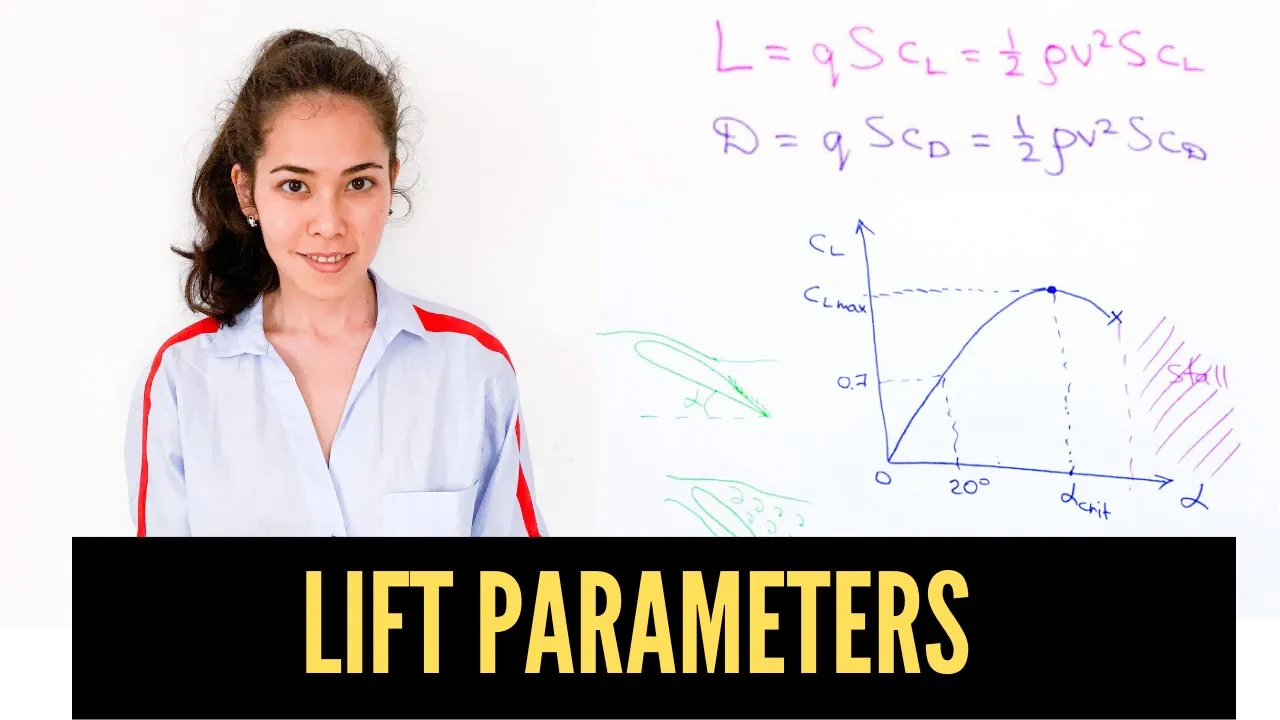
How to Calculate Lift: Lift Coefficient and Angle of Attack
@AliyaBurkit
60K views•2020-05-28
How a Student's Question Saved a NYC Skyscraper from Collapse
@veritasium
22.8M views•2025-04-26
Related Study Plans & Knowledge Roadmaps
Structured learning paths in Engineering