


















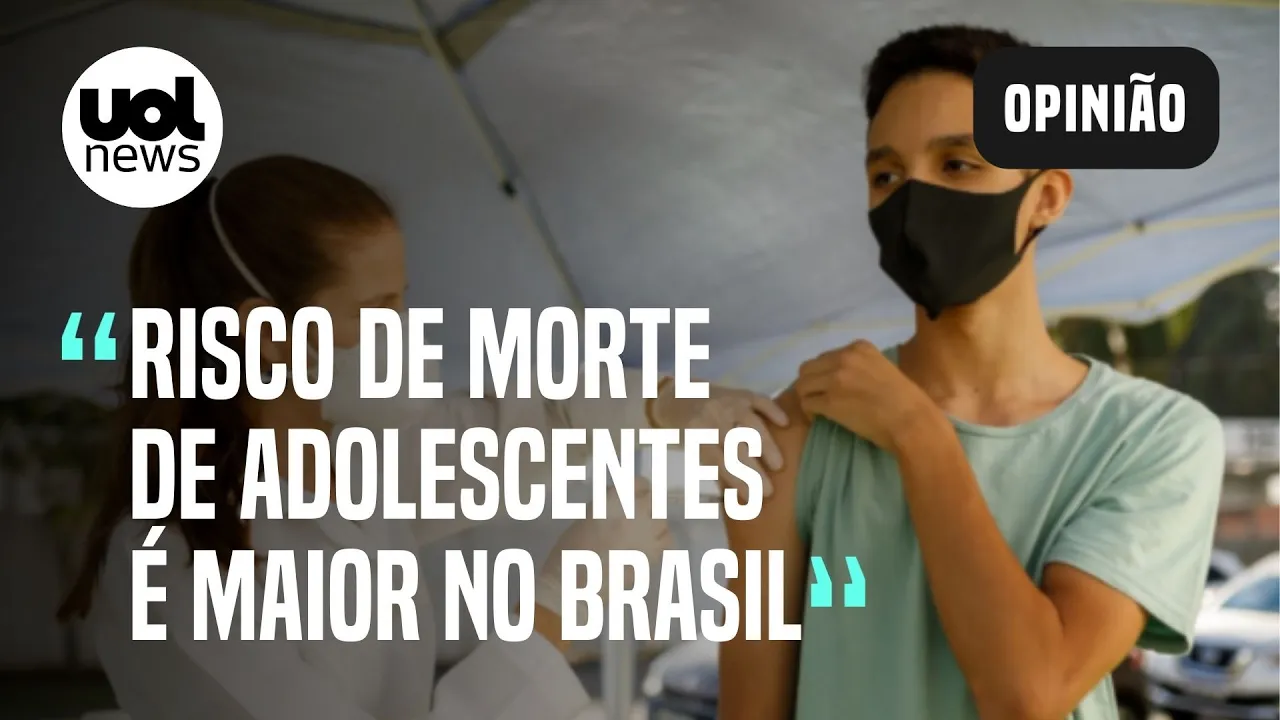
Vaccines are medical products that inherently carry some risk, but the key question is whether the benefits outweigh those risks; for the SARS-CoV-2 vaccines, the benefits of preventing severe disease, hospitalization, and death far exceed the very rare side effects, making vaccination the safer choice compared to natural infection, which carries significantly higher risks of serious complications including myocarditis, MIS-C, and long-term health problems.
COVID-19 Vaccines and Kids: Risks, Benefits, and Myths Debunked
Added:Basic immunology concepts, specifically how the adaptive immune system reacts to pathogens and the difference between vaccine-induced immunity and natural immunity.
The fundamental mechanism of action of mRNA vaccines and how they instruct cells to produce viral antigens.
An understanding of pediatric clinical trial structures and how regulatory bodies like the FDA and CDC evaluate safety and efficacy data for younger populations.
Basic medical terminology regarding cardiac inflammation, particularly the definition, symptoms, and typical prognosis of myocarditis.
Analysis of active and passive vaccine safety surveillance systems (such as VAERS and V-safe) and the statistical methods used to detect rare adverse events post-authorization.
The study of bioethics in public health, focusing on the ethical frameworks surrounding vaccine mandates, individual liberties, and pediatric consent.
Epidemiological research on the long-term sequelae of SARS-CoV-2 infection in children, such as Multisystem Inflammatory Syndrome in Children (MIS-C) and Long COVID.
Comparative analysis of global health policies, examining the varying guidelines and risk-benefit analyses for pediatric COVID-19 vaccination across different nations.
85.1K views2.5Klikes59:15Original Release: 2021-07-20
- [Zubin] Live in a second on YouTube.
So today is July 20th, 2021.
ZDoggMD Show we are live streaming with the legend, the Mac Daddy, the P. Daddy, the P. Diddy, Paul Offit.
P.O., what's up, man?
- [Paul] Hello, my brother.
- [Zubin] So good to see you, man.
You've been all over everything and you've been just burning the thing at both ends, whatever the phrase is.
People have so many questions, man.
Thanks for carving out a time.
We have roughly an hour so we're gonna try to pound through as much misinformation, information, and nuance as we can.
But let me just throw it right at you right away.
So many people are wondering, since you're a pediatrician and a vaccinologist, what is the deal with kids and the Pfizer vaccine now between the myocarditis, the question of should we have one or two shots for kids, what's the actual risk for kids, and parents are really in a gray area they can't navigate?
- [Paul] Right, so it is clear that the mRNA-containing vaccines are a rare cause of myocarditis, inflammation of the heart muscle, probably in the vicinity roughly one per 20,000 vaccines.
Now the good lead, that I think myocarditis never sounds good.
You can say the word mild myocarditis, but people will see that as a contradiction in terms.
I think the good news is that it does appear to be short-lived and self-resolving without permanence as well, so that's good.
But then I suspect as time goes on, we're gonna see there is a spectrum of this that ranges from probably asymptomatic myocarditis to more symptomatic myocarditis.
But for right now, it looks like a rare and, for the most part, self-resolving phenomenon.
Now I should point out that natural infection with SARS-CoV-2 also is a cause of myocarditis.
There was a study done that was reported in JAMA looking at hundreds of athletes in the Big Ten Conference who had COVID, who had symptomatic COVID.
And what they found was 2.5% of them had myocarditis.
What they did was they did gadolinium-enhanced MRIs on everybody and found that 2.5%, so roughly one in 40 people had myocarditis.
So who has myocarditis associated with the vaccine is roughly one per 20,000.
So in many ways, there's no avoiding that, also for children who have MIS-C the so-called multisystem inflammatory disease, depending on which review you read between 50 and 75% of those children had myocarditis.
So I think that as we understand the pathogenesis of this, I think it's going to be somewhat similar to the myositis or muscle inflammation associated with influenza.
In other words, influenza is like SARS-CoV-2, a mucosal infection, meaning, virus in the bloodstream or viremia is not an important part of the disease process.
Nonetheless, you see myositis and it's not because the virus reproduces itself in muscle cells, it doesn't for influenza.
Rather, what happens is it's a cytokine effect.
And I think that's also gonna be shown to be true here.
But I can see where it's a little scary.
But again, the choice not to get a vaccine is not a risk-free choice.
Frankly, we now know that the virus itself causes myocarditis, we know that this post-infectious inflammatory syndrome is actually fairly common cause of myocarditis.
So the vaccine is always the safer choice.
And and I'll say this, I think that over the next few years, you're gonna have two choices, which is to be vaccinated or be infected.
So vaccine's always a better choice.
- [Zubin] Yeah, so I think I agree with the idea that anyone who's not vaccinated will ultimately get infected, especially with more infectious variants like Delta and so on.
I guess the questions come up with children, though, their absolute risk of, really, harm from COVID.
So 4,000 cases of MIS-C, roughly close to 400 deaths.
Is that weighed against, again, it's always, myocarditis is always fine until it's your kid that gets the myocarditis, then it becomes like a big deal, right?
Even though, again, most of the kids get better.
Do you still think if you were, if you had a nine year, let's say, an 11-year-old boy or a 12-year-old boy, would you vaccinate that kid?
Let's say they have no comorbidities at all on balance given the current rates of infection and so on in the community, what you see?
- [Paul] In a second.
I mean, I had an 11-year-old boy, he's now a 28-year-old boy, but I would have vaccinated him in a second.
I think, if you put it in perspective, it's the rare medical product that doesn't have a serious side effect.
I mean, so you said it, there's about 400 deaths from SARS-CoV-2 in children less than 18 years of age.
I mean, how many people die of, children die of influenza every year between 75 and 150 for which we have a vaccine?
How many children died... And influenza vaccine is a rare cause of Guillain-Barre syndrome in roughly one per million.
If measles would kill 500 children a year, measles vaccine prevented that, but measles vaccine also is a rare cause of thrombocytopenia in roughly one in 25,000, one in 30,000 people, which we see occasionally in the hospital, kids who come in with petechia associated with thrombocytopenia.
So the number of deaths with this virus matches what you see with flu or with measles, and the rare side effect is also similar.
So again, the vaccine is always a better choice.
I'll tell you, the thing that's most compelling to me having rounded at Children's Hospital of Philadelphia last winter is this multisystem inflammatory disease.
It is pretty frightening.
I mean, these kids initially present asymptomatically or with mild symptoms that were picked up just serendipitously because they were exposed to a friend or family member, PCR positive.
They come back a month later, they're PCR negative.
They're not shedding virus anymore.
They're antibody positive and they have high fever with evidence of liver, lung, heart, and kidney disease.
And those kids, we'll know in time, but I suspect a significant percentage of those kids are going to go on to have symptoms that lasts longer than two months, being the so-called long haulers.
This is a bad virus.
I mean, this virus is not what it was claimed to be.
Coming out of China, it was claimed to be a winter respiratory virus like flu, and like flu, could cause severe and occasionally fatal pneumonia.
This virus causes you to react, causes your immune system to react to the lining of your blood vessels, it causes vasculitis and because every organ system in your body has a blood supply, every organ system is at risk.
And with longer term problems, I mean, this is not flu.
- [Zubin] Tell me about this idea, though.
So if you're looking at kids and you understand there are these sort of very scary possibilities that can happen.
Why wouldn't we be able to mitigate some of the very small risk of the vaccine already by giving just a single dose, say, of the mRNA Pfizer vaccine as some people have proposed?
- [Paul] Right, so if you look at the phase one studies.
at least for the Pfizer vaccine, which in phase one studies were done in those 16 and older, so we have a 16 to 17-year-old age group.
The first dose induced virus-specific neutralizing antibodies, but no detectable cellular immunity.
The second dose induced virus-specific neutralizing antibodies at a level tenfold greater than the first dose and the presence of a virus-specific cytotoxic T cells, T helper cells.
And and so I think this is not a one dose vaccine.
I think if people choose a single dose, I think it puts them at greater risk for having a shorter duration and less complete protection.
Now in that, we'll see what happens with the children's studies.
Those studies, say, the 6 to 12-year-old are currently being done.
Hopefully, we'll have data by late fall.
And hopefully, we'll have a vaccine that's in hand by late fall, early winter, because come winter, this is going to be a problem.
- [Zubin] So this is interesting, this idea that you're not really generating the big time cellular immunity without the second dose.
How then would, say, a Johnson & Johnson adenovirus vector single shot vaccine generate that?
Is it just a total different mechanism there?
- [Paul] Because it does, and that's right.
- [Zubin] Because it does.
- [Paul] A single dose induces the level of virus-specific neutralizing antibodies.
It's comparable, if not a little less than that, just by that second dose of mRNA containing vaccine, but you get cellular immunity with that first dose.
- [Zubin] Interesting, yeah.
And I wonder how much of that is, again, the vector and doing something interesting, which also has the potential as a class effect since AstraZeneca and Johnson & Johnson have this small association, again, with Guillain-Barre.
Can you speak anything about what we know about that potential class effect with that particular class of vaccines and we'll go back to kids?
- [Paul] Right, so again, a rare phenomenon, looks like I think the numbers were 100 cases per 12 point million doses, so one per 128,000 vaccinees.
So again, a very rare phenomenon.
And again, you see Guillain-Barre syndrome occasionally with flu.
There are years when you don't see it at 1 in a million, occasionally you see it at 1 in a million.
What I'd love to know with Guillain-Barre syndrome, which is this ascending paralysis, and often self-resolving, but sometimes not, and sometimes serious.
But I'd love to see studies looking to see whether or not this infection also causes Guillain-Barre syndrome because that wouldn't surprise me.
- [Zubin] It's interesting.
I've gotten mixed messages on that from clinicians out in the fields who say they have seen Guillain-Barre associated with COVID.
And others say that they really haven't seen it, which is interesting, I think it needs actual data, but that's a really good question if you're thinking about the mechanism of Guillain-Barre, which may be this molecular mimicry.
And that actually speaks to something we'll talk about later, which is these, what I call the spikanistas, these folks that are coming online and saying the spike protein is toxic, therefore, giving a vaccine that has your body make its own spike protein is a terrible idea.
Actually, do you wanna quickly talk about that, and then we'll come back?
I wanna come back to kids and vaccines.
- [Paul] Yeah, the "spike protein is toxic" paper.
It's really to think that that in any way makes any statement about human health is wrong.
It was a study done in mice, it was a study done giving a quantity of vaccine that did not have a human equivalent.
It was given not by the intramuscular route, it's given I think intratracheally.
And from that study, you can learn nothing.
And also remember, you make antibodies as spike protein when you're naturally infected too, so naturally infected were vaccinated.
And those are two choices.
I mean, you'd much rather have an antibody response to a single viral protein than to have a virus that is reproducing, and you unchecked.
- [Zubin] Yeah, let me double down on that.
Every single human being who is not vaccinated will eventually get infected with natural coronavirus in whatever variant or form.
Do you agree with that?
- [Paul] There's a paper by Jon Udell published in Public Library of Science, PLOS, that basically made that statement.
You're gonna have two choices.
I don't know people know Jon Udell, but he's the head of virus research at NIH.
And I think he's right.
I think that's gonna be the way it works out.
- [Zubin] So if he's right then, you're taking a risk with everything we do, we have to parse risk.
So vaccine has these defined risks that we know, there may be risks we... So here's the question, why can there not be risks we do not know with vaccine?
How likely is it pretest wise that this vaccine has a long-term effect on sterility, autoimmunity, et cetera, that people have been proposing online without data sources or precedent?
Tell me about that. How do you think about that?
- [Paul] Well, so I mean, we're still waiting for that first vaccine that's shown to have a serious permanent or even fatal side effect beyond two months after the last dose is given, hasn't happened.
I mean, smallpox vaccine can cause pericarditis or myocarditis.
Some flu vaccine cause Guillain-Barre syndrome.
That swine flu vaccine that was used in Europe, Pandemrix, in 2009, was found to be a rare cause of narcolepsy, which is a permanent disorder of wakefulness, all noticed within the first month after the vaccine.
Rotavirus vaccine is a rare cause of intussusception, which is intestinal blockage which occurs within a couple of weeks of getting a vaccine.
Measles vaccine cause thrombocytopenia, lowering the platelet count all within two weeks of vaccine.
So there exists yet not in the past 200 years an example of a vaccine causing long-term side effects.
And in a more rational world, we would be happy about the fact that these very, very rare adverse events are being picked up.
I mean, Guillain-Barre syndrome in one per 128,000 people, myocarditis in one in 20,000 people.
The clotting syndromes associated with the J&J or AstraZeneca vaccines, it means severe clotting problems in one in 500,000 people.
Remember, roughly 16% of people with COVID will have some evidence of clotting problems.
I mean, the virus is worse and the vaccines are not perfect.
I mean, there always is, at some level, a small price to pay for protection against these viruses, in this war against the virus.
I mean, in this war against the virus, it's rough.
- [Zubin] So let's dig into that a little bit because if the dichotomy is, get the virus and run those risks, or get the vaccine and run what we presume are smaller risks.
And actually, I wanna make one point on that.
People seem to say, "Oh, the vaccine then en masse is gonna cause potentially a lot more cases of side effects just 'cause you're giving it so many people than the natural COVID is causing now.
Well, people don't realize the reason that dichotomy exists is that the natural COVID occurring now is so suppressed by the vaccine.
If you just allowed COVID to do its thing, the havoc numerically would be vastly higher than any side effect of vaccine given to everybody equivalent amounts, correct?
- [Paul] Absolutely, I mean, I find the argument and it's often an argument made with any vaccine that comes out.
We don't know enough, we don't have 10 years of data, we don't have 30 years of data, we have never tested this vaccine in a closed container underwater, whatever it is.
I mean, it's always, we never quite know enough.
And the fact of the matter is, you never know everything.
The question is when do you know enough to say that the vaccine is much more likely to do good than harm, and then you pull the trigger, and that's what happened here.
And then you find out that you have these very, very rare side effects.
That should make people realize that that was the right choice moving forward 'cause the side effects are far, far less frequent than the benefits of getting the vaccine.
- [Zubin] So good, so now pulling it, that's exactly how I think about it, too.
But let's pull it back into the dichotomy of infection versus vaccine.
So what if then, you're not in that dichotomy, you've been infected with COVID, maybe you had an asymptomatic case, maybe you had an ICU level case.
And now they're asking you, well, would you like to get the vaccine?
And let's say, we'll do it for two groups.
Let's do it for kids and adults.
How do you think about that in terms of immunity and risk benefit?
- [Paul] No, it's a good question.
I think when the virus first came into the United States, of course, already killing people in March, people who are in the vaccine world were looking for one thing and one thing only.
Does natural infection protect you against relatively severe disease associated with re-exposure?
Because then, you knew you could make a vaccine, then you knew all you had to do is mimic the immunity induced by natural infection to protect, and it's not true.
I mean, there are, we talked about this before, there are instances in the world of microbiology where natural infection doesn't protect.
I mean, you can get Group A beta-hemolytic strep, strep throat again and again, you get gonorrhea again and again, so that's why it's so hard to make vaccines to protect those pathogens, but here, it looked like it did protect, and it does.
I think that one could reasonably make the argument, if you've been naturally infected, I think you very likely are protected against fewer critical disease, meaning, the kinds of diseases that cause you to be hospitalized.
I think that's true.
I think that the reason that I think when we launched this vaccine program in the United States, we didn't say, "Everybody who's been naturally infected is probably protected, you don't need a vaccine," was probably for more bureaucratic reasons than anything else because now you have to test everybody to see whether or not they've been previously infected.
It added another layer to an already complicated program.
And so that was done.
And, frankly, in the scheme of things, if you've been naturally infected, and you get a dose of mRNA vaccine, and there's now a few studies that have shown this, you act as if you've got your second dose, you know what I'm saying?
You get a clear booster response, so I think you probably only need one dose of an mRNA vaccine, but there's no downside.
It's safe and induces, it boosts your immunity and probably gives you longer lasting.
- [Zubin] So okay, I'm gonna clip that out and release that as a separate clip because people, that is on the top of everybody's mind.
There's a lot of, I think there's a lot of distrust of the public health community when natural immunity is denied even though there's reasonable evidence that it's real.
And I think you get the perception in the public that pharmaceuticals and government are pushing a vaccine on people even who don't necessarily need it.
But as you said, it was bureaucratically complicated in the beginning, but now we can have these discussions, like let's say, a kid has had COVID, do they need two doses of Pfizer when the myocarditis risk, which is already quite small, seems to be increased with that second dose?
Would you say that that's a reasonable way to think about it?
Do you think it's too complicated to think about that?
- [Paul] I think it's, well, again, you'd like to see studies in children who've been naturally infected, who then get a single dose, but it is similar to what you see now in older children or young adults, then you can make a case for a single dose, you could.
But again, we await data.
I really wish we could come up with a term different than natural immunity.
I mean, the term natural just sounds good.
Realize that the price you pay for natural immunity is more than 600,000 people have died from this infection.
It's Mother Nature has just, she has a great PR team.
I don't know who her PR team 'cause she has been trying to kill us ever since we crawled out of the ocean on the land.
- [Zubin] Bro, Offit, do you eat organic?
Because natural COVID is way organic, there's carbon, lots of carbon in it.
See, I love it when you say nature has a great PR agent.
So much of what we're seeing now is bad PR.
Scientists are, by default, not great communicators.
You wrote a book about this.
You're one of the rare exceptions where you can actually speak scientifically and still be quite persuasive.
But into the void, come people that prey on these tendencies.
So the idea of you've been infected with COVID, you have some immunity, I think that's important for people to understand that it's helpful immunity.
Do you think it's on a spectrum based on the inoculum and the severity of disease?
We don't really know.
But what's your intuition, like asymptomatic versus ICU?
- [Paul] Hard to know, I mean, there's so many other factors that play into that in terms of age and other comorbidities, et cetera.
I am encouraged though, there's a recent paper in Nature looking at the presence of memory plasma cells in the bone marrow of people who are naturally infected, and it suggests that we would be, those who are naturally infected wouldn't be protected, would be protected for a fairly long period of time.
My feeling on this, though, is that there's no downside to getting booster dose.
I think it's safe and I think it clearly has been shown to bump immunity and probably create longer lived immunity.
- [Zubin] I agree, I don't think there's downside to that.
One question, though, from a resource allocation standpoint.
Right now, we're drowning in vaccine in the US, but there's a bigger picture question since the globe is interconnected, we have a Delta variant that originated in an unmitigated replication in India.
Should we not be focusing on children that are in the pantheon of things lower risk than adults?
Should we be focusing on get every adult as we can in the US, vaccinate, and then give that vaccine to countries that need it or are there logistical and other considerations with that?
- [Paul] Well, I mean, you're right.
I mean, we're throwing away vaccine as it expires.
It's really criminal, and you have countries like India that are desperate for a vaccine.
I do think though, maybe this is my bias working in a children's hospital, it really is hard to watch children suffer this disease and if we can prevent it safely, and I think we can, then I think we should prevent it.
Also, we do need to stop this virus from reproducing itself.
And the only way to do that is to have a critical percentage of the population vaccinated.
Although I think the number one reason to vaccinate children is to protect them from suffering and hospitalization and occasional death.
The second reason is that they are, whatever, 20% of the herd.
We need to get a level of herd immunity that we are not close to.
I mean, we're like it roughly a little less than 50% of the population vaccinated.
I mean, this virus has an R naught, a contagious index of six.
I mean, if you do the, there's a formula for what percentage of the population needs to be vaccinated in order to protect.
It's so-called R naught minus one over R naught, so that would be six minus one over six divided by the efficacy of the vaccine.
So obviously, the more contagious virus is, the higher the percentage of the population needs to be vaccinated.
The higher the efficacy of the vaccine, the lower the percentage of the population to be vaccinated.
Assume 90%, presume the 90% effective vaccine, which is generous, because we really mean effective against shedding, and assume an R naught of six, you're gonna need at least 90% of the population to be vaccinated or naturally infected.
I think, either.
- [Zubin] Now, let's see, the way the public hears that, and I agree, I think that's the correct math, the way the public hears that is, oh, they keep moving the goalpost, right?
It was 60, 70, 80.
But what people need to understand is that R naught is not a static number either as the virus changes, gets more contagious, like Delta, say, R naught increases, vaccine efficacy may actually mildly decrease over time, and then also due to variations in virus.
So it's a complex dynamic in terms of what is technically herd immunity.
But here's a question, Paul, and you can correct anything I said, but do you think we need to reach 90% to have enough comfort with living with this virus 'cause this virus is not going away?
- [Paul] Right, so there's a lot of variables there, too.
I mean, how long does immunity last?
I mean, and knowing that there's 195 countries in this world, many of which have not given a single dose of vaccine, this virus is gonna continue to circulate.
And so we're gonna need to have a highly protected population for years.
This is the same thing with with polio.
I mean, we eliminated polio in this country in the late '70s.
But it still exists in Pakistan and Afghanistan, and so we still vaccinate our children.
I think that we have to find a way to vaccinate people who are choosing not to vaccinate, and I maybe I'm just incredibly pessimistic, but we've tried, right?
I mean, we solved the problem of how to make it, we solved the problem how to mass produce it, we've solved the problem of how to mass administer it, which was not easy.
I gotta give credit to the Biden administration for setting that up.
We've done everything we can, I think to educate, to try and decrease misinformation, although I think we could do more there, the nudge principle, meaning you get a, you win a lottery or you get a free beer if you go to the Phillies games, which by the way, is the only way you can watch the Phillies game is just a little buzz, but that's another issue.
And so we've done all that, and you've tried to address access issues, then what?
What do you do if 60 or 70 or 80 million people in this country say, "No thanks.
I'm going to continue to allow this virus to reproduce itself, continue to allow people to suffer and be hospitalized and die, and continue to allow variants to be made, which may become progressively more resistant to vaccine-induced immunity."
What do you do then?
And I think the answer to that question is you compel vaccination, you mandate vaccines.
I mean, this is a struggle that our hospital is going through right now about mandating the vaccine.
The Penn health system has mandated vaccines.
Our hospital hasn't done it yet, but I think we're on the verge of doing it because we owe it to that, we owe it to our staff, we owe it to the patients we're taking care of.
We're heading into winter months soon, late fall, winter months, this virus will flourish more than it is now.
You have children who don't for whom there's not a vaccine yet.
I mean, I just think pediatric hospitals have been fairly slow to mandate these vaccines.
- [Zubin] Yeah, the libertarian in me just hates the idea of the mandate for under emergency use and all of that, but, oh man, there's a lot of questions here.
- [Paul] Let me give you one example why.
Unfortunately, people occasionally need to be compelled to do the right thing.
I mean, people say, I just was watching one of the republican governors from Indiana talking about or maybe it's congressman from Indiana, who said, "I respect personal choice."
What is he talking about?
I mean, a friend of mine told me recently that she has a relative who, a man who chose not to get a COVID vaccine, so he gets COVID.
He then proceeds to infect his pregnant wife, who, because she's pregnant and has increased risk of disease, gets admitted to the hospital, then she gets admitted to the ICU, and she gets put on a ventilator where she proceeds to deliver her baby prematurely.
So he didn't just make a decision for himself.
He made a decision for his wife and for his unborn child.
If these aren't personal decisions, I mean, my decision of whether he get a tetanus vaccine, that's personal decision 'cause no one's gonna catch tetanus from me.
But that's not true here, it's not a personal decision.
So I really wish we would scrap that.
And Mississippi to me is the best example of this, right?
Mississippi has a vaccination rate in the low 30%, right?
They're one of the worst states out there.
What's the answer to the question?
What state in the union has the highest rate of vaccines for children?
Answer, Mississippi, 99%. Why?
Because they have a state mandate as every state has, but what they don't have that most states have is they don't have a religious exemption, they don't have a philosophical exemption.
If you go to public school in Mississippi, your child goes to public school in Mississippi, they have to be vaccinated unless you wanna homeschool.
So therefore, sometimes, you just have to tell people to do the right thing, it's a sad thing.
I mean, I buy the libertarian argument, I actually do.
I think that people, if they're informed, they will make the best decision for themselves, which will then be the best decision for the science.
The question is, I'm sorry, for society, the question is, how do people get informed and occasionally they get informed in a manner where they get bad information to cause them to make bad decisions that put them and others at risk, and then what do you do?
- [Zubin] And these are the existential questions of our time really, Paul.
I mean, actually, let's dive into that a little bit from a slightly different angle, and this will get to another question, which is, why, as a vaccinated person, should I worry about unvaccinated people now?
And this is a common anti-vaxxer question, but let's talk about it in the context of COVID.
So the vaccines are quite efficacious.
And we should talk about these really data and how it's misused sometimes, right, in terms of vaccine failure.
Let's talk about breakthrough.
So why should I care if Billy Bob who's not had COVID doesn't get vaccinated, gets Delta and I'm vaccinated, why do I care?
Is he really gonna harm me and my family assuming we're all vaccinated with both doses of whatever?
- [Paul] Right, so you and I were vaccinated essentially to protect against the D614G variant or the original Wuhan virus, the 2019 Wuhan virus.
That's what we're protected against.
The next variant, the Alpha variant, is also we're highly protected against that variant.
We're protected against severe critical disease associated with Delta variant, but not as well against asymptomatic or mild or low moderate disease.
This is only been a year and a half, this is variant three.
I think you can assume there are other variants to come.
And as this virus continues to mutate and continues to try and adapt itself to the human population, it could get to the point where it is becoming more and more resistant to vaccine-induced immunity.
So what Billy Bob does does matter to you.
It was Billy Bob, it wasn't- - [Zubin] Yeah, I just picked a random name.
I grew up in the Central Valley of California.
I knew a few Billy Bob's, I might have been a Billy Bob, I might still be a Billy Bob.
It's all everything's connected, right?
I guess one of the questions then, though, that I think vaccine opponents who people are saying, "Well, why I don't even wanna get this vaccine because it doesn't even work."
So they'll look at the Israeli data and say, "Look, now, Israel has what 80 some odd percent of adults fully vaccinated, why are they now getting increasing cases?
And what's the deal there?"
How do you think about that because I think this is a very commonly misinterpreted data set?
- [Paul] Right, so this is a mucosal virus, like rotavirus, like influenza virus, meaning, virus spread into the bloodstream is not part of the disease process.
As a general rule for mucosal viruses, you can protect well against severe disease, moderate to severe to critical disease.
It's much more difficult to prevent mild illness or asymptomatic illness.
I don't consider those breakthroughs.
The vaccines is doing what it's supposed to do.
I mean, 97% of people who are hospitalized for this virus are unvaccinated.
99.5% of people who are dying from this virus are unvaccinated.
The vaccine is doing what it's supposed to do.
It's not going to be great at protecting against asymptomatic or mildly symptomatic infection, it's true of all vaccines, all mucosal vaccines.
Measles is different.
Measles, there virus spread into the bloodstream is an important part of the disease process where the measles vaccine, you can get sterilizing immunity.
I mean, that virus bounces off you.
It doesn't cause any manner of disease illness including asymptomatic infection.
That's not this vaccine.
- [Zubin] Right, and Israel, they're saying, well, okay, what they're measuring now for efficacy against mild infection, asymptomatic infections, 67% with Delta, which is lower than in the clinical trials against the wild type strain that you mentioned.
But they're still looking at severe disease, hospitalization, death, it's still supra- 90% efficacy.
- [Paul] Great, still great.
- [Zubin] what else do you want because I don't mind getting a cold or a flu.
I do mind ending up in the unit, having long COVID, all these other things that might come with that or blood clots, et cetera.
So it seems to me that so far the vaccine is still quite efficacious even in the setting of Delta, so another reason to get it.
Now I'm seeing some comments here.
People are saying, "Why should I be forced, compelled, mandated to get a vaccine when I've gotten natural COVID?"
- I think- - Yeah.
- [Paul] I think that's fair.
I think if you've been naturally infected, it is reasonable that you could say, "Look, I believe I am protected based on the studies that show that I have high frequencies of memory plasmablast in my bone marrow, I'm good."
I think that's reasonable argument.
- [Zubin] So heaven forbid, we have nuance in our policymaking.
How would you measure that, Paul?
How would you confirm that?
Would you do antibody testing?
How would you do that?
- [Paul] Yeah, so antibodies against a nuclear protein, right, which is not going to be something you would have if you got a vaccine.
So you get the vaccine, you'll get antibody responses, SARS-CoV-2 spike protein, but you won't get an antibody response to other, there's four proteins to this virus, so you wouldn't get an antibody response to nuclear protein.
That's how you do.
- [Zubin] And there are commercially available test to distinguish this?
- [Paul] Yes, there are.
- [Zubin] Every time I talk to you, I learn something that just makes me go, oh, because I get that question a lot.
And the idea that you can distinguish between vaccine, and it's like many, it's actually like hepatitis, right, hepatitis B is a similar idea.
There's different antigens you can test.
So that's brilliant.
So I like that idea of really respecting somebody who's been through the COVID mill.
Again, the question is, would a single dose of an mRNA vaccine act as a booster and be necessary, or would it just be a nice to have?
- [Paul] It would just help.
I mean, there's no downside to that.
And all it does is boost your immunity, probably give you longer lasting and more complete protection, so it's a good thing.
But again, I could see that.
I mean, that doesn't bother me.
It's stated that there's 34 million people who've been infected the United States, something like that.
But that's just people who've been tested and found to be infected.
When they do antibody surveillance, that is probably close to 100 million.
So you're already talking about 30% or so of the population has already been naturally infected, then you have people who've been vaccinated.
But remember, many people have been, or a certain percentage, maybe 30% of people who've been vaccinated were also naturally infected.
So there was overlap between those two groups.
So maybe you have 60, 65% population immunity right now if you consider natural infection plus vaccination.
But we do need to get higher than that, we do.
I mean, it's not, to me, it is shocking that this virus is is still raging in the summer months.
I mean, it is a winter virus.
I mean, if you look at, and it's, we're certainly better than we were last summer.
Last summer be 500 to 1,000 deaths a day.
We're a little lower than that because there's been immunity from natural infection, there's been immunity from vaccination, but really raging in the summer months, this does not bode well, and it tells you everything you need to know about the Delta variant, that it can do this in the summer tells you that you should fear the winter.
Fear the winter because what's gonna happen is when kids go back to school now, and this is another reason for why think kids need to be vaccinated.
When kids go back to school this fall, I don't think they're gonna be as good as we were last fall about masking and social distancing, I don't.
You're already saying, states that are banning mask mandates.
And I just think we're gonna be worse off because you'd have a vulnerable population of children who are not vaccinated, who are gonna be doing the personal protective stuff than we did last last school year, and I think it's gonna be a problem.
- [Zubin] It'd be really nice not to have to do that since I'm not sure there's great data beyond ideas around precautionary principle that masking young kids is helpful or have you seen that data?
- [Paul] As a general rule, usually the school outbreaks tend to mimic what goes on in the community.
If you're in a community where the disease rate is low, you're usually well.
If you know there was, then you probably know remember this study.
There was a study done, this is gonna sound counterintuitive, but it's not.
There was a study done in the Netherlands, 1999, 2000 with measles, trying to answer the question, who is most likely to get measles?
Obviously, you were least likely to get measles if you were vaccinated living in a highly vaccinated population.
You were most likely to get measles if you were unvaccinated living in a highly unvaccinated population.
But you were actually more likely to get measles if you were vaccinated living in a highly unvaccinated population than if you were unvaccinated living in a highly vaccinated.
In other words, you're more likely to get it if the virus is more likely to get to you, which is gonna be true if you're surrounded by people who are unvaccinated.
- [Zubin] Do you think that's the rationale for, say, LA, mandating masks again?
- [Paul] Yeah, I mean, you have a big community outbreaks.
So that's why I feel, first of all, I just think going back to school, the notion of just having children who have gotten vaccinated don't need to wear a mask, forget it.
I just gonna be hard enough to figure that out.
So I just think mask mandates when you go back to school till this settles down, and it's gonna really depend on the community to some extent too.
- [Zubin] Hmm, yeah.
- [Paul] I really do think, I think vaccines should be mandated for school entry, I do.
I mean, Penn mandates it, good for them.
Indiana University now has mandated, was challenged in court, and it failed in State Supreme Court so that they are able to do that, good.
- [Zubin] But can that be done under EUA?
When will these things be formally FDA?
- [Paul] Yes, that'd be done or it's being done under EUA.
There's nothing legally that says you can't mandate something that's been approved under the EUA.
I wish we had a different term because the term emergency use authorization technically means that these companies are allowed to distribute an investigational new drug.
That's what that means.
I mean, this is not an investigational new drug.
It's been, 300 million plus doses are out there.
You have an enormous safety and efficacy profile.
It will be licensed when we have six months of efficacy data which are already in hand.
But the other thing, the difference, and I think most people don't realize, but the difference between a licensed product and an approved product is also something that the FDA calls CMC, which is one of those awkward acronyms that only federal agencies can come up with.
And even when you know what the acronyms says, it still doesn't make sense.
Chemical manufacturing control, that's what that means.
So what that means is that when you make a vaccine, you have to, or any biological, you have to, the FDA not only licenses the product, they also have to license the process and license the building because they have to make sure that they have consistency lots, that every lot you make is exactly the same as the previous lot.
So you have to validate every step of that process, and it is grueling.
I mean, I was fortunate enough to be part of a team at Children's Hospital of Philadelphia, they created the rotavirus vaccine.
That validation process was a one year long process.
Now, I think they're expediting that 'cause they realize like we're in a pandemic, but it's hard to do all that.
- [Zubin] Well, essentially, because they were able to catch that goof up with Johnson & Johnson at that manufacturing facility back east, yeah?
- [Paul] Yep.
- [Zubin] Even under this EUA.
Now speaking of that, so Johnson & Johnson, what's your take on that strategy now?
It doesn't look like it's really had a lot of uptake after the pause and everything in the US.
- [Paul] No, I mean, its advantage was it was a single dose vaccine.
And so there were certain populations for whom it was a value, home bound population or transient population.
You could argue for that.
But it had hit number one with thrombosis with thrombocytopenia syndrome, and then it gets hit number two with Guillain-Barre.
I just think it's been hard for that vaccine to get out there.
- [Zubin] And relating to that, Novavax, when is that coming down the pipeline?
And what's the advantage there?
- [Paul] I don't know.
I mean, well, it's a purified protein vaccine.
So it's something people are more used to.
I mean, so the difference here is that, with hepatitis B vaccine and human papillomavirus vaccine, you give the protein, you give the surface protein of the virus, and then you make an immune response to that surface protein.
Here, with the mRNA vaccines or the vector virus vaccines, you give the gene that codes for the protein, so you make the protein and you make the antibody.
So we're more familiar with that strategy.
It's an adjuvanted single protein vaccine.
I don't know, I mean, I'm on the FDA vaccine Advisory Committee, and we've been asked to set aside a number of dates in case this comes up.
But what ends up happening is they set aside like five, six dates, and then as we get closer, and they realize it's not going to be submitted by then, then we eliminate the dates.
- [Zubin] I see, I see, I see.
Okay, but that's still probably coming down the pipeline at some point as- - [Paul] Yeah, I think, and the more, the merrier.
I think people, we have a glut of vaccines now?
I mean, we're throwing away vaccines now.
My feeling on this is that the more you learn about these vaccines especially as the variants continue to raise their head in terms of ability to protect against variants, in terms of the ability to have protection against all manner of illness, in terms of ability to protect people with different co-morbidities, in terms of length of protection, the more, the merrier.
Get as many vaccines out there that you can learn about as possible.
- [Zubin] Hmm, yeah. It's a real struggle.
I've had a group of different people on the show talking about everybody is for vaccines, vaccinate as many people as you can.
And I have a diversity of opinions whether it's Marty Makary, Vinay Prasad.
People have taken very heterodox stances on, say, the two shot regimen for kids or previous immunity being very helpful or masking and the lack of evidence thereof versus other interventions, et cetera.
But to a one, they all agree that the vaccine is remarkably effective and ought to be given to every, at least, every vulnerable adult or every adult.
But going back to kids, so I've had a few questions now in the comments.
Asthma, is that considered a comorbidity for kids that puts them at higher risk of COVID complications?
- [Paul] It is, any sort of chronic respiratory disease is considered a comorbidity, although- - [Zubin] Including run of the mill childhood asthma?
- [Paul] Yeah.
- [Zubin] Okay, that's good to know 'cause people ask, they very much ask that question.
The other thing that comes up a lot is the idea of boosters and how unsettling that is for a population that is very distrustful of industry, government, and pharma during the pandemic.
And that's a significant part of the population.
How do you think about this when the CEO of Pfizer comes out and says, "Hey, maybe we need a booster for this," or "We're gonna likely need a booster for this in the fall?"
- [Paul] Yeah, I didn't like that.
I didn't like it that the CEO of Pfizer says that we're gonna need a booster a year after we gave the initial vaccine.
First of all, all the data, if anything, argues against that.
Secondly, he works for a pharmaceutical company, not a public health agency.
Let the public health agencies make those comments.
- [Zubin] Yeah, I agree, that was very unsettling.
Well, I mean, what are the criteria for booster?
Are you looking at immunological data?
Are you looking at clinical data?
How would you decide that?
- [Paul] Clinical data.
I think right now, you have 3% of people who are vaccinated who are being hospitalized, and.5% of people who are vaccinated are being killed.
As those numbers start to rise 5%, 10%, 15%, then I think we're gonna have to consider a booster dose.
But for right now, the numbers look good.
And I do think, again, your longer term protection is much easier regardless of your critical disease.
So I'm gonna make a prediction that I think it would be a few years really before we needed a booster, but we'll see.
- [Zubin] Wow, okay, I'm gonna quote you on that.
I like that.
That's my instinct as well, just understanding what a little I know about it from talking to smart people, is that this is not something that happens right away.
And by the way, we've talked about this before, but I think it's worth readdressing, if you don't mind.
How is it that companies and scientists determine the efficacy of vaccine against new variants?
Is it all these neutralizing antibody assays?
Is there something else? Is there clinical data?
Is it a mix? Help us understand that.
- [Paul] Right, well, so there are, there's much published now regarding the neutralizing antibody response against the original virus, the Alpha virus, and now the Delta virus based on people who've been naturally infected.
As you can see that there is a lesser quantity or a lesser level of virus-specific neutralizing antibodies as we move now to the Delta variant.
But the critical thing again, that is or is not going to be able to predict what you see clinically.
What you see now that should be really reassuring to people is probably 80% of the circulating strains of Delta variant.
Nonetheless, still, 99.5% of people are killed are unvaccinated, and 97% of people who are hospitalized.
If we weren't getting adequate protection from either natural infection or vaccination as the Delta variant started to rise, and you should have seen those numbers change dramatically and they didn't.
- [Zubin] That makes a lot of sense.
And relating to that, maybe we should do a quick lightning round on misinformation and countering some of it very specifically.
So the idea that this vaccine, and we've addressed this partially, but this vaccine will cause long-term effects like sterility, fertility problems.
How do you talk to patients and parents about this?
- [Paul] Right, so that misconception was born of this letter that was written by two researchers to the European Medicines Agency, the EMA, claiming that the SARS-CoV-2 spike protein, which is what you're making an antibody response against when you get a vaccine, mimics a protein on the surface of placental cells called syncytin-1.
So that therefore, by their analysis, as you made an antibody response to SARS-CoV-2 spike protein, you were also inadvertently making an antibody response to a protein on the surface of placental cells that's responsible for placental cell health.
There were a couple problems with that.
First of all, those two proteins aren't similar.
I mean, to say that they had similar sequences, it's like saying you and I have the same social security number because they both contain the number five, so that was wrong.
Secondly, if you look at the clinical trials, the phase three trials for the mRNA vaccines, there were three dozen pregnancies, and that was a placebo controlled trial.
If it was true, that fertility was affected by vaccination, then those pregnancies should have been more represented in the placebo group, but they weren't.
It was 18 and 18.
So therefore, the vaccine neither enhanced nor negatively affected fertility.
Also remember, 100 million people were just infected last year.
While they were infected, they were making an antibody response to the SARS-CoV-2 spike protein.
So the question is, what happened to the birth rate?
Stayed about the same.
Utter nonsense, but nonetheless, is a true with all these crazy notions.
It's hard to unring the bell.
You can be as logical as you want, as clear as you want, that people have heard that, and it's hard to make them unhear it.
- [Zubin] Yeah, agree.
And once it's heard it, yeah, you cannot unwind it without a lot, a lot, a lot of work.
So relating to that, another piece.
And actually, I do wanna ask this question to someone in Super Chat on YouTube.
TPS says, "Hey, I'm upset by pressure to vaccinate little kids like 3 to 10 years old if the risk benefit isn't there."
First of all, what's the horizon for that even being a possibility?
And second of all, how would you think about that age group?
- [Paul] Remember, we do have school vaccine mandates.
It's not like, we're just entering the birth of vaccine mandates for children.
I mean, we have vaccine mandates for children and have since the 1970s, so it's not novel territory.
You could argue that the vaccines for which we do mandate the school that many of those diseases pale in comparison to this one, so it's not a crazy notion.
Usually, the reason that the school mandates was because that's often where these viruses were transmitted, especially measles, and that's the first mandates really were a measles vaccine.
So I get that.
I mean, it's really hard to say you have to give your three-year-old a vaccine, I get that.
But I think that if we generate the data that should make people feel comfortable that the vaccine is safe and effective, in a better world, they would rush to vaccinate their child.
I mean, the emails that I get these days are like, "When is this vaccine gonna be available for the 6 to 11-year-old?
I feel my child is vulnerable.
We're heading into the winter months.
I'm worried that I'm in a state that that doesn't allow a mask mandate.
I think my child is at risk."
And they're right, their child is at risk.
And the degree to which they become at lesser risk, is it really which we enforce mandates for vaccination?
I just wish we had a different word than mandate, maybe called good health requirements, something that made people feel they weren't being compelled.
- [Zubin] Yeah, I think a lot of this has to do with our own moral flavors on mandated things and so on.
And it's weird because, as in the scientific community, it's quite, there's a general consensus, it's quite clear that these things really do work.
Even if kids are at lower risk, the risk of vaccine is very small, and the risk of infection is not zero.
At the same time, I think, parents do also like to feel like they have the capacity and education to make the decisions.
The trick is, we have to give them that education.
So how about we go back into misinformation for a second?
So there's a guy, Geert Vanden Bossche.
Have you heard about this guy?
Yeah, so apparently, a virologist in Europe, his premise, and you can maybe explain it better than me is that, oh, by vaccinating during a pandemic, we're putting pressure on the virus to emerge, vaccine escape variants, and that we've primed our immune system.
Therefore, follow-up vaccines won't be very effective.
Something along those lines to paraphrase.
Am I paraphrasing that right?
And what do you think about this?
'Cause it has a grip on the public, this idea.
- [Paul] With what evidence?
I mean, you have for example, you have measles.
We've had a measles vaccine since the early 1960s.
Measles is like this virus, a single stranded RNA virus, measles, like this virus does mutate, nonetheless, despite 60 years of measles vaccine, we have not seen strains generated that resist immunity from vaccination.
I mean, flu is different, flu mutates on a daily basis.
I mean, that virus is a moving target.
This virus also mutates but much slower than, say, influenza does, we'll see.
I mean, the notion that you're creating, you've created a population, either from natural affection or immunization that is likely to have several years of protection.
That's a good thing.
And although this virus may mutate to the point that it escapes recognition by current immunity from vaccination immunization, then you come up with a second generation vaccine.
That's what you do.
I don't think that's gonna happen actually.
I think that the virus has probably been already about 12,000 mutations on this virus already.
I mean, and I think you may get to the point, if they're resisting all immunity, meaning, it's as if you never got the vaccine, you'd never gotten actually taken.
I think that's probably a lethal mutation.
- [Zubin] Yeah, so in other words, you're running the runway out on the virus's ability to change itself.
- [Paul] Lethal to the virus, not lethal to us.
- [Zubin] That's right, lethal to the virus, right.
And so, within that parameter, then I think, again, it's another compelling reason to just go and get vaccinated now.
Well, we're gonna need a booster and all this, get vaccinated and see, because if you're even preventing severe disease, hospitalization, death, that's all we really care about to prevent our ICUs from filling up, to prevent morbidity, mortality, and that sort of thing.
And as much as the, especially the adult population that we can get vaccinated as quickly as we can when we're throwing vaccine away, it seems like a moral imperative now that we really try to educate as much as we can.
And, Paul, I mean, you've written books on science communication.
I find the audience that reaches out to me that has skepticism about this vaccine is a very different audience that has kept that has more chronic delusional skepticism about childhood vaccines and that sort of thing.
And I think we have to really be quite open to understanding and parsing that because even when they hear, oh, I think, a vaccine mandate's a good idea, what they hear is, you're taking away my choice with an experimental vaccine, and so on.
And you can talk and sit with them, but it almost requires that relationship and it's very hard to build that online.
I mean, I struggle with that. What's your take on that?
- [Paul] I think you should be skeptical of anything you put into your body, including vaccines.
I mean, when I was asked last October before we saw the data in December with the first two mRNA vaccines, would you get a COVID-19 vaccine, I said not until I see the data.
And I think that's fair and I think you should look carefully to see whether or not this is reassuring.
Now, what happens though is it's when you don't believe the data, then you move from skepticism to cynicism and there is no medicine for that.
- [Zubin] Yeah, that's a tough one.
Yeah, that almost requires teaching critical thinking and recognizing bias and logical fallacies.
What I like about your conversation, I gotta let you go on a couple minutes 'cause you got to go on to CNN- - [Paul] Gotta get dressed up for CNN.
See, it doesn't matter what I look like on your show, but (indistinct).
- [Zubin] That's the thing.
How does it work? Is it all live with CNN?
- [Paul] Yeah, yeah.
- [Zubin] Man, so they put the little ear bug in and you- - [Paul] No, I just do it just like I'm doing.
- [Zubin] Wow.
- [Paul] Dressed up because obviously, that show matters.
Just kidding, just a joke.
- [Zubin] (laughs) Hey, man, my audience gonna trust this show more than CNN.
They think it's too biased.
We gotta get you on as much as we can 'cause it's a joy.
Man, so you're my go-to when I think something happens, there's a problem in the news, we hear another potential side effect of whatever it is, Johnson & Johnson.
And you're always very candid with me in a way that says that you really, people who talk about, oh, well, there's all this pharma influence and all that.
Yeah, except when you're really trying to look at data and you have your biases, which is what I love.
You laid it out, you said, "Listen, I see kids in a major academic institution.
Of course, I'm biased towards keeping kids safe 'cause I see what happens when they're not kept safe."
So that's very important because I know you'll see in comments and stuff, criticism.
Already, Brian Major says, "Lost credibility, gotta get dressed up for fake news, CNN."
So you see, there's always gonna be. (laughs) It's funny, I had Marty Makary in here, and right after he did my show, he got on Fox News, 'cause he's on Fox a lot.
And then people were like, "Fox News."
So it's like, you can't win, right?
But you have to get out there and you have to communicate, and you have to do the best you can (indistinct).
- [Paul] And I think CNN tends to be hanging crepe all the time.
I agree with that.
But the people do watch it, I mean, you're trying to get good information out there, however you can.
- [Zubin] And by the way, for people who don't know what that term means, it's a term in medicine where we say they're always doom and gloom and trying to prepare you for disaster.
And that can be psychologically damaging, I think, to the population to the point where they backlash and I think that's why I just stopped looking at Twitter because it's just, ugh, you just wanna slap up a virtual account. (laughs) So Paul, I'm really gonna respect your time.
There's a billion comments, I will summarize them.
I think we asked the big questions, but we may go deeper in another episode if you're game with coming on?
- [Paul] Come back. That'd be fun, thank you.
- [Zubin] I love it, brother, thank you.
- [Paul] (indistinct) If that's any consolation.
- [Zubin] What was that?
- [Paul] I enjoyed this more than CNN.
It's fun, this is fun.
- [Zubin] Do you hear that, Wolf Blitzer? Deal with that.
Is he still even on CNN? I don't even watch it.
- [Paul] He's on it.
- [Zubin] Oh, great, okay.
Well, tell Wolf I said hi.
And thanks a million, Paul.
You can sign off if you want and I'll wrap up with my audience.
Thank you, brother.
- [Paul] All right, take care.
- [Zubin] Take care.
All right, guys, Paul Offit.
I mean, so all right, let's debrief a little bit, and look at some comments here because I wanna wind us down from being amped up from a live show with Paul because I can tell by the comments, people get very emotional about this stuff.
And yeah, I think we should have a right to be emotional about this stuff because it's been a slog.
So in modern memory, we haven't had this thing happen in the setting of a polarized social media landscape where any person can have a platform and can advocate for something, and then you throw in the politicization of this by both, the left and the right, and even the center, and you have a toxic stew where it's very difficult to know who to trust.
And you'll be looking for little dog whistles in what somebody says as to what are their politics, or what's their bias, or who's paying them, or whatever it is, and you see that on the left and you see that on the right.
And the truth is, if we can't come with good faith, assume we have a good faith actor, who is really good at what they do and learn as much as we can, knowing everything is true, but partial, nothing is complete truth and educate ourselves, then what have we really come to, right?
And the step one of that is assuming good faith, assuming that people are trying to do the best they can and they're coming with good intent.
And I'll tell you, I've known Paul for a while now, he is one of the most sincere, smart, enthusiastic guys, and yeah, he's gonna have biases and I've had people on the show who disagree with some of the things that Paul was advocating, and even my own elephant bias against mandates and things like that tends to click in for COVID, but it's good to hear ideas and proposals that actually challenge your thinking, even if you think they're mainstream ideas.
And the only reason they're mainstream ideas is that you watch the frickin' news.
Step one is probably stop that, (laughs) but it's hard because then where do you make sense?
How do you find sense making in a fractured information ecology?
And I'm getting technical on this because it's what I do is I'm in this information ecosystem.
But it's very important.
Now when I use the terms, alt-middle, that's what I'm talking about, it's not a political center.
It's a way of looking at the world that does what I just described, all right?
So that's what I'll advocate for you guys.
On YouTube, we've got 1,200 odd people watching, on Facebook, we have 2,200 people watching.
You guys are powerful, you're going out in the world and you're spreading information.
So do it in a way that's thoughtful.
And I'm not even gonna tell you what information is right, what information is wrong, et cetera.
I'm gonna try to help us all develop the tools to critically think for ourselves.
So if you like that, the usual calls to action, share the show, leave a comment, hit like, if you're on YouTube, subscribe and click the notification bell so you don't miss anything.
Facebook, hit follow, leave a comment.
And if you wanna support our efforts outside of mainstream media to have these conversations, then join our supporter tribe.
And my favorite platform is Locals because I can't be cancelled.
I keep all the data, they don't touch it, there's no ads, and it's a beautiful community of alt-middle thinkers that love and respect each other, and it's about 13,000 people strong and growing.
You can do the same thing on Facebook and YouTube.
Just go to my website for the link, zdoggmd.com/supporters, and that's how you do it.
Now, let's take a few more comments on the road out here.
Linda says, "I do agree that mis and disinformation are one of the worst threats to human survival."
I think actually, I would drill deeper, and say it's our fractured information ecology that is our threat, that we cannot find truth.
We don't know what truth is.
We have no reference point anymore for truth.
It's a postmodern fugue where all viewpoints are equal.
But anyone intuitively or scientifically knows that all viewpoints are not equal.
Some are more true and less partial than others.
And we need to seek those out and constantly try to enfold them into our understanding.
Jim Baker says on YouTube says, "It's criminal," quote, "if doses are being thrown out expired with so much demand for vaccine worldwide and so much opportunity to protect the vulnerable, that's indeed sickening and disturbing."
So this is the thing, right, and this is something Paul and I didn't get to go into deeply.
If people are wasting vaccine in the US, can't we figure out a logistic way to get that to where it's needed?
'Cause the US is not the center of the universe, right?
This is a global pandemic, we're deeply interconnected, and we're fragile as a result.
So it used to be there was a degree of resilience because an individual country could handle its business.
Now, we're so dependent on things outside of our sphere.
It's always been that way, but it's worse now in an interconnected world, which we would think is an ideal we wanna strive to, until something goes wrong with the Suez Canal, and now you can't get your Amazon Prime delivery of medicine, say, right?
So because this has happened, now we need to figure out what's the new way of thinking and being in that world that turns that liability into a strength, new technologies, new social structures, new ways of thinking that will unfold that.
I call it alt-middle, you can call it whatever you'd like as long as we start pushing towards it, we have no choice except for extinction.
It's really as clear as that, all right?
Thank you so much for being with me in the middle of the day on a weekday, it means a lot to me.
We're gonna keep doing episodes on how we improve ourselves through meditation, mindfulness, awakening, because we'll never emerge this new system without first going inward and seeing what's wrong with us, and what's wrong with us is a lot, it's a lot.
The pandemic really lit it up.
All right guys, I love you so much.
Now I gotta figure out how to end the show.
I'm gonna go over here, I'm gonna click some buttons.
I'm gonna hope for the best.
Bye bye, YouTube. Love you guys.
Up Next

12:41
COVID-19 Vaccine Alternatives: J&J vs Novavax Explained
@DrHongsPharmacyClassroom
7.9K views•2021-02-08

37:45
Rapid Quantitative Immunostaining of Intact Biological Systems
@simonscenterforthesocialbr1919
247 views•2015-12-02

10:28
Neuroanatomy: Central and Peripheral Nervous System Divisions Explained
@AKLECTURES
136.2K views•2014-09-20
3:05
Stages of Labor and Vaginal Birth | Childbirth Animation
@nucleusmedicalmedia
52.1M views•2017-08-18
Related Study Plans & Knowledge Roadmaps
Structured learning paths in Medicine
medicine
Interpreting PFTs: Spirometry & DLCO
01Respiratory Anatomy and Physiology Foundations
02Spirometry: FVC, FEV1, and Flow-Volume Loops
03Lung Volumes and Plethysmography
+ 2 more learning modules
12h5 modules
Explore Roadmap
medicine
Abnormal LFTs: Diagnostic Workup & Pathology
01Liver Anatomy and Basic Physiology
02Introduction to Liver Function Tests (LFTs)
03Hepatocellular vs. Cholestatic Patterns
+ 3 more learning modules
12h6 modules
Explore Roadmap
medicine
Analyzing Blood Smears: RBC, WBC & Platelets
01Introduction to Blood Components & Smear Preparation
02Normal Morphology of Blood Cells
03Erythrocyte Pathologies & Morphological Variants
+ 2 more learning modules
12h5 modules
Explore Roadmap
medicine
Mechanical Ventilation: Waveforms & Alarms
01Anatomy and Physiology of Breathing
02Introduction to Mechanical Ventilation & Core Modes
03Ventilator Settings and Waveform Interpretation
+ 2 more learning modules
12h5 modules
Explore Roadmap