Gene expression is the process by which genes are transcribed and translated into functional products such as proteins, rRNA, tRNA, or small nuclear RNA; researchers determine gene function through two main approaches: knock-out experiments, where removing a gene reveals its essential role by observing loss of function, and reverse genetics, where sequencing a gene and comparing it to homologous sequences with known functions allows prediction of its biological role.
Gene Expression and Function: Knockouts & Reverse Genetics | MCAT Biology
Added:Deep Dive
The Central Dogma of Molecular Biology, specifically the mechanisms of DNA transcription and translation into functional proteins.
Endocrine System L#19
1.8K
The central dogma of molecular biology describes the flow of genetic information: DNA → RNA → Protein. During transcription, DNA is copied into messenger RNA (mRNA). During translation, ribosomes read the mRNA sequence and assemble amino acids into polypeptide chains, which fold into functional proteins. The specific amino acid sequence determines protein structure and function.
Click to watch →

Protein Translation: The Central Dogma of Molecular Biology | Tapan Kumar | Medicaps University
140
The central dogma of molecular biology describes the flow of genetic information from DNA to mRNA through transcription, and then from mRNA to protein through translation. This fundamental principle explains how the genetic message encoded in DNA is ultimately translated into functional proteins that perform various functions in the body.
Click to watch →

Post Translational Modification | Protein Folding & Others | B.Sc. Zoology 3rd Semester |
20.4K
The central dogma describes the flow of genetic information: DNA is transcribed into RNA, which is then translated into protein. Transcription involves unwinding the DNA double helix and synthesizing RNA from one DNA strand. Translation occurs in the cytoplasm where ribosomes read mRNA sequences and assemble amino acids into polypeptide chains. Three-nucleotide codons specify particular amino acids, and peptide bonds connect amino acids into chains. Proteins have complex structures that determine their function, and post-translational modifications are necessary to activate proteins and make them functional.
Click to watch →

Tutorial Kuliah STRUKTUR DAN FUNGSI BIOMOLEKUL_Replikasi, Transkripsi, Translasi
416
The central dogma describes the flow of genetic information in cells: DNA replication (copying DNA in the nucleus), transcription (copying DNA to mRNA in the nucleus), and translation (synthesizing proteins from mRNA in the cytoplasm). Replication occurs in the nucleus and produces identical DNA copies for cell division. Transcription produces mRNA from a DNA template. Translation occurs at ribosomes where mRNA is read to assemble amino acids into polypeptide chains. This three-step process explains how genetic information is stored, copied, and expressed as functional proteins.
Click to watch →
DNA Translation | mRNA to Protein | ডি এন এ ট্রান্সলেশন । HSC Biology || Fahad Sir
192.2K
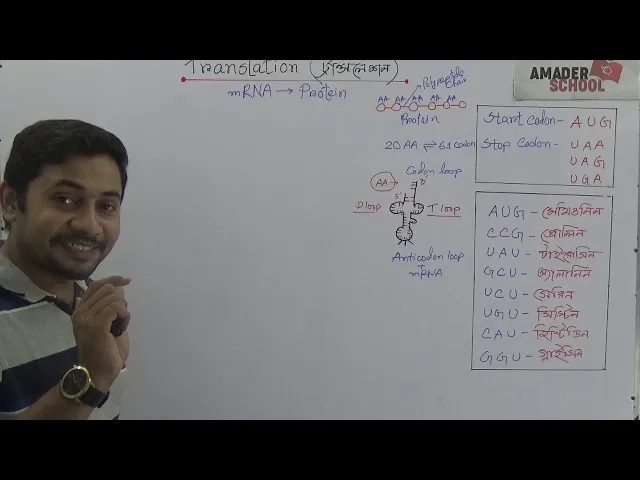
The central dogma of molecular biology describes the flow of genetic information from DNA to RNA to protein. DNA replication copies genetic material, transcription converts DNA into messenger RNA (mRNA), and translation synthesizes proteins from mRNA templates. This fundamental process underlies all cellular functions and gene expression.
Click to watch →
Deep Dive
Basic eukaryotic gene structure, including exons, introns, promoters, enhancers, and start/stop codons.

Eukaryotic Gene Structure
5.2K
Eukaryotic genes consist of coding and non-coding regions organized into exons separated by introns. After transcription, introns are removed and exons are spliced together to form mature mRNA. Exons remaining in the mRNA include coding regions (CDS) and untranslated regions (UTRs). The 5' UTR precedes the coding region and contains the start codon, while the 3' UTR follows the stop codon. Start and stop codons can be located in different exons, with the first few exons commonly found entirely within the 5' UTR. The CDS represents the actual protein-coding sequence and is a subset of the complete mRNA.
Click to watch →
Eukaryotic gene : Functional organisation | Biochemistry | USMLE STEP 1 , NCLEX
24.8K
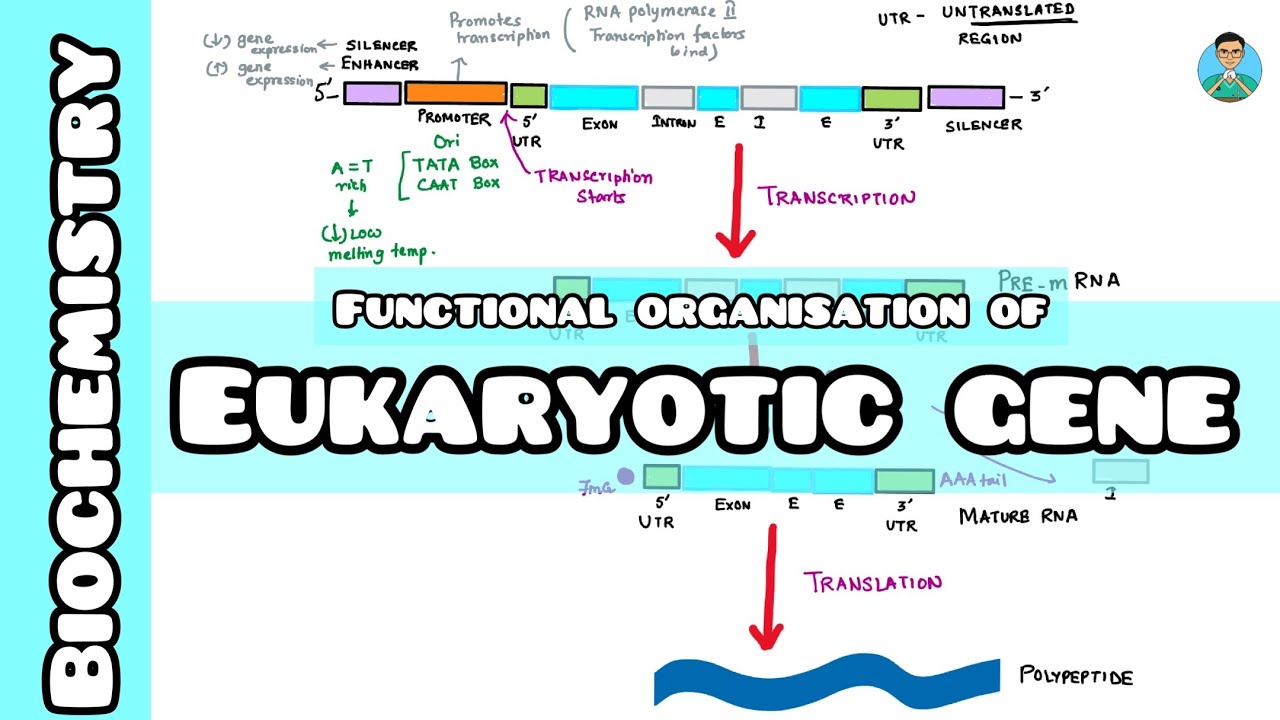
A eukaryotic gene is a specific segment of DNA containing regulatory elements and coding sequences. The gene structure includes silencers (which decrease expression) and enhancers (which increase expression) at the 5' end, followed by the promoter sequence that promotes transcription and binds RNA polymerase II and transcription factors. The promoter also acts as an origin of replication due to its TATA and CAAT boxes. The gene continues with the 5' untranslated region, exons (expressed coding regions), introns (non-expressed interrupting sequences), and the 3' untranslated region. Transcription begins downstream of the promoter, producing pre-mRNA that contains all these components before further processing.
Click to watch →

BT504_Topic019
219
Eukaryotic genes are more complex than prokaryotic genes, containing exons (protein-coding regions) and introns (non-coding regions). Exons are spaced apart with introns between them. During gene expression, both are transcribed into mRNA, then introns are removed through splicing. Introns are distinguished by GT at their 5' end and AG at their 3' end. A typical eukaryotic gene includes a promoter region, 5' UTR, exons, introns, and 3' UTR. The ORF extends from start to stop codon. The primary transcript contains introns and undergoes splicing to produce mature mRNA with a poly-A tail.
Click to watch →

B.Sc 3rd Semester Zoology Unit-1st Structure of Gene Lec-01 || 3rd Semester Zoology Class Unit-01
37.2K
Eukaryotic genes contain alternating exons (coding) and introns (non-coding). Introns were discovered in 1977 by Richard Roberts and Phillip Sharp. During RNA processing, introns are removed and exons are joined to form mature mRNA. The primary transcript undergoes 5' capping and 3' polyadenylation. Eukaryotic promoters include core promoters (TATA box at -34) and proximal promoters (CAAT box and GC box at -25 to -50). Enhancers increase transcription rates, while silencers decrease or repress transcription. These elements can be located far from genes and work through DNA looping. Eukaryotic mRNA also undergoes 5' capping and 3' polyadenylation for stability and function.
Click to watch →

Eukaryotic Gene
555
Eukaryotic genes consist of coding exons (shown in darker green) and non-coding introns (shown in lighter green), with the IL-2 gene serving as an example having four exons separated by three introns. The gene structure includes a transcription start site marked by a green arrow, a promoter region with a TATA box, and a start codon (ATG) that initiates translation. Coding DNA numbering begins at the first nucleotide of the start codon (C.1) and continues through each exon until the stop codon. Exon-intron boundaries are critical for gene sequencing, as mutations at splice sites can cause exon skipping and severe phenotypes. Introns always begin with GT and end with AG. For primer design, primers should be placed 25 nucleotides away from exon-intron boundaries, with GC content between 40-60% for optimal melting temperature.
Click to watch →
Deep Dive
The principles of classical (forward) genetics, including how physical phenotypes are mapped back to genetic alleles.
![KRZYŻÓWKI GENETYCZNE [WSTĘP] [Matura z biologii 2023 + studia] 👩⚕🧑⚕](https://i.ytimg.com/vi/q78yWhMzfg4/maxresdefault.jpg)
KRZYŻÓWKI GENETYCZNE [WSTĘP] [Matura z biologii 2023 + studia] 👩⚕🧑⚕
101.3K
Classical genetics, pioneered by Gregor Mendel, establishes that genes are the basic units of heredity located at specific positions (loci) on chromosomes. Organisms inherit two copies of each gene—one from each parent—forming homologous chromosome pairs. Different versions of genes are called alleles, which can be identical (homozygous) or different (heterozygous). Dominant alleles (uppercase letters) mask recessive alleles (lowercase letters) in heterozygotes. An organism's genotype represents its complete genetic makeup, while phenotype describes observable traits resulting from genotype-environment interactions. Pure lines consist of homozygous organisms that consistently produce offspring with identical traits.
Click to watch →
Forward Genetics vs Reverse Genetics
25.3K
Forward genetics is a research approach that begins with observable phenotypic variations and works backward to identify the underlying genetic causes. This method involves analyzing family pedigrees to trace how genetic conditions are inherited across generations, identifying DNA markers associated with specific traits, and using positional cloning to locate and characterize disease-causing genes. The approach was pioneered in classical genetics using model organisms like Drosophila, where researchers mapped genes to chromosomes through linkage analysis by observing how frequently different phenotypes segregate together during crosses. This 'phenotype-to-genotype' strategy remains foundational for understanding the genetic basis of complex traits and diseases.
Click to watch →

W5L25_Genetics - II
427
Forward genetics involves identifying abnormal phenotypes and working backwards to discover the responsible genes. In Drosophila research, Nüsslein-Volhard and Wieschaus identified mutant embryos with abnormal segment patterns and traced these to specific gene mutations. Similarly, Horvitz studied C. elegans cell lineage, identifying mutants that failed to follow the normal 1090-to-959 cell pattern. These mutants revealed genes controlling programmed cell death, with human homologues implicated in cancer. This approach earned multiple Nobel Prizes and established fundamental principles of developmental genetics.
Click to watch →

आनुवंशिकी - मेंडल के नियम, मटर पर प्रयोग | Class 10 Biology Chapter 7 Bihar Board | Nidhi Mam
225.1K
Phenotype (फिनोटाइप) refers to the observable physical characteristics of an organism, such as height, eye color, or flower color. Genotype (जीनोटाइप) refers to the genetic makeup or the specific combination of alleles that an organism possesses. The phenotype is the expression of the genotype, and understanding both is essential for understanding inheritance patterns.
Click to watch →

PRINCIPLES OF INHERITANCE AND VARIATION- PART 1 || COMBI ROOM || Dr. ASHIQ SAINUDHEEN
54.4K
Phenotype refers to the observable physical characteristics of an organism, such as tall or dwarf height, violet or white flower color. Genotype refers to the genetic makeup or combination of alleles an organism possesses. For example, a tall plant may have genotype TT (homozygous dominant) or Tt (heterozygous), but both genotypes result in the same phenotype of tall height.
Click to watch →
Deep Dive
Fundamental molecular biology techniques, such as PCR, restriction enzyme cloning, and plasmid vectors.

Biotechnology - Principles and Processes | Superfast Revision with Handwritten Notes and PYQs
711.4K
DNA isolation requires cell lysis using specific enzymes: lysozyme for bacteria (peptidoglycan), cellulase for plants (cellulose), and chitinase for fungi (chitin). After lysis, proteases, ribonucleases, and lipases digest other components while DNA remains. Spooling with cold ethanol precipitates DNA for collection. Restriction endonucleases cut DNA at specific palindromic recognition sites, producing sticky ends (with unpaired bases) or blunt ends. HindII was the first restriction enzyme discovered in 1963. Gel electrophoresis separates DNA fragments by size using agarose gel and electric current; DNA is negatively charged and migrates toward the positive electrode, with smaller fragments moving faster. Visualization uses ethidium bromide staining under UV light. PCR amplifies DNA through three temperature cycles: denaturation (92°C), annealing (55°C), and extension (72°C). Taq polymerase from Thermus aquaticus is heat-resistant and essential for PCR. Plasmids are circular, double-stranded DNA molecules that replicate independently. Good cloning vectors require: origin of replication (ori), multiple cloning sites (MCS), and selectable markers (antibiotic resistance genes). pBR322 is a widely used plasmid with ampicillin and tetracycline resistance genes. Selectable markers distinguish transformants from non-transformants. Blue-white screening uses pUC8 vectors with lacZ gene: recombinant bacteria produce white colonies, while non-recombinant bacteria produce blue colonies.
Click to watch →
MP PNST 2026 Biology: Biotechnology के 2-4 नं. पक्के! | Exam Focused Tricks | Manish Sir 🧬
381
This section covers essential molecular biology techniques and vectors. PCR uses Taq polymerase from Thermus aquaticus bacteria. The three-step PCR process involves denaturation, annealing, and extension. Plasmids like pBR322 (discovered by Bolivar and Rodriguez) serve as vectors for gene cloning. Restriction endonucleases are called 'molecular scissors' for cutting DNA at specific sites. Gene cloning uses plasmids to carry foreign DNA into host cells. These techniques are fundamental to genetic engineering and molecular biology research.
Click to watch →

Restriction Cloning
31.9K
Restriction cloning is a fundamental molecular biology technique that involves cutting both a plasmid vector and a gene of interest with the same restriction enzymes, then joining them together through ligation to create a recombinant plasmid; the process requires careful selection of restriction enzymes that do not cut within the gene of interest and using directional cloning strategies (with different enzymes at each end) to ensure the gene inserts in the correct orientation, as opposed to random cloning which can result in 50% of clones being in the wrong direction.
Click to watch →

bihar Paramedical 2026 Entrance exam | paramedical Class 2026 | paramedical ka question 2026 |
5.3K
This section covers foundational molecular biology concepts including: (1) Recombinant DNA creation by Boyer and Cohen in 1972, (2) DNA double helix structure by Watson and Crick, (3) RNA single helix structure, (4) Plasmid vectors (pBR322, Ti plasmid), (5) DNA ligase for joining DNA fragments, (6) DNA polymerase for synthesizing new DNA strands, (7) Restriction endonucleases for cutting DNA at specific sequences, (8) Exonucleases for removing terminal nucleotides, (9) Taq polymerase from Thermus aquaticus for PCR due to thermostability, (10) E. coli limitation in PCR due to enzyme denaturation at high temperatures.
Click to watch →

Plus Two Public Exam 2026 | Biology MS Predictions 60 Marks Sure | LIVE | MS SOLUTIONS
62.8K
This section covers fundamental molecular biology techniques essential for genetic research. Gel electrophoresis separates DNA fragments by size using agarose gel matrix, with ethidium bromide staining and UV visualization. PCR amplifies DNA through denaturation, annealing, and extension steps using Taq polymerase. Cloning vectors contain origin of replication for DNA copying and selectable markers like antibiotic resistance genes for cell selection. These techniques form the foundation of recombinant DNA technology and genetic engineering.
Click to watch →
Prerequisite Knowledge
- Concept 01The Central Dogma of Molecular Biology, specifically the mechanisms of DNA transcription and translation into functional proteins.
- Concept 02Basic eukaryotic gene structure, including exons, introns, promoters, enhancers, and start/stop codons.
- Concept 03The principles of classical (forward) genetics, including how physical phenotypes are mapped back to genetic alleles.
- Concept 04Fundamental molecular biology techniques, such as PCR, restriction enzyme cloning, and plasmid vectors.
Subsequent Learning
- Step 01The mechanisms and applications of modern genome editing technologies, specifically CRISPR-Cas9, for precise genetic modifications.
- Step 02RNA interference (RNAi) and gene knockdown strategies (such as siRNA and shRNA) for transiently silencing gene expression.
- Step 03The practical design and utilization of knockout and transgenic mouse models in biomedical research and drug development.
- Step 04Epigenetic mechanisms, such as DNA methylation and histone modification, that regulate gene expression without altering the genetic code.
Gene Basics
Knockout & Reverse
Gene Basics
0:01Playing Section
- 1
Gene expression converts genes into proteins or RNA.
- 2
Functional determination uses gene knockout methods.
Genetic Compensation and Functional Redundancy
While gene knockouts and reverse genetics are foundational tools for inferring gene function, their reliability is challenged by genetic compensation and functional redundancy. When a specific gene is deactivated, genomes often adapt by upregulating homologous genes (paralogs) or activating alternative metabolic pathways. This buffering capacity can mask the loss of the target gene, resulting in no observable phenotypic change and leading to the incorrect conclusion that the gene has no critical function. This limitation highlights the reductionist constraint of reverse genetics, emphasizing that genes operate within complex, dynamic networks rather than in isolation. To truly understand physiological functions, scientists must consider systems biology and epistatic interactions, recognizing that a single knockout may not reveal the full scope of a gene's systemic role.
Deep Dive
The mechanisms and applications of modern genome editing technologies, specifically CRISPR-Cas9, for precise genetic modifications.

CRISPR Cas9 Gene editing system (HDR, NHEJ) : Part 2
1.1K
CRISPR-Cas9 is a revolutionary genome editing technology derived from bacterial adaptive immune systems. The system consists of Cas9 protein, tracrRNA, and a 20-nucleotide spacer sequence that forms single guide RNA (sgRNA). The sgRNA directs Cas9 to bind specific DNA sequences at the PAM site, where Cas9 cleaves the DNA, creating a double-strand break. Cells repair this break through two mechanisms: Homology-directed repair (HDR) uses a donor template for precise gene correction, while Non-homologous end joining (NHEJ) repairs without a template, often causing gene disruptions. This technology has transformative applications in medicine (CAR-T cell therapy for cancer, IVF treatments), agriculture (crop improvement), and basic research. Jennifer Doudna and Emmanuelle Charpentier received the Nobel Prize for this discovery, which enables precise genetic modifications in both prokaryotes and eukaryotes.
Click to watch →
Explorando genes para innovar la caficultura
325
CRISPR-Cas9 consists of Cas9 endonuclease (cuts DNA) and guide RNA (directs Cas9 to target genes). When DNA is cut, cells repair through non-homologous end joining (random mutations) or homology-directed repair (precise changes using donor templates). The system functions like a GPS, directing Cas9 to specific genomic locations. Applications include rice yield improvement (blocking GN1A gene increased grain production), strawberry seed reduction (editing seed development genes), and disease resistance validation. This technology enables precise gene modifications without introducing foreign DNA.
Click to watch →
10 BIOL 8470 Module 2 Chapter 17
214
CRISPR-Cas9 is a precise genome editing tool originally discovered in bacteria as an adaptive immune system against bacteriophage infection. CRISPR stands for Clustered Regularly Interspaced Short Palindromic Repeats. Bacteria capture snippets of viral DNA and store them in CRISPR arrays, which guide Cas9 nuclease to recognize and destroy invading viral DNA. For gene disruption, guide RNAs direct Cas9 to create double-strand breaks; repair by non-homologous end joining often introduces frameshift mutations that disrupt gene function. For precise modification, donor DNA templates with homologous flanking sequences enable homology-directed repair, incorporating specific changes. This technology enables targeted gene knockout, correction, insertion, or replacement in research and therapeutic applications across species.
Click to watch →

"IRL SPACE MARINES?"... - Ex Reservist Reacts to Surgeon Explains Astartes Creation Process
169
CRISPR-Cas9 is the most well-known genome editing technology, providing faster, cheaper, more accurate methods for editing genetic material. It was adapted from a natural bacterial defense mechanism against viruses. Researchers create guide RNA that attaches to specific DNA target sequences, and the Cas9 enzyme cuts the DNA at that location, allowing researchers to add or delete genetic material. Current applications include gene-edited mosquitoes, agricultural engineering to withstand climate change, and human clinical trials to treat diseases from cancer to transthyroin amyloidosis.
Click to watch →

genoma editing
283
Genomic editing enables targeted DNA modifications including insertion, removal, substitution, or correction of specific sequences. Unlike traditional recombinant DNA technology using restriction enzymes, CRISPR-Cas9 employs a programmable enzyme that can cut DNA at any sequence by being told where to cut. The system consists of Cas9 endonuclease (which breaks phosphodiester bonds) and guide RNA (gRNA, a 20-nucleotide molecule that identifies target sequences). The gRNA has two fragments: one for DNA binding and another for Cas9 interaction. The system scans the genome for target sequences identified by gRNA information. A critical requirement is the PAM sequence (NGG for Streptococcus pyogenes), which enables Cas9 to recognize and cut the target. Once the target is reached and PAM confirmed, Cas9 makes a double-strand break. The cell then activates repair mechanisms: NHEJ (Non-Homologous End Joining) directly ligates ends, often causing insertions/deletions that inactivate genes, while HDR (Homology-Directed Repair) uses donor DNA as a template for precise sequence integration. CRISPR offers advantages over previous technologies: simpler gRNA design, higher efficiency across diverse organisms, versatility for multiple gene modifications, and lower cost. Applications span biomedical research (gene function studies, disease models), medicine (correcting hereditary diseases, cancer therapy, viral infections), agriculture (improved crop yield, disease resistance), industry (drug production, biofuels, bioremediation), and diagnostics (rapid pathogen detection). However, germline editing raises ethical concerns about heritable modifications, sparking debates about responsible regulation.
Click to watch →
Deep Dive
RNA interference (RNAi) and gene knockdown strategies (such as siRNA and shRNA) for transiently silencing gene expression.

زیندەزانی 12| م.هۆشیار | بەشی هەشتەم | وانەی چوارەم
352.8K
This segment covers RNA interference (RNAi) as a mechanism for gene silencing. The instructor explains how small interfering RNAs (siRNAs) and microRNAs (miRNAs) can bind to complementary mRNA sequences and trigger their degradation or translational repression. The video covers the RNA-induced silencing complex (RISC) and how it mediates gene silencing. The instructor emphasizes that RNAi is a conserved mechanism across eukaryotes and has important applications in research and medicine. The content explains how RNA molecules can act as regulatory agents that control gene expression post-transcriptionally.
Click to watch →

RNA Interference I RNAi I siRNA I Small Interfering RNA I Post Transcriptional Mechanism
129.7K
RNA interference (RNAi) is a post-transcriptional gene silencing mechanism where small interfering RNA (siRNA) molecules, processed from double-stranded RNA by Dicer protein into 21-nucleotide fragments, guide the RNA-induced silencing complex (RISC) to complementary mRNA sequences, leading to either mRNA degradation or translational blockage; alternatively, RNAi can also silence genes at the transcriptional level by recruiting chromatin-modifying proteins that condense DNA and prevent transcription.
Click to watch →
shRNA mechanism | short hairpin RNA mediated knockdown and gene silencing
50.8K
shRNA (short hairpin RNA) is a double-stranded RNA molecule with a hairpin structure (20-25 nucleotides long) that mediates gene silencing through RNA interference; it is processed by the Dicer enzyme into small interfering RNA, which then associates with the RNA-induced silencing complex (RISC) containing Argonaute protein to specifically cleave and degrade target mRNA, thereby knocking down gene expression.
Click to watch →

RNAi mechanism | RNA interference pathway using siRNA and shRNA
379.7K
RNA interference (RNAi) is a cellular defense mechanism that selectively degrades specific mRNA molecules to prevent protein synthesis. The process begins when double-stranded RNA (dsRNA) enters the cell, triggering the production of small regulatory RNAs including siRNA, shRNA, and miRNA. These small RNAs form complexes with proteins like Argonaute and slicer to identify complementary sequences in target mRNAs. The RNA-induced silencing complex (RISC) then degrades the targeted mRNA, effectively silencing gene expression without altering the DNA sequence itself.
Click to watch →
INI-CET July 2021 Recall Questions discussions | Microbiology & Biochemistry | Dr Meenakshi Sundaram
17.8K
RNA interference (RNAi) is a sequence-specific mechanism for silencing genes by degrading target mRNA; it involves introducing small interfering RNAs (siRNAs) that bind to complementary mRNA sequences, leading to their degradation and preventing protein synthesis, thereby achieving gene knockdown.
Click to watch →
Deep Dive
The practical design and utilization of knockout and transgenic mouse models in biomedical research and drug development.

BIOL2416 Chapter 14 – Molecular Genetic Analysis and Biotechnology
8.5K
Transgenic mice carry introduced foreign genes that can be passed to offspring, enabling researchers to study gene function by adding new genetic material. Knockout mice have specific genes deleted or inactivated, allowing study of gene loss-of-function phenotypes. Both are created by injecting foreign DNA into fertilized mouse eggs, implanting embryos into pseudopregnant females, and screening offspring for the transgene or knockout. Transgenic mice represent gain-of-function studies, while knockouts represent loss-of-function studies.
Click to watch →

Considerations for creating knockout mice and other transgenic animal models.
58.3K
Creating knockout mice and transgenic animal models requires careful consideration of multiple factors including the complexity of gene modifications, detection of off-target effects, intellectual property licensing issues, and model validation to ensure accurate study data and reproducible results; researchers should evaluate whether purchasing from repositories, collaborating labs, or using internal transgenic cores best meets their specific research needs while maintaining genetic integrity and health standards.
Click to watch →
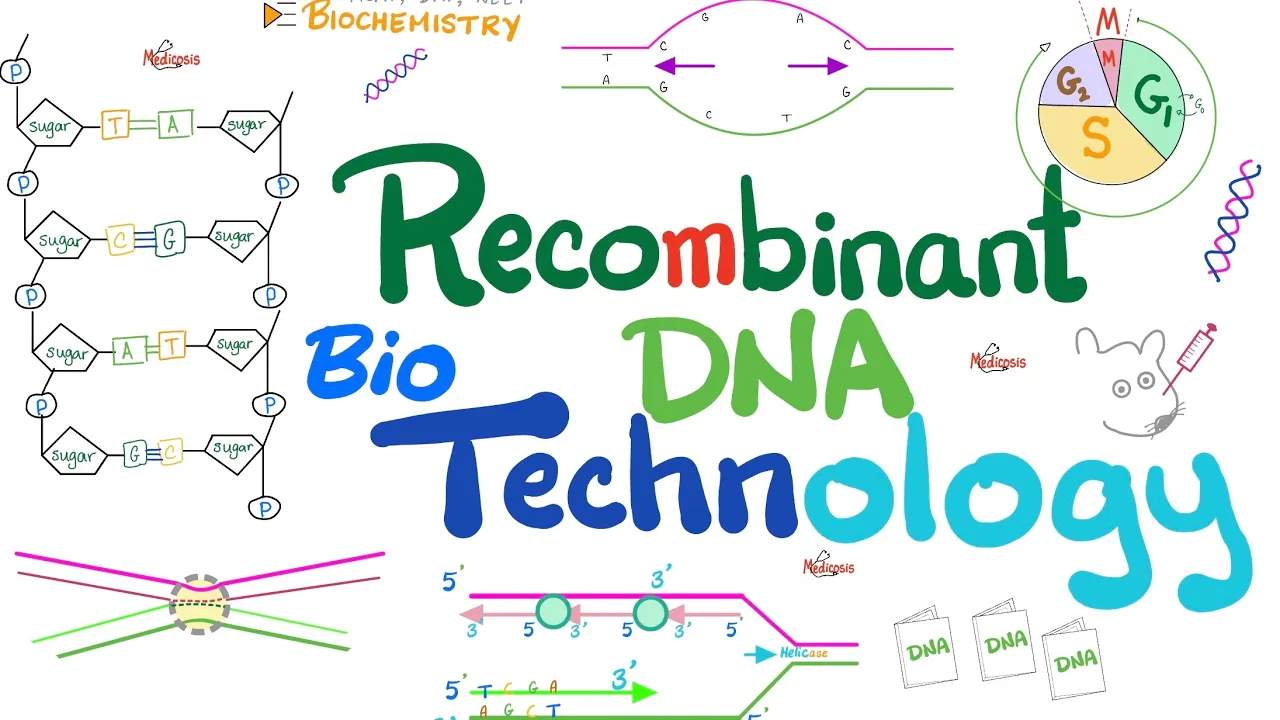
Recombinant DNA technology - Biotechnology - Molecular Biology 🧬 - Biochemistry & Genetics
171.1K
Transgenic mice have foreign genes added (transgenes) during embryogenesis, while knockout mice have specific genes deleted. Transgenic models are useful for studying dominant genes since only one copy causes disease manifestation. Knockout mice become abnormal, helping researchers study gene function. However, the technique cannot control gene copy number, limiting study of recessive diseases which require both copies to be abnormal. Both approaches help understand disease mechanisms and potential treatments.
Click to watch →
Lec 34: Animal models - Part A
1.4K
Four primary methods generate transgenic mice: spontaneous mutations arising naturally during breeding, chemical/radiation mutagenesis using agents like ethyl nitrosourea to induce random mutations, retroviral infection transferring genetic modifications to pre-implantation embryos, and microinjection directly introducing DNA constructs into fertilized embryos. Each method enables creation of models mimicking human disease mechanisms. Despite mouse models' dominance, significant limitations exist: humans are 3000x larger and live 30-50x longer, undergoing ~10^5 more cell divisions; mice develop mesenchymal cancers primarily while humans favor epithelial cancers; and short lifespans often prevent sufficient tumor suppressor gene loss from producing highly penetrant cancers, particularly with heterozygous mutations.
Click to watch →
Sesion 8: Biología y Fisiología (julio 7) - XII Curso Usuarios de Animales en Investigación
105
This section covers transgenic and knockout mouse models and genetic verification. Transgenic and knockout mouse models are created using technologies like CRISPR-Cas9 to specifically manipulate genes, enabling targeted investigation of disease mechanisms. Companies like Charles River, Jackson Laboratory, and Taconic offer genetic verification services using SNP panels to confirm strain identity. SPF (Specific Pathogen-Free) colonies are maintained free from specific pathogens including murine hepatitis virus and mycoplasma, with regular monitoring through PCR testing and serology.
Click to watch →
Deep Dive
Epigenetic mechanisms, such as DNA methylation and histone modification, that regulate gene expression without altering the genetic code.
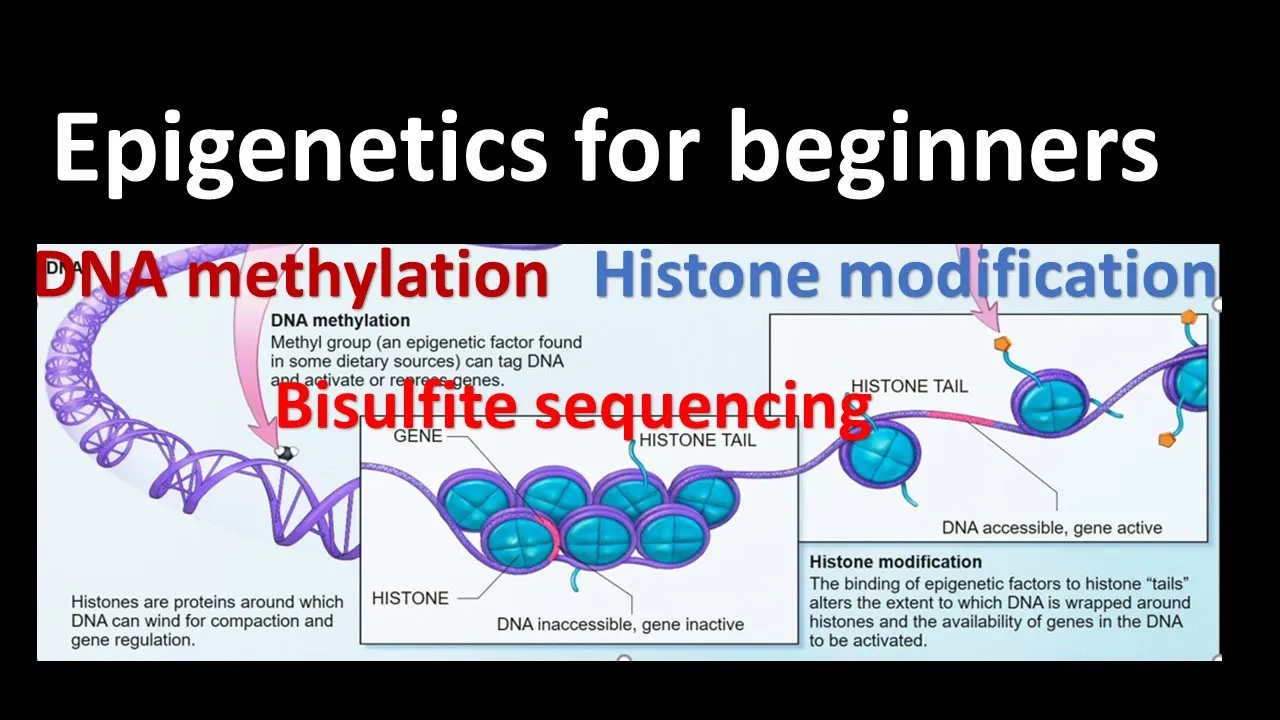
Epigenetics| DNA methylation | Histone Modifications| Bisulfite sequencing| Genetics for beginners
89.7K
The two most common forms of epigenetic mechanisms are DNA methylation and histone modification. Both are major examples of how gene expression can be regulated without altering the underlying DNA sequence.
Click to watch →
Brian Dias - Triumph over Trauma
3.9K
Two primary epigenetic mechanisms control gene expression without changing the underlying DNA sequence: (1) DNA methylation - chemical tags (methyl groups) attach to DNA like light switches, turning genes on or off; when methylated, genes are typically silenced and not expressed; (2) Histone modifications - proteins called histones package DNA into tight coils, and chemical modifications to these histones (tying knots) determine how tightly DNA is wound; tighter winding makes genes harder to read, while looser winding allows easier access for gene expression. Both mechanisms work together to control which parts of the genome are active or inactive in response to environmental experiences.
Click to watch →

Regulation Of Gene Expression In Eukaryotes | B.Sc. Zoology 3rd Semester | Avantika Ma'am |
47.5K
Epigenetic modifications regulate gene expression without changing DNA sequence. DNA methylation adds methyl groups to cytosine bases, making DNA structure rigid and inaccessible for transcription. Histone acetylation adds acetyl groups to histones, neutralizing positive charges and reducing DNA binding affinity, thereby opening chromatin for transcription. These modifications work together to control gene accessibility, allowing cells to activate or repress genes based on developmental and environmental signals.
Click to watch →

What is Epigenetics?
1.4K
Epigenetics is the study of how gene expression changes without altering the underlying DNA sequence; it involves mechanisms such as histone modification (where DNA wrapped tightly around histone proteins prevents protein interaction and gene expression, while loosening allows transcription) and DNA methylation (where chemical tags on DNA either block or attract proteins that read the genetic code), thereby controlling how much RNA and protein is produced from the same genetic blueprint.
Click to watch →

انسجة نظري/ المحاضرة الثانية (( part1)) / مختبرات طبية م ثالثة
178
There are two main types of epigenetic modifications: (1) DNA methylation - chemical changes to DNA molecules that can silence gene expression; (2) Histone modification - chemical changes to histone proteins that package DNA, affecting how tightly DNA is wound and thus influencing gene accessibility. Both mechanisms regulate gene expression without changing the actual genetic code.
Click to watch →
Gene Basics
Knockout & Reverse
Gene Basics
0:01- 1
Gene expression converts genes into proteins or RNA.
- 2
Functional determination uses gene knockout methods.
Genetic Compensation and Functional Redundancy
While gene knockouts and reverse genetics are foundational tools for inferring gene function, their reliability is challenged by genetic compensation and functional redundancy. When a specific gene is deactivated, genomes often adapt by upregulating homologous genes (paralogs) or activating alternative metabolic pathways. This buffering capacity can mask the loss of the target gene, resulting in no observable phenotypic change and leading to the incorrect conclusion that the gene has no critical function. This limitation highlights the reductionist constraint of reverse genetics, emphasizing that genes operate within complex, dynamic networks rather than in isolation. To truly understand physiological functions, scientists must consider systems biology and epistatic interactions, recognizing that a single knockout may not reveal the full scope of a gene's systemic role.
The Central Dogma of Molecular Biology, specifically the mechanisms of DNA transcription and translation into functional proteins.
Basic eukaryotic gene structure, including exons, introns, promoters, enhancers, and start/stop codons.
The principles of classical (forward) genetics, including how physical phenotypes are mapped back to genetic alleles.
Fundamental molecular biology techniques, such as PCR, restriction enzyme cloning, and plasmid vectors.
The mechanisms and applications of modern genome editing technologies, specifically CRISPR-Cas9, for precise genetic modifications.
RNA interference (RNAi) and gene knockdown strategies (such as siRNA and shRNA) for transiently silencing gene expression.
The practical design and utilization of knockout and transgenic mouse models in biomedical research and drug development.
Epigenetic mechanisms, such as DNA methylation and histone modification, that regulate gene expression without altering the genetic code.
312.9K views1.5Klikes3:31@khanacademymedicineOriginal Release: 2015-03-25
- So what is gene expression?
Well, it's basically the process where a gene is used to synthesize some sort of product.
So you go from a gene to a product.
And normally this product is a protein, but sometimes you can have non-protein coding genes.
You can create things like ribosomal RNA, actually let's list these out.
You can either have a protein, you can have ribosomal RNA, shortened to rRNA, you can have tRNA, tRNA, you can also have something known as small nuclear RNA.
So basically you go from a gene to a product.
Now, how do we determine what the function of the gene is?
How do we determine a specific gene exactly what does it do?
Well, let's imagine a scenario where there's a cell and normally it's able to if you give it milk... So lets imagine that we give it a bottle of milk, let me just draw a little bottle of milk, it's not the greatest bottle in the world, but, let's just imagine this is a bottle of milk, so we'll label that milk.
So if you give this cell milk and normally it's able to take the milk and digest it and it's able to use the milk for energy.
Well, what if we wanted to figure out what gene is responsible for being able to digest milk.
Well, one thing that we can do is if we have an idea of what gene it might be we can just knock-out that gene.
So let's just imagine that there's a gene here and we imagine that this has something to do with the digestion of milk.
Well, if we knock it out and then we give milk to the cell and if it's still able to digest the milk then we know that this gene didn't really have much to do with digestion of milk.
But if we knock it out and the cell is no longer able to digest the milk, then we know that this gene had something to do with the digestion of milk.
So this process is known as a knock-out.
So basically, you're knocking out a gene and trying to figure out what the function is of the gene.
So if you knock out a gene what happens to the organism?
So you basically create a knock-out mutiny and study its effects.
So another thing you can do is something known as reverse genetics, reverse genetics.
So here what you do is first you start with a gene, and then you sequence it.
You figure out what is the sequence of the gene.
And then what you can do is you can look for other gene sequences somewhere else in the genome that share a similar sequence.
So you sequence it and then you look for a homologous sequence somewhere else in the genome.
And if you know what that homologous sequence does then you have a pretty good idea of what that gene might do.
So if you know that there's this homologous sequence somewhere else in the genome and it goes for a specific protein, and you know the function of that protein, then you know that the gene of interest might create a protein that has a similar function.
Up Next
2:42
Protein Synthesis From DNA to Protein — 3D Molecular Animation
@yourgenome
22.8M views•2015-01-07
50:12
Bacterial Communication: Quorum Sensing and Biofilm Formation Explained
@JHUAAP
12.6K views•2011-06-28
5:10
Mendelian Genetics: Alleles, Genotypes & Punnett Squares
@khanacademymedicine
648.4K views•2014-06-16
7:08
Bacteriophages: Earth's Deadliest Killers and Future Antibiotics
@kurzgesagt
34.6M views•2018-05-13
Related Study Plans & Knowledge Roadmaps
Structured learning paths in Biology
biology
RNAi: Biogenesis, RISC & Gene Silencing
01Molecular Biology Foundations: DNA to Protein
02Introduction to RNA Interference (RNAi)
03Molecular Biogenesis of miRNA and siRNA
+ 2 more learning modules
10h5 modules
Explore Roadmap
biology
Mycorrhizae: Signaling, Biophysics & Ecology
01Foundations of Mycorrhizal Symbiosis
02Molecular Signaling and Root Colonization
03Biophysics and Bioenergetics of Nutrient Exchange
+ 1 more learning modules
11h4 modules
Explore Roadmap
biology
Circadian Clocks: TTFL, SCN & Periphery
01Foundations of Molecular Biology & Gene Expression
02Introduction to Chronobiology and Actograms
03The Core TTFL: Molecular Architecture of the Clock
+ 3 more learning modules
14h6 modules
Explore Roadmap
biology
Population Genetics: Math, Drift & Selection
01Genetic & Probability Foundations
02The Hardy-Weinberg Principle and Baseline Models
03Mathematical Modeling of Natural Selection
+ 3 more learning modules
18h6 modules
Explore Roadmap