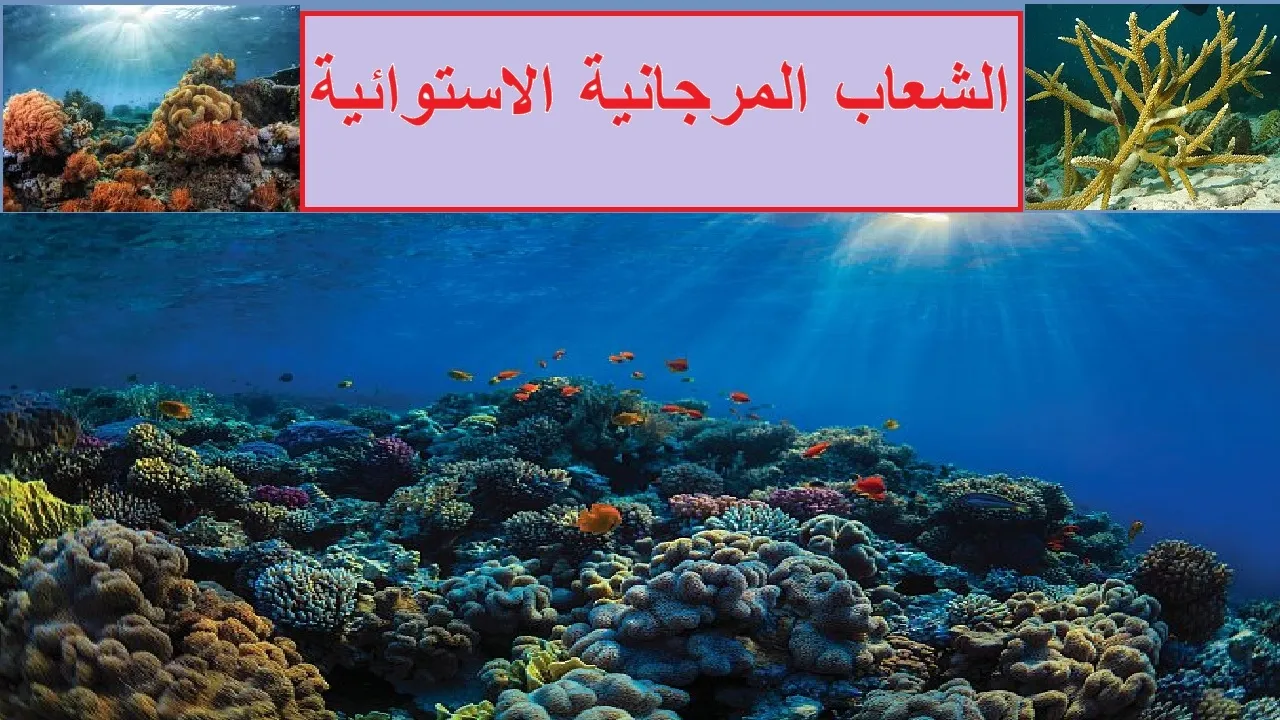


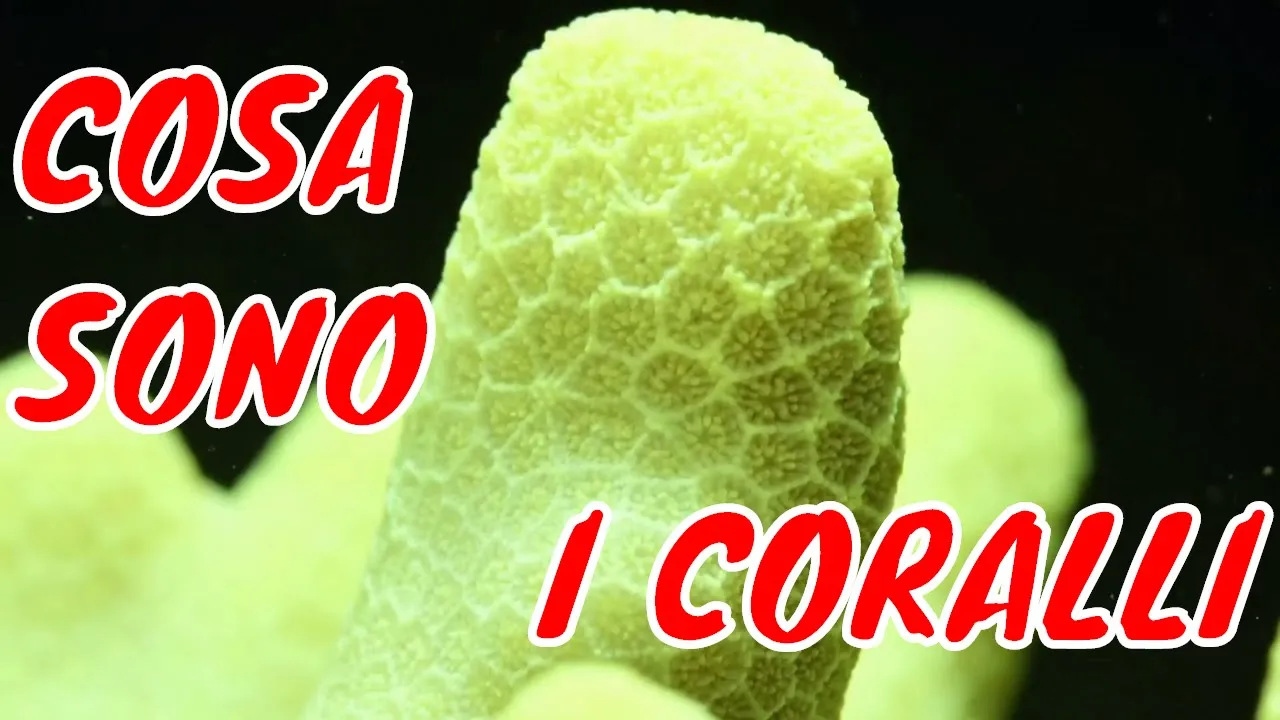

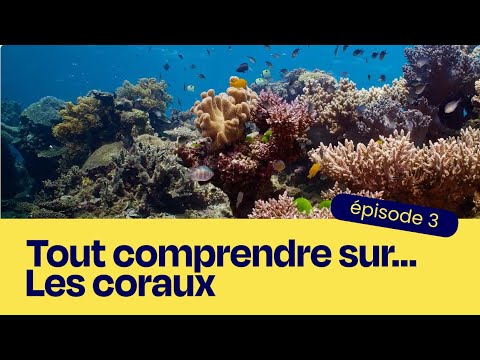














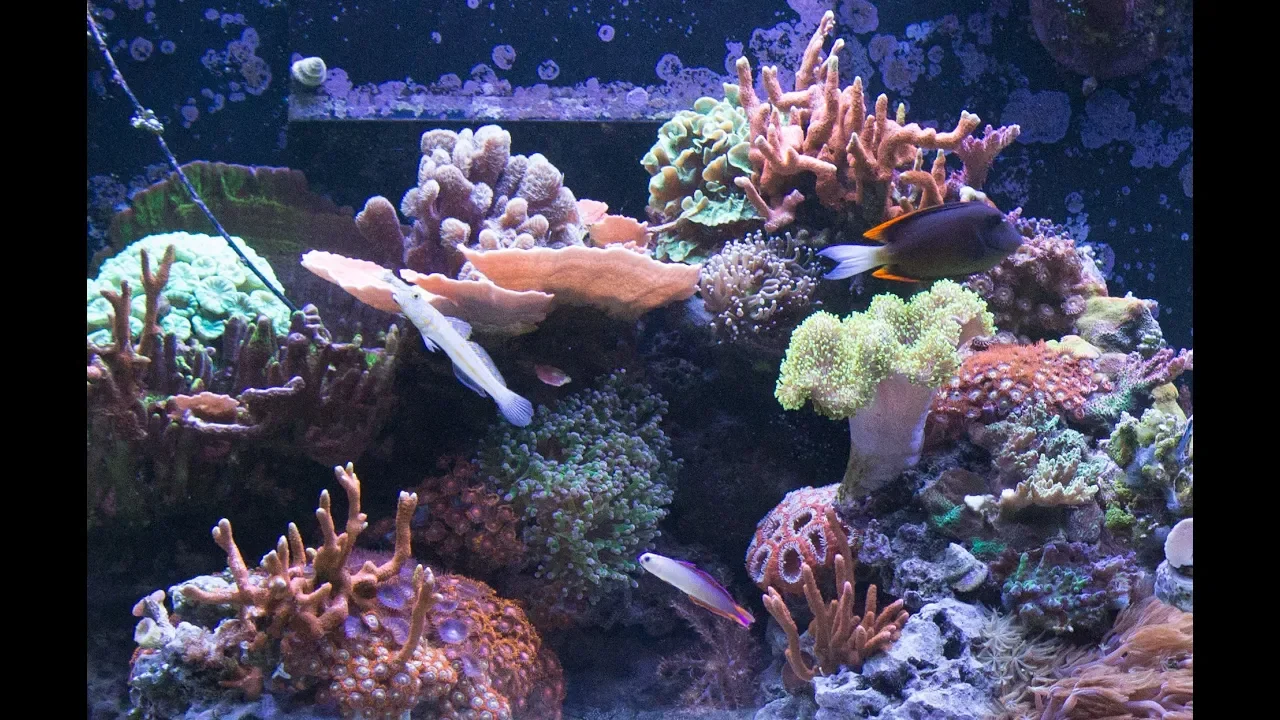




Coral reefs are vital marine ecosystems that provide food, coastal protection, medicine, and tourism revenue worth hundreds of billions annually, yet face existential threats from human activities including overfishing, pollution, and climate change; however, scientists are developing innovative restoration methods such as using 3D-printed surfaces to attract coral larvae, isolating specific bacteria that trigger coral settlement, and successfully culturing rare coral species like the pillar coral (Dendrogyra cylindrus), demonstrating that even severely degraded reefs can recover if given proper support and understanding of coral biology.
Coral Reef Restoration: Growing Baby Corals to Rebuild Reefs
Added:Basic Coral Anatomy and Biology: Understanding that corals are colonial marine invertebrates consisting of polyps, and their symbiotic relationship with photosynthetic zooxanthellae.
Coral Reproduction Mechanisms: Familiarity with both asexual fragmentation and sexual reproduction, particularly broadcast spawning and the larval (planula) stage.
Major Threats to Reef Ecosystems: Knowledge of the causes and consequences of coral bleaching, ocean acidification, warming sea temperatures, and habitat destruction.
The Ecological Significance of Reefs: Understanding why coral reefs are critical to global marine biodiversity, coastal protection, and human economies.
Assisted Evolution and Thermal Tolerance: Exploring how researchers selectively breed or genetically analyze corals to survive rising ocean temperatures.
Advanced Restoration Scaling: Investigating large-scale deployment techniques like larval seeding (coral IVF), microfragmentation, and 3D-printed substrate colonization.
Reef Monitoring and Technology: Studying how marine biologists assess restoration success using environmental DNA (eDNA), 3D photogrammetry, and acoustic monitoring.
Socio-Economic and Policy Frameworks: Understanding how local community engagement, Marine Protected Areas (MPAs), and carbon offset initiatives support global conservation efforts.
136.8K views2.3Klikes13:46Original Release: 2015-12-23
What was the most difficult job you ever did?
Was it working in the sun?
Was it working to provide food for a family or a community?
Was it working days and nights trying to protect lives and property?
Was it working alone or working on a project that wasn't guaranteed to succeed, but that might improve human health or save a life?
Was it working to build something, create something, make a work of art?
Was it work for which you were never sure you were fully understood or appreciated?
The people in our communities who do these jobs deserve our attention, our love and our deepest support.
But people aren't the only ones in our communities who do these difficult jobs.
These jobs are also done by the plants, the animals and the ecosystems on our planet, including the ecosystems I study: the tropical coral reefs.
Coral reefs are farmers.
They provide food, income and food security for hundreds of millions of people around the world.
Coral reefs are security guards.
The structures that they build protect our shorelines from storm surge and waves, and the biological systems that they house filter the water and make it safer for us to work and play.
Coral reefs are chemists.
The molecules that we're discovering on coral reefs are increasingly important in the search for new antibiotics and new cancer drugs.
And coral reefs are artists.
The structures that they build are some of the most beautiful things on planet Earth.
And this beauty is the foundation of the tourism industry in many countries with few or little other natural resources.
So for all of these reasons, all of these ecosystem services, economists estimate the value of the world's coral reefs in the hundreds of billions of dollars per year.
And yet despite all that hard work being done for us and all that wealth that we gain, we have done almost everything we possibly could to destroy that.
We have taken the fish out of the oceans and we have added in fertilizer, sewage, diseases, oil, pollution, sediments.
We have trampled the reefs physically with our boats, our fins, our bulldozers, and we have changed the chemistry of the entire sea, warmed the waters and made storms worse.
And these would all be bad on their own, but these threats magnify each other and compound one another and make each other worse.
I'll give you an example.
Where I live and work, in Curaçao, a tropical storm went by a few years ago.
And on the eastern end of the island, where the reefs are intact and thriving, you could barely tell a tropical storm had passed.
But in town, where corals had died from overfishing, from pollution, the tropical storm picked up the dead corals and used them as bludgeons to kill the corals that were left.
This is a coral that I studied during my PhD -- I got to know it quite well.
And after this storm took off half of its tissue, it became infested with algae, the algae overgrew the tissue and that coral died.
This magnification of threats, this compounding of factors is what Jeremy Jackson describes as the "slippery slope to slime."
It's hardly even a metaphor because many of our reefs now are literally bacteria and algae and slime.
Now, this is the part of the talk where you may expect me to launch into my plea for us to all save the coral reefs.
But I have a confession to make: that phrase drives me nuts.
Whether I see it in a tweet, in a news headline or the glossy pages of a conservation brochure, that phrase bothers me, because we as conservationists have been sounding the alarms about the death of coral reefs for decades.
And yet, almost everyone I meet, no matter how educated, is not sure what a coral is or where they come from.
How would we get someone to care about the world's coral reefs when it's an abstract thing they can barely understand?
If they don't understand what a coral is or where it comes from, or how funny or interesting or beautiful it is, why would we expect them to care about saving them?
So let's change that.
What is a coral and where does it come from?
Corals are born in a number of different ways, but most often by mass spawning: all of the individuals of a single species on one night a year, releasing all the eggs they've made that year into the water column, packaged into bundles with sperm cells.
And those bundles go to the surface of the ocean and break apart.
And hopefully -- hopefully -- at the surface of the ocean, they meet the eggs and sperm from other corals.
And that is why you need lots of corals on a coral reef -- so that all of their eggs can meet their match at the surface.
When they're fertilized, they do what any other animal egg does: divides in half again and again and again.
Taking these photos under the microscope every year is one of my favorite and most magical moments of the year.
At the end of all this cell division, they turn into a swimming larva -- a little tiny blob of fat the size of a poppy seed, but with all of the sensory systems that we have.
They can sense color and light, textures, chemicals, pH.
They can even feel pressure waves; they can hear sound.
And they use those talents to search the bottom of the reef for a place to attach and live the rest of their lives.
So imagine finding a place where you would live the rest of your life when you were just two days old.
They attach in the place they find most suitable, they build a skeleton underneath themselves, they build a mouth and tentacles, and then they begin the difficult work of building the world's coral reefs.
One coral polyp will divide itself again and again and again, leaving a limestone skeleton underneath itself and growing up toward the sun.
Given hundreds of years and many species, what you get is a massive limestone structure that can be seen from space in many cases, covered by a thin skin of these hardworking animals.
Now, there are only a few hundred species of corals on the planet, maybe 1,000.
But these systems house millions and millions of other species, and that diversity is what stabilizes the systems, and it's where we're finding our new medicines.
It's how we find new sources of food.
I'm lucky enough to work on the island of Curaçao, where we still have reefs that look like this.
But, indeed, much of the Caribbean and much of our world is much more like this.
Scientists have studied in increasing detail the loss of the world's coral reefs, and they have documented with increasing certainty the causes.
But in my research, I'm not interested in looking backward.
My colleagues and I in Curaçao are interested in looking forward at what might be.
And we have the tiniest reason to be optimistic.
Because even in some of these reefs that we probably could have written off long ago, we sometimes see baby corals arrive and survive anyway.
And we're starting to think that baby corals may have the ability to adjust to some of the conditions that the adults couldn't.
They may be able to adjust ever so slightly more readily to this human planet.
So in the research I do with my colleagues in Curaçao, we try to figure out what a baby coral needs in that critical early stage, what it's looking for and how we can try to help it through that process.
I'm going to show you three examples of the work we've done to try to answer those questions.
A few years ago we took a 3D printer and we made coral choice surveys -- different colors and different textures, and we simply asked the coral where they preferred to settle.
And we found that corals, even without the biology involved, still prefer white and pink, the colors of a healthy reef.
And they prefer crevices and grooves and holes, where they will be safe from being trampled or eaten by a predator.
So we can use this knowledge, we can go back and say we need to restore those factors -- that pink, that white, those crevices, those hard surfaces -- in our conservation projects.
We can also use that knowledge if we're going to put something underwater, like a sea wall or a pier.
We can choose to use the materials and colors and textures that might bias the system back toward those corals.
Now in addition to the surfaces, we also study the chemical and microbial signals that attract corals to reefs.
Starting about six years ago, I began culturing bacteria from surfaces where corals had settled.
And I tried those one by one by one, looking for the bacteria that would convince corals to settle and attach.
And we now have many bacterial strains in our freezer that will reliably cause corals to go through that settlement and attachment process.
So as we speak, my colleagues in Curaçao are testing those bacteria to see if they'll help us raise more coral settlers in the lab, and to see if those coral settlers will survive better when we put them back underwater.
Now in addition to these tools, we also try to uncover the mysteries of species that are under-studied.
This is one of my favorite corals, and always has been: dendrogyra cylindrus, the pillar coral.
I love it because it makes this ridiculous shape, because its tentacles are fat and look fuzzy and because it's rare.
Finding one of these on a reef is a treat.
In fact, it's so rare, that last year it was listed as a threatened species on the endangered species list.
And this was in part because in over 30 years of research surveys, scientists had never found a baby pillar coral.
We weren't even sure if they could still reproduce, or if they were still reproducing.
So four years ago, we started following these at night and watching to see if we could figure out when they spawn in Curaçao.
We got some good tips from our colleagues in Florida, who had seen one in 2007, one in 2008, and eventually we figured out when they spawn in Curaçao and we caught it.
Here's a female on the left with some eggs in her tissue, about to release them into the seawater.
And here's a male on the right, releasing sperm.
We collected this, we got it back to the lab, we got it to fertilize and we got baby pillar corals swimming in our lab.
Thanks to the work of our scientific aunts and uncles, and thanks to the 10 years of practice we've had in Curaçao at raising other coral species, we got some of those larvae to go through the rest of the process and settle and attach, and turn into metamorphosed corals.
So this is the first pillar coral baby that anyone ever saw.
(Applause) And I have to say -- if you think baby pandas are cute, this is cuter.
(Laughter) So we're starting to figure out the secrets to this process, the secrets of coral reproduction and how we might help them.
And this is true all around the world; scientists are figuring out new ways to handle their embryos, to get them to settle, maybe even figuring out the methods to preserve them at low temperatures, so that we can preserve their genetic diversity and work with them more often.
But this is still so low-tech.
We are limited by the space on our bench, the number of hands in the lab and the number of coffees we can drink in any given hour.
Now, compare that to our other crises and our other areas of concern as a society.
We have advanced medical technology, we have defense technology, we have scientific technology, we even have advanced technology for art.
But our technology for conservation is behind.
Think back to the most difficult job you ever did.
Many of you would say it was being a parent.
My mother described being a parent as something that makes your life far more amazing and far more difficult than you could've ever possibly imagined.
I've been trying to help corals become parents for over 10 years now.
And watching the wonder of life has certainly filled me with amazement to the core of my soul.
But I've also seen how difficult it is for them to become parents.
The pillar corals spawned again two weeks ago, and we collected their eggs and brought them back to the lab.
And here you see one embryo dividing, alongside 14 eggs that didn't fertilize and will blow up.
They'll be infected with bacteria, they will explode and those bacteria will threaten the life of this one embryo that has a chance.
We don't know if it was our handling methods that went wrong and we don't know if it was just this coral on this reef, always suffering from low fertility.
Whatever the cause, we have much more work to do before we can use baby corals to grow or fix or, yes, maybe save coral reefs.
So never mind that they're worth hundreds of billions of dollars.
Coral reefs are hardworking animals and plants and microbes and fungi.
They're providing us with art and food and medicine.
And we almost took out an entire generation of corals.
But a few made it anyway, despite our best efforts, and now it's time for us to thank them for the work they did and give them every chance they have to raise the coral reefs of the future, their coral babies.
Thank you so much.
(Applause)
Up Next
23:06
3D Brain Anatomy: Parts, Functions, and Structure Explained
@officialinsideus
17.4K views•2023-10-31
50:12
Bacterial Communication: Quorum Sensing and Biofilm Formation Explained
@JHUAAP
12.6K views•2011-06-28

18:11
How Bacteria Talk: Quorum Sensing Communication | Bonnie Bassler TED
@TEDEd
707.9K views•2013-02-09
7:08
Bacteriophages: Earth's Deadliest Killers and Future Antibiotics
@kurzgesagt
34.6M views•2018-05-13
Related Study Plans & Knowledge Roadmaps
Structured learning paths in Biology
biology
RNAi: Biogenesis, RISC & Gene Silencing
01Molecular Biology Foundations: DNA to Protein
02Introduction to RNA Interference (RNAi)
03Molecular Biogenesis of miRNA and siRNA
+ 2 more learning modules
10h5 modules
Explore Roadmap
biology
Mycorrhizae: Signaling, Biophysics & Ecology
01Foundations of Mycorrhizal Symbiosis
02Molecular Signaling and Root Colonization
03Biophysics and Bioenergetics of Nutrient Exchange
+ 1 more learning modules
11h4 modules
Explore Roadmap
biology
Circadian Clocks: TTFL, SCN & Periphery
01Foundations of Molecular Biology & Gene Expression
02Introduction to Chronobiology and Actograms
03The Core TTFL: Molecular Architecture of the Clock
+ 3 more learning modules
14h6 modules
Explore Roadmap
biology
Population Genetics: Math, Drift & Selection
01Genetic & Probability Foundations
02The Hardy-Weinberg Principle and Baseline Models
03Mathematical Modeling of Natural Selection
+ 3 more learning modules
18h6 modules
Explore Roadmap