











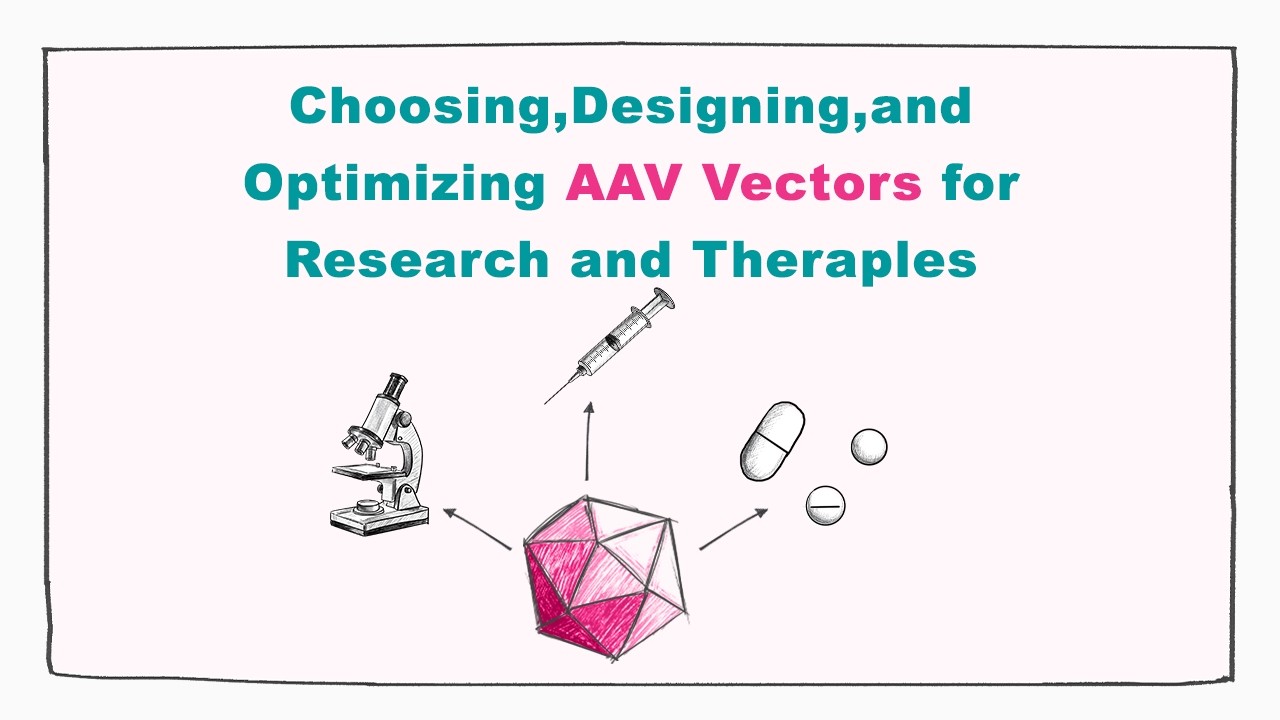








Gene therapy involves delivering functional genes to replace or correct defective genes causing disease; however, direct plasmid delivery faces challenges because cells naturally resist foreign genetic material, with only about 1% entering cells successfully. To overcome this, scientists utilize modified viruses as delivery vehicles—specifically adeno-associated virus (AAV)—which have been engineered to retain their natural ability to bind to and enter specific cell types while losing their capacity to multiply and cause disease. The AAV system requires three components: a plasmid containing the therapeutic gene of interest, a plasmid expressing viral rep and cap proteins needed for particle assembly, and a helper plasmid providing additional functions. When these are introduced into producer cells, they assemble into viral particles that can efficiently deliver genetic material to target tissues for therapeutic applications.
Gene Therapy Design Using AAV Viral Vectors | BHU Lecture
Added:Namaskar.
Hyderabad gate gate.
Kumar, realumar.
Okay.
Google search.
breadology department of science center for genetic disorders.
Body lunch.
Yeah.
foreign semester.
Everybody subjects Center for Gentic Disorder. Center for Gentic Disorder.
for Maxi.
Today I'm going to talk more about workshop kind of talk and uh I'm going to more talk about how gene therapy work and how it can be used for your research. How gene construction you can design and what are tool and technology especially genetic engineering tool that you can use for your research and also for your career point of view. If you write and if you know if you have an experience of genetic engineering any kind of genetic engineering if you write in your CV if any person will see your CV they will very um happy to see such kind of experience.
Okay. Another thing I want to say before I start that uh I changed my powerpoint in last moment. So I did not prepare much. So I will try to use multiple slide multiple file multiple poweroint multiple slide from multiple files. So try to combine together to make complete story. Okay. So first thing first who am I? Uh I have done my PhD from CDRA LNAU and master from KMTU.
Here are my expertise. I my expert is in how you can target the gene over expression in knockdown in particular cell type especially my all the research are involved and second thing how can you use the crisper technology to gene over expression in gene knockd down and as you know that the if you want to study the RNA label in particular cell how you going to study the RNA for example if you extract the RNA from the brain particular brain punch a chunk of brain size that chunk have all possible kind of cells how you going to isolate the RNA only one kind of that's expertise I have and lastly recently uh like five six year ago I started the gene therapy lab uh where I do the gene construction design I package the gene into the AB and antivirus and I provide a service for the other user users within university as well as outside university.
Okay. So, and my hobby is I have a two YouTube channel and uh where I try to teach especially the lab at home uh science in uh layman style so that any person can understand the science is not very difficult to understand.
uh people who never go to school that person also people if he or she will see my videos they will understand what I'm talking about okay so what is the gene therapy very simple just fix the bad gene with the good genes and whatever technology you are using is not gene so why gene therapy required so as we know that that each Any of the protein in our cells come from the DNA and DNA transcribed into mRNA. MRNA transcript translated into protein and protein have certain function. If any kind of mutation or addition of any DNA over there or deletion or over production or under production of this gene as the result this protein might not work as it should be right. If we fix the problems, if you fix this gene by any method, then protein will work work properly and and the related disase also will be fixed.
This is called gene. Right?
So gene means plasmid basically we deliver the plasmid in the tissue.
Whatever region associated with that particular tissue. Next next question is how you going to deliver this plasmid into the cells. For example, if you have any injection syringe that have a plasma in it, we just directly inject to the heart or kidney.
Our cells do not like any kind of foreign object to go into the cells.
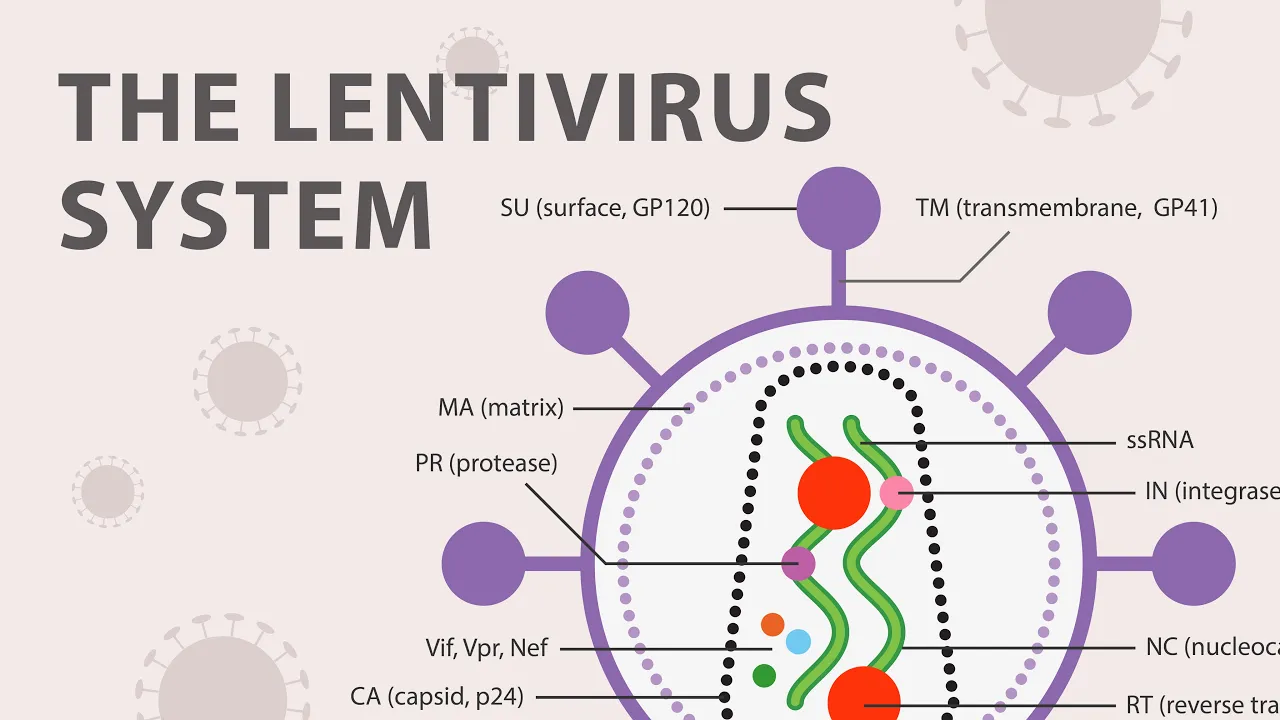
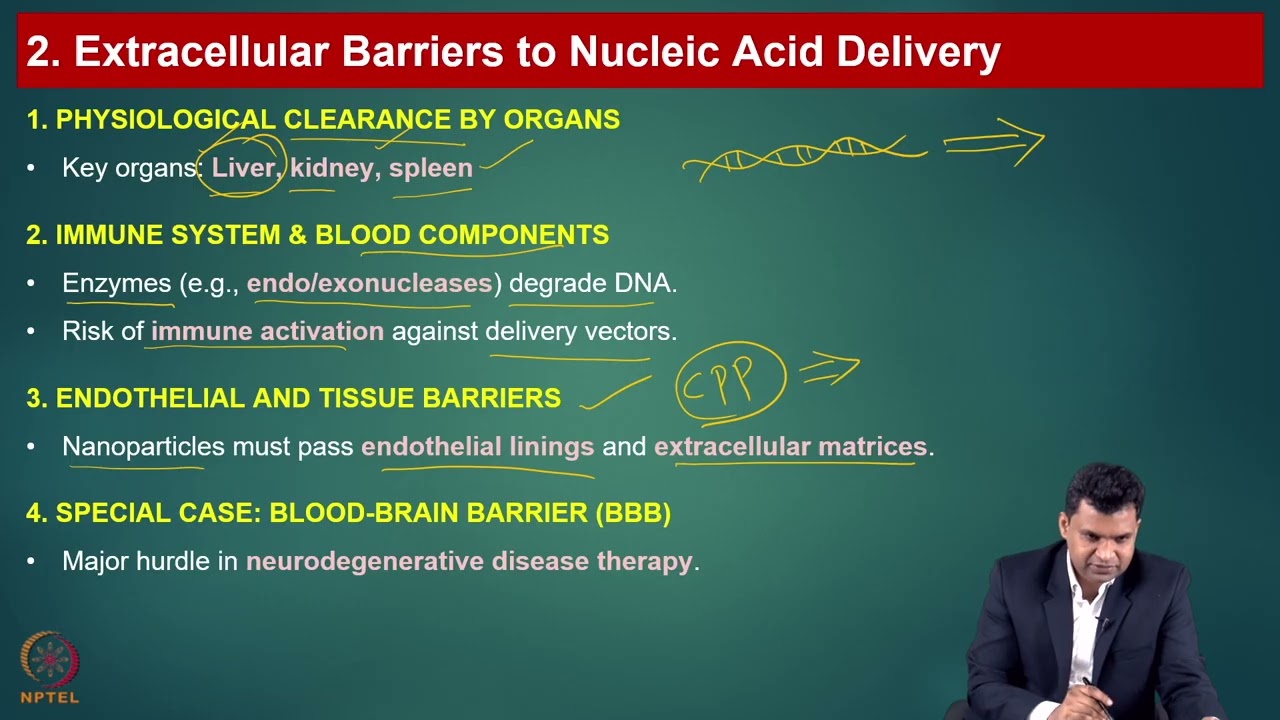
Especially in V even in right in vivo is our body is designed in such a way our defense mechanism is so high that it will not allow to return any plasmid into the cell. Maybe 01% plan might go the same but rest of the plan will be twe so your will is not fulfilled right the question is how you going to deliver the ga with interest into the cells there's a many ways to deliver the gene uh into the cell the one the way that I'm going to talk about is called viral based gene therapy and I have expertise I'm delivering the gap test using viral based one is adino associated virus another is leni virus I will more talk about associated virus based but if you have any question related to len virus feel free to ask uh like I said before I prepared the slide very last moment so I do not compile much enough so feel free to ask any question is why we are using the virus If you think about virus in your if you think of virus first thing in come in your mind is very infectious right for example corona virus you know the whole world is affected because of the infectious in nature virus is one of the organism microorganism or parasite that has highly infectious in nature you can take advantage of this first This because of this has very b highly binding authority. Virus had capability to modify itself in such a way that can target any kind of cells.
As you know that the corona virus have certain receptor that particularly inject to the lung cells. Right? Anyone know the receptor name? I think CP2 or something like that right? So so that virus have very high affinity to our lung cells. Second thing each virus have their own genetic material inside the cells. The virus is what? Virus is just catchy protein. There's a ball. Ball is made of the catch protein. [laughter] Inside the protein, there is a genetic material inside. Right? In case of corona virus, there is a RNA inside.
Right? Each virus contain either RNA or DNA. So in case of corona virus, it has RNA. That's why we use the RNA vaccine.
That's why we developed the RNA vaccine to inhibit the progress of RNA from the corona virus right so so that that this is very important because of they have capability to deliver the gene a test whatever you want right second thing is multiplication that we do not want so we want to use the virus we we we can make a binding affinity with our target For example, if you are targeting the heart cell, liver cell, kidney cell, that's that is we can take advantage.
Second thing, we can put our gene of interest into their body, which is very good. But we do not want this vir to multiply in your cells, right? So, what we have to do, we have to do some uh here is a life cycle. You can see there is a multiplication part somewhere here that we do not want to uh amplify.
Otherwise if you amplify in your body it going to cause the disease. So what scientists does they did some mutation in a virus in such a way that it has it can carry it has binding ability and it can carry your genome but it cannot multiply.
So how this work? So this is AB virus.
How it is look like? It contains DNA not RNA like bacterial face. Uh is another bacter virus that we are not using as a tool. And another advantage of using AV is cannot cause in human disease in junk. Wild type A cannot cause any disease in human that's why we use this virus as a tool. Okay.
So if you look the genomic structure of this virus this is how it look like. It has rap and cap. There's two protein inside their genetic material called rap and there is a two sides here is called inward tandem repeat called ITR both. I will explain you why what is this and why this ITR is important. So what we did we just replace this gene with our gene. For example, if any lung disease associated with the CFTR mutation in the ama in case of ama. So you can have a good C CFTR gene clone here on either side of it right in circular plasmid.
Now you have one plasmid that contain your genome. You can clone any genome entries. If you you can clone the GFP for example just to see the blood sense expression of GFP in your cell. Very simple. Now virus also need their red cap, right? So we clone another vector that has a red [laughter] cap. You can express it with the CMD promoter or anything like that. Now we have a two class. One carry your gene of interest.
Another carry your rep that virus required. This gene of interest has another side of uh it.
So like I said before we need to we do not want to multiply the virus. So we need some mutation in the web protein in such a way that it have binding authority that it can carry or gene up but it cannot multiply.
Right now we introduce third virus third plasmid called helper plasmid. So once you transpect all three plasmid into the cell line especially the HK 293 293 cells and this three plasmid will translated into the protein right is kind of capsit protein right now caps protein has ability to start and aggregate together this protein here is kind of assembling right assembly Assembly assembling assembly. So during the assembly virus need their own genome as well right each virus has to have their material inside. So now virus will see where is my idea. This how virus recognize their genes by doing the idea.
So in therapy it is said that if you inject a how many do you have to give right in case of animal one is enough we had discussed very well. Okay.
You all are welcome for the cup of tea.
Papa is waiting outside.
>> [clears throat] >> Diagnostic center.
Last [laughter] Practice practice. [laughter]
Up Next
Quantitative Real-Time PCR (qPCR): Principle, Method & Data Analysis
@animatedbiologywitharpan
129.2K views•2023-09-06

AAV Production in HEK293 Cells: A Lab Protocol | NIIMBL
@innovatebio
2.2K views•2021-12-04
Microbial Degradation of Plastics: Biodegradation Pathways & Sustainability
@majeedhammad
2.9K views•2021-04-11
CRISPR and Genetic Engineering: How Gene Editing Works and Why It Matters
@kurzgesagt
30.5M views•2016-08-10
Related Study Plans & Knowledge Roadmaps
Structured learning paths in Biotechnology