![Supreme Court Landmark Case [Miranda v. Arizona]](https://i.ytimg.com/vi/9GY1kahjPkw/maxresdefault.jpg)

















![[Landmark Cases] Right to Remain Silent: Berghuis v. Thompkins](https://i.ytimg.com/vi/6QTYdbeHJ78/maxresdefault.jpg)

In Miranda v. Arizona (1966), the U.S. Supreme Court established that statements made during custodial interrogation are inadmissible at trial unless law enforcement provides specific warnings about the right to remain silent, the right to counsel, and the right to free counsel if indigent; this landmark decision consolidated four cases where defendants confessed without being advised of their rights, recognizing that custodial interrogation creates inherently coercive conditions that threaten individual liberties and require procedural safeguards to protect the Fifth Amendment right against self-incrimination.
Miranda v. Arizona Case Brief | Fifth Amendment Rights
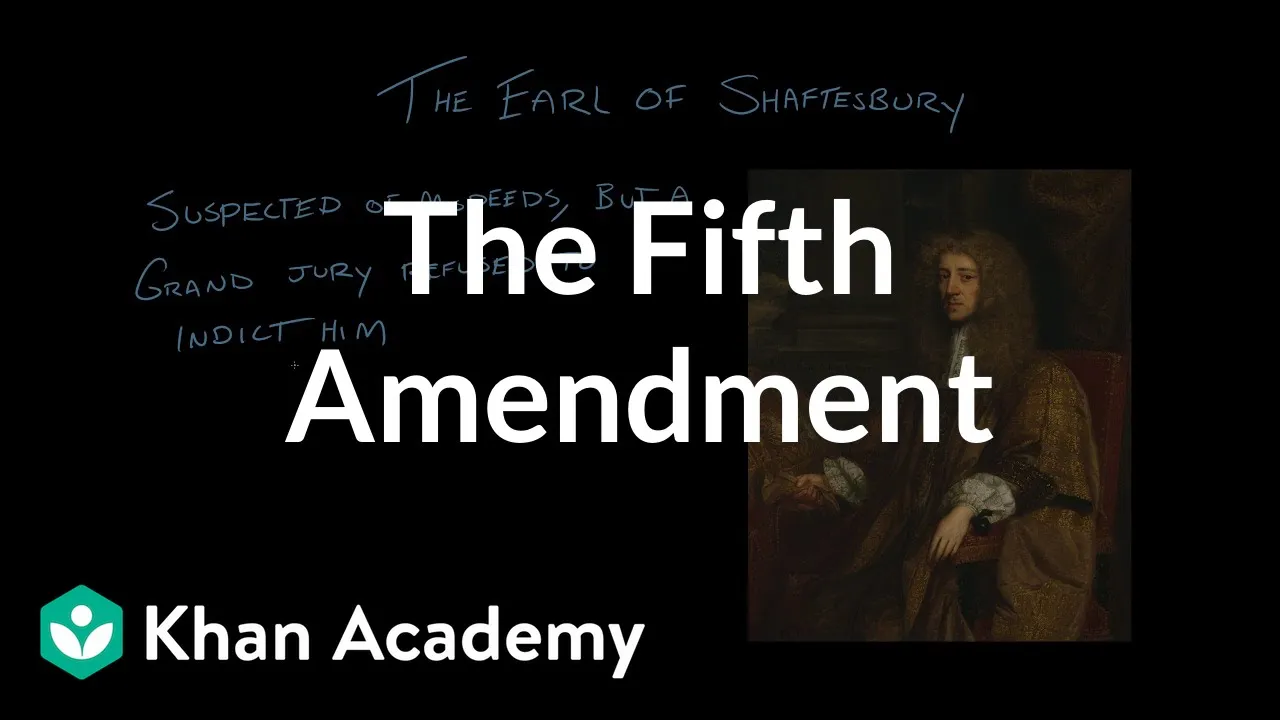
Added:Understanding the text and historical context of the Fifth Amendment, specifically the privilege against self-incrimination.
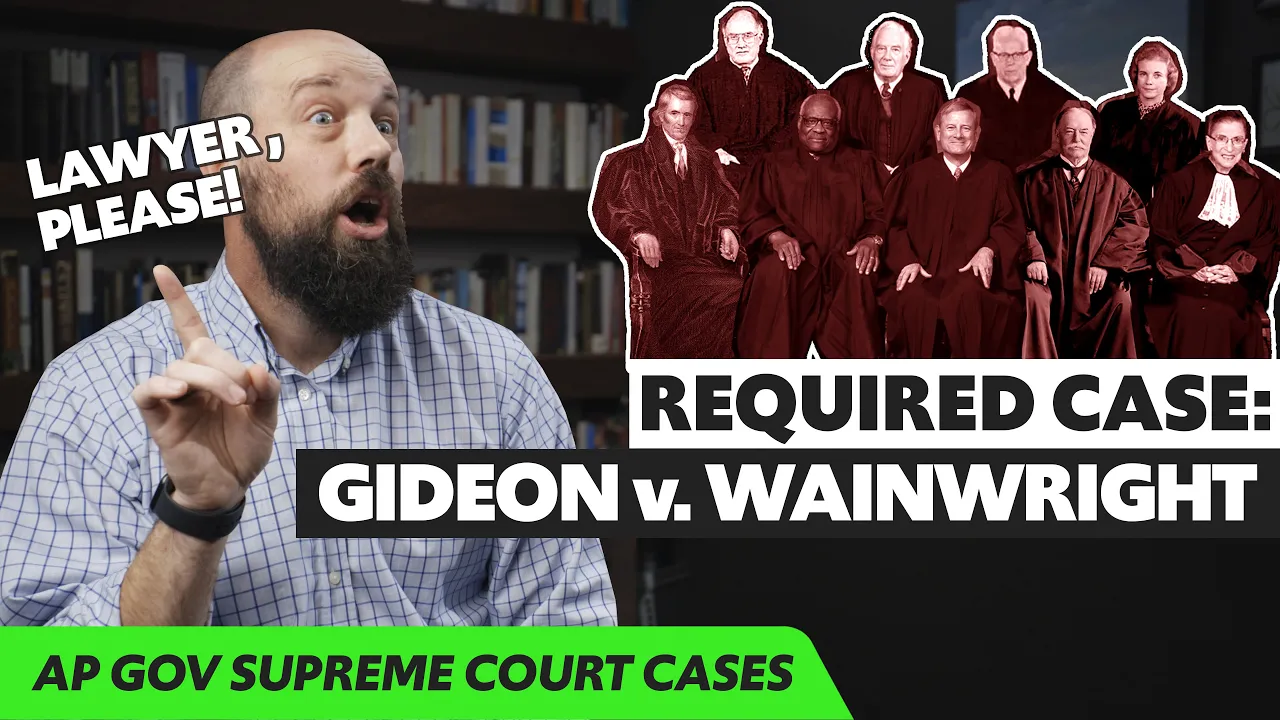
The Sixth Amendment guarantee of the right to legal counsel during criminal prosecutions.
The concept of 'due process of law' as outlined in the Fifth and Fourteenth Amendments.
How the Supreme Court of the United States interprets the Constitution and establishes binding legal precedents.
The 'Exclusionary Rule' and how evidence obtained in violation of constitutional rights is treated in court.
Exceptions to the Miranda rule, such as the 'public safety exception' established in New York v. Quarles.
The legal definitions and boundaries of what constitutes 'custody' and 'interrogation' in modern law enforcement practices.
Subsequent landmark cases that refined Miranda, such as Dickerson v. United States and Berghuis v. Thompkins.
231.7K views1.9Klikes5:00Original Release: 2017-10-13
- [Narrator] In the 1960s, Miranda versus Arizona was a huge victory for individual rights.
The case established a set of arrest procedures, including the famous right to remain silent that Americans now take for granted.
Miranda was a consolidation of four cases.
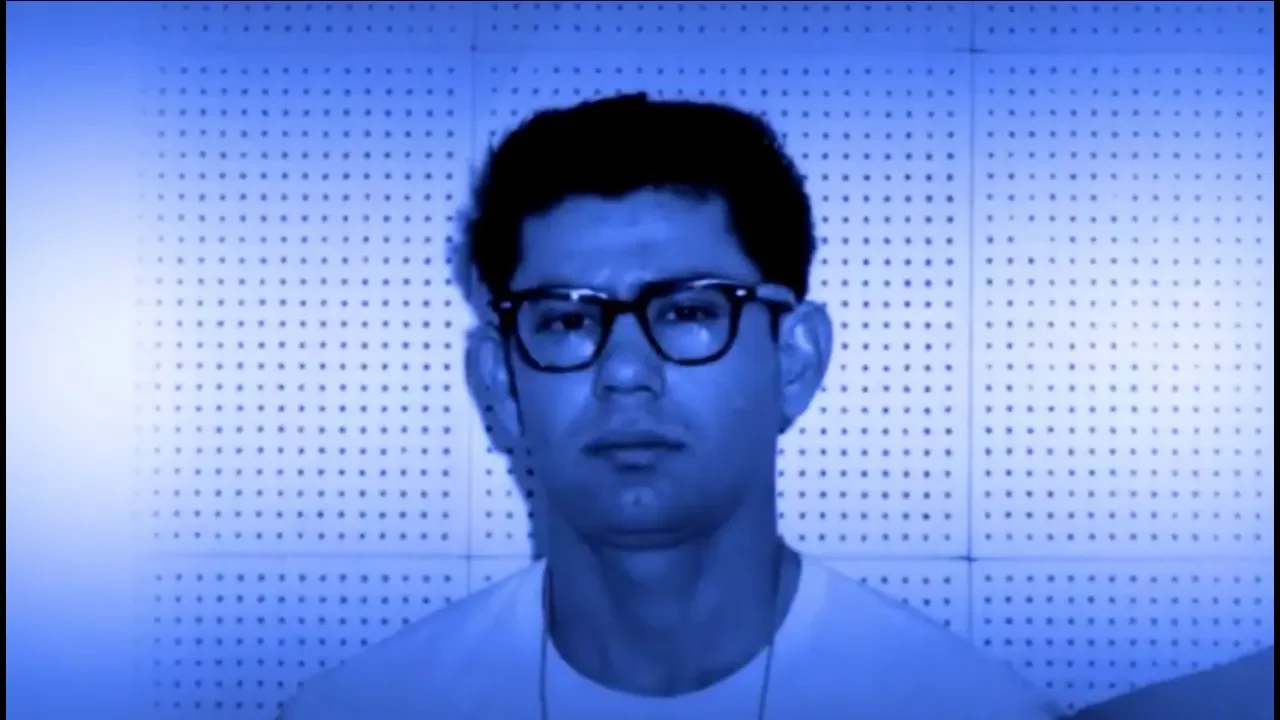
Ernesto Miranda confessed after questioning by Arizona Police while he was in custody at a police station.
Before confessing, Miranda wasn't advised of his right to counsel.
At trial, his confession was admitted and a jury convicted him of kidnapping and rape.
The Supreme Court of Arizona affirmed Miranda's conviction.
Like Miranda, defendants Michael Vignera and Carl Westover confessed to crimes after extensive custodial interrogations without being notified of their rights.
Their convictions were affirmed.
However, the Supreme Court of California reversed Roy Allen Stewart's conviction because the record was silent on whether he had been advised of his rights.
The United States Supreme Court accepted these four cases to determine what kinds of custodial interrogation procedures were required to adequately safeguard the Fifth Amendment right against self-incrimination.
The court held that without certain hallmark warnings regarding the right to remain silent and the right to counsel, statements made during custodial interrogation were inadmissible at trial.
Writing for a five-justice majority, Chief Justice Warren concluded that prosecutors couldn't use statements from custodial interrogations without procedural safeguards.
Custodial interrogation occurs when law enforcement officers question a person who has been arrested and taken into custody, or otherwise deprived of freedom of action in any significant way.
Warren described custodial interrogation as inherently coercive.
Cutting suspects off from contact with the outside world creates an environment ripe for intimidation.
Acting within a closed, hostile environment, police officers can prey upon individual weaknesses at the expense of individual liberties.
The risk of psychological intimidation was plain in several of the consolidated cases here.
For example, Miranda suffered from mental illness, and Stewart had dropped out of school in the sixth grade.
Due to these concerns, the Constitution requires a number of procedural safeguards that relieve some of the pressure put upon people in custodial interrogation.
Prior to any questioning while in custody, a person must be informed of the right to remain silent and that anything said can be used as evidence of guilt.
The arrestee must also be notified of the right to an attorney, and that if the arrestee can't pay for an attorney one will be provided for free.
Any waiver of these rights must be voluntary.
If a person refuses to be questioned at any point, law enforcement can't continue the questioning.
The fact that a person answers some questions doesn't mean the person waives the right to consult with an attorney or to stop the interrogation at a later point.
After establishing these principles, the court held that the statements of all four men were inadmissible.
The court reversed the convictions of Miranda, Vignera, and Westover, and then affirmed the California Supreme Court's reversal of Stewart's conviction.
Justice Clark dissented from the court's judgment as to the reverse convictions, and concurred in the judgment on Stewart.
Lacking empirical evidence on the impact of the court's procedure safeguards, Clark worried the majority had gone too far.
Clark would've employed a totality-of-the-circumstances test to evaluate whether each statement was voluntary.
Justice Harlan, joined by Justices Stewart and White, dissented.
The majority's procedures discouraged any kind of confession.
Even if the Fifth Amendment applied to pre-trial custodial interrogations, it hardly supported the majority's strict procedures.
Legislative reform could craft a better solution and would be supported by empirical data on the effect of any new procedures on law enforcement practice.
Justice White also wrote his own dissent.
In White's view, no Fifth Amendment jurisprudence supported the majority's procedures.
While it frequently fell to the court to make new law, there was no logical basis for assuming that custodial interrogations were inherently coercive, or that the majority's procedures would render the statements voluntary.
Moreover, the majority's procedures could weaken criminal law enforcement.
Just two years later, Richard Nixon advocated reversing Miranda in his 1968 presidential campaign.
He supported Congress's passing of the Omnibus Crime Control and Safe Streets Act of 1968, which purported to abolish Miranda in the federal system.
In Dickerson versus United States, the court eventually struck down the law and ruled that Miranda warnings were still constitutionally required in federal cases.
Up Next
37:08
Bill of Rights Explained | First 10 Amendments by a Lawyer
@internetesquire
221.1K views•2025-12-18

4:27
US Secondary Sanctions Impact on EU Businesses and Blocking Legislation
@Bureauvandijk
1.6K views•2019-03-20
1:52
Employment Division v. Smith Case Brief | Free Exercise Clause
@QuimbeeDotCom
15.4K views•2021-01-08

24:42
Police Interrogation Tactics: False Confessions & Legal Reform
@LastWeekTonight
7M views•2022-04-18
Related Study Plans & Knowledge Roadmaps
Structured learning paths in Law
law
Self-Defense Law: Imminence & Castle Doctrine
01Foundations of Self-Defense Law
02Imminent Threat & Reasonable Belief
03The Principle of Proportionality
+ 3 more learning modules
12h6 modules
Explore Roadmap
law
Defamation Law: First Amendment & Actual Malice
01Introduction to civil torts and the First Amendment
02Elements of Defamation: Libel and Slander
03Public Figures vs. Private Individuals
+ 2 more learning modules
8h5 modules
Explore Roadmap
law
Hearsay Rule: Trial Evidence & Exceptions
01Introduction to Trial Evidence & Courtroom Basics
02Demystifying Hearsay: The Core Definition
03Non-Hearsay: Exclusions Under FRE 801(d)
+ 3 more learning modules
14h6 modules
Explore Roadmap
law
Medical Malpractice: Law, Liability & Care
01Foundations of Tort Law and Civil Liability
02The Four Elements of Medical Malpractice
03Defining and Proving the Standard of Care
+ 2 more learning modules
12h5 modules
Explore Roadmap