

















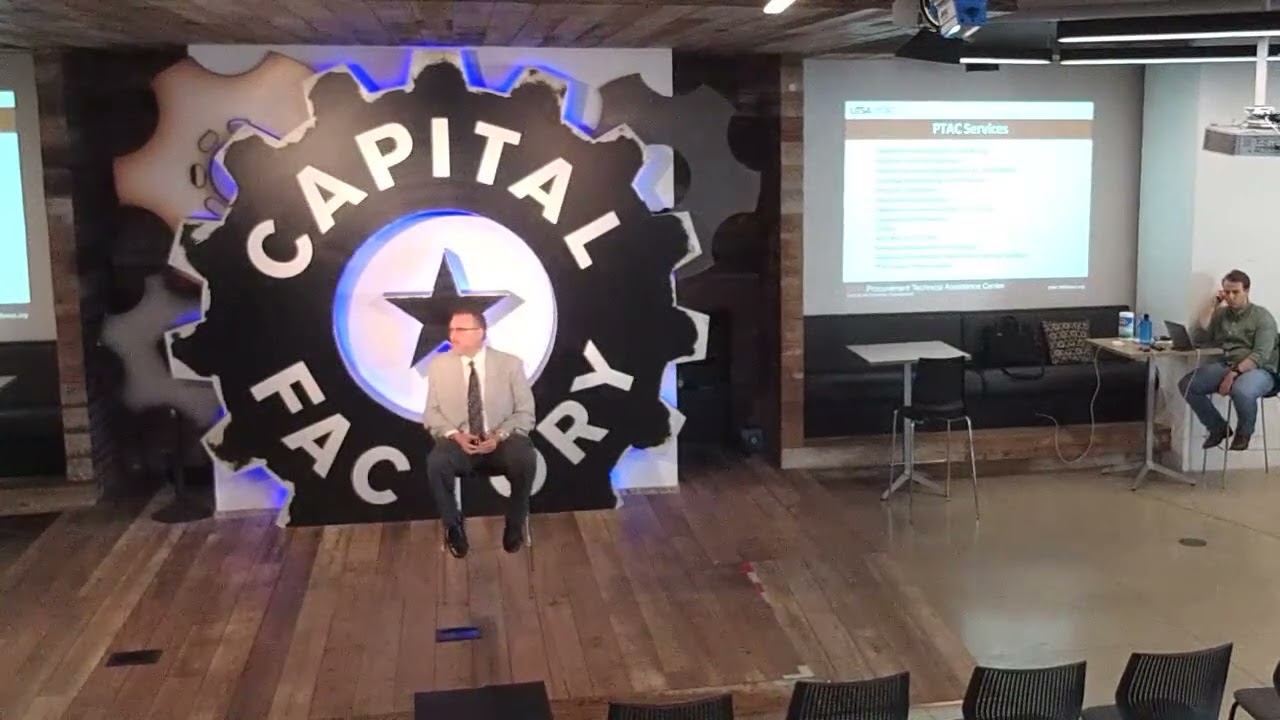




The post award phase of government contracting involves contract administration activities including post-award conferences to establish work details, managing contract modifications and disputes through legal adjudication, determining appropriate oversight levels, and handling contract termination through convenience or default mechanisms.
Government Contracting Post-Award Phase Explained by Expert
Added:Understanding of the Federal Acquisition Regulation (FAR) framework and general government procurement principles.
Knowledge of the pre-award phase, including solicitation (RFPs), proposal preparation, and contract award mechanisms.
Familiarity with standard government contract types, such as Fixed-Price, Cost-Reimbursement, and Time-and-Materials (T&M).
Awareness of key agency roles, specifically the legal authorities of the Contracting Officer (CO) versus the Contracting Officer's Representative (COR).
In-depth study of the Contract Disputes Act (CDA) and the formal appeals process through the CBCA, ASBCA, or Court of Federal Claims.
Developing compliance frameworks for federal audits, such as Defense Contract Audit Agency (DCAA) guidelines and cost accounting standards (CAS).
Managing Contractor Performance Assessment Reporting System (CPARS) evaluations to build a strong past performance record for future bids.
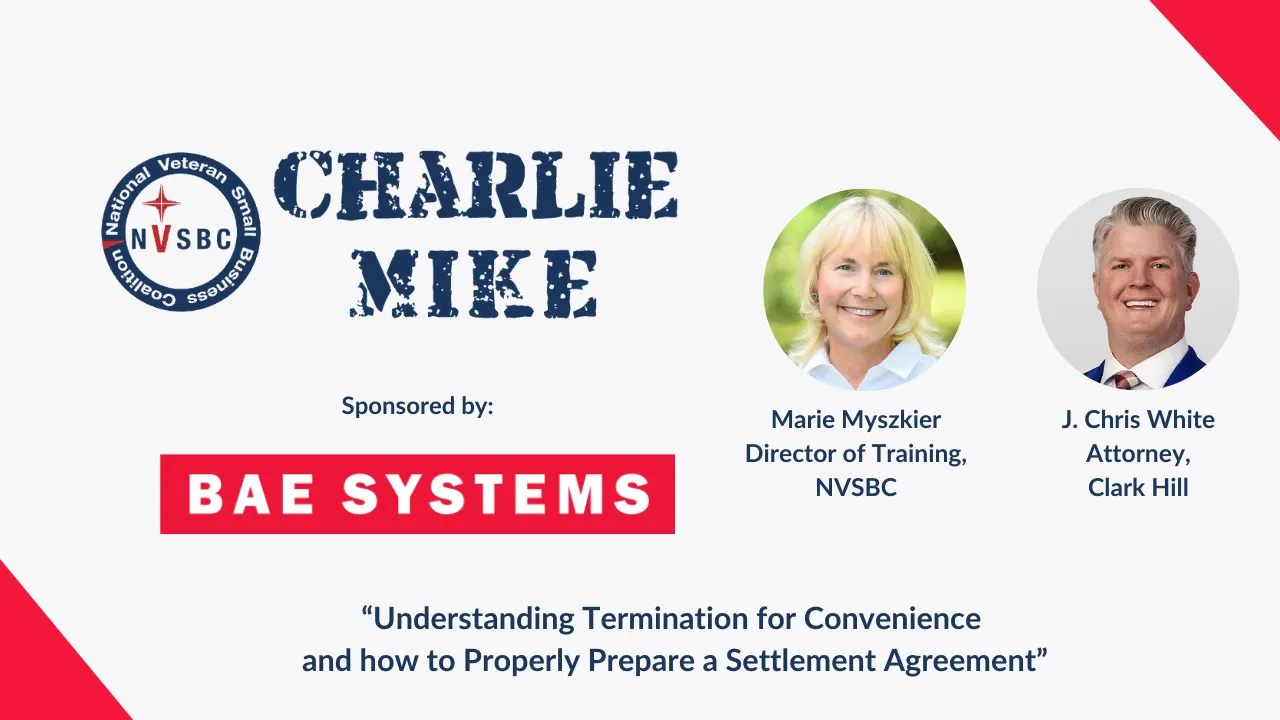
Advanced strategies for negotiating Termination for Convenience (T4C) settlement proposals and mitigating Termination for Default (T4D).
1.8K views6likes5:08Original Release: 2009-04-25
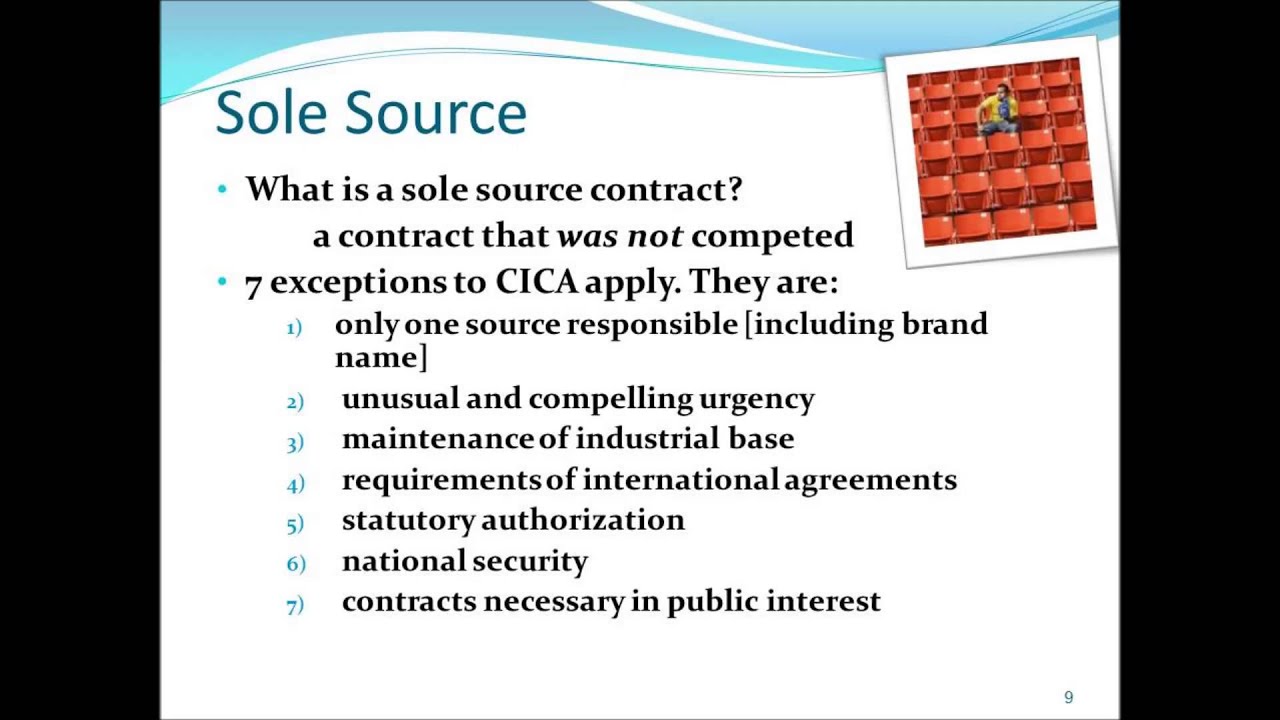
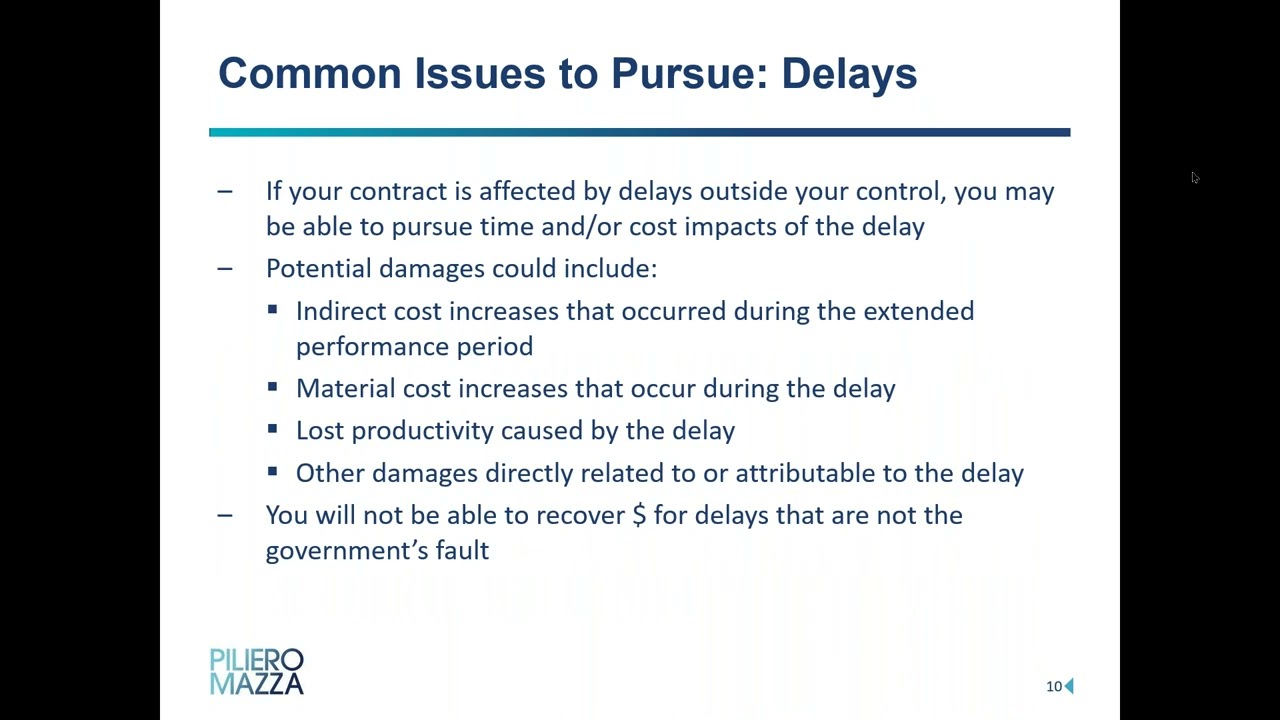
once we've awarded the contract now we get into contract administration post award contracting in large dollar complex type contracts we may need to have a meeting with the contractor no matter what the dollar threshold if it's complex and the contractor and the government need to get together on just how the work is going to be performed how is the contractor going to get into the facility when are they going to do the job are we going to allow them specific times so we may need to have a conference between the government and the contractor so we might need a post award conference to work out those details it could be just a by telephone to identify with the contractor so that we both know when the works get going to be done how the work's going to be done but as in larger dollar contracts it may need to be more of a formalized conference as part of the post award there's going to be possibly changes to the contract over its lifetime and we do this through modifications in major contracting we're going to have disputes between the government and the contractor we will not have any disputes and both the government and the contractor are very happy with what it is that the requirement is contractor performs and the government receives the benefit and we're happy but a dispute is nothing more than a disagreement in what the contractor feels they're supposed to be doing and the government feels that the contractor is supposed to do this dispute needs to be adjudicated needs to be handled in a legal manner that is satisfactory to both the government and the contractor disputes hopefully can be handled at a very low level it's usually certainly a misunderstanding it's a disagreement and if we can make this agreement go away we will if it becomes a formal disagreement it may have to go to a board of contract appeals above the contracting officer to make a determination how to resolve the dispute which then would require a modification and a change to the contract oversight of contractors contractor oversight how much contract oversight is necessary hopefully none contractor knows what they're supposed to be doing contractor performs the government's happy we all are very satisfied with the outcome but sometimes we have to have oversight to assure that the contractor is doing all of the things that we want them to do determination of contract oversight is usually determined by the contracting officer the customer and the user assuring that the contractor is doing everything that they're supposed to do hopefully we'll have contract close out the contractor completes the job we pay them for the job and everybody's happy but sometimes that doesn't happen and we have to actually terminate contracts if we have termination for convenience the government always has the right to terminate a contract because we don't need it any longer and pay the contractor for the worked that they have done now we also have termination for default where the contractor is not in compliance with all of the terms and conditions of the contract and we may then have to default the contractor for their work and would not pay them for any work that was unacceptable but the contract would be terminated now this has been a very short understanding of the three phases of the contracting process for the government from pre-solicitation solicitation award to post award
Up Next

16:02
A Contractor's Guide to Finding Large Primes for Subcontracting
@govafyai
9.7K views•2015-10-02

26:22
Walking in the City: Urban Rituals and the Flâneur in Contemporary India
@PSBTIndia
1.9K views•2016-08-02

9:49
FastAPI vs Flask vs Django: Choosing the Right Python Web Framework
@TechWithTim
302.5K views•2024-05-26

1:42
Game of Thrones Opening Credits: A Cinematic Analysis
@gameofthrones
46.3M views•2011-04-18
Related Study Plans & Knowledge Roadmaps
Structured learning paths in General & Interdisciplinary Studies
general-studies
Artificial Light: History, Tech & Human Impact
01The Pre-Electric Era: Fire, Oil, and Gas Lighting
02The Incandescent Revolution and Grid Electrification
03Gas Discharge and Fluorescent Illumination
+ 3 more learning modules
14h6 modules
Explore Roadmap
general-studies
Elevator Engineering: History, Physics & Cities
01From Hoists to Safety Brakes: The Dawn of Vertical Lift
02Hydraulic vs. Traction: The Engineering Physics of Elevators
03Modern Speed, Safety, and Algorithms
+ 2 more learning modules
12h5 modules
Explore Roadmap
general-studies
Rubber: Material Science, History & Geopolitics
01Origins of Natural Rubber & Mesoamerican History
02The Chemistry of Natural Rubber & Vulcanization
03The Geopolitics of the Rubber Boom & Colonization
+ 2 more learning modules
12h5 modules
Explore Roadmap
general-studies
Containerization: Evolution, Logistics & Trade
01Ancient Trade & Bulk Cargo: Amphorae to Barrels
02The Industrial Revolution & Cardboard Packaging
03The Containerization Revolution: Malcom McLean
+ 2 more learning modules
12h5 modules
Explore Roadmap