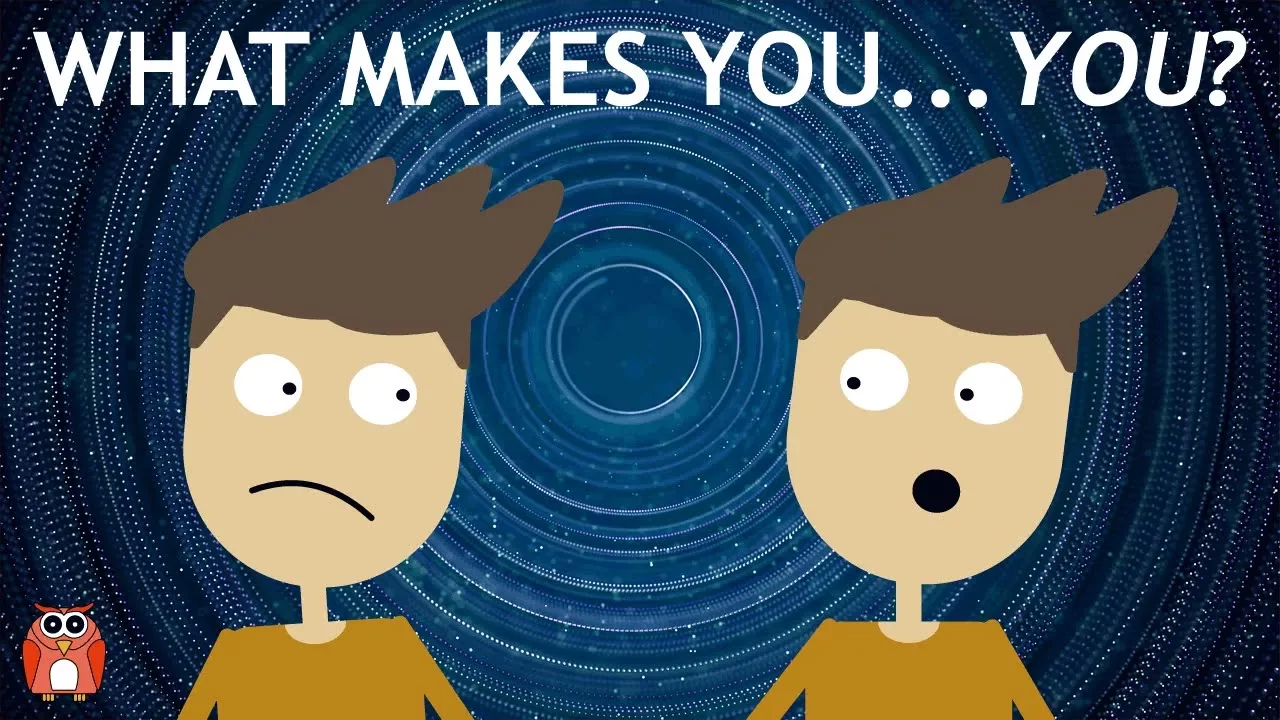



















Animalism is the philosophical view that human persons are biological organisms (animals), not immaterial souls or abstract entities; this view argues that since we observe ourselves as conscious biological entities and cannot conceive of a human being existing without being an organism, we must be animals, which also implies that personal identity depends on biological continuity rather than psychological continuity.
Animalism and Personal Identity: Philosopher Eric Olson Interview
Added:The philosophical problem of personal identity, specifically the distinction between numerical identity over time and qualitative identity.
John Locke's psychological continuity theory of identity, which posits that memory and consciousness define the self.
Classic thought experiments in metaphysics, such as the 'Prince and the Cobbler' or brain-transplant scenarios, which challenge our intuitions about the self.
Basic metaphysical terminology, particularly the distinction between a 'person' (a moral/cognitive category) and a 'human animal' (a biological category).
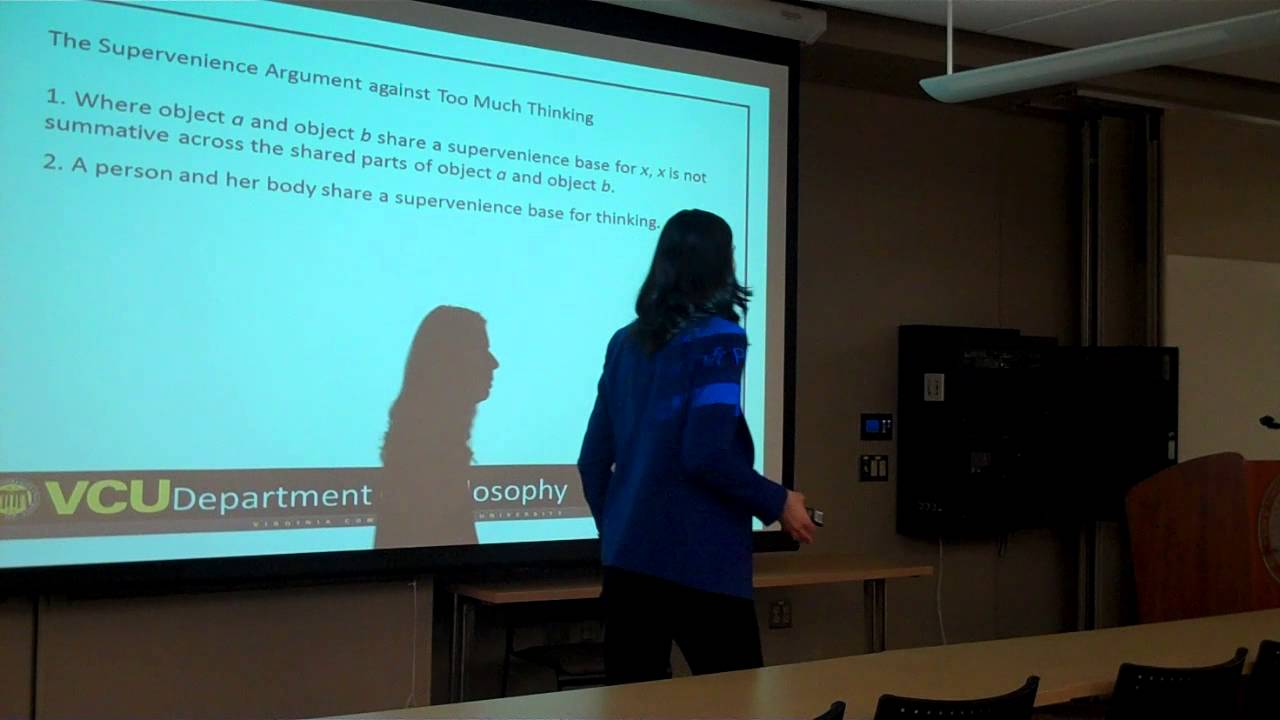
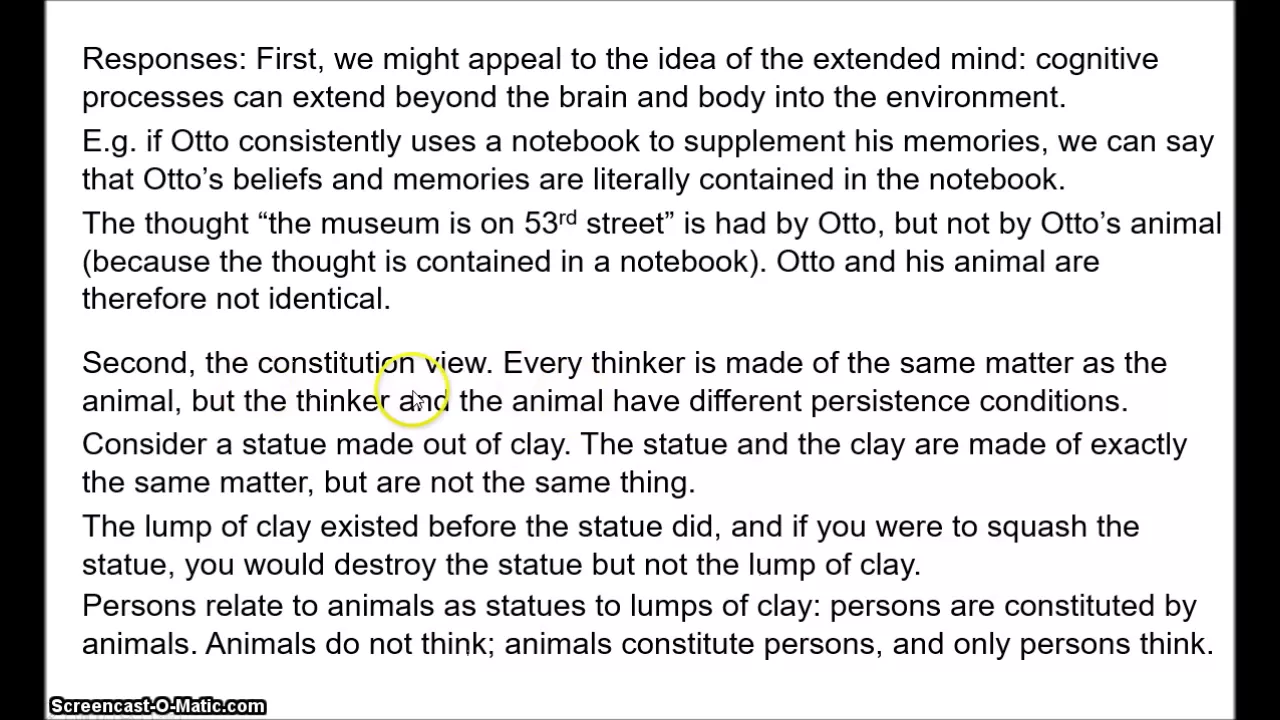
The 'Too Many Thinkers' problem, which is a primary metaphysical objection raised against animalism.
Alternative physicalist accounts of identity, such as Constitutionalism (the view that we are constituted by, but not identical to, animals) and Jeff McMahan's Embodied Mind theory.
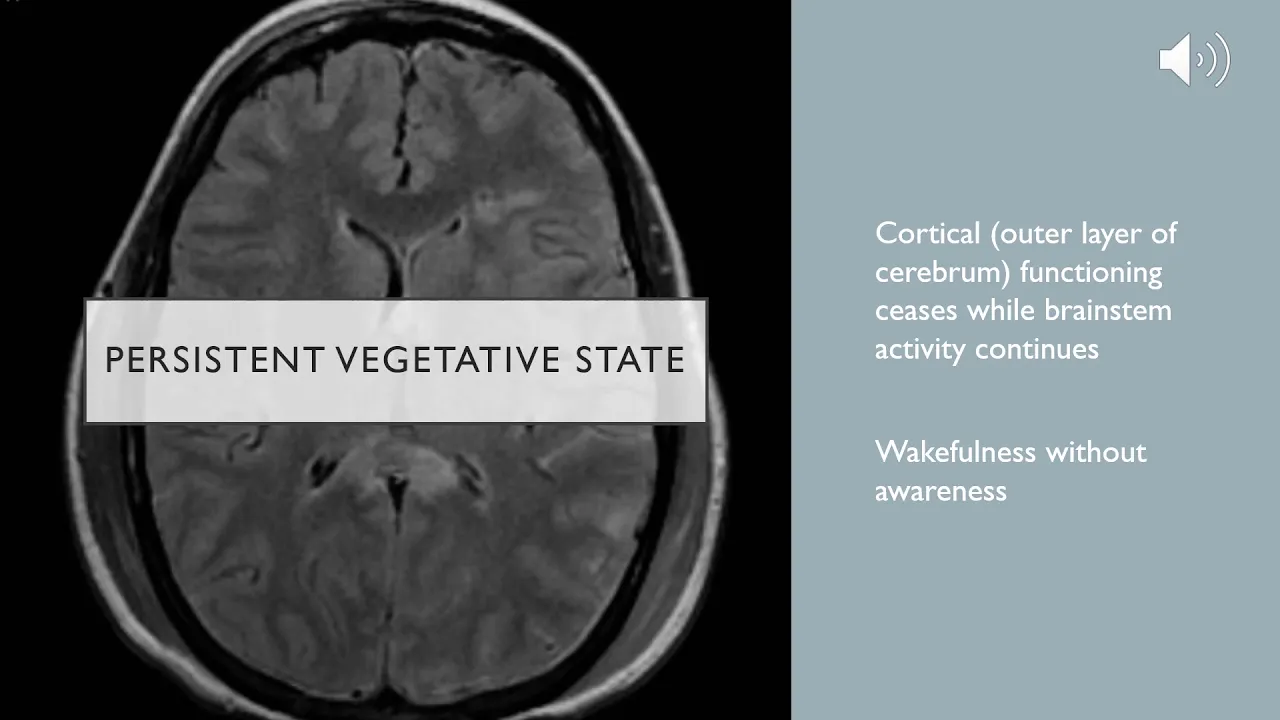
The bioethical implications of animalism, particularly how it affects the definition of death (e.g., whole-brain death vs. cardiopulmonary failure) and the moral status of patients in persistent vegetative states.
The compatibility of animalism with theories of survival, such as the metaphysics of resurrection or the possibility of technological mind uploading.
1.7K views42likes46:51Original Release: 2019-05-29
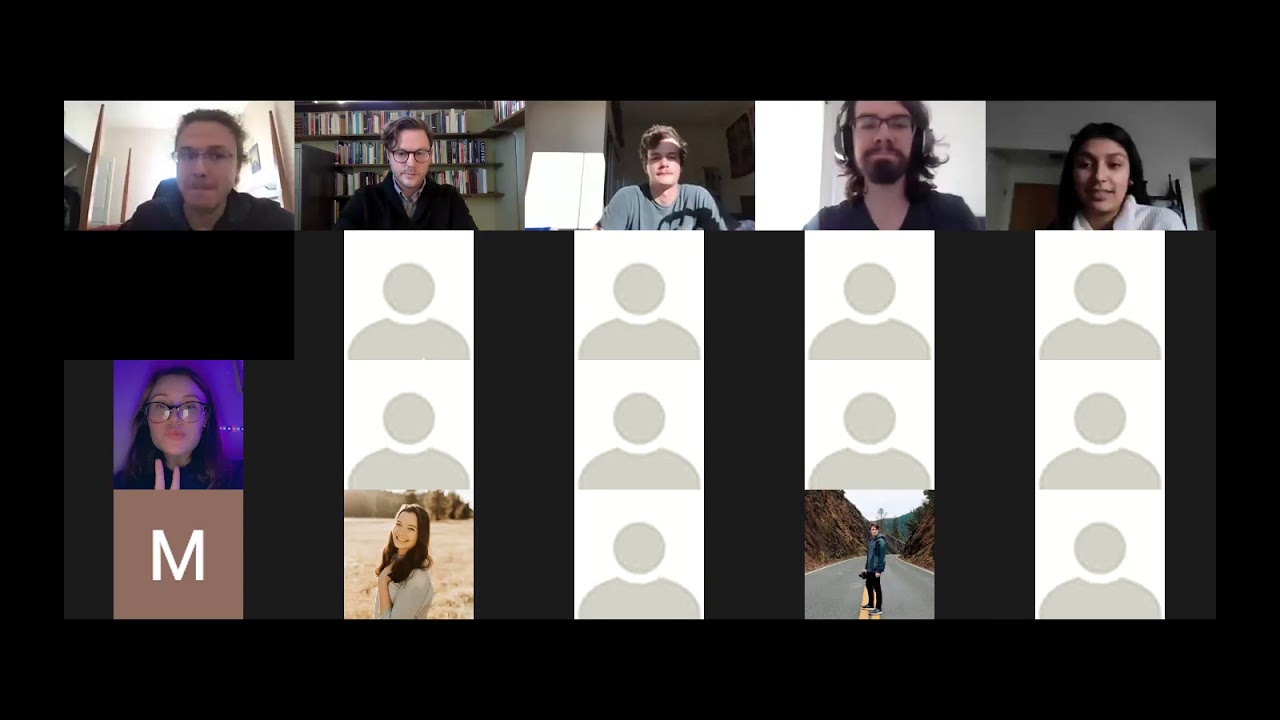
the first question is obviously about animalism can you please and I know you've done that many times in many papers but for the general audience for our audience can you please explain animalism briefly yeah well animalism is simply the view that you and i are animals we are biological organisms and surprisingly that view is actually very unpopular or quite unpopular amongst professional philosophers who have an opinion about this it's not so it may seem rather obvious that we are animals that's what you see when you look in the mirror but a lot of widely held views in philosophy are incompatible with our being animals and so for that reason it's it's considered a minority a minority view your famous argument for animalism looks like this I see myself in the mirror I see an animal in the mirror but compare it with this I see the Alps through the window I see two mountains second through the window and conclusion the Alps are these two mountains but the last conclusion is overly obviously false why then do believe that the first one I mean I am an animal is true I don't think the fact that you see an animal in the mirror or that when you look at yourself or touch yourself you touch an animal I don't think that is by itself a very strong argument for animalism for the view that you are an animal I mean the a Cartesian duelist for example who thinks that you that you and that somebody who thinks that I'm entirely immaterial would would be would be unsurprised of course they too will look in the mirror and see you and that's what they would expect to see the fact that I see an animal in the mirror or that you see an animal here shows I suppose at most that there is an animal that is intimately connected with me somehow I mean I can I can move the animals hands and I can feel for the animals our sense organs and so on but that by itself is not very not really conclusive what I think is a good argument for animalism is to think about the animals psychological properties think about is the animal conscious I mean we and it seems like if anything could be conscious or at least if any material thing could be conscious it would be an animal of some sort so if if it's possible for any animal to have any mental property or for any biological organism to have any mental property then surely human animals are conscious and they can think and they ought to have the same thoughts that we have but if the animal was thinking my thoughts and it must be me if you think I'm not an animal then then you almost inevitably have to have to deny that a human and more can have mental properties and I find that very hard very hard to believe and that's the reason why I think I'm an animal I'll try to probe the argument as well because it certainly he's a very challenging argument well actually when I look at the mirror I don't see an animal I see a body so so maybe that's what you mean by that what is that what's the difference what's the difference well animal is very loaded term it has a lot of like you know other things I see a body that's moving and I and perhaps a perhaps the word animal has certain connotations I perhaps more carefully you might say you see a biological organism a living thing that is a biological organism in the sense that biologists talk and so I would just use the youth the time I'll try something and something that is an animal or an orgasm in the same sense that a dog or a tree or a scenario is an organism well perhaps the artist the the scientists are connecting your brain with the mechanic body so you can control it and the body is sitting in the chair and thinking so you look at the you know you you you you you saying now there's a Robert sitting in your chair and the Robert sitting chair is thinking therefore you are the thinking well you you are the thinking being in that chair the one and only thinking being see give me a chair isn't Robert hence you are the Robert Wood you see that that's a similar I suppose I would disagree about your claim that the robot can think if the robot is some some mechanical hmm contraption made of metal and plastic why should I suppose that that can think I mean we've got good reason to think that living organisms can think and be conscious I don't think we have any good reason to think that that robots or at least the robots that currently exist can think or be conscious and of course I could be mistaken about my claim that I am an animal is not something that I know are priority I can't I mean I can know our priori that I can think I can't very well deny that but my claim that the thinking thing is an animal is based on my experience and my experience could perhaps be badly misleading it could be that I'm really a brain-in-a-vat or something like that and and that all of these these experiences of their being a living organism here are some sort of illusion and maybe it's also possible that really I'm some sort of robot or some sort of inorganic thinking thing and I only have the illusion of being a living organism but I was I was taking for granted that there really is an animal here I had him on the biological sense mm-hmm I'm not sure whether I've answered your question or not recent paper you have claimed that on the one hand animal isn't doesn't say I quote doesn't say that we are animals essentially on the one hand on the other hand again I quote if we are animals then we are necessarily animal and it looks like a contradiction for me may you explain why it is not a contradiction after all it's like if I say that 4 is greater than 3 I'm not saying that 4 is an even number but it's necessarily true that 4 is an even number it's like that if I say I'm an animal I'm not saying that I am an animal essentially whether that but that might follow from my being it follows just if every animal is an animal is immune that's a second question one question is whether I'm an animal or whether I'm an animal a second and independent question which of course arises whether or not whatever the answer to the first question is the second question is whether animals are animals essentially or animals only contingently you could give an animal have existed without being you know I happen to think that animals are animals essentially but that but but that opinion is quite independent of an animal disagree I assume a second in continuation another question it looks and now confirmed just confirms us like you believe it's a kind of natural conclusion when we say that if we are animals we are necessarily animals why then the question is why then it is not a natural conclusion to say that if a ball is yellow it is necessarily yellow I suppose it's it's false it's what I just said but well I don't see any difference formal difference between your opinion on animals on this proposition I suppose what I think about the nature of an animal I find it very hard to see how something that is in fact an animal could exist without being an animal I can't imagine I can't even conceive of how let's say I don't know a giraffe could be transformed into a plant or a piece of stone or something something that's not oh not an animal at all but what I think about the nature of a yellow ball and I then it does seem possible rather quite obviously possible that the ball could have had a different color mm-hmm in fact we can change the balls color so it's just the difference between the proposition that all animals are essentially or necessarily animals in the proposition that all yellow things are all yellow balls or necessarily yellow the first one seems true to me you know I think seem to do to most people and the second one seems false to most people as well to nearly everyone I think mmm-hmm thank you another question on the basic ideas just for clarification of course you claims it we are animals or organisms but our organized organisms are composed out of vast number of living cells presumably there are these cells organisms as well and in actually in your first book you admit that but then it seems that our organisms are kind of societies but again you claim the societies of organisms are not organisms themselves so it seems they are not organisms after all why such a conclusion is mistaken well I suppose that's a question and quite a hard question about the metaphysics of living things and again that hard question is entirely independent of of my claim that I'm but I'm a living thing but to try and answer the question uh I don't know what their sales are themselves organisms I know I said that in my first book because that anyway I can said it and he seemed to know what he was talking about and nobody ever said anything else to me at that time so I so I said it so you don't agree with this well I don't know I'm agnostic I mean most most biologists I believe or at least most philosophers philosophers of biology that I talked to say that cells are not organisms and I don't know who's right about this yeah that's that's too hard a question for me but I don't think it really matters I mean it if cells are organisms then I suppose that would mean that some organisms are composed of cells are sorry some organisms are composed of smaller organisms mm-hm and that is something that quite a lot of falafels of biology are happy to accept and I don't see any problem with that view you put it by saying that that a human animal is a society of cells maybe the words are sought not and you took that to imply that really there are just lots of cells working together and yes a single organism but that they can pose whether that follows maybe depends on what you mean by a society I mean I I don't think that I don't know the Russian society is a living organism composed of lots and lots of individual human beings but I think that's consistent was saying that I mean saying that the Russian the Russian people don't together compose a vast and scattered disconnected organism doesn't commit me to denying that human cells arranged in this way compose an organism I think those are different cases but what is difference was well that's yes that's a hard question about the the beginning of an answer I suppose I mean really that's that you're asking me what does it take for some cells or for some smaller things to compose a living organism and that's a very large metaphysical question and I suppose it has something to do with the way they interact and cooperate and so on and the interaction of these human cells is very tight and they they depend on each other in a very literal way for their survival and so I warrant the connection between the various people in Russia is is is much looser and they're more independent but that's really only of only a very brief sketch of an answer interesting but there is a problem here or what it's a hard question it's a it's a hard question about the metaphysics of organisms but it's not I mean there are lots of hard questions and a hard question isn't necessarily problem and it's not insofar as it is a problem it's not especially a problem for me it's a problem for anyone who believes in the existence of multicellular organisms mm-hmm so if you believe that there are such things as trees or such things as dogs then your question is as much a problem for for you as it is as it is for me I suppose so please explain the personal identity problem in relation deep or the personal identity problem do you mean personal identity over time yes the word personal identity can mean lots of different things yes it's very common unfortunately for philosophers and non philosophers for things by sort to start talking about without making clear what they what they mean this is a bit of a hobby horse of mine it makes me very frustrated that people and professionally especially philosophers who want to know better start talking about personal identity without making it all clear either to themselves or to the audience what question they're trying to answer but answers at least to questions of personal identities so you are focused on which questions well I suppose animalism as an answer to the question what sort of thing is a person who is a human person is it I think a person is an organism and the Cartesian stand and the play tennis think that a person is it is a simple immaterial substance and there are lots of other views there to this think it's a story or something I don't think they think that actually but I don't think narrative us have any answer to the question of what we are they just that's not that's not on their radar they don't consider that question is one of them but anyways so but does any mental animal is an answer the question of persistence does it identify one person at one time with another person in an animal some does not by itself after the persistence question but the persistence question is about what it takes for a person to continue existing as opposed to ceasing to exist what does it take for a past or future being to be you or me okay animalism just says that we were animals and it doesn't answer that question but or at least it doesn't answer it except by saying that what it is for you to persist is what it is for a certain animal to persist okay so personal identity is animal identity at least in the case of human people anyway so if you ask okay what does it take for me or for a human person to persist through time the animals could rephrase that question by asking what does it take for a human organism to persist through time okay and I think the answer to that question I think most people whether they're animals are not would agree that the answer to that question is something to do with some sort of brute physical continuity okay so it's it's animalism at least seems to imply that what it takes for you to continue existing is for your biological life sustaining to continue in a certain way and I suppose the perhaps the important thing is that that seems to rule out any sort of psychological continuity view of personal identity which is the dominant view in the literature has been the dominant view I suppose for quite a long time so if I am concerned with a question what it takes for me to persist in time am i also concerned with the identity with the persistence of persons or identity of identifying different persons or I'm also concerned with identifying persons and animals and persons and things if I'm interested in in this question what is it what does it take for me to persist am i interested in my also interested in in the questions of identifying my cells with some some other thing or animal I don't think I've quite understood the question can you mmm so I am interested in the question what it takes for me to persist yes that's my interest then if I am trying to resolve that question should I also resolve the question of persistence of identifying in different times the persons and animals persons and things I guess I'm not quite sure what you mean by identifying people and things or people onto animals mm-hmm I'm just not quite understanding the question okay so for instance when you are identifying yourself in future we would have to sometimes in your future you can be in a vegetative state okay so if I am concerned with personal identity issue I would have to identify myself with something that is okay okay so okay so personally grave yes so if you ask what does it take for me or for you to continue to exist yeah that doesn't necessarily presuppose that you have to continue existing as a person okay it may be depending on the answer to the question that you could one day exist as a non person as a vegetable or as a corpse or or something else so I mean the the the the traditional question of personal identity is often put by asking what does it take for a person existing at one time to be the same thing as a person existing at another time okay now taken on its face that doesn't seem to be asking what does it take for me to continue existing or for us to continue existing or even for a person to continue existing that seems to be asking what does it take for a person to continually exist continue to continue existing and remain a person of them okay and I think people ask that question what does it take for a past or future person to be me they ask that question because they presuppose that I could only exist as a person that I am essentially a person I couldn't possibly exist without being a person and I think that view well depending on what it is to be a person that he was likely to be incompatible without being in it without being animals right well so I think very often the question of personal identity over time is stated in a tendentious way in a way that encourages or always based on a psychological approach to the whole see that this like a vicious circle or something right the question is asked in such a way where it actually it's not a circle exactly but the question is asked in a way that presupposes something that is incompatible with a whole range of answers to the question yes it's assessed in a way that presupposes a certain sort of answer I guess it's not that that answer could it's not strictly incompatible with my answer to the question but putting the question in that way discourages people from even thinking about my answer the question yeah this animal is an answer survival question does animalism tell me when I would survive in which situations can you say what you mean why survive do you mean can you continue existing or continue my survival I mean okay well most people are concerned was surviving it's their instinct they wants to live now what exactly does that mean it's in I don't know I'm scared to death I would like to survive why survive you mean remain alive well I don't think that a lot of common folks actually have the precise definition they're just interest I think that the the common desire is to survive yeah I don't think they they actually know exactly what that means okay well I guess insofar as I'm not sure what you mean by survival what anyone means by surviving that I'm not sure what answer to give to the question of what animalism implies for the question of what it takes for me to survive continue living yeah it does imply that what it is for me to survive this is what it is for this animal to survive if that's helpful I'm not sure whether that helps very much what does it take for some people a living organism to survive yes survive have it okay they they really believe it they really want it right yes so they don't really believe in their animal to survive in the heaven I mean they could okay that doesn't apply so it's not obviously impossible for an organism I suppose to survive in heaven but it there are certain obstacles I mean we know what happens to an organism when it dies it gets eaten by worms and it decays and all of its atoms become dispersed and once that's happened it's very hard to see how the organism could ever come back into existence I mean if the organism seems to cease to exist what it when it when it decays and it's very hard to see how that seems to be the end of it once the thing has been completely destroyed so that its atoms are totally dispersed and so on it's hard to see how that everything could come back into existence and that's not just the case for animalism but but but I mean yes the further what happens in the grave is a problem for anyone who believes in life after death right there has to be some story about I mean about how it's possible for a thing to die and decay and be eaten by worms or be consumed by fire or whatever but still exist in a conscious state in the next world that's a mystery now and perhaps that mystery is the main reason part why religious believers tend to be tend to be Cartesians they they tend to want to believe that what we are is immaterial your souls because they are not consumed by the flames are eaten by the worms they aren't they they don't decay anyone where anybody who thinks that we are material things are physical objects has a as a problem if they want to believe in life after death but I'm not sure if it's more of a problem for animal us than for other for other materialists that wasn't you you want there simpler answer right yeah no I actually the next question was actually about your your you know I've read your paper about afterlife and the preservation model so so personal identity to be it has direct relevance to question of afterlife in my opinion so your position on personal identity leaves you with the collisional after life after biological death is highly improbable or isn't probable in one of your papers you say that the only weight to survive would be by preservation and that is also unlikely so can you explain the B to our audience why do you think that you know basically just extend a little bit on what you've been say okay what I meant by preservation was that the appearance that when you die you are eaten by worms and you know all of your parts are dispersed and you were totally destroyed the preservation is the thought that that is only in appearance and it's an illusion and in fact we're not totally destroyed after we die but rather somehow our structure or our nature or is is preserved okay so what happens in the grave is not what we observe happening in the grave is not what really happened so or it is only a part of what really happens right so so so the most familiar version of view of this sort is the Cartesian view that you are an immaterial soul okay so when you die it's your body the animal that is destroyed but the soul continues to existing and in fact it's entirely unharmed and it returned the soul is what you are and it thinks and is conscious and it carries your mental life with it to the next world so what we see in the grave really is what happens but it's not the whole story there is something else that we can't see namely the souls being preserved and somehow making its way to heaven and that's what you are and there you are in heaven if that sort of thing is possible then life after death as possible okay and and maybe it's also possible for some sort of preservation story to apply to animalism maybe the organism itself is not destroyed as it appears to be but is somehow preserved this is this is a very new Aegon's view you also find it curiously in CS lewis if you read some of his novels so well when he when the I can't remember what what what what book it is but when the when the hero when the CS Lewis novel is has to get from Earth to form Earth to Venus to do some jobs and God and God has to get him there God doesn't just have click his fingers and the magic magic magically transform him discontinued from from from Earth to Venus but he puts him in a box and sends the box at high speed from the Earth to Venus and when he gets there he's got a sunburn because the box was made of glass it's a curious detail but yes it's it's it's it's it's possible I suppose that when you die the animal does not decay but the animal was rather fetched away hole and to the to heaven and arrived there as an animal press it he'll presumably of whatever illness or injury it is that was that killed it so that it doesn't arrive dead and then the corpse that you see in the grave is some sort of counterfeit it's put there to give the appearance that that the animal is in the grave and decaying and being totally destroyed that's that's a possible story and that I suppose shows at least that are being organisms is logically compatible with life after death and in the next world whether it's a likely story you're an attractive story is a further question and that's one for the theologians to worry about okay let's imagine that your body is injured and your brain is transplanted into the fat you're in the VATS and your body's never us will be destroyed but you are conscious or something is conscious and has memories so who is that person into that it depends on what's happened to the organism destroy if the organism is destroyed yeah and the brain in the grave the brain of the vet is not the organism and if there really is something in the fact and the thing in the bat really is conscious then it's it's it's somebody else it's alright since that you it's not me that's right logical consequence yes I understand yes really hard to buy that that's really hard to buy especially if well I suppose it's it's it's a case where the person has died and a new person has been created out of the remains of the dead person created well nothing has really created just something has been subtracted well hmm I mean I know it's the whole story I mean I agree this is this is a strange consequence but then it's also a quite a strange story and I have no idea whether it's the stories it is in any sense possible and it's it's it's it's a rather strange story for an on animalist as well I have to say I have to say something rather than plausible okay and that the person in the end that that is not me if you think the person that that is me if you are then well first of all you have to say that I was never an animal but something else you have to explain why the animal was never a person was never a conscious and intelligent and so on and you have to explain what the relation is between the thing in the VAT and the person as she was before before she went into the VAT okay it looks like the thing in the VAT is the person's brain but that can't be right because the person wasn't the brain before she went into the VAT presumably the person had arms and feet arms and legs as parts I suppose so why why it's a brain not an animal yeah well if the brain in the VAT is an animal that's probably the same animal well it might well be the same animal as the one that died or the one that that the the animal that once walked and talked in that case it's you okay you think it's not the brain is not an animal well that's what I'm inclined to think but I'm not completely confident about that I mean that any way I could thanks the animal yes I think she thinks the brain of the brain then that would be the animal and I don't know whether that's right I was I was assuming that it wasn't right that because that's that makes the problem harder just question just for clarification we you mentioned that just mentioned that the idea that we are animals necessar is just an opinion according to you but can you clarify the nature of this opinion is it empirical hypothesis or some selected opinion on which it is based I suppose everything I'm telling you is an opinion in the sense I see I'm not certain any of this and I don't feel completely confident in any of this and I'm willing to to reconsider if consideration should arise yes the Challenger so you're asking why do I think that I'm an animal is essentially an animal yes it's just in my opinion you said well I guess when I say it's an opinion I mean I'm not I'm expressing a certain lack of confidence I mean that's how it seems to me but I'm prepared to change my mind if need be mm-hmm and I guess the reason why I'm inclined to say that is simply because that's how it seems what I think about it because I cannot conceive of a situation in which an animal whether a human animal or a giraffe or a tree or whatever could exist without being an organism mm-hm and what about after life you just said that this imagine me maybe it is I'm not sure whether imagine accounts for very much I mean maybe imagining in a sense is very easy but being able to imagine something in that easy sense doesn't tell us anything about about whether it's possible ah I don't think I mean maybe I can imagine interesting at that table as conscious and can think so you are but that doesn't show that intelligence as possible with any interesting sense or that a thing made entirely of wood could be conscious mm-hmm so there is no link between consume ability and possibility according to you well I was talking about imagine imagine ability all sorts of things happen in in fiction for example there's clearly impossible yeah the fact that we can watch the film or read the story whether and suspend our disbelief I think doesn't show anything of metaphysical importance mm-hmm I suppose so insofar as I cannot conceive of how something is of how an animal could exist without being an animal that's at least a reason you to think that it's impossible okay not a conclusive reason like was in stuff in so far as I can conceive of how something could have been different like how the yellow ball could have been a different color that's a reason to think that it's this is only a change in state of affairs but again that's only fallible evidence for it you yourself mentioned the DES term animalism has been coined by Paul Snowden as far as far as I know it's Paul's coinage but but and he's animalized himself how would you describe the main differences between your views Paul Snowden yourself all right well I think we have pretty much the same view or at least we share the view that we are animals biological organisms disagreement about that we might disagree about certain other metaphysical questions but that's that's probably so no no big difference not important you argue for the view in different ways and if you think about both has a very different way of thinking philosophically from from me he has a very sort of very gentle and very subtle and patient indirect way of arguing he it's quite ingenious but quite quite quite quite different from mmm-hmm from my style it's just a difference in personality I suppose it comes from Oxford in one of your interviews you said that you're a troublemaker critical philosopher but in your book what are we you claim that your series would be wrong or on if Kantian famous critical again critical approach is right but again there is no critic of Kant in that book very complicated but may you briefly explain what is the current chief mistake in your opinion that's a hard question oh gosh well the reason I said that that current view is incompatible with my my theory as you put it is is is that Kant denies the existence of biological organisms he thinks that physical things are only appearances and what we really are is something that is completely non spaceship temporal doesn't participate in causation and so on something which we can't really say very much about at all I suppose the reason that I'm not convinced of that is simply that I don't think can't gave a convincing argument for that for that clayman that's a large question I mean it's argument seems to have been something like well things would appear to be spatio-temporal no matter what because just because of the way we're built we cannot possibly have any awareness that isn't that wasn't in spatial temporal form so we would appear to be spatial temporal things in any possible circumstances even if it were in fact false and so we have no reason to believe it and so somehow that means that means that we shouldn't believe it but we should believe the opposite and although I it's not that I'm not worried about that argument but I think it's well it doesn't just doesn't seem strong enough for me to give up my belief that in the reality of space and time mm-hmm I see unconnected questions the last questions by the way is the history of philosophy any help in your researches or is it a rather an obstacle oh that's also a large question I suppose the great philosophers of history had some good insights and made some bad mistakes just as contemporary philosophers have contemporary philosophy is that it is a mixture of insight and mistake and confusion and model so I suppose some historical philosophers might say things that are that are helpful and insightful and others will say things that just so confusion or or mistakes so I think that for you yes it's a hard question and I'm not a scholar of the history of philosophy and and and I'm embarrassed to admit at that time ignorant of the history you know I know some things but but if I think about Locke for example I mean what gets credit I suppose for protein questions about about personal identity and people on the agenda he asked good questions I suppose but I think he also caused a lot of confusion I think when I read locks chapter and personal identity I want to tear my hair out I just I find it exasperation the question is unclear this his answer to the question is unclear he says things that seemed to me of just very badly confused was for example his view that a person is not a substance I like I cannot understand that at all his view that some others that I could be or be associated with some other or thinking substance I can't make any sense of that and I do not understand why so many contemporary philosophers take it seriously in fact think that Locke was right more or less it seems to me although it's very thought-provoking and interesting it seems to be shot through with with with terrible confusion so however brilliant mark was I think he has a lot to answer for in a way I suppose the part of the reason why it was so influential is because it was brilliant and and insightful so I suppose this is sort of a question about about history philosophy generally or maybe about how one philosopher is is interpreted by succeeding generations mm-hmm so one can hope that succeeding generations will learn something useful from the philosophers of the past but and not inherit too much confusion I'm sure it will be the same if anybody ever reads my work in a hundred years time which is unlikely but if they do I hope they'll learn something useful and and not just inherit too much too much confusion from me but and then is the history or philosophy any help to you or not oh it would be better if it doesn't exist at all just an obstacle I'm not sure really I mean I don't look at the Philosopher's of past centuries for solutions to the puzzles that I've got because I I don't find it helpful in that sense because they tend to be asking different questions from from the ones that I'm asking and they're quite hard to understand anyway well I find them hard to understand anyway mind you I find a lot of contemporary philosophers hard to understand as well but as you go back and time it those problems are simply simply multiplied so I suppose I'd I don't find it so helpful though I am grateful of course for the the causal influence than they've had I mean I mean I mean we couldn't be doing sophisticated good philosophy now in the 21st century and worse a lot of philosophers in the past had been doing a lot of flaws phenols and made a lot of mistakes and so on and maybe less a brief question we just talk about history it's now time to ask you about the future what is there something about your plans my out here my plans I I'm not very good at making plans [Laughter] I don't think um this is a character flaw and I'm afraid I tend to drift through life so it was washed to us anyway because we now know yes about yeah okay yes okay good well I've I've been asked and I've agreed to co-author a book on were that we're made of matter Erin Siegel is the other art form at the Hebrew University so that's going to be a sort of a popular book for for a student audience and I've been thinking about questions to do with death he and other metaphysical questions I've sort of been trying to get away from personal identity because I I've been working on it for too long and I don't find myself repeating myself a lot but I keep getting asked by people to say something or write something or come to a conference or whatever and I find it hard to say no when people want me to come partly because well they want me to comment and because I think I have useful things to say and because I think a lot of people get more other people some people are confused and I think maybe I can maybe I can help them I don't want today's students to learn their philosophy from or to learn about personal identity from the other people confuse I'd rather have them learn it from me not because I'm vain or because I'm sure that I'm right but but because I think it's at least clear fairly clear what I'm trying to say and I suppose everyone thinks that that they're more likely to be right there on the other people thank you very much thank you very much
Up Next

51:50
Personal Identity: Objections to Personality Theory
@YaleCourses
90.3K views•2008-09-30

164:01
John of Damascus on Holy Images: A Theological Defense
@BannedBooks
139 views•2026-04-25

68:32
Should We Destroy the Machines? Big Tech Surveillance Critique
@TheStoriesWeTell303
167.9K views•2025-11-30
4:57
The Myth of Sisyphus: A Greek Legend of Eternal Punishment
@TEDEd
8.6M views•2018-11-13
Related Study Plans & Knowledge Roadmaps
Structured learning paths in Philosophy
philosophy
Frankfurt School: Critical Theory & Culture
01Foundations of the Frankfurt School and Critical Theory
02Horkheimer & Adorno: The Critique of Instrumental Reason
03The Culture Industry and Mass Deception
+ 2 more learning modules
12h5 modules
Explore Roadmap
philosophy
Philosophy of Language: From Frege to Austin
01The Linguistic Turn: An Introduction to Language in Philosophy
02Gottlob Frege: Sense and Reference
03Early Wittgenstein: The Picture Theory of Meaning
+ 3 more learning modules
15h6 modules
Explore Roadmap
philosophy
Feminist Epistemology: Standpoint & Injustice
01Introduction to Epistemology and Feminist Critiques
02Sandra Harding and Standpoint Theory
03Donna Haraway and Situated Knowledges
+ 2 more learning modules
12h5 modules
Explore Roadmap
philosophy
Environmental Philosophy: Ethics & Deep Ecology
01Foundations of Environmental Ethics & Anthropocentrism
02Biocentric Individualism and Animal Liberation
03Ecocentric Holism and Deep Ecology
+ 1 more learning modules
10h4 modules
Explore Roadmap