






![COM 302 [19] Epidemiological studies](https://i.ytimg.com/vi/HoTMhE7kv9Y/sddefault.jpg)









Brain training games lack strong scientific evidence for providing broad cognitive benefits; while they may help with specific issues like working memory deficits or dyslexia, they don't significantly improve general cognitive abilities. Instead, engaging in novel learning experiences, challenging books, or mentally stimulating activities is more effective for maintaining and improving brain function across the lifespan.
Does Brain Training Work? Scientific Evidence Examined
Added:The concept of neuroplasticity, which is the brain's ability to reorganize itself by forming new neural connections throughout life.
Basic cognitive domains and executive functions, such as working memory, selective attention, and processing speed.
The distinction between 'near transfer' (improvement on the trained task) and 'far transfer' (improvement in unrelated daily life activities).
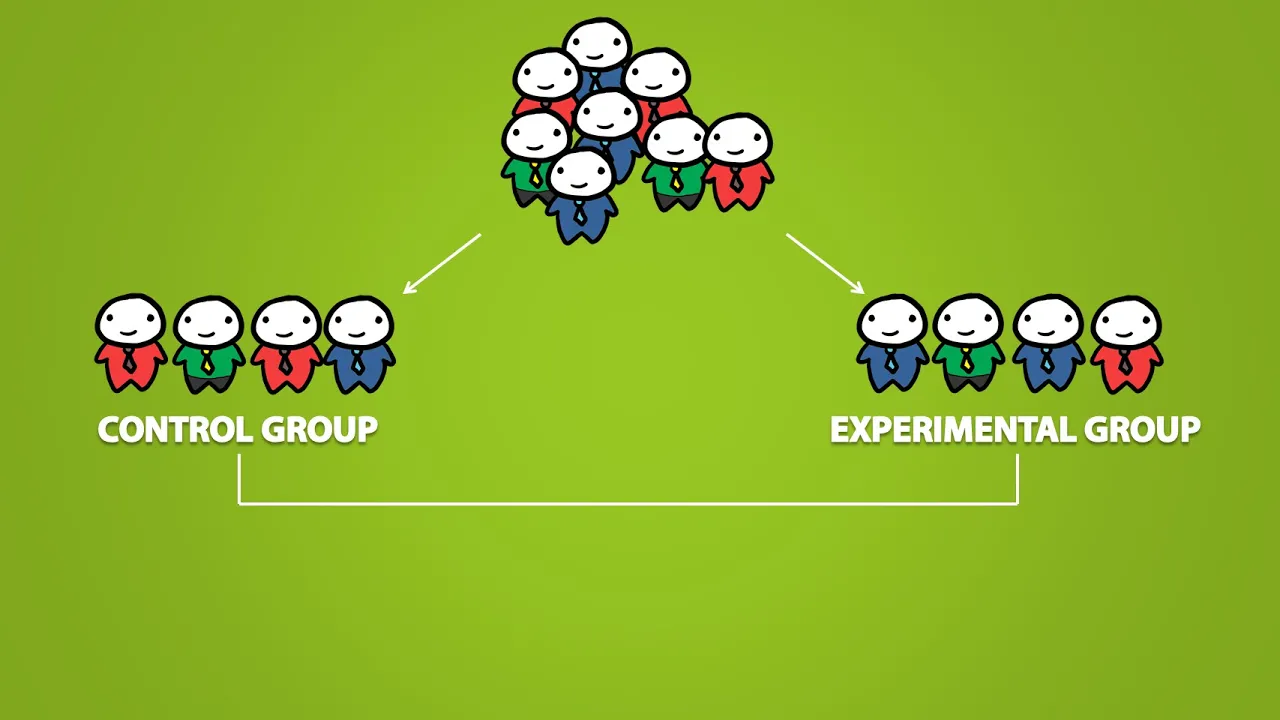
Fundamental principles of research design, including the placebo effect, active vs. passive control groups, and double-blind studies.
The 'Cognitive Reserve' hypothesis and how lifestyle factors (like education, social engagement, and physical exercise) protect against cognitive decline.
Evidence-based lifestyle interventions for cognitive enhancement, comparing the efficacy of aerobic exercise, mindfulness, and learning complex new skills.
The ethical and regulatory landscape of digital health technologies, including FTC advertising standards for cognitive training products.
Advanced neurotechnologies for cognitive enhancement, such as neurofeedback, transcranial direct current stimulation (tDCS), and brain-computer interfaces.
67.3K views1.8Klikes7:02Original Release: 2013-03-14
brain trainings are very popular in their real world at the moment there's a lot of companies games on the market to try and train up your brain but the evidence is still quite contentious about this it's just like muscles in the body they're things that you do with your brain determine the size and shape of different areas of it what we're trying to understand is how far it can go and also importantly is it a trade-off so if you're improving some things does that mean you're losing other things so if you've got one of these little machines and you're press buttons that the more you press that button the faster you get it pressing the button that's great the big question is is getting better at pressing this button going to make you better at anything else in life that you'd like to be better at and that's where we still really don't have much evidence to suggest that brain training is really going to make a big difference you know if you are losing other things it might be that your brain training actually doesn't have a desirable result well there it's not quite like that with exercise is it because it's not like you only have a limited amount of muscle in your body and so you know if I build up my arm muscles my leg muscles are going to get weaker that's not the case but it may be the case with the brain because we have limited resources and there is some evidence that when you increase one thing you lose other things and I suppose a broader question is whether whether this is the best way to engage the brain we know it's a good idea to engage but are these sort of games and training strategies the best way of doing it or would taking an evening class reading a challenging book would that be equally good if you're for instance someone getting older and you're worried about deterioration in your brain you're afraid you're losing some abilities then it's we think it would be very healthy for you to try learning some new things so it's not about just doing the same things that you've already been doing for a long time because that's not going to increase or strengthen anything because you've already done that you need to go and work on new things and again the parallel with muscles if you are already you know running five miles a week or something then running five miles a week isn't probably going to make that much difference to you but it would be better for you to start doing sit-ups but if if you'd never run before then then you're going to build some new muscles if you do that I would say there's a slight a possible area where there is some potential and that's in the area of increasing working memory and helping perhaps people with some forms of dyslexia and learning deficits where working memory is a fundamental limitation that does seem to be some evidence and I'm not too surprised that there is that we can actually through steady and repeated training increase people's working memory a little bit so that they can store that working memory is that kind of short-term memory the kind of memory we're using at the moment for an interaction so it's the kind of storing of information that you want to use at any point in time like RAM in a computer exactly so you want to store that you want to store this because you're processing it because it's fundamental to what you're doing certainly for particular conditions where we know that people have got a very specific difficulty with one cognitive process like memory or attention training might be much better but it's certainly there's not any strong evidence that's just an everyday person who trains a lot using some kind of computerized battery will improve a great deal but it could help people who have kind of a very specific problem and that's been targeted but for ordinary people everyday people's needs to think that somehow doing little things like that will keep you or will make your your brain stronger or better I think is it that is a myth it's possible that for the elderly again not so much doing silly things like pressing flashing buttons but perhaps doing crosswords things that keep keep us searching in our brains for the meanings of words the use of different kinds of words some kind of basic verbal problems solving those kinds of things may well be very useful for us as we age you think about the brain more than most people you've studied it do you do anything to care for your brain or to look after your brain that perhaps I don't do or the average person does do you do anything extra because of that awareness yeah I don't think I can think of anything specific don't do anything my brain that's a really good question um I don't do anything explicit I don't sit around and think well what could I do to you know to build up my Heschl's gyrus or increase my motor cortex or something you you of all people must know how important the brain is is there nothing we can do to you know we go to the gym to look after our bodies and things like that isn't anything we can do forever um potentially there's a lot of work recently on the benefits of mindfulness meditation so that could be the equivalent of the sort of TLC that one might give to one's body to also give to one's mind and actually I'll tell you one thing that I did for my brain now you asked is a we did just I did a study a couple of years ago about social group sizes and and the brain and what we it was very simple we just got people to write down how many social contacts they'd had in the last week say this is not work contacts but just write down the initials of everyone that you actually spoken to socially it could be email it could be phone whatever and then we look to see whether that predicted anything about the brain you wouldn't think it would but it did amazingly it predicted the volume of several different areas in the brain notably one that's called the orbital frontal cortex it's kind of right under here above the eyes and people who had more social contacts had more volume in that area and as a you know fairly antisocial scientist with a limited number of contacts it made me really think gosh I better get out there and make sure that at least their every I talked to one or two people socially and helped to may be strengthen up those circuits and improve my social abilities I wouldn't go so far as to say you know we know for sure this works but it's that kind of correlation it's interesting that's the only one I can think of that I've really applied to my life
Up Next

27:54
The Power of Language: How Bilingualism Shapes Thought and Decision-Making
@pivot00
76.4K views•2024-03-13

68:32
Cognitive Skills for Differentiated Instruction | Teacher PD
@BrainWareLearning
631 views•2017-12-17

9:55
Thinking, Fast and Slow: Daniel Kahneman Animated Book Summary
@FightMediocrity
2.3M views•2015-06-05

6:40
The Nocebo Effect: How Beliefs Can Cause Real Harm
@CGPGrey
10.4M views•2013-12-23
Related Study Plans & Knowledge Roadmaps
Structured learning paths in Psychology
psychology
Neuroscience of Creativity: Networks & Training
01Foundations of Creative Cognition
02The Cognitive Neuroscience of Insight & Fixation
03The Triple Network Model of Creativity
+ 1 more learning modules
15h4 modules
Explore Roadmap
psychology
Imposter Syndrome: Etiology & CBT Framework
01Defining the Imposter Phenomenon
02Socio-Developmental Etiologies
03CBT Fundamentals & Thought Distortions
+ 2 more learning modules
15h5 modules
Explore Roadmap
psychology
Adult ADHD: Executive Dysfunction & Scaffolding
01Neurobiology of the ADHD Brain
02The Core Triad of Executive Deficits
03Executive Dysfunction and Emotional Regulation
+ 2 more learning modules
12h5 modules
Explore Roadmap
psychology
Loneliness: Evolution, Neurobiology & CBT
01Evolutionary Origins of Human Connection and Loneliness
02The Neurobiology and Physiology of Chronic Loneliness
03Maladaptive Social Cognition: The Psychological Loop
+ 2 more learning modules
12h5 modules
Explore Roadmap