












![Fadiga em Estruturas Aeronáuticas - Aula 1 [CURSO GRATUITO]](https://i.ytimg.com/vi_webp/yo1Xy6I7W-E/maxresdefault.webp)





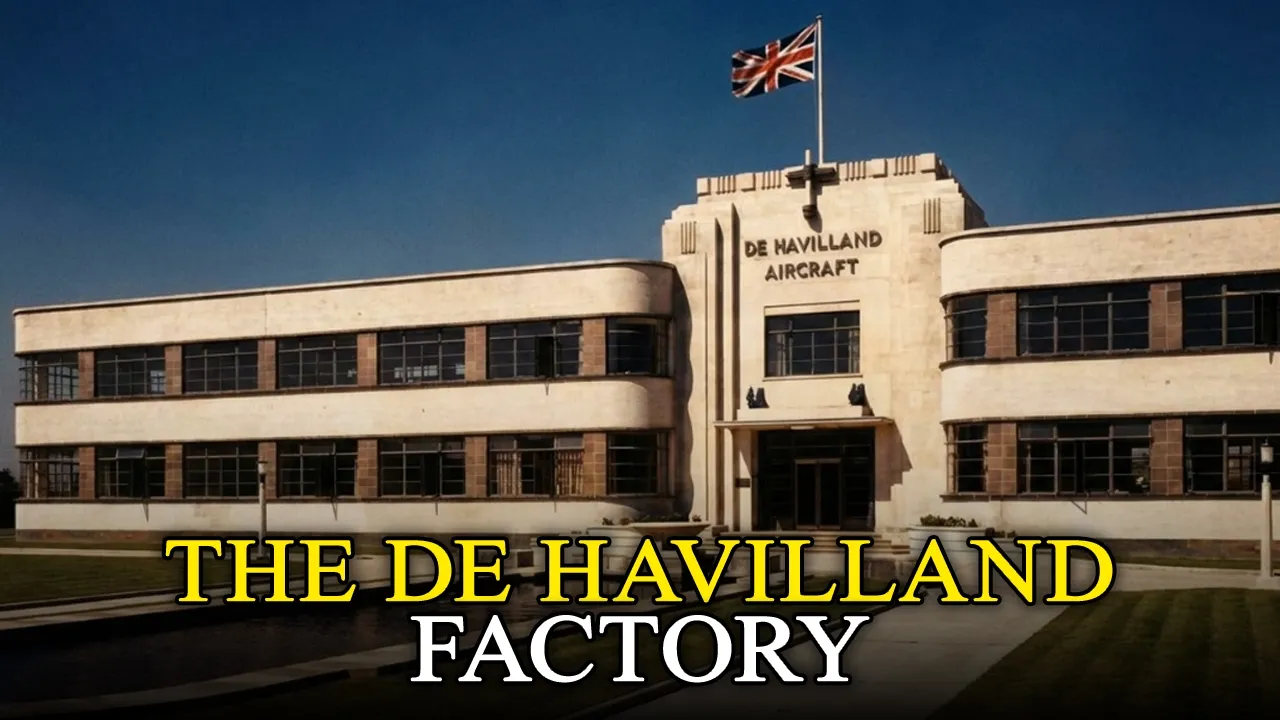


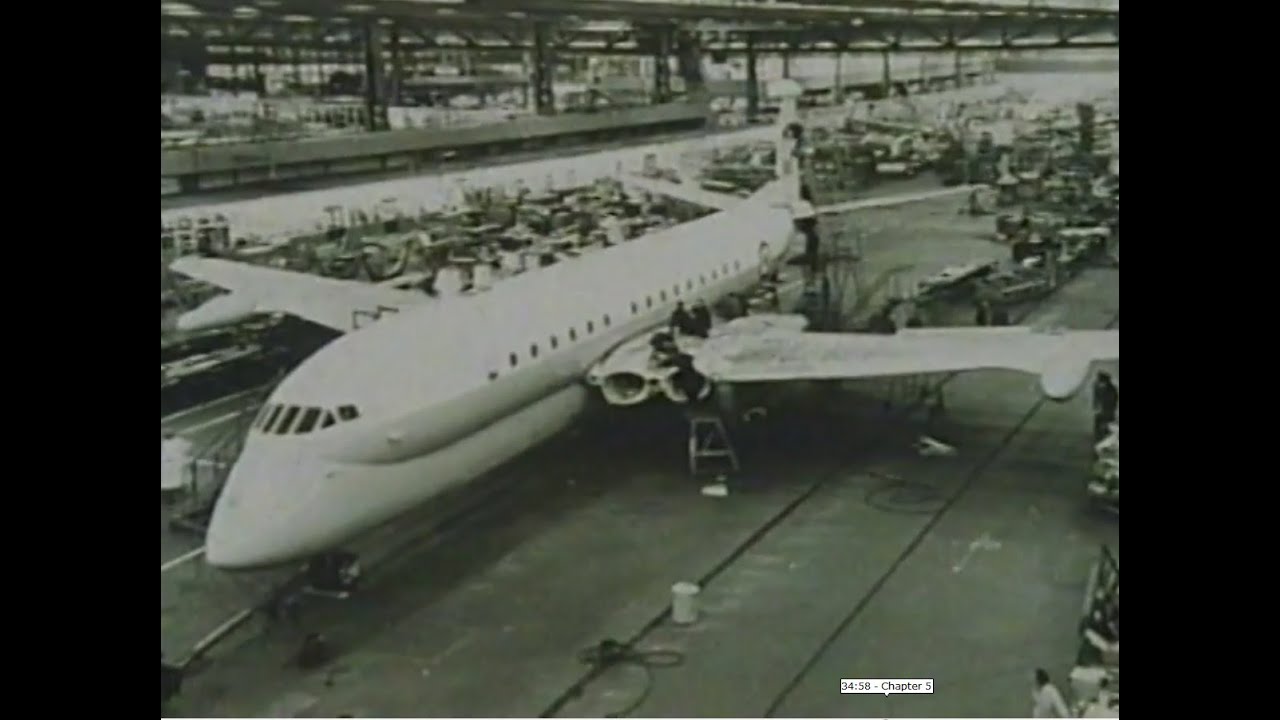





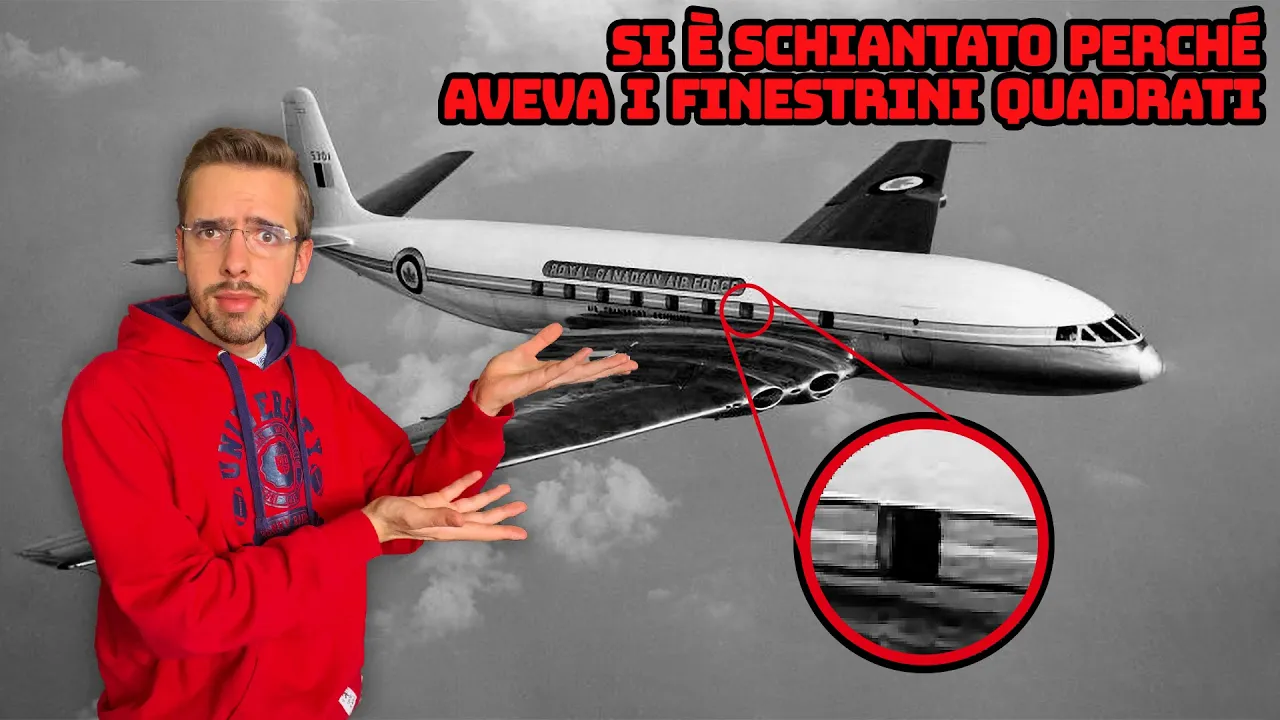
The De Havilland Comet, the world's first passenger jet airliner, crashed in mid-air in 1954 due to metal fatigue caused by manufacturing defects in rivets around the windows and doors. The aircraft's lightweight aluminum skin, designed to be as thin as possible to reduce weight, experienced repeated stress from cabin pressurization cycles during flight. These stress concentrations around structural weak points (windows and doors) caused microscopic cracks to form and grow over time, eventually leading to catastrophic structural failure. This tragedy, which killed 35 people, led to fundamental changes in aviation safety standards and aircraft design, establishing metal fatigue as a critical consideration in modern aircraft engineering.
De Havilland Comet Flight 781: The Fatal Crash Investigation
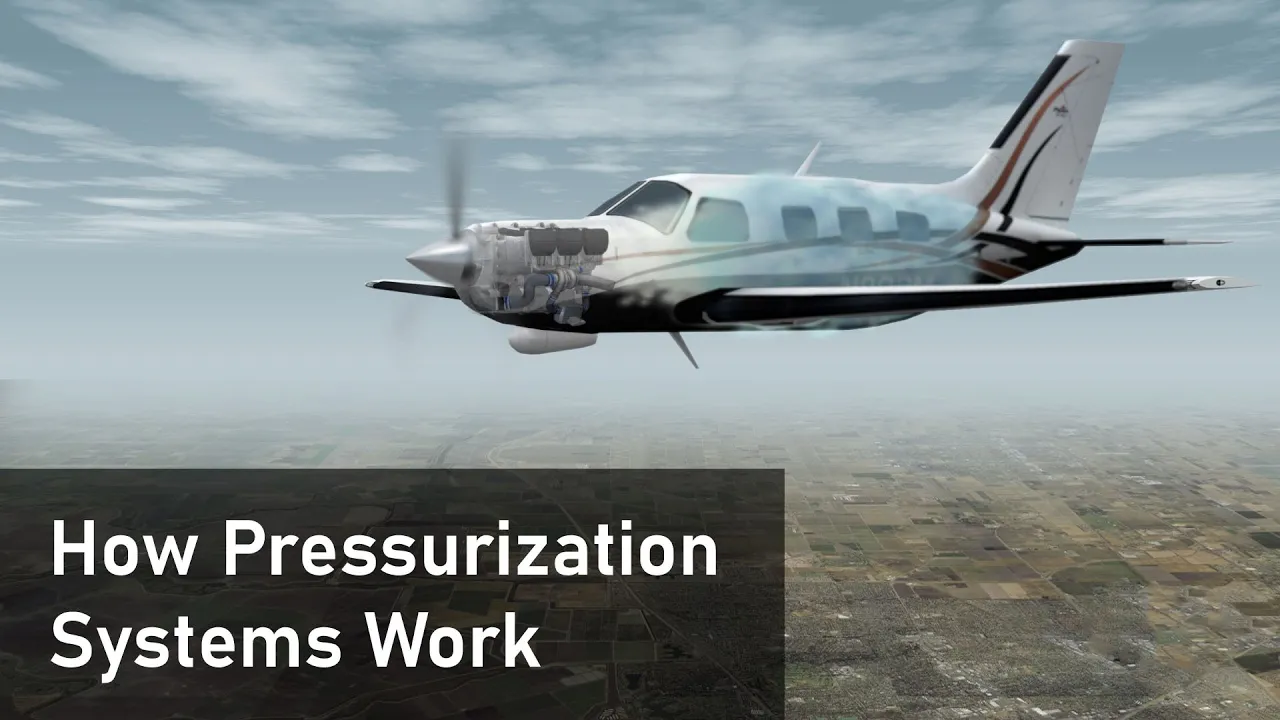
Added:Basic principles of aircraft cabin pressurization and the physical forces created by pressure differentials at high altitudes.
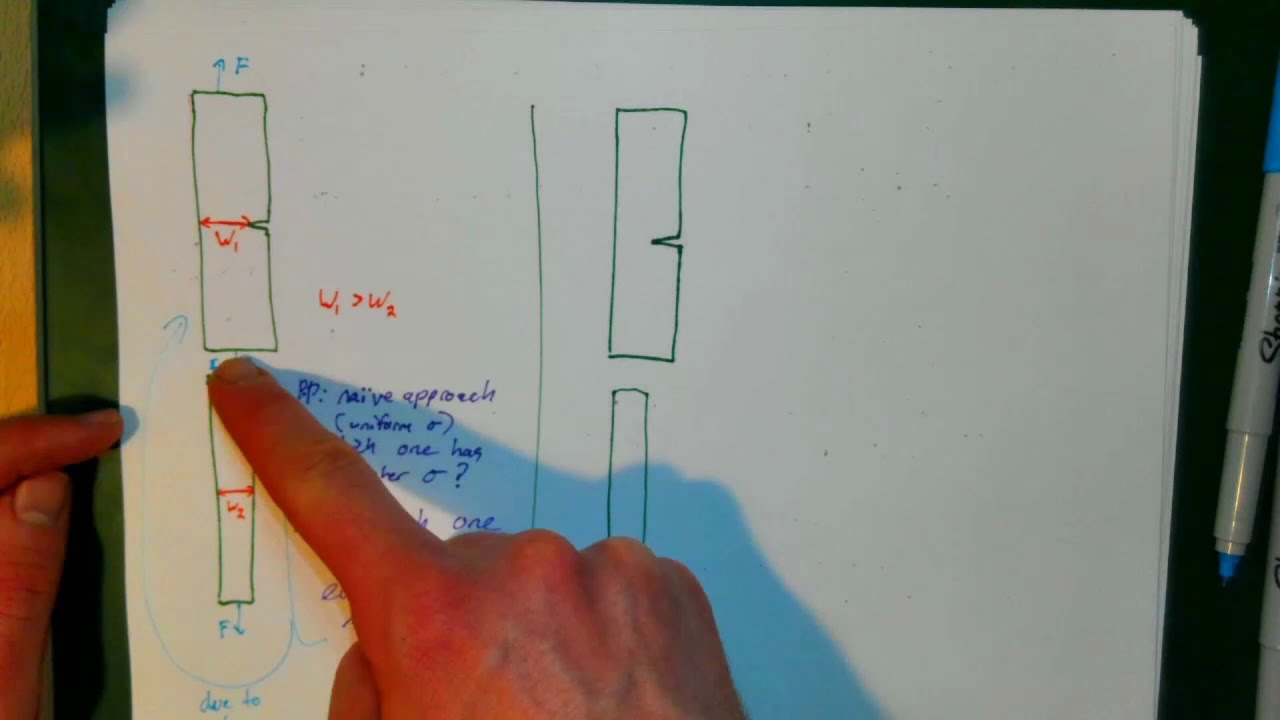
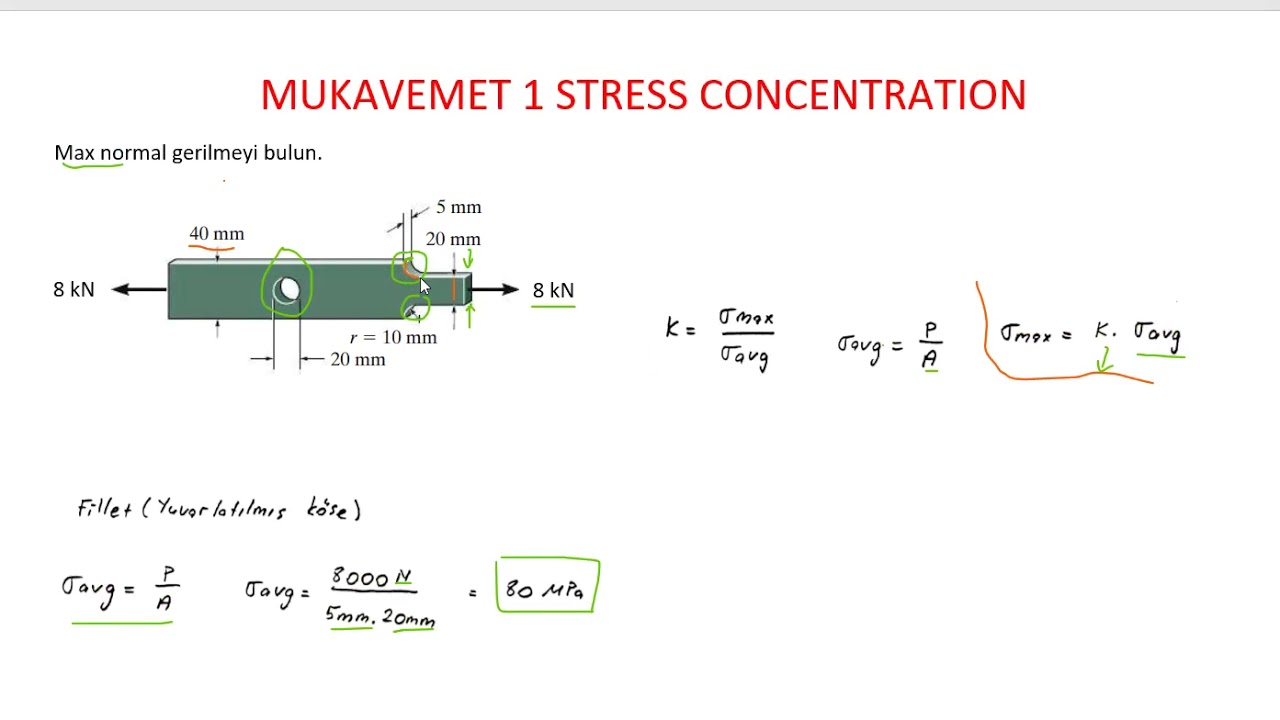
The concept of stress concentration, specifically how structural geometry (such as sharp corners versus rounded edges) distributes physical loads.
Fundamental material science concepts, including elastic deformation and how cyclic loading can weaken metals over time.
The historical transition of commercial aviation in the post-WWII era from piston-engine propeller aircraft to high-altitude jetliners.
The evolution of aerospace design philosophies, specifically the shift from 'safe-life' design to modern 'fail-safe' and 'damage-tolerant' structural engineering.
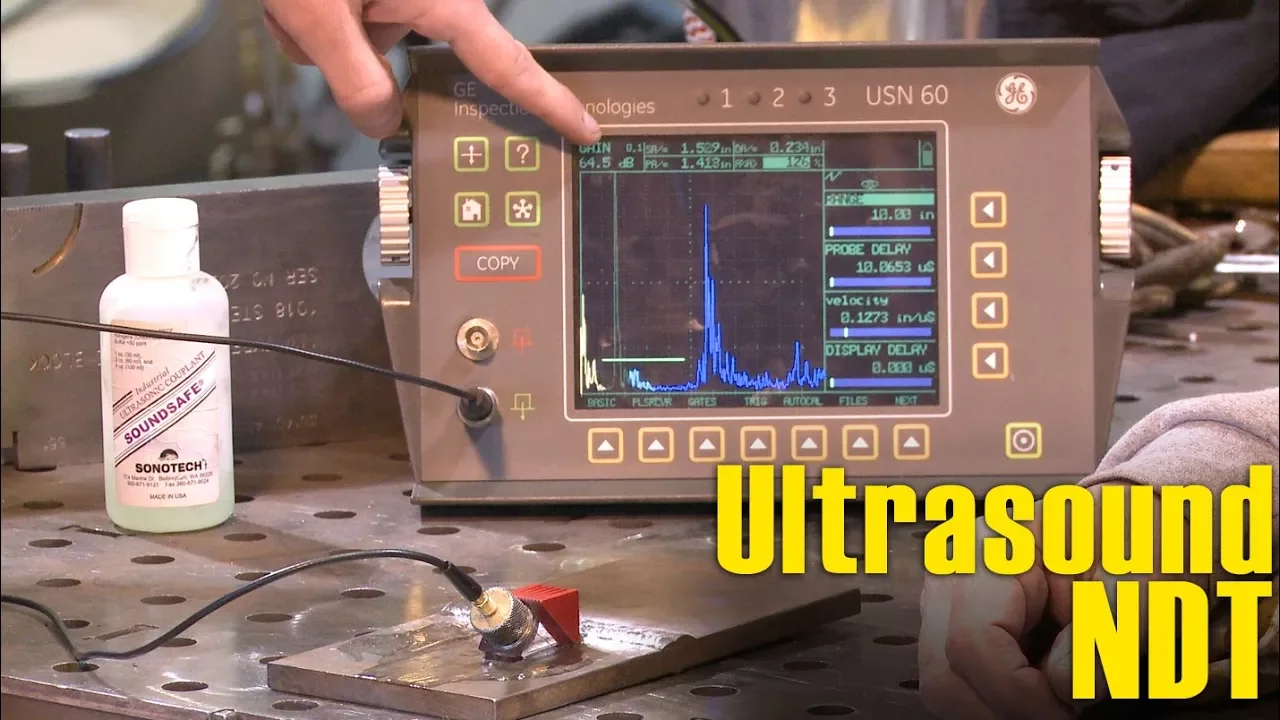
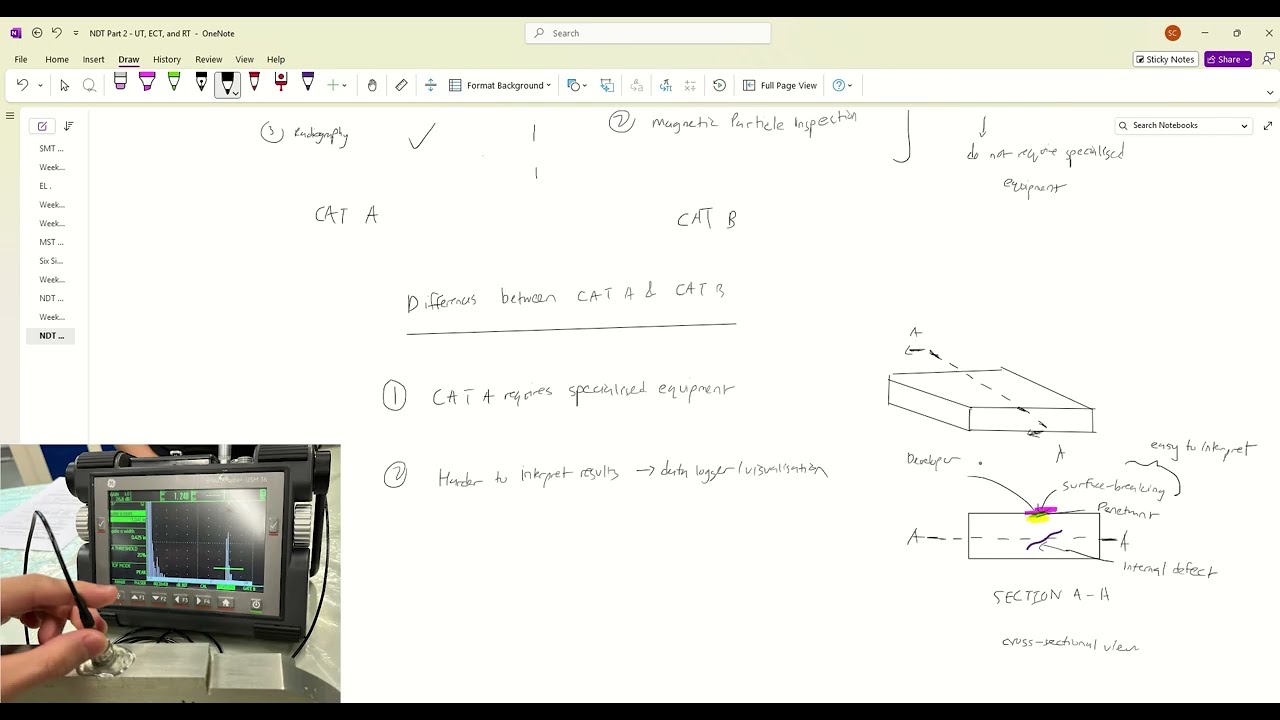
Modern Non-Destructive Testing (NDT) methodologies, such as ultrasonic, radiographic, and eddy current testing used to detect micro-fractures in aircraft hulls.
The development of forensic air accident investigation techniques, including the pioneering use of full-scale water tank pressure testing for structural analysis.
The properties of modern aerospace materials, including advanced aluminum-lithium alloys and carbon-fiber composites designed to resist fatigue propagation.
10.5K views111likes1:15:40Original Release: 2017-03-11
Europe 1954.
Throughout the continent, there is a growing sense of optimism. As the nightmare of World War II begins to fade, former enemies forge new links.
There's a spirit of enterprise.
Civil aviation is booming, boosted by technological advances made during the conflict. In just 2 years, the number of airline passengers has nearly doubled.
9:30 a.m. Sunday, January 10th, Rome Airport. Here, a dozen planes come and go every hour.
On the tarmac stands Flight 781 on route from Singapore to London. The plane is a Britishbuilt Dehavland comet. It's the marvel of its day and the perfect symbol of the new technological age. The Comet is the world's first passenger jet and it's haring journey times around the world.
The pride of Britain sends a message of superiority to every aircraft manufacturer in the world.
A dream comes true at Hatfield Airport.
The Comet, the world's first alljet airliner, begun 3 years ago, the airliner that makes every other passenger plane out of date, will go into operation within 18 months. The revolutionary design is based on De Havlin's hard one military expertise.
The plane is powered by four ghost jet engines and carries 42 passengers and crew at up to 800 kmh, almost twice as fast as its nearest competitor.
To help it achieve this staggering speed efficiently, it flies at a height of up to 12,000 m where the air is thinner.
Until now, such performance was the preserve of military jet fighters.
20 months after the launch, there are 17 of these aircraft in service.
Nine are owned by the British Overseas Airways Corporation or BOAC, and among them is Flight 781.
9:40 a.m. BOAC engineer Jerry Bull inspects the comet's undercarriage.
He checks for fuel leaks, tire damage, and marks on the airframe.
He pays attention to the aircraft's high tech ultra lightweight aluminium skin.
It's extremely thin and vulnerable to damage.
You're looking for this incidental damage. There was none, as far as I can recall, at that stage. So my own thought at the time was walking. Oh well, we got a clean airplane today.
At 10:00 a.m. Bull completes his final checks. The flight crew join him. The captain is Alan Gibson.
At 31, he's one of BOAC's youngest pilots.
Captain Gibson was a man of very good ability, not a person who would panic about anything. He was, you know, confident.
In Rome airport terminal, members of the new jet set enjoy breakfast. Many are children returning to England for a new school term.
They're excited about flying on the world's first passenger jet.
Also on the flight is renowned BBC reporter Chester Wilmont.
He's returning home after covering a tour of Australia by the recently crowned British Queen.
Chester is a devoted family man with three children.
[Music] He's especially close to his 10-year-old daughter, Jane, who was born deaf. She is devoted to him, unaware that he's one of Britain's bestloved broadcasters.
I did adore him and I knew that he was busy. I knew he was on television. I knew he wrote books. But I don't think I even tweaked how famous he was. He was just my dad.
10:05 a.m. And the last pieces of luggage are stored in the hold of flight 781.
The plane will be flying today with 29 passengers and six crew members on board.
One of the passengers is 23-year-old Bernard Butler.
Bernard is an electrical engineer who's been working in Bahrain to save money for his forthcoming wedding.
His fianceé is Pat Knight. They've been engaged for 2 years and plan to marry in a fortnight.
I've made the bridesmaid's dresses. All the invitations had gone out and we we'd already received wedding presents.
Everything was was planned.
Bernard is returning home with a surprise. He's picked out a dress for Pat to wear at their wedding.
At 10:18 a.m., all pre-flight checks are complete.
Captain Gibson signs to confirm that everything is in order. Captain Gibson seemed very relaxed, also looking forward to getting home.
Flight 781 is just one of five BOAC services from Rome to London today.
An older generation of slower propeller-driven airliners make up the other flights. At 10:19 a.m., a BOAC Argonaut, also bound for London, thunders down the runway. Captain Johnson is at the controls.
At 10:30 a.m., 11 minutes after the Argonaut's departure, the comet taxes to the runway. Jerry Bull salutes goodbye.
BA781 is Champion control. Control, this is flight BA781, we are clear for takeoff.
Roger. Air traffic control, grant permission for takeoff.
One minute later, the high-tech plane takes to the air.
It's a sunny day and conditions for flying are perfect. The journey to London will be exactly 2 hours and 37 minutes.
The gleaming jet will arrive at London airport a staggering 2 hours before the propeller-driven Argonaut.
[Music] Such speed is so far beyond anything produced by American rivals Boeing and Douglas that comets manufacturer de Havland expect to dominate this booming market throughout Britain. Expectation is high from Prime Minister Winston Churchill down. It was important from the British point of view to have our aircraft in the air and an aircraft which was far better than anything else. So, it was a booster.
But since the comet entered service 20 months ago, there have been two accidents with a loss of 54 lives.
In March 1953, one crashed on takeoff in Pakistan.
2 months later, severe weather was blamed for a second disaster in India.
As both accidents occurred in difficult conditions, reliability of the comet is not in question.
[Music] At 10:38 a.m., flight 781 climbs to an altitude of 11,000 m, twice as high as any other passenger aircraft.
To achieve this while allowing passengers to breathe comfortably, the engineer operates a pressurization system from the cockpit.
As the comet rises, the air pressure inside the cabin is maintained at the equivalent altitude of 2 and a half thousand m. A level easily tolerated by the human body.
But for some passengers, adapting to this new sensation is difficult.
Soon though, they acclimatize and settle back into their seats for the flight.
What they cannot know is that they will never make it to London.
1954 and a state-of-the-art comet jet airliner has taken off from Rome on route to London.
On board are 29 passengers and six crew.
As flight 781 climbs, Captain Gibson receives a message from Captain Johnson in the slower Argonaut that took off a few minutes earlier. Jig receiving. Each pilot uses the plane's call sign. How jig for the Argonaut, yoke Peter for the comet. In few calls, can you pass on height of cloud layer, please? Well, we're currently at 20,000 ft, and I'll let you know when we pass through it. Roger. out.
At 10:42 a.m., Captain Gibson contacts air traffic control. We are a beam of the vacuum beacon flying at 23,000 ft.
The plane will fly northwest over the Italian coastline high above the Mediterranean Sea.
[Music] [Music] At 10:51 a.m., Captain Gibson again radios the Argonaut. George from George.
George from George.
George.
The message ends mids sentence. Yoga.
Yet, come in, please.
When Captain Johnson gets no response, he contacts Rome airport. We've lost contact with BA7, but they seem to have disappeared. And at 10:56 a.m., the airport controller tries to contact the success. They fear something is terribly wrong.
200 km northwest on the island of Elba, a group of Italian fishermen are repairing their nets. Among them is 33-year-old Luigi Papy.
As they work, something extraordinary happens.
I felt a break in the air and then there was a bang and I heard a sound like thunder, but it was not like any thunder I'd ever heard before.
They watch in amazement as flaming wreckage falls from the sky.
[Music] At 11:15 a.m., air traffic control receives word that a plane has crashed into the sea off the island of Ela.
It confirms their worst fears.
Jerry Bull here's the news about the senior engineer says got some bad news Jerry and I look at him and he said the comet's down it's an emptiness I don't know what else to say you can't really describe it just this numbness you get and the next reaction of course is is this something I didn't do 12:00 p.m. Greenwich. Meanwhile, Chester Wilmont's family arrive at Heathrow airport in West London to welcome the BBC reporter home. The day with sparkling. We arrive at the airport by 10 minutes before the flight. Pat Knight arrives with a friend after a 4-hour journey from Nottingham. She's looking forward to seeing Bernard again. It was 11 months since I'd seen Bernard and uh I was very excited that he was coming home and I was going to see him.
1,200 km away, a small flatilla of fishing boats heads off the coast of Elber towards the crash site.
At first, we saw nothing. Then we saw a flock of seagulls which were pecking at something.
So we headed straight for the seagulls and that was where the plane had crashed.
It's a harrowing scene.
Bodies and debris float in the water.
Among the carnage is a white wedding dress.
[Music] 1:30 p.m.
Flight 781 is now over an hour late.
Airport staff mark the plane has delayed.
Jane Wilmont keeps a close eye on the arrival board. Hello KBD.
So, see you off. Keep asking questions.
Plane delayed. Plane delayed. Jane suddenly notices that all reference to flight 781 has been removed.
She decides to ask at the BOAC desk.
Excuse me. And our questions are why they're not there. It's not on the list anymore. Why is it gone? I can't give you that information at the moment, dear. We can't tell you. Have you got someone with you? Go and get to her mother. I'll be happy to speak with your mother.
Edith Wilmont is taken to a side room.
Her children wait outside.
They still believe their father's plane is delayed.
out if these things happen.
Minutes later, Edith returns visibly shocked and close to tears.
This has been an accident. She tells her children that Chester is dead.
Jane will never see her beloved father again.
I just couldn't believe it was happening.
But I very upset that I knew he was coming home for my birthday. And I kept on saying to myself, it wasn't his fault. He wasn't the pilot.
[Music] The grim task of informing friends and relatives continues.
Patricia Knight can scarcely believe what she hears.
We were told it to come down. They didn't know whether there were bodies found or not, [Music] and there was nothing we could do.
[Music] In an instant, Pat's hopes for the future are destroyed.
In Italy, the fishermen begin the gruesome task of recovering bodies.
It was a big shock. Every time we went near a corpse, we would shout, "Come over here. Come over here." Because they seemed still alive. Their eyes were open. But when we got near, you could see they were dead.
In total, 35 passengers and crew die on board comet flight 781.
15 bodies are recovered.
There are no survivors.
[Music] The dead are carried to a small chapel in Port Adzuro.
Local people say prayers.
Children bring flowers.
[Applause] The horrific crash is headline news around the world.
The question on everybody's lips is how could the most advanced airliner in aviation history just fall out of the sky?
Was it a tragic accident or something more sinister?
In 1954, the mysterious crash of the comet dominates the thoughts of the British nation.
What could have possibly caused the most advanced passenger plane in history to disintegrate in midair?
Within hours of the crash, a team of experts working for BOAC begin a technical examination of the comet fleet.
They must discover if there's a flaw in the design or a manufacturing fault.
Britain's position as the world leader in passenger jet travel depends upon it.
The inquiry that follows will turn into one of the most complex and important in aviation history.
Now, by going deep into the investigation, we can reveal the critical chain of events that caused the downing of flight 781.
Paul Wy is an aviation metalologist. For 6 years, he studied the comet investigation and is an expert on this turning point in aviation safety. Wy knows that with no established protocol for air crash investigation, it was an epic task. The difficulties they faced as an investigation team was to develop a whole new series of techniques for looking into a major air crash. and they had to really invent tests, invent methods of doing things as they went along. But Wy needs to be sure that this landmark case actually did get to the truth. Now, for the first time in half a century, he will re-examine the vital evidence.
If he discovers their findings are wrong, it will rewrite the history of air crash investigation.
From the beginning, the inquiry team are faced with an enormous challenge.
In 1954, the investigation team had no black boxes. They had no flight data recorders. They had no way of understanding what was going on in the plane at the time of the accident.
Their best clue, the aircraft itself, lies at the bottom of the Mediterranean Sea. Without the remains of the plane, the team know they must unravel the mystery with the flimsiest of evidence.
With little to go on, the press speculate that sabotage might be the cause of the crash.
These are the early years of the Cold War and there are fears that subversive communists may be responsible.
Sabotage a bomb and that came up fairly rapidly. You know, it was it has to be.
How did it happen? A bomb could have been hidden on board while the plane was taking on extra baggage.
It's only a theory, but if true, it would at least eliminate doubts about the safety of the comet itself.
With the pride and prosperity of a nation, riding on the comet's success, a close eye is kept on the investigation from the very top, Winston Churchill himself.
If saboturs are responsible, the investigators know they must come up with hard evidence.
They know that flight 781 would have been flying at around 11,000 m when something caused it to break up and fall from the sky.
The Italian fisherman provide a few clues.
I saw a huge ball of fire rotating and plunging into the sea. It left a huge, huge cloud of smoke.
Captain Johnson, pilot of the Argonaut, deepens the mystery. The radio went dead in mid-sentence. Everything just cut out instantly.
But it's the victims themselves that provide the biggest mystery. Within hours of the crash, Italian pathologist Dr. Antony Farari examines the bodies.
Despite Fenari's considerable experience, he finds a pattern of injuries he has never seen before.
The victims suffered broken limbs and damaged ribs. Injuries sustained after death.
But what confuses Fenari is that many of the bodies have fractured skulls. Wounds he discovers that were sustained before death.
He finds another puzzling clue.
The lungs of almost all the victims are extensively damaged. Many have ruptured like an exploding balloon.
To top it all, Fenari finds no evidence of a bomb blast.
It's a strange, perplexing picture, and he's baffled.
[Music] With so little evidence, the investigation hits a dead end.
[Music] Concerned, Prime Minister Churchill summons his advisers and takes an unprecedented step. Churchill commands the Royal Navy to retrieve the wreckage of Flight 781 from the seabed. His orders are simple. Endeavor to locate and salve comet.
The task, however, is anything but simple. There has never been a salvage operation like it before.
The wreckage lies at a depth of 120 m and no one knows exactly where. Today, if an aircraft crashed in similar circumstances, the blackbox recorders would have transponders and would lead the investigators and the and the recovery teams to the spot where the aircraft was. The Navy didn't have that information.
HMS Wrangler, an anti-ubmarine frigot, searches an area of 260 km.
Three salvage vessels are on hand to help. They're equipped with the most up-to-date technology, including an underwater camera and a deep sea observation chamber.
But progress is delayed by bad weather.
Then on February 12th, 33 days after the crash, Navy experts identify the first piece of the comet wreckage on the underwater camera. Divers descend to the seafloor.
Over the next few weeks, small bits of debris are sent back to England for examination.
Then comes a major find.
A large section of the rear fuselage is located and brought to the surface.
[Music] Meanwhile, in London, the Comet fleet sits idle. BOAC hemorrhages cash at the rate of £50,000 per week.
With so much invested in the aircraft, pressure builds to get the planes back into the air.
On March 23rd, 10 weeks after the disaster, the British government give the airline the go-ahead to resume service.
At London airport, a comet airliner about to leave for Johannesburg was taking out extra crew members. Press and television attend the relaunch services.
Everybody was in high spirits at the resumption of comet flying. BOAC chairman Somiles Thomas gives the comet a public vote of confidence. We obviously wouldn't be flying the comet with persons in it on service were we not satisfied that the conditions are acceptable for carrying passengers anywhere in the world.
[Music] Wreckage from flight 781 arrives in England piece by piece.
Investigators identify and mark every fragment in a hanger. Carpenters build a wooden frame of the Comet aircraft. As the wreckage accumulates, they wire each piece onto this skeleton.
Now, with the entire Comet fleet back in service, it's more important than ever to find the cause of the crash.
The lives of hundreds of passengers depend on it.
April 1954, while investigators urgently look for clues into the crash of Comet Flight 781, the British government give BOAC the go-ahad to relaunch their comet fleet. It's a terrible mistake.
At 6:32 p.m. on April 8th, 16 days after the resumption of flying, a comet takes off from Rome, bound for Egypt.
14 passengers and seven crew members are on board.
33 minutes into the flight, the pilot reports that he's on course flying at 11,000 m. It's his final message.
A further 21 people are dead.
The news sends shock waves around the world.
Barely a fortnight after reassuring the public the comet is safe to fly, BOAC's chairman publicly admits that he was wrong. Obviously, we cannot continue to carry the public in comets until this disaster is fully explained.
Similarities between the two accidents are uncanny.
Both planes were refueled and checked at Rome by the same engineers, including Jerry Bull.
You just can't accept that an airplane like this again, it's gone down the same way and you've lost his people again.
Both aircraft were flying at an altitude of around 10,000 m. Both crashed into the sea shortly afterwards. It seems there must be a flaw in the aircraft itself.
Again, the British Navy looks for evidence.
They recover five bodies along with a few personal effects.
Churchill acts decisively. He appoints the Royal Aircraft Establishment, Britain's leading aeronautical research center, to investigate.
Heading the inquiry will be Sir Arnold Hall. Hall has an impressive reputation.
He's a Cambridge scholar and one of the outstanding scientists of his generation. Sir Ronald Hall is a brilliant scientist and he's one of those people who would let the facts speak for themselves and would make judgments based on fact, not on opinion.
Churchill instructs Hall. The cost of solving the comet mystery must be reckoned neither in money nor in manpower.
But even for a man as qualified as Hall, it's going to be a tall order.
The second plane to crash rests under 1,000 m of water and is impossible to retrieve.
The hope is that if they can establish the cause of flight 781's crash, it would explain why the second aircraft went down.
Over the next 4 months, 781's wreckage is methodically pieced together at Sir Arnold Hall's headquarters in Farra.
It's groundbreaking work.
Never before on that scale had an aircraft been reassembled by anyone. And the investigation team had to learn how to do it and develop the techniques and and tools to reassemble a very badly damaged aircraft.
As they examine each piece of debris, they find intriguing clues.
Bits of carpet, pills from the first aid cabinet, a corner of a mirror from the toilet, and scraps of passengers luggage are all found wedged into the rear end of the fuselage under the root of the tail fin.
It suggests an explosion at the front of the cabin that blasted personal belongings to the rear of the plane. The question is how and where did the explosion start?
As the wreckage begins to provide some clues, so too do the victims.
Four of the bodies retrieved from the second crash are flown to Britain for postmortem.
The pathologist finds identical injuries to those of Flight 781.
Fractured skulls and ruptured lungs.
[Music] Paul has a hunch. Could the entire plane have burst like a balloon? After all, the pressurized cabin designed to keep passengers comfortable would mean that the aluminum skin of the comet is highly stressed. any structural failure and it might simply explode of its own accord.
[Music] Such a violent decompression, as it's called, has never happened on a passenger plane before, but Hall and his team believe this could explain the terrible injuries.
To test the theory, they stage a pioneering experiment.
The team build a perspect model of the fuselage onetenth the actual size.
The cabin includes 28 miniature seats with six dummies.
The model is housed inside a pressure chamber. When the pressure in the fuselage is increased to 8 and 1/4 lb, the equivalent of flying at 12,000 m, the team deliberately rupture the model.
A high-speed camera captures the results.
The rapidly escaping air causes a tremendous release of energy. Seats tear apart and fly through the air.
The dummies catapult vertically and smash their heads on the cabin roof.
It's a graphic demonstration of a phenomenon experts like Paul Wy understand only too well.
The pressure cabin exploding is the same as a 500lb bomb coming off inside the cabin. The experiment appears to explain how the victims of both flights sustain such horrifying head injuries.
Not only that, the sudden change in pressure would cause the air inside the victims to expand rapidly, rupturing their lungs instantly.
If explosive decompression can explain what happened to both planes, the team must discover exactly what caused the weakness in the structure of the fuselage.
But a failure in the aluminium skin seems implausible.
The manufacturer's own tests show the natural life expectancy of the fuselage is over 10,000 flights, many more than the number flown by the two crashed planes. Nevertheless, Sir Arnold is not a man to leave any stone unturned. He decides to put the entire airframe to the test. Sir Arnold Hall decided that failure of the pressure cabin could be one of the possible causes. And because he wanted to make sure that everything was looked at, this was just one of the tests that was performed.
Before testing begins, the team look closely at the comet design. They discover that to withstand the stress caused by repeated pressurizations, the skin of the aircraft must be immensely strong, but it must also be extremely light.
In order to achieve this, De Havlin developed a lightweight aluminium alloy skin, just over half a millimeter thick.
The comet skin thickness was as thin as the designers dared go to withstand the cabin pressurization, and it was fixed by how little they thought they could get away with. Sranold devises a test to assess the strength of the plane's fuselage.
The experiment is on a completely different scale to anything they have attempted before. It requires the construction of a massive water tank measuring 34 m long by 7 m wide and 5 m deep.
Working non-stop, it takes a team of engineers 6 weeks to complete.
The team at the Royal Aircraft Establishment are working really hard.
They're working 24 hours a day. They're working shifts. They're sleeping on site. They are a very dedicated team. By May 29th, it's ready.
The engines and cabin upholstery of a comet are stripped out. The empty plane is gently maneuvered into the water tank with the wings protruding on either side. Hydraulic rams move the wings up and down to simulate flight conditions.
Engineers fill the tank and the plane with water.
[Music] When they are both full, they force more water into the plane, pressurizing it as if it were flying.
After 5 minutes, engineers reduce the pressure. Each test puts the same amount of strain into the aircraft as a single flight at 12,000 m. Sir Arnold plans to test the fuselage to destruction. It could take up to 5 months.
The experiment runs 24/7 using 1950s technology. It's a grueling task.
Today, we wouldn't do a water tank test.
We'd actually use computer modeling and computer simulation to understand how the aircraft would behave. As the tests continue, there are other lines of inquiry.
In midJune, 5 months after the crash of flight 781, the team assembled 2/3 of the fuselage onto the wooden frame. Half a wing lies on the floor.
[Music] It's now clear from the tears in the metal that the aircraft has indeed decompressed violently and blown apart at the seams.
By following the fractures back to where they started, they think the initial failure was probably at the front of the fuselage. Somewhere between the cabin and the cockpit, it seems as if the tail and rear fuselage then came away from the main cabin. The rear wing structure followed and then the outer wing tips.
The cockpit broke away as the plane plummeted to earth and finally fuel from the wings set the debris ablaze.
But the exact cause of this tragedy is still a mystery.
Then on June 24th, Sir Arnold Hall gets a call that changes everything. The team running the water tank test has had a major breakthrough.
[Applause] [Music] [Applause] [Music] Less than a month after testing began, after the equivalent of just 3,000 flights, the comet fuselage ruptures.
Engineers immediately drain the tank and Sir Arnold Hall inspects the damage.
[Music] There is a massive tear in the aircraft's skin, 2 m long and 1 m deep.
The tear follows the line of the plane's windows and doors.
It's a shocking but vital turning point.
They have uncovered a major weakness in the structure of the comet. The entire fleet seems to be fatally flawed.
I think everybody was thunderruck. De Havlands certainly were thunderruck because they didn't expect a comet airframe to fail so soon in its life.
But what triggered such a dramatic failure? There's one prime suspect, a phenomenon known as metal fatigue.
It's something Paul Wy knows well.
This is a piece of aluminium sheet similar to that which was used on the comic skin, but much thinner. One cycle of load isn't going to fail it at all.
But if I repeatedly load it like this, fatigue is caused when a metal is repeatedly flexed one way and then the other. There you can just see it's about 3 or 4 mm across the sheet. After a while, minute cracks start to form.
The cracks grow further and further across the sand. The cracks steadily increase in size and eventually the part fails.
But there are two problems with this explanation.
Metal fatigue leaves a telltale microscopic pattern on the surface of the metal.
Although in the 1950s, the technology for detecting this pattern is in its infancy.
None of the parts reclaimed from the sea seem to show any sign of it.
Secondly, before the comet went into service, the manufacturers did extensive fatigue tests to find out how the fuselage would behave under repeated pressurizations.
It passed with flying colors.
Sir Arnold knows he must come up with hard evidence to prove the theory. He must find a part of flight 781 that shows signs of the fatigue. The piece of evidence that Sir Arnold needed above all other was that source of fatigue crack growth that he knew was there in the airframe somewhere. A single piece of wreckage is all that's needed to validate the entire investigation. But this crucial evidence still lies at the bottom of the Mediterranean Sea.
It's 1954 and investigator Sir Arnold Hall believes that the cause of the two comet crashes is a rupture in the plane's lightweight skin.
After a unique pressure test on the comet's cabin, the team examined the 2 m split that has ripped along the side of the fuselage.
They make some frightening discoveries.
By tracing the tear back, they find it starts at the forward escape hatch. This is not surprising.
Stress to the aircraft should be evenly spread throughout the fuselage.
But when a door or window is cut into the plane, it weakens the structure and the stress concentrates around the weakened areas.
To investigate further, they rig another aircraft with strain gauges designed to measure stress in the airframe. The results are shocking. During flight, the stress to the skin around the plane's windows and doors reaches 70% of its total strength, four times greater than the rest of the aircraft's skin. This is dangerously high and twice what the designers intended. Then the team discover an even more worrying detail.
The supports around the windows are riveted, not glued as designed. The problem is the rivets are punched into the metal, not drilled. This technique creates tiny manufacturing defects, which with repeated flying can turn into fatigue cracks. The presence of manufacturing cracks in a highly stressed area meant that you were highly likely to suffer from fatigue failure.
Sir Arnold and his team know they're getting close, but they have not yet conclusively solved the mystery. They found no trace of metal fatigue on any of the wreckage from flight 781. It was vital that he found that piece of evidence from the seabed that would tie the crash to the accident investigation in an unequivocal manner.
Then on August 12th, 7 months after Flight 781 crashed, an Italian twer snags a large piece of wreckage.
It turns out to be a section of the roof from 781's fuselage. The piece includes two small windows built for sending and receiving radio signals.
[Music] surface. Sir Arnold Hall and his team inspect the wreckage at Farnra and immediately find what they're looking for.
A rivet hole in the corner of one of the windows shows a tiny crack.
When they put the piece together with the rest of the wreckage, they find that all the cracks run back to this point.
[Music] They have their missing clue.
The future of the comet, the world's first passenger jet airliner, hangs upon the outcome of a court of inquiry being held at church on Tuesday, October 19th.
After 6 months of grueling work, Sir Arnold Hall presents his findings to a court of inquiry. So, our leading air, but one detail fascinates Wy in 1954.
The techniques for analyzing metal fatigue were crude. The final piece of wreckage was examined with an ordinary microscope, and the team relied on experience to make their conclusion.
Today, London's Science Museum safeguards the crucial piece of wreckage.
Paul Wy goes to see the historic item for himself.
No one has ever used modern methods to re-examine the evidence.
Using 21st century knowhow, Widi wants to look again at the wreckage and check that Sir Arnold got it right.
In order to preserve the damaged section, it has been mounted onto a plate.
Running from a rivet hole is the crack which it's believed started the catastrophe.
To examine the damage in more detail, Wy makes an impression of the crucial area using a siliconbased putty.
[Music] Then at Imperial College London, Wy uses an electron microscope to examine the sample.
Magnifying the crack about 200 times, Witty shows what Sir Arnold would have seen.
This is the fatigue crack we saw on the comet skin. And Sir Arnold Hall and his team could see that using their techniques of the day. But zooming in further to 800 times, Willie can see detail that Sir Arnold never could. He finds a tiny manufacturing defect, probably formed when the rivet was punched into the metal. And it was that manufacturing defect that caused this fatigue crack to grow. And it's this image here that shows that Sir Arnold Hall and his team were right. It vindicates them in seeing that it was a fatigue crack which then grew to failure.
52 years after the most groundbreaking and innovative investigation in aviation history, Paul Witty has conclusive proof that Sir Arnold Hall's results are absolutely right.
Now, by rewinding the events leading up to that fateful crash, and by following the evidence uncovered during the investigation, we can reveal how flight 781 was downed.
10:31 a.m. January 10th, 1954.
26 minutes to disaster. Flight 781 takes off from Rome airport.
The plane is designed with an exceptionally thin aluminium skin.
Rivets punched into the aircraft during construction create microscopic manufacturing defects.
On each flight, the pressurization system puts enormous strain on the fuselage, causing stress to the skin, especially around the windows and doors.
Repeated pressurizations turn the manufacturing defects into fatigue cracks that get bigger with every flight.
19 minutes to disaster. Flight 781 climbs to 11,000 m.
As it ascends, the pressure increases and the aircraft's skin becomes more stressed.
At 10:51 a.m., the comet's pilot, Captain Gibson, sends a radio message from 5 seconds to disaster. a fatigue crack which is 2 cm in length and the aircraft skin rips apart.
At 10:57 a.m. the shattered pieces of flight 781 fall from the sky.
35 people are dead.
[Music] On the island of Ela lies a memorial to those who lost their lives over 50 years ago.
The pain of the tragedy will never be forgotten, but the scientific understanding gained during the investigation is comfort to some.
I know gave my mother a great deal of comfort that the test they did on the following the comet crash did this save lives later.
4 years after the crash, the comet did fly again, but it never achieved the commercial success it once promised.
In the interim, American company Boeing developed their own passenger jet and became the dominant force in the world of aviation. The Dehavland Aircraft Company went into decline and were eventually taken over. Passenger air travel had changed forever.
Up Next

10:04
DC-DC Buck Converters: Design and Build a 5V 5A SMPS
@Afrotechmods
1M views•2014-08-18

30:32
Ultrasonic Transducers: Resonant Frequency Measurement and Horn Design
@imajeenyus42
229.9K views•2017-02-22
54:16
Polymer Environmental Degradation: Mechanisms & Stabilization
@iit
1.8K views•2012-07-10
33:39
How a Student's Question Saved a NYC Skyscraper from Collapse
@veritasium
22.8M views•2025-04-26
Related Study Plans & Knowledge Roadmaps
Structured learning paths in Engineering
engineering
Building Acoustic Levitators: Physics & Arduino
01The Physics of Sound and Standing Waves
02Piezoelectric Transducers and H-Bridge Drivers
03Arduino Programming: Generating 40 kHz Signals
+ 2 more learning modules
14h5 modules
Explore Roadmap
engineering
Building Peltier Cloud Chambers: Particle Tracks
01Cosmic Rays & Cloud Chamber Physics
02Thermoelectric Cooling (TEC) Fundamentals
03Custom Liquid-Cooling Loop Design
+ 2 more learning modules
18h5 modules
Explore Roadmap
engineering
Yagi-Uda Antennas: Modeling, Build & VNA Test
01Introduction to RF and Antenna Fundamentals
02Yagi-Uda Antenna Design Principles
03Antenna Modeling and Simulation in 4NEC2
+ 2 more learning modules
18h5 modules
Explore Roadmap
engineering
ECG Monitor Design: Op-Amps, Filters & Noise
01Electronics & Breadboard Basics
02Op-Amps and Instrumentation Amplifiers
03Bioelectricity and ECG Fundamentals
+ 2 more learning modules
18h5 modules
Explore Roadmap