










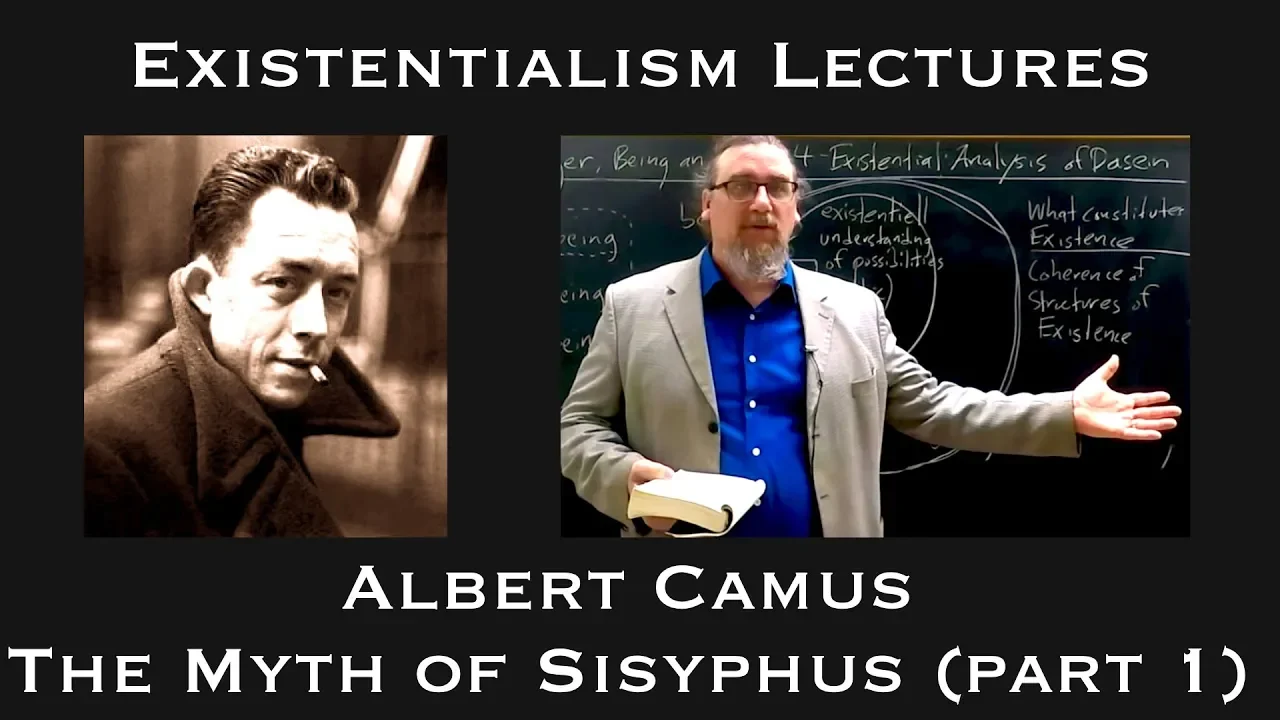












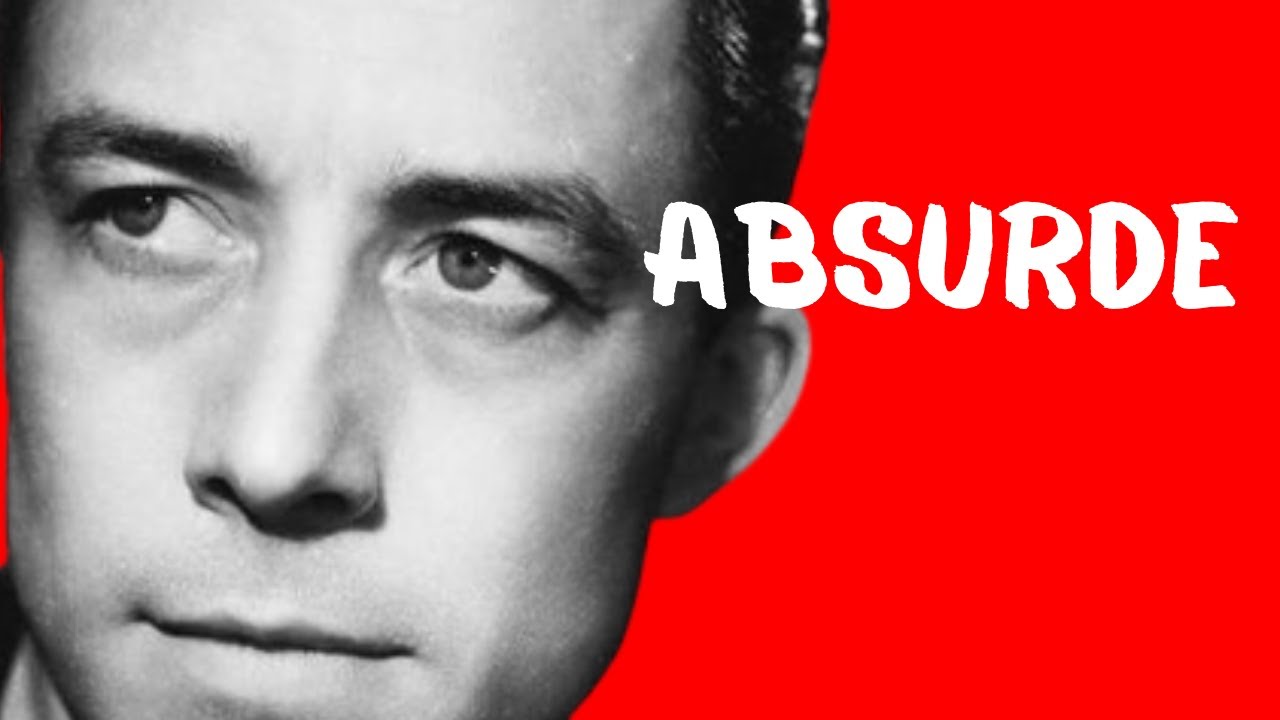





Albert Camus argues that human existence is fundamentally absurd because it creates a tension between our deep yearning for unity and meaning, and the universe's indifference to this yearning; however, rather than escaping this absurdity through suicide or false hopes, one should embrace revolt (defiant refusal to accept meaninglessness), genuine rebellion (striving for solidarity and individual freedom without degrading others), and ultimately achieve absolute freedom where one's very existence becomes an act of rebellion against an unfree world.
Albert Camus: The Absurd, Revolt, and Rebellion | Philosophy Explained
Added:A basic understanding of Existentialism and Nihilism, particularly how these movements address the question of inherent meaning in life.
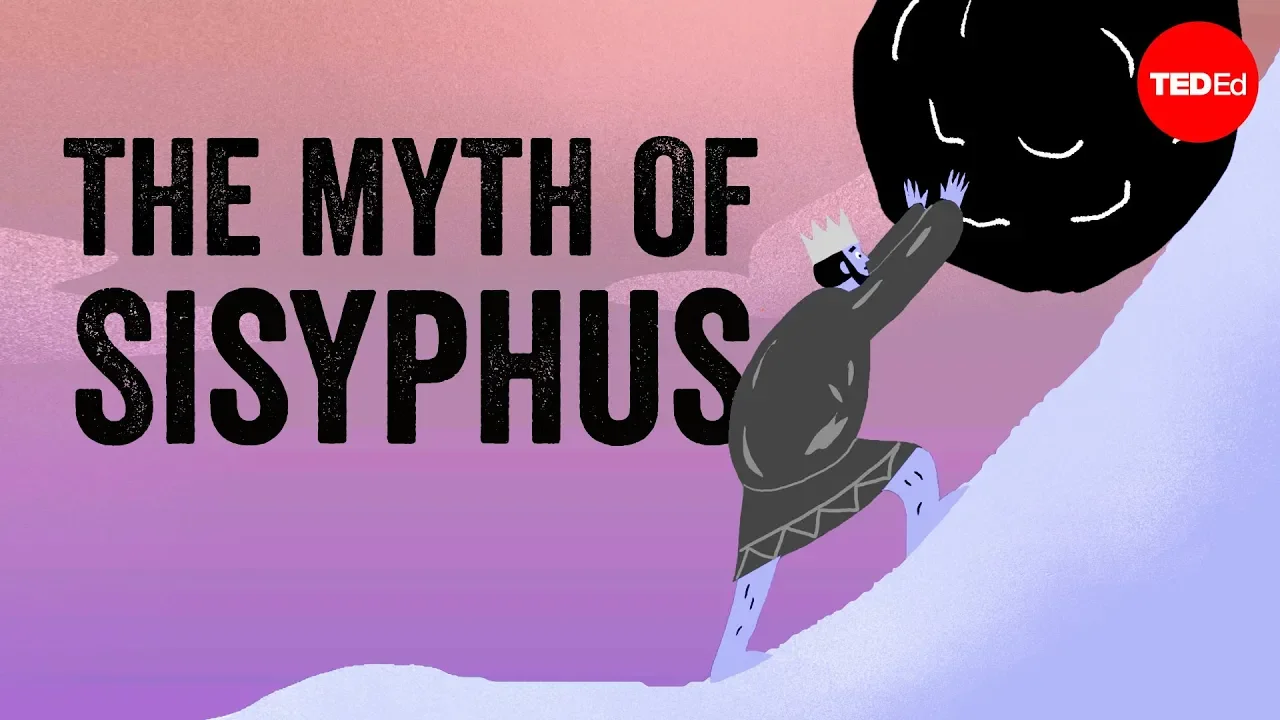
The Greek myth of Sisyphus and its symbolic representation of endless, repetitive, and futile labor.
The fundamental philosophical definition of 'The Absurd' as the conflict between the human desire for significance and the cold indifference of the universe.
The historical context of post-WWII Europe, which influenced intellectual crises regarding morality, totalitarianism, and ideological dogmatism.
A detailed study of Camus' political and philosophical work 'The Rebel' (L'Homme révolté) to understand his critique of historical revolutions.
The philosophical and personal split between Albert Camus and Jean-Paul Sartre over communism, violence, and existential freedom.
An analysis of Camus' literary fiction, such as 'The Stranger' and 'The Plague', to see his concepts of the absurd and solidarity dramatized.
Applying absurdist ethics to contemporary issues like climate anxiety and modern workplace alienation to find personal agency and solidarity.
331.7K views10.5Klikes11:06Original Release: 2016-04-11
In his book, the myth of Seisophus, the philosopher Albert Kimu wrote the following about the routine of many people in the modern day. Rising street car, 4 hours in the office or the factory, meal, street car, 4 hours of work, meal, sleep, and Monday, Tuesday, Wednesday, Thursday, Friday, and Saturday, according to the same rhythm.
This lifestyle, although often tiresome and unfulfilling, is followed by most individuals most of the time without question. Once in a while, however, a troubling experience can shake one from this waking slumber. Be it a sense of isolation from others and disconnection from reality, an awareness of the fleeting nature of time, or a vivid realization of the death which awaits at some point in the future.
Such experiences elicit feelings of anxiety, alienation, and dissatisfaction with life, leading one to confront questions relating to the nature and purpose of human existence. But one day the Y arises, wrote Kimu, and everything begins in that weariness tinged with amazement. This why Kimu held to be a yearning for unity, which can be thought of as a desire to understand the nature of the universe and an urge to unite with life and thus repair the ubiquitous sense of separation which lies at the heart of the human condition. The mind's deepest desire, he wrote, even in its most elaborate operations, parallels man's unconscious feeling in the face of his universe. It is an insistence upon familiarity, an appetite for clarity.
That nostalgia for unity, that appetite for the absolute illustrates the essential impulse of the human drama. In the past, this nostalgia for unity was nourished by various mythical, religious, and philosophical systems which justified earthly existence and gave it meaning. However, born in an age which was wrestling with the death of God, Kimu could not believe in the validity of any of these metaphysical worldviews. If the only significant history of human thought were to be written, it would have to be the history of its successive regrets and its impetences. Contrary to many philosophical and religious worldviews which exalt the divinity of human reason, Kimu did not believe it had the capacity to catch hold of any transcendent truth or meaning. I don't know whether this world has a meaning that transcends it, but I know that I do not know that meaning and that it is impossible for me just now to know it.
This set up a disturbing problem for Kimu. Recognizing that human existence is a futile merry-goround with no end but death stimulates an appetite for clarity, a desire to understand the absolute ordering principles and purpose behind the universe. But our reason is confined to the evidence from our experience. And thus when it comes to the spiritual comforts we long for, there can be no certainty whatsoever. We are like Tantalus who was condemned for eternity to stand in a pool of water beneath overhanging fruit which receded every time he reached for it. Our deep yearnings for a beyond to justify this earthly existence will forever remain unfulfilled. And beneath the flux of daily existence, we will at our core feel like strangers in a strange universe. For this reason, Kimu concluded that human existence is absurd. Man stands face to face with the irrational. He feels within him his longing for happiness and for a reason.
The absurd is born of this confrontation between the human need and the unreasonable silence of the world. It is not that the universe in and of itself is absurd. Instead, the absurd arises from our relationship with the universe.
It exists within the tension between our yearning for unity and the indifference of the universe to this yearning. In Kimu's words, the absurd depends as much on man as it does on the world. What is one to do when faced with the realization that human existence is absurd? In the myth of Sisphus, Kimu put forth two preliminary strategies for dealing with this awareness. Physical suicide and philosophical suicide. Some people commit physical suicide upon the realization that life is absurd.
Believing that if life has no meaning, it must not be worth the trouble. While physical suicide is one solution, many more tend towards what Kimu called philosophical suicide. In the attempt to flee from the unsettling awareness of the absurdity of life, they escape through faith and hope. Despite no evidence, such people adopt the belief that beyond this earthly existence exists absolute harmony, nirvana, meaning or God. Kimu viewed both types of suicide, physical and philosophical, as possible responses to the awareness that life is absurd. Does its absurdity require one to escape it through hope or suicide? That is what must be clarified, hunted down, and elucidated while brushing aside all the rest. Does the absurd dictate death? While admitting suicide as a possible response to the absurd, Kimu concluded that those who choose to commit physical or philosophical suicide fail to understand that to maintain an awareness of the absurd without opting for death represents an accomplishment, a supreme state of consciousness. To be aware of the absurd and of the crushing fate which awaits is for Kimu to become superior to it. Such an individual Kimu called an absurd hero.
The maintenance of a lucid awareness of the absurdity of life tends to naturally stimulate revolt, a feeling of outrage and protest against one's tragic condition and a defiant refusal to be broken by it. It is a constant confrontation between man and his own obscurity. It is an insistence upon an impossible transparency. It challenges the world a new every second. It is not aspiration, for it is devoid of hope.
That revolt is the certainty of a crushing fate without the resignation that ought to accompany it. To revolt is to say no to one's absurd existence, and in the process to say yes to some other more desirable existence. This affirmation implicit in revolt leads to rebellion, which is the attempt to reashion human existence through one's own efforts. In every rebellion is to be found the metaphysical demand for unity, the impossibility of capturing it and the construction of a substitute universe. Rebellion from this point of view is a fabricator of universes.
Despite its healthy initial impulse, rebellion does not always lead to constructive change. In fact, Kimu believed destructive or what he called nihilistic forms of rebellion to be common, especially in the modern era.
Kimu who lived in the midst of some of the worst genocidal totalitarian regimes of the 20th century believed them to be forms of rebellion against the absurd upon the recognition that there is no beyond to justify this existence. These movements expressed a hatred of life and a desire in a godless universe to play the role of both God and devil. With the throne of God being overthrown, the rebel now recognizes that it is up to him to create this justice, this order, this unity. and by doing so to justify the fall of God. Then begins the desperate effort to create at the price of crime, if necessary, the empire of man. All nihilistic forms of rebellion justify the murder and destruction they impose on the world through the claim that in an absurd universe, if nothing is true and there are no moral values, then everything is permitted. If we believe in nothing, if nothing has any meaning and if we can affirm no values whatsoever, then everything is possible and nothing has any importance. Kimu believed nihilistic rebellions to be constant temptations, appealing to the universal yearning for unity common to all. The major socialist movements of the 20th century, for example, starting from an awareness of the absurd and a loss of faith in the divine, turned toward history for salvation by championing the coming of a utopia.
Socialism is therefore an enterprise for the deification of man and has assumed some of the characteristics of traditional religions. When truth, justice, harmony, a utopia are posited to exist in the future, the realization of this utopia located at the end of history becomes the sole measure of value. And any means that are thought to contribute to the actualization of it are justified. Be it a denial of individual freedom, torture, or even genocide. If it is certain that the kingdom will come, what does time matter? Suffering is never provisional for the man who does not believe in the future. But 100 years of suffering are fleeting in the eyes of the man who prophesies for the 101st year the definitive city. Such nihilistic rebellions are characterized by what Kimu called a demand for totality.
Seeking to achieve the impossible by completely eradicating the absurdity of human existence and implementing a utopia. They wreck destruction, chaos, and suffering on the world in the name of a delusion. Totality is in effect nothing other than the ancient dream of unity common to both believers and rebels but projected horizontally onto an earth deprived of God. In contrast to nihilistic rebellions which pollute the original and authentic meaning of rebellion, Kimu championed what he thought to be a genuine form of rebellion which recognizes the necessity of shared communal values and attempts to bring about solidarity, individual freedom and a relative harmony among human beings. If men cannot refer to a common value recognized by all as existing in each one, then man is incomprehensible to man. Kimu believes such common values could be achieved through the recognition that all human beings are children of the absurd. It is a subjection to a common tragic fate and our protest against our condition which unites and binds us together in a solidarity of chains. I rebel, wrote Kimu. Therefore, we exist with an understanding that the absurdity of human existence cannot be completely eradicated. Genuine rebellion does not strive for the implementation of a utopia by destructive means as nihilistic rebellions do, but recognizes the dignity and rights of others and attempts to implement unity among individuals. No doubt the rebel demands a certain freedom for himself. But in no circumstances does he demand, if he is consistent, the right to destroy the person and freedom of someone else, he degrades no one. The freedom which he demands, he claims for everybody. That which he rejects, he forbids all others to exercise. He is not simply a slave opposing his master, but a man opposing the world of master and slave. Bound together by a shared struggle within an absurd condition, Kimu envisioned a community rising up and rebelling against the evils and injustices of the world. Yet Kimu was not totally optimistic such a situation would be realized. In his book, The Fall, he explored the possibility of a world in which nobody takes up the challenge to fight against injustice and where solidarity and hence relative peace and harmony are never achieved. Kimu's concern was wellounded. In our day, freedom in many areas of life is dwindling and governments across the world are rallying people to sacrifice personal freedoms for the promise of future harmony and security. If such a trend continues, Kimu had some preient advice for those who refuse to walk this line, but rather prefer freedom.
The only way to deal with an unfree world, he wrote, is to become so absolutely free that your very existence is an act of rebellion.
Up Next

10:43
Albert Camus on Life's Absurdity: Meaning in a Meaningless World
@Einzelgänger
1.7M views•2020-04-16

131:21
The Arcades of Paris: Walter Benjamin on Urban Politics & Philosophy
@internationalcentreforcont7204
2.3K views•2013-06-19

68:32
Should We Destroy the Machines? Big Tech Surveillance Critique
@TheStoriesWeTell303
167.9K views•2025-11-30
4:57
The Myth of Sisyphus: A Greek Legend of Eternal Punishment
@TEDEd
8.6M views•2018-11-13
Related Study Plans & Knowledge Roadmaps
Structured learning paths in Philosophy
philosophy
Philosophy of Death (Metaphysics, Harm & Grief)
01Introduction to the Metaphysics of Death
02Is Death Bad? Epicureanism vs. The Deprivation Account
03Lucretius's Symmetry Puzzle
+ 2 more learning modules
15h5 modules
Explore Roadmap
philosophy
Frankfurt School: Critical Theory & Culture
01Foundations of the Frankfurt School and Critical Theory
02Horkheimer & Adorno: The Critique of Instrumental Reason
03The Culture Industry and Mass Deception
+ 2 more learning modules
12h5 modules
Explore Roadmap
philosophy
Philosophy of Language: From Frege to Austin
01The Linguistic Turn: An Introduction to Language in Philosophy
02Gottlob Frege: Sense and Reference
03Early Wittgenstein: The Picture Theory of Meaning
+ 3 more learning modules
15h6 modules
Explore Roadmap
philosophy
Feminist Epistemology: Standpoint & Injustice
01Introduction to Epistemology and Feminist Critiques
02Sandra Harding and Standpoint Theory
03Donna Haraway and Situated Knowledges
+ 2 more learning modules
12h5 modules
Explore Roadmap