


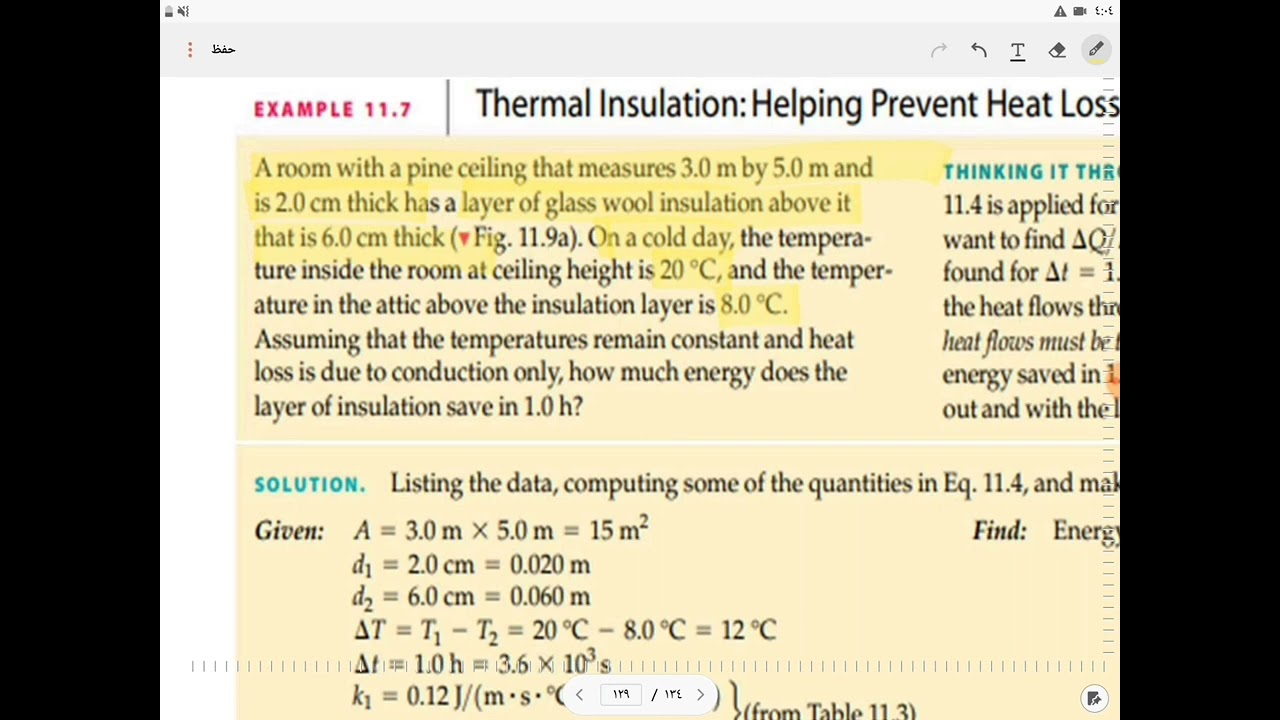











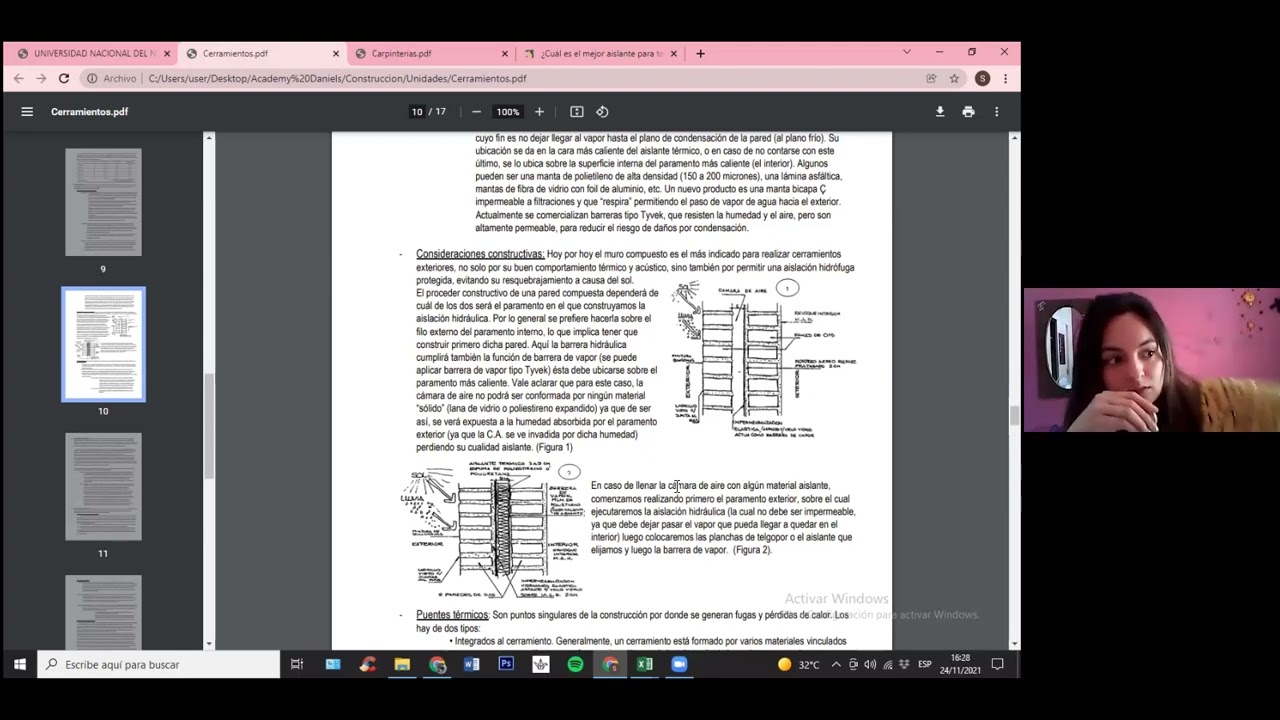

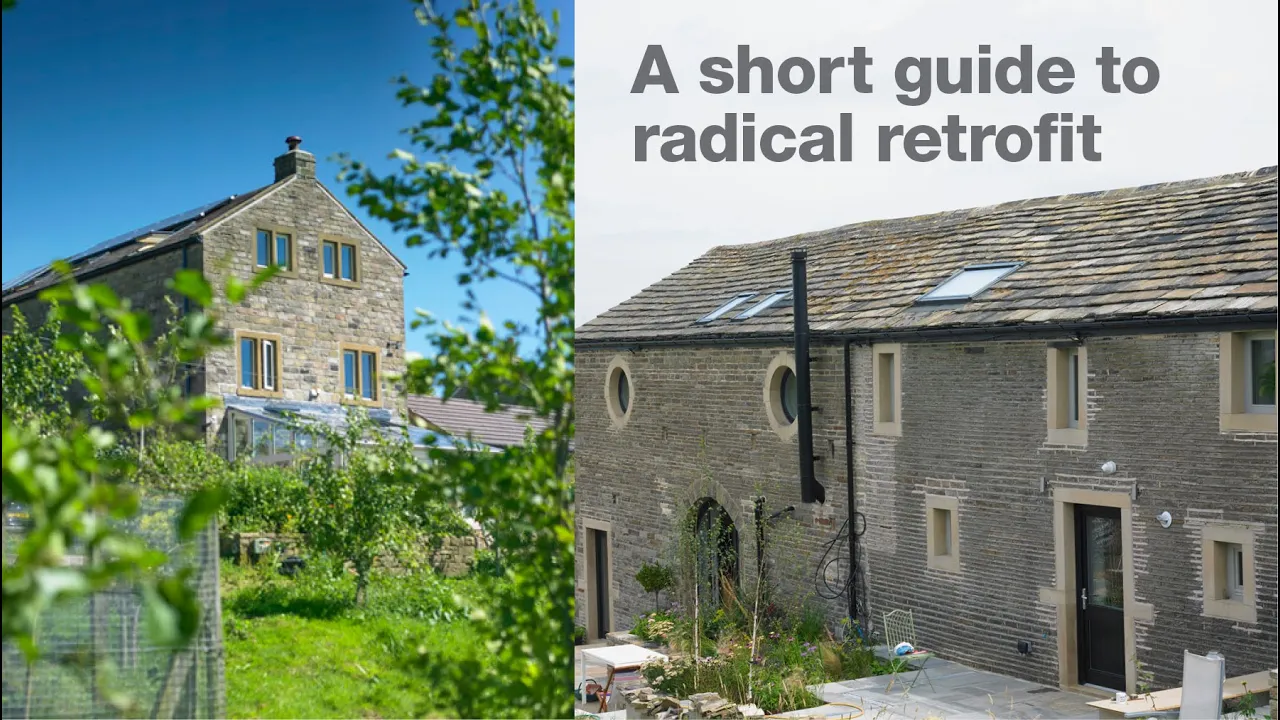



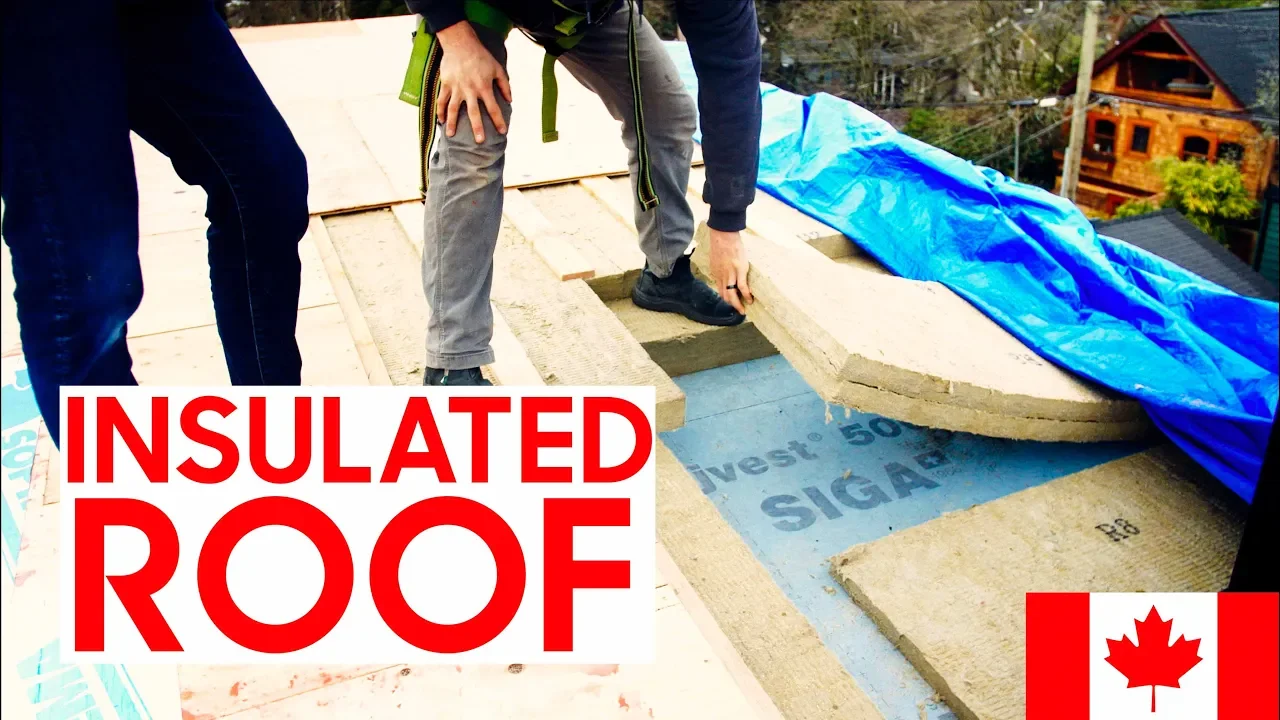
Mineral wool (stone wool) and fiberglass are two primary residential insulation types with distinct manufacturing processes and properties: stone wool is made from basalt rock, slag, coke, and recycled materials, melted at 1500°C and spun into fibers, while fiberglass is produced from sand, soda ash, limestone, and recycled glass at 1700°C; stone wool offers superior thermal stability, moisture resistance, fire resistance up to 2000°F, and sound absorption, though it costs nearly double and weighs three times more than fiberglass, which provides comparable insulation but requires more maintenance due to its fluffiness and susceptibility to moisture damage.
Mineral Wool vs Fiberglass Insulation: Properties and Performance
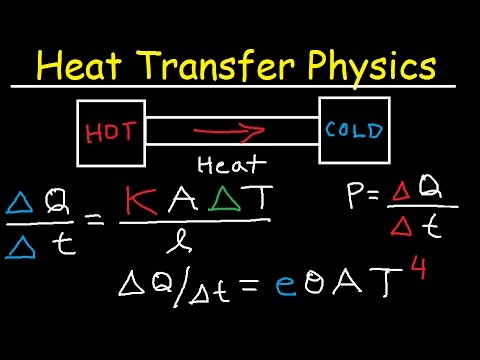
Added:Fundamentals of heat transfer mechanisms, specifically conduction, convection, and radiation within physical materials.
The concept of R-value (thermal resistance), including how it is calculated and its role in building energy efficiency.
Basic acoustics, specifically how sound waves travel through materials and the difference between sound absorption and sound barriers.
An introductory understanding of building envelopes, thermal boundaries, and how insulation fits into residential and commercial construction.
Advanced insulation alternatives, such as spray polyurethane foam (SPF), cellulose, and high-performance materials like aerogels.
The concept of thermal bridging and how to design continuous insulation systems to eliminate structural heat loss.
Life Cycle Assessment (LCA) and environmental impacts of insulation, including embodied carbon, manufacturing emissions, and recyclability.
Moisture management in building science, specifically vapor retarders, breathability, and preventing mold and condensation within insulated walls.
1.8M views56.8Klikes11:25Original Release: 2020-12-12
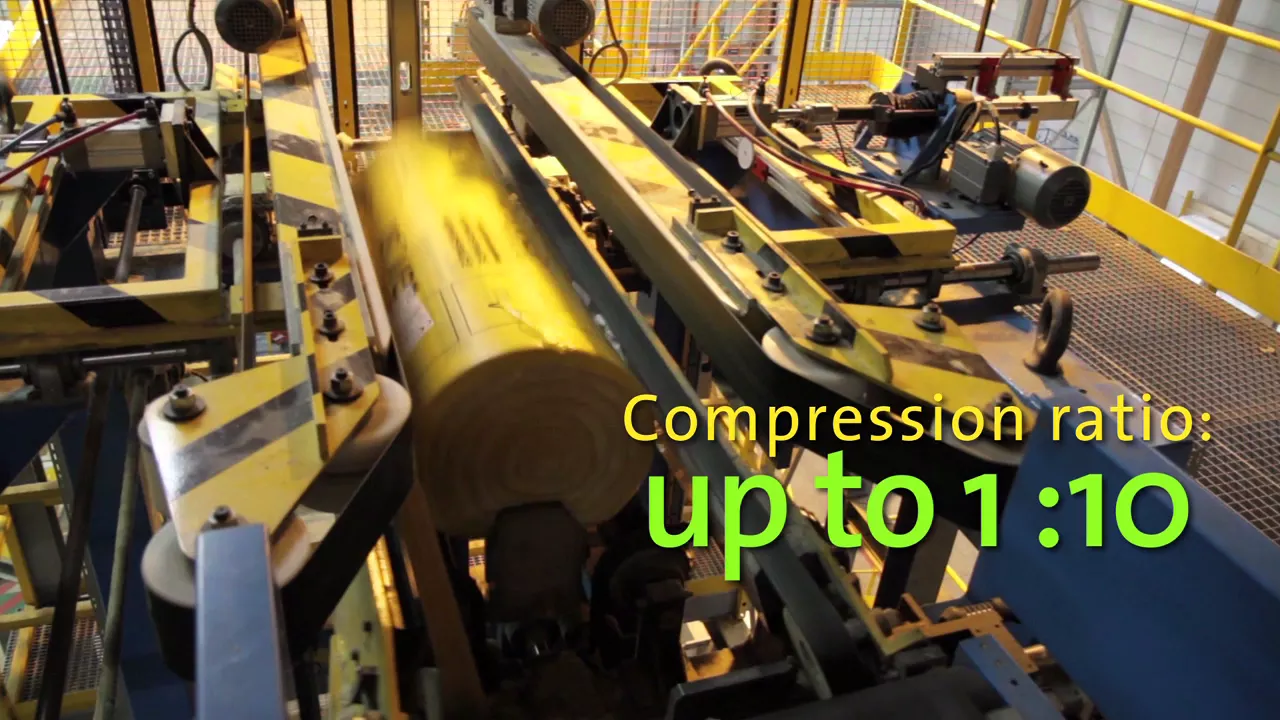
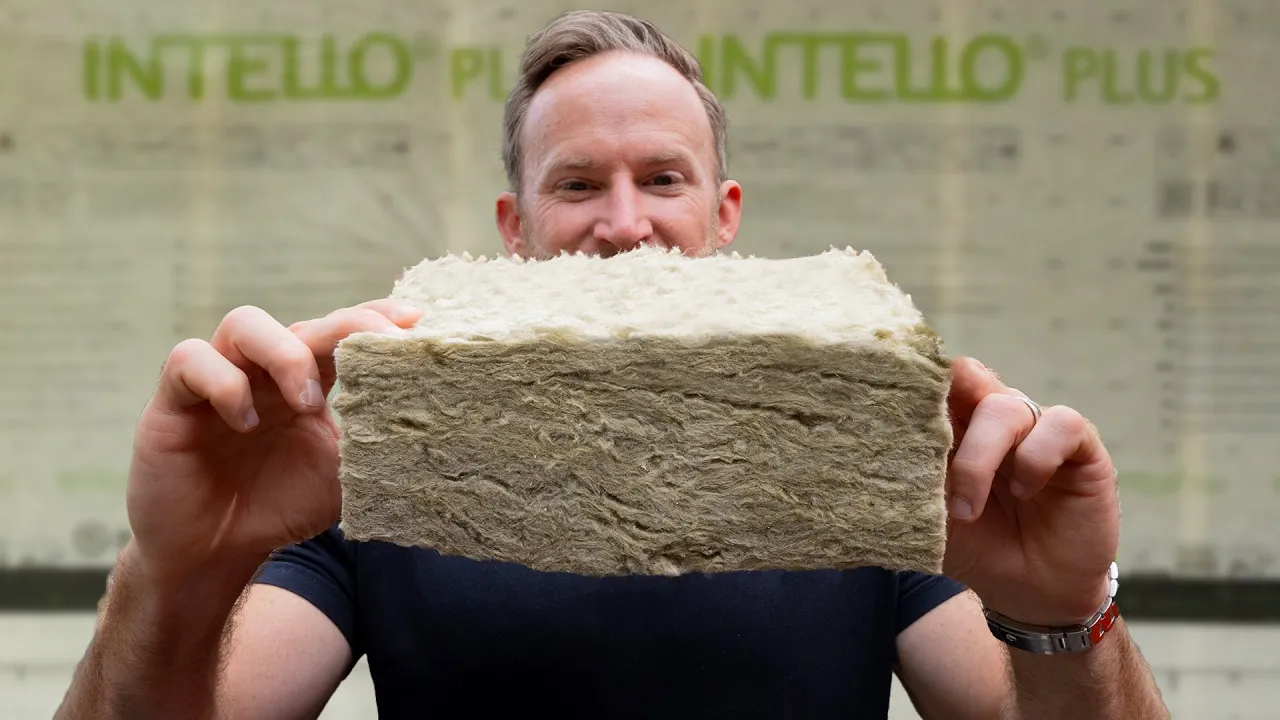
stone wool and glassful insulation are two of the most commonly used insulation types in residential construction in this video we're going to look at how they are made their main differences as well as the pros and cons owens corning and rockwool are the two most popular brands out there this product is usually called mineral wool insulation but in fact they are both mineral insulation they're just made up of different minerals one is made of stone and rocks and the other is made of glass let's start with stone wool its main ingredients are basalt rock slag coke and recycled stonewool waste basalt rock is the dark igneous rock formed from the rapid cooling of molten lava slag is a byproduct of the smelting of metals like iron copper lead and nickel when these metal ores are heated to high temperatures the impurities or slag are separated from the molten metal since it has been melted before it has a high melt efficiency coke is a gray hard porous fuel with a high carbon content and few impurities it is made by heating coal or oil in the absence of air the recycled waste is crushed down into a fine powder and turned into briquettes basalt rock slag and the briquettes are ground down washed and melted with coke at 1500 degrees celsius or 2700 degrees fahrenheit to form molten lava the liquid is spun into fiber-like strands 15 to 20 micrometers thick a binding solution made of phenol urea formaldehyde resin is added to the fibers to help them stick together oil is sprayed to enhance water repellency the tufts of stone wool are carried on a conveyor belt to a pendulum device the pendulum moves back and forth spraying the stone wool in layers on another conveyor belt rollers compress the layers to make them denser they are taken to a long oven and heated to cure the resin binders blades and water jets cut the stone wool into baths a branding tool burns the r value and the company name on the bats the most popular stone wool manufacturer is roxul or rockwool comfort bat is a semi-rigid product used in side homes on walls connected to the exterior comfort board is a compressed rigid product used outside homes for continuous insulation safe and sound is used in interior partitions now let's look at how fiberglass or glassful insulation is made its main ingredients are sand or silicon dioxide soda ash or sodium carbonate limestone or calcium carbonate and crushed up recycled glass called collet soda ash helps to reduce the sand's melting point to save energy and limestone prevents the glass from dissolving in water all the ingredients are heated in a furnace to 1700 degrees celsius or 3000 degrees fahrenheit to make liquid sand or glass this is poured into spinning bowls called fiberizers which have thousands of tiny holes compressed air rapidly cools down the molten glass creating short strands of glass fibers they are naturally white or brown in color but a pink polymer glue is sprayed on them giving it the color that we know a conveyor belt takes these fibers to a 500 degree fahrenheit oven which sets the glue circular saws cut the large sheets and an inkjet prints the manufacturer's details and the r-value on the baths in the last stage the bats are compacted and pushed into bags the most popular fiberglass manufacturer is owens corning their ecotouch insulation is available in baths rolls and blown in loose fill the bats can either be unfaced faced with craft paper to control moisture transmission or a foil vapor retarder for walls connected to the exterior the manufacturing principles for both of these types of insulation is very similar even though their ingredients are different let's look at some of the other differences between the two six pieces of the 16 inch by 48 inch r30 rockwool insulation cost 61 at lowe's the equivalent 16 inch by 48 inch r30 fiberglass insulation cost 64. at home depot but it contains 11 pieces stone ball insulation is almost twice the price of fiberglass since stonewool is three times denser it is also heavier a single bat of r30 stone wool weighs 6.6 pounds while an equivalent bat of r30 fiberglass weighs 3 pounds both of these insulation types operate on the insulating property of air trapped between the fibers that's why it's recommended to fluff up the insulation after taking it out of the bag when the bats are compressed they lose trapped air and the r value is drastically reduced the loss of r value over time is called thermal drift stone wool or rockwool is stiff if it's compressed it just bounces back to its original shape it has greater dimensional stability and lower thermal drift fiberglass on the other hand is fluffy it doesn't maintain its shape either vertically in walls or horizontally in attics so its thermal drift or loss of r value over time is significant it is marketed as an r30 product but that isn't the actual value the high density of stonewool equals more trapped air and better sound absorption properties than fiberglass i built these five sound panels using stonewool insulation that i bought at home depot for 46 the total cost of each panel including 1x4 wood studs cloth and staples was around twenty dollars stonewall insulation is naturally hydrophobic or waterproof because it is made of basalt rock the oils added to the fibers improve water repellency fiberglass on the other hand isn't waterproof it can absorb water and moisture become compacted and lose all insulating properties the resistance to moisture means that stonewool doesn't promote rot corrosion fungi mildew or bacterial growth unlike fiberglass stone wool is naturally fire resistant up to 2000 degrees fahrenheit because it has a high melting point if you live in an area prone to fires it is recommended to use continuous insulation on the outside of your home like comfort board to protect the structure of your building fiberglass is not as fire resistant and it will burn the craft paper or foil facing will make it burn even quicker both stonewool and fiberglass are pretty easy to use stonewool can be cut with a serrated bread knife while fiberglass can be cut with a utility knife is easier to install because the dense firm bats friction fit into place and don't require any stapling both on the walls and the ceiling fiberglass on the other hand is floppy so it needs to be secured with staples or wire you must wear gloves long-sleeved shirts and a respirator when handling both these materials if it touches your bare skin tiny shards of rock or glass will be embedded in it and cause rashes you must not inhale these fibers because they will be stuck in your lungs and your windpipe and will cause respiratory issues in the long run once they are installed however and hidden behind sheathing or drywall there isn't any risk to your health there are some associations that claim that mineral wool is as bad as asbestos and that the phenolic resin used in it is toxic despite tests showing that it isn't these people don't present enough evidence to back up their claims the marketing for their recycled content is very tricky good quality stonewool is made of basalt rock with 25 to 30 percent recycled content there are other slag wool insulation brands that claim that their products have 90 percent recycled content slag wool insulation is an inferior product to basalt rock insulation but they market it as mineral wool to deceive you so watch out for that fiberglass insulation on the other hand has around 30 recycled content mainly old windows that are crushed up both products are marketed as environmentally friendly because they don't contain any cfcs or chlorofluorocarbons and they don't of gas they are both also technically recyclable if they are clean you can't recycle insulation from old homes that are filled with dust moisture mold microorganisms and other hazardous substances stonewool isn't as popular so there are fewer varieties of the product for example blown in loose fill insulation is difficult to find fiberglass is extremely popular so there are a ton of different products on the market they don't have any exterior products though vapor permeability is the ability to allow the movement of water vapor molecules through the material i'll make another video that dives into permeability and perm rating but rock wool is vapor permeable if it is used as continuous exterior insulation it allows your facade to breathe and dry out fiberglass is also vapor permeable but you have to be careful with the orientation of the foil or paper-faced bats they must face inward in cold climates and outward in warm climates it's pretty obvious that stonewool is a superior product to glasswool it blows my mind that humans thought of converting rocks or stones and glass into this cotton candy looking fluffy insulation they seem like the least likely candidates but hey they work great i try to cover every topic i could think of but if i missed anything leave me a message below also leave me a comment if there are any other topics you're interested in hope you enjoyed that video don't forget to hit the like button and subscribe to my channel thanks for watching see ya
Up Next
7:04
How to Measure Frequency Response with Room EQ Wizard (REW)
@AudioUniversity
190.3K views•2021-02-11
30:32
Ultrasonic Transducers: Resonant Frequency Measurement and Horn Design
@imajeenyus42
229.9K views•2017-02-22
54:16
Polymer Environmental Degradation: Mechanisms & Stabilization
@iit
1.8K views•2012-07-10
33:39
How a Student's Question Saved a NYC Skyscraper from Collapse
@veritasium
22.8M views•2025-04-26
Related Study Plans & Knowledge Roadmaps
Structured learning paths in Engineering
engineering
Building Acoustic Levitators: Physics & Arduino
01The Physics of Sound and Standing Waves
02Piezoelectric Transducers and H-Bridge Drivers
03Arduino Programming: Generating 40 kHz Signals
+ 2 more learning modules
14h5 modules
Explore Roadmap
engineering
Building Peltier Cloud Chambers: Particle Tracks
01Cosmic Rays & Cloud Chamber Physics
02Thermoelectric Cooling (TEC) Fundamentals
03Custom Liquid-Cooling Loop Design
+ 2 more learning modules
18h5 modules
Explore Roadmap
engineering
Yagi-Uda Antennas: Modeling, Build & VNA Test
01Introduction to RF and Antenna Fundamentals
02Yagi-Uda Antenna Design Principles
03Antenna Modeling and Simulation in 4NEC2
+ 2 more learning modules
18h5 modules
Explore Roadmap
engineering
ECG Monitor Design: Op-Amps, Filters & Noise
01Electronics & Breadboard Basics
02Op-Amps and Instrumentation Amplifiers
03Bioelectricity and ECG Fundamentals
+ 2 more learning modules
18h5 modules
Explore Roadmap