














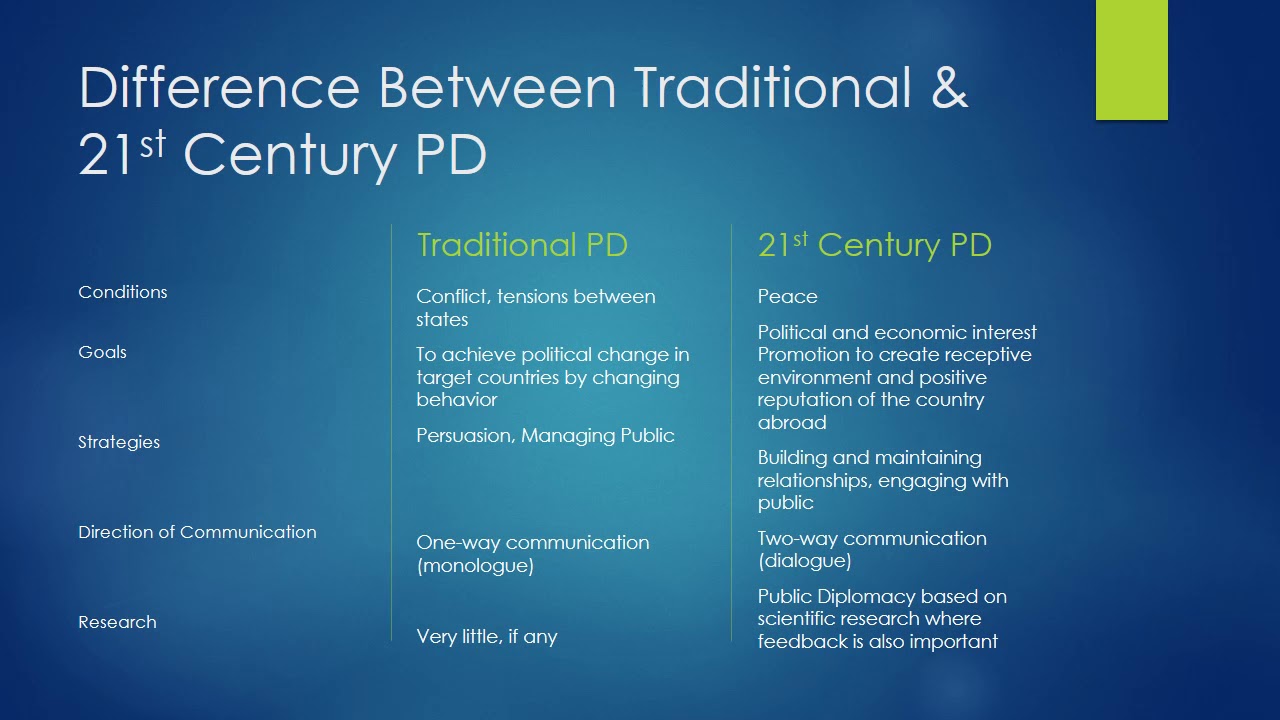


Soft power, defined as a nation's ability to influence others through cultural appeal, values, and communication rather than military or economic coercion, is essential for shaping global perceptions and advancing national interests; the United States has historically used institutions like Voice of America to broadcast news and information globally since World War II, reaching audiences in multiple languages and countries, thereby building America's soft power and promoting its policies and ideals internationally.
America's Soft Power: The Fight Over Voice of America
Added:The concept of 'soft power' as formulated by Joseph Nye, specifically how cultural appeal, political values, and foreign policies are used to shape the preferences of others.
The history and strategic role of state-funded public diplomacy and international broadcasting during the Cold War era.
The institutional difference between independent public-service media (such as the BBC model) and direct state-controlled propaganda outlets.
An understanding of the U.S. Agency for Global Media (USAGM) and its statutory firewall designed to protect journalistic independence from political interference.
Analyzing the rise of 'sharp power' and how contemporary authoritarian regimes leverage state-backed media (e.g., RT, CGTN) to influence democratic societies.
The legal and ethical implications of the Smith-Mundt Modernization Act of 2012 regarding the domestic dissemination of state-sponsored foreign broadcasting.
The role of algorithmic curation and social media platforms in shifting the landscape of public diplomacy from traditional broadcasting to targeted digital influence operations.
Evaluating strategic policy frameworks for reforming democratic international broadcasting to restore global trust amidst rising geopolitical polarization.
80.8K views5.1Klikes26:33Original Release: 2026-03-19
Hi, it's Thursday, March 19th, 2026.
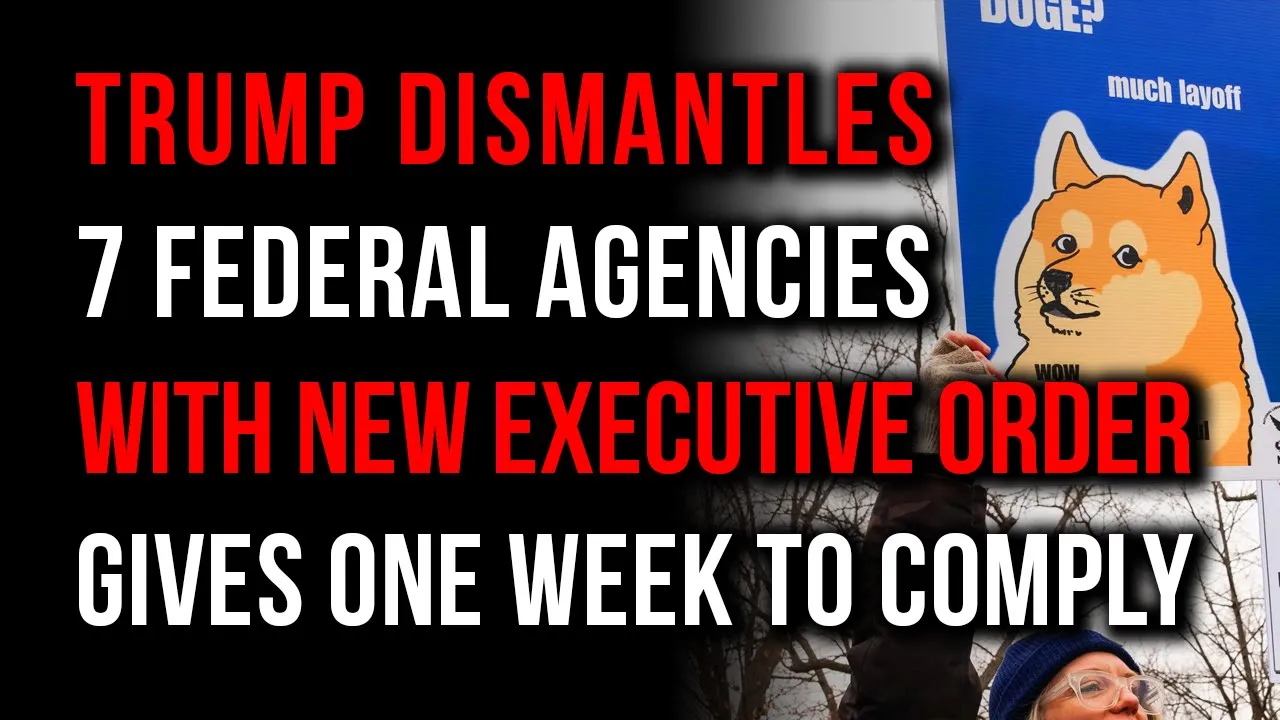
You're tuned into Why America. I'm your lawyer friend, Lisa Miller. As Trump attempts to throw around the power of the US military in the Middle East and the power of the US economy through tariffs, he has been systematically dismantling an essential source of US power for the last year. Something that has been called soft power and that has effectively exported US policy, ideals, and culture around the world since the height of World War II. On Tuesday, a ruling by a US district judge attempted to restore some of that soft power by ordering the reinstatement of over 1,000 staffers at the Voice of America, a branch of the US Agency for Global Media that up until last year had been broadcasting the news around the world non-stop for over 80 years. Today, we're discussing the importance of US soft power, the propaganda of it all, and the ongoing fight by the Trump administration to dismantle the whole thing. One year ago in March, Trump issued an executive order aimed at continuing to gut federal agencies. It featured a whole list of agencies that included the US Agency for Global Media, the parent to Voice of America, saying that it should be quote eliminated to the maximum extent consistent with applicable law. The problem, of course, is that these agencies are created and funded by Congress. And when Congress funds something, that usually means they intend for that agency to, you know, continue functioning. under Trump and his goons ideas about how the government should function. They think the president has what's called the impoundment power, meaning that Congress can allocate funds all it wants, but whether those funds get spent is entirely at the president's discretion.
That is complete and out of line with how our constitution is written and how our government has functioned for 250 years. But that is also a rabbit hole for another time.
Suffice it to say, they are applying that here by attempting to cut back entirely on the functioning of the US Agency for Global Media, of which Voice of America plays an important part.
Notably, however, most of these journalists have been put on administrative leave for the better part of a year at this point, which means we, the US taxpayers, have been paying their salaries while they are barred from doing any work. Talk about waste, fraud, and abuse. Am I right? In a follow-up article after the March executive order titled The Voice of Radical America, the White House provided a long list of what it called radical propaganda being pushed by Voice of America, such as an article titled, "What is white privileged and whom does it help?" or the time they questioned the validity of the Hunter Biden laptop story or a segment they ran about transgender migrants seeking asylum in the United States. After gutting the nonpartisan board that oversees the US Agency for Global Media or US AGM, there was no one to appoint a new head of Voice of America. And the Senate must confirm a new head of US AGM. And that process was never followed. Instead, far-right election denier and twice failed Arizona political candidate Carrie Lake was appointed special adviser to US AGM, then deputy CEO, and then acting CEO.
all titles she apparently gave to herself. Despite having zero experience with international media, she was a local TV host in Arizona for 20 years.
She seemed, according to staffers, entirely uninterested in learning how the agency worked, and instead she worked to fire as many people working for the agency as possible and cut funding across all of its programs. Her actions led to a number of lawsuits, some of which are just beginning to play out. The ruling on Tuesday came from US District Judge Lambert, a Reagan appointee who Carrie Lake nevertheless has called a rotund activist judge. He ruled that her choice to fire hundreds of Voice of America employees did not go through proper channels and defunding the agency went against the will of Congress. Earlier this month, the same judge ruled that Carrie Lakes's appointment as acting CEO was invalid and therefore none of her actions while in her role have been valid. Again, the Senate is supposed to confirm anyone who was heading the US AGM, and she was trying to skirt around that requirement by calling herself different names, but still acting as the de facto head of the agency. The judge ruled that around a thousand US AGM employees should be reinstated and get back to work. But the damage is largely already done. This headline from NPR helped inform my reporting on this issue. Judge orders 10,000 Voice of America staffers back to work in rebuke to Carrie Lake. Using the ground news browser extension, I can get helpful background information on this publication in one quick glance. To get the big picture, I can click on full coverage, which will show me coverage of the same story from publications across the political spectrum. My partner on today's video, Ground News, is an app and website that offers tools to help you critically analyze the news you read, providing context to understand the full picture. You can follow along at ground.news/leia.
For every major headline and headlines you may have missed, ground News provides you with information and context like who owns the publication and how factual it is to help you determine for yourself what is trustworthy and how to interpret the news. I feel empowered by ground news by getting well-rounded insight into each headline instead of relying on a single outlet that might have underlying biases and motivations that I'm not aware of.
Ground News also ensures that I never miss a headline because of my own information bubble with its blind spot feature by highlighting stories that are covered on one side of the political spectrum and not the other. Ground News is transparent about its methodology, how it assesses each story and publication, including how it uses three independent monitoring organizations to assess the bias rating for each publication. I genuinely think the world would be a better place if everyone had this much context about the news they read, because depending on where you or your family members get the news, you're going to get very different takes on the same story. And listen, I'm not the only one who loves ground news. The Nobel Peace Center even called it an excellent way to stay informed, avoid echo chambers, and expand your worldview. I'm always really impressed with ground news and genuinely think that they're a great resource. If you want to stay informed on US politics and more, subscribe through this QR code or my link below at ground.news/leia for 40% off this unlimited access Vantage plan. It comes out to $5 a month for unlimited access to all the features I've mentioned. Thanks, Ground News. To understand the extent of the damage caused by Trump's dismantling of the USAM and Voice of America specifically, we have to go back a bit in history. But first, we have to understand the idea of soft power versus hard power. The term soft power was coined three decades ago by a Harvard academic named Joseph Nye as a means to define how activities by a state specifically the United States but this is something all states can exercise that are outside the realm of traditional shows of power specifically military and economic might. How those nonh hard power activities can translate into true power of a different one might say softer kind. Key sources of a state's soft power include their cultural exports that impact their reputation around the world. TV shows, music, art, fashion, all of that can impact how people around the world perceive of a country which can translate to influence which is a form of power. And then also communication is a form of soft power. Specifically, in this case, the communication and broadcast of the news. Soft power relies on long-term building up of a state's reputation to influence the world through dissemination of ideas that are beneficial for the state. exercising that soft power. It is a means of power that pulls people in as opposed to enacting force upon people through military or economic might. Also, the work the US has historically done through US aid and providing aid to countries also acts of a form of soft power that Trump has dismantled. It's economic technically, but it really provides a padding to the reputation of the United States and wins over the hearts and minds of the people. And that is the point of soft power and communications via voice of America have proven to be very powerful means by which to increase the United States soft power around the world. The broadcasts that would eventually become known as Voice of America began airing right as the United States entered into World War II. It involved radio broadcasts in German beamed directly into Nazi Germany and other occupied territories. From the beginning, it was bound by a sense of journalistic ethics. The very first broadcast opened with quote daily at this time we shall speak to you about America and the war. The news may be good or bad. We shall tell you the truth. It was a means by which the United States could attempt to control the narrative of what was happening in the war. Bring the news to people who otherwise had no access to independent journalism or any news not tightly controlled by the Reich propaganda team and generally attempt to bolster sentiment on the ground against Hitler and the Nazi experiment. After the war, the Voice of America under various different operating names continued to beam news reports into Eastern Europe and the USSR. They set up a separate broadcast to beam into post-revolutionary Cuba. And they use the same method to attempt to sway public opinion and provide news coverage in Iran during the Iran hostage crisis.
After 9/11, as the so-called war on terror began, additional broadcasts were added throughout the Middle East. By the time Trump took over for this second term and went to work dismantling the US Agency on Global Media, its global broadcast had an audience of 360 million people were broadcast in 49 different languages and into 100 countries around the globe. And that constant influx of information around the world with a bent in favor of US interests, reaching that many people in that many different languages carried an immense amount of power to mold and change public sentiment in the US's favor for the last 80 years. And other countries know this.
For as long as the US has been attempting to beam information to people on the ground in countries around the world, there have been countries attempting to thwart those efforts. Both the Nazis and Cuba have used various techniques to try to clog up the airwaves and prevent the radio broadcasts from reaching their people.
Some countries have passed laws that make listening to Voice of America a crime punishable by jail time. In the modern era, many countries have put up internet firewalls so their people cannot access the digital media output by Voice of America. and many Voice of America journalists have been imprisoned around the world for their work. There would be no need to go to these lengths if this type of soft power didn't have a profound long-term impact on the hearts and minds of people on the ground in countries all around the world, especially in countries where access to information is incredibly controlled and stifled by the government. But of course, Trump is a giant stupid baby.
So, the nuances of soft power and the long-term goals that require years or decades to pursue through the use of soft power don't translate well for a giant baby with no object permanence. He wants to see results immediately, and he only speaks in the language of brute force to get what he wants. And of course, soft power like this still isn't powerful enough to undo the damage caused by truly unpopular policy. During the Vietnam War, for example, Voice of America broadcasts weren't particularly useful to change anti-American sentiment on the ground in Southeast Asia. And the same can be said in much of the Middle East as well during our so-called war on terror. But with the US stopping Voice of America broadcasts and other efforts to control the narrative, it gives other countries like China and Russia the opportunity to fill in the gaps left behind by America's withdrawal. And in the digital age, this could mean a ton of disinformation and AI generated slop with no adherence to any level of journalistic ethics. And of course, I think it's worth pausing here to discuss the larger picture. What's probably an elephant in the room for anyone who questions the validity of the American Empire generally, which I think is most of my viewers and myself included. Are we really going to mourn the end of an agency that has been used for the better part of a century to spread pro-American sentiment around the world? And I think this is an important discussion to have, though I don't have a clear answer for you. On the one hand, I do believe that many of the journalists who have worked for the US Agency for Global Media throughout the decades, have had pure intentions and attempted to adhere to the highest levels of journalistic integrity. I don't doubt that that is true. And the Voice of America Charter, its guiding light, attempts to ensure that integrity. The charter has three parts. Quote, one, VA will serve as a consistently reliable and authoritative source of news. VA news will be accurate, objective, and comprehensive.
Two, VA will represent America, not any single segment of American society, and will therefore present a balanced and comprehensive projection of significant American thought and institutions.
Three, VA will present the policies of the United States clearly and effectively and will also present responsible discussions and opinion on these policies. And in the 1994 international broadcasting act, a firewall was created that prohibits interference by any US government official into the objective independent reporting of news at the Voice of America. Those safeguards are deeply important. It means that each successive administration didn't have the ability to step in and play an editorial role over what the journalists were pursuing.
However, the underlying mission and purpose of Voice of America at the end of the day is to represent America and to communicate the policies of the United States clearly. And that mission is going to necessarily introduce certain assumptions, certain worldviews, and certain interpretations of the news that are then going to be disseminated around the world. That becomes problematic when you have a country portraying itself as a protector of democracy while, I don't know, covertly assisting with the overthrow or assassination of democratically elected leaders in order to put a public government in place that will serve the interests of the United States, for example. It plays a really powerful role in legitimizing those actions to the entire world. It allows the United States to control the narrative. And the media and journalists play a deeply important role in this. Gnome Chomsky calls it manufactured consent, but I don't know that I really feel comfortable citing him as a major source given his whole deep affiliation with Jeffrey Epstein even after the entire world knew he was a pedophile thing. So, if you have books that aren't written by Nam Chsky that cover this info, I welcome your suggestions in the comments. But the basic concept is this.
While individual journalists are governed by codes of ethics about seeking truth, verifying sources, etc., The overall role that the media plays is to manufacture the consent of the public in whatever the US government is doing at any given time, which almost exclusively benefits elite interests.
Journalists choose the language they use when discussing groups of people, and that language subtly reinforces pro-American biases. Palestinians died while Israelis are butchered. One is an unavoidable outcome perpetrated by unnamed forces. The other is a deep bloody tragedy for which vengeance must be sought. Journalists decide which sources are legitimate and which are not. Journalists decide what news gets reported on and what news does not.
Journalists take press releases produced by the state and lean on them as an authoritative source of truth when the state, the United States in this case, has every reason to reframe narratives to fit their objectives. And on and on.
Choices journalists make, even when guided by strict codes of journalistic ethics, play a profound role on the public's perception of events and of which events matter and of who was right or wrong in those events and of who is worthy of protection or mourning and who is worthy of hate and vengeance. And then of course all of our media has been conglomerated into oblivion to a point where you also have media companies that are absolutely bound to the whims of advertisers and to their billionaire overlords in order to continue existing.
And that is going to introduce editorial bias that is going to reinforce elitist narratives. And so we've reached a point where collectively we all know this. We might not be able to always put our finger on it, but we feel it. We know that every headline that's dropped by the Washington Post, for example, while perhaps factually accurate and written by individual journalists who still adhere to ethics standards, we know to trust it less because Jeff Bezos owns it. And also because of the editorial decisions they've made recently, such as withholding endorsement of Kla Harris, for example, or firing all of the op-ed people who aren't falling in line with the regime's talking points. It undermines the credibility of every single major news agency because we know who they ultimately serve. And so we seek out alternative sources of information from people we feel we can trust more. And that is why there is a major surge in frankly people like me.
People who you can trust to filter the news in a way that isn't beholden to Jeff Bezos or whoever the I of course ultimately get my information from guess what? Journalists usually at major news organizations. But you trust me to check those sources, to take that information and perhaps refilter it to be less unquestioningly loyal to the status quo. But there are people who then do nefarious with that trust that you, the public, have given them.
And so you get the Alex Joneses and the Tucker Carlson's and the Nick Shirley's, that 20-year-old kid who came to Minneapolis to uncover fraud. It's not a coincidence that as our media sources began conglomerating in the9s, we saw the rise of the talk radio phenomenon that eventually gave way to the news podcaster. We are seeking out the truth from people we trust to tell it to us straight. And then these right-wing lunatics are able to take that trust and mold it to fit a narrative of fear that gets them the most clicks and the most attention and the most ad revenue or revenue from the survivalist slot buckets they sell or whatever else they can get out of their audience. It's the ultimate grift, but it's being spurred on by an underlying truth, and that is that we don't know who we can trust. And the legacy media has lost our trust long ago because of its never-ending money lust. And I go down this manufactured consent rabbit hole because it's important to recognize the deeply important role that journalists play in our society and how the news media has violated our trust for decades at this point. So, while Voice of America may more explicitly have the ideal of sharing US policy and the US perspective with the world in a way that makes us uncomfortable, arguably all of our legacy news media at this point does the same thing. Only they have zero oversight by any agency and instead just spread the gospel of empire and billionaires in a very insidious way, including to us the American people. And in some ways that makes the Voice of America broadcasts slightly less dangerous and more transparent because they are openly funded by a government.
So their biases are more apparent. The people on the ground listening to it, as long as they know that it's fedally funded US media, which I guess I didn't confirm whether everyone listening knows that. But if they do know, then they know to take the info with a grain of salt. And now that Carrie Lake has had her hands all over it, the world trusts it even less. Carrie Lake signed a broadcast and content licensing agreement with far-right one America News Network to make Voice of America merely a shell that just passes OAN news on to the people. And the various social media of the US Agency for Global Media is now following the example of the White House, posting things like AI images of Trump looking heroic and also 50 lbs lighter. So, the agency that Trump in his March executive order last year claimed was posting radical propaganda is now actually spewing radical propaganda in a way that makes it even less trustworthy to people in the few places where it's still broadcasting. On the one hand, that could be really insidious because now Voice of America has the capacity to broadcast radical MAGA viewpoints to radicalize people around the world. On the other hand, I think people take that content with a grain of salt in a way that they do not necessarily distrust the far-right influencers who are doing frankly a better job of radicalizing people towards a racist xenophobic worldview that aligns with both the Trump agenda but also with the pro- billionaire US empire. So, I guess the question is, does the soft power of the United States in the form of the US Agency for Global Media matter as much anymore in this digital age where 20-year-old content creators have the funding to produce huge volumes of slop that takes no time to create because they're not bound by pesky ethics. I think my argument is that Trump is doing so much damage to the global world order and to America's place in it that no amount of Voice of America broadcasts, even if they were genuinely driven by journalistic ethics and included disscent and counterpoints to the American Empire, which they are not at this point, even if they were, there's no amount of that that could undo Trump's horrific policies. I think we're at a point of reckoning with the entire US experiment, which I don't necessarily think is a bad thing. I just worry about what's going to come in to fill the void left by the American machine. You know, there are absolutely places in the world that are barred from accessing independent media or media guided by any journalistic ethics at all. One could argue that even American biased news in those places is better than no news at all, so long as that news attempts to adhere to some form of journalistic ethics like Voice of America has historically done. And with America removing itself from the picture, neither Russia nor China are particularly known for their journalistic integrity. But the people want information and they're going to seek it out from sources they think they can trust. Or they're going to consume it on their social media feeds without considering the source at all. That opens the door to all sorts of propaganda that can be deeply dangerous, that can radicalize people, and that can spread like wildfire, especially now thanks to AI. And as I've already explained, that level of soft power can impact hearts and minds. It is a form of power and influence. And there are a lot of nefarious actors, some state actors, many more just individuals trying to make a buck who are going to take advantage of this complete breakdown of credibility in American news institutions, whether at Voice of America or at the Washington Post or elsewhere. Okay. So, what do we do about this? If you are consuming my content, it means you are someone who seeks out information. So I think at this point we really need to be seeking out those sources of information we can genuinely trust. Sources that have a strong history of integrity that are guided by ethics that are detached from the sway of capitalism as much as is possible in a capitalist society that provide multiple sides of the stories they cover that acknowledge when they don't know something. If someone has a slick easy answer for everything thrown their way, odds are it's made up or heavily biased.
If someone is making sweeping assertions and not citing their sources, odds are they're grasping at straws or not telling the whole story. I do still get information from major news sources like NPR, Axio, The Hill, The Atlantic, MS Now, etc. But I read more than one article about a topic. I try to notice the language they're using. Who is the hero and who is the villain in their narrative? Who deserves attention according to them? Who are their sources? What are they paying attention to? Trust but verify. I also read newsletters by independent journalists and academics I feel I can trust.
Heather Cox Richardson is one example.
And I consume news from other independent sources. ProPublica, Mother Jones, Democracy Now. I also consume news media from places not in America.
Al Jazera, the BBC for example. And I do not get my news from social media where it can be way too easy to share something viral without knowing whether it's true or not. And if you follow content creators like me, you want to make sure they're citing their sources.
They're okay with being wrong or not knowing something. They can admit when that happens. They can acknowledge their biases. The problem is not that you consume biased news. The problems arise when any one source of news attempts to present itself as unbiased and balanced and the one source of the truth. The truth is almost always subjective. Even when reporting facts, you're still making choices about which facts are worth reporting. And I think consuming news from one or even just a couple sources exclusively makes you more predisposed to falling into the cult of personality or it keeps you a bit blind to the full gamut of news and truth that's happening at any given time which I guess then inspires me to make my own ethics and biases known on the record right now. As for my biases, I am a lawyer. Therefore, I am a product of US higher education and a legal field that absolutely prioritizes protecting wealth over everything else. But I am a leftist and I am critical of capitalism, billionaires, the monetization of human necessities like food and shelter.
Though I also function within capitalism and I am not a purist about that. Like we can critique and push for change while also doing what we need to do to survive. I choose stories to cover based on a number of factors. What is everyone on the news and on social media talking about? What would my viewers have questions about because of this? What am I interested in? That last one drives a lot of my work because I can't just produce content with the end goal of getting as many views or clicks as possible. I have to at the end of the day be driven by my interests and what I think matters. Otherwise, I will get burnt out. I post my sources in the description of every single video. You can also find them on my website leijah milliller.com on the whyame tab. There are a lot of news commentators who never do this. I try as hard as I can to be guided by the truth. I am interested in figuring out the full picture and providing you with that information. I am comfortable living in gray areas and I like to point those out. That being said, I am also going to editorialize the out of what I'm talking about, but I don't try to force the facts to fit my narrative. I present you with the facts and also with my interpretation of them to the best of my ability. I do work with advertisers. You will see a brand sponsor on nearly all of my videos. In the two-ish minute ad reads that I do in each video, I write the script and it is based on what the advertiser wants me to say, but it's also based on laws and regulations around advertising. I cannot give a positive review if I do not actually believe in it. I cannot say I've used a product or service when I have not. I disclose to you when I am talking about a brand sponsor who has paid me to say things. Those brands pay me to say those things. But those brands exercise absolutely zero control over any part of any video outside of that one to two minute ad read. Some brands try. They want me to pick topics that fit their niche. I always refuse that 100% of the time. It is part of the deal with working with me. I will not tell you the topic of the video ahead of time and I will not mold the topic or what I say to fit what the brand wants me to say outside of the two minutes they're paying for. Some creators on YouTube and other platforms manage to finance their operations with just subscriptions from their members with just crowdfunding.
And I do have a Patreon and YouTube membership here where I release these episodes an hour or two early and completely adree. But I'm the main bread winner for my family and I have to exist under capitalism while also continuing my mission of providing these episodes for free to the public and not having to rely on pay walls to get it out there.
My work is so much more powerful because it can get out to the people and I can partner with brands that allow me to pay my bills and support my family while doing this. And I am lucky and that I have found brand partners that know I'm going to be running my mouth about political and they aren't afraid of partnering with me. I care about the information I'm putting out in the world. I care deeply about not just adding to the noise just for the sake of it. I care about adding value to the world and I care about maintaining your trust and I hope that you hold me to that. If you'd like to support my work, consider joining on YouTube, Substack, or Patreon to get access to all these episodes completely adree. Also, if you like my Reagan ruined everything t-shirt, you can get one for yourself at ligamillermerch.com. Thank you to my multiplatinum patrons, Christopher Cohen, Evan Freely, Mark, Sarah Shelby, Dennis Smith, Art David, Latranger Lucas, Thomas Johnson, and Tay. Your generosity makes this channel what it is. So, thank you. And if you like this episode, you'll like my episode from Monday about the Save Act going through Congress. Thanks so much for watching.
Have a good day. Bye-bye.
Up Next
13:03
The Scientific Method: Galileo, Bacon & Descartes | History of Science #14
@crashcourse
849.1K views•2018-07-16

26:22
Walking in the City: Urban Rituals and the Flâneur in Contemporary India
@PSBTIndia
1.9K views•2016-08-02
20:41
The Historical Roots of American Suburban Sprawl: A Critical Analysis
@LeejaMiller
1M views•2023-07-12

1:42
Game of Thrones Opening Credits: A Cinematic Analysis
@gameofthrones
46.3M views•2011-04-18
Related Study Plans & Knowledge Roadmaps
Structured learning paths in General & Interdisciplinary Studies
general-studies
Artificial Light: History, Tech & Human Impact
01The Pre-Electric Era: Fire, Oil, and Gas Lighting
02The Incandescent Revolution and Grid Electrification
03Gas Discharge and Fluorescent Illumination
+ 3 more learning modules
14h6 modules
Explore Roadmap
general-studies
Elevator Engineering: History, Physics & Cities
01From Hoists to Safety Brakes: The Dawn of Vertical Lift
02Hydraulic vs. Traction: The Engineering Physics of Elevators
03Modern Speed, Safety, and Algorithms
+ 2 more learning modules
12h5 modules
Explore Roadmap
general-studies
Rubber: Material Science, History & Geopolitics
01Origins of Natural Rubber & Mesoamerican History
02The Chemistry of Natural Rubber & Vulcanization
03The Geopolitics of the Rubber Boom & Colonization
+ 2 more learning modules
12h5 modules
Explore Roadmap
general-studies
Containerization: Evolution, Logistics & Trade
01Ancient Trade & Bulk Cargo: Amphorae to Barrels
02The Industrial Revolution & Cardboard Packaging
03The Containerization Revolution: Malcom McLean
+ 2 more learning modules
12h5 modules
Explore Roadmap