



![[PHILO] Distinction entre Épicurisme et Hédonisme - Michel Onfray](https://i.ytimg.com/vi_webp/nknhn2ZGuaM/maxresdefault.webp)









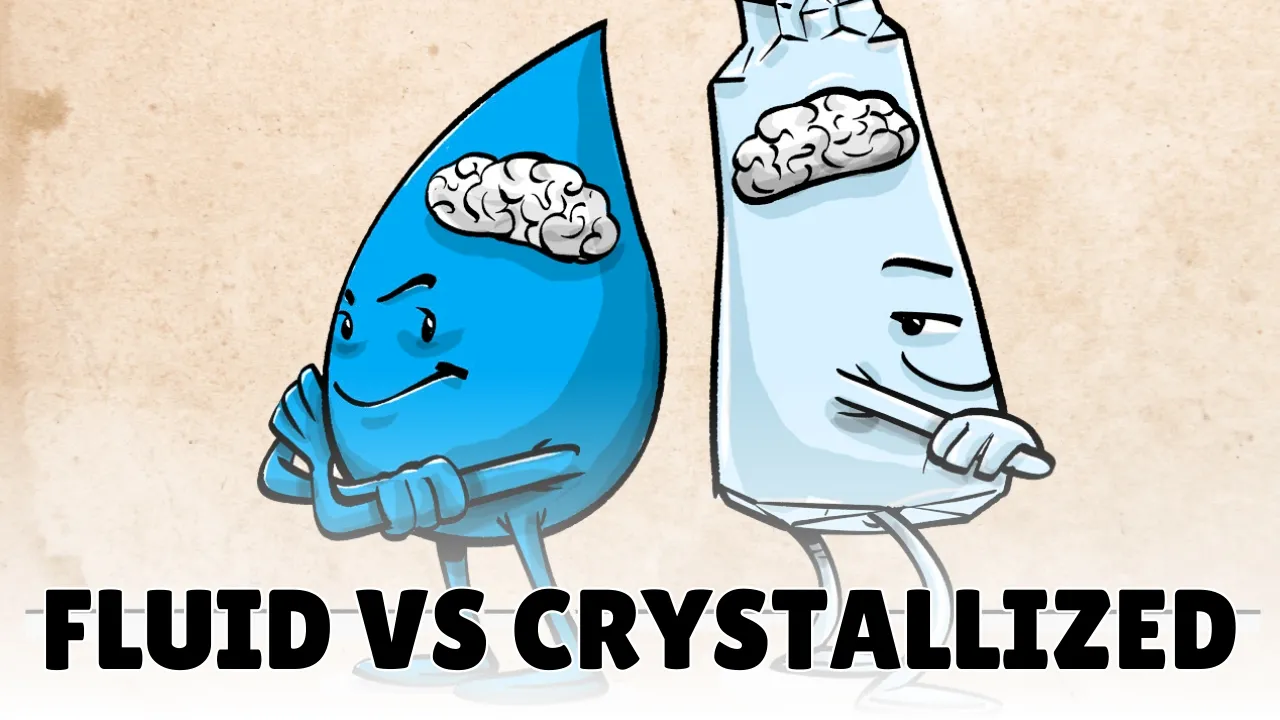



Human development follows two parallel curves: fluid intelligence (analytic capacity that peaks in the 20s-30s and declines in the 40s-50s) and crystallized intelligence (wisdom and accumulated knowledge that grows throughout life). The key to long-term success is recognizing when to transition from one curve to another, as people who resist this transition often experience unnecessary panic about professional decline. This concept applies across domains, from careers to athletics, where raw abilities may diminish while strategic wisdom and judgment improve with age.
Stoicism vs. Epicureanism: Happiness Lessons with Arthur Brooks
Added:Core principles of Stoicism, including the 'dichotomy of control' and the pursuit of virtue (arete) as taught by Epictetus, Seneca, and Marcus Aurelius.
Fundamental concepts of Epicureanism, specifically the pursuit of 'ataraxia' (tranquility) and 'aponia' (absence of pain), and how it differs from modern vulgar hedonism.
The developmental psychology concept of 'Fluid vs. Crystallized Intelligence' (Raymond Cattell), which forms the basis of Arthur Brooks' theories on professional decline.
The historical context of Hellenistic philosophy as a practical guide to life (art of living) rather than purely abstract academic theory.
The intersection of ancient philosophy and modern Cognitive Behavioral Therapy (CBT), specifically how Stoic practices are utilized in clinical psychology.
Applying Arthur Brooks' framework on transition from fluid to crystallized intelligence to design a long-term professional development and retirement plan.
A comparative study of Western Hellenistic philosophies (Stoicism/Epicureanism) and Eastern philosophies (such as Buddhism's concepts of detachment and mindfulness).
Analysis of modern secular communities and 'friendship networks' through the lens of Epicurus's 'Garden' to combat the modern loneliness epidemic.
48.8K views1.1Klikes1:07:02Original Release: 2021-12-04
So what I'm finding is that there's kind of two kinds of people during COVID.
Those that are resisting the transition and so therefore are not learning and those who are have stopped resisting the transition and so therefore they're learning a lot about themselves.
I loved your piece on professional decline.
It was it was fascinating but I do feel like in a way you are you are a walking contradiction of it. I feel like you've been absolutely on fire lately. Your Atlantic pieces have been in a sort of hit after hit in sort of deep thoughtful provocative pieces in a you know in a time of mostly disposable sort of partisan hot takes.
Yeah, thanks Ryan. I appreciate it and you know coming from you that means a lot because near as I can tell you you've been on fire since you were about 14 you're about 14 years old.
But the key thing about that piece about professional decline is not that you're going to inevitably decline inevitably decline and and and go away or become unproductive. It means that certain skills decline but other skills are behind them and so this is the really important thing to keep in mind. People who get good at something particularly in knowledge industries idea industries they have this thing called fluid intelligence. Now fluid intelligence is analytic capacity the ability to figure to invent things from nothing and that ability increases through your 20s and stays high in your 30s and then declines like a rock in your 40s and 50s.
And and most people see that as their decline and that's why they panic they get into their early 50s like I I don't have my groove I and they see what got them to be really good at what they do is no longer in abundance if they're a lawyer or you know whatever.
But here's the good news Ryan there's another curve behind it. The fluid intelligence curve has you know is is not it's treating you bad. I mean it's leaving you behind but there's a crystallized intelligence curve which is one where there's synthetic knowledge the ability to assemble stories the ability to to figure out what things mean to teach basically and so what I've been able to do in my career I'm 56 years old I'm older than you a lot older than you are.
I've been able to convert my career early on I was an analyst I was writing you know math theory I was and I was an academic economist.
And now I'm writing for more popular audiences I'm harvesting material that other researchers are using and putting it together and in stories and and telling people how they can use it in their lives.
Two curves.
Yeah, I think you see this in sports probably most starkly where the raw athleticism declines but the athlete gets smarter wiser better at deception better at strategy you know Jared Goff and and Tom Brady meet in the Super Bowl Goff has all the athleticism that Tom Brady doesn't have or you could look at this Patrick Mahomes as well but doesn't work as well but but what Tom Brady has is the ability to perform under pressure the the understanding of the game the ability to pace himself and and so I think you see this in athletes as sort of a microcosm of what we all go through which is you get worse as you're saying you get worse at some things but much much better at perhaps even more important things. Yeah and it it certainly depends on the industry to be sure. Professional athletes all can't just use their brains and continue to go on and on and on but you and I sure can in idea industries but we have to know how to get from one curve to the other and there's this very uncomfortable liminal state where you're declining in one in the in increasing in the other and some people just don't want to jump off their fluid intelligence curve. They want to stay at what made them really good but that's always a mistake. You know it's it's worth pointing out you said something important a minute ago and and it makes sense because you know you're you know the the captain of the stoicism ship in in you know modern times that nobody ever says that a virtue is intelligence. Everybody says that wisdom is a virtue and that's really what the first curve is it's your brains curve and your second curve is your wisdom curve. So you can actually go not only from one skill to another they're they're not morally equivalent you can go to a superior a skill morally as you get older.
I think about that as a writer I've been lucky enough to be successful early you know I put up I put out my first book when I was 25 but but one of the things that struck me I think this is starting maybe with stillness maybe before but I it it struck me one day that that this that this pace was not sustainable that when I look at the writers that I really admire they do it not just into their 60s but sometimes they're writing up until the the the very day that they die. I mean there's that famous that famous line from DaVinci like the last thing he ever wrote you know he's working and then he just goes my soup is getting cold and then he and then he dies like he's working up until the last minutes of his life and if that's what you want it strikes me that not only do you have to make this transition you're talking about but also pace and sustainability are important virtues to to figure out. Sure and there's actually an equivalent or a similar story to the DaVinci story which is the story of Johann Sebastian Bach which is kind of instructive. So early on he was this incredible innovator in the High Baroque and people sought him out and he was I mean he was doing stuff that nobody else was doing he was he was the master inventor. He was an entrepreneur musically and then about the time he was 50 years old he got left behind in a big way stylistically because his own son Carl Philipp Emanuel Bach ushered in this newfangled style of music called classical music that was taking Europe by storm and nobody wanted to hear Baroque music anymore. It's like it's like disco man. I mean it was just completely passé and so he rededicated himself to being an instructor of the High Baroque. He was way less famous and way less rich. He just was hanging out with his family. He was an organist and at the the Thomaskirche in Leipzig. He was the greatest teacher of his time known as such and he was writing a textbook when he died. It was called the the Kunst der Fuge the art of fugue which was based on 20 fugues and canons to demonstrate the greatness of the High Baroque even though nobody cared about it anymore for future prosperity posterity and and he was writing one of his famous contrapunctuses which is one of the fugues and over it it stops literally mid-measure when he's 65 years old stops mid-measure and his son the one who overtook him writes in the margin of the score at this at this moment the composer put down his pen and died.
STRONG FINISH MAN BUT THE point is you can continue to be productive but you have to stay in your lane. You have to figure out what you're curve is you have to figure out what you're uniquely suited to and you have to be able to have to be willing and able to jump to the new curve when it's time.
Yeah and there's there's something about writing too like I'm I'm a huge fan of Michael Lewis and I what I think about when I think about his career is he writes all these you know he writes his first book Liar's Poker which is his sort of young memoir does these other books all very successful but you could also argue that sort of his his development as a writer perfectly intersects with the financial crisis in 2007-2008 and you get The Big Short. So is there's also this I think element of you stay in the profession as long as you can you work on the skills and then you're also hoping that you kind of you meet your moment that you that that your skills become perfectly suited for some future moment that you really can't even anticipate yet and that's where really great profound work comes from.
Epictetus said that philosophy wasn't this dry abstract thing. It was a thing he said you should be talking about writing down reading about exploring with other people all the time he said constantly have it at hand. That's how I think about philosophy and it's weird for the last five years every single day I've been writing this free email about Stoic philosophy.
It's been not just cool to meet all these fellow practitioners of Stoic philosophy but in writing about it talking about it reading it for our podcast I have got to internalize these ideas in a way that I never would have been able to under any other circumstances. That's the idea.
Philosophy is something you're supposed to engage in not keep in these dusty old books or read once and be done with.
It's a constant process and I think that's why the email has worked so well for the people reading about it and sharing it and talking about it all of that as well. So I'd love to have you join us on this email you can sign up at dailystoic.com/dailyemail.
It's totally free no spam you can unsubscribe whenever you want. I've basically given away a book for free every single year for five years and I'm going to keep on doing it till I drop dead. Check it out dailystoic.com/dailyemail.
Indeed although we have to be careful not to not to mistake that profound work with worldly rewards and and and adulation accolades. So it's perfectly possible that anybody listening to us right now has not you know is a is a fantastic writer and is doing things great intrinsic creativity and importance and won't get that moment that window won't open up and that's got to be okay. I mean that the key thing is and this is an Aristotelian distinction between telic and atelic activities and you know all about this too but not everybody in the audience is going to be you know thinking about telos and because this is actually pre-Stoic in a lot of ways. Mhm. But but the a-telic or telic activities are those that have telos, that have a goal, have an end in mind. They're instrumental. They're incomplete per se. You do them for something else. In other words, I'm going to write this book cuz I want it to be a huge bestseller. I don't know about you, but I've never written a book cuz I wanted it to be a huge bestseller.
I write these books because they're just like bursting out of me like the alien out of my chest in the beginning of that movie. It's like I can't not write these books.
And and the point is that what Aristotle says, if you want a complete activity that will bring you joy, that will bring you fulfillment, that will make your soul complete, you need to do a-telic things, things that are useless in and of themselves, that are complete and that bring satisfaction without being instrumental to something else. And so we got to be careful about that. I mean, sure, you know, I've written books that people have read, bought, and you I mean, it's like unbelievable starting when you're 25 years old. But that can't be the reason you do creative work.
That's a mistake because you won't find satisfaction. You'll get on the hedonic treadmill. You'll run run run. You'll actually your wants will outstrip your haves and you'll become less satisfied, paradoxically, the more you have.
No, that's a that's a great point. I think Michael Lewis is a good example of that as well. He He did a book and I'm forgetting the title, which itself is illustrative, but he published a book about sort of the future of the internet and and technology in like like the day that the tech bubble burst. Like he'd been working on this book for years and years and then it turned out to be exactly what people did not want to read about. So there is this element of luck and I think I think what's great about The Big Short is not that it sold extremely well and then and then you know, got turned into this great movie. I think the point about external internal rewards, which is that the years of mastery happened to line up perfectly with the right story. And then on top of it if it was also successful, but I think what gets you going maybe through the the start of the professional decline. And and again, you see this with athletes where, you know, they were the star of a team and then actually the the role of their life was being a backup or a mentor to some future athlete. Like you know, you don't know what the future holds. There's this great Marcus quote where he says, you know, it's really a shame for the soul to give up before the body. And I think what he's saying or before the end I think what he's saying is that even as the body starts to fall apart, you have to have this kind of determination and this commitment, this love of the craft or the profession. And that's what keeps you going and and you know, I think is ultimately the source of your best work. I agree. I agree. There's another thing that happens, however, and maybe you're starting to encounter it or or maybe not. I mean, you live a pretty simple life down there in Austin, Texas out on your on your little ranch with your little bookstore and I mean, right Hollywood has got a lot going on, but in a in a good simple way.
And this is something that I learned some years ago that I think is probably useful for the audience as well. I was touring this museum, the National Palace Museum in in Taiwan, which is the world's largest set of artifacts of Chinese art. It's incredible from, you know, Paleolithic stuff to the Qing Dynasty at the beginning of the 20th century. And and I was actually I hired a guy because I wanted to know, I didn't, you know, it's another jade Buddha, right? I I wanted him to and then all it's so vast all you remember at the end is like the gift shop or something. So I said, "No, no, no, no. I want you to explain the difference between Eastern and Western art to me." Cuz this guy had been trained in both. He's a Chinese guy who'd been trained in both.
And he's And so he's showing me this enormous jade uh you know, countryside scene three-ton boulder from, you know, from the Ming Dynasty or something. And I said And and and he he he said I said, "So what's the difference between this fundamental philosophically and and Western art?" And he said he answered with a question because that's how, you know, he's used to it. It's the way to do it.
He said, "What do you think of when I say a piece of art that has not yet been started?" I said, "I don't know, an empty canvas." He said, "Right.
We think of a boulder of jade that is yet to be uncarved." And I said, "Why?"
He said, "Because you for you art is something that you make from nothing.
From us art is something that we take away to reveal." And then he said something that was really profound to me. It really changed my life a lot. He said, "That's how you think about success in the West, too. It's getting more more more more more. We think of actual success at the by the end of life is taking away all the parts of your life that aren't you because you need to reveal yourself.
That's success is to actually understand who you truly are. And the detritus of excess possessions and material things and relationships and experiences And and by the way, and political opinions, which are just chunks of jade to to chip away until you can actually find, you know, deep Ryan within, the Buddha within that that's within the piece of jade. Boy, that really helped me out a lot because as I'm moving from my fluid to crystallized intelligence, I'm finding I'm just shedding stuff like crazy. I've gone from slopping paint onto my canvas to to chipping away my boulder.
Well, I think the last year has been illustrative of that.
Uh just how little the Stoics say this, just how little is actually needed for the happy life. You know, as your your life gets radically simpler, the amount of things you're able to do is forcibly reduced.
I'm sure there's some people who have become much less happy, but almost everyone that I know that's that's busy or successful has really reconnected with what they what they want to do with their life and who they are over the last 12 months. Obviously this comes from a position of privilege to a certain degree. Of course, if you're having to show up every day to work at a grocery store, there's there's additional set of challenges or if you you lost your job or your house or something. So I'm not trying to be flip about it, but I think the the massive winnowing, this forced lifestyle experiment we're in, sort of is this idea that actually you don't need all the the things that you think you have to work so hard to accumulate.
Yeah, no, the thing about the coronavirus epidemic that I think is instructive, you know, we talked about, you know, the time between the curves, but which is just a transition. And the coronavirus epidemic, no matter where we are in our lives, is a transition. We from It's a forced transition. It's an involuntary transition. So therefore it's an unwelcome transition. But transitions per se, there's a lot of research on this.
Especially when they're unwelcome, they're the most fertile periods in our lives.
Uh this is called what what psychologists call the the liminal state, to be betwixt and between. And when when you're in the liminal state, you actually are profoundly uncomfortable and as such you can learn more and gain new skills in ways you would otherwise wouldn't be able to. So what I'm finding is there are kind of two kinds of people during COVID. Those that are resisting the transition and so therefore are not learning and those who are have stopped resisting the transition and so therefore they're learning a lot about themselves. And so this is the key thing. Look, we're not done with this thing yet. Everybody has an opportunity to And and none of us is like, "Yeah, hooray. I hope it lasts forever." No.
We all want this thing to be done and some people have as you correctly point out have endured a tremendous amount of hardship and even tragedy. Most people, thankfully, have not. And but they they're like, "Ah, can't wait for this thing to be over so I can get back to traveling so I can get back to waiting in a TSA line and and or sitting in traffic. Are you kidding me? What are you learning about yourself? I mean, this is the This is going to be in retrospect, if you're doing it right, one of the most fertile periods of your psychological and creative development. But you got to let it happen.
Yeah, this is the Stoic idea of amor fati. Do you sort of love it and accept it or do you spend your time resenting it, trying to make it otherwise, waiting it out? And I think yeah, especially for creatives because it it really is much closer, the last 12 months have really been much closer to what our lives should be like if we were as disciplined and uh and focused as as we probably ought to be. Yeah, for sure. It's interesting it it coincided for me it was real serendipity. I I retired from my job as a president of a think tank in Washington, D.C. And you know, I had been doing 175 speeches a year. I was I was doing 100, you know, trips per year cuz I had to raise 50 million bucks and and sort of be out there all the time. And I was always regretting the fact that hit that I was taking to my creative life. It was brutal. And I was like, "If only I had time. If only I had time." And so I retired in the middle of 2019 and I came to teach at a university, which is what I do now, so I could write a column and finish my books and do my research and do a podcast. And And then the world stopped. The world said, "Okay, buddy.
Yeah, if you it's like you you asked for it, you're going to get it." I tell you, this has been There's this one image that I keep getting in my head, Ryan, that might be useful.
It was this It's actually it's a funny it's a memory from when I was a kid. I used to go fishing a lot.
And I remember the first time I went fishing in off the Oregon coast. I grew up in the Pacific Northwest in Seattle.
And the fishing in the ocean is actually like no other kind of fishing because you have to know the tides. And I was first day I'm on the rocks and I'm casting out and I'm catching nothing.
And there's like wizened old mariner comes out to me and says, "Hey, kid. You catching anything?" I'm like, "No." He says, "You getting any bites?" Like, "No." He says, "Cuz you're doing it wrong." So what He says, "What What are you talking about?" He says, "You can't fish now. You can only fish in a falling tide." Now, falling tide is when the tide is going out really fast. And you'd think that there are no fish because they'd all be going out to sea. He says, "No, no, no. In a falling tide, the plankton and bait fish are all stirred up, and so the game fish go crazy. Watch this." We wait for 45 minutes, throw in our lines, and we're pulling out one fish after another right next to each other. And for like half hour, it's great. And then we're sitting on the rocks, and he's kind of contemplative.
We're sort of relaxing afterwards, me and this old man. He lights up a cigarette, and he says, "Hey kid, you know, during a falling tide, you can only make one mistake." I said, "What's that?" He says, "Not having your line in the water."
And I remember that right now because Brian, we're in a falling tide. The coronavirus epidemic is a falling tide.
So, it feels like everything is going away, but what's really happened is that the bait fish are stirred up. Get your line in the water because that's when things are really good. That's when magic can happen.
It's beautiful. That's really beautiful.
Yeah, and and I think, you know, one of the things I've talked about is that as you become successful at whatever it is you do, writing, running a think tank, or or whatever, um you get more and more you get more and more inquiries to do things that are not quite that thing. Or the things are that are related to that thing that take you away from whatever it is that you actually want to be doing. And so, uh you have to have a quite a bit of discipline, but also what the mind does is it opportunity cost are very hard for us to wrap around. Yeah. So, I think one of the things the pandemic really revealed for revealed for me is I thought I was being productive before. I thought I was fishing with the tide. You know, I thought I was but I wasn't aware of what I was not doing. Wow. And so, the last 12 months, as I've seen my my my productivity go up, my happiness go up, my connection with my family go up, it's now very clear to me what obstacles in my old life were were preventing that sort of connection.
Yeah, no, I agree. And it's it's funny because the worldly rewards, money, power, pleasure, fame, I mean, they come crowding in, and we know in our hearts that they're really only four things. Faith or philosophy, which is one, family life, friendship, and meaningful work in which we can earn our success and serve other people.
Those are the only and literally, and this is I teach this I teach this a class in the science of happiness at the Harvard Business School, and I can tell you those are the only four in your happiness portfolio. Those are the only accounts you need to put something in every single day. And it's super stoic, I know. I mean, it's like because they knew everything before we behavioral social scientists even had the data.
But the problem is that those things get crowded out. The good four get crowded out by the bad four, money, power, pleasure, and fame. And so, the result is, you know, what I worry about is the coronavirus epidemic finishes, and we're like, "Ah, look at all this opportunity, these speaking engagements." And and everybody's got their equivalent of that. And I mean, that is like you and I are, you know, two guys who, you know, write books and give talks and do podcasts and such.
And most people are not doing it, but they have their own version of that. So, the key thing is what can I learn and what can I retain notwithstanding the fact that the worldly idols are not singing to me as loudly.
Right? Cuz this is the key. These are all idols. I mean, money is an idol. I and we need a certain amount of it, but it it satiates really quickly.
You know, fame, you know, fame literally, if you look at the data, is the only of the worldly rewards you can only be happy in spite of.
It can't make you happy, but you can only be happy in spite of it, despite the fact that we want it for evolutionary reasons.
Power, et cetera. I mean, you fill in the blank. So, we have to basically be asking ourselves so that we're not so that we're living metacognitively, what am I learning right now that I'm going to resist when the idol comes back?
You talked about philosophy, and I know you did this piece recently on sort of some of the differences and similarities between the Epicureans and the Stoics.
I I do feel like weirdly the last year has been uh it's it's drawn on a lot of stoicism in the sense that one had to be one had to endure, one had to manage their perceptions, one had to care about, you know, how one's actions affect other people, one had to have some wisdom to to wade through all the insane contradictory information out there. But there's also been the sort of the the the quieter life that we're talking about. There's an Epicurean uh flavor to that which I've enjoyed.
I'm I'm wondering I'm I'm wondering though like which of those lives are you drawn towards? Are you are you the the active participant in public life or or you more of the sort of quiet introvert, do my meaningful work? Are you a a mix of both?
Well, I try to be a mix of both, but my natural state is to be out there. I'm at the 99th percentile on extroversion. And and and furthermore, I have this very, very strong stoic disposition. I was a classical musician for the first 12 years of my career. So, you were publishing French horn, right? Yeah, exactly. So, I was when I was the age that you were getting your first best seller, congratulations, I was actually playing in a symphony orchestra in in Barcelona. Um and because all the way through I dropped out of college when I was 19 until I was 31, I made my living as a professional French horn player.
And to be a classical musician is an absolutely stoic lifestyle. I mean, you you'd think of professional musicians as being sort of Epicurean, soft, you know, giving in to every whim. It's you know, no, no. I mean, it is super hardcore.
It's like being a professional athlete.
You know, you practice your scales when you get dull on a practice your scales.
You do the you do your duty without any questions, and you do it privately as well as publicly with no loopholes because that is the integrity that makes the person who the person is supposed to be, which is a very stoic way of thinking, the idea of moralism and naturalism and and and and I'm very, very drawn toward it. I mean, I think that any success I've been able to have as a as, you know, in the intellectual world, publishing books and writing and being a professor now, getting up getting through my PhD in my 30s was because I had played the French horn. It's because I had like this hardcore stoic boot camp as a classical musician early on. So, that's my natural disposition. I married an Epicurean. You know, my wife is from Barcelona, and the the Spanish are very Epicurean in their outlook. There's not very much stoicism.
It it Ironically, Seneca was Spanish.
Did you know that? I did. Yes.
So, Yeah, exactly right. And so, he was I mean, he was Roman, but no, he was Spanish. But anyway, my but my wife, you know, she's she's disciplined about all of the right things, disciplined in the soul.
But she also understands that one has to enjoy one's life in a way that I just don't I mean, I will defer my gratification until like I it's like I have a time horizon that goes to a thousand years after my death.
It's absurd how much I will actually defer my gratification. My wife's like, "No, I I'm I'm I'm sleeping in today."
You know, that's you know, it's it it's cold outside the bed. It's nice here, and there's nothing wrong with it, and then I'm not not doing what I need to do. And I'm like, "No, do you understand? You got to get up and lift. It's time to get up and lift." No, it's funny. I I have those same discussions with my wife and our our I think part of being together so much over the last year has helped us sort of realize areas where the different sides of our personality are are bumping into each other. I remember she was saying like this is let's say there's 40 days left in the year.
She said she was like, "I want to do 30 Peloton rides before the end of the year." I said, "Oh, that's interesting.
Okay."
And you know, then like 2 days later, uh you know, she she wasn't riding, and I was like, "Are you going to ride today?" And she's like, "No, I don't think so." And then the next day, she I was like, "Are you going to ride today?"
We were making a schedule. She says, "No, I don't think so." And and I I got this feeling inside me. This is I couldn't and then I realized I was like, if for the first time, I usually we'd have just argued about it or something. And I said, "You know, you not riding is giving me anxiety. Like, I'm so organized and disciplined." And I was like, "It's not It has nothing to do with you being in shape or not. It's that you set a goal. You were trying to do a thing, and you have 10 days that you're not going to do it, and you've just eaten up 2 days at the beginning.
And now that means you only have 8 days, and what could and so there's a part of me that if I if I said, "I'm going to, you know, I would do it I I would I would somehow do it all 40 days, and then also probably some extra days." And so, I think it's interesting you I wonder how much of it is philosophical and how much of it is our natural disposition, and the philosophy is is there to kind of give you awareness of the assumptions that are that your mind is and then realizing like, "Oh, this is totally insane. Why do I have anxiety about somebody else's made-up goal that doesn't matter, that has nothing to do with me? This is basically just OCD in some form." Uh it was a it's a digression, but I think you get my point. For sure. And Stoics have a tendency to look down on Epicureans. That's just as old as the hills. I mean, you actually look at what what Epictetus said about Epicurus. I mean, and you know, he said he basically he that he was feminizing the culture of his time. They said it because, you know, Epicurus he had you know, he would he had this basically a cult. You know, he had these people living in a commune, and they would have peace, and they would have quiet, and they would talk about the importance of of finding happiness by remembering pleasant things, all the stuff that, you know, Epictetus would be like, "You kidding me? Are you kidding me?" And so, the result is that people who have less fun because they're holding they believe they're holding themselves to higher standards. That is a very dubious proposition, but they also try to hold the people they love to those standards because they believe it's not admirable to not be stoic. And so that's the key thing to keep in mind. So those of us who are stoics married to Epicureans, we need to let them guide us a little bit more. There's a key thing a key point that that you those of us who do the science of happiness talk about. You know, happiness has a lot of happiness is like a meal. Subjective well-being is like a meal. And it's got a bunch of dishes in it and a bunch of ingredients in making it. But it basically has has three macronutrients.
So just as food is fat, carbohydrates, and protein, the macronutrients of happiness are enjoyment, satisfaction, and meaning.
And what what stoics are all about is purpose and meaning. What Epicureans are all about is enjoyment. Now you're everybody's trying to get satisfaction, which is incredibly elusive. The way to get satisfaction, of course, as we talked about before is to manage your wants as opposed to expanding your halves. That's the secret. It actually is that that middle that middle macronutrient, that elusive satisfaction. But the key thing is if you're naturally and if you're naturally Epictetus, if you're a stoic, not Epicurus, then then you need to work on your skills in the other department because a balanced lifestyle is really important.
The truth is if you're all purpose and you're no enjoyment, you'll be like the American Gothic, you know, that Grant Wood painting with that grim farmer with a pitchfork standing next to his grim wife.
And and if you're all enjoyment and no meaning, you know, let's call that I don't know, your undergraduate experience or something. It's just not sustainable. You you need all the macronutrients.
It's actually good that you're married to somebody different than you.
Uh totally. And and my wife likes to joke that uh one of us writes about stoicism and the other one is stoic. Um because I think actually thinking in the Epicureanism there there can actually be a profounder stoicism. And Seneca obviously quotes Epicurus quite regularly. I suspect one of the things that that bothers stoics about Epicureans and why there's this conflict and there was there was actually a a stoic named Diotimus who I write about in in Lives of the Stoics who who forges all these fraudulent letters accusing uh Epicurus of all these crimes, uh which is partly why his his reputation is so extreme to this day. But I suspect that that part of it is this sort of insecurity or fear where it's like you know, so like let's say you work very hard, you assemble your your success and your your your net worth over over your life, and then you meet somebody who, you know, in 3 months makes everything you've ever earned in Bitcoin. Uh you know, there's a part of you that goes that that feels almost attacked, that that what you did wasn't necessary. That like I think I think the stoic fears that the person who's enjoying themselves that's not holding themselves to such a high standard it's not that they're getting away with something, it's that you are perhaps doing something living in a in a more difficult way than you actually have to be, which is probably true.
For sure. And one of the things that stoics should understand, they don't always, is that the way you live has to be intrinsically satisfying per se. This is really important to keep in mind. It it is that you know, the discipline is part of the reward. If you're not getting that, then you're going to be stoic in an in an in in an unhappy way, in a in a way that doesn't actually give you the satisfaction that you seek, that doesn't is not rewarding. And that's a big problem. You're simply denying yourself stuff. Look, the essence of what you write about as an expert in stoicism.
And the the and if you look deeply at what Marcus Aurelius writes in his meditations, it's not a chore to be a stoic. It's a joy to be a stoic. It's great to live according to your own principles, to live up to your own standards, to to to to effectively pray the serenity prayer every day, to look for a good life well lived, understand the essence of eudaimonia. That stuff is great. If you're only doing it because, you know, you want to be somehow morally superior or you're trying to punish yourself, then you're not going to enjoy it. And then some Epicurean is going to come along and and will be living the soft life and you'll resent it. But that's a mistake. That's a mistake. Be a stoic because being a stoic is great.
I think that's very well said. Right. If you think that they're going to throw you a parade at the end of your life because you were disciplined and temperate, you're not only going to be rudely surprised. You know, Marcus Aurelius reminds himself of the worthlessness of posthumous fame.
Uh I I think about this what you take a president like Harry Truman. Almost no one was more unpopular in office uh than Harry Truman. He makes all these incredibly difficult decisions, uh tough decisions, uh but that were almost universally unpopular at the time. The fact that he's vindicated several generations now and is now considered to be a consequential great president, he doesn't get any of the he doesn't get any of the the the posthumous uh satisfaction of that. Uh obviously, you know, depending on your belief of what happens after you die, perhaps you can make some argument. But I could I think we could say that that he's he's not getting him any pleasure after the fact that he did the right thing. And so my point is not that he should have been a more Epicurean president, that he should have done the easier more expedient thing. It's that you have to get to a place where you do the right thing because it's the right thing, and you enjoy it because it was the right thing, even if you are criticized and disliked for it. That has to be irrelevant to you. Totally. I mean, this is gets back to Aristotle's concept of of a telek experiences, which have to be intrinsically and completely rewarding in and of themselves. And indeed, that's the case. Doing the right thing is incredibly intrinsically rewarding. And you know, the idea that you one of the Carl Jung had a very interesting theory that that the essence of unhappiness is having a set of moral standards and not living up to them.
And so basically, you need to Jung in this way was very stoic. He said, you need to know what you believe, and then you need publicly and privately with no loopholes to live up to those things that you actually believe. And then you'll actually be happy. And not just like, you know, the ancient idea of, you know, eudaimonia, which is happiness axiomatically even if you're clinically depressed. You'll actually feel happy, too. You'll actually get satisfaction from living that way. And I'm completely sure that's the case. Now, one in in in defense of Epicureans, which I find really interesting. I mean, it's true. I mean, you were talking about this ancient historian that was trashing, you know, Epicurus all the time, you know, trashing his reputation.
There was there were reasons for that because there these were warring philosophical camps. But Epicurus was not leading orgies. He was not a drunk.
On the contrary, hedonism, which comes from hedonia, which was a concept that's profoundly Epicurean, had nothing to do with, you know, living an unbalanced or an out of proportion uh you know, life bereft of morals. On the contrary, he believed that that it was only when you tamed the appetites could you really enjoy life. And so he would say, for example, he had this you're really familiar with this, his cure for the fear of death. He had these four rules, right? Don't fear the gods, don't fear death, what's pleasant is easy to get, and what's unpleasant is easy to avoid.
Those were his four rules Epicurus's for for living a happy life. And the part about his the fear of death was completely cerebral.
You know, his basic formula was just say this. Just say this. When I'm here, death isn't. And when death is here, I'm not.
CASE CLOSED. IT'S DONE. AND THEN just contemplate that over and over. Now, that's not emotional. That's not feeling.
That's that's complete brainpower. And it's muscling it through. And it's I think it's a an admirable way. I don't know if it's successful, but it's admirable nonetheless. He was not a hedonist in the modern He was not Woodstock. If it feels good, do it.
My my summation of of pleasure for Epicurus is if it gives you a hangover, it wasn't pleasurable. So it's you know, do you does it does it cause regret, pain, uh do you feel disgusting or full or afterwards? Then you probably had too much. To me, Epicurus is really about pleasure in the temperate sense, the sense of moderation. What's just the right amount and no more. Right. And and actually, we would think of it in a slightly different way today. So pleasure is largely based on appetites. When you take your appetites and you add human capital, learning, thought, you know, when you add your own brainpower to it, it becomes enjoyment. So, you know, that we talk about Epicurus as if he was all about pleasure. He wasn't. He was really all about enjoyment. And enjoyment is a higher art than pleasure. Netflix brings you pleasure. Reading uh or uh you know, reading any of your books brings enjoyment because it actually requires brainpower. It requires thought. It requires self-reflection.
And that's really important. So, for example, I'm getting tons of enjoyment in an Epicurean sense from our conversation right now. And in point of fact, from my career now, I get tons of Epicurean pleasure. Because I just, you know, it's so enjoyable. It's fun, which is pleasurable. But it adds all this intellectual you know, work to it. So, I think that's what Epicurus was getting at. I one place that I definitely agree with the Epicureans or I think Epicurean logic serves serves one well, and this is something you wrote about recently and I really enjoyed it. The idea of like finding a place that you love that makes you happy and living there. I feel like there there's a you know, Marcus Aurelius, you can tell he hates his job.
He hates Rome. He hates his job. He wishes he could do anything else. And and look, there are some of us who are called to certain levels of leadership or certain situations where we'd rather not be there, but we know we have to.
And And I think there's a time and a season for that. But But one gets the sense that Marcus really would have rather done just about anything else, and this burden was foisted upon him.
You know, that was a time of a lot less social mobility.
There was a broken governmental system as well. But I think I talked to so many people, and it's so obvious to me the root of their unhappiness is that they feel obligated to live in New York City or live in Los Angeles or or live in if not in one of those cities in a fashion or in a lifestyle that is just at odds with their personality or sustainability or or just any form of human happiness.
Yeah, that's the key. So, when it comes to where and how you live, it should be an adjunct. It'll never be intrinsically satisfying, per se. It'll never be anything more than an adjunct to the the happiness that you seek. And that can only come from faith, family, friendship, and work that satisfies you because you serve others and because you earn your success. That's it. When I say faith, I also mean philosophy, okay? So, it can be a secular philosophy as well.
Transcendental, something that gets you out of your own little boring TV show.
That This is why when people they're crazy about the Daily Stoic, right?
Because it gets them to a 40,000-ft level. When they're you know, they're not 5 ft off the ground looking at their boring life at a 40,000-ft level. And this is when you read the Meditations of Marcus Aurelius, it's like, "WOW, I'M PART OF THIS BIG adventure out there."
And if So, the problem is that people will live in a place that's not an adjunct to faith, family, friends, and work. It'll be an adjunct to money, power, pleasure, and fame. In other words, it'll be serving the wrong four masters, the idols that are making us walk 180° ultimately away from our happiness. Why do people live in New York? Some people really love it. Some people think it's really awesome, and it's great, and more power to them. But I know that, too. All these people who live in New York or LA, and they're you know, barely able to make their mortgage, and they're stuck in traffic all the time, and you'll ask, "How come?" Well, it's cuz of one of those idols. What's the main idol in New York?
What does everybody talk about New York?
Money.
What does everybody talk about in LA?
Fame. What does everybody talk about in DC? Power.
What does everybody talk about in Las Vegas? Pleasure. Those are the four idols. And some people who are living at There are to live in those cities.
Listen, and we're going to get you know, like hate mail because people said, "What Why did you trash my beautiful city?" But a lot of people live in those cities, frankly, for the wrong reasons, and they should be maybe in a in you know, a suburb of Austin, Texas, or you know, where I live in a suburb of Boston, Massachusetts. I think what what I found, you know, living in outside Austin and and first moving to Austin in the first place, uh is you're also surrounded by people who are who are not motivated by those things. And so, I think you know, was it Joseph Epstein said something like uh uh you know, of all the seven deadly sins, envy is the only one that's not any fun.
I know. He did say that. That's a wonderful little book called Envy that he wrote.
Yes, it's amazing. And But But the less you're like I think envy obviously look, sobriety Let's say take something like sobriety. You got to work on your own sobriety, and and and that's your job. At the same time, you don't want to be around a lot of other drunks or a lot of temptations that make you want to drink or do drugs.
And I find envy is one of those things where yes, you have to work on it, but also the more you can create or design a life that doesn't subject you to the stimulus or the the the shock of of things to be envious of or people to compare yourself to, the easier it is to focus, and the easier it is to do what you're doing. Um Marc Maron's talked about this in on his podcast where the last year the fact that nobody is doing anything has allowed a lot of us to get more in touch with what we want to do because we're not using what other people are doing as our rubric for what we should be doing. Yeah, I I agree completely. Now envy is an adjunct to pride.
And we use pride in a way that makes it sound like a virtue, like I I tell I tell my kids, you know, my I have one of my kids are all grown up, and you know, they're doing phenomenal things. One's in the military, and you know, one's a high school math teacher, and you know, one's going off to college. "I'm proud of you. I'm so proud of you." That's That's not the original intent. It's a deadly sin. Pride is the idea of an an excessive love of one's own excellence compared to others. I mean, it's just like there's nothing good pride like as an ego. Yeah, and and and envy comes out of that. So, envy is something where it's it's it's completely about social comparison, which Teddy Roosevelt called the thief of joy.
Now, the key thing to understand about all this, and this gets back to a lot of the stuff that you write about about Stoics, pride and envy are fear-based emotions.
They're fear-based, and they're not love-based at all. And the problem is that fear and love are opposites. Hatred and love are not opposites. Fear is the ultimate negative emotion. And so, if you want less fear, you need to surround yourself with more love. You need to surround yourself with more family and with more friendship. You need to surround yourself with ideas that really light you up, a love for God. You need to You need to love more, and that's that's the ultimate way that we can cure this. But if you're in a fear-based polarity in your life, you're simply not going to be able to attain any of these things that we're talking about, which really is the only secret to happiness.
I connect that to another thing you wrote, which I've written about, too.
I find not only am I happier not living in a major city, but I'm also I feel like I'm happier, I'm more connected with my fellow human beings, I'm more charitable, I'm more understanding and empathetic the less political news that I consume.
Oh, yeah. Oh, yeah. So, the more I read history, the more I read fiction, the more I talk to actual human beings, the the more connected I am, the more I want to participate in the world, the the more understanding I am. And then the second I turn on CNN or Fox or MSNBC or the second I just see what people are saying on Twitter, the more the exact opposite of all those emotions kick in.
Yeah, totally. And you know, the the problem with politics is that it's become this sort of national entertainment mechanism where people get really, really into it.
You know, it's the same sort of thing that people who are It's like you go to England in in pubs, they make it so you can't talk about soccer because you know, if if it's a pub on the cusp between two teams, people will literally come to blows over it. And we we we treat entertainment or politics like entertainment or sport in a in a big way, and it's also supplanted a lot of religious differences that we have.
So, as the country becomes a lot more secular, if you go back from 1960, 3% of people your age would say they have no religious affiliation, and now it's closer to 40% of people your age have no religious affiliation, depending on the day that you want to look at. And so, there's a place that has to be held for you know, what is the ideology? What is the container for all this stuff that I believe morally? And And national politics has filled that, and it's utterly inadequate. It's not up to the task. Religion's good for that.
Philosophy is good for that. Politics is terrible for that. So, we get this conceit of tiny differences, like, "Oh, you know, you want a flat tax? I want a fair tax. We can't talk." What do you That's insanity. And so, when you're living you know, out in in Austin, Texas, and you're talking to people who are not very political, it doesn't even come up. I said I find it so refreshing.
Yeah, cuz I worked at a think tank in DC for 11 years. You know, I was at the vortex of these of these debates. And when I talk to people who literally they're like, "I don't know. I don't care. I don't know anything about politics." It's so refreshing to me because that's an attitude not of of of being, you know, checked out of life.
That's not somebody who needs to do something. That's somebody who's usually or frequently modeling a set of characteristics that I I kind of admire.
And I've done a lot of you know, research on this. It's abundantly clear that the more you think about politics, the more your happiness is going to decline. It's just an inverse correlation between attention to politics and your and your life satisfaction.
Yeah, I was I've talked about John M. Barry's book The Great Influenza, which is an incredible book that I think everyone should have read at the beginning of this pandemic. But what I What struck me as I'm reading this book is uh I'm you know, you're reading about a a a pandemic that comes from nowhere, overruns hospitals, overruns medical understand It It mirrors what we're experiencing right now in so many ways.
But when you're reading it, you're not like, "What were the Democrats doing? What were the Republicans doing?" You don't It doesn't matter to you what party Woodrow Wilson is. You're You're We have the ability to look at history as human beings doing human things. Sometimes they're good people, sometimes they're bad people. Often times you find the really good people also had really bad sides, and the really bad people occasionally did really good things. And so, I think I think if people People say they don't have time to read books. They're like, "When am I going to make my way through Thucydides?" And it's like, "Well, what if you just stopped watching Rachel Maddow, and you you sat down with a book published 2,000 years ago?" You know, you say you don't have time to read, but but then actually look at your habits, you're doing lots of reading. You're just reading the wrong things. You're reading, you know, breaking news alerts.
Yeah, you're basically eating potato chips when you should be eating your vegetables. And so, you're filling up, and and it's the it's equivalent, by the way, of social media instead of having a real in-person friendships. It's not nutritious. So, you can be both morbidly obese and malnourished simultaneously with junk food. The junk food of of you know of social life is social media. And in in intellectual life is exactly what you're talking about right now. You had a very nice post on this day before yesterday, I think, where you talked about the importance of of stretching yourself with things that are a little too hard for you to read. And and then you gave this example I actually instructions cuz that's so useful because you say, "How do you do that?" You know, "How do you read the Peloponnesian War?" I mean, who's going to read the Peloponnesian War like you can? Any of us can. You know, Being and Nothingness by Jean-Paul Sartre is like a billion pages long and it's hard. Can you read it? Yes. Yes, you can. You simply need to make a commitment to not doing something else that's more trivial and less useful to you. And you know, that's sort of commitment per se by the way. That's a very stoic thing to do.
It's an incredibly stoic thing to do, right? Of course. No, and I think the funny thing is the more history you understand, the more psychology you understand, the more philosophy you understand, the more you understand about human nature, the easier it actually is to get to the bottom of whatever the current issue of the day is without having to read a lot of stuff because you know you've seen this before or you have some sense of you're you're a better judge of character, you see when you're being bullshitted or not. I I tend to find that I can pretty quickly get to where I think about this issue or that issue in the current day based on not the the 50 articles that I read about it right now, but my understanding of the human experience general. Yeah, for sure. And one of the things that I do one of the great things about being a social scientist is that relying on research about humans is something you can learn an awful lot about. And I teach this class at Harvard that introduces people to the science of of human flourishing and and and relates it to leadership and all the things that we're doing. And they ordinarily they come in my graduate students. These are MBA students at Harvard. They're really smart and motivated. But they've not read very much academic literature of this you know the social science literature the social psych the behavioral economics the stuff cuz they're intimidated by it. You know, we academics what do we do? It's like we like putting a gun on the table. You know, you start start start the conversation by putting your gun on the table. It's like who's going to argue with you under the circumstances?
What I try to do in my class is I make them read 25 to 30 academic journal articles and help them understand that understanding how the hypothesis testing how the the how the the the the coefficients in the regression analysis how they're related all this technical stuff is way less important than the arguments whether they line up whether you know the sample sizes are legitimate. You get a feel for actually what these things say and you know, everybody listening to us they can actually read research. And and you know, I do that every day. I read a couple or three you know research papers every day for my job and I'm just learning learning learning learning all the time and it's so fulfilling and it's not just cuz I'm some nerd with a PhD.
I happen to learn some of those statistical techniques, but everybody can do it. So, it's not you can you can even do something that's more modern than the Peloponnesian War. You can read the Journal of of Personality and Social Psychology and learn a whole bunch of stuff about the humans. Well, what I recommend too is is print the paper out and go to a your the table in your living room and sit down and read it with a pen or a pencil. Read it you know 30 or 40 years ago, you wouldn't have even been able to search for this in a database. You would have gotten it when it was printed out and mailed to you as a journal. And so for hundreds of years, that's how humans have interacted with these complicated distilled you know bits of data or or insight that that you're just going to browse this as a PDF is not to me a great environment to engage in a big idea. And truly and that's you know, the idea of just harvesting information is not the same thing as absorbing the information such that you can use it.
It won't it won't help your repertoire of ideas and the synthesis of the of the concepts that you're trying to put across. But the bottom line is what we're saying here is that we can greatly enhance our lives by doing something that's kind of this this this you know, weighted sum of stoicism and epicureanism to get greater enjoyment to add to the pleasure of knowing things.
And when I say pleasure, I mean that.
You know, one of the the primary positive emotions that's that's processed by the limbic system of the brain believe it or not is interest. You know, it finding things interesting is inherently uniquely pleasurable experience. But then adding knowledge to that is actually what raises the level of enjoyment and hence an epicurean virtue. And then doing something that stretches us because stretching us is inherently a good thing to do. It's an intrinsically it's a good thing to do. It's not just morally it makes us more interesting and that just makes us a better factory for the epicurean enjoyment we're trying to get.
So, basically Epictetus can make Epicurus more effective in this way.
I love that. So, I one last question for you. This is less sort of science of happiness and philosophy and more some of your earlier work on sort of free enterprise. I think the last year has been so interesting in that it is it is illustrated to us what government is supposed to do, what it does well, what it does not do well, what the what the flaws or weak spots of the free market are. How do you look at the last of you know, the the the last 12 months some of the successes some of the the failures as far as the interplay between the the the private market and and and then the state?
There's nothing surprising that's come out, but it reminds us of a lot of truths.
The first fundamental truth by the way is that you know, we we we all have to recognize that the free enterprise system has pulled more billions of people out of poverty than any other system in the history of any system in the world ever. You know, that's a that's a actually a quote from more or less a quote from Barack Obama. You know, not you know, some right-wing philosophy.
Sure.
But at the same time if they're not the markets aren't perfect. And the thing that markets aren't perfect at doing is making us moral individuals. And so the first thing that I think that the last year has taught us is that morals have to come before markets. You know, we don't even understand what markets are all about. And you know, Adam Smith said that. You know, he wrote the Wealth of Nations in 1776, but in 1759 he wrote the Theory of Moral Sentiments. And his mentor was a translator of Epictetus.
Exactly right. Exactly right. So, you know, morals must come before markets.
Your heart actually has to come before anything else. You have to get your your ideas your ethics in order. That's much more important than anything that we're trying to do economically because your your economics will simply magnify your morals. And if your morals are bad, your economics are going to make it worse especially when you have the accelerant of the free enterprise system of of capitalism.
Although you know, that said, I've seen just as much vice and and and and selfishness under socialism as any other system. People are people is the bottom line. So, that's the first thing morals before markets. The second thing is we have to remember that one of the great greatest accomplishments of capitalism maybe the greatest accomplishment of capitalism is is this is the the social safety net. You know, the the fact is that we're able for the first time in human history because of the largesse that that capitalism brings to our society to help take care of our brothers and sisters that we've never even seen or met. It's unbelievable. You know, if it weren't for capitalism, there'd be no welfare state. And if it weren't for the welfare state, a lot of people would be literally starving to death right now. And what this tells us is that it's just not appropriate to trash the welfare state or to trash capitalism. We're simply we have to find the lanes the roles that the government and the free market are supposed to play. And what I really want the country I want to live in is one where iron sharpens iron. Where you have people on the left who are saying, "No, more welfare state." And people on the right saying, "No, more market." And I want people to duke that out. I want that rumble so that we can see the dynamics of how that goes back and forth as opposed to right now, not right now, certainly before the coronavirus epidemic, where the politics were basically my way or the highway. You give me everything that I want or I've unilaterally lost, which is wrong. And by the way, that violates a great stoic virtue, too, which is humility, epistemic humility, that I might not know everything. I might not be right.
As a matter of fact, I'm pretty sure I'm not right at least in everything. Well, no, I had I had Charles Koch on the podcast. I don't think it's run yet, but you know, we were sort of talking about this and and the idea to me that the vaccine as we're as we're seeing it roll out now in in some European nations fail and even some of the the Asian nations which which did a wonderful job locking down you sort better than the West or preventing the spread of the virus to begin with.
The this sort of the hybrid of the of of uh uh public governance and private enterprise coming together to accomplish an extraordinarily difficult thing to me is is one of the few things that that gives me some hope about the future.
Yeah, no, I agree with that. And and so actually you know, to speak more to your point even more directly to that, it is true that some of the Asian nations were better at the lockdowns because they're they're much better with big government and social control than we are. We're chaotic. We don't we just like we we don't take directions very well in the United States especially you guys in Texas. Like you kidding me? You tell me what to do, I'm going to do the other thing basically. And that's part of the the spirit of the pioneer, of the immigrant, of the ambitious riffraff.
You know, the Holiday family didn't come over here as landed gentry. I mean, they're probably scratching out potatoes in Ireland and you know, barely making it at some or something along those lines. I would I would argue that I I think it's true there's the pioneer spirit. It's also that same sort of you don't get to tell me what to do spirit that's responsible for some of the grave injustices in our country that Of course. Who is the government to tell me I can't own another human being and live with them? Well, yeah, I mean look, there's there's there's good and bad from all of these characteristics. As you'd expect, you'd be shocked if there weren't. And anybody who's saying that, you know, one policy or one ideology is all good or all bad is trying to sell you a Buick. You know, they're it's like you don't believe it.
Nothing wrong with Buicks, but there's something wrong with that argument. But okay, so so these Asian nations that have a, you know, much larger degree of social control are good at lockdowns.
Who's good at vaccines? Right. We are. I mean, why? Because we have an a tremendously entrepreneurial economy. We have a set of incentives even beyond the money to do new stuff, to try incredible things, to be unbelievably creative. And so this is a kind of an interesting juxtaposition of world views. You know, we can lock down forever and never find a cure. And it's only because of this interplay that we have in our society be between, you know, the cultural characteristics of the United States and the free enterprise system as instantiated in our economy that's going to make it possible for us ultimately to get out of this mess.
That's true, although I think what's so fascinating and I think you talked about humility, what's so it's like we did we invented uh the the world did, but but primarily, you know, driven by US companies invents this incredible vaccine, this this miracle, this unprecedented breakthrough in science which is going to ripple through, you know, generations to come. And then uh the actual putting of shots in people's arms, which is not quite social control, but it is governmental competence. It's it's boots on the ground logistics.
Uh we've we've failed that and and you could argue what what what was great about America in the Second World War is that we had both. We were the we had the economy that drove it, but we also had the organizational competence and the the logistics that allowed us to be uh the arsenal uh as well. Well, and also, Ryan, the public spiritedness, you know, in order to mobilize the war effort and at the same or more or less the same era, it took 18 months to build the Empire State Building and, you know, a year and a half to build the Pentagon.
And it takes 26 years to put down one extra runway at at Atlanta Airport because of NIMBY problems. We can't get We haven't even built a memorial to Eisenhower yet.
Yeah, we just we just opened the the Eisenhower memorial. Yes. We can't get the shots into the arms here in Massachusetts of people who are really old and and at greatest risk because the teachers union has muscled their way into the into the queue.
Because they have pure unmitigated political power. I mean, God love them, but still this is that that's that's that's the problem, it seems to me. It's that we're not all in it together.
Yeah. No, no, it's it's fascinating and I think your point uh that that this is I'm not sure you can't mandate public-mindedness. Ultimately, this has to come from faith or philosophy. This has to come from your own sense of virtue and obligation. Yeah, that's right. And, you know, it's up to us to bring to to improve ourselves and to raise the next generation of people to hold each other and and primarily, I mean, the Stoic idea is holding yourself to account. That's the most important idea as opposed to holding other people to account. It's interesting. It's also the way that we the way that we argue with each other, you know, this great virtue I'm going to college campus and people think the great virtue is standing up to people with whom you disagree. That's not morally virtuous at all. It might be necessary, but real moral virtue is standing up to the people with whom you agree on behalf of those with whom you disagree.
That's a hard thing to do because you actually lose friends by doing something like that. And that's, you know, and again, we're in a period right now, I think, between waves of enlightenment, between waves of moral enlightenment. And I think we're due for it. I mean, there's a reason that a lot of a lot of people are so attracted to the Daily Stoic and just the stoicism that you're propagating in general because they want something that's truly good. They want something that's better. They want to hold themselves to account. That's a huge opportunity for traditional religion and for virtuous philosophy to try to make a more public-spirited and more internally coherent, virtuous, and ethical set of individuals.
Yeah, and I I know I told you I'd let you go, but there's this great Cicero quote where he not Cicero, I think it's Flaubert. He says, you know, between Cicero and Marcus Aurelius but before when the gods had ceased to be and Christ had yet to come, man stood alone in the universe. Now, he's wrong in almost every part of that timeline, like none of it lines up, but but the idea of the old systems falling away and not being replaced by something, I think that's where we are now. Patriotism seems silly to people. As you said, almost a majority of people are not religious. Uh school is is almost uh anti uh those things, right? School is school isn't building up some sense of civic-mindedness. It's it's pointing out all the silly people who were civically minded before you and all the mistakes that they made. And so it really leaves people with either a choice between like sort of defaulting to nihilism or having to go find something new or old. And I do hope philosophy can be one of the things that fills that hole. For sure, I completely agree. And and once again, the coronavirus epidemic is pointing a lot of this stuff out where me first, me first, me me me me about the vaccine.
Are you kidding me? Let's let's put the old people and people who have Come on, man. I mean, that's that's and the the philosophical traditions of the 20th century did a whole lot of harm. Um and the most anti-Stoic of them all, of course, was existentialism which said existence precedes essence.
In other words, you you're you're just born, you know, you're just born and then you just got to create some reason for why. You create it. And you have to figure it it's like Stoics would be like, uh-uh. Essence precedes existence and my job is to figure out that essence and live according to it. And for my money, that's the way to live. That's I mean, that's where the joy comes in, that's where the happiness comes in, that's where the belonging comes in, and that's where we can serve each other best as sisters and brothers. And that's what I want to do.
Yeah, General Mattis says uh cynicism is cowardice. And I think there's a cynicism uh that that I contrast with earnest belief in something other than yourself.
Yeah, I agree with that. I absolutely agree with that. And that's that's what we can bring. That's what people are going to get by reading your books and listening to your podcasts and uh I hope the work that I'm doing as well. Let's start Let's start a revolution, man. Yeah, I hope they're reading your Atlantic pieces. I love them and I'm a huge fan. I'm so glad we had this conversation. Thank you for taking the time. Thank you, Ryan. I'm a huge fan, too. Let's let's stay at it.
Let's create the next great enlightenment.
Up Next
47:02
Why Economics 101 Fails: Minimum Wage, Rent, and Taxes
@unlearningeconomics9021
449.8K views•2021-04-09

164:01
John of Damascus on Holy Images: A Theological Defense
@BannedBooks
139 views•2026-04-25

10:33
Stoic Philosophy: 9 Timeless Rules from Marcus Aurelius
@DailyStoic
3.3M views•2021-11-05
4:57
The Myth of Sisyphus: A Greek Legend of Eternal Punishment
@TEDEd
8.6M views•2018-11-13
Related Study Plans & Knowledge Roadmaps
Structured learning paths in Philosophy
philosophy
Frankfurt School: Critical Theory & Culture
01Foundations of the Frankfurt School and Critical Theory
02Horkheimer & Adorno: The Critique of Instrumental Reason
03The Culture Industry and Mass Deception
+ 2 more learning modules
12h5 modules
Explore Roadmap
philosophy
Philosophy of Language: From Frege to Austin
01The Linguistic Turn: An Introduction to Language in Philosophy
02Gottlob Frege: Sense and Reference
03Early Wittgenstein: The Picture Theory of Meaning
+ 3 more learning modules
15h6 modules
Explore Roadmap
philosophy
Feminist Epistemology: Standpoint & Injustice
01Introduction to Epistemology and Feminist Critiques
02Sandra Harding and Standpoint Theory
03Donna Haraway and Situated Knowledges
+ 2 more learning modules
12h5 modules
Explore Roadmap
philosophy
Environmental Philosophy: Ethics & Deep Ecology
01Foundations of Environmental Ethics & Anthropocentrism
02Biocentric Individualism and Animal Liberation
03Ecocentric Holism and Deep Ecology
+ 1 more learning modules
10h4 modules
Explore Roadmap