




























Standard economics 101 models, particularly supply and demand analysis, often fail to accurately predict real-world outcomes for policies like minimum wage and rent control. Empirical evidence consistently shows that minimum wage increases do not reliably reduce employment (with studies finding elasticities close to zero), and rent control effects are more complex than simple supply-demand models suggest. This discrepancy arises because econ 101 relies on unrealistic assumptions about perfectly competitive markets and rational actor behavior that rarely hold in reality. The persistence of these oversimplified models in public discourse serves ideological purposes by justifying policies that favor the wealthy and powerful, rather than providing genuinely useful guidance for improving social welfare.
Why Economics 101 Fails: Minimum Wage, Rent, and Taxes
Added:Scarcely a day goes by on these here internets without some goddamn 14 year old telling you that you don't understand economics. Well I'm here to say that these 14 year olds, are wrong.
But this video is about so much more than just arguing with children. The problem is that many people in positions of power and influence, as well as parts of the economics profession, share the view that 'economics 101' is the reason we can't improve the world, especially for poor people.
In some cases this seems like a genuine intellectual commitment by people who sincerely believe economic theory helps us make sense of the world, but that it just leads us to unpalatable conclusions. In a recent YouTube documentary about the economist Thomas Sowell which mysteriously appeared in everyone's recommendations, there was a famous quote from the man himself In other cases the same argument can seem like an ideological commitment underpinned by nothing but empty sociopathic tendencies. Not too long ago noted personality vacuum Abby Shapiro tweeted that Let's leave aside the question of what education Abby has actually had in economics.
Because it's not just for the extremely online among us that economics makes its influence felt.
You can even see it pretty often in popular culture: "I spend money to make money, economics 101 dude" "What have we here? Oh, economics! Very very interesting" "I'm confused" "It's a question of economics" "I'm sorry boys, you just don't understand economics" "Simple economics" The reality is that economics is just a set of theories which may or may not hold in the real world and over the past few decades it has been shown time and time again that the standard econ 101 story is misleading at best and flatly contradicted by the evidence at worst. Over the course of this video, I want to detail both the theory and the evidence in this debate, with some help from Mexie, who kindly agreed to offer her views. And before loads of tedious economists pop up in my mentions claiming that I'm strawmanning them or that I should learn economics before I unlearn it I'd like to say that yes, the content of actual economics 101 classes has changed recently. This video is largely about how a selectively interpreted version of this has been used in political debate on issues spanning from minimum wages to rent control to taxes and spending. Having said that, I do think these ideas still exert something of a grip on the profession of economics, as we'll see.
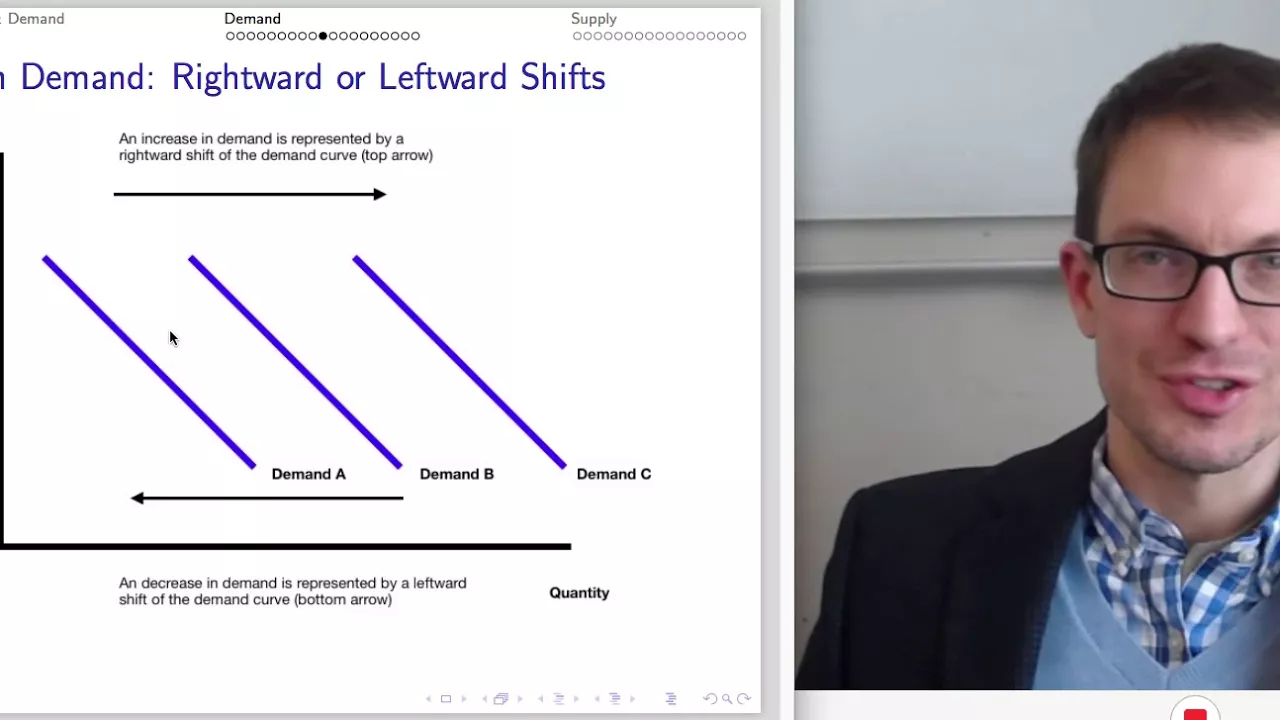
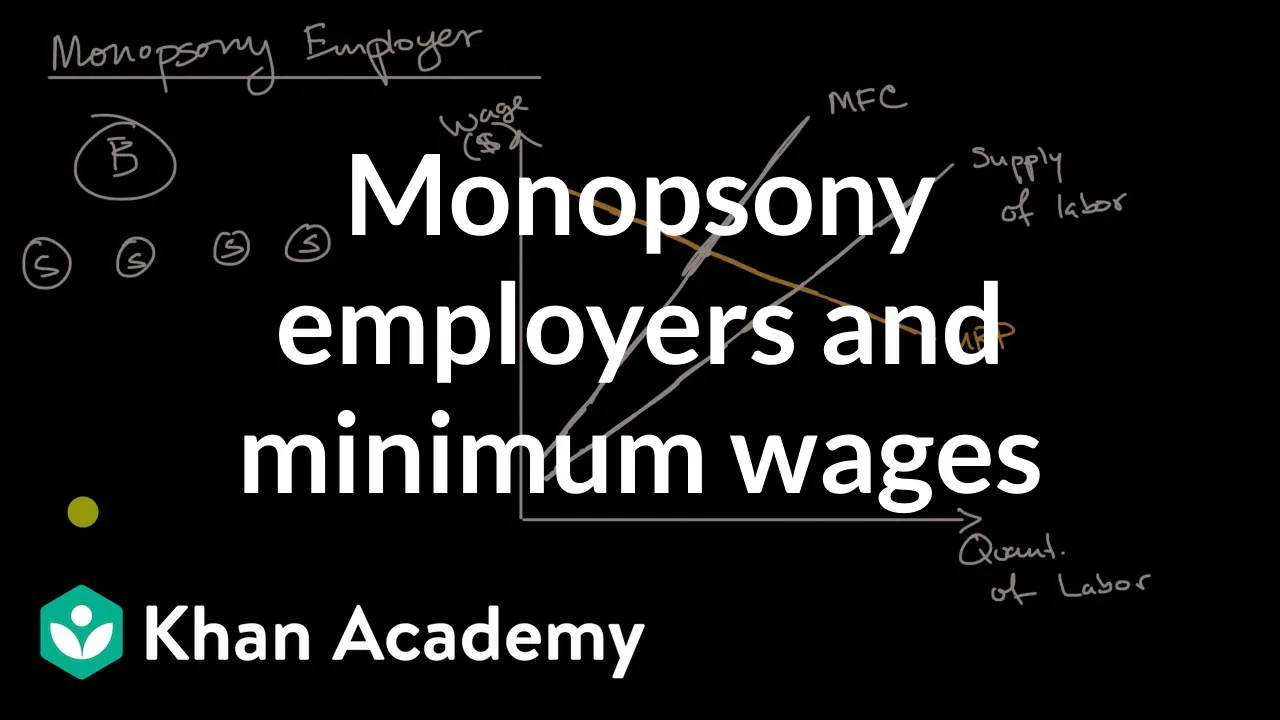
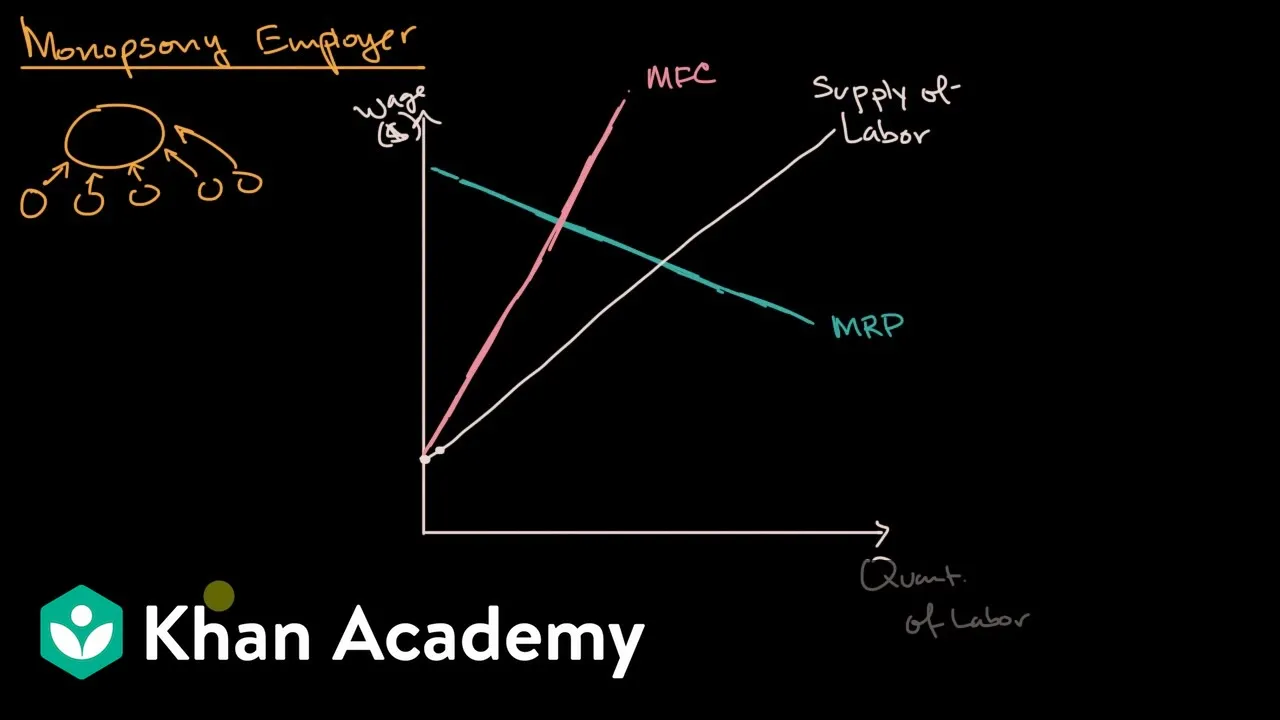
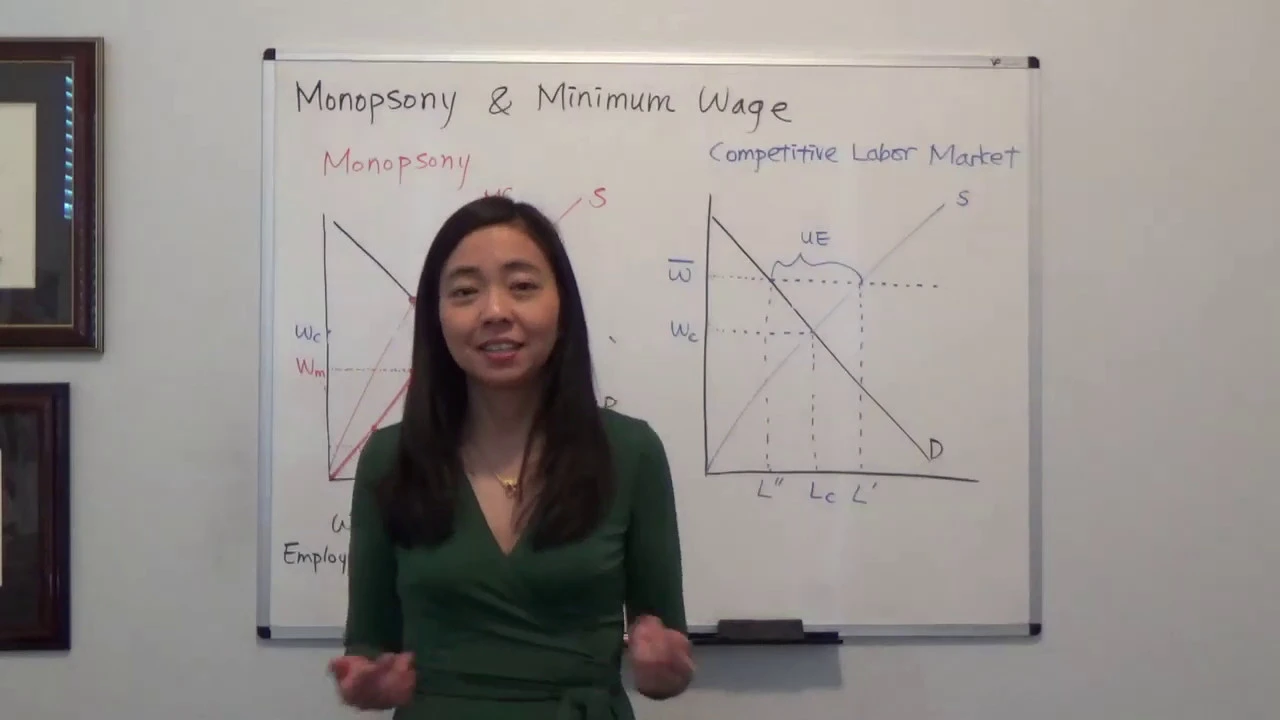
In the Thomas Sowell documentary they single out the minimum wage as an example of how economics shows you the true impact of well-intended policies. "One of my biggest concerns was about minimum wages. At first I thought this is good because all these people are poor and they'll get a little higher income and so that'll be helpful and then as I studied economics I began to say well there's a downside, they may lose their jobs completely so there's that." This reasoning is based on standard demand-supply analysis which epitomises the core of economics 101. When somebody tells you to go and learn economics chances are this is what they have in mind, so let's do what they say and learn about it. Demand and supply is used to represent a variety of markets, but the one we've got here is the labour market. It shows how - in theory - the market for labor will settle at a given level of wages, on the y-axis, and employment, on the x-axis. It can also show the effects of the minimum wage on these quantities, but we don't want to get ahead of ourselves so let's take demand and supply one at a time. The demand for labour depicts the willingness of business to employ workers in the form of a relationship between wages and employment. If the wage is high, say at the level W1, businesses will not find it profitable to employ many workers. On the graph if you travel right from W1 until you hit the demand curve and then go down until you hit the x-axis you will get to E1 - the corresponding level of employment at this wage. On the other hand, if the wage is lower at W2 then businesses will employ more workers and employment will be at E2. Generally speaking, the lower the wage the more workers businesses will want. The demand curve slopes downwards, an expression you may well have heard before. So what about the other side of the equation - supply?
Well here we are looking at the amount of labour workers are willing to supply for a wage.
This is a strange way of putting it that might not come naturally to most people, but the important thing to know is that if the wage is higher more people will want to work.
Which makes some sense, I guess. So if the wage is high at W1, employment will be high at E3.
If the wage is lower at W2, employment will be low at E4. The supply curve slopes upwards. I hope you're ready because we're about to put the two curves together. Demand curves depict the number of workers businesses are willing to employ at a given wage. Supply curves depict the amount workers are willing to work at a given wage. Where these cross over, the decisions of the businesses balance with the decisions of the workers and we get the outcome of wages W-star and employment E-star: what economists call an equilibrium. "You have a product, they have no means of distribution. They have demand, they- they don't have any product. That's that's market equilibrium: yin and yang, ebony and ivory.
Tell me what the [ __ ] problem is." So how does our minimum wage affect this happy depiction of the labor market? The minimum wage is represented by this god-awful ugly line MW that's interfering with our precious market. It might seem odd that with the name 'minimum' wage the line is high up on the diagram. (Maybe it's just me that finds that odd). But remember that the point of a minimum wage is to increase wages above the level they're currently at, so it has to be higher than where the curves cross over to have any effect. Now how do we work out the effects of this minimum on employment?
Well, no matter what the market wage is stuck at MW so we need to ask where this crosses the demand curve - how much labour businesses will hire at MW - and also where it crosses the supply curve - how much workers will want to work at MW. At the minimum wage, businesses will only want to employ the number of workers E-MW. More will want to work because MW crosses the supply curve much further to the right, at a higher level of employment E-star-S. But businesses are not willing to employ so many workers at such a high wage, therefore the employment level E-MW will be the one that is realised. Notice that this is also lower than the previous equilibrium E-star. The minimum wage has reduced employment! [ __ ] what are we going to do? It is important to remember that this is a prediction of the model, not some kind of logical necessity. And I actually don't think most non-economists are aware of quite how convincing the empirical evidence against standard theory has been on this issue. For example, in a video on the minimum wage the YouTuber Vaush makes some good points about why the minimum wage could be a positive thing and raises some valid questions about a well-known Congressional Budget Office study predicting that it would lead to job losses.
"How many of these are like real [ __ ] 40-hour week proper jobs. I'd be willing to bet very few of them. Most of these are cuck jobs and the loss of these jobs could actually be a good thing because it would mean the people who were otherwise taking them can now afford to live off of only one job instead of having to take two or three." But we can add a bit to what Vaush says- um, sorry, scratch that. In a recent video on the minimum wage 'manlet' Vaush shows how little he knows about anything by failing to bring up well-known studies on the minimum wage and accepting the central finding of the CBO study like a cuck, even though it's definitely false. To see why Vaush is so hopelessly destroyed by facts and logic, we're going to take a deep dive into the literature on the minimum wage. Doing so will teach us not just about why minimum wages are good, but also about the kind of empirical studies that have shown this, as well as the limitations of economics 101 itself.
Newly elected U.S. President Joe Biden promised to introduce a 15 Federal minimum wage once elected, which sparked a renewed debate over the pros and cons of the policy. As I write this the proposal has been voted down in the Senate, which is extremely disappointing but shows that econ101-ism is alive and kicking, I suppose. Since the dawn of time the U.S.A.'s federal minimum wage has stagnated or even fallen. As you can see here, in the early 80s it was around three dollars an hour and despite steady rises in the headline value it has only kept pace with inflation since then - barely changing in real terms. The U.S.A. lags behind other rich countries and even many poorer ones in its low minimum wage. As this table shows, the ratio of minimum to median wages is only 33 percent for the U.S. compared to 54 for my own country of the U.K. or 69 for Chile and Costa Rica. The debate is relevant to a broad range of countries: in the U.K. we have had the living wage campaign, which used social pressure to force companies to increase their wages and eventually made its way into policy for those aged 25 and over. There is also the global living wage initiative which.... campaigns for a global living wage. So what does the evidence say on minimum wage increases and employment? Before we go into this I want to define a crucial term: the elasticity.
"Yo, you know what we got here? We got an elastic product! You know what that means? That means when people can go elsewhere and get they printin' and copyin' done they're going to do it! You acting like we got an inelastic product and we don't!" In economics, this means the percentage change in one thing because of a percentage change in another thing. Stringer was talking about the change in demand owing to the change in the price of their product, but here we will mostly be talking about the change in employment owing to a change in the minimum wage. So an elasticity of -1 means that if the minimum wage increases by one percent employment will fall by one percent.
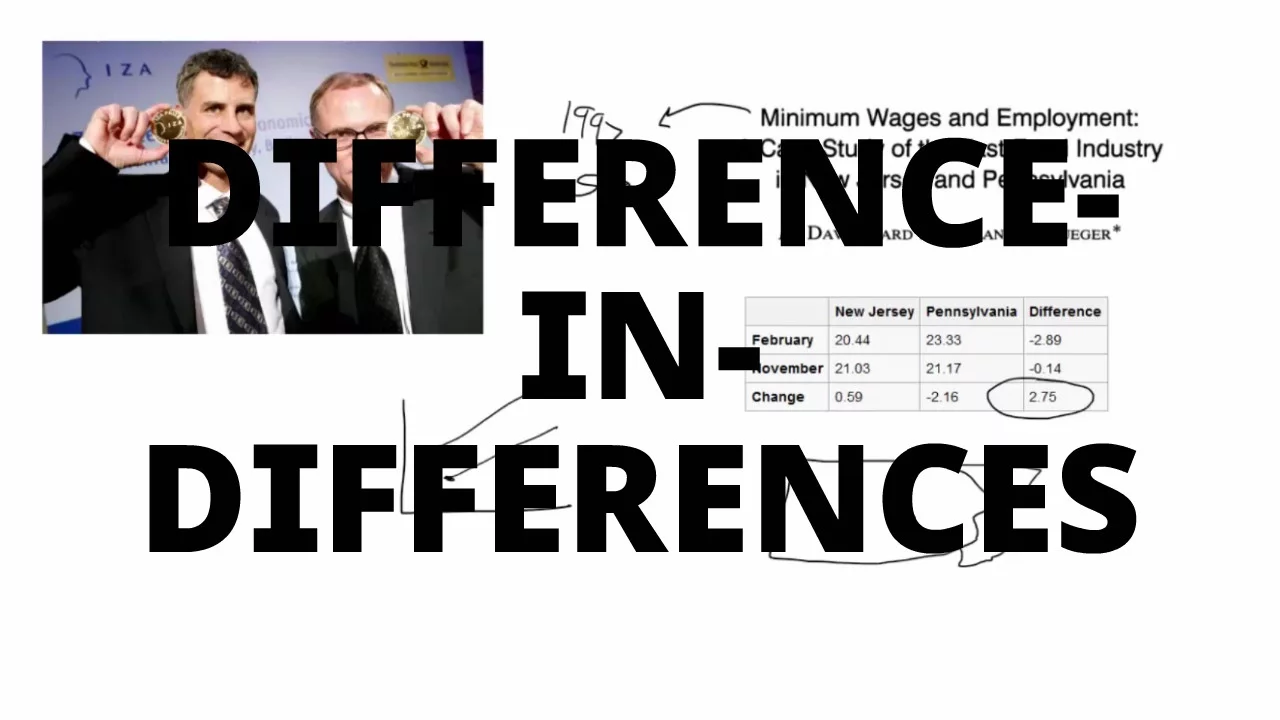
An elasticity of minus 0.1 means that if the minimum wage increases by one percent, employment will fall by 0.1 percent. You can see that the former would be hugely problematic while the latter could easily be considered a price worth paying for higher wages. For a long time, economists accepted that the minimum wage would be bad for employment based on the supply and demand theory we've seen, as well as using what are now seen as relatively crude tests that today are not considered credible even by opponents of the minimum wage. Except for the people in the Thomas Sowell documentary, evidently. Beginning with a famous paper by David Card and Alan Krueger in 1994, a wave of studies sometimes dubbed the 'New Minimum Wage Research' have used careful empirical techniques to investigate the elasticity of employment with respect to minimum wage changes.
Card and Krueger looked at the effect of a minimum wage change using two adjacent U.S. states: New Jersey and Pennsylvania. In 1992 New Jersey increased its minimum wage, while Pennsylvania did not. This is a kind of 'natural experiment' - when the policy applied to one area is not applied to a similar area, and comparisons between the two approximate the ideal of a lab experiment.
The argument goes that if two areas differ only in the policy - in this case, the minimum wage - any difference in outcomes between them - in this case, employment - can be attributed to that policy.
Since the U.S. has many state-level policies it is fertile ground for these natural experiments.
Card and Krueger phoned fast food restaurants, which employ a lot of minimum wage workers, both before and after the change. "Can I help you sir? My god you're greasy". What they found was that far from reducing employment in New Jersey, the minimum wage may actually have increased it. That's right: for some of their results, the elasticity was positive.
The study made quite an impact. Reid Garfield, Senior Economist of the Joint Economic Committee, commented in 1996: Since this, thousands of papers have been written in the USA and elsewhere on the employment effects of the minimum wage. One of the most pertinent critiques of Card and Krueger was how narrow their study was: a single change in fast food restaurants in two relatively small U.S. states should not be generalized to minimum wages everywhere. More recently, the frontier of minimum wage research has been led by people like Arin Dube and his co-authors. They have mostly followed in Card and Krueger's footsteps by taking advantage of natural experiments, but have substantially broadened the number of states they include as well as the time frame of the studies and the depth they go into estimating the effects. For example, in a 2010 paper Dube, Lester and Reich found no employment effects of the minimum wage using adjacent pairs of states. That's Card and Krueger times by hundreds! "My god. That's - I don't even know what that is!"
"Nobody does." A 2019 paper by Cengiz, Dube, Lindner and Zipperer estimated the effect of minimum wages on the entire distribution of jobs using 138 different minimum wage changes in the U.S.A.
The x-axis here shows the part of the wage distribution we're in relative to the minimum. 'Two' means it's two dollars higher than the new minimum wage. The y-axis shows the effect on employment at a given part of the wage distribution. Just below the minimum wage - zero on the x-axis - a substantial number of jobs disappear, as shown by the negative blue bar. Which makes sense as it's now illegal to employ people at that wage. But this is offset entirely by the appearance of jobs at or above the new minimum wage, as shown by the positive blue bar to its right. There are no effects anywhere else in the distribution, so this gain in wages for low income workers is not offset by other workers losing out. The same paper looks at these effects over the long term and it shows that the new jobs which appear do not disappear after a few years. I favour this type of natural experiment approach.
It's transparent, and the core of close comparison between pairs of real regions keeps the method grounded in empirical reality - instead of blinding us with complex statistical methods.
But I should say that it's not the case that every study has found no effect like this. There are dissenters within this literature, specifically economists like David Neumark and his co-authors.
The details of this debate are too heavy for this video, so maybe I'll leave a comment with my thoughts if you'd like, along with their papers in the references. Overall, though, most systematic meta-analyses find a small but statistically significant negative elasticity of employment with respect to minimum wage changes. Having said that, these studies also show evidence that there is a bias towards publishing negative estimates. Why that's the case I'll leave you to figure out.
So how does one make sense of such a vast and tricky literature? Well....not the way the CBO does it.
To give you some background, the Congressional Budget Office is an official but non-partisan entity in the USA which produces research on important policy topics. Their recent report claimed that raising the minimum wage to 15 would lead to 1.4 million job losses, a pretty concerning figure. Where did they get their estimates from? Vaush said that he'd have to get a textbook out to understand this debate. I'd hate to be the reason that anyone had to read an econometrics textbook, so let's save him from having to do so... Uh oh, too late brah! The first thing to say is that this report was kind of opaque, even for someone who is used to reading this type of thing. It's full of phrases like "CBO concluded" and "In CBO's estimation" often with little to no explanation.
They select 11 studies from the literature, but why these 11 were chosen is not explained. The CBO then computes the effect of minimum wages on employment from an average of the 11 studies but they increase the magnitude of the actual average because of a really weird thing they do where they randomly drop some of the studies they use and recalculate the average with those studies missing.
I don't know why this method is chosen or how it really works because again it isn't explained. "It's garbage." Dube himself has commented to similar effect, though in more measured academic terms.
He says the CBO overemphasises the negative estimates in what we already know is a literature biased towards finding negative estimates. He points out that more recent, better quality research has found employment elasticities of the minimum wage closer to zero. As an alternative he suggested his own 2009 review for the U.K. Treasury. This only includes studies which estimated the effect on employment for the same workers whose wages are increased by the minimum wage, which gives a clear picture of the trade-offs faced by the workers actually affected by the policy. This is known as the 'Own Wage Elasticity'. Along the y-axis is the study. The dots represent the estimated effect size for that study, with the bars either side of the dots representing the uncertainty surrounding that estimate. Dube concludes that based on this review,the average elasticity is minus 0.04, meaning that a 25% increase in average wages for a group affected by the minimum wage should reduce employment by one percent for that group. There's a lot of debate over whether $15 an hour is enough and Dube also comments on how high the minimum wage could be: Now, to return to demand and supply. Strictly speaking this evidence alone doesn't contradict the supply and demand model; it could just imply that the curves have a specific shape - albeit an unlikely one that contradicts other evidence, I'll provide a reference for that below - but here's my bottom line. When effect sizes are this small and uncertain, it's suggestive of something that's just not that interesting, whether theoretically or politically. As the economist Thomas Leonard pointed out, this whole debate does prompt the question "what evidence would convince you that your theory is refuted?" Let me illustrate this with one more recent study. This shows a bunch of different elasticities for 16 to 19 year olds, the group most likely to be affected by the policy. As you can see, in most cases the blue horizontal lines cross zero, which is given by the red vertical line, indicating that the effects estimated are not statistically distinguishable from none at all. As a contrast consider a more straightforward question: what is the effect of the minimum wage on wages themselves? this might seem tautological, but if the minimum wage is low or is not properly enforced we may not observe an effect.
unlike our previous figure the estimates here are universally positive and statistically distinct from zero. This is the pattern one would expect to observe when the relationship one is estimating is strong and reliable. The minimum wage effects do not look like this. Higher labour costs as a result of the minimum wage are obviously a thing. But employers often have more bargaining power than workers, so they can afford it. Increased pay can motivate workers, leading to higher productivity.
It can make them more likely to stay, reducing turnover costs from hiring and firing.
And at the economy-wide level, the minimum wage increases the spending power of workers, which will increase demand for businesses. I'm happy to debate the importance of these different effects but the standard economic approach only helps us with a tiny part of them, if at all, and arguably the effect on employment is so uninteresting that it's distracted us from other questions such as the effect of the minimum wage on mental health or poverty. So now we know that the minimum wage just doesn't have the kind of reliable negative effect on employment we'd expect if the theory were useful. But now i want to talk about another, similar, prominent example: rent control.
It's no secret that both house prices and rents in many countries have skyrocketed over the past couple of decades, especially in Anglo countries. Housing is probably the main cost for most people so this has prompted questions about whether governments should do more to help people cope with these costs. The most direct policy to do this would be rent control.
Rent control isn't a hugely popular policy although it exists in a few countries and localities, for example New York City as discussed by the friends in the popular sitcom 'Friends'. "But more important because of rent control it was a friggin' steal".
In their debate on housing, philosopher Ben Burgess and streamer Destiny also discussed the policy: "Rent control is like one of these few issues that economists broadly agree is a garbage policy. It doesn't help who we want it to help, it usually hurts who we want to help and it just doesn't usually get what you want done." Destiny was correct: opposition to rent control is possibly the area where economists agree the most. A 1990 poll had 93.5 percent agree that "a ceiling on rents reduces the quantity and quality of housing available". A 2012 poll asked for economists' views on the statement "local ordinances that limit rent increases for some rental housing units such as in New York City and San Francisco have had a positive effect over the past three decades on the amount and quality of broadly affordable rental housing in cities that have used them."
81% of economists disagreed or strongly disagreed with this statement with answers including "Next question: does the sun revolve around the earth?" "Unless all the textbooks are wrong, this is wrong" "The planets are lined up here: theory and evidence point in the same direction". The award for the strongest statement about rent control, however, goes to the economist Assar Lindbeck who claimed "In many cases rent control appears to be the most efficient technique presently known to destroy a city, except for bombing." To understand where all this strong opposition is coming from let's return to our supply and demand diagram. Instead of the market for labor, we are now looking at the market for houses. Apparently they work in exactly the same way. We have rents on the y-axis instead of wages. We also have quantity of houses rented on the x-axis, instead of employment. Again the supply and demand for houses should balance with rents r-star and quantity at q-star. What does rent control do in this situation? It's represented by the horizontal line RC which forces rents down.
At this low rental rate, the quantity of houses supplied is lower than the previous equilibrium even though more people want to rent. We have a shortage, and a fall in rented units compared to the 'free market'. I want to say outright that there is more evidence for the predictions of the supply and demand model for rent control than for the minimum wage, depending on how you interpret it.
But the blanket opposition to rent control that derives from this is hugely overstated and econ 101 reasoning is again more of a hindrance than the help for understanding the debate.
First: what does it mean for the quantity of housing to be reduced? I would contend that the supply-demand model can mislead people into thinking that the reduction is in housing supply rather than the number of houses specifically used for renting. The 1990 poll mentioned above failed to distinguish these two clearly, and in the debate with Destiny, Ben Burgis just largely accepted this framing, contending that you could compensate by building more housing. "Because if we just have rent control there's going to be far less investment in private housing, there's gonna be far less private housing built, but if you're building a lot of public housing to make up the shortfall then it's literally- you could you could accept your premise you can accept what the economists are saying and still think that it's just irrelevant to that package of policies." "Why not just build more houses?"
Building more housing is good. But a reduction in rental housing doesn't mean that houses disappear; there may just be a corresponding rise in ownership. Our concern is surely whether people are getting the houses they need, not whether they're renting or owning them. We can have a debate about the relative merits of renting versus ownership and which demographics are more likely to use one or the other, but it's not immediately obvious to me which is more desirable.
Second: rent control captures a wide variety of different policies. The standard demand-supply analysis only depicts a straight-up cap on rents, whereas modern rent control just limits increases and allows for inflation in landlords' costs to encourage maintenance. Such provisions are common and common sense - for example, if you're worried about rent control discouraging construction exempt new buildings, like Berlin. Recently a Bloomberg article that mysteriously appeared in everyone's trends on Twitter discussed the impact of rent control in Berlin, which froze rents on older houses and allowed tenants to force landlords to lower existing rents. True to form, the article claims "if populism on the political right corrupts democracies, populism on the left ruins economies" It's based on a report which is in German and fortunately I'm fluent so I was able to consult the original document. Just kidding, I'm English. We'll have to go on the article itself.
Some of the outcomes it chooses are kind of strange. The results clearly show that rents have plummeted for those affected, a huge benefit which is downplayed. The article charges that rent controls have reduced house prices, as if that's definitely a bad thing or somehow unexpected.
It seems to me that both more affordable housing and lower rents might be considered a good thing by some people. The article uses a couple of graphs which apparently show the policy has had negative effects. One shows that prices in uncontrolled units have risen since the policy, but from this graph it's hard to see whether this is really a change or just a continuation of a previous trend.
The graph doesn't go back far enough for us to know - and even if it is true, it may just be because the uncontrolled units are new. You could say exactly the same thing for their graph showing that the number of rental apartments has declined, especially since they follow this up with a graph showing that the supply of unregulated units has outpaced other German cities. Somehow this is also framed as a bad thing. As you're all now budding natural experiment enthusiasts I know what you're going to ask: is there any more credible evidence than this...crap...on rent control, and the answer is: some, but not enough, and it's mixed. One of the most recent and commonly cited papers on this topic is Diamond et. al, which uses the sudden introduction of rent control to older houses in San Francisco in 1994 and compares them with more recently built units which were exempt.
Let's take an in-depth look at this paper as I think it raises some interesting questions.
The paper claims that the policy led to a 15% reduction in rental units, although if you unpack this it's actually a combination of eight percent being converted into owner-occupied buildings with a further seven percent being converted into rental units which were exempt from rent control.
Which isn't a 15 reduction in rental units. The paper does show that residents of both owner occupied and exempted units are likely to have higher income, which is a cause for concern because it favors richer residents. There are conflicting effects, though. Part of the reason for the higher income residents is that rent control leads to higher maintenance and upgrades so landlords can increase rents. We can see on these graphs that - top left - rents fell while - top right - redevelopments rose and - bottom left - conversions rose and - bottom right - repairs rose. This suggests rent control does increase quality, in contrast with economists' poll answers that we saw earlier.
Rent control also means existing tenants are more likely to stay, which is more pronounced for minority groups. The strangest spin in the Diamond paper is to frame this as a bad thing too.
Keeping existing residents in the area while rich residents join is a bad thing! The solution is obviously to have only rich residents so the income inequality in the area is low! "Look at this place. Somebody ought to build a town that works" "Somebody did" I'm being facetious, but only a little. At other times the paper argues that existing tenants are ultimately forced into poorer areas and here they frame gentrification as a good thing, saying So it's bad when existing tenants stay but also bad when they leave? Gentrification is good but also bad? I found this paper quite confusing, and it seems to be a go-to reference for opponents of rent control.
With such a variety of competing effects the authors eventually conclude that the overall effects of rent control are a wash. But the important lesson here is that ultimately neither theory nor empirical analysis are going to make the issue of competing values and perspectives go away. When considering the effects of rent control, do we prefer rented or owned housing? Do we want higher quality houses which are more expensive? Do we want to favor existing residents over new ones?
I don't have easy answers to these questions but econ 101 leads people to believe that they do.
The economist Josh Mason argues that rent control research is in a similar place now to minimum wage research in the 1990s: a few well-formulated studies are displacing conventional wisdom and this will likely expand as time goes on. He summarises a few studies similar to the Diamond one which you can look at if you're interested in pursuing this topic further. So here we have two of the most important markets - labour and housing - where the crude econ 101 approach has failed to make sense of hotly debated policies. But what about more generally? Where has the influence of econ 101 come from, and how does it affect our understanding of other policies like taxes and social spending?
I don't think i can answer this one so I'm going to have to hand over to someone else.
The influence of basic economics is...everywhere. Both pervasive and perverse, it really is why we cannot have nice things. For every earnest call to make our political economic system ever slightly more just or livable for working people or the planet there's a capitalist, an economist, a politician, a corporate news outlet, or an average joe saying "that's cute, but that's just not how the economy works!" James Kwak calls the reductive invocation of basic economics to explain all social phenomena in our society 'economism'. Economism relies on the abstract concepts taught in econ 101 classes to explain why things are the way they are and why any attempt to redress the externalities of capitalism is futile. This is despite the fact that many of the concepts taught in econ 101 textbooks assume that a perfectly competitive model of capitalism is possible, along with various other assumptions that rarely, if ever, hold true in the real world.
UE covered how economism has worked to depress wages while housing prices have skyrocketed but the invocation of econ 101 has affected nearly every other sphere of our lives too.
Provide universal health care as a basic human right? Adorable! That will rob people of choice.
Prevent price gouging during natural disasters so that poor people aren't unfairly served a death sentence? How naive! That will prevent the efficiency of the competitive market from kicking in to save the day. Plus it'll mean that life-saving materials will be sold to people who don't value them as much as people who are willing to pay three times the price.
Raise taxes on the ultra rich to redress the wage theft inherent in their wealth and fund services that will benefit everyone? So cute! Econ 101 says that that will backfire and lead to a decrease in productivity and available jobs, something that's never mentioned in econ 101 textbooks when talking about things like raising taxes on the rich or the minimum wage etcetera is that the ultra rich are hoarding money far and above what they actually need and they're doing so off the backs of workers who are the ones who actually produce the goods and services that make money for the capitalists.
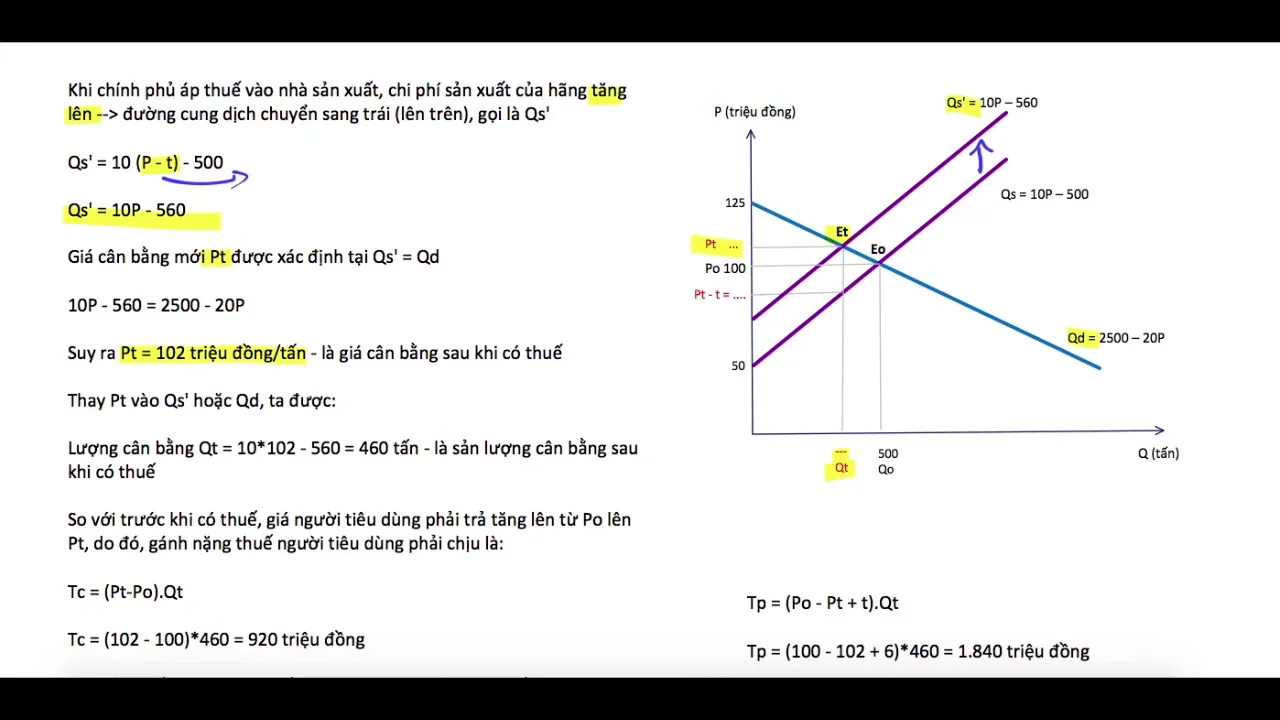
Workers who, like those who work for Walmart or McDonald's, are encouraged to apply for food stamps to survive. When workers are losing their homes or are unable to access healthcare during a pandemic the unwillingness of the capitalist class to pay taxes or living wages is pretty hard to reconcile - that's a polite way of putting it. But that's just me, let's look at how taxation and inequality plays out on the ground, outside of the classroom. Will increasing taxes on the ultra-rich hurt us all? In the end it follows that when you tax a good depending on what the good is people will buy less of it. But when you try to apply econ 101 supply and demand models to things like income tax the model shows us how out of touch it is with average working people. The model tells us that if income taxes are raised people will 'choose' to work less and take more leisure time or simply retire.
The incentive for them to work additional hours is simply not there and so productivity plummets.
For anyone actually working to survive right now with depressed wages and a skyrocketing housing market, you can see how this logic breaks down. People don't choose to work 60 hour work weeks; they desperately need to. Anyway it is true that the rich are people who can choose to work less if incentives aren't there because they are not working to survive and many of them are making the bulk of their income through investments anyway which is basically just sitting around and watching your assets grow. Taxes on capital gains and dividends are already much lower than income taxes but politicians like Paul Ryan, Marco Rubio, and Ben Carson invoking econ 101 want to reduce or eliminate taxes on investment income altogether.
The idea is that we need rich people to save their money so that it can be invested somewhere else enabling the creation of new businesses and jobs. Over the past 70 years taxes on investment income have plummeted, with no real increase in economic growth and with personal savings actually declining. The economy expanded most rapidly in the 60s and 70s, when investment income tax was 70% or higher. Zooming into more detailed studies, the evidence is mixed at best. In 1978, economist Michael Boskin found that a tax cut that increases investment returns by 10 percent tends to result in three to four percent more savings. However, later studies disputed this and showed that those estimates depended heavily on contextual details. Eric Toder and Kim Rueben conducted a review of existing research and determined that there was little evidence to support the claim that lowering investment taxes increased savings. This was confirmed by tax expert Leonard Burman, and a Congressional Research Service report stated that This is fairly intuitive: at a certain level of wealth, people have very little else to do with their money other than invest it, regardless if their profits might be slightly lower. There are actually games now where the challenge is to spend all of Jeff Bezos' or Bill Gates' money, showing how completely impossible it is to actually buy enough things with that gross excess. In terms of productivity, working people need to work to live, period.
But rich people - the 'job creators' - are also not less likely to work if income taxes are higher.
Robert Moffitt and Mark Wilhelm studied the 1986 tax reform and found no change in hours worked by high-earning men. This was confirmed by the CBO and economist Thomas Hungerford, who wrote: Growing inequality leads to growing unrest, something also not addressed in econ 101 textbooks. Despite the ample empirical evidence that contradicts these reductive and bewildering claims, economism survives and thrives because it is incredibly politically useful to the most powerful people in our society. Whenever there is political unrest, whenever there are militant movements against the violence of the status quo the 1 percent, the 0.1 percent will come back and say these well-intentioned protesters just don't understand basic economics. James Kwak writes that: So how did this idealistic ideology become so popularly accepted? Well, people like to point to Daddy Smith, who described the price mechanism and the Wealth of Nations in 1776, but Smith discussed many reasons why this principle would not hold and did not think that competitive market forces acting alone would produce the best of all possible worlds. Antoine-Augustin Cournot first illustrated supply and demand curves which were popularized in Alfred Marshall's 1890 textbook Principles of Economics. However, Marshall too rejected the idea that the supposed perfect equilibrium that was assumed to result from perfectly competitive markets would necessarily produce the best of all possible worlds because people will differ in wealth. He said: At the time in the late 19th Century, unchecked markets were producing immense hardship and social instability, leading to socialist and communist movements rather than any kind of embrace of pie-in-the sky economism. When the Great Depression hit the idea that unregulated markets would maximise universal prosperity seemed fully discredited, leading to a shift in economic thinking and an embrace of the Keynesian demand-side economics of the New Deal. The New Deal worked to redress the political conditions existing at the start of the 20th century, and the capitalist class started to resent not being able to extract as much wealth as possible from working people. Moneyed interests adopted economism and used their wealth and power to fund think tanks, buy politicians, buy media outlets and influence education so that economism was taken up by the broader conservative movement and later accepted by many liberals as well. Financing came from corporations such as General Motors, Ford Chrysler, General Electric, and Procter & Gamble among others...and billionaire businessmen like the Koch brothers. Ideas were derived from fanatic economists like Hayek, Mises, and Friedman, mouthpiece politicians included Reagan, Thatcher, Bush, Clinton - too many to name, honestly - and high profile think tanks like the Heritage Foundation lobby to influence policy. Economism allowed business people and politicians to say that they were pro-market instead of anti-government and conveniently ensured that labour and environmental concerns would be suppressed so that capitalists could extract more and more surplus. This is why David Harvey calls the neoliberal era that was ushered in by Reagan and Thatcher a project to restore elite class power. The U.S., the IMF, and the World Bank have also been pretty brazen in forcing global countries through violence and/or debt to deregulate their markets further and implement a suite of free market policies such as lowering or scrapping the minimum wage, which UE just explained makes little economic or moral sense.
This economic imperialism served the project to restore transnational ruling class power and provided a spatial fix for capitalism. This is all getting into more complex Marxist political economy though which I personally think is key to understanding all of this so if you would like to learn more, might I shamelessly plug my channel?
Why is economics 101 so pervasive as a set of propositions? It's kind of odd that an introductory diagram, based on obscenely unrealistic assumptions, would have so much influence, right? Well it often favours the rich and powerful which, as Mexie pointed out, isn't a bad feature for a theory to have if it wants to be accepted and enacted as policy. But I also think there's a more subtle force at play here. The reaction by Nobel Laureate James Buchanan to Card and Krueger's original finding - which, to remind you, was that the elasticity of employment with respect to minimum wage changes may be positive - could give us a clue as to what is going on: This statement reveals what's at stake: not just what is actually a fairly minor concession to government regulation versus the free market, but the very idea of economics as a science, with general laws that cannot be violated. Buchanan is right accepting these findings does amount to a denial that economics has scientific content because if markets do not obey supply and demand, then what hope is there? A lot of people have asked me to discuss healthcare on this channel and I'm sure I will at some point. Mexie and I have hopefully given you plenty of evidence that goes against simplistic econ101 reasoning, but the healthcare debate provides yet another example of how faulty econ101 reasoning pervades the world and I'm far from the only one to notice this. U.S.
representative Alexandria Occasio-Cortez made the link between the two not too long ago: "When we talk about economics, there's something known as a demand curve within a elas- with elasticity.
And with every other commodity you can say 'how much is this phone worth to you?' And you can say a hundred dollars, two hundred dollars, you can buy a Nokia phone, you can not have a phone at all.
But you cannot ask the question 'how much will you pay to be alive?'
'How much will you pay to live?' Because the answer is everything." These kinds of examples illustrate that there are many reasons markets will not be as well behaved as the standard econ101 story. When I present them to economists they say a lot of words about how they don't really apply and that I've misunderstood the niceties of the theory, usually by defining the theory so that it simply must be true. But past a certain point these hypotheticals become useless for thinking about the real world and in many cases they just provide a bulwark for bad ideas. I want to leave you with a lengthy but typically eloquent quote from John Maynard Keynes during the Great Depression, a time when - as Mexie mentioned - prevailing economic orthodoxy seemed to be on the wane. Commenting on his version of economism, which he called Classical or Ricardian economics - after the 19th Century economist David Ricardo - he reflected on how it had become so dominant, and its likely downfall in the future: Thanks for listening everybody and WAIT just one second, before you turn it off. This has been a little bit of an experiment. A lot of people in my previous videos asked me to go into a bit more detail they said they'd be happy with a bit more length...so, this is what I've done in this video - it's a bit longer and it goes into some depth on the theory and evidence.
I'm not saying that every video I make will be like this from now on but I just want to know what you guys think of it: was it too much? Do you want even more? I hope not but please just let me know what you think. And thank you to my Patrons as usual um there's a whole bunch of stuff that's been set up there's like a Discord server and a Reddit now if you want to discuss economics so uh please just get involved. See you later everybody!
Bye!
Up Next
Meta-Ethics Explained for A Level Philosophy Students
@mrmoffat
40.3K views•2022-02-26

John of Damascus on Holy Images: A Theological Defense
@BannedBooks
139 views•2026-04-25

Should We Destroy the Machines? Big Tech Surveillance Critique
@TheStoriesWeTell303
167.9K views•2025-11-30

The Myth of Sisyphus: A Greek Legend of Eternal Punishment
@TEDEd
8.6M views•2018-11-13
Related Study Plans & Knowledge Roadmaps
Structured learning paths in Philosophy