








![[#EBS평생학교] 5강 노자가 전하는 발상의 전환│박재희의 고전에서 미래를 읽다](https://i.ytimg.com/vi_webp/3b8s9rOE84g/maxresdefault.webp)






![[테마극장] 오늘의 테마는 '가을에 생각나는 영화'...와호장룡, 원스 어폰 어 타임 인 할리우드, 부기 나이트 추천!, [권순표의 뉴스하이킥], MBC 240927 방송](https://i.ytimg.com/vi_webp/C14zArEPM54/maxresdefault.webp)

Kung Fu Panda draws heavily from Chinese philosophical traditions, particularly Daoism and Confucianism, with the movie's central conflict exploring how these philosophies approach life's challenges. The film uses the character of Master Uguay to represent Daoist principles of natural flow, acceptance, and intrinsic value, while Master Shifu embodies Confucian values of discipline, order, and societal roles. The narrative ultimately suggests that Daoist philosophy provides a path to inner peace that Confucianism alone cannot achieve, as demonstrated through Po's journey of self-acceptance and the blank scroll symbolizing contentment with one's true self.
Kung Fu Panda & Chinese Philosophy: A Cultural Analysis
Added:Familiarity with the plot, themes, and key characters of the animated film 'Kung Fu Panda' (2008).
An introductory understanding of Daoism (Taoism), specifically the concepts of 'Wu Wei' (effortless action) and the dualism of Yin and Yang.
A basic awareness of Confucianism, particularly its emphasis on filial piety, respect for elders, societal roles, and duty.
A general concept of 'Qi' (or Chi) as the vital life force in traditional Chinese culture, medicine, and martial arts.
A comparative reading of primary philosophical texts, such as Laozi's 'Daodejing' and the 'Analects' of Confucius.
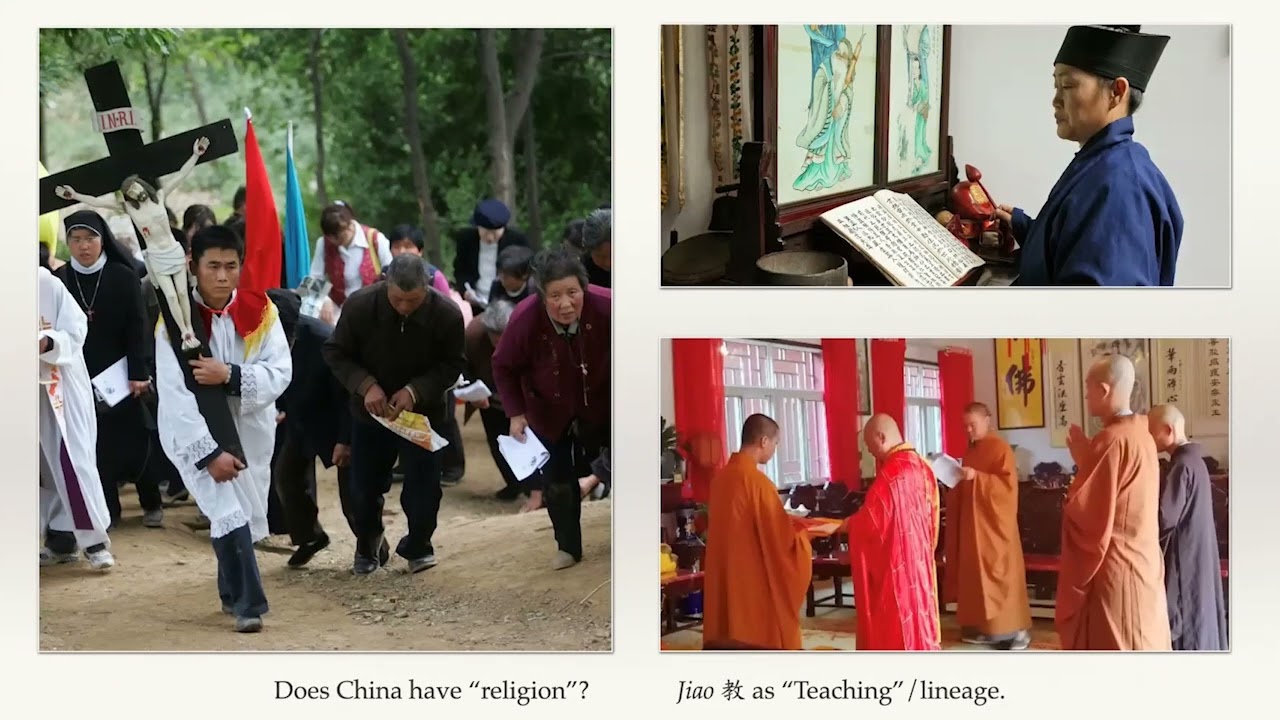
An exploration of how Buddhism merged with Daoism and Confucianism to form the 'Three Teachings' (Sanjiao) that historically shaped Chinese society.
Analysis of other Western media adaptations of Eastern philosophy (e.g., 'Avatar: The Last Airbender' or 'Star Wars') to study the globalization of these concepts.
An investigation into the history of the Wuxia genre in Chinese literature and cinema, evaluating how martial arts serve as a vehicle for philosophical expression.
1.5M views98.5Klikes32:19Original Release: 2021-05-19
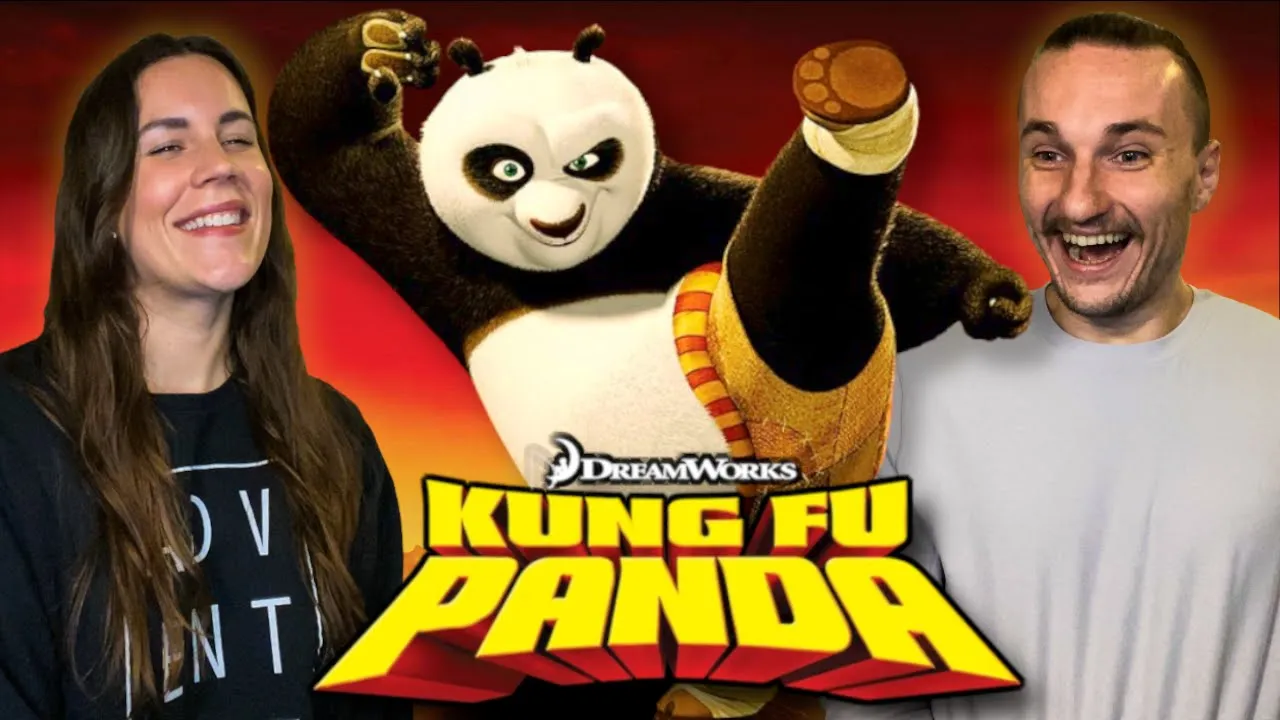
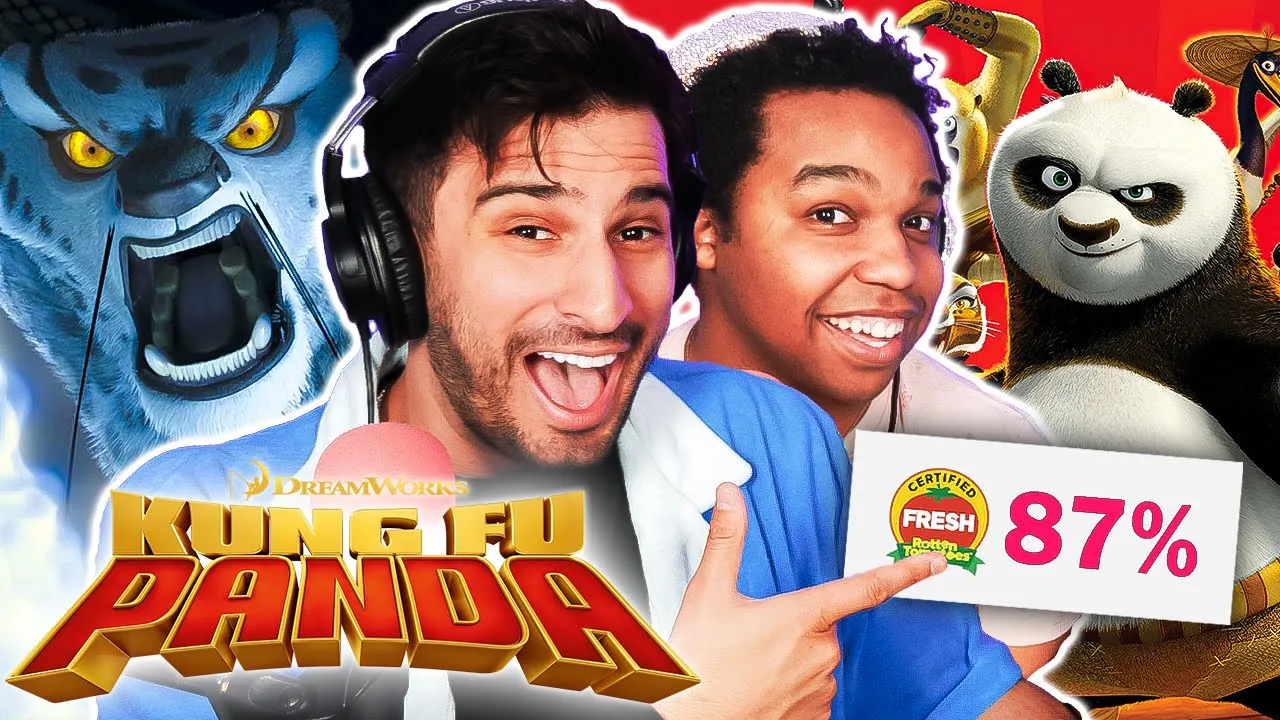
Have you ever heard of that trivia tidbit where it's like the Chinese were so impressed by Kung Fu Panda that they held meetings to figure out why they couldn't produce something as good as it with their own culture? Well, it's true.
That did happen. And the answer is probably a combination of a lack of financial and cultural support for artists, government censorship of storytelling, and animation not being taken seriously as an art form. But what did Kung Fu Panda do that was so right?
What influences did it take from Chinese culture? I'm going to try and figure that out. Usual disclaimer, I am only one person and don't speak for all Chinese people. I'm just sharing my perspective on the movie. Me liking it and thinking it uses Chinese culture in a faithful and respectful way doesn't mean that all other Chinese people think it too. And others might also disagree with my interpretation of it. So keep that in mind. I'm not here to represent.
I'm just here to share. Also, at the end, I'll talk about my opinion on whether it matters that this movie was made by white people when Chinese audiences liked it so much. And so let's start. To begin with, these mountains in the opening immediately remind me of Hangen or the Yellow Mountains. It's a pretty famous mountain range in China with a lot of these jagged stony peaks and clouds surrounding them. The Kung Fu Panda art book confirms that the Valley of Peace is inspired by the Yellow Mountains and the Lee River Valley, another place famous for being really, really pretty. And then we get into post fantasy. This concept of a veabond martial arts master is a key element in Wuia media, which is a very culturally specific media genre that evolved throughout Chinese history. I once said that Wooa movies are just martial art movies, but that's not quite accurate.
Wooa is broader than just martial arts.
It can almost be compared to westerns because the central feature of Wooa is that these veabonds have distanced themselves from the formal structures of government and society for whatever reason, usually because the government is terrible and they live by their own code of honor in the martial arts world or Jangghu, literally meaning rivers and lakes. To enter the Tangu, you usually need to bow to a martial arts master like the Furious Five to Master Shiffue, which literally means master. By the way, master disciple lineages are very important, and disciples are expected to treat their masters with utmost respect and loyalty. Here, the sword Po is holding looks like a Guandow to me, and so do most of the swords in the army.
This type of sword is famously wielded and named after Guanu of Three Kingdoms fame, but it was probably an invention of the Romance of the Three Kingdoms instead of having any basis in history.
The three kingdoms era is one of those cases where the canon greatly overshadows the cannon, especially with regards to juggle. You heard it from me.
Romance of the three kingdoms is just juggle Gary Stew fanfiction. Then we have Po waking up from his dream. I see lots of rustic rule of Chinese aesthetic influences here. But I have to nitpick that ninja stars are strictly Japanese, not Chinese. A random tidbit, but did you know that these blue patterned white porcelain bowls that are iconic to China are actually originally made for the Islamic market? The blue is only possible with cobalt pigment imported from Persia. Then we see Po's dad's noodle shop. The character on the lanterns means fortune, which is traditionally hung upside down because the Chinese were upside down. Also sounds like to arrive. So this is a visual pun for fortune will arrive. The kitchen again has a lot of recognizable influences from rural China like the hearth, the huge woven basket, the giant porcelain vat, the really short wooden stools, and so on. Now we're getting into the central conflict of the movie.
Po must decide if he should follow in his dad's footsteps and live an ordinary, peaceful life as a noodle maker or chase his dreams of being a kung fu master. This is distinctly relatable to me as a Chinese person because I struggled a lot with my parents wanting me to go into a reliable job when what I really wanted to do was write stories of being full-time author.
I had so many huge fights with them over the years and they said some very hurtful things to me that I'm not sure if I can ever fully forgive. But ultimately, I pulled through and achieved my dreams. I now have two book series coming out with major publishers, both based on my love for Chinese history and mythology. Iron Widow, in particular, is coming out this September 21st, and it'll be translated into over seven languages worldwide. You can pre-order if you're interested. Help me chase my dreams further. Anyway, Po's conflict is extra heart-wrenching because his dad is so happy about the thought that Po would make noodles like him and very proud that he'll soon get to pass down his secret ingredient. This is harder to blow off than if you were angrily demanding that Po do it. You know, in China, a lot of restaurants and businesses are passed down from generation to generation, but not all of them, which the movie even jokes about.
Some establishments advertise themselves as having centuries of history with handcrafted secrets passed down through the family, but in reality, they just bought it from someone else. I like how this joke shows that some things we think of as ancient traditions really don't have that long of a history. Po questions if his dad ever had wild dreams when he was young and his dad is like, "Oh yeah, I once thought of running away and learning to make tofu."
I want to say that it actually is true that a lot of street food and these really small restaurants in China specialize in one thing. They perfect the making of that one thing over years and years and it is delicious. Also, the huge cleaver that Po's dad is using, exact same type of knife that my family uses exclusively. Meat, fruit, vegetables, cardboard boxes, plastic bags that are tied with a knot you can't pull free. They cut it with the same huge cleaver. I personally use a smaller chef knife though. And now we go to the J Palace where Master Master I mean Master Roshi I mean Master Chu is playing a du a bamboo transverse flute when the Furious Five attempt to sneak attack him. The Furious Five are each designed after a type of animal that has inspired martial arts in China. Very generally tiger style focuses on powerful direct blows. Mantis style focuses on quick movements and redirecting attacks. Monkey style focuses on surprising and fooling the opponent. Viper style focuses on fluid movements and quick strikes, and crane style focuses on blocking attacks with whirling movements and then picking back at the opponent. Though, I should say that there's a lot of variety in the real life martial arts that inspired them. Like, there's not a single tiger style, but a whole bunch of styles inspired by the tiger. It's natural for martial arts to evolve and diversify because each master has their own interpretation. Then comes the drama where masters fight over whose style is the most authentic. But that's the plot of it, man. Three. Anyway, the Furious Five do well at disappointing Shufu.
This is relatable to me because my parents are in a constant state of being disappointed in me as well. What they have failed to realize is that it has only made me stop caring about their opinions. This is a stereotypical Asian parent attitude. But is this just what Chinese culture is? The movie's rebuttal comes in the form of master u which literally means master turtle. In my view, Kung Fu Panda depicts a clash between confusionism and dowoism. two native Chinese philosophies. Now, I'm not like a serious scholar, so what I'm about to say is strictly a personal interpretation of both these philosophies and the movie itself. But what I'm getting at is that Master Uguay represents Dowoism with his carefree attitude toward the world, while Master Shifu represents Confucianism with his need for strict control. You can see the difference right in their first scene together. Master Uguay goes at his own pace while blowing out the candles using nothing but his breath. But Master Shifu quickly loses patience and blows them all out with his kung fu. I suspect this is actually a test by Master U to whether Master Shifu has the patience and inner peace to let things run their course. The shape of this pool thing is likely also a reference to Dowoism, specifically the bwa or eight trigrams, eight symbols that represent the fundamental pieces of reality. They're used in all sorts of ways that are too complicated to talk about in this video, but just know that because there are eight of these triagrams, octagons are often used in Dowoism. And fun fact, four of the eight triagrams are on the South Korean flag. I'm not exactly sure why. Comments if you're Korean and you know Uguay then tells Shu that he had a vision that Shu's wayward disciple, Taiong, which literally means big dragon, will break out of prison soon.
Taiong is actually a leopard though, which is another animal that's inspired Chinese martial arts. Shifu freaks out and tells the messenger Zen to check if Taiong is still being held in the Chugong prison, which is Cantonese for sitting in prison. Prison. The creators have said that they deliberately chose names like this as an inside joke. While Shufu continues to panic, Uguay continues to be totally chill. One often meets his destiny on the road he takes to avoid it. This sounds like an ancient Chinese proverb, but it is not. It is a French saying by Jean de la Fontaine.
What Wugi says about Shifu's mind being like agitated water though is actually pretty similar to a passage in the Daoing the quintessential text in Dowoism. The original line is who can make the muddy water clear? Let it be still and it will gradually become clear. This makes Shufu come to the conclusion that he needs to finally choose a dragon warrior among his five disciples. The writing on the poster here says the tiger gazes upon the five warriors. Martial arts tournament starts at 5:00. Also, the whole design of Po's dad's restaurant has a very authentic look to me. So, the producers must have based it on real buildings in China. The location screams more residential garden than typical restaurant. But the pale stone walls, the lattice window in the stone, the moongate entrance, the large stones as decoration, that rounded wooden door, they all feel very familiar to me. Not to mention the writing on the sign. Today's signature noodles, numb spicy soup noodles, homemade stir fry noodles. Then we go to the martial arts tournament. The palace doors are probably inspired by the forbidden palaces. In ancient China, nobles and royals painted their doors red to flaunt their wealth because the red lur was really expensive. So red lur doors became a status symbol and poets would write poems roasting rich people. Like the red doors give off the smile of wine and meat while there are frozen corpses on the road. Also, there are nine bolts on each row on these doors which is a pun for everlasting. In this shot, you can see more of these giant rocks that get used a lot for decoration in Chinese gardens. They're supposed to represent mountains because the goal of Chinese gardening is to recreate natural scenery on a smaller scale. The tournament takes place in the courtyard of the palace.
Courtyards are a really integral part of traditional Chinese architecture.
Usually, residences are built with a courtyard in the middle and multiple buildings surrounding it. And the palace would naturally have the biggest courtyard of them all. Commoners wouldn't be allowed in without permission, though. But this tournament setup gives me quite the original Dragon Ball feel. Then stone lions. Cannot tell if they're gay or straight because they're not holding smooth balls or lion cubs, though. They're non-binary. It is now cannon because I'd said so. The Kung Fu Panda Palace is guarded by non-binary lions. The sign on the left there says best-selling handiccraft and is a container of pin wheels, which are a popular toy sold by street vendors in China. Those kites at the side, too.
They get flown a lot in public plazas. I highly suspect the production crew stumbled upon one of those public plazas and took pictures of what kids were playing with there. Fun fact, when I went to Europe, I noticed the bothersome street vendors there were selling a lot of the same glowing and spinning things as they do in China and Mexico. I don't know what's happening. Is there an international organization employing these street vendors or something? It feels like an alien invasion plot. But one experience I could never forget in Europe is when one of these street vendors looked me dead in the eye and with complete seriousness just picked up one of those squeaky putty things he was selling and smacked it to the ground as if that would entice me to buy it. I didn't buy it. Anyway, Po trying to rocket into the palace with a chair and fireworks has been confirmed by commentary to be based on a supposed legend of a Chinese official named Wanahu who strapped himself to a chair and tried to rocket to the moon via fireworks. But thing is by my research this story was actually made up by some American dude called John Watkins and was published in the scientific American in 1902. It was based on western imagination of what ancient tales in China are like. It has no actual basis in Chinese texts, but the story then got translated back into Chinese and Chinese people started thinking it was a real story from Chinese history. I don't know how to make this entire saga. It's kind of like how convoluted the history of Aladdin is, but Po rocketing himself into the path of Master U's pointing demonstrates how in a way him getting chosen as the Dragon Warrior isn't a complete accident. It happened as a result of how badly he wanted to be involved in kung fu. This is why Master Uguay says there are no accidents. Uguay doesn't try to go against the surprising turn of events because as a dowist master he will go with the flow of the universe at all times. But Master Shifu is against this because as a confusion he believes that everyone has a set role in life and only by strictly enforcing those roles can societal order be maintained. A flabby panda becoming the dragon warrior breaks the sense of order in his mind. Then we go to the sitting prison prison. Canonically, this prison is actually in Mongolia in the TavaBoged mountains or the Five Saints Mountains.
The letter actually reads in very colloquial language, "Strengthen your forces, especially precautions. Your prison might not be secure enough." The armor the rhino guards are wearing, I'm pretty sure, is based on the armor of the Terracotta warriors. And the inside of the prison is confirmed by commentary as incorporating aesthetics from the Great Wall and the movie House of Flying Daggers. After Po gets carried up into the palace itself, he at a bunch of treasures. But I have to complain that one shot has Japanese swords and ninja stars which are again not Chinese.
Shifu puts a Wooi finger hold on Po and I hope none of you think that's a real thing. It's not. What immediately comes to mind is the city of Wooi in China, but this is supposed to be a person's name and I have no idea what it could mean. There are countless possibilities.
In the training scene, we get a better look at how the Furious 5 uses their respective martial arts styles. A lot of the poses they're doing are real poses, and some of the training equipment are based on real stuff, too. Like the wooden dummies. The writing on these dublets says, "Focus, harmony, respect, sacrifice, courage, and then power, agility, speed, kindness, and silence."
Really, it's not a proper Chinese dublet. There's no sense of parallelism between the two scrolls. At night, Tigers gives Po a thorough verbal smackdown. Now, this may seem mean, but honestly, for someone who takes martial arts very, very seriously and has trained all her life only to lose the biggest opportunity she's been aiming for, to someone who had happened to land in front of her at the right time. This attitude is perfectly understandable to her. His buffoonery disrespects everything she values in life. Then, we get to the sacred peach tree of heavenly wisdom, which I'm pretty sure is a joke name that references the really grandiose names of things in Wua media.
But honestly, the names are only really grandiose in English. In Chinese, each word would only amount to one syllable, so it would just breeze by. Peach trees are very significant in Chinese myth.
Peaches are associated with immortality and dowoism, while peach wood is believed to have the ability to ward off evil. So, people will make bows and arrows out of peachwood to fight demons.
Once again, Uguay demonstrates his dowist wisdom. The whole concept of the Dao in Dowoism is just the natural flow of the universe. To cultivate the Dao is to become more and more attuned to the natural cycles of the world. The way I understand it is instead of asking what is my purpose? What is the purpose of life? Dowists believe that there is no purpose and that's fine. Value is intrinsic in existence itself. Instead of regretting what happened in the past or worrying what the future may hold, the Dowist master lives carefree in the present. Next, Tailong proves that sometimes one meets their destiny on the road they take to avoid it by escaping using a single feather that Zen the messenger dropped. This shot, I'm pretty sure it's inspired by a shot from the movie Hero. The next morning, we see more of that Lee River Valley influence with the mountains right by the rivers.
Everyone expects Po to be lazy, yet he is up early before anyone else. That doesn't mean his training goes well, though. But he climbs back to the palace even after tumbling down the stairs and Mantis and Viper try to make him feel better by doing acupuncture on him which doesn't work. Thus foreshadowing how his fat will make him immune to Tai Lung's pressure point attacks. This diagram is obviously a parody of the Vuvian man. A real acupressure diagram wouldn't look like this. No, it would be way more complicated. Here the character Crane is writing is Zen as in Zen Buddhism or Chan Buddhism. This was a specific school of Buddhism that developed in China with strong influence from Daoism.
Martial arts are considered a form of physical cultivation in its practices and so our poetry, painting, and calligraphy. Anyway, Viper and Mantis get on the topic of Shifu's past. Then, Tigers bursts in and tells the full story of how Taiong was actually Shifu's adopted son, but he went berserk when Uguay refused to choose him as the dragon warrior and Uguay had to subdue him and lock him up. This wayward disciple troop is a pretty common one in Wuia stories. Then we see Shifu struggling to achieve inner peace before learning that Tailong has broken out of prison after all. Next comes the most philosophically significant conversation in the movie. It's a full-on Dowoism versus Confucianism debate with both sides making good points. Thinks control is an illusion and ultimately futile because no individual can go against the natural rhythm of the universe and things will happen as they're meant to.
While Shifu believes that there are at least some things we can control. But the movie subtly maintains that Uguay has the superior philosophy by having a peach drop on Shu's head as he's making his point. The peaches further become a metaphor for child rearing. Uguay stresses that no matter how much control you want to have over a seed, you can't make it grow apples or oranges if it's meant to grow peaches. This directly contrasts the confusion way of thinking which claims that it's best to discipline children into set roles.
Shifu becomes frustrated and wonders how a peach tree or poe is supposed to defeat Taiong. And Ukui is like, "You just need to believe." This is a really vague concept, but the way I'm interpreting it is, "You need to believe that everything has its own value, including Po. And if you nurture it instead of trying to stamp it out, Po will show his own kind of strength."
Then Uguay very peacefully ascends to the next world. He disappears in a storm of peach blossoms, a metaphor for spiritual immortality. His completely chill attitude toward death reminds me of the stories about Drangzu, who wrote one of the fundamental texts of Daoism.
Legends say that after Drama's wife died, his friend Hua went to console him, but found him casually sitting and drumming on a basin. Huza was like, "Wow, dude, your wife like just died.
Isn't this a little much?" But Donza was like, "No, you see, I was sad at first, but then I thought back to the time before she was born, before she had a body, and before she had a soul. Some kind of transformation took place in the universe, and she had a soul. And then another transformation and she had a body. And then another transformation and she was born. Now there's just been another transformation that led to her death. It's as natural as the progression of the seasons. Now that she's at peace, if I were to run after her crying and sobbing, it would show that I don't understand anything about fate. So I stopped. This shows that Dr. saw death as just another transformation from one existence to another. whatever we were before we were born to which we will return upon death. Or he just didn't care about his wife. Who knows?
But seriously though, even when Donza himself was about to die, and his disciples wanted to give him a lavish burial, he was like, "No, what's the point? The heaven and earth will be my coffin. The sun and moon will be my pearls and beads, and everything in the world will be my burial treasures." To which his disciples were like, "But master, we don't want scavenger birds to eat you." Then Dr. was like, "Above ground, I'll be eaten by scavenger birds. Below ground, I'll be eaten by worms and ants. What's the point of robbing one and giving to the other?"
So, he was just chill about death all around. Anyway, at dinner, Po makes the Furious Five noodles, which they discover is amazing. Po says his dad's secret ingredient soup is still superior, but they're like, "What are you talking about? This is so good already." And as Po's dad will reveal later on, there is no secret ingredient.
So Po soup actually is amazing already.
Yet he can't taste it because he doesn't believe in it. This is another subtle dowoism moment. As long as you think there's something better to be achieved, you're never going to stop and be satisfied with what you already have.
You'll spend your life chasing goal after goal and feeling inadequate instead of feeling content. This is why billionaires keep coming up with schemes to hoard more money when they already have more than they could spend in a lifetime. There's a hole in their soul that can't be filled. I know this is a big leap to make from Po not being happy with his noodle soup, but like you get my point. After this, Tigris mentions a belief that the dragon warrior can sustain on nothing but the dew of the goko leaf and the energy of the universe. This is a possible reference to the Dowist practice of fasting or avoiding grains specifically to cultivate immortality. And Ginko trees are extremely long living and tenacious, even surviving the Hiroshima and atomic bombing at distances where basically nothing else did. So, there's no time to cultivate immortality, though, because Shifu shows up and reveals to everyone that Taiong has escaped from prison and Uguay has passed away into the beyond. Po panics and tries to run away, but Shifu catches up to him and demands that he stay and have faith just as Shifu has faith in Uguay's faith in Po. Shifu is believing in the Uguay that believes in Po. Po rebuttals with how he knows Shufu never believed him, which leads Shifu to wonder why Po stayed in the first place.
Then Po says it's because he was holding on to the hope that the greatest kung fu teacher in China could change him because any of the pain that he's endured at the palace was better than being stuck being who he was before.
That's dark. And it shows that Po is deeply insecure to the point of rejecting his own existence. This ends up getting Shu fired up to train Po, but he has no idea how to pull it off before Tylon gets there. Overhearing this, Tigris then decides to go fight Tailon herself. The others of the Furious 5 join her. The next morning, Shifu discovers that Po is exceptionally talented at martial art moves when he's trying to get food to eat. So, Shifu then takes Po across the Yellow Mountains and to the pool of sacred tears. Here's a joke that's actually very western. Because generally, East Asians don't have BO. Something like 95% of us have a mutated ABCC11 gene. That means our armpits don't have the bacteria that produces that distinct BO smell. Of course, we can still smell bad, but it's not that particular smell.
Seriously, I didn't know what BO was until I came to Canada. In China, deodorant is just not a common concept.
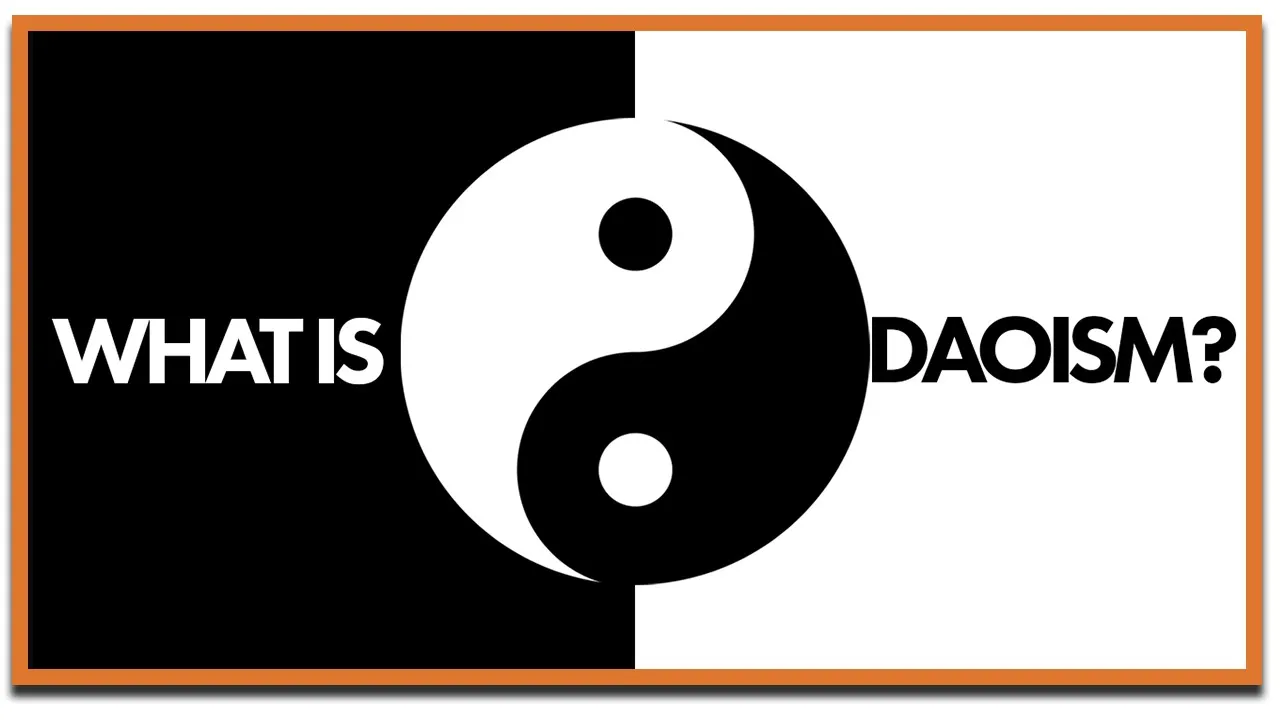
If you happen to be part of the 5% that gets BO, your life is not great. Often, you're pushed to get surgery to get your armpit sweat glands removed instead of just wearing deodorant every day. So, superpowered mutants do exist. They're us. Our super power is not being as stinky as everyone else and having dry ear wax instead of wet because the gene is associated with that, too. So all of that means that armpit smell jokes generally don't make sense to most people in East Asia. The pool of sacred tears is in the shape of the yin-yang, the ultimate symbol of Daoism. In Dowist beliefs, everything is transforming through a cycle of ying and yang from one extreme to the other. When the sun rises to its highest point, it will inevitably start to fall. When it falls to its lowest point, it will rise again.
Same with the passage of seasons between hottest summer and coldest winter and the rise and fall of empires and so on with basically everything else in the world. In this way, the rhythm of the world is predictable and it cannot be defied. And so, Dowists believe the only way to be at peace with it is to become one with the rhythm or the Dao. I don't think it's a coincidence that Po is black and white just like the yin-yang.
Sheriff then begins to train Po in a dowist way instead of a confusion way.
He begins to nurture what comes naturally to Po instead of forcing him through a regime that doesn't come naturally to him. Po has failed a training so far because he was thinking too much while doing it. Specifically, he was thinking too much about how much better the Furious 5 was and how he would never match up to them. He was boggled down by his own insecurity. Only when his mind was clear of insecurity because it was filled with nothing but a desire for food, could his talent shine through. He can only reach his true potential when he's not forcing himself to do it. Just like you can only find the tow by not looking for it. As sentient beings, none of us are born with insecurities and self-doubt. If someone grew up in an entirely isolated environment, they wouldn't have a positive or negative opinion of themselves. Those things are constructs imposed on us by other people since our births. And when we allow the opinions of others to dictate how we feel about ourselves or when we compare ourselves to others, we trap ourselves with parameters we can't control. The only way to be free of this is to recognize the intrinsic value in our existences.
We don't need to feel bad because we're worse off than others or feel good because we're better or so say the dowist sages. This training sequence may seem like Po mastering kung fu in an absurdly short amount of time, but it's actually about Po learning to detach from things like self-doubt and insecurity and unlock his innate abilities by learning to act as spontaneously as the universe does. The change in him is exemplified at the end when he's not even hungry anymore.
Meanwhile, the Furious Five have reached a place that look more like the Chongja Jia Mountains, inspiration for James Cameron's Avatar, and several chapters in my book. Taiong and the Furious Five have a very cool fight at the bridge.
But unfortunately, they are ultimately no match for his pressure point striking attacks. Crane manages to carry them home, making Shu realize Taiong has gotten even stronger. And so, he decides to give Po the Dragon scroll. To everyone's shock, the scroll is blank.
Not knowing how to interpret this, Shifu makes the Furious 5 evacuate the village and decides to face Taiong himself. Po goes back home where his dad consoles him by saying his destiny was making noodles after all, because they are noodle folk. Po doubts that his dad is even his dad, which connects back to the whole Peach Tree debate. Po being clearly a different species than his dad can be interpreted as a metaphor for how Po is not meant to be making noodles. He is not actually mood folk. broth does not run through his veins. There's a moment when it seems like Po's dad is about to tell him that Po's adopted, but turns out he's just revealing that there's no such thing as a secret ingredient in his soup. This makes Po realize the true meaning of the blank reflective scroll, contentment with the self. At the same time, the movie makes the point that you can't just artificially inflate someone's ego by telling them how special they are.
Self-worth is something that must be realized from within, not by the approval of others. Taiong is ultimately still at the mercy of needing the approval of Uguay and Shufu. He has no intrinsic inner peace. The scroll is useless to him even when he gets it after an epic fight with Po. This is a really telling shot. Him saying there's nothing on the scroll when his face is clearly reflected in it. He angrily tries to do his pressure point attacks on Po, but Po's fat makes him immune. Po ultimately wins the fight because his mind is clear while Tailong's mind is muddy. Po's synchronicity with the universe makes him figure out the Wooshi finger hold which the later movies revealed it sent someone to the shadow realm. I mean spirit realm. The valley rejoices upon realizing that Po has defeated Tailong. Po's dad even brags about him which is very similar to my parents bragging about my books despite doing everything they can to yell me out of choosing this career before I got my book deals. Thanks guys. Po runs back to the palace when he remembers Shifu is still there and Shifu finally achieves inner peace upon realizing U was right.
Ironically, even though Uguay's dowist philosophy won out in the end, it was Shufu's Confucian philosophy that gave him the faith to believe in Uguay.
Because if Confucian believes, you're not supposed to doubt your master. Uguay and Shu make an interesting parallel to the legend of Confucious meeting Lasu, the legendary founder of Daoism. Lau isn't his name, by the way. It's just the title that means old master back then. And Confucious isn't a name either. It's an English bastardization of Kung Fu, meaning master Kong. But anyway, what had happened was that these two supposedly met up at one point when Confucious was young and Lasu was much older and Confucious got schooled. After Confucious got back to his disciples, he didn't speak for 3 days. Finally, someone asked him what happened and he was like, "Guys, Lau was like a dragon beyond my understanding." There's doubt on if this meeting actually happened or if La was even a real person. But what matters is that in the classical philosophical texts, Laua is positioned as the superior thinker. But the thing is, even though it's acknowledged that Daoism is best at making you content, very very few people can achieve that level of enlightenment when you're at peace with existence itself. Legends even say that Laua himself eventually lost faith in China and headed past the western frontier on a water buffalo, never to be seen again. So realistically, Dowoism isn't the best philosophy for a government to promote.
Though before Confucianism became dominant for the rest of imperial Chinese history, there was a short while where Dowoism was the state ideology.
This was in the early Han dynasty about 2,100 years ago, right after theQing dynasty created imperial China and then swiftly collapsed because of its tyrannical policies. The people were so worn out by hundreds of years of wars and 15 years of brutal Chin rule and then seven more years of civil war by then that the early Han emperors were like, "You know what? We're just going to sit back and let you all chill." This is Dowist principles translated to governance, doing as little as possible as a government. You make the absolute minimum interference in your citizens lives. Smallest government ever. This policy of wooue or non-interference did allow society to recover naturally. Then Emperor Wuvo Han came Milan and made Confucianism the supreme ideology. But he was sneaky about it. He promoted Confucianism on the surface as a guide for morality. But on an administrative level, he actually let things operate with a core of legalism. The practical law above all philosophy that allowed the Chin dynasty to conquer the waring states. This Confucianism on the surface, but legalism on the inside model proved so effective that it became the default ruling model for the rest of imperial China. So even though confusionism is one of the most famous aspects of Chinese culture, it's far from the only philosophy ancient Chinese people came up with. While the famous Greek philosophers like Socrates and Aristotle were over in the west pondering about the meaning of life and how to live it, a whole bunch of thinkers in the east were also doing the same thing. This was called the hund schools of thought with the hundred just being a metaphor for there being a lot.
Confucianism, Dowoism, legalism, mohism, the school of vertical and horizontal alliances, and many, many more. All very interesting, though they get confusing if you try to read about them in English. So maybe I'll do a video on them one day. Anyway, Kung Fu Panda essentially makes the argument that Confucianism can't bring you inner peace. Only Dowoism can. And I believe this exploration of different Chinese philosophies is why Chinese audiences were so receptive to this movie. So, does it matter that the movie was made by white people? Well, in principle, if you're basing your story off an underrepresented culture, it's always better to involve as many creators from that culture as possible. It's not that white people are incapable of writing good stories based on non-white cultures. Kung Fu Panda is good, but it's a matter of decolonization for them to take a step back and let creators actually from those underrepresented cultures shine. We don't need white people to tell our stories for us. We want white people to step off the podium so we can tell them ourselves. We've seen what you guys can write. Now, let's see some different perspectives. But Kung Fu Panda was so good because the creators did put in the work. The production staff spent like 6 years researching and developing this movie.
It was made out of genuine appreciation for Chinese culture instead of just throwing in an underrepresented culture to show off how woke they are. It wasn't expected to be a big hit. It was a labor of love and art. and they had a Chinese head of story and art director. And as the franchise went on, it went in this right direction. The second movie had a Chinese director and then the third was straight up a Chinese co-production. All excellent decisions. I could have used more Chinese voice talent, though, always. Enough with these A-list actors taking voice acting opportunities. You don't Their faces don't even show.
What's the point? Anyway, that was my dissection of Kung Fu Panda 1. Once again, I am not a philosophy scholar of any kind. So, if you want to disagree with me on my interpretations, please do so nicely in the comments and don't be condescending. Come on. But thank you for watching and I hope you've learned something new. If you want to see more videos from me, like a deep dive on the other Kung Fu Panda movies or Marco Polo or just Chinese history and myth videos, please consider supporting me on Patreon or tipping me on Kofi. On Patreon, you can get updates about where I am with the videos instead of waiting in the void. You can suggest and vote on future topics and join my Discord server if you're of a certain rank. Shout outs to my guardian lions, Benji Sudokulken, Do It Out of Spite, Felix Chaplain, and Molly McAllister. Finally, again, this video was sponsored by Surf SharkVPN, which you can try out with the link in the description. That is all and see you next
Up Next

30:44
Ultra Instinct vs Ultra Ego: Eastern Philosophy Explained
@Geekdom101
228.6K views•2021-12-11

164:01
John of Damascus on Holy Images: A Theological Defense
@BannedBooks
139 views•2026-04-25

68:32
Should We Destroy the Machines? Big Tech Surveillance Critique
@TheStoriesWeTell303
167.9K views•2025-11-30
4:57
The Myth of Sisyphus: A Greek Legend of Eternal Punishment
@TEDEd
8.6M views•2018-11-13
Related Study Plans & Knowledge Roadmaps
Structured learning paths in Philosophy
philosophy
Frankfurt School: Critical Theory & Culture
01Foundations of the Frankfurt School and Critical Theory
02Horkheimer & Adorno: The Critique of Instrumental Reason
03The Culture Industry and Mass Deception
+ 2 more learning modules
12h5 modules
Explore Roadmap
philosophy
Philosophy of Language: From Frege to Austin
01The Linguistic Turn: An Introduction to Language in Philosophy
02Gottlob Frege: Sense and Reference
03Early Wittgenstein: The Picture Theory of Meaning
+ 3 more learning modules
15h6 modules
Explore Roadmap
philosophy
Feminist Epistemology: Standpoint & Injustice
01Introduction to Epistemology and Feminist Critiques
02Sandra Harding and Standpoint Theory
03Donna Haraway and Situated Knowledges
+ 2 more learning modules
12h5 modules
Explore Roadmap
philosophy
Environmental Philosophy: Ethics & Deep Ecology
01Foundations of Environmental Ethics & Anthropocentrism
02Biocentric Individualism and Animal Liberation
03Ecocentric Holism and Deep Ecology
+ 1 more learning modules
10h4 modules
Explore Roadmap