



![درس [5-2] الليجندات وتكوين المعقدات](https://i.ytimg.com/vi/NK_Y-40CQ4Y/maxresdefault.jpg)



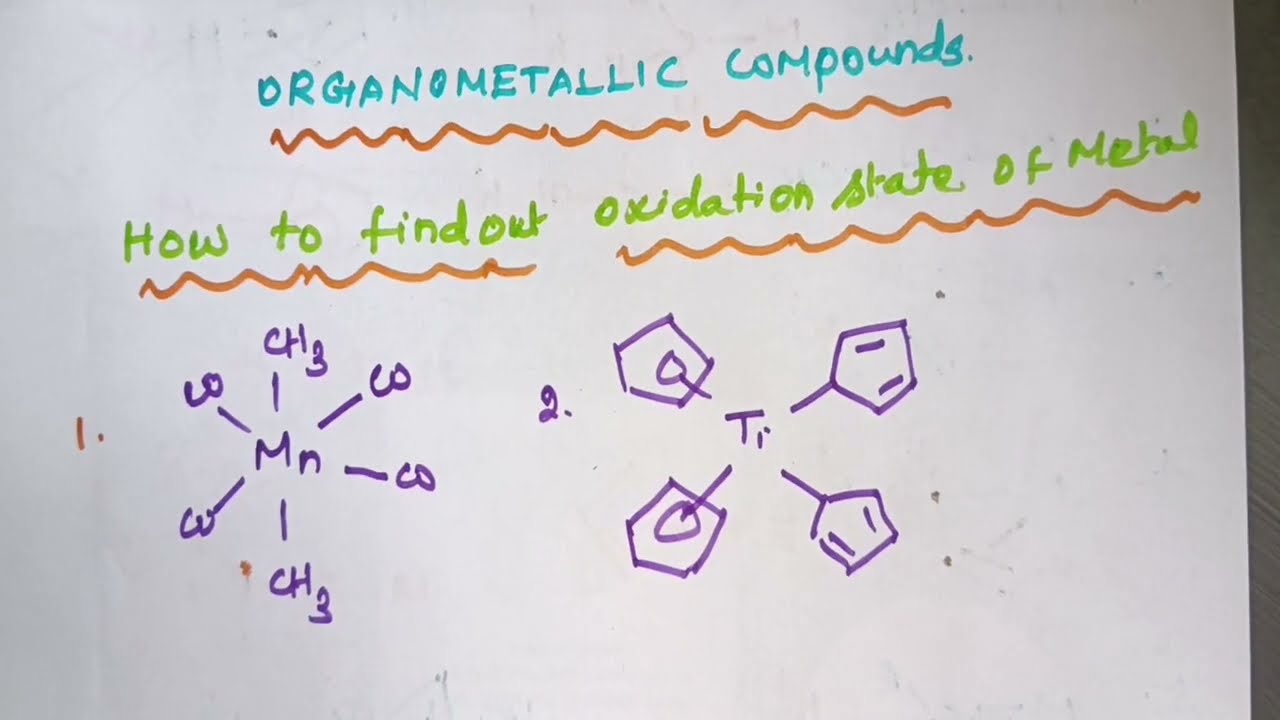













The 18 electron rule is a guideline for determining the stability of transition metal complexes, where metals seek to be surrounded by 18 electrons (compared to the octet rule's 8 electrons for main group elements) due to access to d-orbitals that can accommodate 10 additional electrons; to apply this rule, one must calculate the metal's oxidation state by subtracting ligand charges from the overall complex charge, determine the metal's valence electrons, count the electrons donated by each ligand, and verify if the total equals 18, though exceptions exist for square planar complexes which are typically stable with 16 electrons.
18 Electron Rule in Transition Metal Complexes | Stability & Electron Counting
Added:Basic electron configuration of d-block transition metals, specifically identifying valence s and d electrons.
Fundamental concepts of coordination chemistry, including ligands, coordination numbers, and complex geometry.
How to determine the oxidation state of a transition metal within a coordination complex.
Lewis acid-base theory, understanding ligands as electron-pair donors and metals as electron-pair acceptors.
Organometallic reaction mechanisms such as oxidative addition, reductive elimination, and migratory insertion, which involve changes in electron count.
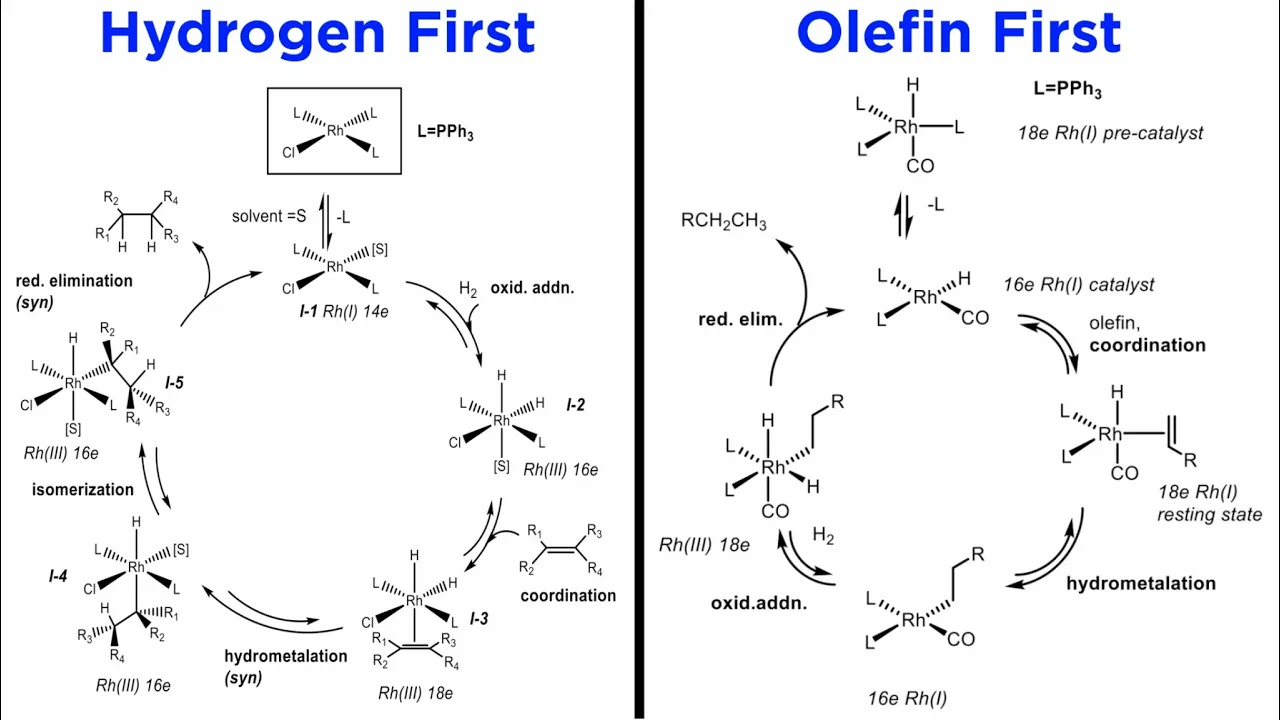
Applying electron counting to understand homogeneous catalytic cycles, such as Wilkinson's catalyst or hydroformylation.
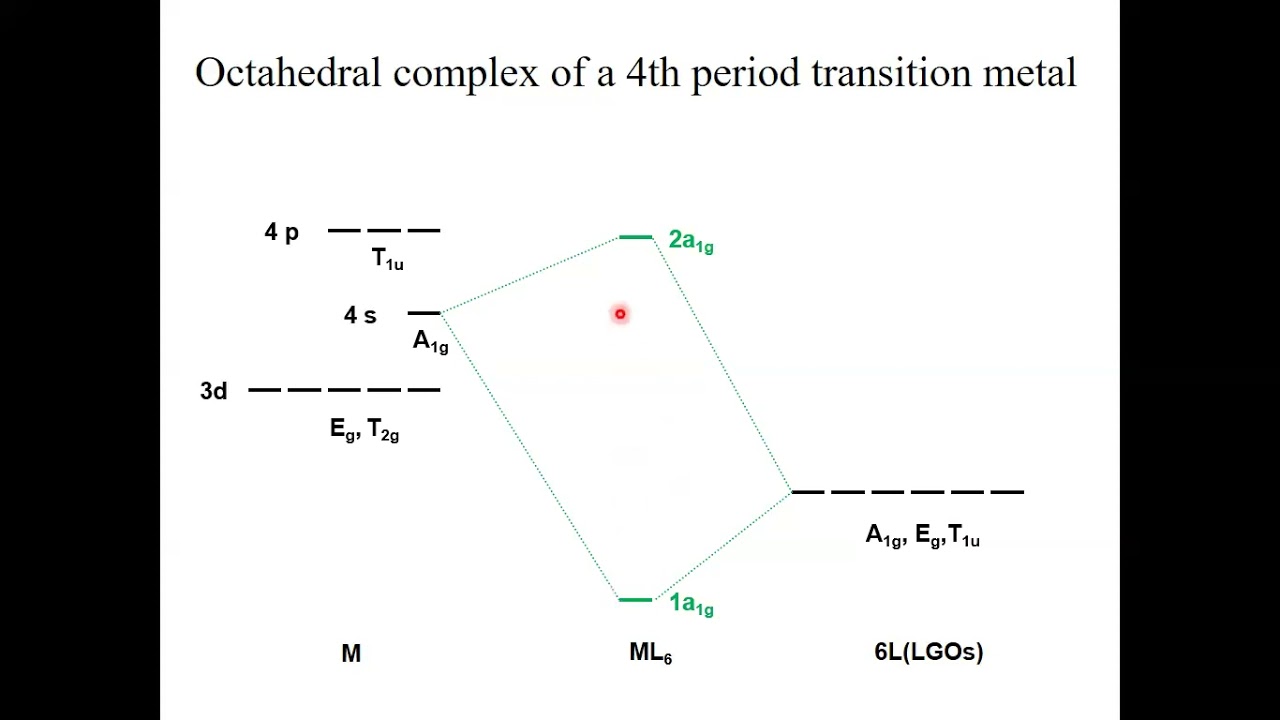
Molecular Orbital (MO) Theory and Ligand Field Theory to understand the quantum mechanical basis and limitations of the 18-electron rule.
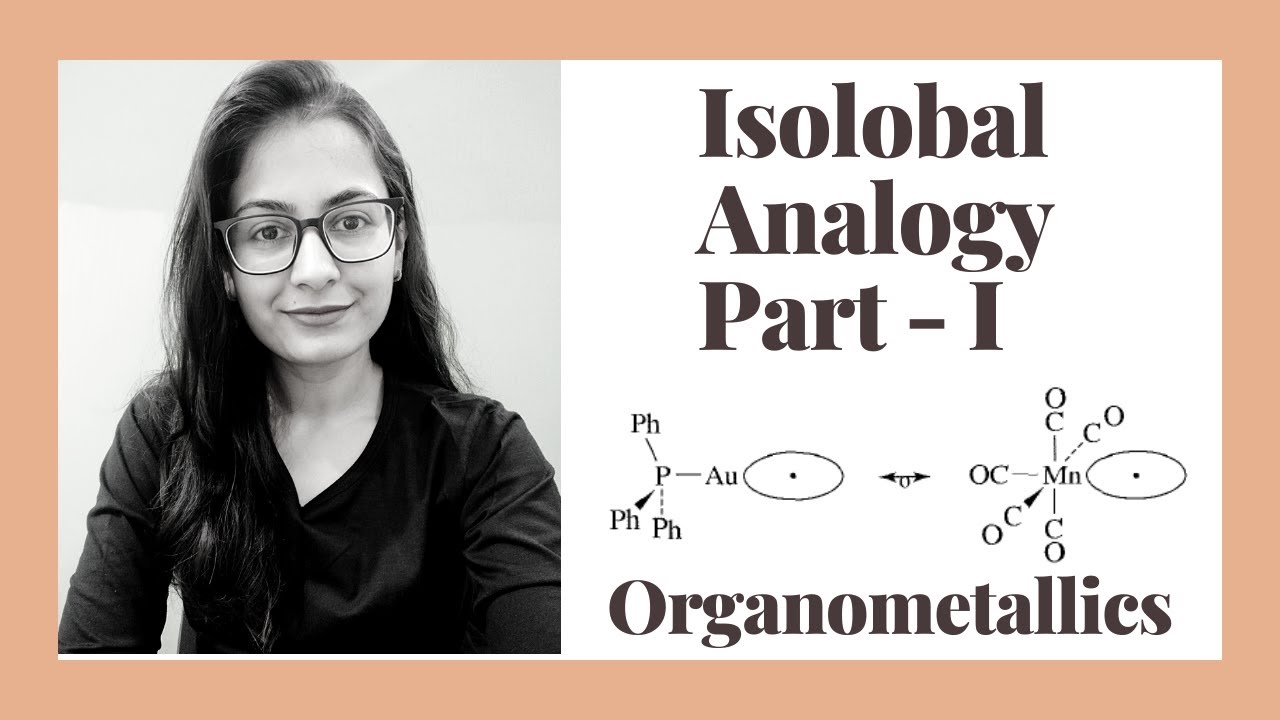
The Isolobal Analogy, which bridges the gap between organic and organometallic molecular fragments.
176.2K views2.8Klikes10:45Original Release: 2022-09-28
We just spent some time learning about the various ligands in transition metal complexes and how they interact with the central metal atom. Now we need to understand how to look at any given complex and determine whether the metal is accommodating as many ligands as possible, so as to comment on its stability. The method we will use to determine this is called the 18 electron rule. This is a little bit like the octet rule, which as we know, says that certain elements in the second row of the periodic table, namely carbon, nitrogen, oxygen, and fluorine, will tend to behave in such a way so as to gain a full octet, or eight electrons around them, thus achieving noble gas electron configuration. This number eight is due to the fact that the n = 2 shell can accommodate eight electrons, given that there is one s orbital and three p orbitals, which take two electrons each. But with transition metals there is now a tendency towards filling the d subshell as well, and with five d orbitals per energy level, that’s another ten electrons that can be accommodated, so transition metals will seek to be surrounded by 18 electrons.
This will be a particularly stable situation thermodynamically, and complexes with fewer than 18 electrons will often react in ways that lead to 18 electron counts, while complexes with more than 18 tend to be unstable and react in ways that reduce their electron count.
This is more of a guideline than a firm rule, just as we quickly discovered when we learned the octet rule in general chemistry, but it is very useful nonetheless. We can now take what we learned in the past few tutorials about common ligands and the number of electrons that they donate in order to count these electrons for any complex and determine whether the 18 electron rule is being followed. Certain situations are trickier than others, but let’s go ahead and learn a general algorithm that we can follow. First we must separate each ligand from the metal, and allow all ligands to exist with their natural charge.
Next, using the charges on the ligands and the overall charge on the complex, we can calculate the charge, or oxidation state, on the metal center. Because the charge on the metal plus the charges on the ligands should add up to the overall charge, we simply subtract the sum of the ligand charges from the overall charge to get the charge on the metal.
Then using this charge we calculate the number of valence electrons on the metal. We simply take the number of valence electrons on the neutral metal atom and subtract the formal charge.
Next we count the number of electrons that are being donated to the metal atom by the ligands.
This isn’t always immediately obvious, but we should be able to memorize electron counts for the common ligands quite easily, even the ones that are less intuitive, so this shouldn’t be a problem. Then add up the electrons on the metal and the electrons donated by the ligands. That’s your electron count. This will make much more sense with an example, so let’s try one. We have an iron atom and six cyanide ions, which make a complex that has an overall charge of 4-. Let’s go through the steps we just outlined. First, each cyanide ion is CN-, like this. There is a triple bond between the atoms and a lone pair on each, which leaves carbon with a negative charge. There are six of these for a total of 6-, and the overall charge is 4-, which means that the iron atom must have a charge of 2+, because 2 plus negative 6 equals negative 4.
Now a neutral iron atom has an electron configuration ending in 4s23d6, so it has 8 valence electrons. This means that the 2+ cation must have only 6 valence electrons, which happen to be the 6 d electrons. So iron contributes 6 electrons to the total count.
Each cyanide ion contributes 2 electrons, the two in the lone pair on carbon. So that is a total of 12 from the 6 cyanide ions. 6 plus 12 is 18, so this complex does satisfy the 18 electron rule and should be expected to be quite stable.
Now this one was pretty easy, but don’t forget that we have all those polydentate and polyhapto ligands, so this can get a little trickier. Let’s try this one. Here we have a tungsten center, we have a cyclopentadienyl anion, three trimethyl phosphines, and two chlorides, with an overall charge of 1+. So let’s go ahead and separate the ligands from the metal. This is the first place where mistakes can be made, as we need to know the charges on these ligands, even though they aren’t shown explicitly in the formula. We must know that the cyclopentadienyl ligand is an anion, it has a 1- charge. The phosphines are neutral, that makes sense from simple Lewis diagrams.
And the chloride ligands have a negative charge as well. So adding up the charges on the ligands, we get a total of 3-. The charge on the complex is 1+, so the oxidation state on tungsten must be +4, since 4 plus negative 3 equals 1. Now tungsten has an electron configuration ending in 6s25d4, so it has six valence electrons. Losing four electrons therefore leaves us with only two. Now let’s see how many electrons the ligands are contributing. The cyclopentadienyl anion donates three pairs of electrons, so it donates 6 electrons total. This one is very important to remember. The others are more obvious, the phosphines and chlorides donate two electrons each. So that’s 6 plus 6 plus 4, for a total of 16 electrons from the ligands. Add the two from the metal atom and we get 18, so this complex satisfies the 18 electron rule and should be quite stable.
Now let’s try something slightly different. Here is a complex with an iron center, surrounded by a cyclopentadienyl anion, two carbonyls, and an alkyne, with a 1+ charge.
Let’s try and predict whether the alkyne is a 2 electron or 4 electron donor in this complex.
So first let’s separate the ligands, those being the Cp-, two neutral carbonyls, and the alkyne.
That’s a total charge of 1- for the ligands, and we have to get to 1+ overall, so the metal must be in the +2 oxidation state. Since iron has 8 valence electrons, a cation in the +2 oxidation state must have 6 electrons.
Now back to the ligands, this cyclic ligand contributes 6 electrons, each carbonyl contributes 2, and then once again the alkyne contributes either 2 or 4. Now let’s take the 6 from the iron, plus 6 from this ligand, plus 4 from the carbonyls, and that gets us all the way to 16. 2 more electrons would get us to 18. This means that due to the 18 electron rule, the alkyne is likely acting as a 2 electron donor in this complex. So that gives us an introduction to the 18 electron rule, which will be very important for understanding all the transition metal complexes we will soon be learning about. Remember, all we have to do is separate the ligands, use their charges and the overall charge to get the charge on the metal, use that to determine the number of valence electrons possessed by the metal, and then add to that the number of electrons contributed by the ligands. If we get to 18, the complex is stable.
We may want to memorize this chart which tells us the number of electrons contributed by the most common ligands and their charges, as some of them are not as intuitive, although many of them are very easy to remember. It is also best to bear in mind that there are alternative counting schemes. The charges and electron counts covered in this tutorial are the most commonly used, but in the end they are merely a convention. Other sources may consider alkylidenes to be neutral rather than 2-, and alkylidynes 1- rather than 3-. This is simply another convention, and the total count will still be 18, so if you encounter a discrepancy with other sources, take note of the difference in the approach as best you can.
We also have to mention some exceptions. The 18 electron rule does not usually apply to square planar complexes. We will come to understand why just a bit later when we investigate ligand field theory, but for now, just know that square planar complexes will be most stable with a 16 electron count. This is common for complexes with platinum(II) and palladium(II).
So when you see an octahedral complex, don’t worry about it, you know 18 electrons is the goal.
If you see a formula for a complex with four monodentate ligands, however, you will have to figure out first whether the complex is tetrahedral or square planar in order to make an assessment regarding electron count. But don’t worry, we aren’t there quite yet, we just had to mention this caveat right now to be thorough.
For the moment, let’s just continue and get a little more practice with the 18 electron rule.
Up Next
10:31
Franck-Condon Principle Explained: Vibrational Transitions & UV-Vis Spectra
@CHEM4432
30.1K views•2020-03-30

83:56
Biocatalysis and Catalysis in Islatravir Synthesis | Merck Webinar
@SCIwheresciencemeetsbusiness
675 views•2020-10-08
10:54
Intermolecular Forces and Boiling Points Explained | Chemistry
@ProfessorDaveExplains
2.7M views•2015-11-05

17:31
Edible Water Bottles: A DIY Guide to Sodium Alginate Spherification
@ryan
10.5M views•2019-06-21
Related Study Plans & Knowledge Roadmaps
Structured learning paths in Chemistry
chemistry
Nuclear Chemistry: Decay, Meds & Fuel Cycle
01Introduction to Nuclear Structure and Radioactivity
02Decay Dynamics and Kinetics
03Radiation Interaction and Detection
+ 2 more learning modules
24h5 modules
Explore Roadmap
chemistry
Supramolecular Chemistry: Forces & Machines
01Foundations of Chemical Bonding and Intermolecular Forces
02Introduction to Host-Guest Chemistry
03Thermodynamics and Dynamics of Self-Assembly
+ 2 more learning modules
16h5 modules
Explore Roadmap
chemistry
Photochemistry: Excited States & Reactions
01Foundations of Light-Matter Interactions
02Molecular Orbitals and Electronic States
03Photophysical Processes and Jablonski Diagrams
+ 2 more learning modules
18h5 modules
Explore Roadmap
chemistry
Coordination Chemistry: Bonding & Properties
01Introduction to Transition Metals and Ligands
02Crystal Field Theory (CFT) and Geometry
03Magnetic Behavior and Spin States
+ 2 more learning modules
14h5 modules
Explore Roadmap