![TOPIC1(PART1): Soil-physical, chemical and biological properties [Soil science for UPSC Agriculture]](https://i.ytimg.com/vi/3x2-p3P8WCY/maxresdefault.jpg)





![[WEBINAR] Soil Microbiome analyses as a tool to improve nutrient management | 2020](https://i.ytimg.com/vi/VEGBrXC0pcY/maxresdefault.jpg)











Cover crops improve soil health through ten interconnected mechanisms: (1) Feeding soil organisms like bacteria, fungi, protozoa, nematodes, and earthworms by providing continuous living biomass; (2) Rebuilding soil organic matter and carbon, which has declined to about half of historical levels due to tillage and erosion; (3) Enhancing nutrient cycling and reducing nitrogen leaching by keeping nutrients in the root zone; (4) Maintaining soil cover to regulate temperature and moisture, supporting biological activity; (5) Increasing biodiversity above and below ground, including beneficial mycorrhizal fungi; (6) Improving water infiltration and reducing runoff; (7) Reducing soil compaction through enhanced soil structure; (8) Supporting livestock integration by providing high-quality forage; and (9) Preventing soil erosion by over 90% through root anchoring and water infiltration. These benefits collectively function like a Swiss Army knife, making cover crops one of the most versatile tools for improving soil health in agricultural systems.
Cover Crops for Soil Health: Top 10 Ways to Boost Agronomy
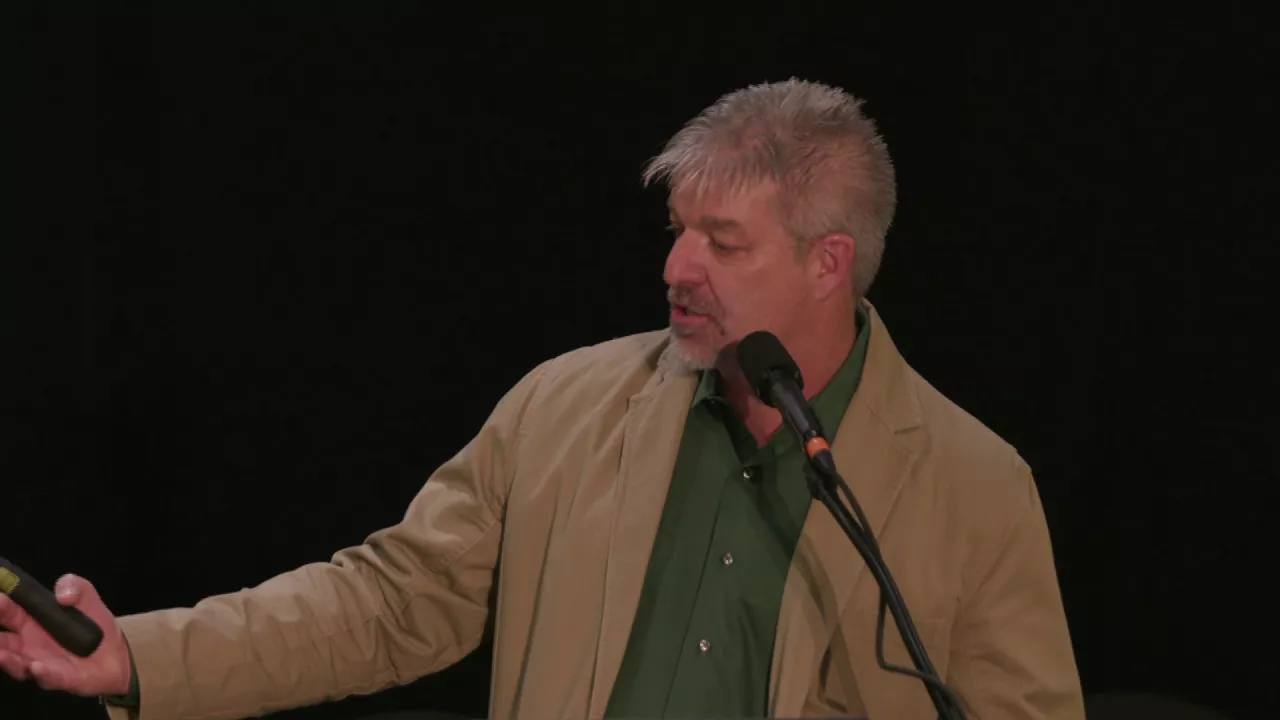
Added:all right well good morning my name is Rob Myers and I'm with the USDA sustainable AG research and education or Cera program based at University of Missouri and pleased to welcome you back to the second day of our conference we've got more great speakers this morning I'm especially looking forward to Keith Bern's talking here in a bit about carbon ah mcc's I've had a chance to hear Keith before and he does a great job I've got a couple of announcements before we get started one is that there's still a few seats on the bus tour so if you're interested in those you can pop out to the registration area they told me they can still arrange a lunch if you want to go on either those bus tours so just check out at the registration desk right outside the room also if you're interested in CEU credits you can also take care of that at the registration desk so we're gonna have a couple of talks here this morning before we get into our breakout sessions following the coffee break this morning I'm kind of the warm-up act to Keith so I'm gonna give you a little bit of a perspective on some things going on in cover crops related to soil health and then Keith's gonna take a deeper dive and what's happening down in the ground in terms of the underground carbon economy and as I said I've had a chance to hear Keith do this this talk and it's a really interesting and fresh way of looking about what happens in the soil you know from my own journey with cover crops like a lot of you I got exposed to them early on we had them on our central Illinois grain farm when I was young and I can remember my dad when I was a boy in the late 60s pointing to some of our corn and saying well look over there you know that corn looks better following some of the sweet yellow clover we had a year or two before and that kind of stuck in my mind as a young boy and then years later when I was starting to do research as an agronomist cover crops were one of the things I started to work with in the early 1990s when I was working on diversification of cropping systems and I could see the benefits that cover crops were providing but you know it was it really clear to me what was happening down in the soil and so part of my journey like a lot of you has been to start getting a better handle on what's happening in the soil and I'm just so excited about all the new discoveries that are occurring with our soil biology and even yesterday I was learning some new things and so what I want to do in the next 20 minutes or so is just share some of the insights that we're gaining from farmers and researchers that are working on soil health as they connect to cover crops and I've kind of called this the top 10 in terms of some things that we can see with cover crops as they impact soil health and it really comes back of course to what's happening underneath our feet those things that aren't so easy to see and it starts as you've probably heard with the soil food web and the critters down there being fed so whether it's a plate of radishes like we have here or any other type of living biomass and roots that can help feed those organisms that's critical you've probably seen a diagram like this with the soil food web from NRCS where it shows the some of the variety of organisms and of course it's much more diverse than is simplified here but it starts with bacteria and fungi we hear so much about that in soil biology but as I've learned more about it it's really remarkable how many different types of fungi and how many different types of bacteria are there and that there are kind of sort of like the plankton in the ocean feeding all these sea creatures and the whales and so on they're the kind of the basic of the part of the food chain working with the roots Keith's gonna talk about this exchange of carbon for nutrients so I don't want to steal his thunder or let him get into that but there's that whole food chain with protozoa eating bacteria and nematodes eating fungi other bigger nematodes eating those and earthworms insects arthropods doing their thing to complete that food chain the flip side of it is you know driving over here from Missouri I like a lot of you I saw a heck of a lot of fields that look like this I think because of the dry fall we had a lot of people out there doing tillage and if you think about it it's kind of like going to the grocery store here in early December and being told sorry we don't have any groceries for you till next April so that's kind of what we're doing to our soil microbes and we don't have anything living out there for that long period of time so they're either gonna go dormant or die without those living roots another way to kind of picture this Gerry Hatfield coined this idea that feeding all the soil organisms beneath the ground and one acre is like feeding to African elephants so imagine two big elephants on a football field need to be fed constantly every day and you get the idea the amount of biomass that's needed on a daily basis for those soil organisms here's another way I've heard some farmers talking about this that I think is really good you know what can we tap that free solar energy that's falling on our ground for all those months when we don't have a cash crop growing so if it's corn or soybeans you know that maybe seven or eight months of the year that there's a free resource we could be pulling in and using to build our soil and we're not tapping that very effectively when we have those tilled fields so one of those organisms we hope to increase because of their benefits as earthworms and I've told a few people as I keep reading about earthworms it's fascinating how much they do for the soil they are indeed impacted by cover crops as you've probably heard there's some work in Iowa along with other places showing that they increase on the left you see the number of mins which is the mounds that nightcrawlers will create as they come to the surface or on the right the red circle area shows that just looking at earthworm numbers a couple different species that they more than tripled following rye cover crops in one year in Iowa so they do have an impact if we look at a field like this with cover crops on the left and the tilled area on the right you can guess which side would tend to support the earthworms better if we look below the surface though it may be less obvious just because we can't see it that when we had that tilled system as speakers mentioned yesterday we're totally destroying all those earthworms channels the root channels and what's interesting when you start reading about earthworms is that they're creating a very nutrient-rich area with their castings along those earthworms channels and so if you think about the roots gravitating to where there's nutrients of course they're going to follow those earthworms channels that creates a wonderful growing environment for those roots because of all that nutrient concentration along those earth orange annals and those are also hotspots of biological activity again because of the nutrients in that area and with the roots growing so I saw this reference the earthworms or soil engineers I kind of like that phrasing it thinks helps us think about the fact they're moving or a matter around helping distribute nutrients helping cycle material and so they play a very important role so just kind of keep that visual in your mind when you think about tilled versus an undisturbed system I didn't know until a few years ago that there's actually a lot of different types of earthworms Eileen click oh I see back here she was one of the first people in this room probably to write a lot about earthworms back in the 90s and you know it's amazing like so many things there's just all these species that we don't know much about but the night crawlers are the ones we tend to see on our driveways and sidewalks after a rain or used for fishing but if you've ever had a composting bin maybe it was some kids that we're using red worms those are another type of species of worm there's also the pale or gray worms that tend to tunnel more horizontally the red worms will stay right at the surface with a leaf litter and they're all doing things for us both in terms of cycling organic matter and helping create root channels in the soil one of those things are doing again is helping with our organic matter you heard Dan - Sutter talked yesterday here from Indiana and I if you watched his video when we cued that up one of the things Dan said right at the end of his video was he said I hope that when I by the time I finished farming I've rebuilt my soil organic my soil carbon to the level it used to be and when I first heard Dan say that that really made an impression on me and I now heard many other farmers say that they want to rebuild their soil carbon restore it to the levels it used to be you heard I think David Montgomery mentioned yesterday that we've got about half of the organic matter nationally that we used to have on average of course it varies by field and soil type and this of course has to do with the role of tillage and oxidizing organic matter and erosion and other things that have happened but the good news is this comes from Ray wiles paper and Ray is talking here about soil organic matter at the conference that we can rebuild soil organic matter soil carbon over time if we minimize soil disturbance and especially if we had cover crops back into the system and the research shows that the cover crops are the key with that minimal soil disturbance in rebuilding organic matter of course if we had livestock we can go even faster so another way to look at organic matter is in terms of just simple bulk density you know if you have a lot of bulk density you've got a brick if you don't have much about density you've got a sponge so you know which would you which condition would you rather have your soil and have that high pore space ability to desorb water of course the higher organic matter is going to feed those organisms supply crop nutrients improve rooting just keep in mind with that sponge that we've got half of that sponge capacity that we used to have because we've lost half of that organic matter so that's part of the goal is to rebuild this soil organic matter going forward well the organic matter as I mentioned relates to nutrients so that's my point number four is that these cover crops really need to be part of our thinking and how we're managing our overall nutrients in the cropping system now probably like some of you and I got my initial agronomy training I would say it was kind of the input-output model you put on a pound of fertilizer to get a bushel of corn you know so if you wanted 180 bushels of corn you put on 180 pounds in nitrogen fertilizer and we still find some people using that rule of thumb but in reality that input-output model doesn't reflect the fact that we have complex bio cycles going on with the soil organisms if you look at this even somewhat simplified diagram there's a lot of different types of bacteria that are playing a role in converting nitrogen between its different forms you've also got protozoa feeding on those bacteria again you've got fungi impacting the nutrient balance one thing I would point out though in this diagram is that there is a leakiness in the bottom-right part of the picture and so if we don't have that active soil biology the system becomes more leaky we have that nitrogen escaping from the system going into the groundwater or going into our tile lines so that's part of the goal with keeping that soil ecosystem healthy is to keep that cycling of the nutrients keeping them in the root zone and less leakiness you've heard about cover crops playing the role of scavenging nutrients at the end of the growing season that's particularly true with nitrogen but real for any of our nutrients I will admit though and this is a challenge for the researchers in the room Matt Rourke where are you you know we need to figure out how to understand when those nutrients are released the next growing season I know Matt has been really looking at this along with some others that are here and you know some of the cover crops that winterkill probably release it very quickly we know that others hold it for a long time like the cereal rye maybe even longer than we'd like but we need to keep researching that understanding what's going on the bottom line though is these cover crops are helping keep these nutrients in the root zone keeping them from escaping from where we put them so that we don't lose that economic value point number five you hear this a lot keep the soil covered sometimes we can think about that just in terms of a simple mulch layer like you see the Rye here between the soybeans and we heard pokes like Dan the Saturday talk yesterday about keeping the soil temperatures cooler I think Dan had a great analogy Jimmy Emmons talked about this too you know he doesn't want to be out there working when it's 120 degrees he wants to be working at 70 and I thought that was a good way to phrase it but we also have more moisture so between the cooler temperatures are more moisture that's going to keep more of these soil organisms alive if we have that cover and it was pointed out that even if you don't have the residue layer just because of the extra biological activity that can still help keep the soil a little cooler I took this photo at Steve Groff farm many of you know Steve he's here at the conference one of our speakers he's done a lot of wonderful field days on cover crops over the years and Steve this picture banner that you had made up really hit me when I saw that a few years ago the soil is meant to be covered and I think maybe it was David Montgomery yesterday that said you know if you look at a prairie or you look at a forest you don't see big areas of bare soil you know you might see a tiny little patch but our soil organisms have evolved to have living plants with them year-round you know they didn't involve in these conditions where the soil was bare for the majority of the year and so no wonder that they don't function very well in that system point number six related to prairies prairies are diverse we want a more diverse system that's one of the tenants of soil health ski principles we get more above-ground biodiversity we found that creates more below ground biodiversity so we can do that with a variety of approaches we can have diverse mixes of covers of course we know farmers are moving in this direction we've seen with our national cover crop survey that farmers that use cover crops over time tend to add more mixes as they go forward but also getting more diversity in our rotations and when we do that we see better growth of the orgasms that we want like mycorrhizal fungi now we've been hearing a lot about mycorrhizal fungi I first heard about them in the early 90s when I was doing some work with buckwheat the Russians we're talking about this mycorrhizal fungi what the heck is mycorrhizal fungi well they are pretty amazing we're still learning about them but as Keith will talk about they're part of this underground carbon exchange again I don't want to steal too much of his information but we you know we know that in really simple terms they're creating a larger access to nutrients in the soil with the exchange they're doing with the plant roots so that's what we created this diagram just to help people visualize you're getting more exploration of the nutrients in that soil root zone by having more of those fungi okay what about rain we mentioned that cover crops help with organic matter and keeping soil moisture most of you have seen a rainfall simulator like this and you've probably seen it demonstrated where I'll have a sample of the soil that's been tilled like the second group of soil from the left or pan of soil and if you look at that bare soil you can see in front of it there's a lot of water that's runoff into the jar it's also kind of muddy because the soil particles have washed with it underneath that bare soil that jar is kind of empty if you look right in the middle you see the cover crop pan and there's not much water that came off of that one however there's a lot underneath it so obviously the water is infiltrating and I'd seen that demonstration a couple times thought yeah that makes sense but probably like some of you you've seen this happen when they take those pans and flip them forward so which one is the tilled soil it's the one in the front right so that's the soil that the water is not infiltrating through as opposed to the one in the back that's a cover crop less disturbed soil where the water is soaking down and infiltrating and the first time I saw that maybe six years or so ago I was like wow I've been doing tillage as a research agronomist my whole career I've done a little bit of no-till work and I never really thought about the fact that this water the rain was not soaking into the soil and that tilled system very well so that really made an impact on me okay number eight cover crops reduce compaction we've all either experienced this or seen fields with this after harvest we get some muddy tracks out there and so of course the temptation is to grab the tillage equipment to go smooth that out hopefully we don't see this situation and I'll admit cover crops are not going to fix that problem but they can help prevent it and it comes back to the soil microbes if we can build a stronger soil maybe we don't get that big tractor bogged down in the first place so you've heard an ounce of prevention is better than a pound of cure this is kind of like a microgram of prevention if we can get those soil microbes growing and providing some of the glue or glue Mallen that helps bind those soil particles together and even the hyphae of the fungi will help knit the soil particles together then we've got a lot more strength how many times have you heard a no tiller and cover crop users say I'm getting in the field earlier than my neighbors because I can get on my soil you know it's not it's got that strength that I can drive across it with my equipment another way to look at it which is less expensive buying a bigger tractor to pull a deep Ripper and burning a lot of diesel fuel or paying a little bit for some cover crop seed the research is showing in Ohio they've got some good work on this alan sunder meyer and some of his colleagues jim Norman have looked at this that you actually get longer-lasting benefits from the cover crop roots than you do from doing the deep Ripper at least on many of our soils okay how about livestock we heard about this yesterday that if we can reintegrate livestock that that pays a lot of benefits for soil health and it's been an interesting trend to me having grown up on a grain farm livestock had left when I was a boy to see some of the grain farm we're starting to bring their livestock back and put them out into the fields and if you think about it you know clearly our soils again evolved with herbivores whether it was the Buffalo and the prairies or other herbivores in the woods those soil organisms are used to having that animal manure and urine and saliva but stimulating that soil biology so that's part of the reason we see a more rapid improvement in soil health and soil organic matter if we can add livestock to the system and it's not going to work for everybody maybe it's working with a neighbor that has livestock but something to look at and the good thing economically is the research is showing that that cover crop forage can be very high value our forage specialist in Missouri showed that the quality of late season cover crop forage or early spring forage like from triticale rye wheat and so on is much higher than from a tall fescue pasture with better rates of gain so that's one of the reasons we're seeing people move in this direction okay point number 10 cover crops help me with soil erosion kind of our old purpose for cover crops unfortunately we still still see too much of this happening big rainfall events moving sediment right out of the field here's a field with terraces that's still getting some erosion and I heard a talk really interesting a couple weeks ago by our NRCS economists in Missouri saying she found in case studies that cover crops were much more cost effective than just terraces for stopping soil erosion on a per ton basis so if we can get cover crops out there between the terraces that'll pay big dividends in areas with moderate to high rainfall what it comes back to is this whole process we get that rain drop that's going to detach the soil particle so can we intercept that with the cover crop leaves if they're living or even dead after the cover crops have been terminating if we can get the cover crop root channels and earthworm channels to open up and get that rain to soak into the soil that's a huge impact on erosion because then we don't have as much of the transport event and of course those cover crop roots can also help anchor the soil so some of the work we'd and others have shown that you can reduce erosion by over 90% very easily by adding cover crops to the system and it's not just water erosion it's wind erosion these are some great pictures by a Michigan State Extension person Bruce took these showing a field that had been tilled on the left you can see the soil blowing and on the right just a little bit of rise starting to grow but enough to make the difference in holding the soil in place in fact on that right photo in the far back you can see an adjacent field that have been tilled with the soil blowing so how does erosion connect to soil health yes we don't want that but what's the connection well part of it is that our most intense biological activity is in that upper layer of the soil this is something I just kind of caught on tooth this past year I haven't really thought about that and so we don't want to lose that very top layer of soil because that's where we've got this concentrated biological activity that's also where we've got our highest concentration of nutrients and organic matter unless we're tilling the heck out of the soil then yes it would be more mixed up so if we lose that top inch in a somewhat undisturbed system we're losing not only biological activity but a lot of nutrients in organic matter all right just to summarize you know I like this visual we created as cover crops benefits with the Swiss Army knife because it shows how versatile cover crops are as a tool for us in our farming system I can't think of another agronomic management practice that provides as many benefits as cover crops or potential benefits and the bottom line for all these is improving soil health they all connect back to that in some way well tools are a good thing to have on a farm like a lot of you I enjoy working with tools and we can build things with tools and I just ask you to imagine if we're going to be building things with tools going forward that we imagine a future where we don't just have an occasional field with cover crops which is kind of what I saw driving over here from Missouri this is Rick Jim's farm with cereal rye you can see the bright green in Northeast Iowa but where we get to a situation where must most of our country has a majority of the acres covered in living covers and Steve Groff sent me these photos last year in Southeast Pennsylvania he sent me several photos different parts of that area and they all look like this and this is not winter wheat for grain they only have about 3% winter wheat in that County for grain so it is possible to get higher levels of covers out there and in the end of course the goal is building soil health and as we heard some of our speakers yesterday you know we're doing this to build the soil Hall for now and for that next generation to farm and have that productive American soil that helps feed our nation and support our country going forward so thank you and I appreciate your attention [Applause]
Up Next

How to Read Haney Soil Test Results | Regen Ag Lab Webinar
@ecdysisfoundationatbluedasher
178 views•2026-01-22

Life in Biosphere 2: Sustainable Ecosystems & Human Survival
@TED
334.9K views•2009-06-16
Microplastics Everywhere: How Plastic Impacts Our Lives
@TEDx
100.9K views•2018-05-08
Ice Stupa Artificial Glaciers: Solving Ladakh's Water Crisis
@SonamWangchuk66
3.2M views•2015-05-03
Related Study Plans & Knowledge Roadmaps
Structured learning paths in Environmental Science