The Forum of Augustus (42 BC-2 BC), built by Emperor Augustus, exemplifies Roman imperial architecture through its massive scale—1.5 times larger than the Temple of Venus—with marble imported from across the Empire, Caryatid figures quoting Greek classical elements, and monumental statues of Romulus, Aeneas, and a 14-15 meter statue of Augustus himself, transforming the site into a museum celebrating Rome's history and Augustus's own legacy; however, despite its grandeur, the forum fell into disrepair by the 6th century, with marble stripped for reuse and the piazza disappearing until Mussolini's excavations revealed its remarkable preservation.
Forum of Augustus: Marble Masterpiece of Ancient Rome
Added:Deep Dive
The rise of Octavian (Augustus) and the transition of Rome from a Roman Republic to the Roman Empire.
Октавиан Август: рождение Римской империи и Золотой век Рима 🪙 История 6 класс
135.4K
After Caesar's assassination, Octavian (Augustus) formed the Second Triumvirate with Mark Antony and Lepidus, defeated Antony and Cleopatra at the Battle of Actium in 31 BC, and in 27 BC was granted the title 'Augustus' by the Senate, marking Rome's transition from republic to empire; he maintained republican institutions while concentrating power, implemented moral reforms, created a professional army with the Praetorian Guard, and patronized the Golden Age of Roman literature through poets like Virgil, Horace, and Ovid.
Click to watch →

Деконструкция. Клим Жуков о фильме «Клеопатра» (1963)
618.5K
After defeating Antony and Cleopatra, Octavian (later Augustus) became Rome's undisputed ruler. Rather than declaring himself emperor immediately, he maintained republican institutions by holding regular elections and maintaining the Senate, preserving the illusion of republican governance while consolidating power. This political strategy became the model for all subsequent Roman emperors. The transition from Republic to Empire demonstrates how political systems can evolve while preserving formal structures, allowing Rome to maintain legitimacy while fundamentally changing political reality. Octavian's careful political maneuvering, combined with Antony's failures, enabled this transformation, showing how political transitions require both opportunity and skillful execution.
Click to watch →
The Great Emperors of Rome - History of Rome - See U in History
107.4K
The assassination of Julius Caesar on March 15, 44 BC marked the end of the Roman Republic. His great-nephew Octavian was named heir, initiating a power struggle that culminated in the Battle of Actium in 31 BC. Octavian defeated Mark Antony and Cleopatra, then systematically consolidated power through political alliances and military campaigns. In 27 BC, he accepted the titles Augustus and princeps, establishing the Principate—a system that preserved republican forms while concentrating power in the emperor. This transition from Republic to Empire represents one of history's most significant political transformations.
Click to watch →
Augustus - Founder of the Roman Empire Documentary
1.7M
Caesar Augustus (born Gaius Octavius in 63 BC) rose from a relatively modest background to become Rome's first emperor by skillfully navigating the political chaos of the late Roman Republic, defeating his rivals Mark Antony and Cleopatra at the Battle of Actium in 31 BC, and then transforming his absolute power into a constitutional framework that ended the Republic and established the Roman Empire, ushering in an era of unprecedented stability known as the Pax Romana.
Click to watch →

Comment la République Romaine est devenue un Empire ?
149.1K
Augustus (formerly Octave) transformed the Roman Republic into an empire through a carefully orchestrated series of reforms that concentrated power while maintaining the appearance of republican institutions; he established the principate—a hybrid monarchy disguised as a republic—by reforming the Senate, reorganizing provincial administration, professionalizing the army, and implementing meritocratic promotion systems, all while using propaganda, the imperial cult, and moral reforms to legitimize his rule and ensure a smooth transition of power to his adopted heir Tiberius.
Click to watch →
Deep Dive
The concept of Roman public architecture as a medium for imperial propaganda and political legitimacy.

ゲームの建築から読み解く人類史2000年/鳴潮×ゲームさんぽ
61.9K
The video explains that Roman public architecture served as a tool for political legitimacy. The video notes that emperors built public facilities like baths and amphitheaters to gain the support of the general population. The video explains that this practice was necessary because emperors had no other basis for their rule except the favor of the people. The video notes that this tradition of building for public benefit became a defining characteristic of Roman political culture and influenced subsequent political systems.
Click to watch →

56- Architettura imperiale romana (prima parte)
4.7K
Roman imperial architecture served as political propaganda, with each emperor building increasingly elaborate structures to demonstrate their power and legitimacy. The Column of Trajan and his forum exemplified how architecture communicated imperial achievements and maintained political authority.
Click to watch →
¿Cuánto sabes de Arte Romano? ¡Demuéstralo en este test!
253
Roman civic architecture served both practical and propagandistic functions. The basilica functioned as commercial and judicial space, while baths served as social centers. Romans added Tuscan and Composite orders to Greek architectural traditions. Theatres had semicircular plans for drama, while amphitheaters were oval for gladiatorial combat. Triumphal arches and commemorative columns spread imperial narratives, with portrait sculpture emphasizing realistic individual features while idealizing emperors as divine leaders.
Click to watch →

Рим 5. От архитектуры к скульптуре.
1.3K
Roman architecture served as a primary tool for political propaganda and imperial glorification. The Arch of Titus commemorated military victories over Judea, with reliefs depicting the destruction of the Jewish Temple. The Colosseum demonstrated engineering prowess while providing entertainment. Forum Trajanum evolved from marketplace to civic center, housing basilicas, libraries, and the emperor's court. The Pantheon's circular design symbolized Rome as the center of the world, with the oculus representing the axis of the cosmos. Roman baths like Caracalla's demonstrated sophisticated urban planning and care for citizens. These architectural projects communicated imperial power, legitimacy, and the civilization's universal reach to both citizens and conquered peoples.
Click to watch →

Perché non Sopravviveresti un solo Giorno nella Roma Antica ed altri Segreti
380
Roman architecture was propaganda carved in stone. The Colosseum, when intact, was a mountain of white travertine marble, 15 stories high, with colossal statues in the arches—a declaration of absolute power that made people feel small and insignificant. The Forum was a chaotic superposition of temples, basilicas, and triumphal arches. The Arch of Titus was not just decoration—it told a precise story: Roman victory in Judea, destruction of the Temple of Jerusalem, soldiers carrying away the sacred treasures. The art and architecture of Rome were propaganda designed to intimidate and inspire awe, constantly reminding citizens of their place in the social hierarchy.
Click to watch →
Deep Dive
The civic, religious, and social functions of a 'Forum' in ancient Roman daily life.

ANCIENT ROME: The Ultimate Quiz (50 Questions)
46.8K
The forum, which was originally an open-air marketplace, served as the center of day-to-day life in ancient Rome. It functioned as a commercial hub, political gathering place, and social center where citizens conducted business, participated in public affairs, and engaged in civic activities.
Click to watch →

24 Hours Inside Ancient Rome (AI Reconstruction)
3.7K
The forum was an open rectangular space surrounded by temples, basilicas, and government buildings that served simultaneously as a marketplace, courthouse, political stage, and social hub. On any morning, one might witness trials, land deals, religious sacrifices at the Temple of Vesta, and school lessons conducted by grammatici under porticos.
Click to watch →

Rome la ciudad eterna en español, todos sus lugares que visite !
162
The Roman Forum (Foro Romano) was a public space in ancient Roman cities serving commercial, financial, religious, administrative, and economic functions. It was the central location where Roman citizens conducted their social lives. The forum contained numerous palaces and temples dedicated to Roman pagan gods. Today, panoramic terraces offer free views of the entire forum.
Click to watch →
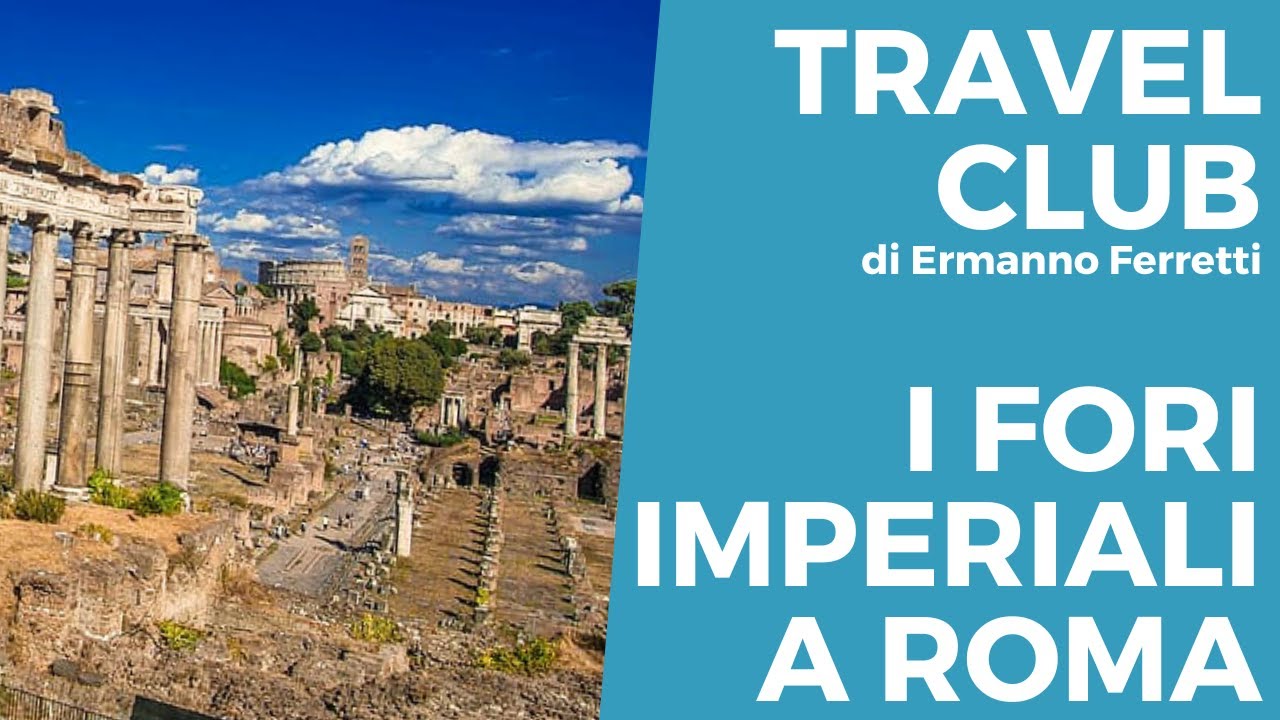
I Fori imperiali a Roma
2K
The Roman forum served four essential functions that made it the heart of ancient Roman civilization. First, as a public space, it was a gathering place for citizens similar to modern plazas. Second, as a political space, it hosted important decisions and political presentations where magistrates addressed the people. Third, as a judicial space, it contained courts and venues for legal proceedings. Fourth, as a religious space, it housed temples dedicated to various deities. This multifunctional nature meant the forum represented the core of Roman civic life, embodying the concept of civitas—the organized community based on law and discourse.
Click to watch →
Com’era DAVVERO una giornata nell’ANTICA ROMA? La vita quotidiana dei romani spiegata
484
The Forum was the heart of Roman city life where affairs, politics, markets, and improvised entertainment occurred together. Artisans opened small shops (3m holes with rolled-up tents, stools, and tools). Scribes worked under porticoes with wax tablets. Messengers and slaves followed endless orders. The Forum featured stalls with fabrics, meat, and wine, alongside lawyers arguing and tribunes giving orders. Clients followed their patrons like a personal army.
Click to watch →
Deep Dive
The significance of Augustus's urban renewal policy, famously summarized as finding Rome a city of brick and leaving it a city of marble.

The Story of Augustus || Learn English Through Biography || Level 3 || Improve Your English Fluency
9.1K
Augustus wanted to make Rome beautiful again after fires, wars, and poor planning had damaged the city. He famously said, 'I found Rome a city of bricks. I leave it a city of marble.' He built new temples, public buildings, clean and safe roads, aqueducts bringing clean water into the city, public baths, theaters, and a postal system to send messages across the empire. He made Rome a capital reflecting the greatness of his empire. These improvements transformed daily life for Romans and established standards for urban development that influenced cities throughout the empire.
Click to watch →

Fall of the Roman Republic (Part 2 of 2)
882
Augustus famously said he found Rome 'a city of bricks and left it a city of marble.' He made extensive reforms to the military, demobilizing much of it and converting it to a full professional force. He brought in auxiliary troops from other peoples. These reforms made the Roman army a new force. The key point is that Augustus maintained the veneer of the Republic while effectively ruling as emperor. This was important because the idea of the Republic had strong emotional power in Roman consciousness, even though no one had actually experienced it. The transition to empire was gradual, with Augustus using the trappings of the Republic to excuse his new form of government.
Click to watch →
Augustus Caesar: The Man Who Turned Rome Into an Empire | Bedtime History Stories
554
Augustus transformed Rome from a collection of brick and stone into a gleaming marble capital worthy of a world empire. He rebuilt the Forum, adding new temples and public buildings. He built his own Forum of Augustus featuring the Temple of Mars Ultor dedicated to the God of War and to Julius Caesar's memory. He restored 82 temples throughout the city, revived religious practices, built new aqueducts, roads, public baths, theaters, libraries, and marketplaces. He claimed he had found Rome a city of brick and left it a city of marble, an exaggeration but containing truth about his transformative impact on the physical landscape.
Click to watch →

El Imperio Que Dominó El Mundo Antiguo Y Cambió La Historia Para Siempre: Imperio Romano
173
The phrase that Augustus 'found a city of brick and left a city of marble' is more descriptive than it appears. Under Augustus, Rome built the Forum of Augustus, Temple of Mars the Avenger, Ara Pacis, Theatre of Marcellus, Mausoleum of Augustus, dozens of temples and basilicas. This was not vanity but state propaganda converted to stone, designed so each generation of Romans grew up surrounded by physical evidence that they lived in the best moment of history. The Pax Romana, the two centuries of relative peace that began with Augustus, was the consequence of this system—not an accident but the most sophisticated political engineering of the ancient world.
Click to watch →
Die Dynastien des Römischen Reichs – Macht, Intrigen und legendäre Blutlinien
2.4K
He was the longest-reigning emperor in Roman history, which allowed him to change many elements of Roman life over the course of his reign. One of the most profound changes affected the appearance of the eternal city itself. As one source reports, Augustus supposedly said that he found Rome a city of brick and left it a city of marble. This was not empty boasting. Augustus actually transformed the city by erecting many new public buildings and squares. The centerpiece was on the Palatine, one of the seven hills of Rome in the city center.
Click to watch →
Prerequisite Knowledge
- Concept 01The rise of Octavian (Augustus) and the transition of Rome from a Roman Republic to the Roman Empire.
- Concept 02The concept of Roman public architecture as a medium for imperial propaganda and political legitimacy.
- Concept 03The civic, religious, and social functions of a 'Forum' in ancient Roman daily life.
- Concept 04The significance of Augustus's urban renewal policy, famously summarized as finding Rome a city of brick and leaving it a city of marble.
Subsequent Learning
- Step 01A detailed investigation into the Temple of Mars Ultor, the center point of the Forum of Augustus, and its connection to the avenging of Julius Caesar.
- Step 02A comparative study of the Forum of Augustus with subsequent Imperial Fora, such as those of Trajan and Nerva.
- Step 03An analysis of the sculptural program of the Forum, specifically the 'summi viri' (famous Roman men) statues used to construct a curated lineage for Augustus.
- Step 04Exploration of other key Augustan monuments, including the Ara Pacis Augustae (Altar of Augustan Peace) and the Mausoleum of Augustus.
Augustus' Grand Design
Symbolism & Legacy
Augustus' Grand Design
0:07Playing Section
- 1
Forum of Augustus showcases new scale with massive Temple of Mars Ultor.
- 2
Construction took 40 years, importing marble from across the empire.
- 3
Gigantic firewall protected the enterprise from Rome's slums.
The Forum of Augustus as Imperial Propaganda and Political Control
While the Forum of Augustus is celebrated as an architectural masterpiece, critical historians view it primarily as a sophisticated instrument of political propaganda and dynastic legitimization. Rather than a benign civic space, the forum was carefully engineered to justify Augustus’s autocratic rule (the Principate) under the illusion of restoring the Roman Republic. By aligning statues of Rome’s legendary heroes (summi viri) with his own Julian ancestors, Augustus constructed a highly selective, revisionist historical narrative. This layout juxtaposed his lineage directly with Rome's founding myths (Aeneas and Romulus) and deities (Mars Ultor), portraying his absolute power as the natural, divinely sanctioned climax of Roman history. Furthermore, some scholars argue that this display of monumental marble served to obscure the socioeconomic inequality of the era and the erosion of democratic institutions, using grand architecture to cultivate compliance and distract the public from their lost political agency.
Deep Dive
A detailed investigation into the Temple of Mars Ultor, the center point of the Forum of Augustus, and its connection to the avenging of Julius Caesar.

Así Surgió Roma: El Imperio que Cambió el Mundo
838
The central monument in the Forum of Augustus was the Temple of Mars Ultor (Mars the Avenger), which commemorated the defeat of Julius Caesar's assassins and avenged his death. The forum was surrounded by porticoes and protected by an impressive marble-clad wall made from marble of different colors from many parts of the empire and conquered provinces.
Click to watch →
Лекция "Формирование коринфского ордера в эпоху императора Августа", Атаянц М.Б.
1.6K
The Temple of Mars Ultor (Mars the Avenger) on the Forum of Augustus represents the culmination of Roman Corinthian order development. It features an 8-column portico with Corinthian columns and a fully developed entablature. The temple was dedicated to Mars Ultor because Augustus claimed to have avenged Julius Caesar's death at the Battle of Actium. The temple's entablature shows the canonical Roman Corinthian form with modillions, dentils, and a heavily ornate cornice. This temple demonstrates the fully developed Roman Corinthian order that would become standard throughout the Roman Empire.
Click to watch →
![10 Roman Emperor Sites Most People Never Hear About [4K]](https://i.ytimg.com/vi/VHgu0xfLX6Q/sddefault.jpg)
10 Roman Emperor Sites Most People Never Hear About [4K]
358
Augustus built a new forum because he needed a new frame for authority. The Temple of Mars Ultor (Mars the Avenger) tied his legitimacy to justice and retribution in a city still shaped by civil war. Surviving walls still stand high enough to control space, showing how architecture directed attention and shaped behavior. This forum hosted legal and ceremonial functions within an Augustan narrative, demonstrating that emperors ruled not only through armies but through space itself, deciding where authority would be seen and how it would feel.
Click to watch →
Mythologie zum Einschlafen | Alle römischen Götter erklärt – Von Mythen, Macht und Legenden
682
The seriousness of Mars's cult was reflected in his temple, the Mars Ultor (Mars the Avenger), a spectacular temple built by Augustus in the Forum of Augustus. Augustus vowed this temple during the Battle of Philippi, where he avenged the murder of Julius Caesar, and vowed it to symbolize that war was only conducted to avenge and restore order. The assemblies for discussing war and peace and the ceremonies for beginning campaigns were held in this temple, reinforcing that the god was not an instigator of chaos but a defender of the state. This temple represented the culmination of Mars's evolution from agricultural god to the embodiment of Roman military justice and state protection.
Click to watch →
Augustus Caesar: The Man Who Turned Rome Into an Empire | Bedtime History Stories
554
The Forum of Augustus with its Temple of Mars Ultor was one of Augustus's greatest building projects. Dedicated to God of War and to memory of Julius Caesar whose murder Augustus had avenged, it contained statues of Rome's greatest heroes from Aeneas and Romulus to generals and statesmen who had built the republic. By placing himself in this context, Augustus claimed place in long tradition of Roman greatness, suggesting his rule was fulfillment of Rome's destiny rather than break with past. The temple was magnificent with marble columns and elaborate decoration, reminder that Augustus had won power through military victory.
Click to watch →
Deep Dive
A comparative study of the Forum of Augustus with subsequent Imperial Fora, such as those of Trajan and Nerva.

History of Arch Lecture 09 Roman Architecture Part 2
10.9K
The Imperial Fora represent a transformation from the Republican Forum's loose, flexible organization to axial, hierarchical urban space. These forums—Augustus, Nerva, Trajan—became increasingly elaborate, with Trajan's Forum being enormous and digging into the hillside. They feature temples inserted into colonnaded courtyards, with exaggerated curved spaces (exedrae) that amplify spatial experience. The forums are organized around axes and local symmetries, creating 'sponge-like' openings within the city. This shift reflects the transition from Republican citizen governance to imperial rule, where space became more controlled, hierarchical, and designed to project imperial power.
Click to watch →
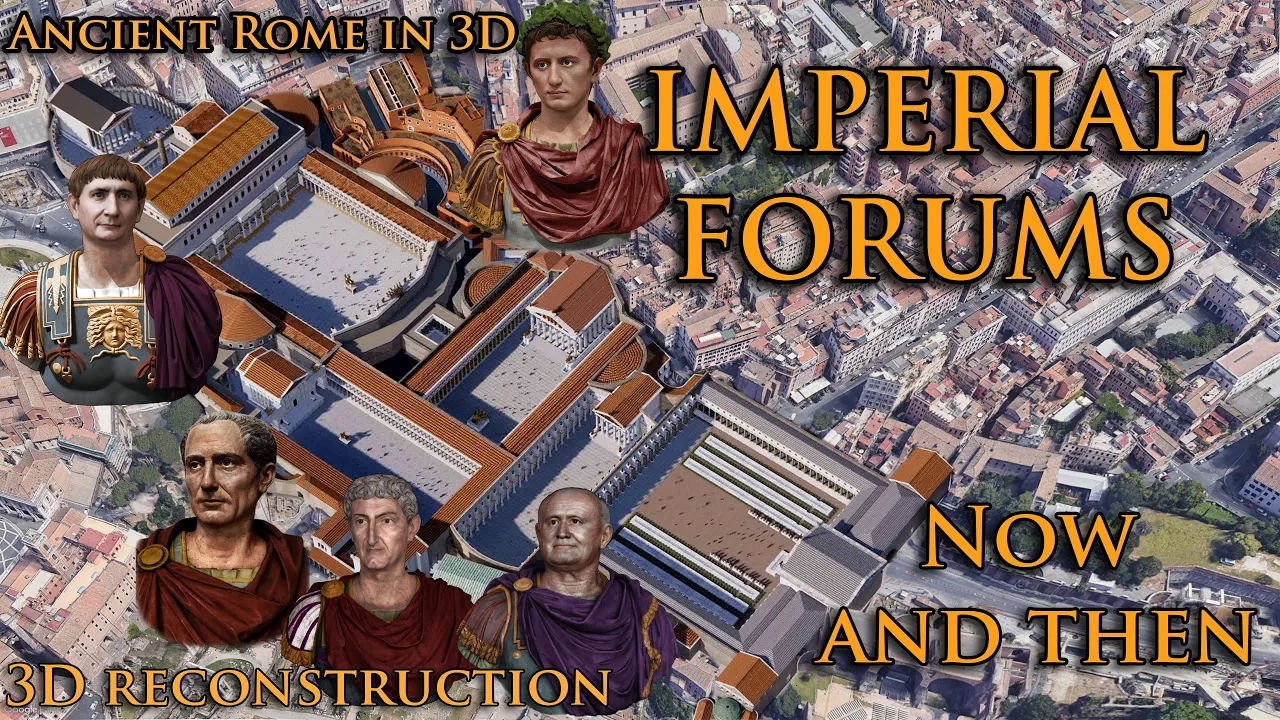
Imperial Forums - Now and Then - Virtual Ancient Rome in 3D
30.1K
The Imperial Fora of Ancient Rome were five grand public squares constructed by successive emperors from 46 BCE to 113 CE, each serving as political, religious, and cultural centers: the Forum of Caesar (dedicated by Julius Caesar in 46 BCE, featuring the Temple of Venus Genetrix); the Forum of Augustus (dedicated in 2 BCE, containing the Temple of Mars Ultor); the Forum of Peace (dedicated by Vespasian in 75 CE, housing trophies from the Jerusalem Temple and the Forma Urbis map); the Forum Transitorium (built under Domitian, completed by Nerva in 97 CE, connecting major streets); and the Forum of Trajan (dedicated in 113 CE, the largest and most luxurious, built with spoils from the Dacian conquest, featuring Trajan's Column and the Basilica Ulpia).
Click to watch →

"Il centro del potere nella Roma imperiale. Alla scoperta dei Fori Imperiali da Augusto a Traiano"
627
The Imperial Forums of Rome, spanning from Augustus to Trajan, represent the evolution of Roman urban planning and imperial power projection, where each forum served specific administrative, judicial, and political functions rather than being mere public gathering spaces; recent excavations have revealed that the Forum of Augustus was primarily a judicial complex with two tribunals, while the Forum of Trajan represents the largest and most sophisticated of these imperial piazzas, featuring the Basilica Ulpia and demonstrating how Roman emperors used monumental architecture to communicate political authority and divine legitimacy across the empire.
Click to watch →
Rome au IIe siecle John Scheid
59.5K
This segment examines the Imperial Forums and political life in Rome. The Forum Boarium was the natural port of Rome, located near the Tiber River, serving as the entry point for grain and other goods arriving from Egypt, Africa, and other provinces. The Imperial Forums (Forum Augustum, Forum Nerva, Forum Trajanum) were large public spaces that hosted political activities. The Forum Trajanum, created from spoils of the Dacian Wars, included a famous column depicting the campaigns. These forums served as venues for legal proceedings, public speeches, and administrative functions. The Forum Trajanum also housed a university-like institution where teachers sat on benches with students listening.
Click to watch →

The Imperial Fora: The Empire of Marble ANCIENT ROME FREE VIRTUAL TOUR
1.4K
The Imperial Fora were a series of monumental squares built by different Roman emperors in the 2nd and 3rd centuries AD, including the Forum of Trajan (largest, early 2nd century), Forum of Augustus, Forum of Julius Caesar, Forum Transitorio, Forum of Nerva, and Forum of Peace. These forums served as the heart of Roman public life, featuring temples, basilicas, and administrative buildings. The irregular geometry of early forums like Caesar's and Augustus's resulted from purchasing land from private owners rather than imposing expropriation, respecting property rights while creating impressive public spaces. Each forum reflected the achievements of its builder and demonstrated how Roman emperors used urban planning to project power and legitimize their rule.
Click to watch →
Deep Dive
An analysis of the sculptural program of the Forum, specifically the 'summi viri' (famous Roman men) statues used to construct a curated lineage for Augustus.
Trinkkultur für den Triumphator Messalla
630
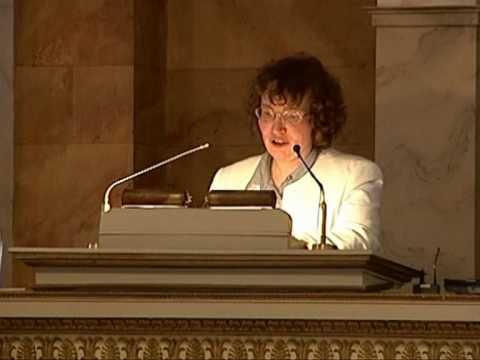
The Augustan Forum's structure and symbolic power derive from its programmatic representation and interpretation of Roman history. Among Augustan buildings, it took exclusive precedence due to its central location, dimensions, and above all, its programmatic representation and interpretation of Roman history. The idea that the achievements of great men of the leadership class should serve as models for posterity was conventional. What was new was the assembly of exemplary figures into a comprehensive program. The selected persons were genuine parts of the family memory in Republican times. Their exhibition in a collective display space of the Principate removed them from the traditional interpretive authority of the elites and the multi-voiced historical culture of the Republic. The Forum offered a harmonizing picture of Roman success history, in contrast to the multi-voiced historical culture of the Republic with its individual interests. The Forum's ancestral mask display in the aristocratic private sphere was translated into monumental form and became a site of identity formation for all Roman citizens. The statues of the Julii claimed a special position through the consistent integration of the Julian framework into a family-transcending total history. The Julian family's position was elevated to Roman Augustan state myth. The family's long-standing competition with other great families and their fluctuating fortunes were overshadowed by the fact that Augustus himself emerged from their ranks. The Republican family myth of the Julii was thus transformed into the Roman Augustan state myth. The Valerius Corvinus family's history was highly successful, in stark contrast to the politically weaker Julii. In the fourth and third centuries alone, multiple consuls can be documented in this family branch. Even in the Republic, Corvinus descendants played in the highest political league. The father of our Corvinus had been consul in 61 BC and censor in 55 BC. This demonstrates how some Republican families achieved political success without needing mythological genealogy. After the Corvinus family's success, Augustus erected a statue in his new forum. On this statue was the image of a raven as a memorial sign of the event and battle described. This demonstrates that even at the height of Augustan propaganda, the Corvinus family was not overlooked. The statue was visually distinctive because all portraits of the summi viri were uniformly dressed as triumphators, regardless of whether they had actually celebrated a triumph or had merely distinguished themselves for the glory of the Roman Republic. The research has therefore called the gallery of summi viri a 'stone triumphal procession.' In the mass of identically shaped statues, identification of individual persons was largely possible only through reading the inscriptions. Corvinus stood out from the start in the gallery of summi viri through his unmistakable attribute of the raven. This visual distinction was significant because all other statues were uniformly dressed as triumphators. The Augustan descendant of Corvinus, who triumphed in 27 BC, could therefore be particularly gratified by this demonstrative honor of his distinguished ancestor. Messalla Corvinus, the Augustan descendant of the Corvinus family, did not achieve the fame of other friends and political allies of Augustus. Despite being one of the greats of his time, he did not achieve the fame of other friends and political allies of Augustus. The lecture notes that we do not speak of 'Messalla' when referring to private cultural support, but rather of 'Messalla.' This distinction reflects the importance of his literary patronage and his role in Augustan cultural circles. Messalla Corvinus's achievements as a patron of Augustan direction could certainly be claimed. He maintained first-rate contacts with poets like Tibullus and the young Propertius, and not only with them but also with their patron Maecenas. This demonstrates how literary patronage was a key feature of Augustan cultural politics and how political elites used cultural support to build their reputation. Messalla Corvinus was not only a friend of poetry but also a brilliant orator, a significant military man, and an influential politician who survived the civil wars. He was one of the most respected senators in the Augustan period. His sons received high honors during his lifetime, and his descendants were among the most important members of the senatorial class in the Augustan period. His connection to Octavian can be fixed at key dates of his career. In the fateful year 31 BC, he accompanied Octavian to Actium, where he commanded the fleet instead of Octavian's opponent Marcus Antony. In 2 BC, when the Augustan Forum was dedicated, Messalla requested in the Senate that the princeps receive the honorific title 'Father of the Fatherland.' The monumental quadriga (four-horse chariot) erected on the plaza in honor of the princeps bore an inscription that brought the newly granted honorific title into effect.
Click to watch →

Commémorer les actes fondateurs : Enée, Romulus et Auguste
368
The Forum of Augustus featured a temple of Mars Ultor along the northeast side, with wide exedrae and porticoes containing niches for statues of significant historical figures. Central niches housed the groups of Aeneas and Romulus, creating a 'honor guard' around Augustus's statue. The program included ancestors, heroes, and gods, suggesting that virtues, glory, and power could be inherited. This was crucial when Gaius and Lucius appeared on the political scene, as it was imperative for Augustus to make dynastic legitimacy perceptible. The Forum provided monumental space for the commemoration of founders and their acts, with the choice of statue program reinforcing the idea that imperial power could be transmitted through hereditary succession.
Click to watch →

Forum of Augustus part 1
1.8K
The Forum of Augustus uses spatial narrative to connect Augustus to Rome's mythical origins. The temple's triad (Venus, Mars, Divus Julius) represents religious foundations of Augustus's control, with Venus and Mars being Rome's founding gods. The Forum displays statues creating a temporal triangle: Aeneas (founder of the Julian family) with his son Ascanius, the Alban kings, and Romulus (founder of Rome). This arrangement moves from primordial time through Roman history to Augustus's ancestors. The famous statue of Aeneas carrying Anchises and holding Ascanius represents Pietas, allowing Augustus to link his position to Rome's legendary founding and justify his political authority through ancestral connection.
Click to watch →
3.1 Roman Art: The Rise and Reign of Augustus
1K
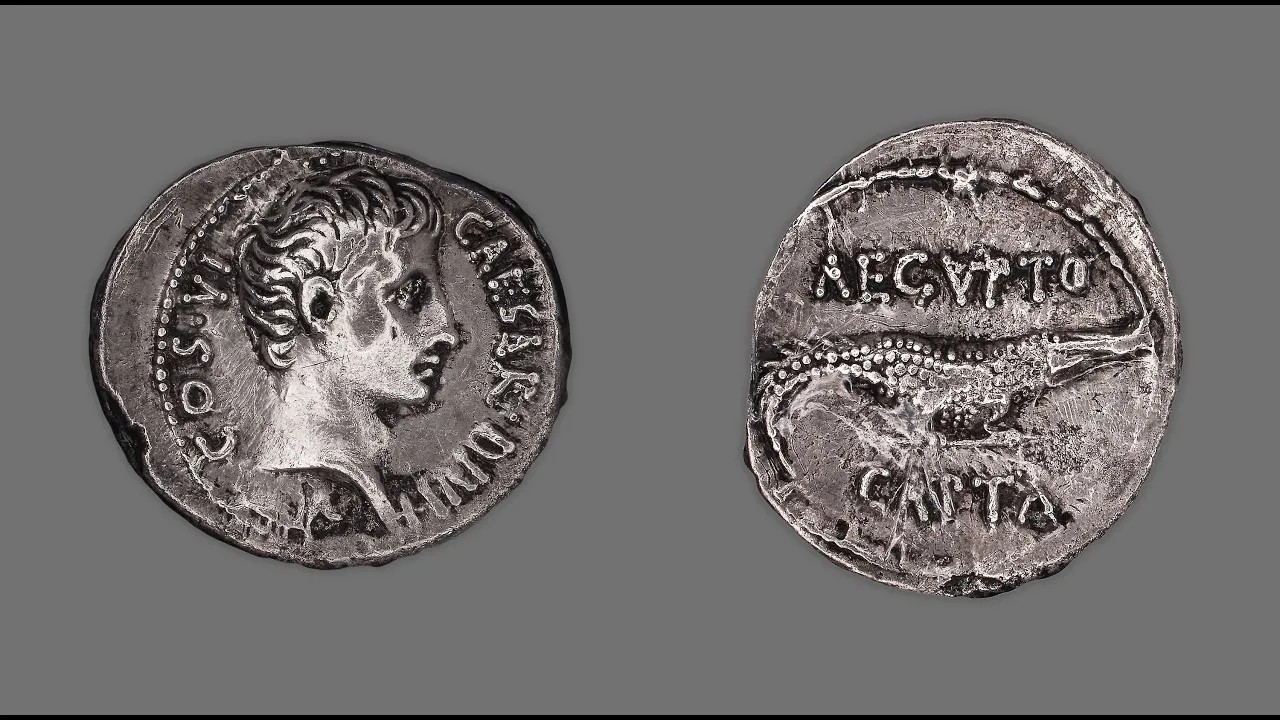
The Forum of Augustus contained approximately 108 statues of historical figures, creating what functioned as a museum of great men who had contributed to Rome's greatness. These statues included Roman generals from the Republic, figures who rebuilt Rome after its sack in 390 BCE, and even Alexander the Great, whom Augustus admired despite not being a Roman. Alexander was linked to Zeus as his divine parent, connecting Augustus to another powerful divine lineage. This collection reinforced Augustus's position as the culmination of Rome's long line of great leaders, positioning him as the natural successor to all previous military and political achievements.
Click to watch →
Why Augustus Covered Rome in Marble
128
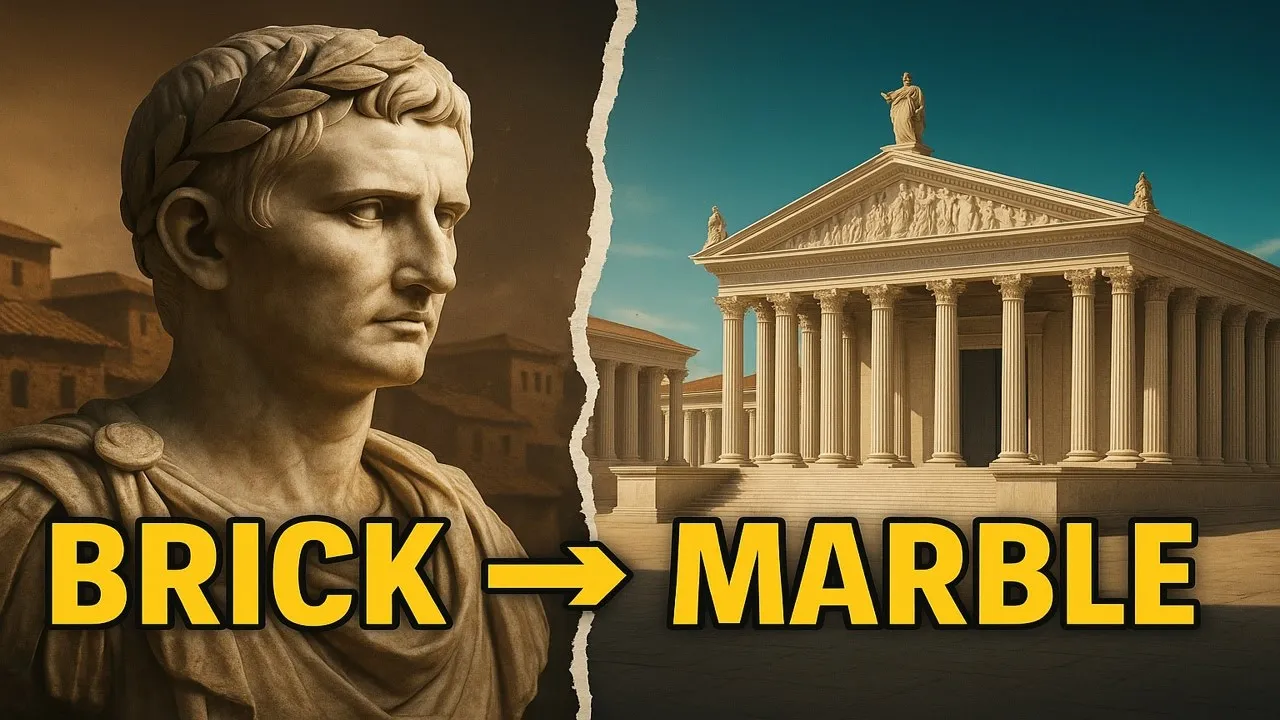
Augustus's forum featured statues in niches celebrating ancestors of the Julio-Claudian gens and heroes of ancient Rome. A major niche displayed Aeneas, the legendary founder figure who allegedly arrived in Italy and established Rome's dynastic succession leading to Caesar and Augustus. Across from it stood Romulus, the believed founder of Rome, creating a visual narrative connecting Augustus to Rome's mythical origins.
Click to watch →
Deep Dive
Exploration of other key Augustan monuments, including the Ara Pacis Augustae (Altar of Augustan Peace) and the Mausoleum of Augustus.
Ara Pacis Augustae & newly restored Piazza Augusto Imperatore 🕊️ | Ancient Rome Meets Modern History
212
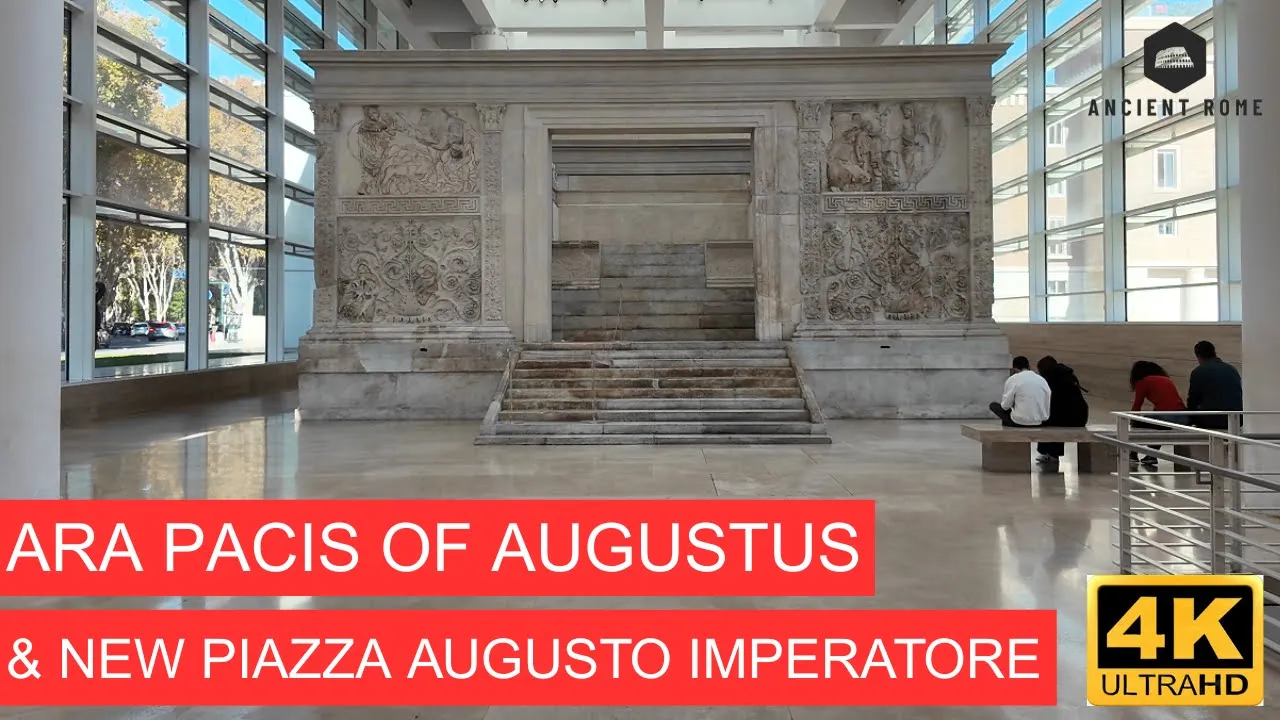
The video explores the Ara Pacis Augustae, a monumental altar commissioned by Emperor Augustus in 9 BC to celebrate the Pax Romana, and its surrounding modern urban context. The altar, considered a masterpiece of Augustan art, features intricate marble reliefs depicting themes of peace, prosperity, and Rome’s founding myths. It is housed within a contemporary glass-and-marble structure designed by architect Richard Meier, creating a deliberate contrast between ancient and modern architecture. The walk continues to the restored Piazza Augusto Imperatore, where imperial, fascist-era, and Renaissance elements coexist: the Mausoleum of Augustus (not currently open, with a planned 2026 reopening), monumental buildings from the 1930s Fascist regime, a small 1774 fountain, and fragments of ancient Roman infrastructure embedded in the cityscape. This layered urban environment illustrates the interplay between imperial ambition, 20th-century monumentalism, and archaeological preservation. The route includes Via dei Pontefici, Via del Corso, and Vicolo del Grottino, forming a 1.0 km loop that returns to the Ara Pacis. The experience is presented without commentary, emphasizing ambient sounds and natural light. The Ara Pacis Museum, which houses the altar, also includes multimedia panels on Augustus’ reign and rotating temporary exhibitions. Opening hours are daily from 9:30 to 19:30, with variable holiday hours. An entrance fee is required, and visitors are directed to the official website for updated information.
Click to watch →
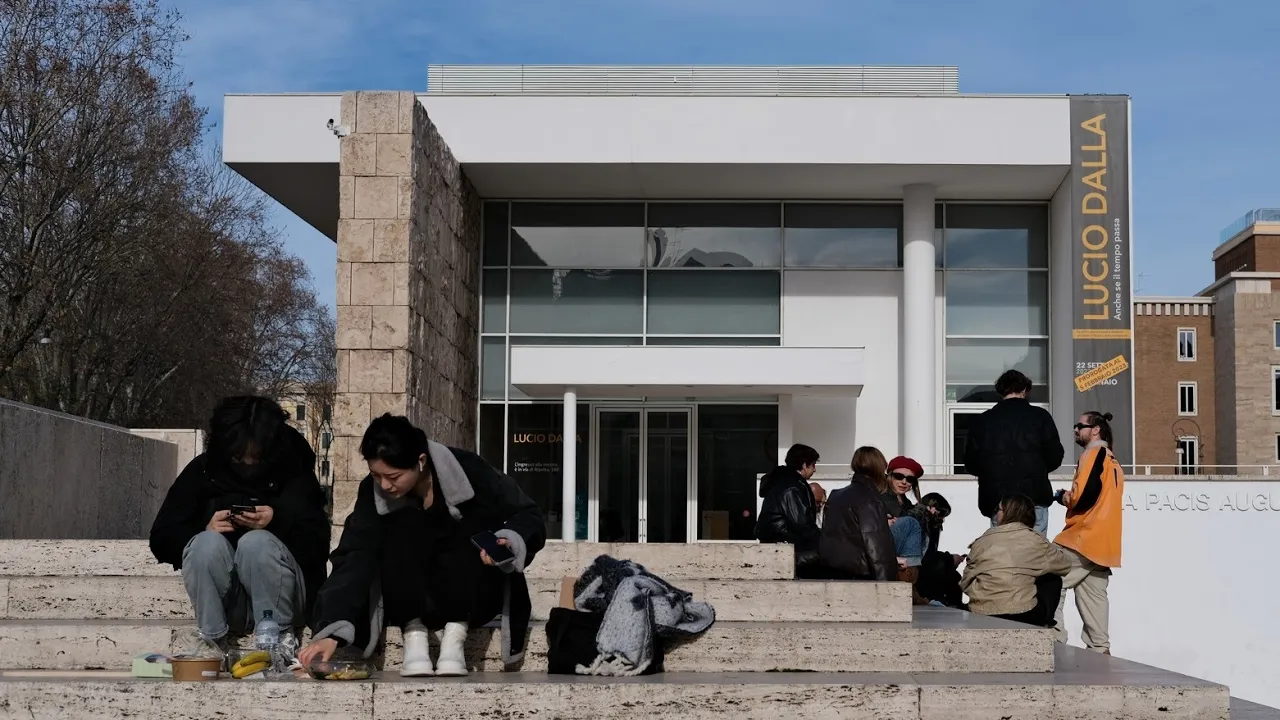
Passeggiata in via di Ripetta e nell'area di piazza Borghese (tour Guidato) Roma, Italia. 4K HDR
1K
The Ara Pacis (Altar of Augustan Peace) and the Mausoleum of Augustus represent two of the most significant Roman imperial monuments in Rome. The Mausoleum, with a diameter of approximately 87 meters, is recognized as the largest known circular sepulcher in history. Located on Via Tomacelli, it stands as a testament to the architectural achievements of ancient Rome. The Ara Pacis, situated nearby, features a modern fountain designed by architect Richard Meier. These monuments exemplify the grandeur of Roman imperial architecture and continue to attract visitors and scholars interested in classical antiquity.
Click to watch →
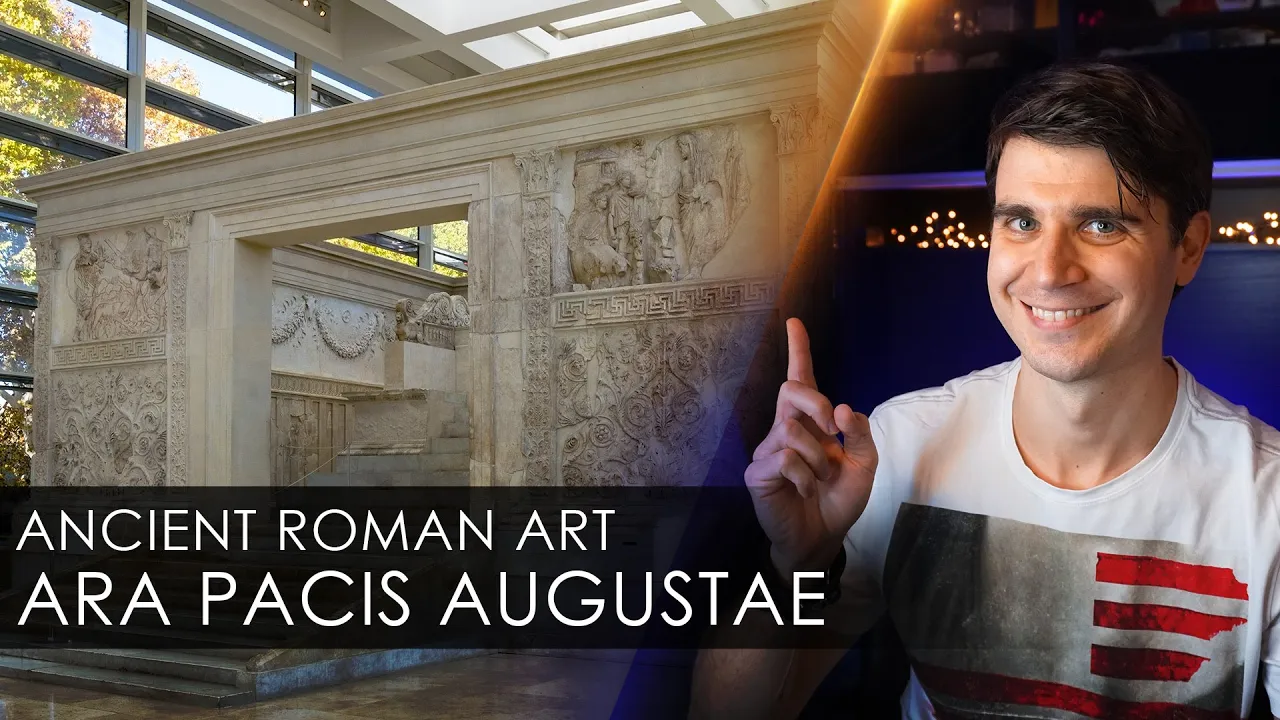
Ara Pacis Augustae The Altar of Peace That Glorified Augustus
851
The Ara Pacis Augustae, commissioned by the Roman Senate in 13 BC and dedicated in 9 BC, is a marble altar that glorifies Emperor Augustus by depicting scenes of peace, prosperity, and abundance through elaborate reliefs of plants, animals, and real portraits of Augustus and his family, serving as a powerful example of how Roman art was used as political propaganda to legitimize imperial rule and celebrate the transition from civil war to stability under Augustus's reign.
Click to watch →
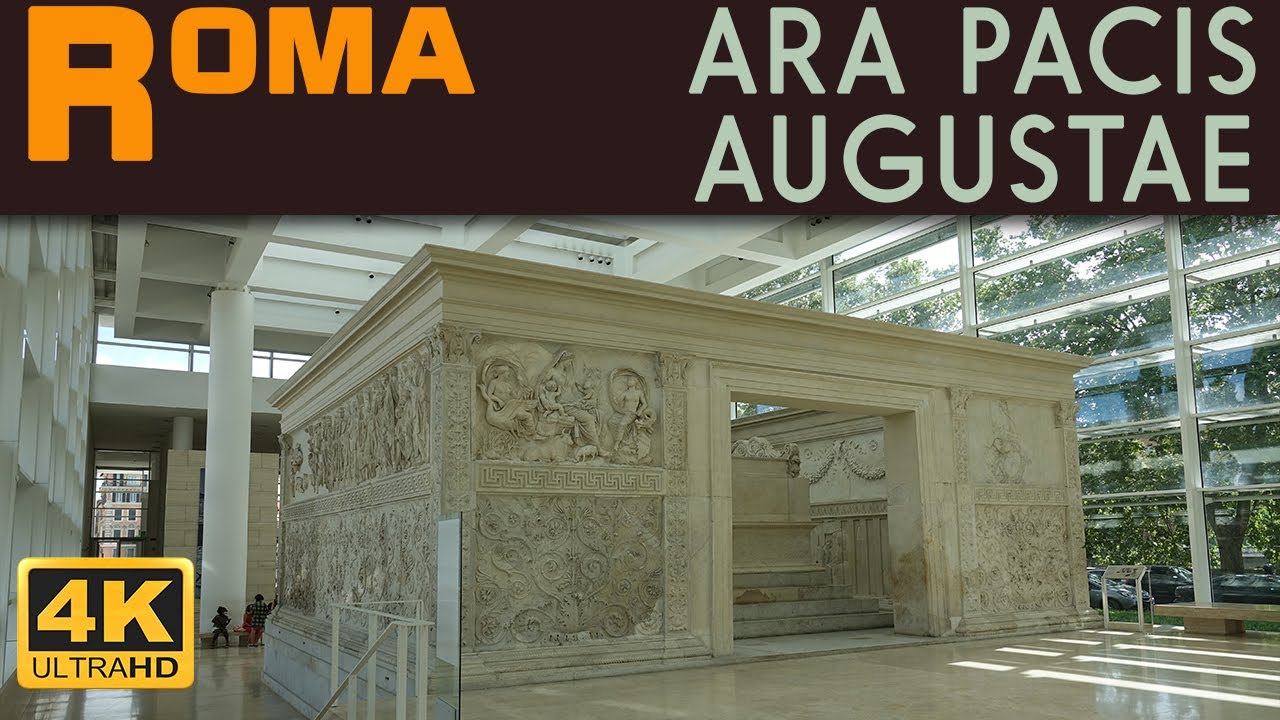
ROMA - Ara Pacis, l'altare di Augusto
4.1K
The Ara Pacis Augustae (Altar of Augustan Peace) is a marble monument located near Augustus's tomb in Rome, originally commissioned by the Senate in 13 BC to commemorate Augustus's return from his pacification campaigns in Spain and Gaul, with its consecration ceremony held on January 30, 9 BC; the monument features a remarkable processional frieze depicting Augustus and his entourage at the height of his power, and its fragmented remains were discovered in 1568, dispersed among various museums including the Vatican, Vienna, and the Louvre, before being reconstructed in the 1990s by Italian authorities with the cooperation of other nations.
Click to watch →
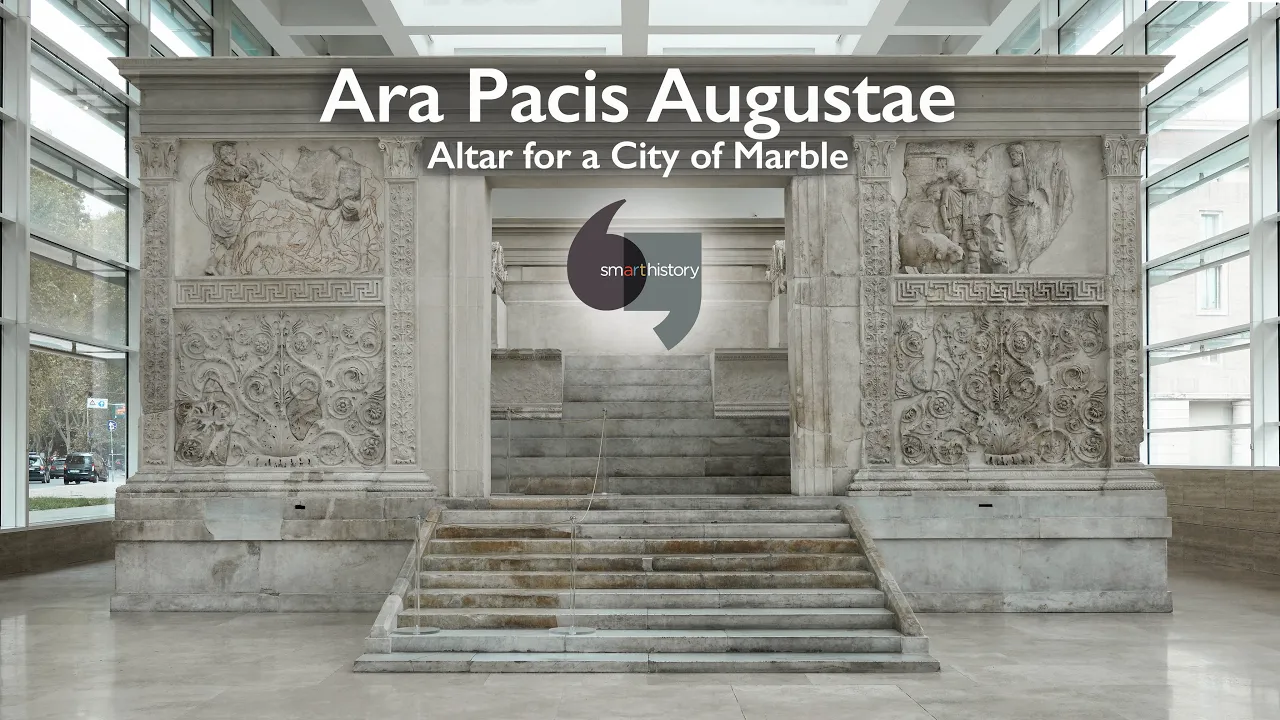
Ara Pacis Augustae, Rome
124.4K
The Ara Pacis Augustae (Altar of Augustan Peace), built in 9 BCE to commemorate Augustus's military victories and the establishment of the Pax Romana, represents a pivotal moment in Roman history where Augustus transformed the Republic into an empire while maintaining republican appearances; the monument's intricate decorative reliefs featuring over 50 plant species and allegorical figures symbolize fertility, abundance, and the Golden Age of Rome, demonstrating how Augustus used art and architecture to legitimize his centralized power while embracing traditional Roman values.
Click to watch →
Augustus' Grand Design
Symbolism & Legacy
Augustus' Grand Design
0:07- 1
Forum of Augustus showcases new scale with massive Temple of Mars Ultor.
- 2
Construction took 40 years, importing marble from across the empire.
- 3
Gigantic firewall protected the enterprise from Rome's slums.
The Forum of Augustus as Imperial Propaganda and Political Control
While the Forum of Augustus is celebrated as an architectural masterpiece, critical historians view it primarily as a sophisticated instrument of political propaganda and dynastic legitimization. Rather than a benign civic space, the forum was carefully engineered to justify Augustus’s autocratic rule (the Principate) under the illusion of restoring the Roman Republic. By aligning statues of Rome’s legendary heroes (summi viri) with his own Julian ancestors, Augustus constructed a highly selective, revisionist historical narrative. This layout juxtaposed his lineage directly with Rome's founding myths (Aeneas and Romulus) and deities (Mars Ultor), portraying his absolute power as the natural, divinely sanctioned climax of Roman history. Furthermore, some scholars argue that this display of monumental marble served to obscure the socioeconomic inequality of the era and the erosion of democratic institutions, using grand architecture to cultivate compliance and distract the public from their lost political agency.
The rise of Octavian (Augustus) and the transition of Rome from a Roman Republic to the Roman Empire.
The concept of Roman public architecture as a medium for imperial propaganda and political legitimacy.
The civic, religious, and social functions of a 'Forum' in ancient Roman daily life.
The significance of Augustus's urban renewal policy, famously summarized as finding Rome a city of brick and leaving it a city of marble.
A detailed investigation into the Temple of Mars Ultor, the center point of the Forum of Augustus, and its connection to the avenging of Julius Caesar.
A comparative study of the Forum of Augustus with subsequent Imperial Fora, such as those of Trajan and Nerva.
An analysis of the sculptural program of the Forum, specifically the 'summi viri' (famous Roman men) statues used to construct a curated lineage for Augustus.
Exploration of other key Augustan monuments, including the Ara Pacis Augustae (Altar of Augustan Peace) and the Mausoleum of Augustus.
10.2K views162likes3:47@AncientRomeLiveOriginal Release: 2016-02-11
form of Augustus is one of the standout constructions in the reign of Augustus it is massive just looking at the temple of Mars Ultor alone it's one and a half times the size of the Temple of Venus kinda tricks in the form of Caesar so you see that Augustus is really trying to set a new standard and build on a new scale he's importing marble from all over the Empire just for the pavement and really it's a massive enterprise it takes 40 years to build the forum of Augustus from 42 BC to to BC what we see today is in a gigantic firewall 35 meters high and that really protects this Freight Enterprise from the slums of Rome in the Subura behind it on either side of the of the piazza you have rows of porticos and they hide behind them hemicycles org z drew and these are large basis for Tribunal's the forum of Augustus is also a large museum space and you have all kinds of statues of the great statesmen and generals from Rome's history and you have statues match with a loggia but basically detail the activities and the successes of individual Romans forum of Augustus with his various refinements carvings represents the best that money could buy in the time of Augustus the attic story the porticoes you have Caryatid figures they're replications of the Caryatid figures on the erecting and structure on the Acropolis in Athens from classical times so Augustus is quoting things that most people probably would never see in person but he's quoting things that had a reputation that were considered to be the best of the Greeks ever produced and what he's doing in his form isn't just making a Greek structured he's making something quintessentially Roman which is taking components from different parts of the so the pavement the Marvel for the pavement is gonna come from but Africa it's gonna come from Turkey and Greece and you have various sculptural groups that are going to be vocally the grandeur of the Greek world the Greek world that is now under the sway of Rome statues of great Romans are depicted and niches all throughout the forum and the two largest monumental statues and the hemicycles are representations of triumphing Romulus and Aeneas with his son Ascanius carrying on his shoulders and Kai sees the largest statue that we know that's depicted in the form of Augustus is in the Hall that philosophy represents a statue of Augustus himself towering it possibly 14 or 15 meters high we have the remains of foot in a hand and it really is of a gigantic scale in the center of the Piazza in front of the temple of Mars Ultor there was Augustus himself in a four-horse chariot by the sixth century we here the temple of Mars Ultor beginning to fall down and the form space is largely stripped of marble that can be reused in the Middle Ages for building material the Piazza itself is filled in with housing and ultimately disappears from view the temple podium space still stands and in its place you have the church in a monastery and it's not until the time of Mussolini that you have massive excavations that reveal just how much was preserved and it's that firewall which is so breathtaking so large is so well preserved that will continue stand only with constant maintenance
Up Next

10:04
Rome's Most Ambitious Imperial Construction Projects: A Historical Analysis
@toldinstone
217.5K views•2024-01-26

33:02
The Great Schism of 1054: Causes and Consequences
@SacredCathedrals
113.5K views•2026-02-19

91:57
The Geopolitics of the Ukraine War and the Rise of Global Autocracy
@JordanHarbingerShow
468K views•2025-04-19
17:05
Understanding the Cold War: Superpower Conflicts and the Road to Détente
@OverSimplified
46.1M views•2019-01-24
Related Study Plans & Knowledge Roadmaps
Structured learning paths in History
history
Byzantine Iconoclasm: Theology, Art & Politics
01Foundations of Byzantium and Early Christian Images
02The First Iconoclasm: Leo III and the Crisis of Images
03Empress Irene, Nicaea II, and the Second Iconoclasm
+ 2 more learning modules
9h5 modules
Explore Roadmap
history
Iranian Revolution (Causes, Events & Legacy)
01The Pahlavi Dynasty and the Roots of Discontent
02The Spark of Rebellion and the Rise of Khomeini
031979: The Fall of the Shah and the Climax of the Revolution
+ 2 more learning modules
8h5 modules
Explore Roadmap
history
Mali Empire: Mansa Musa, Trade & Timbuktu
01Foundations of the Mali Empire
02The Trans-Saharan Gold and Salt Trade
03The Reign and Pilgrimage of Mansa Musa
+ 1 more learning modules
6h4 modules
Explore Roadmap
history
1947 Partition: Politics, Borders & Legacies
01Foundations of British India and the Divide
02The Political Negotiations and the Mountbatten Plan
03Drawing the Boundary: The Radcliffe Line
+ 2 more learning modules
8h5 modules
Explore Roadmap