
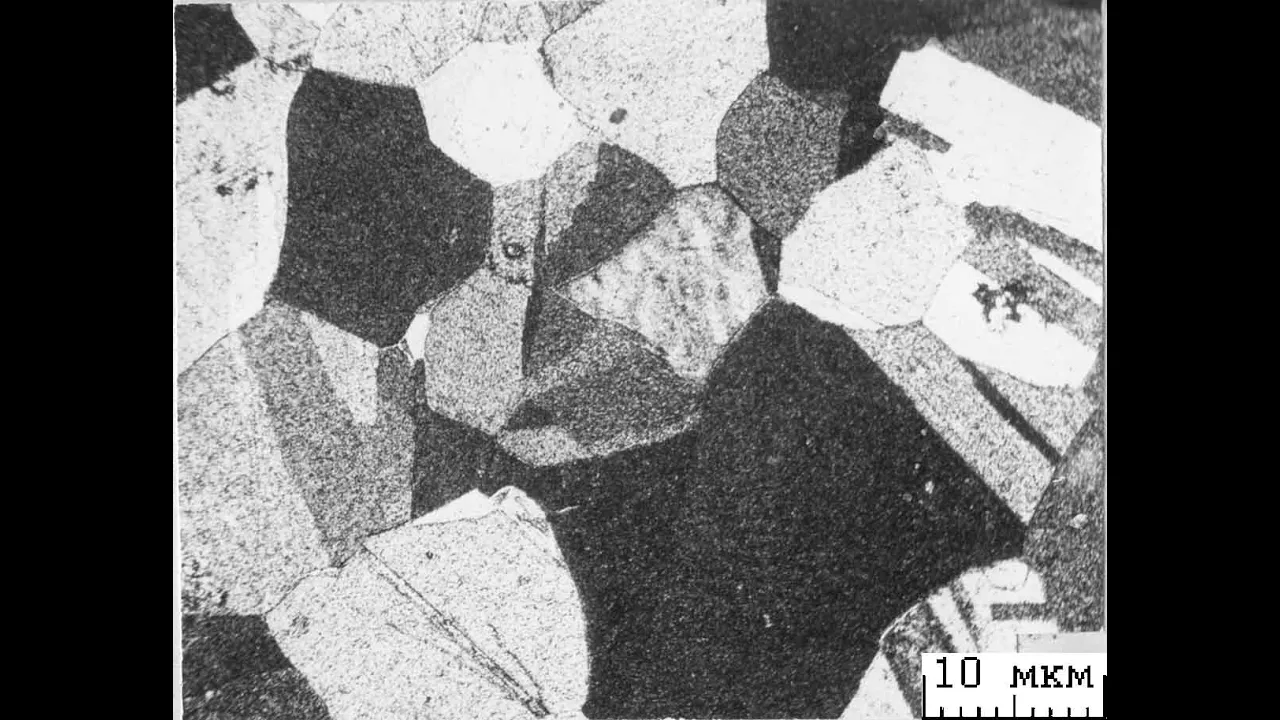
















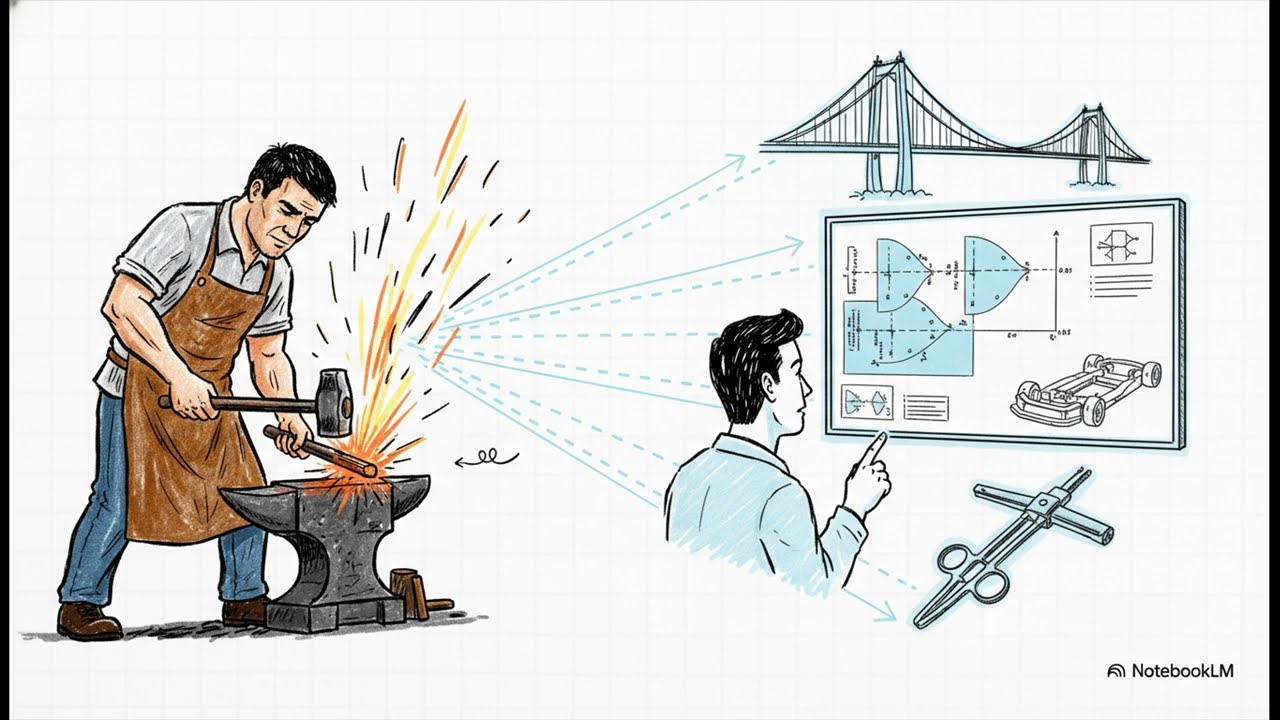

In metal heat treatment, heating increases atomic vibration which allows dislocations (imperfections in the crystal lattice) to move more freely; larger grains created through processes like annealing increase a metal's ductility because dislocations have more distance to travel before reaching grain boundaries, whereas smaller grains restrict dislocation movement and reduce ductility.
Metal Heat Treatment Explained: Grain Size, Annealing & Dislocations
Added:Basic crystalline structure of metals, including how atoms arrange themselves in regular, repeating patterns (lattices).
Fundamental mechanical properties of materials, specifically the definitions of yield strength, ductility, and elasticity.
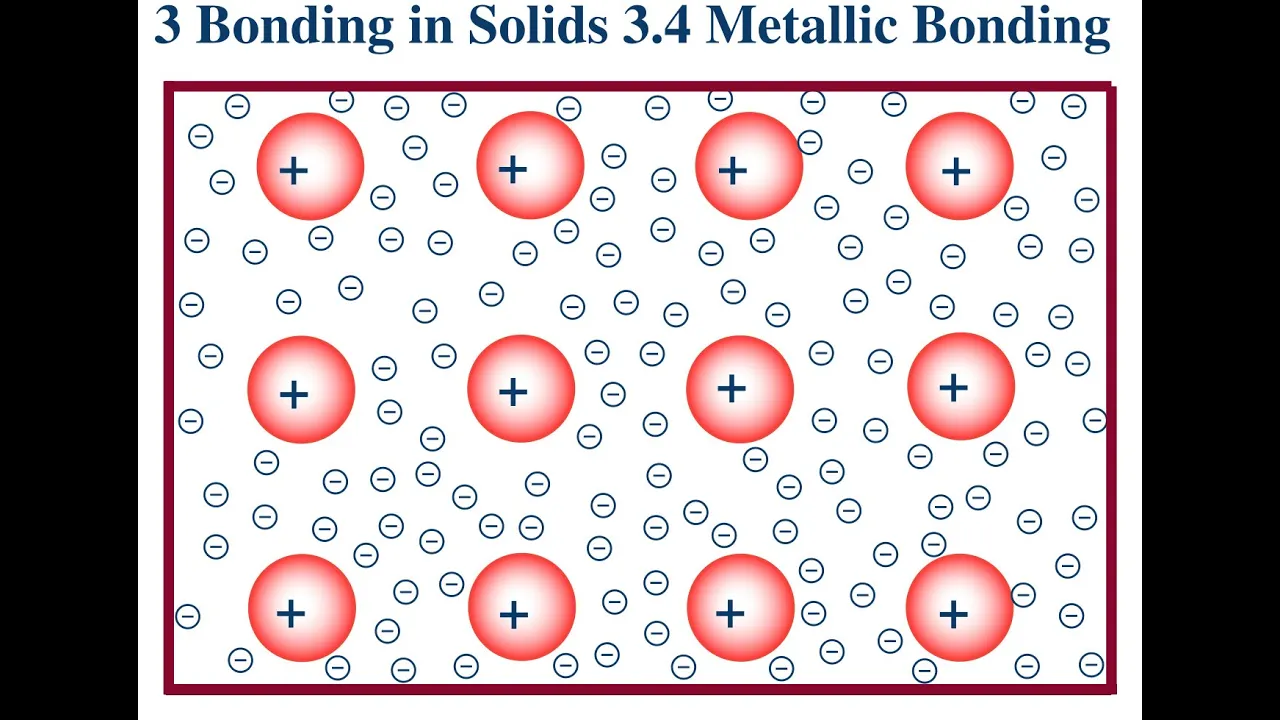
The concept of metallic bonding, which explains why metals can deform without immediately fracturing.
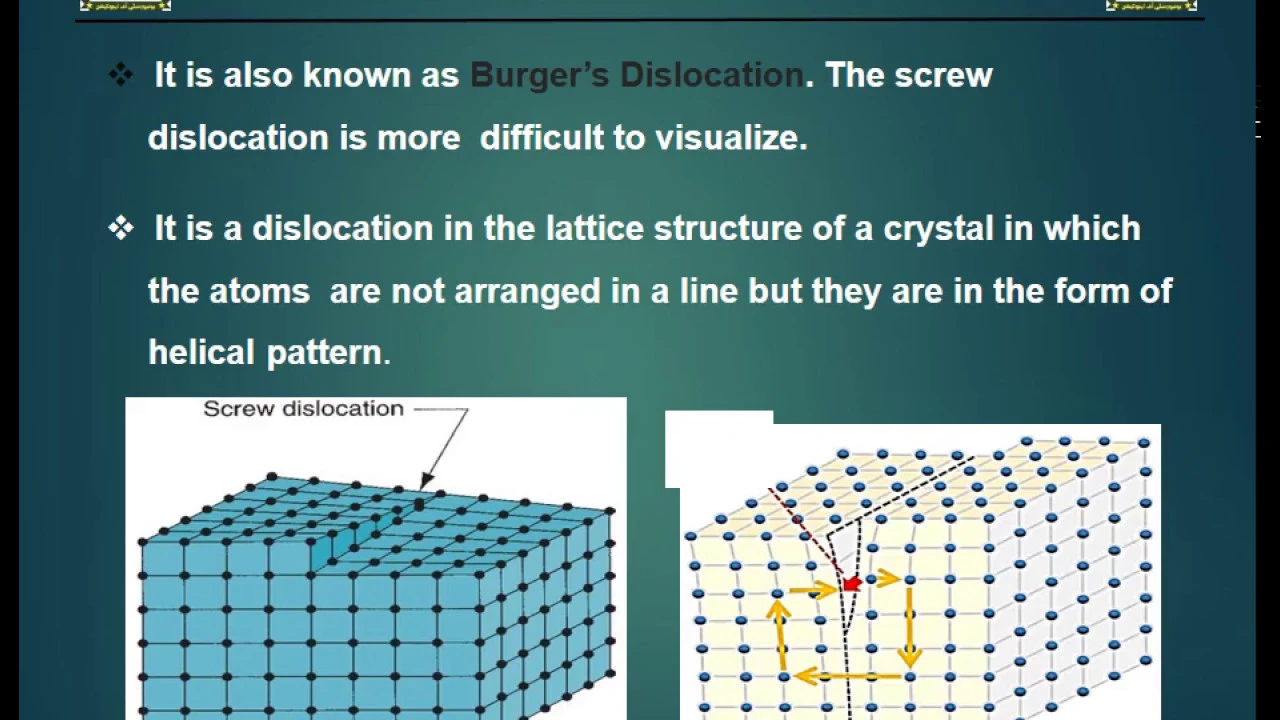
An introductory understanding of crystalline defects, particularly the concept of a dislocation as a line defect.
Other metal strengthening mechanisms, such as solid-solution strengthening, precipitation hardening, and work hardening.
Advanced heat treatment processes, including quenching, tempering, and normalizing, and how they alter microstructure.
The Hall-Petch relationship, which mathematically quantifies the relationship between average grain size and yield strength.
The use of phase diagrams (such as the Iron-Carbon system) to predict microstructural phases during heating and cooling.
3.6M views69.8Klikes8:45Original Release: 2019-08-22
there's this really cool desk toy called Atomics that you can't buy anymore so a couple of years ago I made my own it's about three thousand ball bearings sandwiched between two layers of acrylic they're free to move in two dimensions and they naturally fall into this regular lattice structure except that there are imperfections in the lattice and actually that's why I built this thing in the first place because I wanted to make a video about lattice imperfections in things like diamond or metals and this Atomics toy is a really good model for that if you want to watch that video the link is in the card and in the description but someone commented on that video saying that this Atomics toy might also be useful for demonstrating what's going on when you heat treat metals like annealing or tempering and that's what this video is about if I allow the balls to fall quickly into position they form these small regions of regularity you get the same kind of arrangement in the atomic lattice of metals these small regions of crystalline metal that are neighboring each other and they can't form one single crystal because they're oriented differently these regions are called grains in a metal and it turns out that the size of grains in a metal really has a profound effect on the physical properties of that metal so let's see what happens to the grain size when we heat treat a metal this is a model of an atomic lattice so we need to think about what heating means for the model well on the atomic scale heat is just kinetic energy it's how much are the atoms and molecules jiggling around so if we want to increase the temperature in our model we need to jiggle the balls around I'm going to jiggle these balls with a vibration generator which is basically a speaker with a prong and because I'm filming at 50 frames per second I'm gonna try vibrating at 50 Hertz and a hundred Hertz by picking a multiple of the frame rate I don't need to worry about the stroboscopic effect you can see how the other kinetic energy gives the lattice an opportunity to rearrange itself but extra movement means that the atoms can slip and slide into new positions and the grain size increases so heat treating a metal lattice in this way increases the grain size but what effect does that have on the physical properties of the metal well in metallurgy you have all these different terms for the physical properties of a metal hardness toughness strength they all sound really similar but they all have different technical definitions that I don't want to get into in this video so we're just going to gloss over all that and say how hard or easy is it to bend a metal permanently out of shape before and after heat treating in this way well my assumption would be that if you have larger grains larger crystal structures then it will be stronger because a regular crystal arrangement is really strong but it turns out that larger grains make it easier to bend a metal out of shape to see why we need to look at what happens at the molecular level when you permanently deform a metal it's called plastic deformation when you permanently change the position of atoms and you might theorize that when you ponies deform metal maybe the grains are sliding over each other or they're breaking up into smaller grains or joining together it's actually none of that it turns out the most important thing when it comes to plastic deformation is imperfections in the crystal specifically imperfections called dislocations dislocations come in a few different flavors but generally speaking they look a little bit like this and it turns out that dislocations are easy to move you can see why if you look at the bonds around a dislocation they're already quite strained so you don't need much energy to break one of those bonds so when you apply forces to a metal in different directions these dislocations will move around in different directions like this the important thing is it takes less energy to move dislocations through a grain than it does to move grains against each other that's why dislocations are sometimes called the carrier of plasticity in you might have thousands of dislocations within a single grain in a metal so when you're bending it you're causing those dislocations to glide through the grain but crucially when a dislocation gets to the edge of a grain it can't go any further it can't hop to the next grain that's the end of its journey so if your metal has small grains then the dislocations within those grains won't have far to travel before their journey ends before they reach a grain boundary and on a macroscopic level that means that your metal isn't very ductile you can't plastically deform it very much and if you keep applying force then it's just going to fail in other ways whereas if you grow the size of your grains like we did here then you're giving those dislocations further to travel you're increasing the capacity of your metal to plastic Li deform before breaking you're increasing the ductility of your metal that's about the limit of what I can demonstrate with this model and obviously it's an oversimplification of the whole field of metallurgy because there are different ways to heat treat a metal with different results what I've done is probably closest to annealing but there's also tempering and quenching and there's loads of different variables like what temperature do you raise the metal to is it above or below the recrystallization temperature how quickly or slowly do you let it cool down and you get all these different properties it's really really interesting and it's not something I can demonstrate with this model but I found a couple of really good videos if you want to dive a bit deeper I'll leave those in the card and in the description [Music] [Applause] [Music] let me tell you what I've been doing with the sponsor this month and pleased to say it's go share again online community of learners with thousands of courses in creative and entrepreneurial skills what I've been doing is learning about my camera so I've got a really good video camera to Panasonic gh4 it's also a really good stills camera and I just don't use it for that like it's got roar you can shoot an ROI it's got an amazing burst mode it's really good and I don't use it so I've taken a skill share course in photo editing it's called cinematic styles in Adobe Camera Raw Elizabeth is amazing I've just I've become this advocate for online courses because it's giving me this amazing foundation in a skill that I just didn't have before and I can use my camera now to take amazing pictures on my kids you know I've got these really nice dense narrow depth of field I've got macro lens and having this ability to take and edit RAW images as well it's just really cool it's really affordable it's just $10 a month for annual membership but because they're sponsoring this video you can get two months absolutely free if you go to school Dutch slash Steve mold for that's school Dutch slash Steve mold for someone told me that I should say slash instead of forward slash because I guess the Ford bit is implied it's never back slash so in case anyone was wondering why didn't you say four words - I made this longer really by explaining every knife anyway I hope you enjoyed this video if you did don't forget to hit subscribe and I'll see you next time [Music]
Up Next

20:21
Superalloys Explained: Jet Engine Materials & Strengthening Mechanisms
@eldhopaul683
2.6K views•2021-06-18
30:32
Ultrasonic Transducers: Resonant Frequency Measurement and Horn Design
@imajeenyus42
229.9K views•2017-02-22
54:16
Polymer Environmental Degradation: Mechanisms & Stabilization
@iit
1.8K views•2012-07-10
33:39
How a Student's Question Saved a NYC Skyscraper from Collapse
@veritasium
22.8M views•2025-04-26
Related Study Plans & Knowledge Roadmaps
Structured learning paths in Engineering
engineering
Building Acoustic Levitators: Physics & Arduino
01The Physics of Sound and Standing Waves
02Piezoelectric Transducers and H-Bridge Drivers
03Arduino Programming: Generating 40 kHz Signals
+ 2 more learning modules
14h5 modules
Explore Roadmap
engineering
Building Peltier Cloud Chambers: Particle Tracks
01Cosmic Rays & Cloud Chamber Physics
02Thermoelectric Cooling (TEC) Fundamentals
03Custom Liquid-Cooling Loop Design
+ 2 more learning modules
18h5 modules
Explore Roadmap
engineering
Yagi-Uda Antennas: Modeling, Build & VNA Test
01Introduction to RF and Antenna Fundamentals
02Yagi-Uda Antenna Design Principles
03Antenna Modeling and Simulation in 4NEC2
+ 2 more learning modules
18h5 modules
Explore Roadmap
engineering
ECG Monitor Design: Op-Amps, Filters & Noise
01Electronics & Breadboard Basics
02Op-Amps and Instrumentation Amplifiers
03Bioelectricity and ECG Fundamentals
+ 2 more learning modules
18h5 modules
Explore Roadmap