











![Les Paul • "Les Paulverizer" Demonstration & Interview • 1966 [Reelin' In The Years Archive]](https://i.ytimg.com/vi/R0885WM1W9c/hqdefault.jpg?sqp=-oaymwEmCOADEOgC8quKqQMa8AEB-AHGBYAC4AOKAgwIABABGGYgZihmMA8=&rs=AOn4CLBe-ZiJvyloDXXcM1Foirf8GI7R8Q)





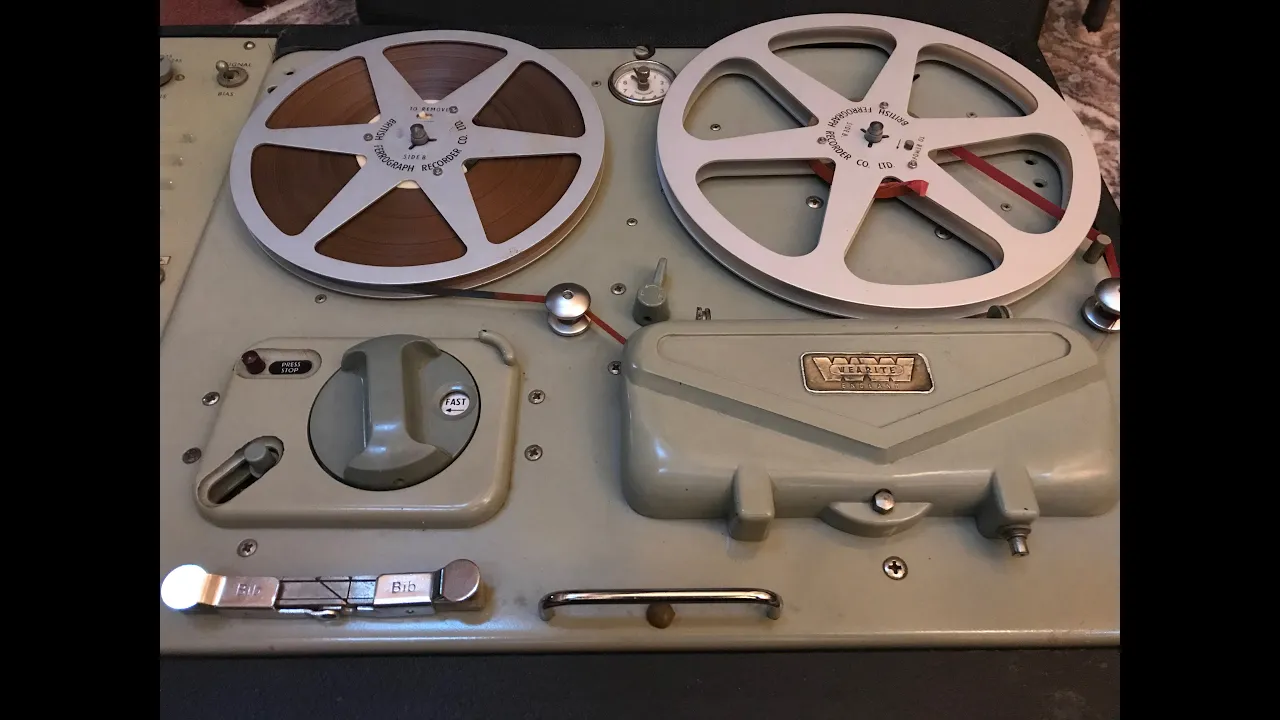





Les Paul, a pioneering guitarist and inventor, demonstrated his revolutionary multi-track recording and overdubbing technology on the 1978 NBC Today Show, showcasing how a single performer can create complex, layered musical arrangements that sound like multiple musicians playing together. This innovation, which Les Paul invented, fundamentally changed the sound of recorded music and allowed artists to build intricate compositions through layering individual performances.
Les Paul & Chet Atkins: Guitar Monsters TV Interview (1978)
Added:Understanding the history and development of the solid-body electric guitar, particularly Les Paul's role in pioneering the Gibson Les Paul.
Fundamental concepts of analog recording, specifically multi-track recording, overdubbing, and 'sound-on-sound' techniques.
Familiarity with Chet Atkins' signature fingerstyle guitar technique (often associated with the 'Nashville Sound') and his influence on country and pop music.
An awareness of the musical climate of the late 1970s, including how legacy artists adapted to evolving television formats and recording technologies.
The evolution of live looping technology, tracking the lineage from the 'Les Paulverizer' to modern digital loop pedals and hardware samplers.
A deep-dive analysis of the collaborative album 'Guitar Monsters' (1978), focusing on the fusion of jazz, country, and pop guitar arrangements.
Advanced music production techniques derived from Les Paul's innovations, such as close-miking, tape delay, and phase manipulation.
The historical study of how technological innovation directly influences musical composition and performance styles in the 20th century.
1.7M views10.4Klikes7:49Original Release: 2009-09-23
Les for the zoo. He and his late wife Mary Ford had 22 gold records back in the 1950s. He's out of retirement now.
He and his nose and they're playing with another master guitarist, Chad Atkins.
And we'll be hearing from all of these people in just a few moments. And I personally cannot wait. First, the station break.
[Music] Chad Atkins is a master guitar player.
When it comes to music, he can play everything from flamco to country to Bach. Ched can do a concert with the symphony orchestra one week and then the grand all opery the next week. Not for nothing do so many people think of him as Mr. Guitar. And this fell over here with the silicone nose is Les Paul. He plays guitars. He writes songs. And Les Paul has probably done more to change the sound of recorded music than has any other human being. He invented multi-track recording and overdubbing.
And with his wife, the late Mary Ford, he had 22 gold records. Popularized songs like How High the Moon, The World Is Waiting for the Sunrise. Few little items like that. Well, Les Paul and Chad Atkins are working together now, and they've already done two albums, not counting when he's hitting me on the arm. The latest is called Guitar Monster, which we better look at right now, or both of these fellas will come down hard on me. Welcome, Chad. You're a vice president of RCA. Who put out? Who put out this album?
Uh RC.
Very good. Very good answer.
Why do you call it Guitar Monsters?
Because it's a Gibson and it's a less Paul.
No, it's not Gretch.
Okay, got that in.
It's a Gretch guitar.
Why do you call it Guitar Monsters?
Because we look like monsters.
You don't look like monsters. If you did, I had to be television monster. We You answered that correctly. Thank you.
Thank you.
How about some music?
Okay.
Like what?
Right. Start.
We'll do Avalon and the key of F. Bless.
Thank you.
You going to play in the same key?
Same. I'm going to try.
Okay.
Don't leave.
I'm leaving.
[Applause] [Music] Heat. Heat.
[Music] All right.
[Music] Boy, that's a couple of monsters playing. That's Henry Stleki on the other guitar and Bob Sutton on the drums. Give your little group a little credit here. What's this little black box on here fast?
Well, this is called the Less Pulverizer and it's an invention of the Less Pulverizer.
The Less Pulverizer. That's right. No, no, no, no, no. This invention, we're ahead of the Russians with my little invention, the black boxer.
I see.
Now, I'd like to show you how it runs.
I'm glad you asked because Radio Shack is worried sick over my little black box. Let me show you how it works. I'll play it. I'll play the thing for you.
Oop, I got to turn it on.
You can hear that?
I hear like we're in a big room.
Now throw this switch and you'll hear that back.
[Music] Now, wouldn't you like to take that home with you? Huh?
Yeah. If you set it up for me, then I'll hold A lot of women could clean seven rooms at once with this invention of mine. Now, if I throw the switch again, I can add a bass part to that.
That's really nice, huh?
What's that? A tape recorder?
That's nothing. Oh, no. No. It's my box.
I'll break it down.
Now, you want a little boogie woogie?
Watch this. What chance have I got?
[Music] My pal.
This is one person playing, huh?
Of course, it's one person. Can't you hear it? Now, if I want to add drums to it, we'll add drums. Come on, play along with me. All right.
How do you like that?
I think it's remarkable. Very extraordinary.
Now, watch this. Watch this. All right.
Come on. Now, play your drums. Play your drums. Really play them. Go ahead. This Bobby Sutton. Can I get out of the way so you can see him? Go ahead, Bob.
[Music] [Music] Heat.
[Music] Heat.
[Music] Heat. Heat.
[Music] Heat.
[Music] Heat.
[Music]
Up Next

9:20
Understanding the Nyquist Theorem in Digital Audio
@CatoNoise
3.7K views•2020-09-23

12:54
Triumph of Orthodoxy Icon: Byzantine Art & History Explained
@BenCallan
2.1K views•2024-08-06

9:49
FastAPI vs Flask vs Django: Choosing the Right Python Web Framework
@TechWithTim
302.5K views•2024-05-26

1:42
Game of Thrones Opening Credits: A Cinematic Analysis
@gameofthrones
46.3M views•2011-04-18
Related Study Plans & Knowledge Roadmaps
Structured learning paths in General & Interdisciplinary Studies
general-studies
Elevator Engineering: History, Physics & Cities
01From Hoists to Safety Brakes: The Dawn of Vertical Lift
02Hydraulic vs. Traction: The Engineering Physics of Elevators
03Modern Speed, Safety, and Algorithms
+ 2 more learning modules
12h5 modules
Explore Roadmap
general-studies
Rubber: Material Science, History & Geopolitics
01Origins of Natural Rubber & Mesoamerican History
02The Chemistry of Natural Rubber & Vulcanization
03The Geopolitics of the Rubber Boom & Colonization
+ 2 more learning modules
12h5 modules
Explore Roadmap
general-studies
Containerization: Evolution, Logistics & Trade
01Ancient Trade & Bulk Cargo: Amphorae to Barrels
02The Industrial Revolution & Cardboard Packaging
03The Containerization Revolution: Malcom McLean
+ 2 more learning modules
12h5 modules
Explore Roadmap
general-studies
Textile Tech: Evolution, Labor & Global Impact
01Pre-Industrial Textiles: Handloom & Cottage Industry
02Mechanization: The Spinning Jenny to the Power Loom
03The Factory System & Global Labor Transformation
+ 2 more learning modules
10h5 modules
Explore Roadmap