Jean-Paul Sartre's concept of 'bad faith' (mauvaise foi) describes the self-deceptive practice of lying to oneself to avoid short-term discomfort, particularly by convincing oneself that one has no alternatives or choices, thereby closing off opportunities for personal growth and authentic living; Sartre argued that humans are fundamentally free ('being precedes essence'), yet often suppress this freedom by telling themselves they must accept their current circumstances rather than embracing the possibilities of reinvention and change.
Sartre's Bad Faith: The Philosophy of Self-Deception and Authenticity (60 chars)
Added:Deep Dive
The foundational existentialist maxim 'existence precedes essence' and its implications for human nature.

Assista à entrevista com Clóvis de Barros Filho
73.6K
In existentialism, existence precedes essence, meaning that for humans, life comes before definition. Unlike a cat (which is first a cat, then lives as one) or a pair of scissors (which is first designed, then exists), humans have no predetermined nature that determines their lives. This means humans are fundamentally free, with 360 degrees of possible paths at each moment. Each choice involves an infinity of lives precluded, and this freedom is not a reward but a condition that humans are 'condemned' to accept.
Click to watch →

10 Libros para comenzar a leer filosofía.
60.4K
Jean-Paul Sartre's 'Existentialism is a Humanism' (1945) presents the fundamental existentialist principle that 'existence precedes essence.' This means humans first exist, then define themselves through their actions and choices. Sartre argues that unlike objects which have predetermined purposes, humans create their own meaning through free will. The book addresses key existentialist themes including freedom, responsibility, abandonment, bad faith, anguish, and despair. Sartre contends that all existentialism is fundamentally humanistic because it places humans at the center of philosophical concern, requiring individuals to take responsibility for self-determination through their actions.
Click to watch →

مقال الحرية والمسؤولية حسب التدرج الجديد 2024 إلى شعبة لغات وعلوم تجريبية ورياضيات و السنة الثانية.
186.2K
Sartre argues that existence precedes essence, meaning humans are born first and then define themselves through their choices and actions. Unlike religious views that predetermine human nature, Sartre believes humans create their own essence through struggle, effort, and will. Since humans freely create their own nature, they must be held accountable for their choices. This existentialist view emphasizes radical human freedom and the burden of self-creation.
Click to watch →

The Tragic Beauty of BLADE RUNNER 2049 Explored
251.3K
Jean-Paul Sartre's philosophical concept that 'existence precedes essence' is applied to Blade Runner 2049. For humans, existence comes first, and then they define themselves through their actions. However, replicants are made for a specific purpose (essence) before they come into existence. K's essence is to kill old Nexus models, but he consistently overcomes this goal, taking agency to make complex decisions against his purpose. This demonstrates that K's essence is less predetermined than the humans who created him. The film suggests that if replicants act on intuition, cognition, and morality, then traits commonly associated with humanity may not be unique to humans. When we see animals showing compassion or acting morally, we denote them as exhibiting human behaviors, revealing that using the word 'human' may simply inflate human self-importance.
Click to watch →

You Are Not Alone
140.2K
Sartre is credited as the father of modern existentialism - a philosophical school concerned with our place as individuals forced to assume responsibility for our lives without certain knowledge of truth. He differentiated himself by rejecting the idea that humans are relying on an external power like God to provide us with meaning. In Sartre's view, existence precedes essence - we are conceived and only after being born do we figure out what our purpose in life will be. This might seem like an uncontroversial opinion to us today, but in the mid-20th century this was a radical idea. For most of human history, it was assumed that essence precedes existence - since the time of Plato and Aristotle, it was widely believed that our purpose as individuals was assigned to us before birth.
Click to watch →
Deep Dive
Sartre's concept of absolute human freedom and the inherent anxiety of bearing total responsibility for one's choices.

SOS ProEnem: Filosofia no Século XX | Filosofia | Prof. Leandro Vieira
32.5K
Jean-Paul Sartre argued that humans are not born with predetermined essences. His famous phrase 'existence precedes essence' means we first exist and then define ourselves through actions and choices. Humans are 'condemned to be free'—born without predetermined natures and must create their own identities through choices. This freedom comes with absolute responsibility: since nothing defines us except our own actions, we are solely responsible for who we become. 'Anguish' is the psychological experience of recognizing this absolute freedom and responsibility.
Click to watch →

САРТР | часть 2 | курс "Философия в портретах"
778
Existential anxiety (angst) arises when we recognize that our actions depend entirely on us and that we bear full responsibility for our choices. This anxiety is not about external threats but about the terrifying realization that we are the sole authors of our lives. Sartre explains that when we choose one path, we simultaneously deprive ourselves of all other potential paths, and we must bear responsibility for this loss. This creates a fundamental tension in human freedom - we are condemned to choose and bear responsibility for what we might have missed.
Click to watch →
Menyigi SARTRE: Cara Santai Buat Paham Kenapa Hidup Kita Nggak Pernah Sesimpel Itu
18.4K
Human freedom entails absolute responsibility for one's choices. Since humans have no predetermined essence, they must create their own nature through their actions. This means that every choice is a responsibility, and individuals cannot blame external circumstances or predetermined natures for their actions. Sartre famously described freedom as a 'condemnation' (condamnation), meaning that humans are condemned to be free because there are no external authorities or predetermined natures to guide their choices. When individuals confront the reality of their freedom and responsibility, they experience existential anxiety (angst), which arises from the realization that there are no external authorities to guide their choices.
Click to watch →
Condemned To Be Free I Sartre
1K
Sartre's radical definition of freedom rejects both positive liberty (resources to fulfill potential) and negative liberty (absence of external restraints). We are 'doomed to be free'—we are freedom itself, our own possibilities and projects. We are completely responsible for the world because we are the ones who give meaning to things. As Dostoevsky wrote, 'We are responsible for everything toward everybody.' This freedom cannot be escaped; even in prison, we remain free to interpret our situation. Anxiety is the mode of being-for-itself as consciousness of being an outsider. In anxiety, all barriers collapse—we emerge alone confronting our unique project. We discover ourselves as the one who gives meaning to alarm clocks, signboards, and policemen. We decide what counts as value and what does not. Nothing protects us against ourselves, cut off from the world by nothingness, we must realize meaning without justification.
Click to watch →

자유를 얻은 뒤에도 우리는 왜 불안한가 | 장폴 사르트르 #사르트르 #실존주의 #자유 #철학
137
In 1939, when Germany invaded Poland and France entered the war, Sartre was conscripted. He was not a frontline soldier but was assigned to meteorological observation duties. A philosopher who had spoken of freedom was now a soldier moving according to orders. However, for Sartre, freedom did not merely mean the ability to move as one wished. Even in places where the range of action was extremely narrowed, like prisons or armies, humans cannot completely surrender how they accept their situation and what they attempt. One of the important concepts Sartre developed was bad faith, a form of self-deception where we know we are free but act as if our movements are determined by our professional roles. A teacher can say 'I am a teacher, so I can only act this way.' A parent can believe they must sacrifice their desires. A writer can think they are naturally creative so daily responsibilities are unimportant. However, a role cannot replace all possibilities of a human being. In 1943, Sartre's most extensive philosophical work 'Being and Nothingness' was published. A desk does not worry about becoming a desk. However, humans know what they are now and imagine the possibility of becoming different. We are not completely identical to our current selves. Even a conscientious person can lie, and a cowardly person can take risks at some point. Within human consciousness, there are gaps beyond the current self. Sartre connected this gap to 'nothingness' (le néant). This does not mean simple emptiness or death. A person who does not exist can actually fill the entire space. Humans can think about this nothingness, which allows them to negate the present and choose other possibilities. They can quit their current job, end long-term relationships, admit mistakes, and change their behavior. However, this same ability means we constantly look at what we are not yet. We cannot rest in a completed self. Anxiety is not an emotion that appears only before dangerous choices. It is the sensation that arises when we realize we are the ultimate basis for our own actions. When no one gives us the correct answer, human nature does not pre-determine our direction, and God's command does not speak clearly, we must judge ourselves. After judging, we cannot completely deny that the result was our own choice. We want to believe in ourselves. We think 'I am not the kind of person who would do that.' However, Sartre argued that past conscientiousness or usual character does not guarantee future behavior. The fact that I keep promises does not become reality until I choose to keep this promise again. Yesterday's virtue is not a shield against today's cowardice. Humans are anxious because they are free. However, this freedom does not merely mean individual preferences like what clothes to wear or where to eat. It is a much heavier problem. When a person chooses their actions, they simultaneously show what actions are possible and acceptable for humans. Choosing to lie is not merely one lie but approving that lying is a possible action under their conditions. In October 1945, Sartre gave a lecture titled 'Existentialism is a Humanism.' He repeated his claim that humans have no predetermined essence. A knife is made after the creator thinks of its use and form. The knife's essence is conceived before it exists. However, if we do not accept the belief that God created humans for a specific purpose, there is no such design for humans. Humans appear in the world first, then decide what they are through their actions. The phrase 'existence precedes essence' is not a permission to live as one wishes. It is a declaration that there is no nature to explain oneself. When someone says 'I am a cowardly person so I fled,' Sartre doubts this order. He asks whether repeated fleeing behavior has not created the cowardly self. Albert Camus was a writer who viewed war and absurdity in different languages. They discovered each other in each other's works. Sartre highly valued Camus's works, and Camus came close to the intellectual space Sartre created. They were writers of the same generation who had passed through war and occupation, asking how humans should live in a world where God is silent. However, someone who places revolution behind freedom and someone who protects human limits even before revolution cannot walk the same path for long. Camus participated in editing the newspaper Combat, creating language of resistance. Sartre believed that changing social structures was necessary to end oppression. Individual goodwill alone could not stop poverty, exploitation, and colonial domination. Power was organized, and opposing forces needed to be organized. In 1956, when Soviet troops crushed the Hungarian uprising with tanks, Sartre criticized Soviet intervention and distanced himself from the French Communist Party. Instead, he became more actively involved in the issue of colonialism. France was a republic that spoke of freedom and human rights but maintained a vast colonial empire abroad. Algeria was not merely a simple colony but was incorporated as part of French territory, yet the rights and living conditions applied to European residents and the majority Muslim Algerian residents were greatly different. Political representation, land, education, and economic opportunities were distributed unequally. When the Algerian War of Independence began in 1954, French society was deeply divided. Attacks by independence movement forces caused civilian casualties, and the French army used torture and collective repression. Violence did not come from only one direction, but placing both sides' violence at the same level while ignoring the basic structure of colonial domination also obscured reality. Sartre supported Algerian independence. His magazine office was attacked and he was called a traitor. At this time, freedom for Sartre was no longer merely the possibility felt within an individual's mind. One cannot speak of one's own freedom while dominating other peoples. The oppressor's choice reduces the choices of the oppressed. In his 1960 work 'Critique of Dialectical Reason,' Sartre attempted to resolve the tension between individual freedom and social structure. He argued that humans make history but make it within conditions they did not choose. Individuals are free subjects but do not exist alone. Material scarcity, institutions, class, and organizations, and accumulated past actions limit current possibilities. A bus with insufficient seats means not everyone can be on it. Sartre tried to explain this state of being together yet separated. However, when common threats or goals appear, scattered people can act together. Groups opposing oppression, workers occupying factories, and citizens resisting occupation experience each other as subjects of the same action rather than competitors. At that moment, each person's freedom combines with others' freedom. The problem arose after successful collective action. Revolutionary groups create rules and organizations to maintain themselves. Sartre knew that declaring individual freedom would not stop this cycle. However, completely returning freedom to the result of structure would eliminate the place of responsibility. He sought a path between these extremes. Long-t
Click to watch →
Deep Dive
The ontological distinction between 'being-in-itself' (non-conscious objects with fixed essences) and 'being-for-itself' (conscious human beings).

Ngaji Filsafat 187 : Jean Paul Sartre - Cinta Eksistensialis
102.5K
Sartre distinguishes between 'being-in-itself' (ada dalam dirinya) and 'being-for-itself' (ada untuk dirinya). Being-in-itself refers to objects that simply exist with fixed characteristics - they are passive, affirmative, and have no self-awareness. Being-for-itself refers to humans who exist as empty potential that must be filled through their own choices and actions. Unlike objects (being-in-itself) which have fixed natures, humans (being-for-itself) are fundamentally empty and must create their own essence through action. This means humans are not determined by any fixed nature but are free to become whatever they choose.
Click to watch →
Don’t Let Others Define You | Sartre’s Existentialism
129.9K
Sartre's distinction between two modes of existence. Being-in-itself refers to objects that simply exist as they are, with fixed essences—they cannot change themselves or reflect on their existence (like a fork or train). Being-for-itself is uniquely human: it is not fixed, constantly in flux, and defines itself through actions. Humans possess 'facticity' (biological traits, birth circumstances we cannot control), but our essence is created through our conscious choices and actions, not determined by our facts.
Click to watch →

Live UPSC Philosophy Optional Paper 1 (Section A) Strategy & Analysis | Shivani Ma'am | Plutus IAS
311
Sartre distinguishes between 'being-in-itself' (être-en-soi) and 'being-for-itself' (être-pour-soi). Being-in-itself refers to things and objects that simply exist, are self-identical without consciousness, characterized by pure facticity, completeness, and fullness. They are static, fixed, and without questioning—like stones, chairs, and trees. Being-for-itself refers to human beings as conscious beings characterized by self-awareness, incompleteness, and nothingness. Humans are free, can make choices, and carry the heavy responsibilities of freedom. Human existence combines both modes: facticity (body, past, social circumstances) and transcendence (freedom to choose and project toward the future). This creates permanent tension, making human existence characterized by anguish.
Click to watch →

Jean Paul Sartre Zeynep Direk İle Felsefe Vakti Türkçe
6.6K
'Being and Nothingness' (1943) establishes an ontological framework distinguishing between being-in-itself (en-soi) and being-for-itself (pour-soi). Being-in-itself refers to things that simply exist without consciousness, while being-for-itself refers to consciousness. Consciousness is characterized by negation—it is what it is not. Humans cannot be reduced to objects or fixed identities; when people try to squeeze themselves into fixed identities, they engage in objectification, which Sartre considers impossible. While consciousness is characterized by freedom, humans simultaneously have a tendency to become being-in-itself, to objectify themselves. This tendency is described as wanting to become God.
Click to watch →

LA AVENTURA DEL PENSAMIENTO SARTRE
23.2K
Sartre's ontology distinguishes between two fundamental types of being. The 'being-in-itself' (être-en-soi) is a solid, seamless substance without fissures, representing inert, mechanical existence that has not been penetrated by reflection. The 'being-for-itself' (être-pour-soi) is where consciousness operates, functioning by annihilating contents and projecting light that says 'this is not me.' Consciousness is not a thing but pure spontaneity, temporality, and freedom. The being-in-itself is absolutely contingent, gratuitous, unpredictable, and absurd. Consciousness is distanciation from being, and therefore is 'non-being.' This rejection of substantialization of consciousness is fundamental to understanding Sartre's view of human existence.
Click to watch →
Deep Dive
The philosophical definition of authenticity as living in alignment with one's freedom rather than external expectations.
3 HEURES d'idées existentielles troublante pour DORMIR PROFONDÉMENT
118
Authenticity consists in having a truthful consciousness of one's situation—not being oneself in the sense of a fixed essence, but assuming one's freedom fully. It means refusing bad faith, refusing to hide behind excuses, roles, and determinisms. It means recognizing one is radically free and that this freedom condemns one to choose. Even when options are limited, there remains freedom of attitude, of response. Authentic existence accepts this freedom with all its consequences: anguish, crushing responsibility, absence of guarantee. This concept resonates with Kierkegaard's call to become oneself, Nietzsche's call to create one's own values, and Camus's emphasis on lucid confrontation with the absurd.
Click to watch →

A religião deixa as pessoas menos autênticas? | Luiz Felipe Pondé
23.2K
The concept of authenticity as a value to be pursued emerged from Romanticism, suggesting that individuals should live according to their true characteristics. Existential philosophy, including thinkers like Kierkegaard, Sartre, and Heidegger, centers on this idea, arguing that people should transform into what they truly are. However, this pursuit faces criticism as potentially illusory, since complete authenticity may be impossible. Additionally, the notion that everyone has a special vocation is viewed as a psychological invention from the 1960s-70s. While Epicturus warned against living solely to satisfy others' expectations, social contracts necessitate compromise, meaning full authenticity is impossible in group life.
Click to watch →

POWER 2026 Inauguration & Holy Mass | Fr Augustine Vallooran | Divine Retreat Centre
5.1K
Martin Buber, the existentialist philosopher, wrote about the authenticity of life. He strived to be authentic in all that he said and did. In a dream, he heard God say 'Buber, you are condemned.' Buber realized that to be authentic means to be what God wants us to be. There is a true freedom and a false freedom, and we often confuse between the two. False freedom is what people think: the absence of restraints, license to do whatever one pleases, going by feelings, and being what one wants to be. This is actually captivity and slavery. True freedom is the ability to live according to one's purpose of life. Every one of us is sent into the world with a purpose with a mission. Freedom is to be able to respond to that purpose that God has for us.
Click to watch →

🎙️ΤΟ ΒΑΡΟΣ ΤΗΣ ΕΛΕΥΘΕΡΙΑΣ – Από τον Κίρκεγκαρντ στον Σαρτρ / Η ΙΣΤΟΡΙΑ ΤΗΣ ΔΥΤΙΚΗΣ ΦΙΛΟΣΟΦΙΑΣ
16.7K
Existentialism is a philosophical movement that emerged in the mid-20th century, centered in France, which emphasizes that human existence is fundamentally characterized by radical freedom, responsibility, and the necessity of authentic self-creation. Unlike deterministic philosophies, existentialism holds that humans are not born with predetermined essences but must actively construct their identities through choices. Key concepts include anxiety (the awareness of freedom and mortality), authenticity (living according to one's own values rather than external expectations), and the burden of choice. The movement, represented by thinkers like Kierkegaard, Heidegger, and Sartre, challenges individuals to confront the absurdity of existence and take full responsibility for their lives, rejecting both external authority and passive acceptance of fate.
Click to watch →

Reacts Day #472, Geoguessr w/ Jynxzi, & Philosophy React | Joe Bartolozzi
46.3K
Jean-Paul Sartre believed that embracing freedom and living authentically was the fundamental meaning of life. He argued that one must take full responsibility for their life choices and actions because existence comes before essence. This means that humans define their own nature through their choices and actions, rather than having a predetermined essence or purpose.
Click to watch →
Prerequisite Knowledge
- Concept 01The foundational existentialist maxim 'existence precedes essence' and its implications for human nature.
- Concept 02Sartre's concept of absolute human freedom and the inherent anxiety of bearing total responsibility for one's choices.
- Concept 03The ontological distinction between 'being-in-itself' (non-conscious objects with fixed essences) and 'being-for-itself' (conscious human beings).
- Concept 04The philosophical definition of authenticity as living in alignment with one's freedom rather than external expectations.
Subsequent Learning
- Step 01Sartre's critique of Freudian psychoanalysis, specifically how the theory of 'bad faith' rejects the concept of a divided unconscious mind.
- Step 02Simone de Beauvoir's expansion of existentialist ethics in 'The Ethics of Ambiguity', examining how bad faith intersects with societal oppression.
- Step 03The analysis of Sartre's famous thought experiments, such as the 'café waiter' and the woman on a first date, found in 'Being and Nothingness'.
- Step 04Applying the critique of bad faith to contemporary issues, such as performative social media identities, systemic conformity, and consumer culture.
Bad Faith
Denial
Work Lies
Freedom Fear
Suppression
True Being
Love Lies
Mutual Lies
Blaming Self
Real Freedom
Bad Faith
0:06Playing Section
- 1
Sartre's 1943 book identifies self-deception as a modern plague.
- 2
Bad faith means lying to oneself to avoid short-term pain.
- 3
This leads to long-term psychological impoverishment and missed chances.
Freudian Psychoanalysis and the Unconscious Mind
Sigmund Freud's theory of the unconscious mind serves as a major counterpoint to Sartre's concept of bad faith. While Sartre rejected the unconscious, arguing that individuals are fully aware of their self-deception and thus morally responsible, psychoanalysis proposes that the human mind is divided. According to Freud, self-deception is not a conscious choice or a failure of authenticity, but rather the result of unconscious defense mechanisms (such as repression or projection) operating beyond active awareness to protect the ego from anxiety. Consequently, individuals are not always radically free or consciously complicit in their self-deception. This perspective challenges Sartre's emphasis on absolute personal responsibility, shifting the focus from existential choice to psychological determinism and the therapeutic uncovering of repressed truths.
Deep Dive
Sartre's critique of Freudian psychoanalysis, specifically how the theory of 'bad faith' rejects the concept of a divided unconscious mind.

L'inconscient - Cours de Philosophie
168.7K
Sartre criticized Freud's unconscious theory as a form of 'bad faith' (mauvaise foi). For Sartre, humans are entirely free and therefore entirely responsible for their decisions. Attributing decisions to unconscious desires is a refusal of this freedom and an avoidance of responsibility. While descriptive claims about unconscious influence may be scientifically plausible (as Libet's experiments suggest), Sartre's point is practical: if all decisions are determined by unconscious processes, why choose at all? This would lead to fatalism determined by the unconscious. Sartre's view is thus an imperative to assume responsibility for our choices.
Click to watch →

De l'inconscience à l'inconscient
1K
This section addresses the objection that Sartre's concept of bad faith offers an authentically phenomenological alternative to Freud's unconscious hypothesis. In 'Being and Nothingness,' Sartre addresses Freud's unconscious hypothesis and opposes it with the concept of bad faith (mensonge à soi). Using this concept, Sartre can explain certain patient resistances to psychoanalytic interpretation without recourse to the unconscious hypothesis. For example, when a patient seeks to evade revelations from the analyst while feigning continued treatment, this is bad faith because the subject is conscious of what they are fleeing and chooses to evade it. The speaker also references Sartre's analysis of the homosexual who plays on the ambiguity of the verb 'to be' to illustrate how bad faith operates. This demonstrates that certain phenomena traditionally explained by the unconscious can be understood through the phenomenological concept of bad faith.
Click to watch →

SAFPAC Seminar Series: Johnathan Webber - Rethinking Existentialism in Psychotherapy
189
Jean-Paul Sartre famously criticized Freud's conception of the mind as divided between accessible conscious regions and inaccessible unconscious depths (the 'id'). Sartre argued this division is logically untenable because the mechanisms that supposedly operate at the boundary between these regions cannot function properly - they must either belong entirely to one side or the other, making the concept incoherent. This criticism is presented in Being and Nothingness and represents one reason why existentialism might seem opposed to psychoanalysis.
Click to watch →
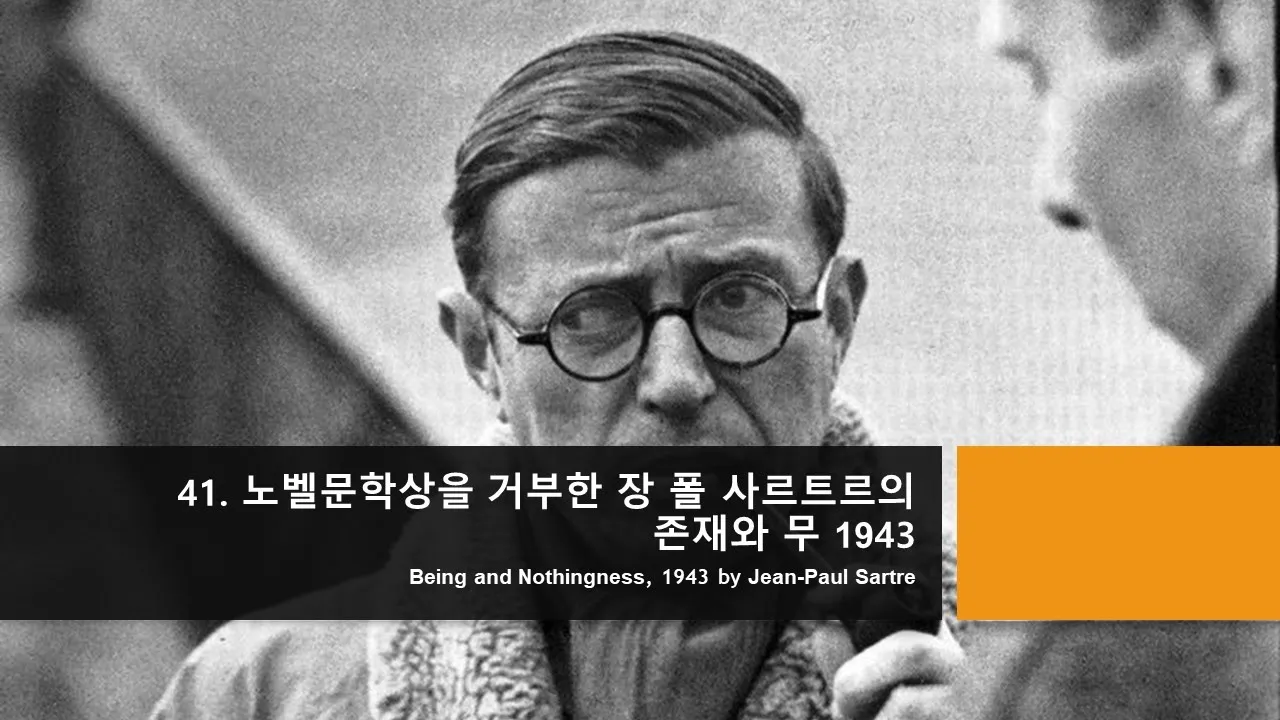
041. 노벨문학상 수상거부 장 폴 사르트르의 존재와 무Being and Nothingness Jean Paul Sartre 1943
623
Sartre criticized Freud's theory of the unconscious and repression. He argued that Freud's concept of repression creates a false dichotomy between conscious and unconscious, when in reality consciousness is always self-aware. For Sartre, what Freud called repression is actually a form of bad faith where people deny their own freedom.
Click to watch →
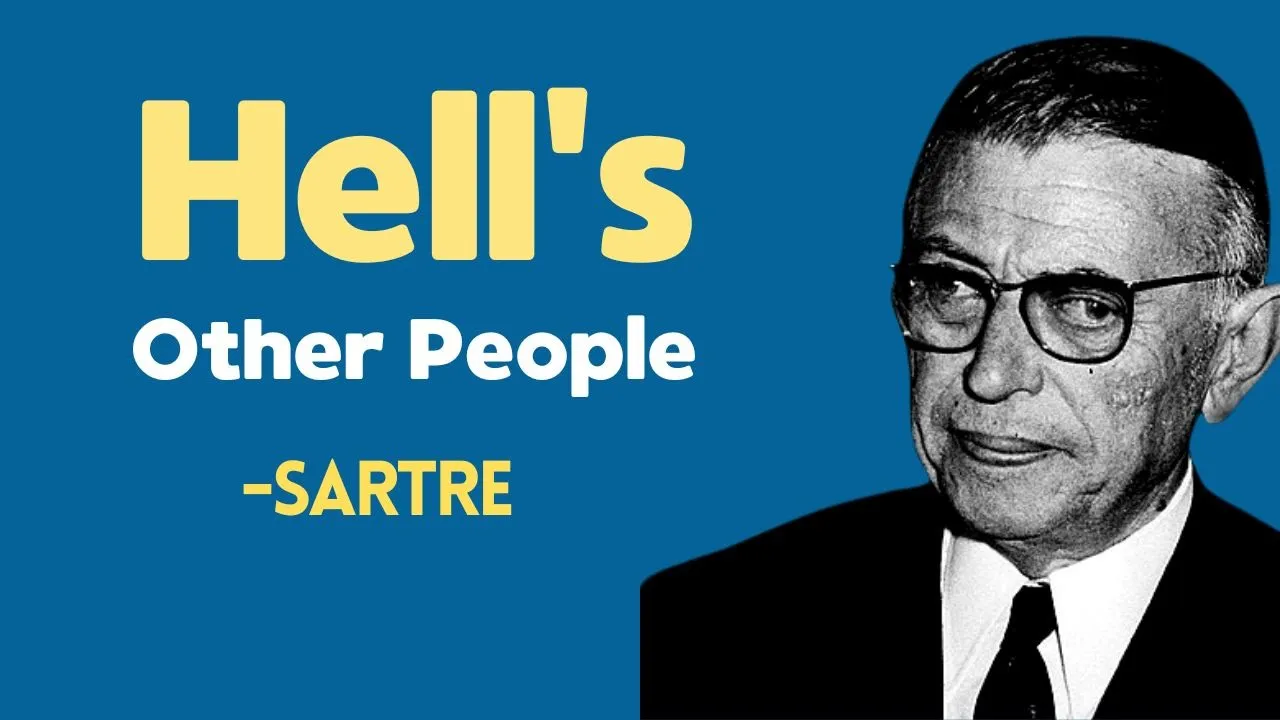
Sartre's Genius Philosophy - Life’s Meaning Comes from Nothingness
234.7K
Sartre argues that consciousness defines who we are—anything we are not conscious of is not truly us. This directly challenges Freudian psychoanalysis, which claims the unconscious controls much of our behavior. Sartre contends that repression requires conscious awareness; you cannot repress something you are not conscious of. Pretending not to know is self-deception for self-preservation. Sartre distinguishes between being-in-itself (non-conscious phenomena like trees) and being-for-itself (humans who are aware of their existence). Since we have no divine essence, we exist as nothing, making us totally free but also forcing us to deal with external constraints. Through interactions with the world and others, we make choices that limit our freedom but also cause anxiety. To escape these constraints, we seek answers in imagination, take roles, or defer to authority figures, creating bad faith.
Click to watch →
Deep Dive
Simone de Beauvoir's expansion of existentialist ethics in 'The Ethics of Ambiguity', examining how bad faith intersects with societal oppression.

Simone de Beauvoir, The Ethics of Ambiguity | The Situation Of Oppression | Philosophy Core Concepts
298
In her work Ethics of Ambiguity, Simone de Beauvoir analyzes how oppression divides human society into two fundamental groups: those who use their freedom dynamically to advance humanity, and those condemned to mechanical repetition merely to support the collective existence of society; she argues that the oppressed can fulfill their freedom only through revolt against this oppressive situation, which the oppressor often justifies by framing it as a 'natural condition' rather than a human-made injustice, thereby preventing genuine liberation.
Click to watch →

Beauvoir: ambiguity and existential ethics
64.5K
Simone de Beauvoir's existential philosophy, developed in 'The Ethics of Ambiguity,' presents ambiguity as the fundamental human condition arising from our dual nature as both free subjects (transcendence) and situated objects (facticity); she argues that ethics emerges from this freedom, which is not a psychological capacity but a nothingness that must be actively converted into moral freedom through recognizing our own freedom and the freedom of others, and that oppression occurs when one group denies another's freedom, creating a self-contradictory situation where the oppressor both requires recognition by a free subject while denying that freedom, requiring oppressed individuals to temporarily deny the oppressor's freedom to achieve liberation.
Click to watch →
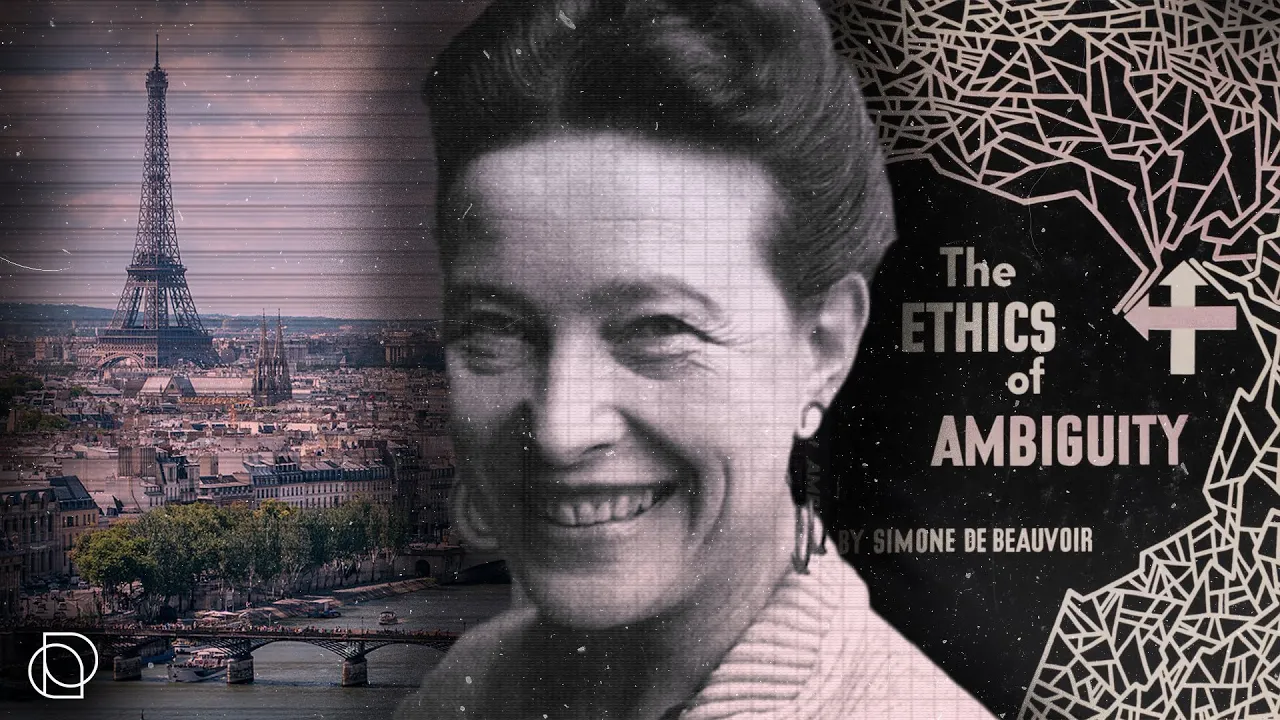
Simone de Beauvoir and The Ethics of Ambiguity
63.2K
Simone de Beauvoir's 'The Ethics of Ambiguity' presents a feminist existentialist philosophy arguing that humans are 'condemned to be free'—we face an inherent tension between our facticity (current existence) and transcendence (potential), creating existential angst. Rather than escaping this ambiguity through bad faith (like the subman who becomes apathetic, the serious man who claims to have all answers, or the nihilist who concludes nothing matters), de Beauvoir prescribes embracing this ambiguity honestly and focusing on others' freedom. True freedom requires recognizing that we cannot be free without the freedom of others; our actions toward others define our meaning and ethical responsibility. This interpersonal ethics challenges us to accept life's tensions while actively working to maximize freedom for all.
Click to watch →

European Intellectual History since Nietzsche: Class 16, The Second Sex
2K
In 'The Ethics of Ambiguity,' de Beauvoir articulates existentialist ethics about avoiding bad faith—the temptation to flee from one's freedom. She takes from Heidegger the notion that we must accept human finitude—that our lives are finite and we are mortal—as the context for decision-making. Ethics presupposes failure because life involves moral dilemmas. The positive comes from our negation of negation, and transcendence is preconditioned by accepting freedom in this life, not in an afterlife.
Click to watch →

Episode #106 ... Simone De Beauvoir - The Ethics of Ambiguity
53K
Simone de Beauvoir's 'The Ethics of Ambiguity' argues that human existence is fundamentally characterized by ambiguity—we simultaneously exist as both facticity (the facts about who we are) and transcendence (our possibilities), subjects and objects, individuals and members of collectives. Rather than escaping this tension through bad faith (as people commonly do by reducing one side of these dualities), de Beauvoir proposes that we should embrace our freedom and responsibility. Since humans are 'condemned to be free,' we must recognize that our moral worth depends on maximizing our own freedom while simultaneously maximizing the freedom of others, as genuine freedom is inherently relational and cannot exist in isolation.
Click to watch →
Deep Dive
The analysis of Sartre's famous thought experiments, such as the 'café waiter' and the woman on a first date, found in 'Being and Nothingness'.

Wolfgang Welsch - Sartre (Teil 1)
8.4K
'Being and Nothingness' is a phenomenological ontology asking what 'being' means. Sartre distinguishes 'being-in-itself' (things, full and complete) from 'being-for-itself' (humans, characterized by lack and consciousness). Humans are defined by striving for what they lack, unlike things which are complete. Through the cafe example, he shows how humans practically 'nothingness' the present by focusing on what is sought rather than what exists. Sartre's central thesis: 'man creates himself through choice.' Humans make themselves by choosing, but this does not establish fixed essence. Each choice implies other possibilities, creating a horizon of uncertainty. Fundamental life choices cannot ultimately be justified - they are 'absurd' because they cannot be reduced to logical necessity.
Click to watch →
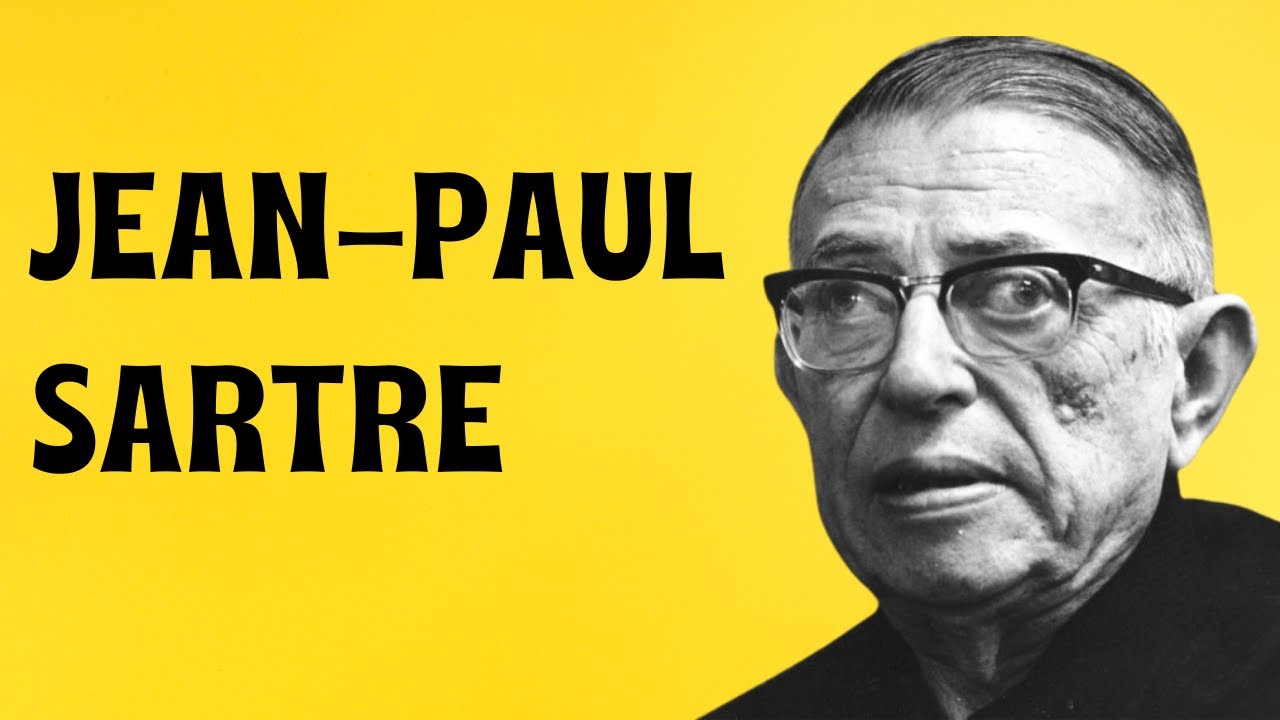
PHILOSOPHIE - Jean-Paul Sartre
384
The most famous description of bad faith appears in 'Being and Nothingness.' Sartre observes a waiter who stands out because he identifies excessively with his role as if he were primarily a waiter and not a free human being. His movements are quick and determined, a bit too precise, a bit too hurried. He approaches guests with a step that is a bit too eager, bends a bit too eagerly, and his voice and eyes show an interest in the customer's order that seems a bit too anxious. The man, possibly inspired by a waiter at Café de Flore in Saint-Germain, has convinced himself that he is essentially and necessarily a waiter, rather than a free being who could equally well be a jazz pianist or a fisherman on a North Sea trawler.
Click to watch →
Fall Asleep To The Meaning Of Life (Jean-Paul Sartre) | Existential Philosophy Sleep Story
148
This section explores two foundational Sartrean concepts through everyday scenes. The waiter in a Paris cafe demonstrates bad faith—slipping into roles so tightly we forget we are always more than any role can contain. Bad faith is not moral failure but the soft forgetting of our freedom. We are pouris beings: conscious, open, free, forever creating ourselves through choices. The Pierre absence scene reveals nothingness—not a mystical void but something consciousness creates. When searching for Pierre and he is absent, the cafe becomes porous, marked by a hollow pocket. This absence feels fuller than any stranger's presence because consciousness creates the space shaped like him. The world bends around our expectations and shifts when someone we look for is not found. Both scenes reveal that meaning comes not from roles alone but from awareness that we can always step outside them and breathe.
Click to watch →

Existentialism From Socrates to Sartre 1979
9.3K
Sartre created a philosophy for modern man by drawing from Descartes' subjectivism, Husserl's intentionality, Heidegger's existentialism, Hegel and Marx's dialectics, Kierkegaard's emphasis on existence, and Nietzsche's concept of the Superman. His first major work, The Nausea (1938), used literature to grasp concrete human existence. The novel's protagonist Roquentin experiences nausea upon confronting the bare existence of things, discovering that things have no essences and that existence is absurd—contingent without necessity, superfluous without reason. In Being and Nothingness (1943), Sartre established his philosophical foundation by revising Descartes: consciousness is not a thinking substance but is always intentional, directed toward objects. He identified two regions of being: being-for-itself (conscious beings) and being-in-itself (causally determined objects). Consciousness introduces nothingness into the world by being aware of what is not the case, of lacks, and of possibilities. This nothingness is the same as human freedom—the power to negate, question, and imagine possibilities not present. Sartre argues that conscious beings are totally free and undetermined—past resolutions do not determine present choices. Against Freud, Marx, and the sciences, he argues that while facts may be determined, as conscious beings we choose the meaning they have for us. In No Exit (1944), Sartre's famous play, three characters discover that hell is other people. In Being and Nothingness, he analyzes human relations through the concept of the look—becoming aware that one is an object for someone else's perception. This objectification means one is no longer master of one's situation. Sartre concludes that conflict is the original meaning of being-for-others. In love, the lover wants to possess the beloved's freedom, but this is hopeless—the beloved cannot be both free and one's possession.
Click to watch →
Sartre's Genius Philosophy - Life’s Meaning Comes from Nothingness
234.7K
Published in 1943, Being and Nothingness responds to religious notions of creation and Freudian psychoanalysis. Sartre argues we are nothing prior to birth—we are born first, then become something with essence. He distinguishes between being-in-itself (non-conscious phenomena like trees) and being-for-itself (humans who are aware of their existence). Since we have no divine essence, we exist as nothing, making us totally free but also forcing us to deal with external constraints. Through interactions with the world and others, we make choices that limit our freedom but also cause anxiety. To escape these constraints, we seek answers in imagination, take roles, or defer to authority figures, creating bad faith. The self is created by free thoughts floating in nothingness colliding with the unfree outside world of existence.
Click to watch →
Deep Dive
Applying the critique of bad faith to contemporary issues, such as performative social media identities, systemic conformity, and consumer culture.

Por qué la sociedad moderna corona a los superficiales
42K
Modern society has transformed ignorance from a passive lack of knowledge into a strategic, performative identity that is rewarded by digital platforms and consumer culture; the spectacle economy prioritizes emotional reactivity, visibility, and instant gratification over critical thinking, depth, and truth, making the 'performative idiot'—who reacts rather than reasons, expresses without understanding, and seeks validation through engagement rather than substance—both a symptom and a product of contemporary social structures.
Click to watch →

Creepy National Anthem Sing-Along Breaks Out In Texas Walmart
67K
This video examines how performative patriotism—such as singing the national anthem in a Walmart surrounded by foreign-made products—can become a form of 'brainwashing' that creates social pressure and oppression, particularly when it involves captive audiences like minimum-wage workers on holidays, and how such displays are often criticized by conservatives as inauthentic while being embraced by liberals as ironic commentary on consumer culture.
Click to watch →

Mi problema con la gente Labubu
110.9K
The Labubu phenomenon represents a disturbing trend where adults, particularly those over 30, collect and display children's toys as status symbols, spending significant portions of their income on these items. This connects to a broader epidemic of personality loss where individuals abandon their authentic self-expression to conform to trending social media aesthetics, becoming 'empty shells' who sacrifice uniqueness for social validation. The speaker distinguishes between following trends (normal and healthy) and copying entire personalities (harmful behavior). This creates a homogenized culture where everyone appears and behaves identically. Additionally, a harmful phenomenon involves individuals who perform identities they do not genuinely possess, particularly wealth and cultural identities like Asian aesthetics, completely abandoning their authentic selves to mimic appearances they do not belong to. This represents a broader cultural issue of performative identity over authentic self-expression.
Click to watch →

ROBERTO VAQUERO RESPONDE a los ATAQUES de QUIQUE PEINADO, INÉS HERNAND y compañía.
82.1K
The speaker delivers a comprehensive critique of media personalities (Quique Peinado, Inés Hernán, Lara Álvarez) who engage in superficial commentary without substantive analysis, serving as 'lapdogs' for their employers. The critique extends to social media culture where individuals equate follower counts with importance, believing more Twitter followers make them more significant. The speaker criticizes the tendency to equate reading on Twitter with genuine intellectual engagement, advocating instead for traditional book reading and substantive intellectual work. The speaker criticizes individuals who adopt progressive postures on television to appear contemporary while their actions contradict these positions, specifically mentioning how some individuals curate their social media presence by deleting contradictory comments. The critique extends to institutional neglect of working-class needs, specifically mentioning immigrants who work long hours but lack housing, and women victims of gender violence who receive institutional support but no practical assistance. The speaker argues political parties and institutions serve capitalist interests rather than revolutionary transformation, specifically mentioning the European Union as a mechanism that perpetuates dependency and prevents genuine change. The speaker criticizes individuals who claim to be critical and leftist but lack genuine intellectual depth, arguing that true critical thinking requires substantive knowledge and understanding. The speaker criticizes the tendency to reduce complex political analysis to simple left-right dichotomies, arguing this represents a superficial understanding of political reality. The speaker specifically criticizes anti-intellectualism, dismissing critical thinking and intellectual engagement as negative, advocating for the importance of reflection, analysis, and substantive intellectual work. The speaker also criticizes political opportunism, where individuals adopt positions based on convenience rather than genuine conviction.
Click to watch →

GOTH REACTS TO AWFUL TIKTOK CRINGE
232.6K
This segment analyzes two phenomena in contemporary social media culture. First, it examines performative masculinity where men create fabricated scenarios to appear as protectors, often by making up fake women and then 'white knight'ing' them in staged situations. The speaker describes this as ironic because the behavior is so cringy yet some men continue it. Second, the segment explores the culture of 'stupid fame' on platforms like YouTube, TikTok, and Instagram, where individuals achieve notoriety through attention-seeking behavior, buying expensive cars, and doing stupid things. The speaker characterizes this as a broader pattern of attention economy where content is designed to be easily mockable and shareable, creating a cycle of fame based on being ridiculous rather than creating genuine value.
Click to watch →
Bad Faith
Denial
Work Lies
Freedom Fear
Suppression
True Being
Love Lies
Mutual Lies
Blaming Self
Real Freedom
Bad Faith
0:06- 1
Sartre's 1943 book identifies self-deception as a modern plague.
- 2
Bad faith means lying to oneself to avoid short-term pain.
- 3
This leads to long-term psychological impoverishment and missed chances.
Freudian Psychoanalysis and the Unconscious Mind
Sigmund Freud's theory of the unconscious mind serves as a major counterpoint to Sartre's concept of bad faith. While Sartre rejected the unconscious, arguing that individuals are fully aware of their self-deception and thus morally responsible, psychoanalysis proposes that the human mind is divided. According to Freud, self-deception is not a conscious choice or a failure of authenticity, but rather the result of unconscious defense mechanisms (such as repression or projection) operating beyond active awareness to protect the ego from anxiety. Consequently, individuals are not always radically free or consciously complicit in their self-deception. This perspective challenges Sartre's emphasis on absolute personal responsibility, shifting the focus from existential choice to psychological determinism and the therapeutic uncovering of repressed truths.
The foundational existentialist maxim 'existence precedes essence' and its implications for human nature.
Sartre's concept of absolute human freedom and the inherent anxiety of bearing total responsibility for one's choices.
The ontological distinction between 'being-in-itself' (non-conscious objects with fixed essences) and 'being-for-itself' (conscious human beings).
The philosophical definition of authenticity as living in alignment with one's freedom rather than external expectations.
Sartre's critique of Freudian psychoanalysis, specifically how the theory of 'bad faith' rejects the concept of a divided unconscious mind.
Simone de Beauvoir's expansion of existentialist ethics in 'The Ethics of Ambiguity', examining how bad faith intersects with societal oppression.
The analysis of Sartre's famous thought experiments, such as the 'café waiter' and the woman on a first date, found in 'Being and Nothingness'.
Applying the critique of bad faith to contemporary issues, such as performative social media identities, systemic conformity, and consumer culture.
693.8K views17.6Klikes3:38@theschooloflifetvOriginal Release: 2015-10-30
In being and nothingness written in 1943 the French existentialist philosopher Jean-Paul Sartre identified a problem which he believed plagued modern life.
Mauvaise Foi, literally "bad faith" Bad faith occurs when we lie to ourselves in order to spare ourselves short term pain, but thereby suffer from long term psychological impoverishment.
We force ourselves to believe something which we're not really convinced by, because it's easier.
In particular, Sartre believe that what we constantly lie to ourselves about is that we don't have other options.
We always do, but find it curiously more reassuring to say we don't. It lets us off the hook.
Bad faith often happens around work.
Sartre describes a waiter who tells himself he's just a waiter. It's his lot in life, his destiny.
He tells himself that he had no choice, that he has to keep on at it because he needs the money.
But it's not true, insists Sartre, we are all free.
There are scary, almost sickening moments of what Sartre calls Negative Ecstasy, which might come late at night, when we realize that we are in fact far more free than we ever say we are.
That we could throw in the job, go and live in the woods, or reinvent ourselves.
It can be harrowing, because we have to acknowledge that we may be wasting our lives and that in the end this is our own fault, however much at other times we are tempted to blame circumstances or other people.
But we then typically suppress this insight. The next day we force ourselves to believe in what we're doing.
The price is that we close off the opportunities for changing and improving our lives We forget, Sartre Says, that 'Being precedes essence' That is, who we are can't be pinned down to one particular job or relationship.
Our being is much bigger.
It embraces in Sartre's words "all the things we are at present not, but could possibly become".
In bad faith we keep those possibilities out of our minds, we tell ourselves that the way we are at the moment is the only way we can be, so bad faith closes down on the options of freedom.
Sartre detected bad faith as a feature of many unhappy relationships.
He describes its origins in early dates when a couple secretly realise that they are not at all compatible, but then force themselves to believe that they can be happy together.
In Sartre's example, a woman wants to be loved for her mind and can't bear to pay attention to her own dark suspicion that her partner is in fact more interested in her body.
Meanwhile the man realises that the woman isn't interested in him sexually, but keeps telling himself that "really she must be".
They both lie to themselves and that's why they end up together and unhappy.
Bad faith will lead them to throw the blame on each other saying it's the other's coldness or lack of sophistication that's the problem, when really it's their own doing.
Sartre didn't see bad faith as a surprising or unusual problem. It's a natural outcome of how our minds work.
He didn't want us to feel bad. He just wanted to remind us to be as free as we really are.
Up Next
11:06
Albert Camus: The Absurd, Revolt, and Rebellion | Philosophy Explained
@academyofideas
331.7K views•2016-04-11

164:01
John of Damascus on Holy Images: A Theological Defense
@BannedBooks
139 views•2026-04-25
9:14
John Locke's Political Theory: Education, Toleration, and Rights
@theschooloflifetv
3.1M views•2016-04-08
4:57
The Myth of Sisyphus: A Greek Legend of Eternal Punishment
@TEDEd
8.6M views•2018-11-13
Related Study Plans & Knowledge Roadmaps
Structured learning paths in Philosophy
philosophy
Frankfurt School: Critical Theory & Culture
01Foundations of the Frankfurt School and Critical Theory
02Horkheimer & Adorno: The Critique of Instrumental Reason
03The Culture Industry and Mass Deception
+ 2 more learning modules
12h5 modules
Explore Roadmap
philosophy
Philosophy of Language: From Frege to Austin
01The Linguistic Turn: An Introduction to Language in Philosophy
02Gottlob Frege: Sense and Reference
03Early Wittgenstein: The Picture Theory of Meaning
+ 3 more learning modules
15h6 modules
Explore Roadmap
philosophy
Feminist Epistemology: Standpoint & Injustice
01Introduction to Epistemology and Feminist Critiques
02Sandra Harding and Standpoint Theory
03Donna Haraway and Situated Knowledges
+ 2 more learning modules
12h5 modules
Explore Roadmap
philosophy
Environmental Philosophy: Ethics & Deep Ecology
01Foundations of Environmental Ethics & Anthropocentrism
02Biocentric Individualism and Animal Liberation
03Ecocentric Holism and Deep Ecology
+ 1 more learning modules
10h4 modules
Explore Roadmap