


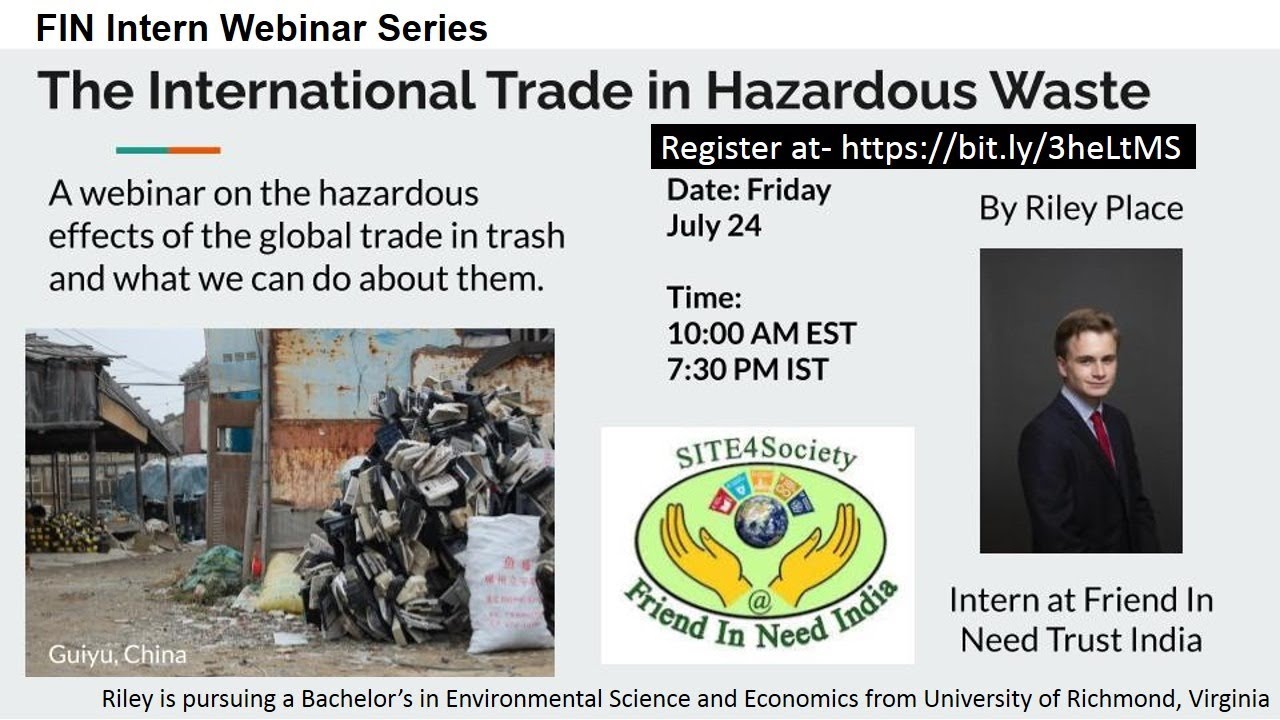


















Electronic waste from developed nations is being exported to developing countries like China's Guiyu village, where primitive recycling methods involving open burning and acid leaching release toxic pollutants (lead, dioxins, heavy metals) into the environment and harm local populations, despite international agreements like the Basel Convention that prohibit such hazardous waste transfers; this occurs because domestic recycling costs are too high due to labor expenses and environmental regulations, creating an economic incentive to export waste to countries with cheaper labor and weaker environmental protections.
Exporting Harm: The High-Tech Trashing of Asia – E-Waste Crisis
Added:The definition and chemical composition of e-waste, including hazardous substances such as lead, cadmium, mercury, and brominated flame retardants.
The economic disparity and trade dynamics between the Global North and Global South, which facilitate the transboundary movement of hazardous waste.
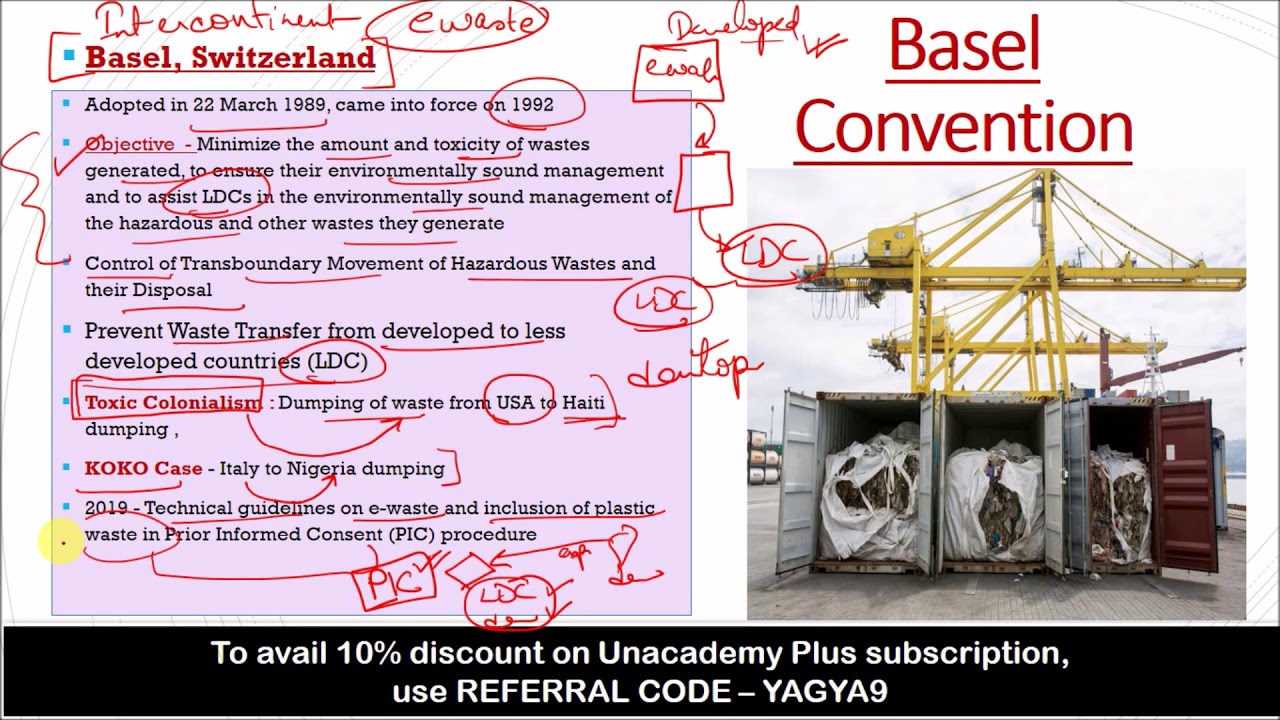
The fundamental principles of the Basel Convention, an international treaty designed to restrict the movement of hazardous waste from developed to developing nations.
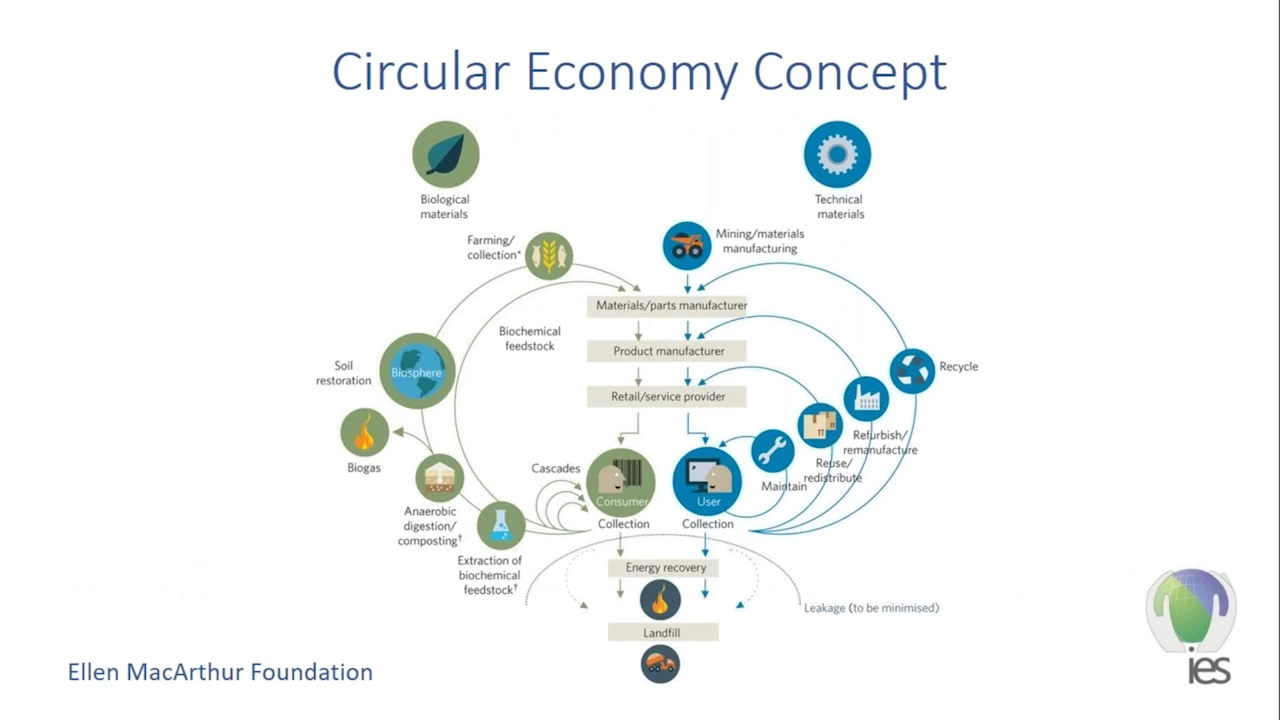
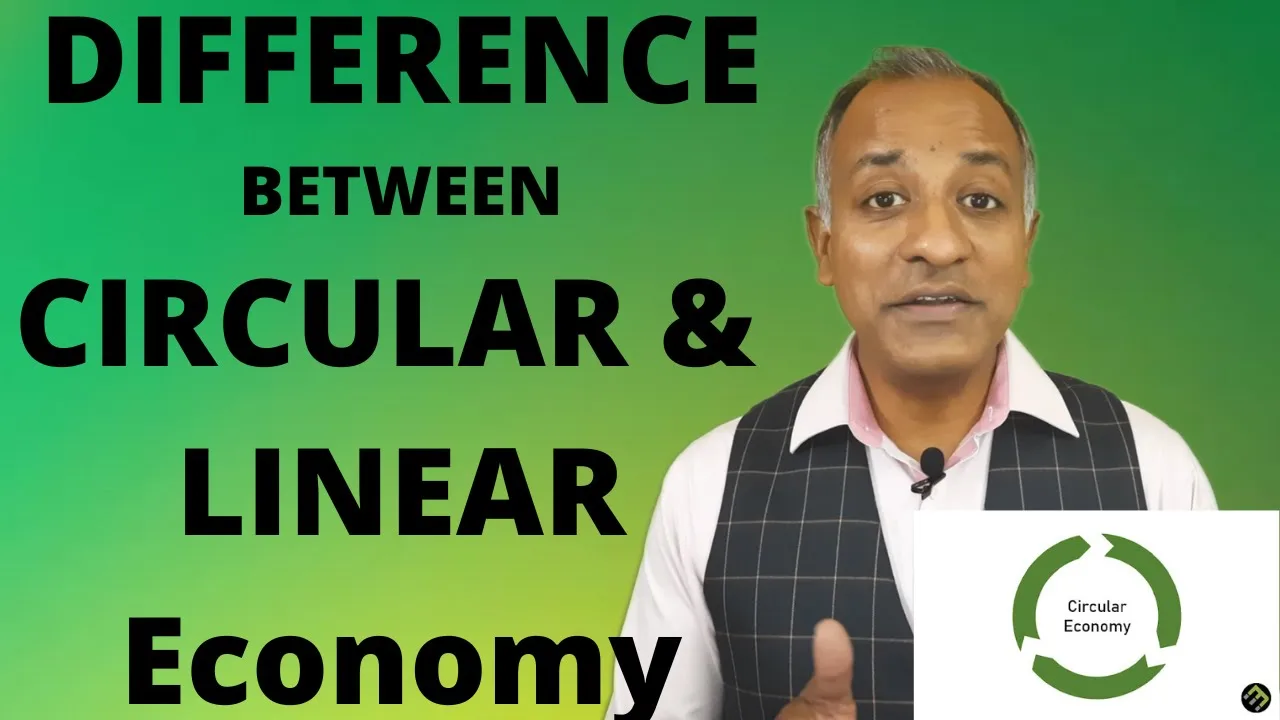
The concept of a linear economy ('take-make-dispose') versus a circular economy, to understand why electronics are designed with short lifespans.
Extended Producer Responsibility (EPR) policies and how legislative frameworks can force electronics manufacturers to take financial or physical responsibility for post-consumer products.
Design for Disassembly (DfD) and Green Chemistry, exploring how engineering and product design can reduce toxic materials and make electronics easier to safely recycle.
The concept of 'Urban Mining' and state-of-the-art, safe hydrometallurgical and pyrometallurgical techniques for recovering precious metals from discarded technology.
Environmental Justice frameworks, examining the intersection of social inequality, race, and environmental degradation in marginalized communities globally.
425.3K views2Klikes23:04Original Release: 2013-05-16
[Music] Heat. Heat.
[Music] [Music] Heat.
Heat.
[Music] All of us have faced the problem. Your favorite computer breaks or cannot cope with the latest software requirements and has become hopelessly obsolete.
You'll find that it costs more to repair or upgrade your unit than replacing it with the latest model. So reluctantly perhaps you get rid of it. In the United States, it is estimated that 5 to 7 million tons of what is being called electronic waste or e-waste becomes obsolete every year. And it is believed that the volumes of e-wasts are rising at a rate of 3 to 5% per year. So how does one get rid of an old computer or other electronic device? If you're conscientious, you'll likely do a little research. A few phone calls to your city or counting agencies and you'll discover an interesting fact. Computer waste is in fact hazardous. Indeed, it is not well known that computers contain substantial amounts of very serious pollutants. Computer monitor glass and circuit boards contain so much lead, for example, that they readily qualify computers as hazardous wastes. So, invariably, you'll be told that rather than place your e-waste in a trash can and contribute to polluting our environment through your local landfill, you should send your e-waste to your local recycler. That sounds good, but what they don't tell you is that e-waste recyclers are, for the most part, not recyclers so much as they are waste distribution centers.
While neither the US Commerce Department nor the EPA collect data on the actual amounts, industry insiders admit that of all the e-waste in the United States that actually goes to recyclers, about 80% of that material is likely to wind up on containers ships bound for China, India, Pakistan, Vietnam, or other Asian destinations. According to such estimates, approximately 10.2 2 million computers will be exported to Asia in 2002 from the United States alone, and the numbers are expected to increase each year. The recycler routinely collects the waste, provides some separation of waste streams, and sells the rest to a broker who's likely to export most of that material offshore.
Craig Lor, manager of Total Reclaim, a Seattle recycler, explains the simple economics of the e-waste export brokerage business. It's all about the money. You're charging on the front side. You're selling the material on the back side offshore. You don't do any work in between. You just arrange to have the material load into a shipping container and shipped. It's all about the money.
Many recyclers would much prefer not to export, but are left with little choice.
Total Reclaim tries very hard to avoid export of the component parts of the computer monitors they break down. They provide a welcome avenue for incountry monitor glass recycling, but so far they have not been able to avoid export entirely.
We still are unable to to come up with a domestic market for the plastics. Um there are a couple of companies that say they'll take the material, but we have not been able to uh we've not been able to get their their customer service people on the phone, so they're not really they're not really running on a on a full scale, at least not on an accessible scale by most recyclers. Mhm.
So basically aside from landfill um I don't know any option for the plastics other other than export once the material is exported to Asia neither the consumer nor the recycler has knowledge of what types of recycling if any will really take place or how harmful it will be to the people and the environments of Asia. And until now the collective ignorance has been blissfully profitable. One California study showed that exporting computer monitors was 10 times more profitable than recycling the units at home.
If you as a consumer want to do the right thing with your e-waste garbage, you won't throw it in the dumpster.
You'll take it to a recycler, right?
This is what the local government will tell you to do. This is what the state government will tell you to do. This is what the federal government will tell you to do. But what they don't tell you is by taking it to a recycler, that piece of e-waste has a very high probability of being exported by a ship to China or other Asian destination. And yet nobody, and we talked to recyclers, we talked to government people, we've talked to industrialists, nobody had ever bothered to go look and see what that recycling in Asia really looked like.
The Basil Action Network, BAN, a global watchdog group dedicated to preventing toxic trades of all kinds, decided to conduct a field investigation.
Following up news articles and emails from mainland China, ban was directed to an e-waste processing area known as Guayu on the Long Dong River near the city of Shantaao in the northeast Guandong province, 4 hours by car from Hong Kong. In the course of three intensive days in and around Guayou's four villages, the small investigative team witnessed firsthand what passes for recycling of e-waste in Asia. By this investigation, they were for the first time able to provide the western world with more than just a guess of what the underbelly of our consumptive cyber age lifestyle really looks like. 6 years ago, Guayu was a peaceful rice growing village. But life in Guau changed dramatically when it began receiving its first truckloads of imported e-waste.
Guayu has now been transformed into a bustling, sprawling junkyard for much of the world's electronic discards. Lured by the possibility of making a $1.50 for a day's work, residents of rural farming provinces migrate to Guau to toil long hours breaking e-waste down to the component materials of steel, aluminum, copper, plastic, and gold.
The operations are primitive, labor intensive, and of a small scale.
However, taken as a whole, the sheer number of the individual operations in the Guayou area is impressive and significant. It is estimated that a 100,000 people make their living scrapping e-waste here. However, with the newly found wealth have come severe environmental costs. Since only part of the waste stream can truly be recycled and due to the hazardous nature of the waste itself and the hazardous processes employed in recycling it, the pollution in and around the town has become obvious and ugly.
60-year-old Mr. Ling summed up the town's transformation this way to a Chinese journalist.
For money, people have made a mess of this good farming village. After they have dismantled the computers, they burn the useless parts. Every day, villagers inhale this dirty air. Their bodies have become weak. Many people have developed respiratory and skin problems. Some people wash vegetables and dishes with the polluted water and they get stomach sickness.
Open dumping of the unrecyclable plastics, processing residues, burned and discarded circuit boards, leaded CRT glass, toner cartridges, and other debris is common place.
Printer waste, computer waste, printer cartridges, plastic, myar, videotapes, all dumped wherever they can find a place to dump it, usually by water.
This is the disposal system for monitors from the USA.
This is where their final resting place is, the end of their life cycle in a roadside ditch in the heart of China.
For the last 5 years, well water and surface water in Guayou has been undrinkable and has to be trucked in from a town 30 km away. Water tanks hauled by tractors are a constant sight on the streets of Guayou. Um he's transporting water into the village. Um the um I asked him why uh do you take water? Do you sell it there? And he said the water there tastes no good.
And how long have they been transporting water into the village?
Um they've been doing it for 5 years now.
And how long has the electronic waste been in this village?
Um according to the other men that we interview, uh 5 to 6 years.
But although the drinking water is no longer drinkable and the air smells foul, the populace of Guayou is still largely ignorant of the health impacts of the imported poisons. The investigation sought to take a closer look at the different e-waste recycling processes employed in Guau to better understand their impacts. What was found in just a short time proved to be cause for alarm.
Cathode ray tubes or CRTs which make up the bulk of a typical computer monitor or television are the most wellknown of e-waste hazards as they contain between 4 to 8 lb of toxic metal lead. For this reason, CRTs are considered a hazardous waste in international law and certain states in the US are beginning to forbid their disposal in landfills. Contrary to what was expected, the investigative team could find scant evidence that CRTs were being reused or refurbished.
Although it's possible that such an activity takes place elsewhere, what was witnessed in Guayou was the daily breaking by hand of hundreds of CRTs without any special protection. The object of all this was simply to remove the copper laden yolk at the end of the glass tube funnel for its copper value alone. Following the cracking operation, the monitor glass was not recycled in any way. Rather, this leaded, hazardous glass material was simply thrown into irrigation canals and along riversides.
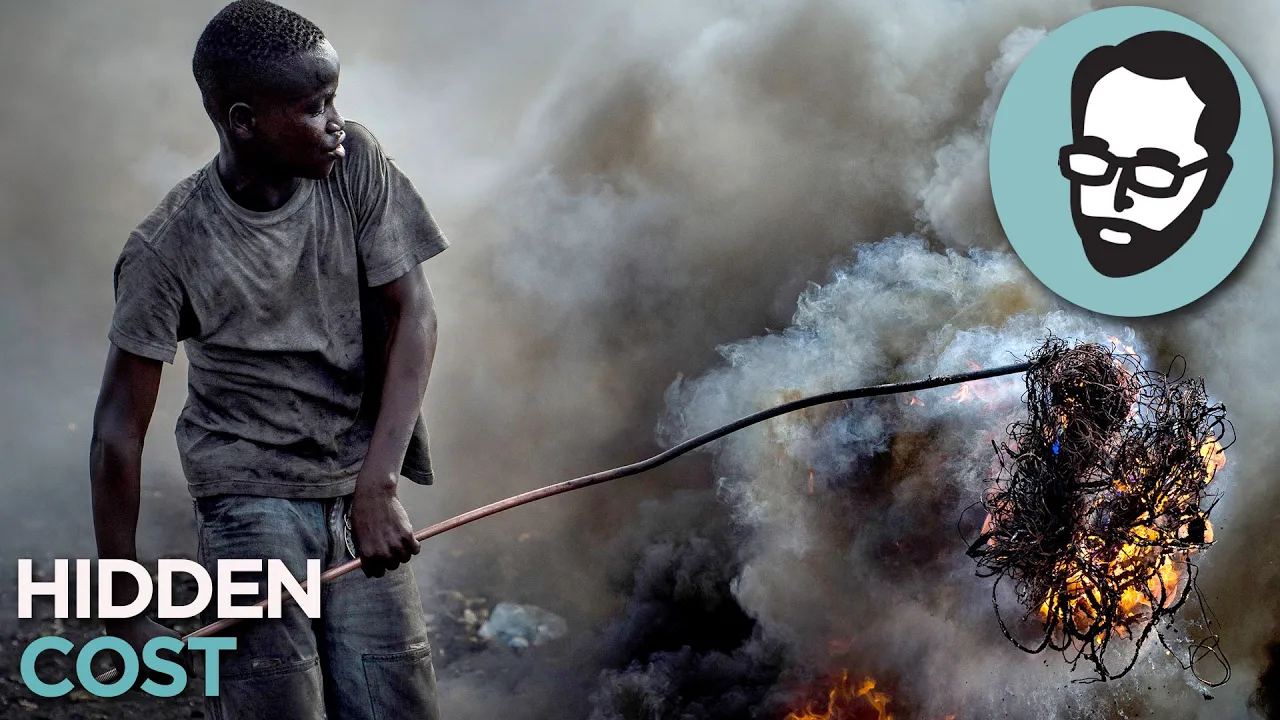
The investigative team discovered that open burning of wires and other components was common place. The burning was conducted to liberate the recyclable metals, aluminum, steel, and especially copper from plastic surroundings. Small villages of migrant workers set up shop along the riverfront and subsist entirely from the burning of wires stripped out of the imported computers in town. Here along the Longhong River, all the residents, men, women, and children, sort wires by day and burn them by night. Here are the wires ready to be burned.
Here the resulting copper scrap.
And here just some of the ashen residues.
The burning of wires made from PVC plastic or impregnated with plastic additives such as flame retardants may result in dangerous compounds such as dioxins and polyyclic aromatic hydrocarbons being emitted into air and ash. Yet the villagers live right in the workyard, their homes covered with ash.
The children play in the ash piles.
Pregnant women and breastfeeding mothers cook, wash, and drink from nearby well and surface water. A stones throw from the blackened village are fish ponds that provide a source of protein to the villagers diet.
In parts of Guayou, the streets and roads are filled with nothing but printer and copier parts. Prominent in this local are workers whose sole task is to use paint brushes to sweep out the small amounts of toner left in the cartridges. Here they're seen starting work in the morning. By the end of the day, they will be covered with black toner, which inevitably billows around their hands and faces as they work. This material contains carbon black, which is a probable human carcinogen, and other materials of unknown toxicity.
Manufacturers of the toner refuse to admit that the toners are toxic, but they do say they will cause respiratory problems if inhaled.
For some reason, the plastic toner cartridges are not recycled along with the other plastics. Rather, they are routinely discarded along roadsides and waterways.
[Music] Plastic computer wastes of various kinds are collected and sent on to another of the Guayou villages that specializes in separating, chipping, and then melting plastics into large extruded pieces for lowquality plastics applications elsewhere. Scientists confirm that melting plastics is likely to create dioxins and furons when PVC plastic is involved. Likewise, e-wasts impregnated or coated with flame retardants may create dioxins. This is a very serious problem as use of these highly polluting flame retardants in electronic plastics is widespread.
It was estimated that about half of the imported e-waste plastic is not recycled but is either burned or dumped in the vicinity of Guayu.
Perhaps the most profitable and most dangerous recycling operation involves the processing of electronic printed circuit boards. After the circuit boards are pulled from the computers, they are then handled by one of the hundreds of desoldering laborers operating all over town. The circuit boards are placed over a coal fired grill until the solder melts. Then the chips are plucked from the boards for later sorting. Some of the workers use fans to blow the fumes away, but inhalation of the lead, tin, solder vapors is inevitable, as is the ambient fallout of the heavy metals over the entire community.
After the valuable chips are removed, the boards are often burned to recover residual solder and discarded in the environment. Here along the river, even after a government cleanup operation, massive piles of charred circuit boards lie dumped, reduced to ashen fiberglass skeletons.
Analysis of the river water, soil, and sediment samples here revealed alarming levels of heavy metals. Soil here had levels of lead more than 200 times the level at which the Dutch government considers sediment to be a hazardous waste. River water here was found to be 2,400 times the World Health Organization's threshold level for lead and drinking water.
Once the computer chips and connectors are cut or peeled off the circuit boards, they're then either sold for reuse or more often sold to the acid strippers. These cyber age gold miners are found operating on the river banks just outside of town.
Here, over small fires, they heat an ancient formula known as aqua regia, which is made up of 75% pure hydrochloric acid and 25% pure nitric acid. Aquaria is swirled over the plastic tubs of computer chips to dissolve the tiny amounts of gold found inside. After many hours of this, a chemical is then added which precipitates the gold, making it settle to the bottom of the tub. This is recovered as a mud, dried, and then finally melted to a tiny bead of pure shiny gold. Besides the highly corrosive acid fumes, the process emits sulfur dioxide and chlorine, both toxic gases.
Yet, the only worker protections used are rubber boots and gloves. The hazardous sludges from the process, including pure acids, heavy metals, and hydrocarbons, are simply dumped, blackening the river banks and soaking into the river.
Okay, now I'm testing the acidity of the water.
It's almost zero. Extremely, you know, the highest scale in acidity that you can get. Now, I'm placing the whole paper in And this is just water that has uh run from the acet bath and it's going right into the uh river.
[Music] There is a reason that the toxic computers used in the United States and other developed countries end up on ships bound for Asia. They move due to the brute market forces that if left unregulated dictate that toxic waste will always run downhill on an economic path of least resistance. If left unchecked, the toxic affluent of the affluent will flood towards the poorest countries where labor is cheap and occupational and environmental protections are inadequate.
Well, it's being exported because of the cost factor. Um, it's very expensive to take this material apart. Takes a lot of labor. We have to pay real wages and we have environmental protection standards in this country. In China, maybe a buck 50 a day and very lack standards for environmental health and safety. In this country, we've we've decided we don't want the material in our landfills. And so, we've enacted landfill bans on some of this some of this material. If we're going to have those kinds of laws domestically, then we're either going to have to disassemble it in this country or else it's going to be exported. So, basically, it's still being exported because it's legal.
A free trade in toxic wastes leaves the poor peoples of the world with an untenable choice between poverty and poison. A choice that nobody should have to make. It was in an effort to counter the unsustainable and unjust effects of free trade in toxic wastes that an international treaty known as the Basil Convention was created. And it was also for this reason that the Basil Convention in 1994 agreed to adopt a total ban on the export of all hazardous waste from rich to poor countries. The Basil Convention calls on all countries to reduce their exports of hazardous wastes to a minimum and to the extent possible to deal with their waste problems within national borders.
Indeed, this is an obligation of the Basil Convention, regardless of the level of waste management technology in the importing country.
One would think that a country like the United States would be a country most able to fulfill and implement this call for national self-sufficiency in waste management. But to date, the United States is the only developed country in the world that has not ratified the Basel Convention. They have actively worked to defeat and then to weaken the Basel waste export ban. In fact, the United States government has within its own legal framework moved to ensure that electronic wastes would be exempt from the minimal laws it does possess. Those laws require prior notification to importing nations of impending hazardous waste shipments.
The US is trying very hard to keep the back door to toxic waste exports open.
Their response to our concern has been a business as usual attitude in trying to establish a global minimum standards for recycling. The fact is recycling lead, mercury and brominated flame retardants is a dangerous and polluting business anywhere in the world. Even US smelters have a difficult time meeting the minimum US environmental standards. So the question is why should Asia bear the toxic burden of the world simply because it's poor?
We now have a very ugly scenario where the United States on the one hand is doing everything it can to prevent the contamination of its own soil by the dumping of e-waste into its landfills and the lead contamination.
On the other hand, they're actively promoting the wholesale export of this material to Asia where it ends up in the rice patties going up in smoke being dumped in irrigation ditches. And this has gone unnoticed until now. The United States talks a real good talk about environmental justice at home for their own people, but they work in direct opposition to environmental justice on the global stage.
The current US policy of actually encouraging the quick and dirty route of export hidden under the green cloak of the word recycling is not only an affront to environmental justice. It also stifles the innovation needed to best deal with the issue upstream. For as long as manufacturers evade the ultimate costs of hazardous products via export to Asia, they can delay the day when they will have to aggressively use their ingenuity to make sure their products are less toxic and to prevent their wasteful rapid obsolescence. While our government and our industry may be acting irresponsibly, we as small businesses, we as consumers can insist on another path. A way forward has been heralded by the European Union. These 15 European countries have already implemented the Basil Convention and have banned the export of all hazardous wastes to developing countries for any reason. They have also readied legislation which will ensure that manufacturers are responsible for the entire life cycle of computers.
Furthermore, they are required to take them back with the costs being borne by the producers and additionally must agree to specific phase out dates for toxic inputs.
I don't want to export this material and I think there are a lot of other recyclers like myself that feel the same way. Um, but as so long as there are no prohibitions against doing so, uh, as long as it's legal, it probably will continue to do so. And and ultimately, this doesn't this doesn't really address the larger issue, the toxicity of the materials, the the wastefulness of our society and the electronics industry.
Um, it just basically sweeps that under the carpet and and I think we can do better than that.
Now that we've all seen the ugly face of the e-waste problem, we must give the European model a second look. We can no longer pretend that we don't know what is happening with a large portion of our recycled electronic waste. We can no longer allow its dumping on foreign shores. The real answer surely lies not in exporting our problems to those least able to deal with them, but in preventing the problems at their source.
[Music] with how bey [Music] Fore for me.
[Music]
Up Next
28:11
Public Health Impacts of Informal E-Waste Recycling in Pakistan
@journeyman
1.4M views•2016-07-11

15:54
Life in Biosphere 2: Sustainable Ecosystems & Human Survival
@TED
334.9K views•2009-06-16
14:30
Microplastics Everywhere: How Plastic Impacts Our Lives
@TEDx
100.9K views•2018-05-08
10:28
Ice Stupa Artificial Glaciers: Solving Ladakh's Water Crisis
@SonamWangchuk66
3.2M views•2015-05-03
Related Study Plans & Knowledge Roadmaps
Structured learning paths in Environmental Science
environmental-science
Ocean Noise: Cetacean Impacts & Mitigation
01Fundamentals of Underwater Acoustics
02Marine Mammal Bioacoustics
03Anthropogenic Noise: Shipping & Seismic Surveying
+ 2 more learning modules
16h5 modules
Explore Roadmap
environmental-science
Road Ecology: Corridors, Overpasses & Fencing
01Foundations of Habitat Fragmentation and Carnivore Ecology
02The Road Barrier: Ecological Impacts of Transport Infrastructure
03Principles of Ecological Corridors and Connectivity Mapping
+ 3 more learning modules
14h6 modules
Explore Roadmap
environmental-science
Ocean Acidification: Kelp Buffering & Shellfish
01Fundamentals of Ocean Chemistry & pH
02Chemical Pathways of Coastal Acidification
03Bivalve Physiology & Calcification Under Stress
+ 2 more learning modules
18h5 modules
Explore Roadmap
environmental-science
Ice Stupas: Glacial Retreat & Water Security
01Foundations of Glaciology & Mountain Hydrology
02Climate Change and Glacial Retreat Dynamics
03The Science of Ice Stupas & Artificial Glaciers
+ 2 more learning modules
14h5 modules
Explore Roadmap