















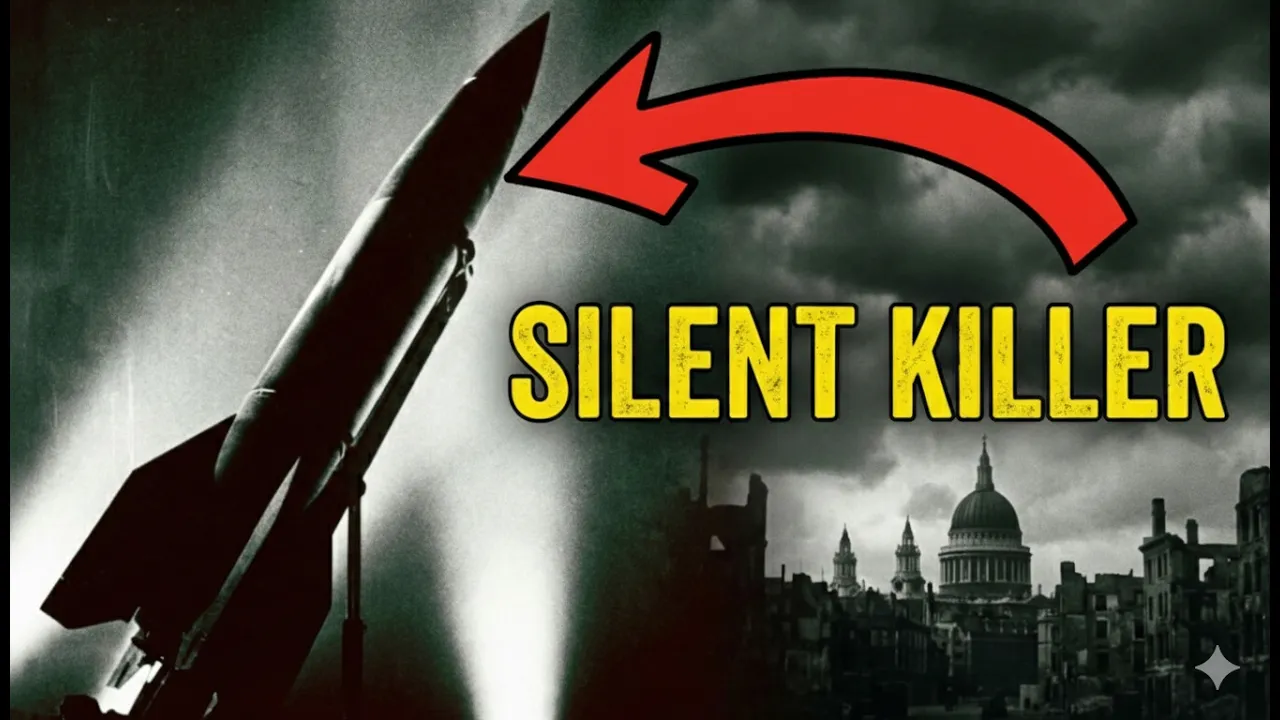


The V-2 rocket, launched on June 20, 1944, was the first human-made object to reach space (108.5 miles), achieved by Nazi Germany under Wernher von Braun's leadership. While this revolutionary technology became the foundation for all modern rocketry and eventually enabled the Apollo moon landing, it was built by approximately 20,000 slave laborers from Nazi concentration camps who died in underground factories at Mittelbau-Dora, and was used as a terror weapon that killed 9,000 civilians in Allied cities. This demonstrates how technological achievements can emerge from morally reprehensible foundations, raising questions about whether we can separate the scientific achievement from the human cost.
The V-2 Rocket: Nazi Weaponry and the Dawn of the Space Age
Added:Fundamental principles of rocket propulsion, including Newton's Third Law of Motion and the difference between solid and liquid propellants.
The geopolitical context of World War II, specifically Nazi Germany's military strategies and the desperate push for 'wonder weapons' (Wunderwaffen) late in the war.
The basic concept of a ballistic trajectory, including how suborbital flight differs from orbital spaceflight.
The structure of the Nazi concentration camp system and the mobilization of forced labor for military industrialization.
Operation Paperclip and the post-WWII intelligence race between the United States and the Soviet Union to secure German rocket scientists.
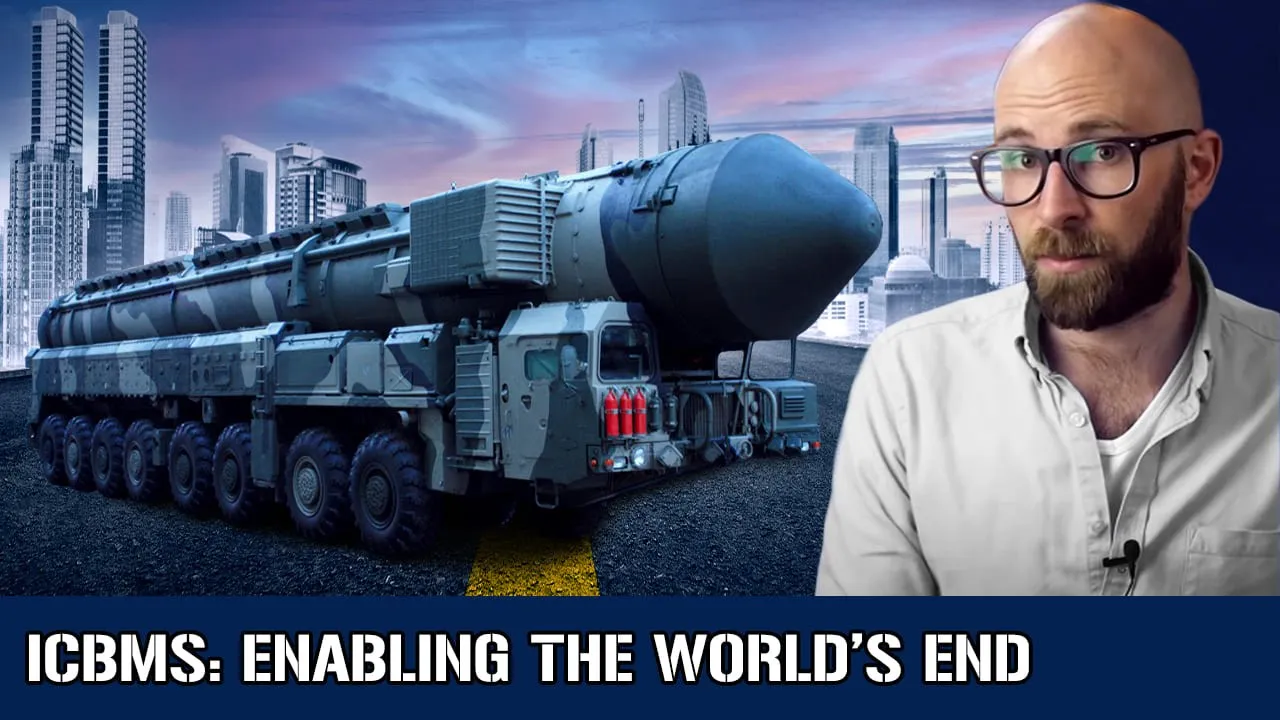
The direct technological evolution from the V-2 to early Intercontinental Ballistic Missiles (ICBMs) and the Saturn V rocket that powered the Apollo moon landings.
The ethical dilemmas of dual-use technology, examining how scientific advancements can simultaneously serve devastating military purposes and peaceful space exploration.
The development of modern inertial guidance systems and automated telemetry, which originated from the V-2's primitive gyroscopic stabilization systems.
2.3K views7likes30:53Original Release: 2025-11-21
June 20th, 1944.
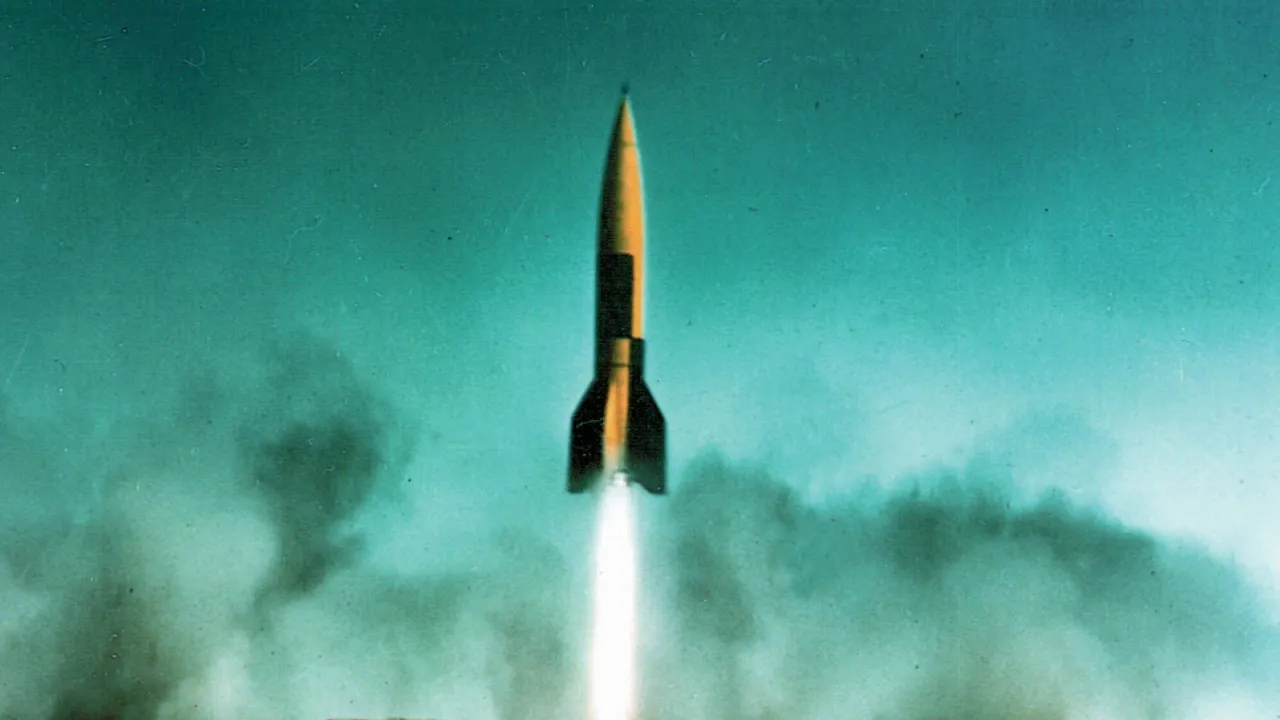
A small island off the coast of Germany, Grwalder Oi, in the Baltic Sea, German scientists prepared a rocket for launch, the Aggregate 4, later known as the V2.
Early morning, the countdown began. The rocket ignited. Flames erupted from the base. Smoke billowed across the island.
The rocket lifted off faster and faster, climbing vertically into the sky. It passed 10,000 ft, 20,000, 40,000, higher than any airplane had ever flown.
It kept climbing. 60,000 ft, 80,000, 100,000. The rocket designated MWB18014 reached 108.5 mi above Earth. It had crossed the Carmon line, the boundary of space. For the first time in human history, a man-made object had left Earth's atmosphere and entered space.
This was 3 years before Chuck Joerger broke the sound barrier, 13 years before Sputnik, 17 years before Yuri Gagarin, 25 years before Apollo 11 landed on the moon. A Nazi weapon built by slave labor designed to kill civilians, was the first object humanity sent into space.
Between September 1944 and March 1945, Nazi Germany launched over 3,000 V2 rockets at Allied cities, London, Antworp, Paris, Brussels, Leazge. The rockets traveled at 3,500 mph, faster than sound, faster than any defense could stop. They carried 2,200 lb warheads. Each one could destroy an entire city block. 9,000 civilians and military personnel died in V2 attacks.
But in the underground factories where these rockets were built, 20,000 slave laborers from Nazi concentration camps were worked to death. More people died building the V2 than were killed by it.
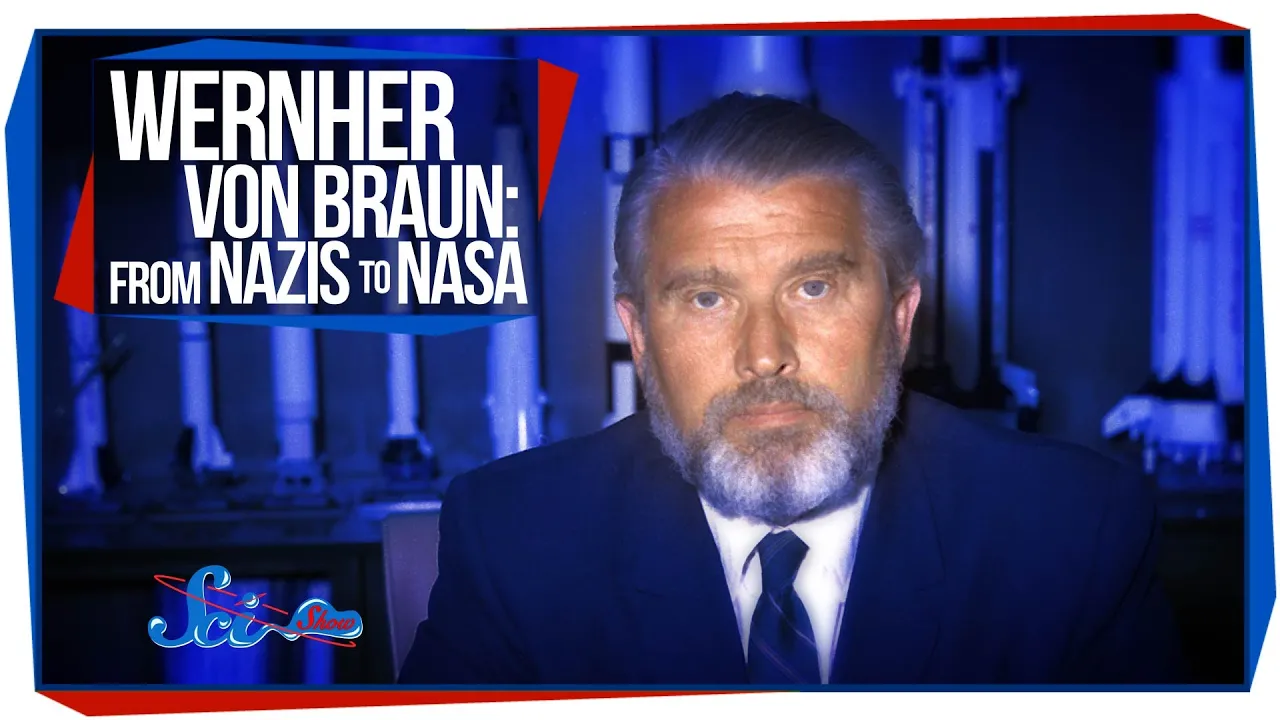
The man who designed this rocket was Verer von Brown, a member of the Nazi party, an officer in the SS. When World War II ended, the United States brought von Brown to America along with 1,600 other Nazi scientists and engineers.
They were given new identities, clean records, American citizenship. Von Brown became a hero, the face of America's space program. He designed the rocket that sent Neil Armstrong to the moon.
This is the story of the V2, the Nazi vengeance weapon that reached space, built on a mountain of corpses that became the foundation of the space age.
If you want to hear the complete dark history of the rocket that reached space before any satellite that was built by 20,000 slaves who died in underground tunnels and that sent America to the moon. Hit subscribe. This is WW2 documents. Let's go. 1912.
Verer Magnus Maxmleian Fryhair von Brown was born in Virus, Germany, March 23rd.
He came from an aristocratic Prussian family. His father was a baron, a government official. Young Wernern showed little interest in mathematics or science as a child. He was more interested in music, played piano and cello. Then at age 13, his mother gave him a telescope. Wernern pointed it at the night sky, saw the moon, the stars, the planets. Something changed in him that night. He became obsessed with space, with the idea of traveling beyond Earth. He read everything he could find about rocketry, about space travel, about the physics of leaving Earth's gravity.
One book changed his life completely.
The Rocket into Planetary Space by Herman Oberth, published in 1923.
Oberth's book explained how liquid fuel rockets could theoretically reach space, could escape Earth's atmosphere, could travel to other planets. Von Brown was 16 years old when he read it. He couldn't understand the mathematics. The equations were too complex. So he taught himself advanced mathematics, calculus, physics, engineering. By 18 he was studying mechanical engineering at the technical university of Berlin. 1930 Berlin von Brown joined the fine furshiff art, the German rocket society, an amateur club of rocket enthusiasts.
They met in an abandoned ammunition dump called Called it Raketan Flug Plots, rocket flight field. Young engineers and dreamers building small rockets, testing liquid fuel engines, dreaming of space.
Herman Oth himself was there sometimes, the man whose book had inspired von Brown. They launched small rockets, most exploded, some flew a few hundred feet.
It was dangerous, exciting, revolutionary, but the group had no money, no resources, no support. Then in 1932, something happened that would change everything.
The German army sent officers to watch one of their rocket tests. The Treaty of Versailles after World War I had severely restricted Germany's military, limited the size of the army, banned certain weapons. But the treaty said nothing about rockets. The army officers saw potential, a weapon that could bypass all the restrictions, a weapon the treaty didn't even mention. They approached von Brown, made him an offer.
Work for the army. Develop rockets as weapons. unlimited funding, the best facilities, everything he needed. Von Brown accepted immediately. He told himself he was doing it for space exploration. The army would fund his dream. Let him build rockets. Perfect the technology. Later he could use that technology to reach the stars. That's what he told himself. 1933 Adolf Hitler became Chancellor of Germany. The same year, von Brown started his doctoral dissertation on liquid fuel rockets, secret work for the German army. By 1934, the army had given von Brown a team, a budget, a research facility at Kumerdorf, south of Berlin.
They built and tested small rockets, the A1, the A2, learning, improving, failing, trying again.
Von Brown later said about the A1, "It took half a year to build and half a second to blow up. But they learned from each explosion. Each failure taught them something. By 1937, they had outgrown Crsdorf. They needed more space, more secrecy, somewhere far from cities. Von Brown personally selected the location.
Panamunda, a fishing village on Yusedom Island on Germany's Baltic coast, remote, isolated, perfect for testing rockets over the sea. Construction began in 1936. The Nazis poured unlimited money into the project. By 1939, Pinamunda had become one of the largest research facilities in the world.
laboratories, test stands, wind tunnels, production facilities, housing for thousands of workers. The goal developed the A4 rocket, later renamed the V2, a rocket that could carry a one-tonon warhead, travel 200 m, strike enemy cities with no warning. 1939 to 1942, development of the A4. It was extraordinarily difficult. Revolutionary technology that didn't exist yet. They needed to solve four massive problems.
First, a liquid fuel engine powerful enough to lift a 14-tonon rocket burning alcohol and liquid oxygen generating 25 tons of thrust. Second, supersonic aerodynamics.
The rocket would travel faster than sound, faster than any aircraft. Nobody knew how to design for those speeds.
Third, gyroscopic guidance. The rocket had to steer itself, stay on course, hit a target 200 m away. Fourth, heat management. The engine burned at thousands of degrees. How do you keep it from melting? Von Brown's team worked day and night, testing, failing, rebuilding. Test rockets exploded on the launchpad, veered off course, broke apart in midair, crashed into the Baltic Sea. Hundreds of test launches. Most were failures, expensive failures. Each prototype cost a fortune. Hitler was unimpressed. He called the A4 an artillery shell with a longer range and much higher cost. He didn't see the potential, didn't understand the revolution they were creating. But von Brown's team kept working, kept improving, kept pushing the boundaries of what was possible. October 3rd, 1942.
4 in the afternoon. Pam Munda test stand. The fourth A4 prototype ready for launch. The previous three had all failed, exploded, crashed. This was attempt number four. The countdown began. The engine ignited. The rocket lifted off. It climbed faster and faster straight up into the sky. The guidance system worked. The rocket stayed on course. It reached 52 mi altitude, traveled 120 mi down range. It worked.
For the first time, the A4 had flown successfully, reached the edge of space, landed in the target area. Von Brown and his team were ecstatic. They had done it. created the world's first long range ballistic missile. Walter Dornberger, the Army general overseeing the program, made a speech that night. This afternoon, the spaceship was born. We have invaded space with our rocket and for the first time used space as a bridge between two points on Earth. They didn't realize they were also inventing a weapon of terror, a weapon that would kill thousands. A weapon built by slaves.
July 7th, 1943.
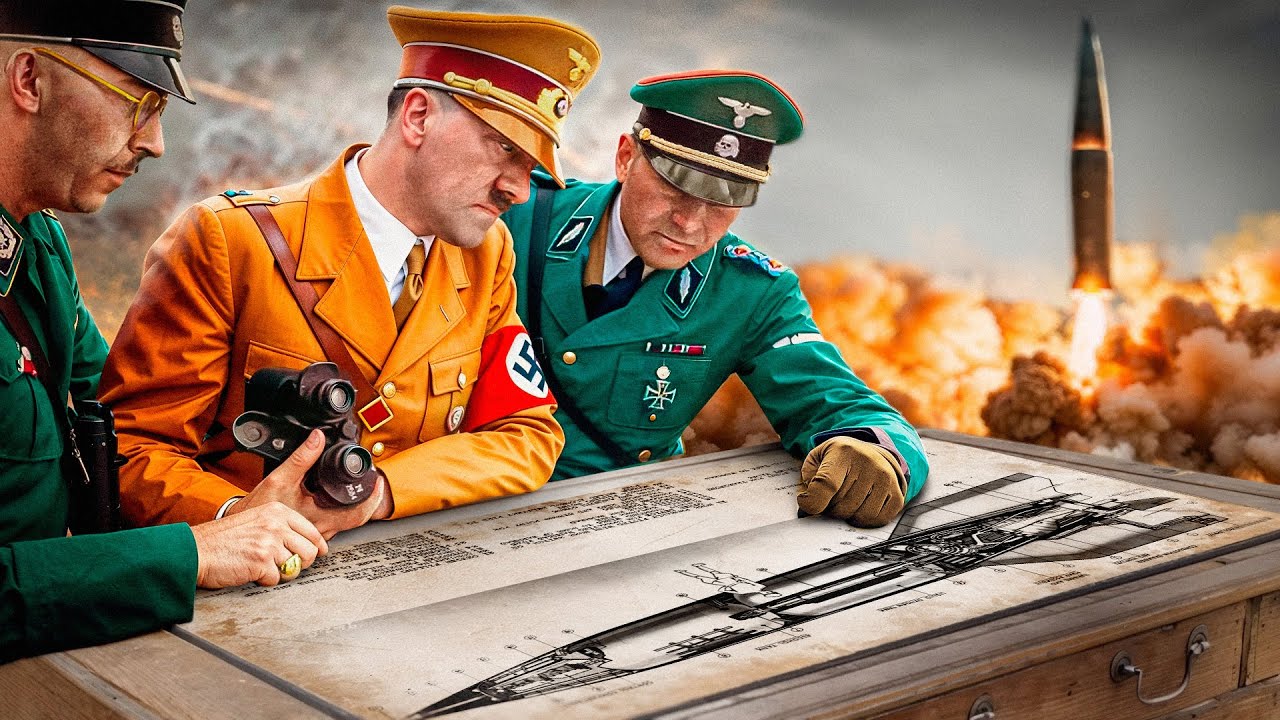
Wolf's lair, Hitler's military headquarters in East Prussia. General Dornberger and Verer von Brown arrived to brief Hitler on the A4. They brought film of the successful October test.
Scale models, technical specifications.
Hitler watched the film, silent, intense. He saw the rocket launch, saw it disappear into the sky, saw the explosion at the target. When it ended, Hitler stood up, excited, animated.
Why was it I could not believe in the success of your work? If we had had these rockets in 1939, we should never have had this war. Hitler gave Pinamunda top priority, unlimited resources, whatever they needed. He wanted 2,000 rockets per month. He wanted them immediately. The A4 was renamed V2.
Figuel Tungvafa, Vengeance Weapon 2. It would re vengeance on Germany's enemies, on the cities that had bombed Berlin. Hitler wanted terror, wanted to break the will of the British people. The V2 would be his wonder weapon, his Vundafa.
August 17th, 1943.
Night. The Royal Air Force launched Operation Hydra, a massive bombing raid on Pinamunda.
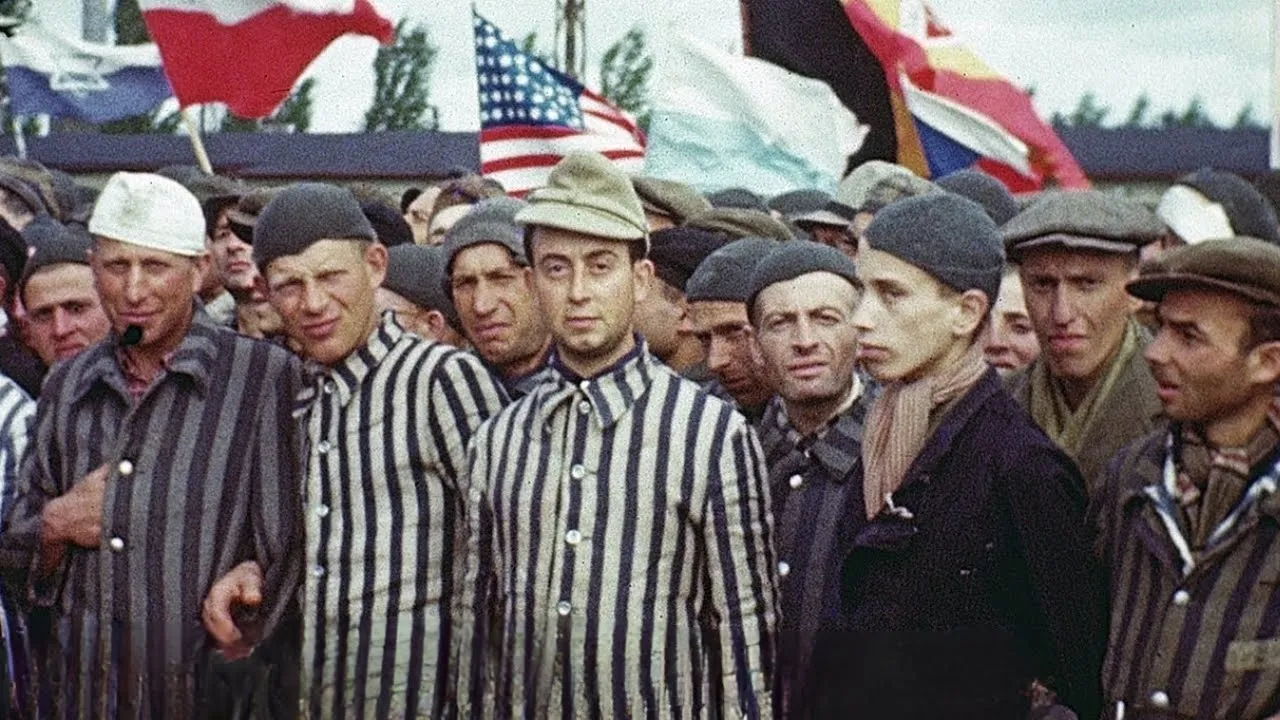
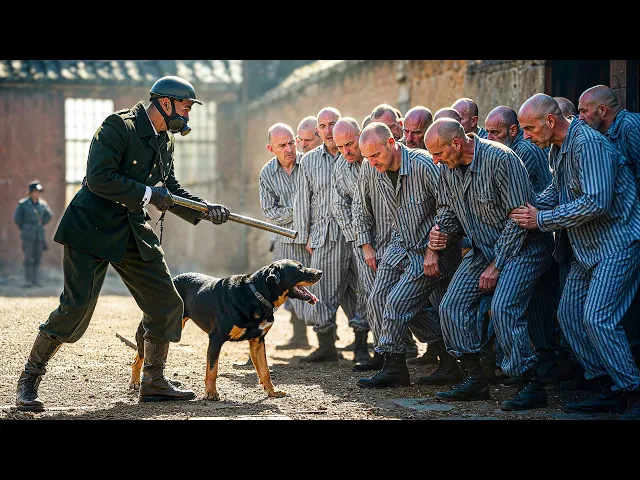
British intelligence had discovered the rocket program, learned about the V2, understood the threat. They sent 596 bombers, Lancaster, Halifax, Sterling aircraft. The raid lasted 45 minutes, destroyed significant portions of Pinamunda, housing blocks, laboratories, production facilities, test stands. Over 700 people died, scientists, engineers, workers, forced laborers. The raid set the V2 program back months, but it also made Hitler and Hinrich Himmler make a decision. The V2 production would move underground where bombers couldn't reach it to a place called Middlesver near Nordhousen in the hearts mountains of central Germany and it would be built by concentration camp prisoners, slaves, an underground factory complex inside a mountain. Two parallel tunnels, each over a mile long, connected by 46 cross tunnels, originally built as a fuel storage depot, now converted to rocket production. In August 1943, the SS began transporting concentration camp prisoners to Dora, later known as Middleba Dora. First a few hundred prisoners, then thousands, eventually tens of thousands. They came from Bukinvald, from Ashvitz, from across the Nazi concentration camp system. Jews, political prisoners, Soviet PS, Poles, French, checks, Dutch. Their job, excavate the tunnels, build the factory, assemble the V2 rockets. The conditions were beyond description. The prisoners worked underground 24 hours a day in shifts. No daylight, no fresh air, just artificial light and the dust from blasting, no sanitation, no running water, no toilets. They slept in the tunnels themselves. 12-hour shifts, sometimes longer, digging, moving equipment, assembling rockets, food, starvation rations, watery soup, a piece of bread, disease spread rapidly, typhus, dysentery, tuberculosis. Guards beat prisoners constantly for working too slowly, for making mistakes, for being too weak. If a prisoner collapsed, guards would beat them. If they couldn't get up, they were shot or left to die.
The prisoners called it the death tunnel. One survivor later testified, "Dante's inferno is a children's game compared to the tunnel. The dust from blasting operations filled the tunnels, got into prisoners lungs. Many died from lung diseases. Prisoners slept in four tier bunks, wooden planks, no mattresses, no blankets. In winter, the smell was unbearable. Human waste, death, disease. Between August 1943 and April 1945, approximately 60,000 prisoners passed through Middle Bodora. At least 20,000 died. Some estimates say 26,000 worked to death, starved, beaten, shot, died from disease. More prisoners died building the V2 rockets than the rockets killed in combat. Let that sink in. A weapon designed to kill the enemy.
Killed more of its own builders than its targets. Arthur Rudolph was the chief engineer of the Middberg factory. He oversaw production. He knew about the conditions. He saw the deaths. He did nothing to stop it. Verer von Brown visited Middle regularly, inspected production, reviewed quality control. He saw the prisoners, saw their conditions, saw them dying. He later claimed he didn't know how bad it was, that he was powerless to change it. Survivors said otherwise.
One survivor testified that von Brown personally selected prisoners for work details. Another said von Brown witnessed hangings of prisoners accused of sabotage. Von Brown denied these accounts for the rest of his life.
Despite the horror, production ramped up. By January 1944, Middberg was producing V2 rockets. At first a handful per month, then dozens, then hundreds.
Each rocket required approximately 10,000 to 20,000 man-h hours to build.
Prisoners assembled every component, the fuel tanks, the engine, the guidance system, the warhead. Quality was actually quite good. The prisoners, despite being starved and beaten, built the rockets carefully. Some committed sabotage, small acts, a loose bolt, a disconnected wire, anything to make the rocket fail. When rockets failed after launch, prisoners suspected of sabotage were hanged in front of the entire workforce as warnings. By summer 1944, Middlesver was producing up to 600 V2 rockets per month. Over 5,000 V2 rockets were built at Midd. Each one represented untold suffering. Each one was stained with blood. September 8th, 1944.
Early morning, the first V2 launched in combat from the Hague, Netherlands, Target, Paris. The rocket climbed into the sky, traveled at 3,500 mph, reached 50 mi altitude. 5 minutes after launch, it came down, crashed into the suburbs of Paris. Six people died. That same day, a second V2 was launched.
Target, London. It crashed into Chisik, West London. 6:43 in the evening. Three people died, 17 injured. The V2 campaign had begun. For the next 7 months, V2 rockets rained down on Allied cities.
London received over,300 V2 strikes.
Antworp, Belgium, a major allied supply port was hit by over 1,500 V2s. Paris, Brussels, Leazge, Noridge, Ipsswitch, Mric. The attacks were terrifying because there was no warning. With conventional bombing, you heard air raid sirens, heard the planes, heard the bombs falling. With the V2, there was nothing. Just sudden explosion, destruction, death. The rocket traveled faster than sound. You heard the explosion first, then seconds later, the sound of the rocket coming. Supersonic boom followed by the crash of the impact. There was no defense, no way to shoot it down, no way to intercept it.
Civilians lived in constant fear, not knowing when or where the next rocket would fall. One V2 hit a Woolworth's department store in London. November 25th, 1944.
Lunch hour, the store was packed.
168 people died. Over a 100 injured. It was the single deadliest V2 strike. But as a military weapon, the V2 was actually a failure. The guidance system wasn't accurate enough. Many rockets landed in the ocean or in open countryside. The ones that hit cities caused damage, but nothing strategic, nothing that affected the war effort.
The British already had survived 4 years of conventional bombing. The Blitz V1 flying bombs. The V2 was terrifying, but it didn't break British morale didn't force surrender. In total, over 3,000 V2 rockets were launched in combat.
Approximately 9,000 people died.
Civilians and military personnel combined. But Germany spent enormous resources on the program. Billions of Reichkes marks, tens of thousands of workers. Those resources could have built thousands of fighter planes, tanks, artillery, weapons that might have actually affected the war's outcome. Michael Newfeld, the leading historian on the V2, concluded the V2 was an extraordinarily expensive way to drop a one-tonon bomb on an enemy city.
And that bomb killed fewer people than died building the rockets. March 1945, Germany was collapsing. Soviet forces advancing from the east, American and British forces from the west. The V2 program was dying. fuel shortages, transportation breakdowns, Allied bombing disrupting everything. The last V2 was launched on March 27th, 1945.
Target London. It hit Orpington, killed one woman, the last person to die from a V2 attack. Von Brown and his team knew the war was lost, knew the Soviets and Americans were coming. They made a decision. surrender to the Americans, not the Soviets. The Americans would value their knowledge, treat them well.
The Soviets might execute them. April 1945, von Brown and his team fled Pinamunda.
They headed south toward Bavaria toward the advancing American forces. May 2nd, 1945, von Brown's brother, Magnus, approached American troops.
My name is Magnus von Brown. My brother designed the V2 rocket. We want to surrender to the Americans.
Within days, American intelligence officers had custody of Verer von Brown and his entire team. They also captured 14 tons of documents. Enough V2 parts to build over a 100 complete rockets. The scientists and engineers who knew how to build them. The United States launched Operation Paperclip, a secret program to bring German scientists to America.
Scientists who had worked for the Nazis for Hitler. Over 1,600 German scientists, engineers, and technicians were brought to the United States. Their Nazi party memberships were erased from records. Their SS ranks disappeared. War crimes allegations ignored. They were given new identities, American citizenship, jobs in the US military and aerospace programs. Von Brown and his team went to Fort Bliss, Texas, then to Huntsville, Alabama. They worked for the US Army, developing ballistic missiles, using captured V2 rockets, teaching Americans what they had learned. The American government made Wernern von Brown a hero. They put him on television, magazine covers. He became the face of America's space program.
Walt Disney hired him to appear in television specials about space travel.
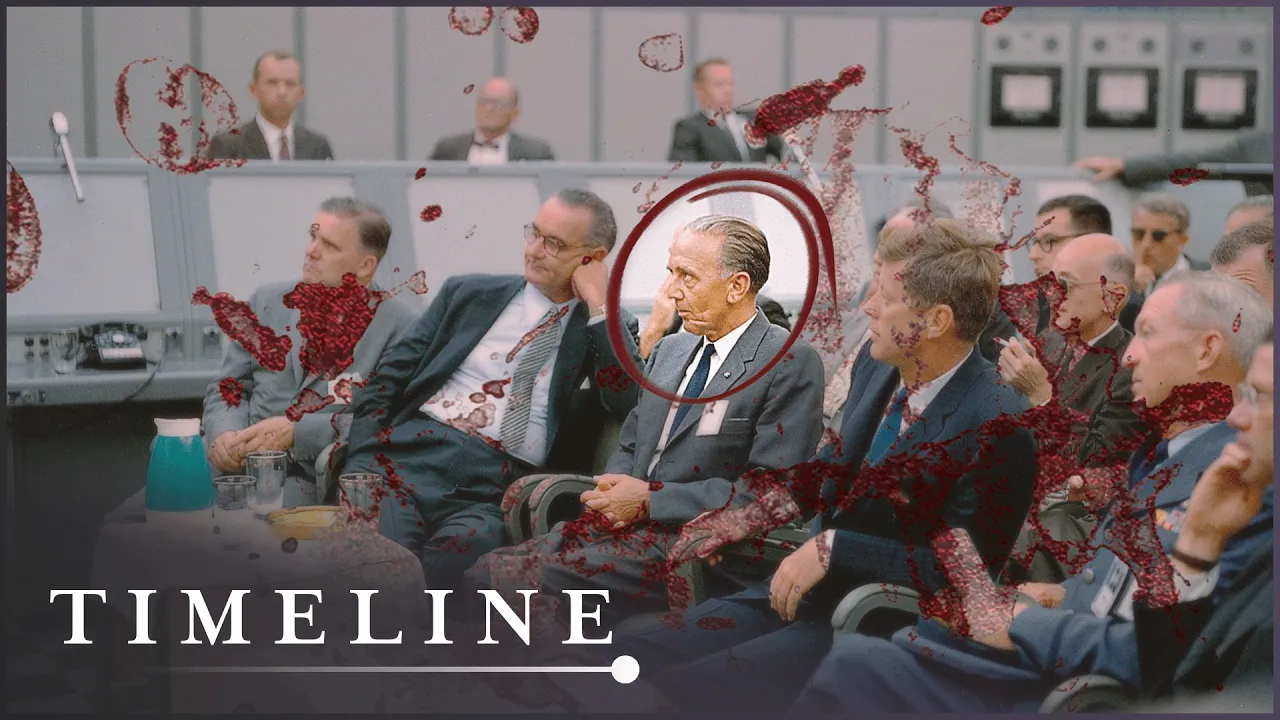
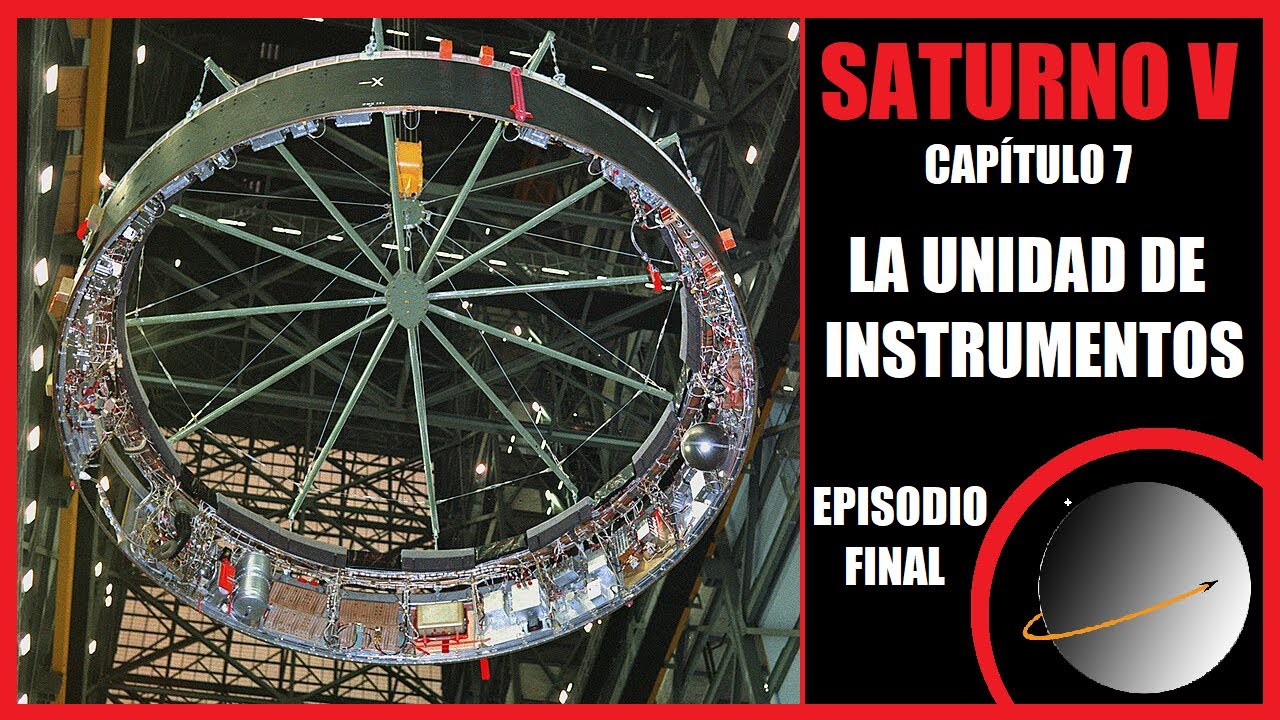
He wrote books, gave speeches, inspired a generation to dream about space. In 1960, NASA was created. Von Brown became the first director of the Marshall Space Flight Center in Huntsville. His job designed the rocket that would take Americans to the moon. The Saturn 5. The most powerful rocket ever built. 363 ft tall, 7,500 lb of thrust. It worked perfectly. Launched all nine Apollo missions that went to the moon. Never a single failure. On July 16th, 1969, Saturn 5th launched Apollo 11. Four days later, Neil Armstrong walked on the moon. Von Brown's dream had come true.
Humanity had reached another world.
American newspapers called him a genius, a visionary, the man who sent America to the moon. They didn't mention Middle Bowora. They didn't mention the 20,000 slaves who died building his rockets.
They didn't mention his Nazi party membership, his SS rank. That was all classified, erased, forgotten. But some people remembered. In the 1980s, Arthur Rudolph, von Brown's colleague, was investigated for war crimes. Rudolph had been the production manager at Middberg, oversaw the slave labor. In 1984, facing prosecution, Rudolph surrendered his American citizenship and left the country. He died in Germany in 1996.
Wernern von Brown died in 1977.
Age 65, pancreatic cancer. He never faced trial. Never admitted guilt. Never apologized for Middle Bodora. When asked about the slave labor, he said, "I was powerless. I was just an engineer focused on rocketry." Survivors disagreed. Adam Cabala, a Polish prisoner who survived Middle Bodora, said, "Saying von Brown didn't know is like saying the director of Awitz didn't know what was happening."
Today, the V2 rocket has a complicated legacy. On one hand, it was the first object to reach space, the beginning of the space age, the foundation for all modern rocketry. The V2 led to Sputnik, Yuri Gagarin, Apollo 11, the space shuttle, the International Space Station, Mars rovers. Every rocket that has ever launched, every satellite, every space probe owes something to the V2.
On the other hand, it was built by 20,000 slaves who died in agony. Used to kill 9,000 civilians, designed as a weapon of terror. Middle Bodora is now a memorial. Visitors can tour the tunnels where prisoners died. There are plaques, monuments remembering the dead.
Panamunda is now a museum, the technical historical museum. It doesn't shy away from the dark history. The exhibits explain, "The cradle of missiles became the victim's coffin." The National Air and Space Museum in Washington DC has a V2 on display. For years, it was painted in test colors, black and white, to emphasize its role in space exploration.
Now, it includes information about middle Bora, about the slave labor, about the cost in human lives. The V2 rocket reached space before any satellite, before any astronaut, before any nation had even conceived of a space program. On June 20th, 1944, rocket MW18014 crossed into space. It was a weapon built by slaves designed to kill. But it was also humanity's first step beyond Earth. That duality defines the V2.
revolutionary technology built on a foundation of corpses. A rocket that killed thousands that enabled humanity to reach the stars. Wer von Brown dreamed of space, of exploring other worlds, of humanity's future beyond Earth. He achieved that dream. But the path to that achievement was paved with 20,000 dead prisoners with 9,000 dead civilians with suffering beyond imagination. The question we're left with, can we separate the achievement from the horror? Can we celebrate the moon landing while remembering Middle Bodora? Can we honor the technology while condemning the men who built it?
There's no easy answer. The V2 rocket is history. Complex, dark, revolutionary, horrible, amazing, all at once. This is the complete verified history of the V2 rocket. Every detail sourced from National Air and Space Museum archives, Middle Bowdora Memorial documentation, NASA historical records, and leading historians including Michael Newfeld. If this story moved you, hit like. Share this video. This history deserves to be remembered. All of it. The achievement and the horror. Subscribe to WW2 documents for more authentic World War II stories. Comment below. What part of this story shocked you most? 20,000 slaves died building rockets that killed 9,000 people. That technology sent humans to the moon. Never forget the price. Never forget the cost.
Up Next

3:04
Yuri Gagarin: First Human in Space (1961) Explained
@Simplehistory
872.4K views•2017-12-19

33:02
The Great Schism of 1054: Causes and Consequences
@SacredCathedrals
113.5K views•2026-02-19
91:57
The Geopolitics of the Ukraine War and the Rise of Global Autocracy
@JordanHarbingerShow
468K views•2025-04-19

17:05
Understanding the Cold War: Superpower Conflicts and the Road to Détente
@OverSimplified
46.1M views•2019-01-24
Related Study Plans & Knowledge Roadmaps
Structured learning paths in History
history
Byzantine Iconoclasm: Theology, Art & Politics
01Foundations of Byzantium and Early Christian Images
02The First Iconoclasm: Leo III and the Crisis of Images
03Empress Irene, Nicaea II, and the Second Iconoclasm
+ 2 more learning modules
9h5 modules
Explore Roadmap
history
Iranian Revolution (Causes, Events & Legacy)
01The Pahlavi Dynasty and the Roots of Discontent
02The Spark of Rebellion and the Rise of Khomeini
031979: The Fall of the Shah and the Climax of the Revolution
+ 2 more learning modules
8h5 modules
Explore Roadmap
history
Mali Empire: Mansa Musa, Trade & Timbuktu
01Foundations of the Mali Empire
02The Trans-Saharan Gold and Salt Trade
03The Reign and Pilgrimage of Mansa Musa
+ 1 more learning modules
6h4 modules
Explore Roadmap
history
1947 Partition: Politics, Borders & Legacies
01Foundations of British India and the Divide
02The Political Negotiations and the Mountbatten Plan
03Drawing the Boundary: The Radcliffe Line
+ 2 more learning modules
8h5 modules
Explore Roadmap