






























Before central heating existed, humans developed various ingenious heating solutions including Roman hypocausts (underfloor heating), Asian heated floors (ondol and kang), chimneys enabling multiple fireplaces, personal warming devices like warming pans and hot bricks, and insulated beds with curtains to trap body heat. These innovations, which humanity invented, lost, and sometimes rediscovered over millennia, demonstrate how people creatively solved the fundamental problem of staying warm through constant labor, fuel management, and architectural innovation.
The History of Home Heating Before Modern Radiators
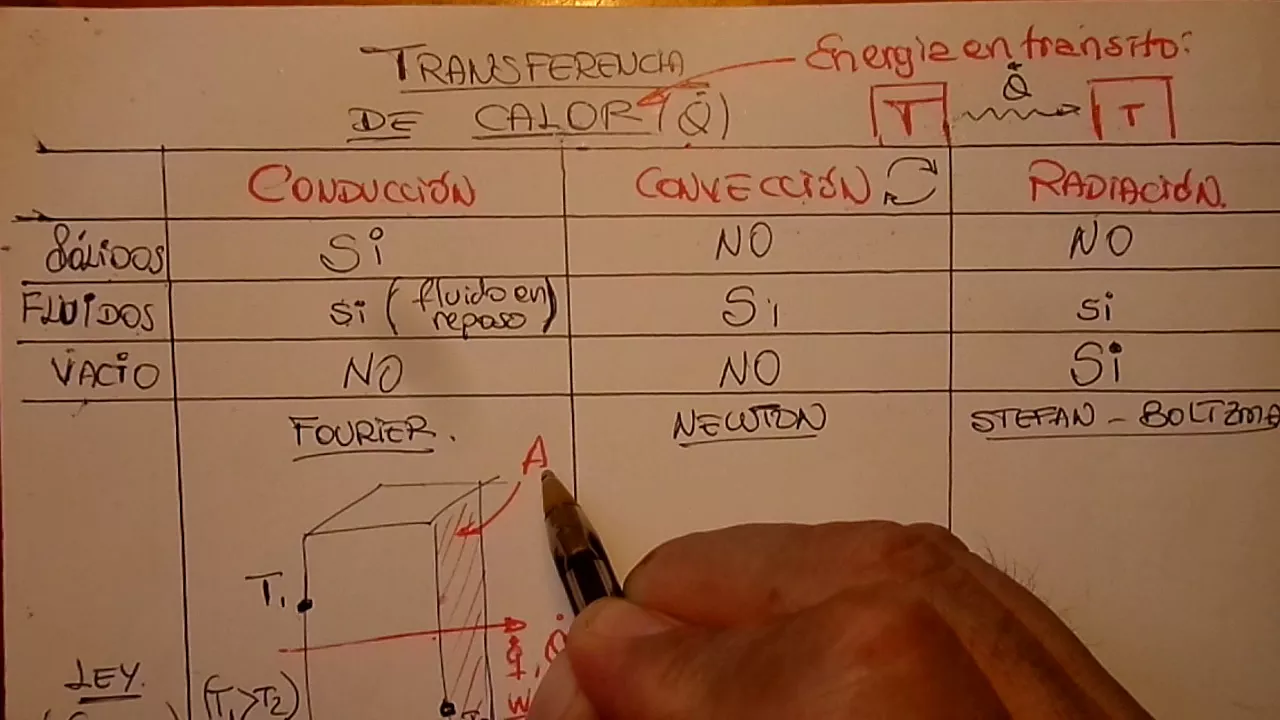
Added:Basic principles of thermodynamics, specifically the mechanisms of heat transfer: conduction, convection, and radiation.
Fundamentals of combustion, including how fuel burns, heat generation, and the necessity of ventilation for smoke and carbon monoxide.
A general historical timeline of the Roman Empire and traditional Korean dynasties to contextualize when and where these technologies arose.
Basic architectural concepts of thermal mass—how materials like stone, brick, and clay absorb, store, and release heat.
The evolution of centralized heating during the Industrial Revolution, including the invention of steam and hot water radiator systems.
The engineering of modern radiant floor heating systems (hydronic and electric) and their direct lineage from ancient ondols and hypocausts.
The transition from fossil-fuel-based heating to renewable thermal energy technologies, such as geothermal heat pumps.
Principles of modern passive house design, which utilizes insulation and structural sealing to minimize the need for active heating systems.
164 views15likes25:31Original Release: 2026-06-26
Picture waking up on a January morning in the year 1400.
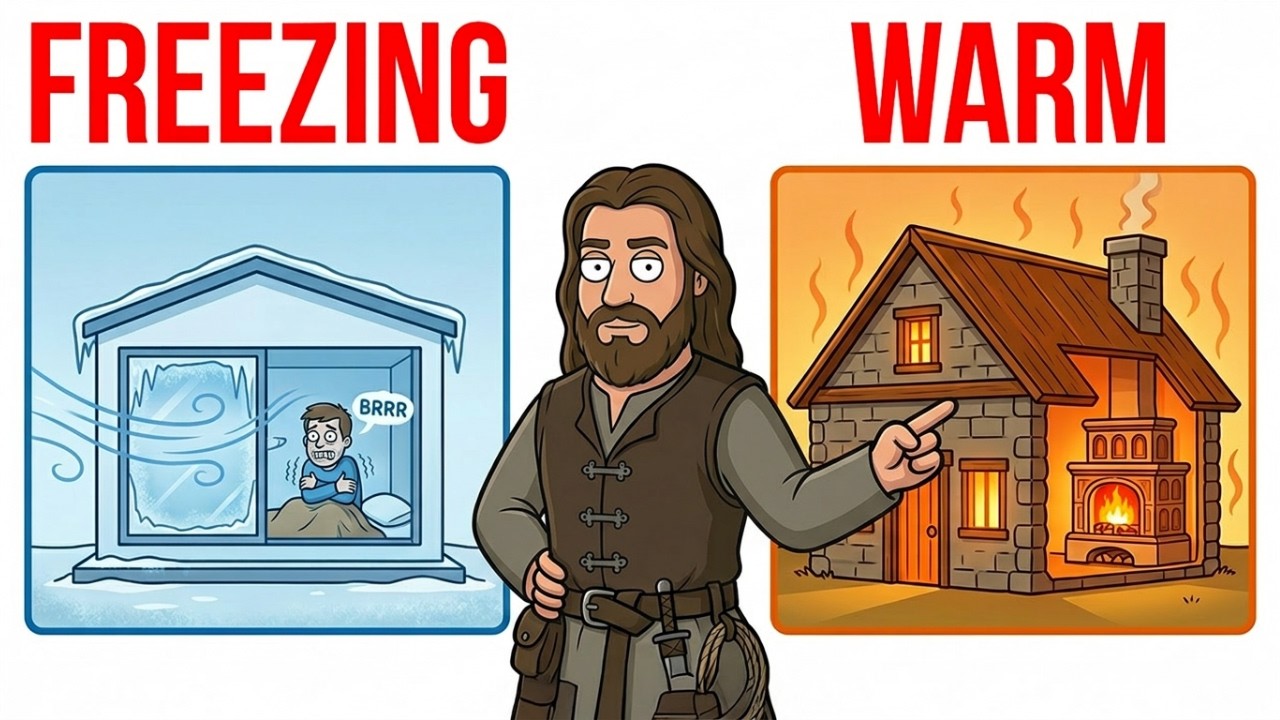
The fire in the hearth died sometime in the night. The water in the basin beside your bed has a thin skin of ice across the top. You can see your own breath hanging in the air of your own bedroom, and the cold has crept so deep into the stone walls that touching them feels like touching the outside. You would assume the people living like this were simply enduring it, gritting their teeth, and waiting around for someone to invent the radiator. At least, that is what it looks like from inside a heated room. In reality, they had built an entire hidden world of survival around one single problem, and a few of their solutions were cleverer than anything we use today. Some of them have been completely forgotten. One of them was so good that humanity invented it, lost it, and did not manage to rebuild it for a thousand years. This is the entire history of staying warm before central heating existed, and it is a far stranger story than you would think. Let me take you back to where it begins. For most of human history, heating your home meant exactly one thing: a fire. An open, smoking, hungry fire that you tended like a living animal, because in a very real sense, your life depended on it. The earliest homes built this fire right in the middle of the floor, not against a wall, not in a corner, but dead center, in a shallow pit ringed with stones. Everyone and everything in the household oriented itself around that one glowing point. The reason it sat in the middle was pure physics. A fire in the center of a room radiates heat outward in every direction equally, so the most people can crowd around it.
The problem is the smoke. With the fire in the middle of the floor, the smoke had nowhere to go but up into the room, and then, hopefully, out through a hole in the roof. Picture a single large room, a packed earthen floor, the fire crackling in the center, and a permanent haze of wood smoke drifting in the upper third of the air. People lived their entire lives inside that haze.
Archaeologists studying ancient skeletons have found the evidence baked into the bones and lungs of people who spent decades breathing it. This was not the home of the poor. This was the home of almost everyone. Even kings and lords lived this way. The great medieval halls you imagine with high ceilings and banners on the walls, those grand stone rooms were originally built tall for one humble reason. The higher the ceiling, the more room there was for smoke to collect above the heads of the people eating dinner below.
That soaring dramatic hall ceiling was, at its origin, a smoke reservoir. And somehow, it gets stranger. Because while medieval Europe was living in a smoky box with a hole in the roof, a civilization a thousand years earlier had already solved this problem so elegantly that we genuinely struggle to believe they pulled it off.
The Romans. Around the 1st century, wealthy Romans developed a heating system called the hypocaust, and it was, for its time, almost science fiction.
Here is how it worked. Builders would construct the floor of a room raised up on a forest of short stone or brick pillars, leaving an open hollow space underneath the entire floor. Then, in a furnace room off to the side, a slave or servant would tend the fire, and the hot air and smoke from that fire would flow into the empty space beneath the floor.
The heat spread out under the whole room, warming the floor from below, then rose up through hollow tiles and channels built inside the walls, and escaped out vents near the roof. Stop and think about what that actually means. It was central heating, genuine, radiant, underfloor central heating in the year 100. The floors of a Roman bathhouse could get so warm that people had to wear wooden sandals to avoid burning their feet. The walls themselves gave off heat. There was no smoke in the living space at all because the fire and its fumes were completely separated from the room and channeled through the architecture. A Roman noble could sit in a warm, smoke-free room in the dead of winter, something a medieval European king 500 years later simply could not do. I mean, think about that for a second. The peak of home heating technology happened near the very beginning of this story, not the end.
So, what happened to it? When the Western Roman Empire collapsed, the hypocaust went with it. These systems were expensive. They required skilled engineering to build, and they demanded a constant supply of fuel and labor to run. As the cities and trade networks that supported that complexity fell apart, the knowledge faded. For roughly the next thousand years, most of Europe heated its homes worse than the Romans had. Humanity had built radiant underfloor heating and then misplaced it like a set of keys, and it would not reliably return until the modern era.
But, the Romans were not the only ones who figured this out, and this next detail explains why the idea never truly died. On the other side of the world, similar ideas appeared, and crucially, they survived. In Korea, people developed a system called the ondol, where the floor of the home was heated from below by channeling smoke and hot air from a kitchen fire through stone flues running underneath the room before venting it out a chimney on the far side. It is the same core principle as the hypocaust, and it has been used in Korean homes for a very, very long time.
Even today, modern Korean apartments are built with heated floors, a direct cultural descendant of that ancient idea. In northern China, families slept on a kang, a wide brick platform built hollow inside with the smoke from the household stove passing through the chamber underneath to warm the surface.
You ate on it, you sat on it, and at night you slept on a bed that was literally heated from within by your own cooking fire. So, the great idea was never completely gone from the human story. It just abandoned Europe for a thousand years, leaving its people huddled around a smoky pit in the floor waiting for the single invention that would change the home forever. That invention was the chimney. It sounds almost too simple to matter. A chimney is just a vertical shaft that carries smoke up and out of the building. But, the arrival of the proper chimney and the wall fireplace, which spread through Europe over the course of several centuries and became common between roughly the 1200s and the 1500s, quietly rebuilt the entire concept of a house from the ground up. Here is why. Once you can put the fire against a wall and reliably funnel its smoke up a chimney, the fire no longer needs to sit in the middle of the room. And once the fire is off the floor and the smoke is gone, two enormous things become possible. First, you can finally build a second story because you no longer need that whole tall open smoke-filled space above the central fire. You can put a solid ceiling in and a whole other floor of rooms on top. Second, and maybe more importantly, you can have more than one fire in more than one room. That single change shattered the old way of living.
For thousands of years, everyone in a household crowded into one heated space because there was only one fire and only one place the smoke could escape. The whole family, the servants, sometimes the animals, all packed together around that central hearth because warmth was communal by necessity. The chimney broke that open. Now, a wealthy family could have a fire in the bedroom, a fire in the parlor, a fire in the study, each one drawing its smoke up its own flue.
People could spread out. They could have private rooms. The very idea of privacy, of going off to be alone in a warm room of your own, was in part a gift of the humble chimney. And no, I'm not making [music] that up. Historians genuinely connect the rise of private, individual rooms to the moment heat stopped being something you all had to share around one pit. Now, the fire still had to be managed with enormous care. And here we run into one of my favorite forgotten facts in the whole story. Long before the chimney, in early medieval Europe, there was a rule about the fire at night. At a set hour in the evening, a bell would ring through the town. And at that signal, everyone was expected to cover their fire, to bank the glowing embers and smother them under ash, so they would not flare up and burn the whole settlement down while everyone slept. That practice, covering the fire, came from the old French phrase couvre-feu, which literally means cover fire. Say that phrase out loud a few times and let it drift across the centuries and you will hear what it became, curfew. The modern word for being made to stay home at night comes directly from the medieval command to put a lid on your fire before bed. A warning sign was hiding in that ritual and people lived with it every single night. Fire was salvation and fire was the enemy in the same breath. It kept you alive in the dark and it could erase your entire town by morning. If you are finding this as fascinating as I do, take 1 second to subscribe because this channel digs into the hidden history of everyday things every single week. And the second half of this story is where it gets genuinely clever. We are about to get into the personal warming gadgets people used in bed, the strange sleeping habits of whole families, and the one shocking flaw in the fireplace that meant people were freezing in front of a roaring fire for centuries without realizing why. By the 1700s, that flaw had become impossible to ignore because here is the dirty secret of the open fireplace, the thing that took humanity an embarrassingly long time to work out.
A traditional open fireplace is a terrible way to heat a room. It feels warm if you stand right in front of it, roasting your face while your back stays cold, but the fireplace as a whole is wildly inefficient. The vast majority of the heat the fire produces does not warm the room at all. It rushes straight up the chimney and out into the winter sky.
Worse, that rising column of hot air pulls in cold air through every crack and gap in the house to replace it. So, a roaring fire could actually create freezing drafts across the floor as cold air got sucked toward the hearth. People sat shivering in front of blazing fires for generations, and most of the warmth they were paying for in firewood was simply being thrown away up the flue.
That is the kind of problem that makes you appreciate just how hard ordinary survival used to be. The man who finally attacked this properly was a scientist, an American-born inventor who eventually took the title Count Rumford. In the 1790s, he studied exactly how fireplaces worked and realized the standard design was almost perfectly wrong. So, he redesigned it. He made the firebox shallower and gave it angled side walls that flared outward so that instead of swallowing the heat, the back and sides of the fireplace would catch the warmth and reflect it back out into the room.
He narrowed the throat of the chimney to slow down that wasteful rush of air escaping upward. The result was a fireplace that pushed far more of its heat into the room and far less of it up the flue, and it could be retrofitted into existing chimneys. The improved design caught on quickly, and his basic principles are still baked into how fireplaces are built today. But even a redesigned fireplace was fighting a losing battle because the open flame was always going to leak heat. The real leap forward came from a completely different shape, the enclosed stove. Up to this point, the story of heat had been the story of fire that you could see, an open flame on a hearth. The stove flipped that. The idea was to trap the fire inside a sealed box, usually of iron or masonry, with a small controlled opening for air and a single pipe for the [music] smoke. By enclosing the fire, the stove burned its fuel far more efficiently, and just as importantly, the body of the stove itself got hot and radiated steady warmth into the room from all sides long after you would have let an open fire die down. In the American colonies, the most famous early example came from Benjamin Franklin, who in the 1740s designed an iron stove meant to sit out in the room and throw heat in every direction rather than losing it up a chimney. The design went through many improvements over the years, but the Franklin stove planted a powerful idea in people's heads, that a free-standing metal box could heat a room better than a hole in the wall.
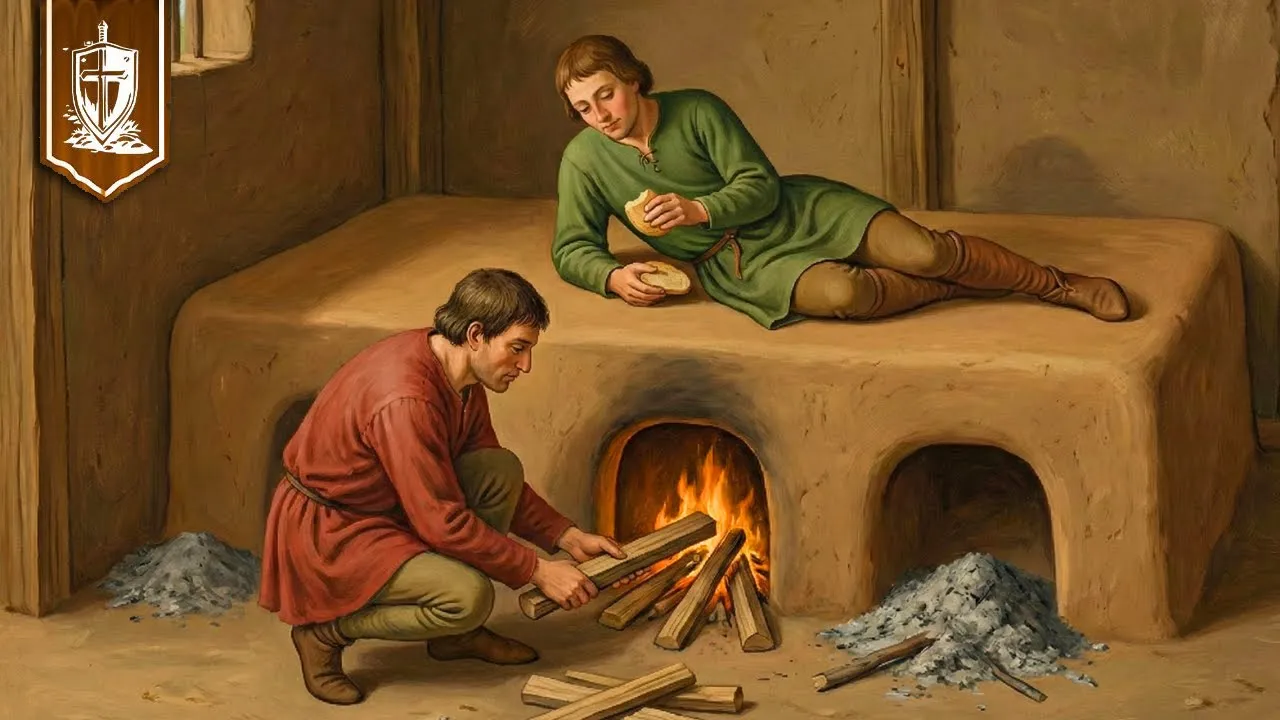
Across northern and eastern Europe, they took the stove to a grander extreme. In places with brutal winters like Russia, Scandinavia, and parts of Germany, builders constructed enormous masonry stoves, sometimes called Russian stoves or tiled stoves. These were huge, heavy structures of brick and ceramic tile built right into the home with a long winding internal path for the smoke to travel before it escaped. You would build a hot, fast fire inside it for an hour or two.
And all of that heat would soak into the massive masonry body of the stove. Then the fire could go out entirely, and the giant warm mass would keep radiating gentle heat into the home for many hours, sometimes through the whole night and into the next day. In the coldest homes, the top of one of these great stoves was warm and broad enough that people, especially the elderly, would climb up and sleep on it. It was the closest thing to a thermostat the pre-modern world had. A warm stone heart in the middle of the house that you charged up and then lived off of. So, that was the architecture of warmth, the hearths and chimneys and stoves built into the bones of the home. But the home only stays warm while the fuel lasts and the fire is lit. The truly desperate hours came at night when the fire was banked low and the cold poured in. And that is where people got genuinely inventive with an entire arsenal of personal portable warming gadgets. The most iconic was the warming pan. Picture a wide, shallow brass or copper pan with a tight lid, full of little holes punched in the top, attached to a long wooden handle. You would fill it with hot embers or glowing coals from the fire, then slide it between the cold sheets of your bed and run it back and forth to take the deathly chill off the linens before you climbed in. You had to keep it moving because if you left it in one spot too long, you would scorch the sheets or set the bed on fire, which I promise you happened more than once.
That long handle and shallow brass dish hanging by the hearth in old paintings was not decoration. It was the household's nightly defense against getting into a bed that felt like a slab of ice. For people who could not afford brass and coal, the solution was simpler and just as effective. hot bricks or stones. You would set a brick or a smooth flat stone near the fire all evening until it was thoroughly heated, then wrap it in a thick cloth and tuck it into the bed by your feet or carry it with you or set it under your chair. A heated stone wrapped in wool will give off gentle warmth for hours and it cannot catch fire the way coals can.
Soldiers, travelers, and ordinary families relied on the heated brick for centuries.
There is something almost touching about it. The simplest possible object, a rock and the heat of the day's fire, carried to bed to keep a person alive through the night. Then there was the foot stove, a small box, often wooden with a metal liner, with holes in the lid into which you placed a little container of hot coals. Women in particular would carry one of these into cold churches where services could stretch on for hours in an unheated stone building and rest their feet on top of the warm box.
A cold church in winter was a genuine ordeal and the foot stove was a portable pocket of survival you carried in with you and set under the pew. For the hands, there was the muff, that cylindrical tube of fur you have seen in old portraits where a person tucks both hands into either end. It was warm and fashionable at once but it was solving a real problem. And later, people made small hand warmers, little metal cases holding smoldering material or eventually a slow chemical reaction that you could slip into a pocket or hold against your skin. And of course, the device many of us still recognize, the hot water bottle. Early versions were made of metal, stoneware, or ceramic, a sealed container you filled with hot water and tucked into the bed. The familiar soft rubber hot water bottle came along in the later 1800s once rubber technology made it possible, and it was a small revolution. Suddenly, you had something flexible, refillable, that held its warmth for hours and molded to your [music] body. It is one of the only items on this entire list that survived the arrival of central heating and is still sold today, which tells you it was a genuinely good piece of design. But, all of these gadgets were really in service of one thing, the single most important piece of heating technology pre-modern home, the bed itself. We tend to think of an old four-poster bed as a symbol of luxury. Those tall wooden posts at each corner [music] holding up a frame and heavy curtains, but that design was not about showing off. It was a survival machine. The heavy curtains that closed all the way around the bed had a job. They trapped a small pocket of air around the sleepers and held in the warmth of their own bodies, turning the bed into a tiny insulated room within the freezing larger room. The canopy overhead did the same thing from above and also caught dust and debris falling from the ceiling. You climbed into a deep feather bed, a thick mattress stuffed with feathers and down, pulled the curtains shut, and your own breath and body heat slowly warmed the enclosed space until it became, against all odds, genuinely cozy. The bigger and heavier the curtains, the warmer the bed. What looks like aristocratic excess was, in part, just very good insulation.
And the people inside that bed were rarely alone. This is one of the parts modern viewers find hardest to wrap their heads around.
For most of history, sharing a bed was completely normal and had nothing to do with romance or poverty alone. Bodies generate heat, and the simplest way to stay warm at night was to pile in together.
Siblings shared beds.
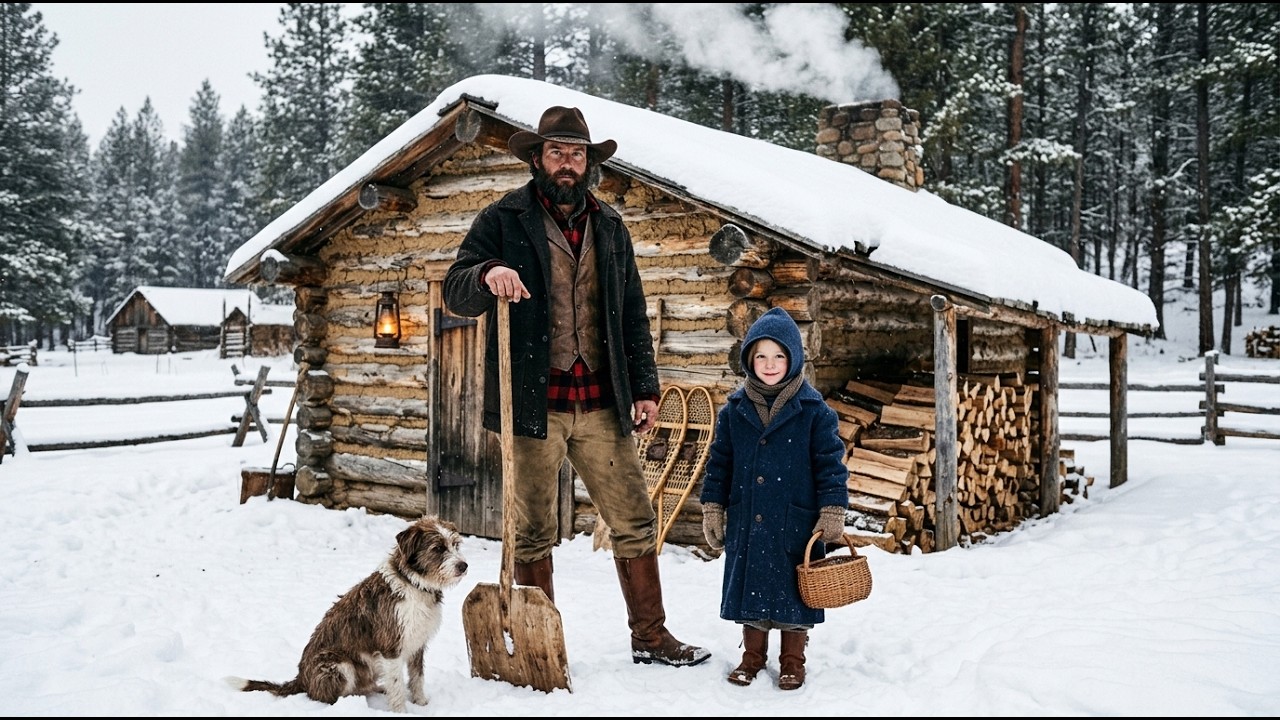
Servants shared beds. Travelers at an inn might be expected to share a bed with a total stranger, and nobody thought it strange. More people under the blankets meant more warmth, full stop. In the coldest homes, the whole family might sleep together, sometimes with the youngest and the eldest in the middle where it was warmest, because they were the most vulnerable to the cold. This even produced one of history's stranger courtship customs, found in parts of early America and northern Europe, called bundling. A courting couple would be allowed to spend the night together in the same bed, fully clothed, sometimes with a wooden board placed between them, or each sewn into a separate sack, so they could talk and be close and stay warm through the long winter night without anything improper happening. Practical warmth and young romance chaperoned by a plank of wood. The cold shaped even how people fell in love, which, looking back, was either incredibly sensible or incredibly awkward, and honestly, probably both. None of this worked without one final ingredient, the thing the entire system was always hungry for, fuel. And the fuel you burned depended entirely on where you lived, which meant geography quietly decided how comfortable your winter would be. In heavily forested regions, wood was king, and a household burned through a staggering amount of it. Keeping a single home heated through a long winter could require cords and cords of firewood, which had to be cut, hauled, split, and stacked months in advance to dry. In many places, gathering firewood was a constant grinding chore that fell to families year round, and the right to collect fallen wood from the local lord's forest could be a serious legal matter, because that wood was the difference between a warm winter and a deadly one. As forests were cut down and wood grew scarce and expensive, especially near growing cities, people turned to coal, which burned hotter and longer, and would eventually power the entire industrial world. But, coal brought its own curse. It was filthy. As cities like London switched to burning coal for heat, the smoke thickened into a choking haze that hung over the rooftops, blackening buildings and lungs alike, a problem that would haunt those cities for centuries. And where there were neither forests nor coal, people burned whatever the land gave them. In boggy regions like Ireland and parts of Scotland, families cut and dried peat, dense blocks of partly decayed plant matter dug straight out of the earth, which burned slow and smoky with a distinctive earthy smell that some people still remember fondly. And in the treeless grasslands, from the steppes of Asia to the American prairie, people dried animal dung and burned that. It sounds grim, but a dried cake of dung burns cleanly and steadily. And on the open plains, where there was not a tree for miles, it was the fuel that kept families alive through winters that would otherwise have killed them.
There is no shame in it, only resourcefulness.
When the cold is trying to kill you, you burn what you have. So, picture the full system now, all of it working together.
A house oriented around fire and chimney. A great masonry stove or a redesigned hearth radiating heat. A warming pan run through the sheets. A hot brick at the feet. A foot stove carried to church. A muff on the hands.
A curtain and four-poster bed packed with feather beds and family, sealed against the night. A wood pile or a peat stack or a heap of dried dung standing by. The household's entire defense against the dark and the cold. Every single piece of it demanded constant labor, constant attention, and constant fuel. Staying warm was not a setting you adjusted. It was a job you did every day for your whole life. And then over the course of a few generations in the 18 and 1900s, all of it quietly vanished. Central heating, real central heating with boilers and radiators and circulating hot water, and eventually the gas furnace and the thermostat swept through the modern home and made the entire apparatus obsolete almost overnight. The warming pan went on the wall as an antique. The hot brick was forgotten.
The bed curtains came down because there was no longer any chill to keep out. The great stove was torn out for a vent in the floor, and the family stopped gathering around the one warm point in the house because suddenly every room was warm all the time with no fire to tend and no smoke to escape. We gained something enormous. We also lost something quieter that we rarely notice.
For all of human history, the hearth was the center of the home, the one place everyone was drawn to, where stories were told and food was cooked, and the family naturally gathered because that was simply where the warmth was. Central heating gave us comfort in every corner, and in doing so, it dissolved that single gravitational center. The fire that everyone clustered around for 10,000 years became a glowing rectangle on the wall, and then it became nothing at all. So, the next time you walk into a warm room in the middle of winter and do not even think about it, remember the cold morning we started with, the ice on the basin, the breath in the air, the dead fire in the hearth. Everything between that morning and this one, the hypocaust and the chimney, the curfew bell, the warming pan and the heated brick, the curtain bed full of sleeping family, all of it was humanity refusing to freeze, one clever object at a time.
We did not always have the warm room. We built our way to it across thousands of years, and we forgot almost everyone who figured out each piece. The real question is not how they survived the cold. The real question is how much quiet genius we have walked right past because it came disguised as something boring hanging by the fireplace. If this changed the way you look at the old objects in a museum or your grandparents attic, subscribe because next week I am breaking down the forgotten history of how people kept food from spoiling before refrigerators and it involves ice harvested from frozen lakes and shipped halfway around the world. Click the video on screen right now to keep going.
Up Next

25:11
Uncovering Roman Baths: History, Healing, and Hidden Secrets
@HistoryHit
2.3M views•2022-09-07

33:02
The Great Schism of 1054: Causes and Consequences
@SacredCathedrals
113.5K views•2026-02-19

91:57
The Geopolitics of the Ukraine War and the Rise of Global Autocracy
@JordanHarbingerShow
468K views•2025-04-19

17:05
Understanding the Cold War: Superpower Conflicts and the Road to Détente
@OverSimplified
46.1M views•2019-01-24
Related Study Plans & Knowledge Roadmaps
Structured learning paths in History
history
Byzantine Iconoclasm: Theology, Art & Politics
01Foundations of Byzantium and Early Christian Images
02The First Iconoclasm: Leo III and the Crisis of Images
03Empress Irene, Nicaea II, and the Second Iconoclasm
+ 2 more learning modules
9h5 modules
Explore Roadmap
history
Iranian Revolution (Causes, Events & Legacy)
01The Pahlavi Dynasty and the Roots of Discontent
02The Spark of Rebellion and the Rise of Khomeini
031979: The Fall of the Shah and the Climax of the Revolution
+ 2 more learning modules
8h5 modules
Explore Roadmap
history
Mali Empire: Mansa Musa, Trade & Timbuktu
01Foundations of the Mali Empire
02The Trans-Saharan Gold and Salt Trade
03The Reign and Pilgrimage of Mansa Musa
+ 1 more learning modules
6h4 modules
Explore Roadmap
history
1947 Partition: Politics, Borders & Legacies
01Foundations of British India and the Divide
02The Political Negotiations and the Mountbatten Plan
03Drawing the Boundary: The Radcliffe Line
+ 2 more learning modules
8h5 modules
Explore Roadmap