



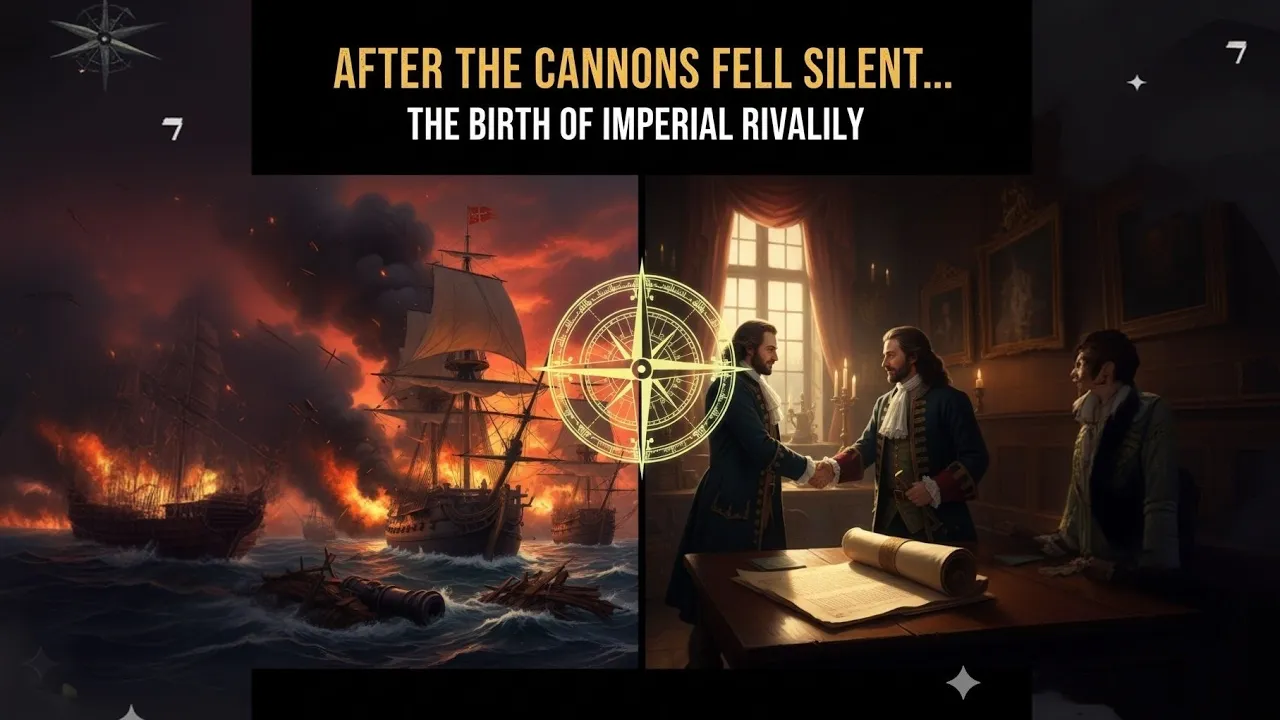


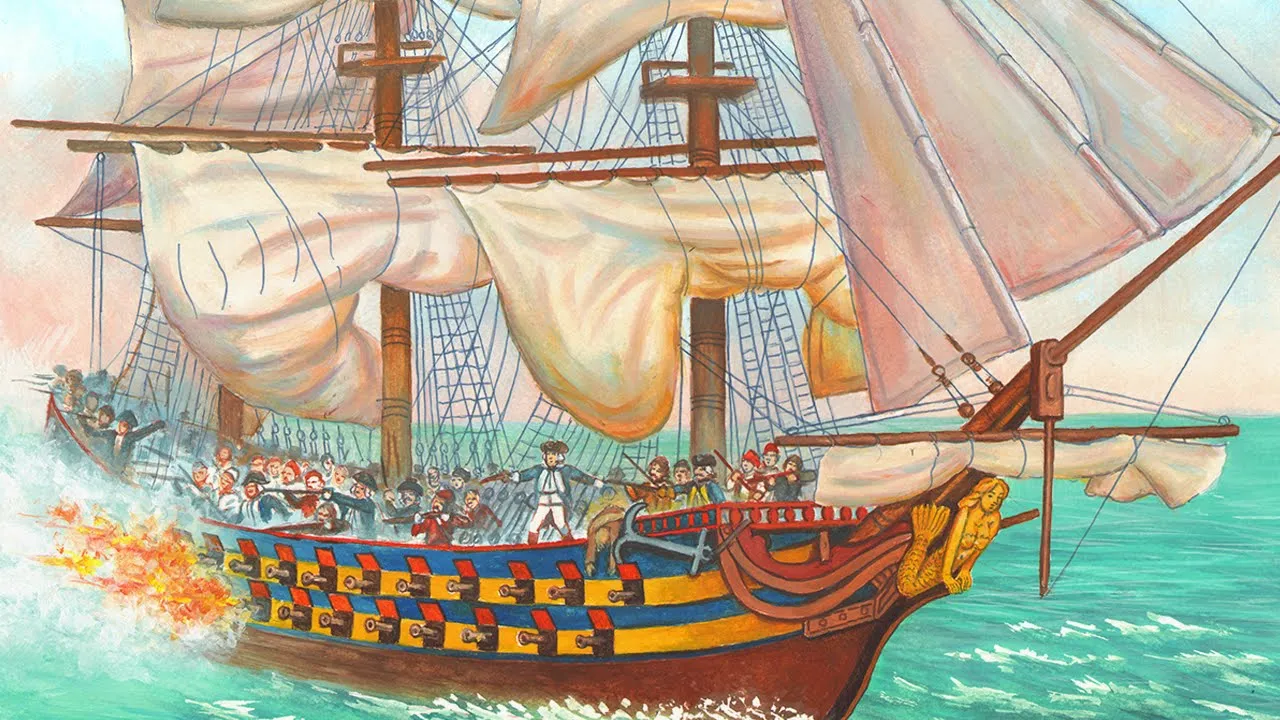
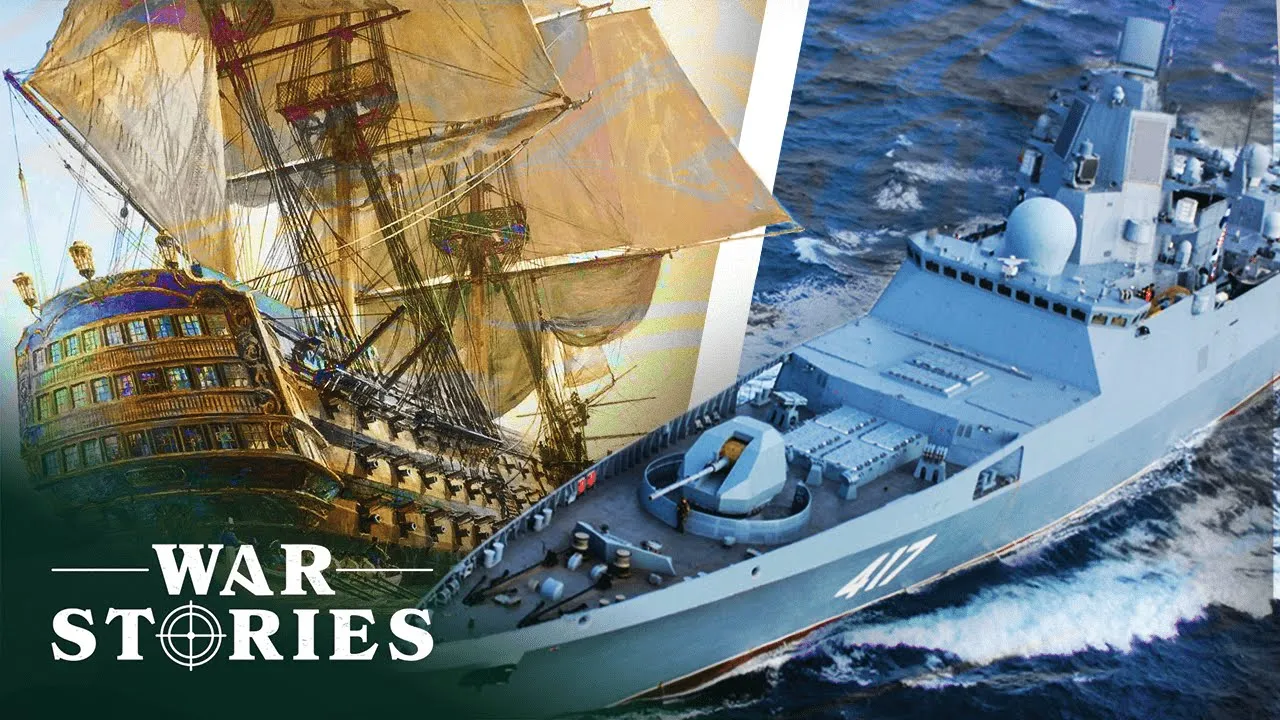






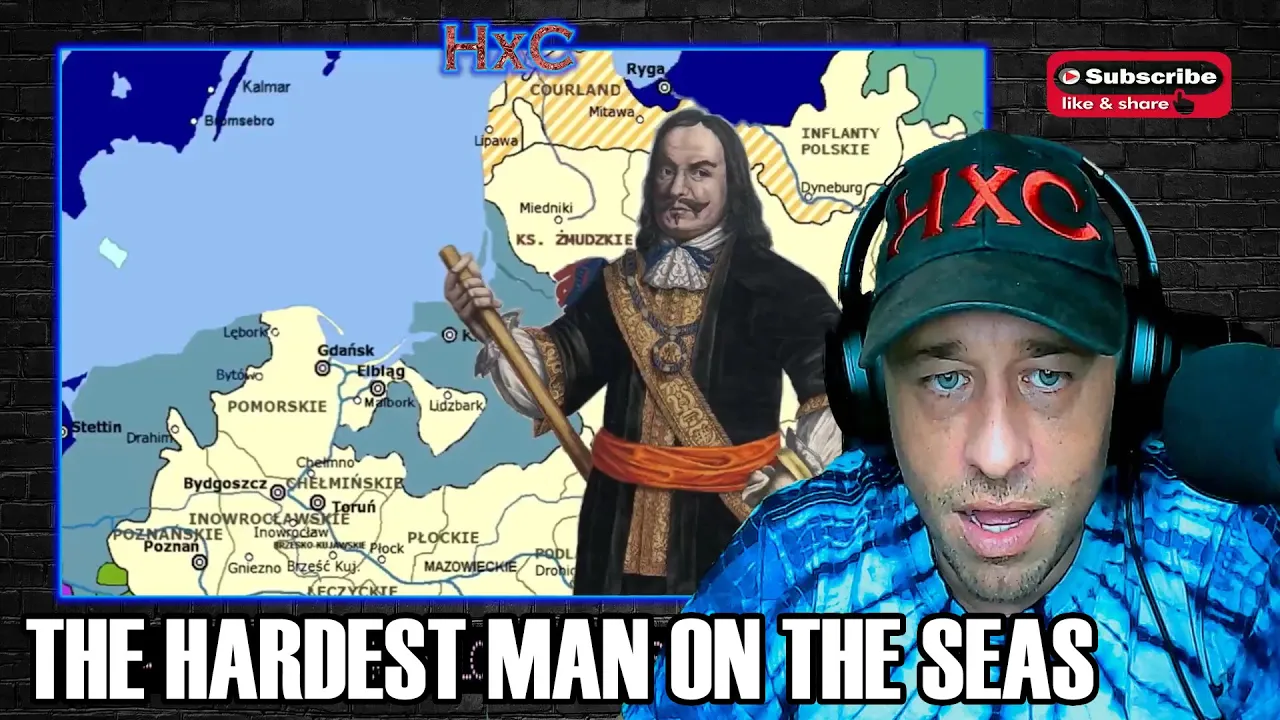



In June 1667, during the Second Anglo-Dutch War, the Dutch Republic executed one of history's most daring naval raids by sailing 60 ships up the Thames Estuary to attack the English fleet at Chatham, capturing the flagship HMS Royal Charles and destroying thirteen English ships of the line for minimal Dutch losses; this humiliating defeat forced King Charles II to negotiate the Treaty of Breda, which amended the Navigation Acts and ultimately contributed to the Dutch losing New Netherland (renamed New York) to England while retaining Suriname, thereby shaping the future colonial character of North America.
Raid on the Medway: Dutch Naval Victory in the Anglo-Dutch Wars
Added:The geopolitical and commercial rivalry between England and the Dutch Republic in the 17th century, driven by mercantilism and the Navigation Acts.
The outcomes of the First Anglo-Dutch War (1652–1654) and how they set the stage for subsequent conflicts.
The basics of 17th-century naval warfare tactics, including the use of line-of-battle formations, fireships, and the strategic importance of naval shipyards.
The financial and political challenges faced by King Charles II of England during the Restoration, which directly impacted the funding and maintenance of the Royal Navy.
The Treaty of Breda (1667) and how its terms shifted global colonial territories, including the English acquisition of New Amsterdam (New York).
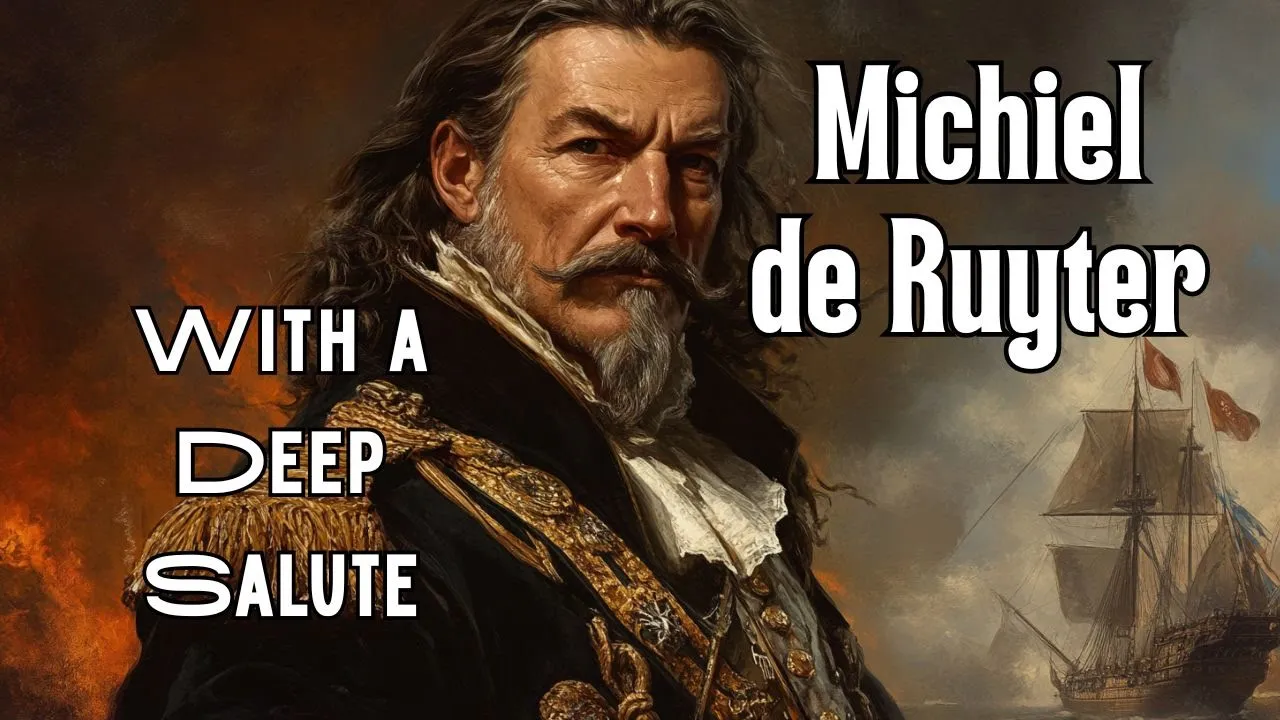
The tactical and strategic legacy of Dutch Admiral Michiel de Ruyter, particularly his innovative leadership in naval warfare.
The Third Anglo-Dutch War and the shifting European alliances that eventually led to the Glorious Revolution of 1688.
The long-term administrative reforms of the Royal Navy spearheaded by Samuel Pepys to ensure such a national humiliation would not occur again.
259.5K views11.5Klikes13:05Original Release: 2018-11-03
England and the Dutch Republic fought a series of wars over trade in the latter half of the 17th century fought largely in the high seas the anglo-dutch wars are easy to forget amongst all of the religious wars continental wars rebellions the English Civil War the general redrawing of the map that occurred on a very dynamic century and European history but the anglo-dutch wars were important they affected the character of European colonization on five different continents and they represented some of the most significant and interesting sea battles at the very height of the age of sail as two of the world's greatest naval powers tested each other skill with wood silk and iron for control of the world's oceans and the ripping yarn of one of the most daring naval raids in world history deserves to be remembered in the 17th century of the Dutch Republic in England were to see powers with very different philosophies while the English were forming an empire by colonization the Dutch were more focused on trade while the English favored a mercantilist system that depended upon exclusive trade with their colonies and funded by tariffs and fees the Dutch favored free trade that only served to motivate the British colonies to circumvent the English tariffs while England had a much larger population the Republic had a more urban population that allowed them greater revenue while the two Protestant powers began the 17th century cooperating against the Habsburg Empire by the latter half of the century the competition over valuable trade routes by Europe's two greatest merchant navies made war virtually inevitable the Dutch victory over Spain in the eighty years war the Dutch war for independence in 1648 had come at the expense of Spain which have been additionally exhausted by the 30 Years War destructive war of religion fought on the continent and was now facing rebellion in Portugal this offered an opportunity for the Dutch to expand their global trading fleet by mid-century the Republic had by far the largest merchant fleet in the world and the value of Dutch trade exceeded the rest of Europe combined the Dutch colonies were seen as trading centres and the Dutch Republic operated by merchant capitalism that emphasised the transportation of goods shipping and finance over manufacturing and agriculture by contrast the English fleet had declined as loyalties were split during the nine years of the English Civil War along the Dutch fleet to dominate trade however following victory over the forces of Charles the first in 1651 Oliver Cromwell had revamped the English Navy using the same principles upon which he built the parliamentary new army well the Dutch Republic had a much larger trading fleet Cromwell's England had more warships fearing an increasing threat from Dutch trade which often circumvented English colonial tariffs prevalent move to protect its trade by passing a series of navigation acts that require goods from English colonies be transported on English ships cutting out middlemen like the Dutch these protectionist measures led to war in 1652 the first anglo-dutch war was fought entirely at sea and included eight major naval engagements culminating in the Battle of XI vanina in July 1653 well nominally an English victory the battle to break an English blockade actually represented exhaustion by both belligerents Cromwell hoped to press the Dutch into joining in a Commonwealth but in the end the English won few concessions and the trade conflicts between the two powers remained largely unresolved moreover the Dutch seem to come out of the situation actually in a better financial situation than England and immediately started rebuilding a fleet including heavier ships to compete with the English fleet the restoration of the English monarchy of charles ii in 1660 would have seemed like an opportunity for reproach minh as the dutch house of orange had supported charles ii and lent him large sums of money however the trade conflicts continued and Charles's brother james the duke of york who was the lord high admiral and who eventually became king james ii supported war largely because he expected to gain personally financially by acquiring Dutch colonies in Africa many Royal Navy officers also supported the war as they expected to win battles as they had during the first anglo-dutch war and less earned fame and fortune many of the English elites on an opportunity to benefit from raiding and capturing Dutch shipping and charles ii was easy to influence towards wars he saw the prospect of a war as a chance to bolster his own authority charles began a series of provocations attacking Dutch colonies in Africa and seizing the Dutch colony of New Netherland in North America Charles used the Dutch response to these provocations as a cause to declare war in March of 1665 the English won a major victory in the first large engagement the war in the June 1665 Battle of Lowestoft the battle which consisted more than a hundred ships on each side and in which the English fleet was commanded personally by the Duke of York was the worst defeat of the Dutch Republic's Navy in its history and the Dutch flagship the Ian Brock exploded when his magazine was hit killing the Dutch commander jakob von ba senior Odum however as was indicative of that war the republic could commit far more money to the conflict not only were they able to rapidly recover but the Dutch had already engaged in an ambitious building program the largest in the history of the Republic to match the English fleets heaviest ships at the time a first-rate ship of the line like the English flag ship the HMS Royal Charles was over 130 feet long and carry more than 90 guns of various weights of shot in a crew of 500 or more when the two navies met again in the 1666 four days battle the Dutch fleet was much improved and had a numeric advantage in what has been described as the longest and largest battle of the Age of sail the Dutch won an inconclusive victory in a bruising battle only to lose two months later in another large engagement called the st. James Day battle the English then took advantage of the damage to the Dutch fleet to make a daring raid on the Vliet estuary in the Netherlands doing much damage in burning two warships and 140 merchant ships for virtually no loss the raid commanded by Admiral Sir Robert Holmes was called Holmes's bonfire still neither fleet had been able to substantially reduce the other the were seemed to be favoring charles ii who in 1666 moved to push for peace on terms that would be favorable to England but the victories were actually hollow the Dutch had actually been more successful at privateering that is reading each other's merchant fleets and the cost of repairs to the ships damaged in the battles of 1666 had left Charles the second impoverished war over London had been stricken with a Great Plague of London the last major outbreak of the bubonic plague in Europe and then in September 1666 by the Great Fire of London as London was the largest city in England and a great source of royal revenue the disasters combined with the cost of the war and financial mismanagement put charles the second's England near financial collapse and he could not afford to maintain his Navy much of the fleet was laid up as Charles could not afford to pay their crews the peace talks were really an act of desperation on behalf of Charles and also partly a ruse as he was Hamilton seeking to obtain a loan from France to further prosecute the war the Republic instead decided that the best course was to seek a clear victory that would end the war on terms favorable to the Dutch and so they planned one of the most daring naval raids in history the Dutch plan to take a fleet up the Thames Estuary in Kent past a fortress at Sheerness at the mouth of the river Midway to the Royal Navy dock yard at Chatham where most of the English fleet had been laid up and would be defenseless it was a daring idea so much so that many Dutch officers thought it impossible objections to it to the Admiral in charge misha l de ruyter responded orders are orders the english thought it impossible as well and they had hardly prepared for the possibility the Midwich shoals were thought to be nearly impossible without pilots who knew them and the idea of a brazen attack in english home waters was largely unthinkable the fortifications along the Midway were mostly outdated undermanned and in decay at Chatham where the great ships of the fleet were laid up nearly defenseless only three ships were manned and ready to defend the dockyard de Ruyter brought some 60 ships and nearly 1,500 Marines as well as two experienced English pilots who had defected the Dutch force took the unprepared fortress of garrison point at Sheerness quickly chasing off the 42 gun frigate HMS unity and forcing the garrison to withdraw by landing an overwhelming number of Marines with Sheerness fallen the English began to desperately prepare a defense a large chain had been stretched across the river at Gillingham but it was lightly defended with only a light gun battery which had been hastily established several English ships were sunk in an attempt to block the channel into Chatham and three English heavy ships the ships of the line loyal London royal James and Royal Oak were sunk in order to prevent their capture with their half filled holes operating as stationary batteries the Dutch had not even arrived and the English had already sunk fourteen of their own ships when the writers fleet arrived their first attack captured HMS unity by assault as she tried to protect the chain unity was taken back as a prize a light draft Dutch fire ship managed to either RAM or break the chain or right over it and Dutch engineers were then able to destroy the chain while the docks were protected by the poorly supplied and hastily defended Elizabeth II and Curtain Fortress of up der castle Dutch fire ships ships filled with combustibles designed to be set alight and steered into enemy ships to set them on fire managed to strike and burn the Royal James in the Royal Oak two of the largest ships in the English Navy as well as the second-rate ship of the line Royal London all three were burned to the waterline what was worse the Royal Charles the flagship of the English Navy which had been the ship that had destroyed the Dutch flood ship and racked at the Battle of Lowestoft was captured being defended only by a skeleton crew and the Dutch sailed off with the pride of the English Navy as a prize with the river now defenseless the English ordered another sixteen ships upriver to be sunk to prevent capture in all 13 English ships of the line were destroyed or captured 30 ships were deliberately sunk by the English in comparison the Dutch fleet lost 8 fire ships expended and some 50 Marines killed Samuel Pepys a secretary of the Royal Navy board whose diary provides an account of the raid from the English point of view wrote thus in all things in wisdom courage force knowledge of our own streams and success the Dutch have the best of us and do in the war with victory on their side the Medway raid of 1667 is considered one of the greatest defeats of the English military in history and perhaps the worst ever in English waters the Dutch tried raiding some more up the coast and they were largely repelled but it didn't make much difference the Medway raid had so embarrassed Charles the second the the interdiction and trade had caused prices in London to soar and there was a panic throughout the country that the Dutch and the French were going to join together and invade England poet Rudyard Kipling summed up the British performance at the battle at Chatham in a poem written some 250 years after the battle if wars were won by feasting or victory by song or safety found in sleeping sound how England would be strong England was on the verge of rebellion and Charles is forced to negotiate an unfavorable peace which was concluded with the Treaty of Breda in July 1667 among other concessions the Navigation Acts were amended to allow ships to carry English cargo the Royal Charles had a draught too deep for the Dutch coast and so was permanently and turned into a sort of tourist attraction for European royalty much to the embarrassment Charles the second because of Charles's objections the ship was finally sold for scrap in 1673 her Stern peace bearing the English coat of arms is on display at the Dutch National Museum in Amsterdam charles ii considered the right to be treacherous he was incensed that the dutch would attack while peace negotiations were going on he of course forgot about his own duplicity in those talks largely because of charles the second's bruised ego the peace didn't last and less than five years later there was a third anglo-dutch war the second anglo-dutch war had large implications for the empires of these two major powers but one of the implications is particularly interesting early in the conflict the English had captured the Dutch colony of New Netherland in North America while the Dutch had seized English trigger qualities in Suriname largely able to dictate terms of the treaty the Dutch chose to keep the colony in Suriname which they saw as having more economic value the British kept New Netherland and the colonization of North America from then on would have a largely English character the colony of New Netherland included a port which the Dutch had built in 1648 and which had originally been called New Amsterdam because of the terms of the end of the second anglo-dutch war that port New Amsterdam fell into English hands and it was renamed today that port is known as New York City I hope you enjoyed this episode of the history guy short snippets of forgotten history between ten and fifteen minutes long and if you did enjoy please go ahead and click that thumbs up button if you have any questions or comments or suggestions for future episodes please write those in the comment section I will be happy to personally respond be sure to follow the history guy on Facebook Instagram Twitter and check out our merchandise on teespring com and if you'd like more episodes don't forgotten history all you need to do is subscribe [Music]
Up Next

7:23
Spinning Wheel History: 1000 Years of Evolution
@humblebee1895
6.6K views•2015-12-02

33:02
The Great Schism of 1054: Causes and Consequences
@SacredCathedrals
113.5K views•2026-02-19

15:08
The Evolution of Elevators: From Ancient Lifts to Skyscrapers
@TheHistoryGuyChannel
436.7K views•2020-01-08
17:05
Understanding the Cold War: Superpower Conflicts and the Road to Détente
@OverSimplified
46.1M views•2019-01-24
Related Study Plans & Knowledge Roadmaps
Structured learning paths in History
history
Byzantine Iconoclasm: Theology, Art & Politics
01Foundations of Byzantium and Early Christian Images
02The First Iconoclasm: Leo III and the Crisis of Images
03Empress Irene, Nicaea II, and the Second Iconoclasm
+ 2 more learning modules
9h5 modules
Explore Roadmap
history
Iranian Revolution (Causes, Events & Legacy)
01The Pahlavi Dynasty and the Roots of Discontent
02The Spark of Rebellion and the Rise of Khomeini
031979: The Fall of the Shah and the Climax of the Revolution
+ 2 more learning modules
8h5 modules
Explore Roadmap
history
Mali Empire: Mansa Musa, Trade & Timbuktu
01Foundations of the Mali Empire
02The Trans-Saharan Gold and Salt Trade
03The Reign and Pilgrimage of Mansa Musa
+ 1 more learning modules
6h4 modules
Explore Roadmap
history
1947 Partition: Politics, Borders & Legacies
01Foundations of British India and the Divide
02The Political Negotiations and the Mountbatten Plan
03Drawing the Boundary: The Radcliffe Line
+ 2 more learning modules
8h5 modules
Explore Roadmap