
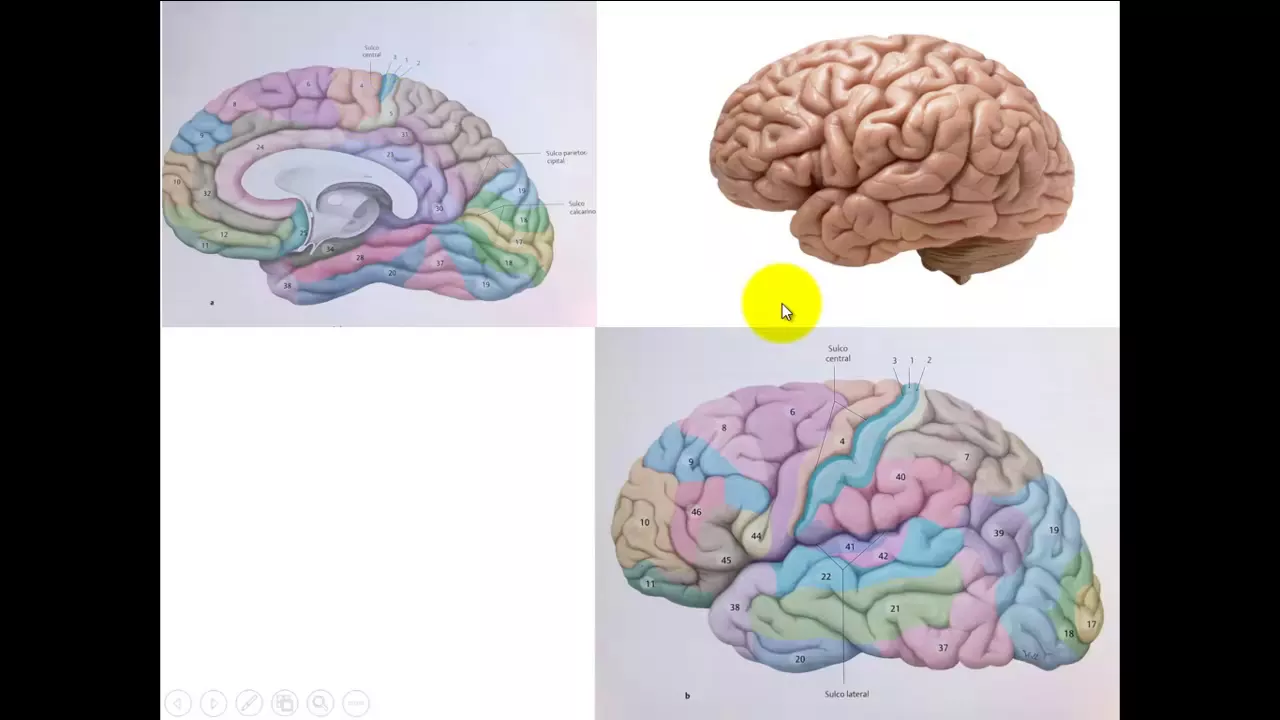
![PSICOLOGÍA - Bases biológicas de la conducta [CICLO FREE]](https://i.ytimg.com/vi/l5Bxh7DHiRo/maxresdefault.jpg)


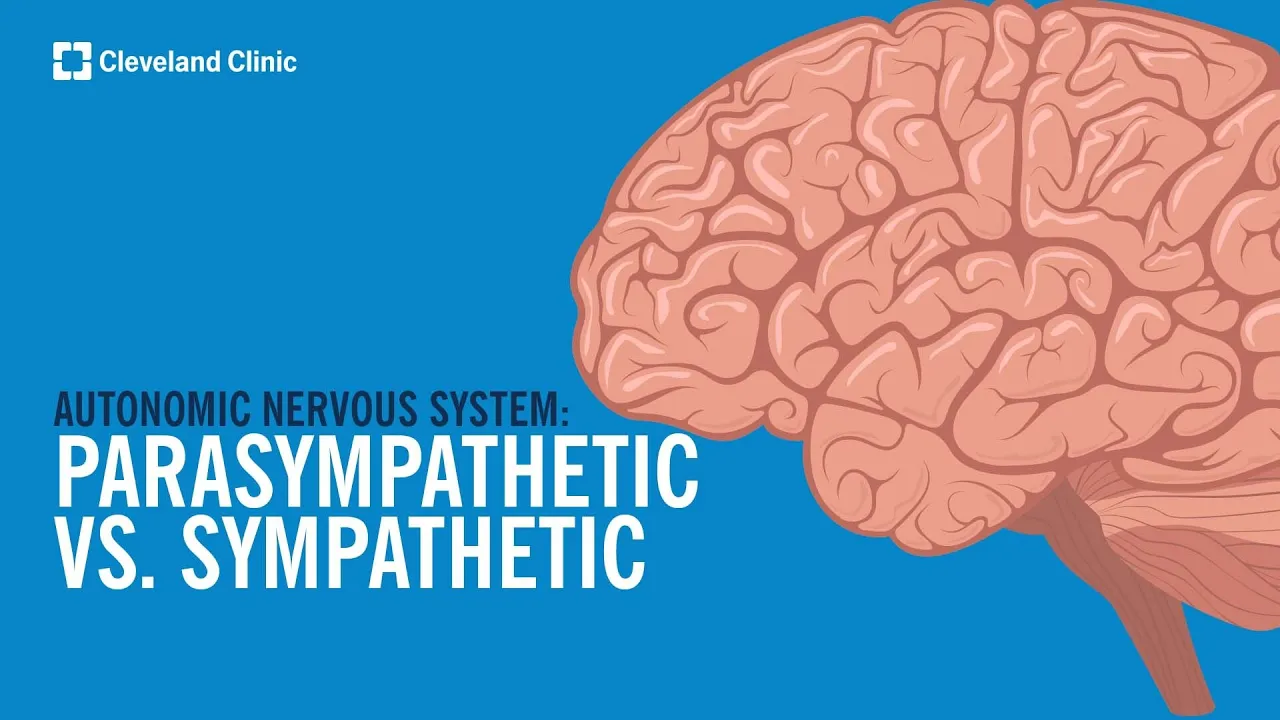
![[#1] SISTEMA NERVOSO AUTÔNOMO PARASSIMPÁTICO E SIMPÁTICO: Diferenças anatômicas | MK Fisiologia](https://i.ytimg.com/vi/7OIIYv2oXJw/maxresdefault.jpg)



















The prefrontal cortex functions as a flexible rule-setting machine that generates potential abstract patterns of action in abstraction, allowing humans to assess different behavioral options before implementation; importantly, this same prefrontal cortex can access alternate rule sets and simultaneously send calming signals through the vagus nerve to quiet the body, enabling courageous exploration rather than defaulting to primitive fight-or-flight responses.
Neuroscience of Anxiety, Dopamine & Personal Growth | Huberman
Added:Basic anatomy of the brain, specifically the location and primary functions of the prefrontal cortex and the limbic system (including the amygdala).
Fundamentals of the Autonomic Nervous System (ANS), particularly the functional differences between the sympathetic ('fight-or-flight') and parasympathetic ('rest-and-digest') nervous systems.
The concept of neuromodulators, specifically how dopamine operates differently from standard neurotransmitters to influence motivation, anticipation, and reward pathways.
A basic understanding of the biological stress response, including how the body physiologically responds to perceived threats and cognitive anxiety.
Practical applications of neuroplasticity, exploring how deliberate behavioral protocols (like NSDR, cold exposure, or cognitive reframing) can physically restructure neural pathways.
The neurobiology of habit formation and addiction, specifically studying how the dopamine 'pain-pleasure balance' drives compulsive behaviors and how to reset it.
Clinical interventions for anxiety disorders, comparing how pharmacological treatments (e.g., SSRIs, beta-blockers) and psychotherapies (e.g., CBT) alter prefrontal cortex-amygdala connectivity.
The flow state and peak performance neuroscience, focusing on the precise cocktail of neurotransmitters (dopamine, epinephrine, acetylcholine) required for deep focus and personal growth.
5.1M views135.6Klikes1:42:32Original Release: 2022-10-13
epinephrine which is also adrenaline those are the same thing is literally manufactured from the molecule dopamine if you look at the biochemical Cascade it is dopamine is converted into adrenaline which is the basis of all energy all neural energy and so including thinking and so if one is not in a place of being able to set their goal on a particular lofty goal a graduate degree a book Etc yet the way one gets to that is by completing things in their immediate environment from start to finish and closing the dopaminergic loop those are at least micro narratives right so they're not integrated across a long span of time but they're not nothing and so one of the things well I did write about this in my first book particularly about putting your life putting your house in perfect order it's like well if you if you're lost one of the things you can do is look around and see what direction you could take locally is fix something [Music] foreign foreign I'm pleased today to have with me Dr Andrew d huberman he's a neuroscientist and tenured associate professor in the department of neurobiology at the Stanford University School of Medicine Dr huberman and his lab have made contributions to the brain development brain plasticity and neural regeneration and repair fields his work and his lab's work focuses on the visual system elucidating the nature of neural mechanisms controlling light mediated activation of the Circadian and autonomic arousal centers in the brain and mediating conscious Vision or sight his lab investigates how the brain works how it changes through experience it's a field known as plasticity and how it repairs itself he and his colleagues have worked to discover strategies for halting and reversing vision loss in blinding diseases and understanding how visual perceptions and autonomic arousal states are integrated to impact behavioral responses his lab employs a large range of state-of-the-art investigative tools virtual reality gene therapy anatomy electrophysiology and imaging and behavioral analysis in January 2021 Dr huberman launched the huberman Lab podcast concentrating on neuroscience and other scientific topics it's done phenomenally well for a detailed scientific podcast attracting 1.5 million subscribers it's very good to see you today Dr huberman and thank you for agreeing to talk with me I'm delighted to be here uh your first book 12 rules for life sits prominently on our bookshelf in our living room and we've all read it and learned a tremendous amount from you over the years and certainly feel a kinship because of the shared relationship between University professorship and public education as well right right yeah well we've got lots in common I'm particularly interested in the neurological work that you've done on both anxiety and exploration although there's plenty of topics to talk about today and plenty of overlapping interests but it's been a while since I've reviewed the Neuroscience literature pertaining to both anxiety and exploration and so I maybe we could start by you laying out what you've discovered and how you're thinking about what you think anxiety signifies how it's related to exploratory Behavior which I think you described as something approximating courageous approach although you were talking about mice in that particular paper and uh what you think what you're thinking about with regards to the neural basis of these different uh behavioral responses behavioral and emotional responses sure I'd be happy to and she mentioned that these days my laboratory mainly focuses on humans we still do some mouse work but we um in partnership with people in Psychiatry we're doing essentially equivalent experiments in humans so I'd be happy to elaborate there you know uh many people perhaps but not everyone have heard of the autonomic nervous system which simply means automatic it's a bit of a misnomer because um without going too much into the history of that if you look back to the the origins of medicine in the time of Galen and so forth um when they were first you know dissecting cadavers and whatnot there was this idea of a nurse of a nervous system or a portion of the nervous system eventually came to be that could control so-called vegetative functions meaning that rate of digestion and the Really uh what neuroscientists typically think of as boring stuff but it's anything but boring it's the stuff that keeps you from urinating while you're asleep if uh unless you're a very young child right and it's the stuff that keeps your digestion going as you uh command your attention to other things the autonomic nervous it's all the things it's all the things that are too complex for us to Think Through that's right and they are as you point out immensely complex and you know nowadays with all this interest in the microbiome and things of that sort I mean these are um tremendously complicated operations that are happening generally below our conscious awareness and that are indeed vegetative they can be controlled by emotion you know we were all familiar with the the idea that when we are emotionally distraught that our digestion can be different or uh Etc but typically we can't control for instance in a conscious way the rate of our digestive or the speed of our heartbeat in any kind of direct way we can have a particular pattern of thought to control those but in general those functions were thought to be vegetative and outside of our conscious control and the name autonomic nervous system sort of swallowed and overtook the vegetative part so it includes that but also um three main aspects of body to brain signaling and those three aspects are heart rate could be quickening or slowing of heart rate we we are and we can be very aware of that some of us more than others gut and the especially the chemical composition and the extent to which our gut is empty or full so stump so heart stomach and then rate of breathing and sort of depth of breathing meaning how much air we have available to us and I think the three main ways to think about the way that the brain and body communicate is that they it's either going to be mechanical or chemical let's use the gut as an example your stomach can feel acidic or it can feel nice and warm and fuzzy whatever that is in a chemical sense your heart rate can feel like it's going at a rate that's appropriate for your circumstances you know if you're running it could be quick and if you're sitting in a chair quietly at the doctor's office waiting to be called back there and all of a sudden your heart starts racing then you would think well that's appropriate for that situation but it's uncomfortable right it's out of sync with what you are doing which is sitting so there's mechanical information and then there's chemical information and with respect to your lungs you know you can feel like you're out of air or you have plenty of air you can feel like your your breathing is labored or it's easy or in the chemical sense that the uh the air that you're breathing your lungs are burning or it feels easy to breathe so basically there's chemical and mechanical signaling from the body to the brain and the Brain interprets all of that and we put all of that Under the Umbrella of the so-called autonomic nervous system and the autonomic nervous system can really be best thought of along a Continuum and here I'll avoid complicated nomenclature but I'll throw it out there for the aficionados some people have probably heard of the parasympathetic and the sympathetic that naming is a little bit misleading again what we can really think about the autonomic nervous system as is a Continuum or more like a seesaw of at one end is alertness and at the other end is calmness right uh that is translated to the so-called sympathetic and parasympathetic nervous system but I'll call it the alertness and calmness system just for sake of simplicity so it's sort of like a seesaw and it has different neural circuits and basically whether or not you feel very alert or panicked or alert but calm or a little bit of anxiety that's going to depend on the balance between this alertness system and the calmness system if you're having a full-blown panic attack then the alertness system is you know it's as if the Seesaw is tilted all that way if you have um if you're deeply asleep well then the calmness system is really tilted down you could say that's a portion of the Seesaw this is all kind of obvious and it dates back you know 100 years or so which isn't that long in the history of science but we've known this sort of thing for a while okay what's interesting and I think more relevant nowadays is to think about one's own interpretation of those signals and how that relates to anxiety and as you pointed out exploration and then to think about where the nodes of control are in this seesaw um model that that I'm putting forward the Seesaw has to include what I would call a hinge a location in the middle in which you can voluntarily adjust the Seesaw to either be more tilted toward alert or more tilted towards asleep and for many people they find that their overall level of autonomic arousal is either inappropriate or inadequate for the demands of their life inappropriate meaning their heart is racing they feel more jittery more as if movement would be the default and worry would be the default and pre and anticipation is the default then is appropriate for their circumstances waking up in the morning and feeling stressed for instance immediately without any immediate cause or maybe stress about real life events for other people they feel more exhausted than they would like they're having a hard time leaning into the pressures of daily life both of those even though they have sort of polarized phenotypes they look very different in one case over energized in one case under energized both originate within the autonomic nervous system and we can reliably say from work done in animals and humans that that is not the consequence of the alertness system or the calmness system being disrupted but rather that that hinge in the middle is dysregulated and we now know what that hinge is and this is based on work done by colleagues of mine at Stanford in particular guy named David Spiegel who's our associate chair of Psychiatry he's done a lot of work and is actually his father did a lot of work in the application of clinical hypnosis not stage hypnosis but clinical hypnosis for the treatment of various things but his work and some work in our laboratory now has shown that there's an area of the brain that you are familiar with Dr Peterson which is the the prefrontal cortex and in particular the left dorsolateral prefrontal cortex if you really want to get down in the Weeds about it that has direct communication with two brain areas that are absolutely critical for this issue of whether or not you feel right for your circumstances whether or not you translate that into a curiosity and exploration or whether or not you translate it into this thing that we call anxiety and those two areas are called the anterior cingulate cortex again I apologize for all the names but the anterior cingulate cortex and the insula and I think if I were to make a prediction about what the buzzword is going to be in popular Neuroscience in the next five years it's not the amygdala it's not the prefrontal cortex it's the insula the insula has a couple of different regions but one of its primary regions the front end the anterior insula is responsible for interpreting all those bodily signals it essentially is a funnel for all those signals about breath rate heart rate conditions of the gut um whether or not your body feels ready to move or exhausted Etc and that all funnels into the insula and then also coming into the insula as information from classical areas like the amygdala which are involved in threat detection and fear and also emotion and memory so the insula is really this incredible Hub of information about somatic signals about bodily signals and then the prefrontal cortex the dorsolateral cortex in particular is in communication with the insula and literally makes a so so let me ask you about that so so does that mean that so that the body in some senses reporting to conscious awareness now it reports unconsciously in all sorts of ways too so it might report to the hypothalamus which is a very low level brain control area by the way for those of you who are listening it might report to the hypothalamus primarily unconsciously but do you think it's the insula that's reporting on the nature of bodily states to the prefrontal cortex in a manner that allows us to be consciously aware of our body States that's exactly that part of that integration system that's exactly right you're exactly right the insula sits as a as a different sort of station in that it's reporting to the conscious areas of the brain to the prefrontal cortex right so we can take them into we can take our own physiological State into account then when we're envisioning plans because part of what the dorsal lateral prefrontal cortex does is allow us to Envision different possible Futures and those are plans and you're not going to make a plan to run two or three blocks to get to the corner store if you're so exhausted you can't get out of bed and you need a reporting mechanism that tells you what physical state you're in so that you can predicate your plans on that you think the insulin at least in part is responsible for formulating those those representations or for reporting those representations that is exactly right in fact the animal data and the human data both lesion data and reversible inactivation data support that in human so you have that exactly right and as you mentioned the the prefrontal cortex you know it gets sort of thrown out there for everything I think you know nowadays people have probably heard of the prefrontal cortex and people hear about executive function which of course is true but if we were to really dial back and say what is the prefrontal cortex in the position to do it's a flexible rule setting structure how do we know that yet I'm sure you are probably more familiar than I am with the the classic Stroop task you know you give somebody a bunch of cards with different um words on them and those words are written in different colors and you tell the person um okay just read the words to me ignore the color that they're written and just read them and so they're saying they're cat dog Shelf book Professor student Etc then you quickly change the rules and you say you know what um just tell me the color that the words are written in but ignore what the words say and people will do that but there's a portion of time in which they have they slow down a bit it's actually hard because you've done a rule switch much of life as you know and again this is more your domain than mine is about applying different rules in different contexts now what we know is that the insula and the prefrontal cortex are both intimately involved in this conversation that establishes which rules are appropriate for a given situation so for instance um if somebody were to say something that quote unquote triggers me okay I'll use myself as the example right maybe somebody will tweet something and I'll think ah you know and I immediately want to respond in a way that I know I can kind of like flip them on their back immediately but then I think ah you know maybe I want to refrain from that for a number of any number of different rules or reasons right well then I have to I'm starting to apply different rules I'm starting to think about the context that's outside of the autonomic response because in a strict very animalistic way in other words in the absence of an insula in a prefrontal cortex conversation really the only thing an animal or human needs to do is just respond to their arousal in you know it's either uh you can either Retreat you can stay put or you can fight right that's really the only three uh three major those are very fast responses generally so so so so let me ask you about the role of the pre-federal cortex in what you described as rule a switching because I would I would like to know what you think about whether or not the prefrontal cortex is actually let's say switching rules or if it if what it's doing is switching context sensitive behavioral patterns that when we talk about we describe as rules [Music] the government continues to spend borrowed money inflation continues to swell dragging down our economy and the stock market has entered bear territory so what's your plan are your assets Diversified I'm Phillip Patrick precious metal specialist for the Birch gold group for nearly 20 years we've helped Americans diversify into gold and we can help you too did you know you can own physical gold and silver in a tax sheltered account we can help you transfer an IRA or 401K tied to stocks into an IRA in Gold if you're skeptical about the trajectory of the economy in the US dollar then text Jordan to 989898 Birch gold group will send you a free info kit on securing your savings with gold with thousands of satisfied customers five star reviews and an A-Plus rating with the Better Business Bureau we take Precious Metals seriously text Jordan to 989898 for your free info kit it's a it's a it is the critical question that you're asking the prefrontal cortex in particular the left dorsolateral prefrontal cortex is in an incredibly unique position to not only establish different rules depending on context and the way it does that is by accessing memory so the hippocampus has access to frontal cortex and vice versa it's almost always a reciprocal conversation so it can pull memory thinking oh you know the last time I responded like that didn't get me the result I wanted or the last time I responded in this other way I got the result I wanted again regardless of situation the other thing that the pre left or lateral prefrontal cortex is exquisitely positioned to do and this is um beautiful work of a colleague of Mine by the name of Nolan Williams also in Psychiatry is because of its connections to some structures that then feed into the vagus nerve it actually can slow the heart rate down so in other words let's say someone says something and your immediate impulse is to fight or uh to respond in a kind of knee-jerk way if you halt right I guess what the meditators and the mindfulness folks was called The Gap or if you can access some memory and think ah and and you might be thinking you know actually there's a much better way to place the dart if I just kind of lean back a little bit or it could be you know silence might be the best response right um or it could be that you're going to carefully access some data from your hippocampus to respond in a way that is most effective uh for instance here I'm talking about confrontation but it could be any situation the left door cilateral prefrontal cortex does two things as it acquires a new rule set or starts to access information about a new or possible rule set it also sends a parallel signal to slow the heart down through the vagus nerve and that is I think one of the more important and fascinating discoveries in the last five years those aren't data from my laboratory I wish they were but it's very clear that when we start accessing alternate rule sets there's a signal that quiets the body in some ways and position is that partly how you calm yourself down that's right it is how you calm yourself down and again you have the clinical background not I but um I I'll confess I've I've been in therapy enough to know that occasionally you know one feels as if you're accessing some piece of info as the patient side I can only report from the patient side you know accessing some what feels like important piece of information you're pulling on a thread of some sort but then the therapist will say something and it it literally gives you that alternate View and this notion of looking at things through a different perspective we often think about that as a switch in our cognitive frame in our in our thinking but also we now know there's this parallel signal that's sent to the body in which in order to access these alternate rule sets new ways of looking at things there's a calming signal literally sent to the body as well and I find this conversation fascinating because normally we just think about anxiety and exploration and Rule setting and Rule responses or responses to rules Etc as a kind of the body send signals and the brain does all this what neuroscientists have always talked about is top down processing right just sort of suppress the hypothalamus control the limbic system right and that's true to some extent but there's also it's clear there are signals being sent to the body in parallel and rather than look at the signals more like conducting than suppressing exactly like conducting like an Orchestra orchestrator conductor exactly and there's a very interesting phenomenon that takes place in people that have chronic anxiety or for people who essentially stop accessing alternate rules and responses to these signals and this is I think what is showing up in chronic anxiety certainly in certain forms of depression and when people enter states of rage and dysregulation is that normally we know based on neuroimaging that the prefrontal cortex is essentially leading the response of the of this anterior cingulate cortex in the insula so information is coming up from the body into the insula and then being fed to the prefrontal cortex but then the prefrontal cortex is actually in a position to lead responses and it essentially is acting like the coach of a team and the team is all these structures like the ACC and the interior Cingular cortex and the insula the heart rate and so forth what happens in individuals who have chronic anxiety or damage to the prefrontal cortex or dysregulation of these circuitries is that that order actually reverses the insula nacc start leading and directing the response of the prefrontal cortex and I think you know we see this in I'm sure you've seen this clinically in individuals and um while this isn't necessarily a discussion about Society at large I mean we see this in dysregulated arguments and dysregulated combat where people is essentially losing themselves and they default to one what appears to be very primitive rule set and it may or may not be the appropriate one but as you and I of course have the Good Fortune of knowing a number of people who've worked in Special Operations and things like that and you talk to any of those individuals and they know from experience and from training that their ability to access multiple rule sets and options in the moments of extreme autonomic arousal is actually where their power lies right it's the or or a combat fighter or let's just take ordin debate right something that you're far more versed in than I am right although I guess every academic has to deal with a bit of that coming up the thesis defense Etc in a really good debate you can't allow the autonomic response to overtake you or you lose access to an enormous database that resides in your one's hippocampus and you essentially one then defaults to the the bodily state right and this is what we see when we see people become dysregulated in Rage Etc so if we were to zoom out and then ask you know where is the line between exploration and anxiety I think that we can check off a few boxes for sure first of all that autonomic arousal this this tendency to be more alert or more in action than in non-action is a very healthy response I mean at the moment adrenaline is released from the adrenals and and as you know there's a parallel signal in the brain you know you get adrenaline released from the adrenals if you get in a cold shower or somebody says something triggering or you are afraid of heights or something but the brain has its own kind of adrenaline system which is this structure in the back of the brain called Locus ceruleus and it basically has a it essentially sprinklers the entire brain with noradrenaline and adrenaline it's a very interesting system it is lacks specificity it basically wakes up the whole brain if you were if I were to put a little um if I were to label the connections of the locus cerules it's basically connected to everything it just kind of sprinkles a caffeine-like substance on the entire brain wakes you up the adrenals in the body wake up the body so two parallel systems wake us up is that associated with The orienting Reflex yes if you Orient is the locus corrillius wake up the brain absolutely yeah so it's a key component of the so-called reticular activating system to get our activating system yeah and and incidentally I I should mention this um because I was going to come to this later but I think it's relevant now if somebody has a lesion in their dorsalateral prefrontal cortex or if you transiently inactivate it with a technology a non-invasive technology like transcranial magnetic stimulation they can now just put a magnet on outside the skull and quiet that area of the brain transiently in animals or humans what you find is that that person or human becomes incredibly accurate at any motor task so for instance if I um were to give you a shooter game where you're supposed to shoot targets and I and you're shooting targets you'll have some some hits and some misses like anybody um if I inactivate your dorsal lateral prefrontal cortex your accuracy goes through the roof it's near 100 but the one thing you can't do is decide whether or not you're shooting an enemy or a uh or a friend so you can no longer establish rules you just become very good at execution of the motor Behavior similarly in an animal or person without a dorsalateral prefrontal cord you see a trade-off there right between between specificity and and flexibility that's right and so and so we see this theme over and over again where as a purely you know sensory motor response machine the prefrontal cortex isn't even necessary in fact if you get rid of it entirely people become like machines if I click over here somebody has no prefrontal cortex basically everything becomes a stimulus a puppy everything's a stimulus you know I used to have a bulldog when he was a puppy you had to worry about leaving cords out and everything was went into his mouth by time he was you know a year old in part because he was a bulldog you just kind of lay there like you could put a toy in front of him and he wasn't into playing and just leave it alone a baby everything's a stimulus many adults become infant like in their responses right when anxiety is high in fact I have a friend who's a psychologist tell me if you agree with this statement or not that anxiety makes children of us all I don't know if that's true or not but um certainly has been my experience that when feeling anxious I don't struggle with chronic anxiety but I certainly feel like have felt anxiety well it simplifies us I mean all these underlying emotions and motivational States these primordial instincts are simplification mechanisms and so if we're unable to compute a complex and sophisticated pathway forward that takes multiple variables into account simultaneously we can't just do nothing we're going to default to a more primordial and direct State and then you might say the whole panoply of emotions and motivations lies there at the weight for us to grip our Behavior Behavior if we're what would you say if we're Paralyzed by inability to choose between multiple options and so we do to the degree that we're simplified by an emotion then we're reduced to something more approximating in an infantile state if you watch two-year-olds and two-year-olds are particularly interested in this regard they basically just cycle through innate motivational States it makes them really interesting to be around because when they're interested in something they're 100 percent interested in it and then when they're angry they're a hundred percent angry and if they're anxious they're 100 percent anxious and they can and tired they just instantly fall into a coma and they just cycle through these with no overarching centralized integration and it's partly because they likely don't really manifest any integrating prefrontal cortical capacity until they hit about three where they can start to engage in joint play states with other children right and then they can exercise then they can they can modulate their underlying emotions in accordance with an abstract representation or goal sometimes that's jointly shared that's part of developing sophistication it's also why the idea that identity is subjectively defined is absolutely Preposterous it's like it's subjectively defined for two-year-olds but it's not subjectively defined for anyone who's sophisticated enough to negotiate with someone else and so tell me about tell me what you think about this um my understanding of the prefrontal cortex is that over the course of evolutionary time it grew out of the frontal cortex and that out of the motor cortex more specifically and so the best way to think about what the prefrontal cortex does in some sense is that it generates potential abstract patterns of action it generates them in abstraction so that they can be assessed before they're implemented and so it's like it's generating potential future cells that's exactly right you see that's okay that's exactly right and and and I'm I'm glad you stated it not not I because it you say that far more clearly and succinctly than I've heard it stated before it's it's as if it's running potent you know running plays uh I'm using a sports analogy it's running plays and thinking about potential outcomes you know the I'm not a chess player although you know Lex Friedman's podcast and Lex Friedman are convincing me that perhaps I should learn because it's there's a lot of discussion about Chess nowadays and there's a lot of thinking as I understand about potential outcomes you know how many moves can you anticipate if if this then that it's sort of if this then that right thinking and if you think about its connectivity it's in a beautiful position based on its access to priors through the hippocampus so memory it can take into account current state bodily state it can access information for instance about do I have the energy do I have the resources to undergo a particular pattern of response and that's through the insula and the ACC and then the dorsalateral prefrontal cortex in this way of also being able to control the body of being able to calm the body this is a very unique pathway because typically we think of the heart heart rate is going up if we're excited or scared and heart rate going down if we're calm but really the default of the neural inputs to the heart and to the breathing systems Etc are to be very activated and then the brain provides a suppressive or kind of a breaking on that entire the vagus nerve right so it's a default on system it's a default on system in the vagus nerve which of course is a massive nerve pathway again it makes it sound like one little nerve but it's this huge Super Highway of connections between brain and body is is classified in medical school as a parasympathetic pathway meaning of the calming system it kind of generically speaking and indeed it is and so that the prefrontal cortex we can think of as remember in the the Seesaw analogy the hinge the prefrontal cortex is more or less like the screwdriver that tightens that hinge essentially make sure that that the Seesaw stays at a level at a tilt that's appropriate for whatever it is that you happen to be doing okay now I presume I personally imagine so to continue the evolutionary analog so um an animal that doesn't have a lot of behavioral flexibility generally its reproduction strategy is multiple copies of itself maybe hundreds maybe thousands and the reason for that is all the variability in the animal's behavior is genetically coded and so for it to adapt to the transforming Horizon of the future it has to produce multiple variants of itself most of which die with mosquitoes for example they produce thousands of of eggs and if they all lived would be knee-deep in mosquitoes in like 10 years but they almost all of them die because they're not matched to the transformation that's coming down the pipeline but with human beings what we seem to have done is evolved a mechanism for manufacturing artificial cells in this game-like manner and so we can put forward optional selves in abstraction and then kill them off when they're not necessary without us dying and so the famous quote I think it was Alfred North Whitehead was that the purpose of thought was to let our our thoughts die instead of us I love that and it really makes us unique yeah it's great it's absolutely great and so and that it seems to me too you tell me what you think about this is that the the abstracted artificial cells uh avatars in some sense that the prefrontal cortex generates or that it allows these underlying motivational and emotional systems to generate because they can generate simple avatars by themselves I think when we describe those we're describing we're telling stories when we describe one of these alternative modes of action that's precisely it it's the verbal description of that is a story that's right you know and you make a very important point which is that the prefrontal cortex is a rule-changing um alternate self-accessing machine that can also calm the body and and here I'm um I'm making up a gesso story because as I always say I wasn't consulted at the design phase and so I don't know why it's set up this way I just know that it is set up this way um one reason to suppress the somatic response the bodily response is that tends to be a unitary interpretation meaning at this moment I feel alert but calm so I feel good but I'm guessing there's a lot of signals coming from the body and in fact there are to my brain but I tend to just say I feel pretty good in fact I'm very delighted to be here so I feel good or if I'm very tired I feel tired those tend to be very kind of um binned responses and they're fairly generic whereas your description of what the prefrontal cortex does which is an accurate one I should say of imagining different selves and different outcomes almost requires that we suppress how we feel in our body in the moment you know I guess we can look to some of our podcasting um colleagues like the the Jocko willings or the the David Goggins you know who are um either forcing themselves uh or are somehow up at 4 30 in the morning and train pushing through that what I call limbic friction you know the limbic system is saying I'm tired or I'm anxious and you know going against that so there's there's literally a there there's a required suppression of the bodily response in order to imagine how we would feel when we complete this or how terrible we would how much of that how much of that so let's parse that into two parts because you can imagine there's an inhibitory component where you're directly in competition with an underlying urge so the top down story is so for example if you're responding to Something in an irritable way that's been directed to you on Twitter there's going to be a limbic rage response that's associated with that which you can then suppress but then the the question there that's quite complex I would say is something like to what degree do you think you're directly suppressing that with the prefrontal cortex and to what degree do you think you're spinning up an alternative self that if embodied wouldn't require that physiological response and so you're switching to a new identity in which that limbic response is no longer um is no longer germane yeah and so the reason that it disappears is not because you directly suppress it in an inhibitory manner but because you replace what's necessary physiologically given your new understanding of the territory that you inhabit I think it's some of both but I've never been able to to really like wrestle that through yeah I so I think um what you're getting to is what we know is that the the prefrontal cortex and its Associated networks contain a a near infinite if not infinite set of possibilities right I mean of course it's it's um it's bottlenecked by experience and it's bottlenecked by one's imagination but you know the number of different possible cells that one could imagine is near infinite if one were to spend time on it whereas the number of different bodily states that one can have are actually very finite and if you think about the autonomic nervous system and the and in my laboratory we've studied this typically in the context of fear and confrontation that the simplest way to put this in a kind of a um in a kind of Pop Neuroscience way would be to say you know we can either be back on our heels meaning retreating or we can be flat-footed sort of calm in our stance or we can be forward Center of mass we can be in sort of pursuit and or competition there there really aren't other motor responses for an animal including humans right you can either stay put right back up or go forward you know and this is yeah well it's useful for people to know that that's the basic platform upon which emotions are erected too is that emotions are like signals of those of those action Tendencies and they are very simple it's back up get away stop or move forward and so generally we associate positive emotion with forward movement and that would be positive emotion that's dopaminergically mediated fundamentally right and then the halting would be well it can be calmness because there's nothing to do but it can also be the paralysis that fear induces and then panic and Retreat are more they're sort of on the border between anxiety and pain I suppose pain responses yeah exactly right complicated in yeah yeah so these three major categories are I think Encompass most if not all of the possible responses as you said and probably form the the base set for all emotions I mean my laboratory studied this mainly in the context of fear and confrontation and one of the reasons we started to explore this was the following you know we we've all heard a fight or flight or rest and digest right those correspond to the alertness system and the and the calmness system of the autonomic nervous system in their kind of extreme forms but what we observed in animals and then now in human studies we published about a year ago is that when people are confronted with an anxiety provoking scenario in our case we do this with virtual reality because we need to do it in the laboratory we find that we find their pain Point essentially and by pain point I don't mean extreme fear I mean the thing that can raise their autonomic arousal that has them in a mode of considering different options and trying to figure out what is strategic and what they're capable of in that moment could be Heights could be confrontation with a predator animal it varies by person do people but everyone has their pain Point even uh even Navy Seals that we've brought to the laboratory or other people from the Special Operations Community they all each and everyone has their pain Point what they do in response to that pain point is really what's interesting and what we found was that the pause or freeze response certainly was associated with autonomic arousal with Stress and Anxiety we measure this in the brain and body but it was the lowest anxiety response people always think of panic you know just being paralyzed in panic that's actually the lowest anxiety response retreat was the next level up in terms of levels of heart rate change and levels of change within the insula of all places we actually recorded from Human insula through a partnership with neurosurgeons and then we found that there were subset of individuals and animals in the parallel animal work that would confront a fear not necessarily reflexively but after some consideration they would lean into the challenge essentially confront the thing that was making them feel anxious and it turned out that that response surprisingly was associated with the highest levels of autonomic arousal and this game right so but that would be that would be heart rate activation particularly heart rate activation and heart rate activation and a change in what it's called the so-called gamma wave activity in the insula we had electrodes in the insulin what we found was that people who were willing to lean into that challenge yeah there the insula took on essentially a a change in its activity patterns this gamma pattern the heart rate increased breathing increased sweating increased so these are all the marks of an anxiety attack but here if you were to just look at the behavior of the person or the animal what you'd find is that they were marching forward toward Their Fear this is the you know and so then that's voluntary exploration right so now you do did an animal study with mice where you show if I remember correctly that the mice that were showing tail flicking which was a prodroma to that exploratory activity showed a particular form of brain activity that if you replicated with stimulation was more potently reinforcing than sexual stimulation right so here's where the the surprise came that the additional surprise came in we thought okay wow well there are animals these mice will tail flick in the in response to a threat which is essentially saying come on let's go let's fight whereas other animals would Retreat and that tail flicking um paralleled within the human studies with people being confronted with for someone who's scared of heights to go through a virtual reality scenario of being up on a high beam between buildings might not sound like a big deal to the average video gamer or to you and me but is it absolutely terrifying experience for those people but a subset of them will just March out onto that platform where we'll even Explore jumping off the platform with the understanding that it's not that it's virtual and get very scared but they will do it and they also show these changes in insole activity and changes in heart rate and breathing what was interesting to us was the mouse data told us that if you stimulate the brain area that was associated with all of this it's an area of the midline thalamus I don't get down into details of structures too much but it was a very mysterious area had not been explored much before uh had this incredible name of nucleus reunions why I don't know the neuroanatomists name these things peculiar ways as you know but if we were to stimulate that brain area in mice we could convert a terrified non-confrontational Mouse into a mouse that was willing to confront its fears in a healthy and adaptive way it wasn't being foolishly running into the jaws of a predator it was being very strategic in its confrontation the the interesting thing was if we introduced no fear stimulus no Heights no Predator no nothing and we just tickle this brain area what we found is that animals and humans love that feeling in fact they will work for that feeling more than they will work for other stimulation and in how do okay so a bunch I've got a bunch of questions about that so the first is how do you think that's related to hypothalamic dopaminergic release in exploratory States and the psychomotor stimulated effects of drugs like cocaine and amphetamine and then second if you put someone in a chronic state of activating that brain area say you did that by teaching them to approach their fears rather than to run from them would that produce epigenetic changes that would transform them physiologically okay so um both very important questions um first of all the dopamine system is absolutely critical here in the animal studies we identified because we could place tracers in the brain and measure connections that indeed this brain area in the midline thalamus connects directly to the major hubs of dopamine released in the brain they have names like nucleus accomplish okay et cetera ventral tegmental area right so that was great because it confirmed for us that so it is tapping the primary approach related positive reward system that's right but it's a very it's a very major nucleus that allows that to happen particularly in the face of voluntary approach to feared stimuli that's exactly right and you know one thing about the dopamine system that's so important and also explains a lot of pathology but also a lot of uh human evolution is that we have basically one major reward system which is the dopaminergic system you know uh I sometimes like the analogy that you know nowadays you hear about cryptocurrency or the dollar versus the Euro versus the this versus that there's only one currency in all of reality actually in this dopamine whether or not it's the dollar back to dopamine or it's eurobact dopamine or Bitcoin back dopamine in the end whether or not someone has a billion dollars or two dollars is really that that currency resides as something that's transact transacted in the real world but their notion of power and potential is dopaminergic and so too the potential for mates the potential for food how much food you have you know how much meat you have stored in the freezer tells you a lot about your security and well-being for you and your family right and that's but and that is translated into a dopaminergic internal representation of how safe and secure you are Etc so this system of fear versus confrontation Taps directly into the dopaminergic system and there's a beautiful set of studies that were done in the 1960s uh published in the journal science as you know one of the you know one of the top journals to publish in um again this is not work that that I uh did but where they gave people human beings the option to stimulate a number of different brain areas just sitting in the clinic and some brain areas would evoke feelings of drunkenness feel others would evoke feelings of of anger others of sadness others of sexual arousal and the area that these subjects all prefer to stimulate the most in fact they would just sit there and lever press pretty much all day long was this midline Thalamus area and the subjective feeling that they reported I find this interesting and would love your thoughts on this is one of mild frustration anticipation of something although they didn't know what anticipate and it's this idea I think that it's tapping into the dopamine system and the dopamine system the dopamine system says something good is going to happen that's right the key so something good is going to happen something good is going to happen and it's it's it's an it's an appetitive state in some sense because it doesn't signify the acquisition of it's not satiating it's repetitive that's right and so it drives you forward and you might think that being driven forward would be unpleasant but if you're in some sense if you're activating the systems that drive you forward voluntarily then that's the most positive form of positive reinforcement you can have I think I I read animal researchers who said that when they when they watched animals who were bar pressing to receive stimulation in those brain areas the animals would look forward as if something was about to appear that they wanted to have a pier incredible so that was part of that apprehension part of it says it's a hope system in some sense it's the elicitation of hope that's right you know it's um dopamine uh and here I'm robbing words from others um like my colleague Anna Lemke who you know it's not about having it's about wanting it's not about pleasure as much as it is about craving and motivation and drive and something critical about the banks have called it seeking yeah brilliant brilliant I never met pankcept did you I did you ever you met yuck I I met him I met him online we we were in a we were in a neurological chat room so to speak for a neuropsychological chat room for about five years and I had a chance to interact with him a fair bit in that so that was really good envious he just he's done beautiful work and thank you for calling people's attention to his work I know you've done that many times in such a key work um the dopamine system is in touch with the autonomic system sure because um it has to register success versus uh failure of some Pursuit that prefrontal cortex is actually part of the dopamine reward system people often overlook this and we just think about nucleus accumbens and ventral teg mental area but the prefrontal cortex because as you pointed out before it is generating possible outcomes different rules different selves are being projected into the future you can think that the two marshmallow tasks the classic you know give kids uh the option to either have a marshmallow now or wait and have two marshmallows and the cute little videos of the kids you know in the room with the marshmallows sniffing it talking to it occasionally a kid will just stuff it in his mouth another child will turn away you know delightful right um and all sorts of ideas have come about about how they do in life versus if they can wait or not wait in any case that's dopaminergic anticipation the key thing with dopamine I think that encapsulates the most of it is this notion of reward prediction error which is very simple if you are excited and anticipating something you are generating some internal sense of the probability of it happening we're going to the ice cream store kids let's go we're gonna have ice cream we have ice cream it's closed the disappointment that they experience actually brings them far lower than they would feel much more sad than they would feel than had you not told them you were going to get ice cream which which speaks exactly to what you were saying that it's an anticipation signal so dopamine's going up up we're going to get ice cream and then no so it drops below Baseline they would have been better off being not told they were going to the ice cream store just drive right by way the danger of Hope danger of Hope if you anticipate that it's going to be open and again this could translate to any scenario and it's open there's a dopaminergic signal upon receiving the reward but it then drops a little bit this is the basis of addiction actually drops a little bit below Baseline transiently so we always think of the ice cream is the reward well actually the reward was right before you had that first lick of ice cream because you know you're gonna get it this is also true of sexual behavior it's true of of um people who sell a company or they're anticipating something exciting or of a wedding it's that it's this whole it also sort of part partially explains this notion of postpartum depression where people are so excited about something the delivery of a child or something in the arrival and then for some reason they feel let down it's because the anticipation was that great um so many many scenarios it might be an exhaustion component there too well it's also the case if I remember correctly that that dopamine kick so imagine what it does is back track the neural systems that were activated as the reward was approached so then it feeds back reinforcement not reward but but mediate cellular growth and maybe maybe myelinization it's increasing the efficiency of the neural connections of the systems that were activated just prior to receiving that reward in the order they were prioritized in the order they were manifested so the closer the behavior is to the receipt of the reward the more it's reinforced and more likely to be manifested in the future and then there's a Decay function going back in time and so and that's partly how an addictive sub personality can grow too right because you can imagine that there's a certain state of mind that you're in maybe it's a state of something approximating nihilistic hopelessness that grips you every time you're motivated to seek out your favorite drug and that's fairly far back in the activation chain but it's there every time you take a hit so what happens is the dopaminergic reinforcement produced by the drug reinforces that nihilistic hopelessness that drives the drug-seeking behavior and that's how in part you develop a monkey on your back yeah I I love the example even though I I am sad that it happens for people I I love the example because what you're saying is that and it's exactly right that the memory for events and states of mind and emotions that preceded a successful collection of reward or a rival at reward is set into a huge number of motor commands some of which are subconscious and and right and the the ultimate dopamine signal actually I experienced this the other day I can give an example um my girlfriend and I decided to go to the beach we were gonna go do this little ritual that we've been talking about doing for a while and I had on a piece of paper what we had written out we were going to do and I had in my back pocket and we got to the ocean and the sun was setting sort of perfect timing for this and the piece of paper was gone and I thought oh my goodness how did I screw this up like of all the things you know I'm supposed to you know I've been I'm 47 years old this is I should be able to to do this you know that I blew it yeah I blew it so I went back to the car Long Walk looking everywhere it was not a windy day but I thought gosh where's this piece of paper looking around didn't find it all the way back to the car wasn't the car came all the way back and I was walking toward her I saw her and I thought okay this is really embarrassing I'm gonna just have to have to wing it or remember we didn't have our phones intentionally either so we couldn't look it up and then I saw the piece of paper on the beach and it was partially buried in the sand I picked it up and I was elated what happened there was my dopamine had dropped way below Baseline because I was disappointed that I'd lost it disappointed in myself Etc and then I found it right and so your anticipation was for nothing exactly so you got punished by yourself for that exactly because that should be eradicated if you're highly anticipatory and it doesn't make itself manifest then you were seriously wrong so you're going to take a emotional hit as a consequence of that I think that's also Associated that emotional hit that pain that you feel I think that's actually associated with the beginning stages of the death of the systems that mediated that initial response because you should eradicate systems that make you anticipate that don't work right and that means those systems which are already instantiated and alive in some sense have to Decay and die and it strikes me as highly probable that you're going to pay a price in something approximating pain for the death of those malfunctioning systems that's also why because why wouldn't they fight for their lives to some degree why wouldn't they resist the Decay and death that might be necessary to keep you going why there should be some pain associated with that logically because it is a biological transformation yeah it's an interesting way to lends to view it through that that self uh image that I had in that moment of you know I'm a responsible partner who can take care of a simple thing right for this nice little ritual that we've been talking about doing for a while I failed right so that part watch well it's also so interesting you think about that this is a depressive Cascade eh that and it's very hard to bind because imagine you anticipate something and then you make a mistake now the question then becomes how significant is the mistake and one view of your error would be well the paper blew out of my pocket and that could happen to anybody and the the more catastrophic interpretation would be and it's an extension of the thought path that you started to walk down well I'm near 50 years old I should be much more responsible than this and there's something wrong with me as a person and then a depressive person would go even further they'd say well not only is there something wrong with me in this decision this is a decision like every other decision I make right now I never make a good decision in the past I've never made a good decision and there's no way I'm going to change in the future and so they the depressive takes that um punishment response let's say that's a consequence of failed anticipation and can't bind it it just it just takes out all of their potential future selves that's a good way of thinking about it yeah and so then they're in a depressive pit yeah it's so that's that's too much learning from failure right that's a it's a uh I'm really um I'm grateful for it for your Insight on this because indeed if I'm if I'm honest that my thought train went to the point of um you know I didn't think oh I'm a total failure because I lost this piece of paper I thought to myself well you know if it were a priority I would have ensured I wouldn't have lost it right right show interpreter is not being a priority like where are my priorities am I you know am I overspent you know like what what's going on you start to sift into the the full set of questions and then of course finding the paper resurrects the sense of self it was you know I think it was in that movie Pulp Fiction yeah well that that binding problem is really tricky eh because so there's some good rules of thumb for that which is it one of the rules of thumb for that that's extremely useful that's socially instantiated is innocent until proven guilty right so you might say when those thoughts come up because they're adversarial and accusatory thoughts you might say well that is part of the realm of possibility but I shouldn't when your child does something wrong that's minor you don't say you're a rotten kid right you say you bind it you say look kid here's a bunch of things you're doing right but in this particular example specific situation here's the minimal thing you did incorrectly and how to alter it and it's a really good habit of mind it's like to to address towards yourself as well as to other people which is to say well what's what's the minimum crime that I am responsible for In This Moment and that's part of this miracle of the presumption of innocence and especially without proof a lot of what I did in my clinical practice to people who had a depressive temperament was help them make a case for themselves it's like well maybe you're as bad as you think you might be but maybe not let's take the contrary argument let's make you as innocent as you can be in this situation and and only narrow the repair to the absolute minimum that needs to be manifested now some people don't have that problem because they don't have a depressive state of mind let's say they're somewhat resilient to the cascading effects of punishment those are people who are low in trait neuroticism by the way so you could think of trait neuroticism as an index to which the degree failure co-activates punishment across a whole sequence of nested selves the more the higher you are in neuroticism the more likely a given error is to a Cascade up the hierarchy of possible cells and it's a it's a trade-off because sometimes when you make one little mistake it is actually an indicator of a flaw in your character but most of the time it isn't and it certainly can't be responded to that all the time because then you'd never be able to make a mistake without wiping yourself completely out and that's obviously not helpful is it fair to say that um at least in the the raising of children and maybe in the raising of ourselves that we should as much as possible try and emphasize that errors are due to State not trait um you know yes absolutely and you do that in an argument with your with your your wife as well you you want to make it you want to make it as local and precise as you possibly can so and that's also one of the advantages to removing yourself from a rage or an anxiety state because a rage or an anxiety state is low resolution and Global and so it'll be globally accusatory and and so you want to specify and think okay well what's the what's the minimum necessary behavioral transformation to ensure that similar mistakes are not replicated in the future and generally that doesn't require like read it's like if your roof leaks you don't have to dig a New Foundation you can just fix a few shingles and you might think well the rain's coming through so you have to tear down the whole house it's like well no you have to and you might panic and run around because the water's coming in but it's still a bad idea to dig up the foundations every time something trivial maintenance problem needs to emerge and so one of the things that's very useful to learn is like well is this only a trivial maintenance problem and one of the advantages to that too is that if it's not the collapse of your entire self let's say and it's a trivial maintenance problem you're much more able to activate that that courageous response to anomaly that's part and parcel of exploratory behavior and eventually success so and part of the trick of of many sorts of of well I would say religious training Enterprises certainly the meditative Enterprises is something like how do you tell yourself a story like a real story though a story that actually works that's most likely to put yourself put yourself in a position where you can confidently approach the thing that's blocking your path this um this notion uh you brought up three points that I I think immediately of the the related neurology but I'm going to repeat them back to make sure I understand because they're very Salient in my mind right now which is this notion of the prefrontal cortex trying different versions of self and working with uh contending with bodily States in that in those moments um and the sort of either death or or uh you know you know or or growth or resurrection of those different selves depending on the outcomes right right the next I I this notion of state or trade I find uh fascinating you know after I found that piece of paper I felt like I was like the greatest you know I got this huge dopamine surge because it's it's the Delta it's the difference between your Baseline and the people yeah right so even though I lost it right I mean I should have thought oh gosh I wasted 30 minutes of our time but instead I thought I found I found this amazing and I felt so elated I think there was a it was the movie Pulp Fiction I think it was the John Travolta character said something I'm gonna get this wrong but you know he said it was almost worth losing that just to find it again he was talking about something I forget what it was right and I think that captured it there as well and then my question is however is you know we've been talking about if you lose something or if an outcome was not great how that can fan out into and kind of over interpretation of trait and and this kind of depressive neurotic uh interpretation what about the opposite where certainly for every success that one has you know um like for instance if I had had not dropped this piece of paper I wouldn't have thought of it as a great success I would have just thought of it as what I was required to do in that moment right it was sort of just Beauty right um and I'm not somebody who um celebrates with everything I check off my list I you know sometimes yes they're bigger uh bigger things than others bigger achievements than others but I can imagine that certain people might over inflate their wins um Mannix manix over inflate there it is they're bad so while dopamine system yeah well for a manic every every possible self is wonderful simultaneously and so they're completely fragmented right because every possibility is 100 dopaminergically giving him a dopaminergic kick and so it's complete it's complete positive emotion catastrophe on the manic side so these systems they have to exist in such tight balance right because all of your potential positive selves are not to be regarded with exceptional enthusiasm that's a form of pathology even though like people don't like being treated for Mania often because especially going into a manic state is very enjoyable because it is associated with enthusiasm and that's all dopamine dopamine mediated positive emotion but the pr there are problems with positive emotion and one is well it needs to be uh judicious and um differentiated you shouldn't be positive about everything which is why you shouldn't reward children indiscriminately it has to be targeted and so when a system loses its focus and Target its capacity to discriminate then it becomes pathological and people don't often think of pathologies of positive emotion but Mania is definitely that's definitely what it is and it makes people impulsive too and fragmented even in their speech someone who's really manic is a different person every sentence that's it's interesting because one thing that we know again about the dopamine system it's about anticipation the the other the other thing that is absolutely clear about the dopamine system is that it is tact to Pursuit more than it is to outcomes but it is highly subjective to to interpretation and this is exciting actually and holds great possibility I mean putting Mania aside you know when we are when dopamine is elevated it tends to put our perception to things outside of our I would say beyond the confines of our skin that person you know that potential lover that food that reward that thing it's about Target it's all about that Target and I think this explains why yeah why manics are all about plans in the future I'm going to do this and I'm going to be president and I'm going to do that and Etc um yeah you see the opposite of neuroticism because one of the one of the phenomenon cognitive phenomena that loads very heavily on neuroticism is self-consciousness and so when you fall into anxiety Then There is this internal obsessiveness which has to do with your pet the panoply of sins in some sense which parts of me are malfunctioning and need to be eradicated and one of the things I used to do with my socially anxious clients so they would go into a social situation often with eyes downcast by the way and they would be so intensely concentrating on their own internal Sensations that they would fail to make eye contact with anybody they were talking to and then they would be awkward because they weren't reading the cues they could have read if they would have only looked and then the conversation would become disjointed and then they would get anxious and fall into themselves and then it would just spiral I see and so one of the things that I taught them to do wasn't to try to calm themselves down but to try to calm the other person down so when you go into a social situation pay more attention to the other person like just focus your attention outward and if the person had any social skill sometimes I had clients who had no shows or skills and so they were anxious socially because they actually didn't know how to behave socially so then you had to teach them the social skills but some of them had the skills but wouldn't activate them because they were so neurotically obsessed with their own inadequacy that they failed to attend to the cues that would elicit the proper responses and all they had to learn to do was wash and then they would automatically respond because they knew how to have a conversation that there there's a um this brings us to some of the Practical tools that I think my laboratory has been working on which is you know many people have heard about the utility of mindfulness meditation which most typically is close your eyes focus on Third Eye Center or your breathing you know bring your awareness to your so-called interception you know perception can be intercepted from the skin inward or extra receptive to the world outward the data are showing that people who are overly uh socially anxious for instance um they are too in much in touch with their bodily signals in fact they can Count Their Own they can Count Their Own heartbeats without taking their pulse with their finger which is a high end which is a great indicator of how interreceptively aware you are those people would probably be best to avoid inward folking focusing excuse me meditations well well it's hard to say because there may be a variable there that's relevant see the reason that socially anxious people are so interceptive is it's involuntary right right they get gripped by the negative emotion and then that produces this intense obsessive interoception that might not happen if they did it voluntarily I see because right because you're going to activate an entire different system the one you already talked about this is why exposure therapy works so well in in Psychotherapy is like well I'm afraid of something and if I go near it then I'm possessed by negative emotion well that's if you go near it accidentally I'm going to have you go near it purposefully and what you're going to find is that to the degree that you do it purposefully that response will be quelled and that happens it's extraordinarily reliable and it does seem to be this is why I was wondering about gene expression so imagine that you have someone who's habitually avoidant and maybe they're avoidant because when they become possessed by negative emotion they become hyper aware of their internal State and they feel the panic and so then they freeze or retreat and they do that constantly and so and then and then they're in this terrible negative emotional state all the time because every time they see a stimulus that's associated with retreat they get gripped by these interceptive uh um Sensations and so you say to them well we're going to reverse that instead of you being gripped by that by Fiat by the command of these underlying systems you're going to expose yourself to that voluntarily now you could imagine that what you're doing is in imposing the dominance of that nucleus reunions on the anxiety provoking systems and so I'm wondering see if you do that repeatedly with people not only do they stop being afraid of the things that you're that you're showing them that you're exposing it to but they become more likely to approach other things they're afraid of far more likely in fact it doesn't exactly look like people get more less afraid at all it looks like what happens is they learn to get braver and that generalizes and so I was wondering when I was reading your research today is it the case that if you put someone in chronically and voluntarily into a state where let's say the nucleus reunions is activated that that transforms their character at the genetic level so that that's more likely to be the case in the future so really retools them all the way down to the DNA um incredibly important question it's the question again uh you're asking the the exact questions that we're pursuing now and here's the answer uh there are two modes of changing these responses in the neural circuitry one lies in so-called neuroplasticity which is the could be strengthening of synapses or just reordering of nerve connections could be the addition of memory cells there's a lot of excitement about the addition of new neurons but really that only reflects a small percentage of changes in the brain of adults it's actually more the rewiring of existing connections but the mechanism doesn't matter so much something gets rewired such that the response is then different going forward and indeed that happens any system that Taps into the dopamine system and indeed what we're talking everything we're talking about today does is highly subject to reward induced neuroplasticity yeah in fact so much so that some of the best experiments done on this have shown that if you give somebody a a drug that transiently increases dopamine works better if you also transiently increase acetylcholine or something like that as well but for the next hours you know one to four hours the of the neuroplasticity is scaled up right it takes many fewer trials or many fewer um cognitive behavioral therapy sessions this has only been done a few times or many fewer learning sessions to create a permanent shift in the neurology such that okay so does okay so does are at the outset of a task that you're doing something important so you're approaching a valued goal and you're in you have a lot of anticipation as a consequence of that does that mean that you put yourself in a neural chemical state that facilitates learning absolutely without question so if you believe what you're doing is important if you truly believe that because it's related to an important goal and it's a pathway Way Forward then that's going to transform into a manifestation of neuroplasticity absolutely and every time I hear about the sort of you know woo statements about um you know uh you know I don't want to offend anyone here but sure I'll just say you know you hear about the secret or manifesting or intention all of that is really yeah it's capturing a fundamental principle of the way that our neurology Works which is that the prefrontal cortex as a rule setting but flexible rule setting machine that Taps into the dopamine system can absolutely adopt new rules for reward release in the brain again there's basically only one reward system there's also serotonin system as you know but the dopamine system is the major currency of reward so much so that for instance everyone knows that food is rewarding we anticipate food we eat a delicious steak uh or something and we feel rewarded however if you are somebody who can attach thought such as fasting is good for me I'm going to do intermittent fasting where I'm not going to eat those foods and therefore I'm going to attach my thinking to the rewards that will come with Better Health better Aesthetics Etc yeah the dopamine system responds it's not just a belief in a narrative it's a it's a real response and what actually starts to happen is that people start to enjoy the foods that they in that they are restricting themselves to more they're actually beautiful data on this from my colleague Ali crumbs laboratory at Stanford that if you believe a food is nutritious and good for you it actually has better impact on your physiology of course there are the rules of physiology and nutrition that still apply right you can't tell yourself that the garbage is good for us right but but there's a significant scaling up of the positive response that's associated with dopamine and hormonal Cascades which we can talk about in a moment in the same way if one adopts a sort of a Carol dewekian growth mindset approach okay it's not about receiving the reward that the more the more strain I feel the more effort that I'm putting in the closer I'm getting to my goal that over time will become a rewarding State such that one will pursue states of Reason yeah well it should it should be also it should be also proportional to the magnitude of the goal that's right right and so so this is I think why people are so obsessed in some sense with the search for fundamental meaning it's because you want to be able to associate so imagine I this is a good story so you can imagine two people laying bricks they're building a gigantic wall and the one person thinks oh my God you know this wall is going to take a hundred thousand bricks and I'm laying one at a time and I'm wasting my life away trivially adding to this gigantic brick wall and what am I doing this is absolutely miserable Brick by Brick and the other person thinks uh in 300 years this is going to be a cathedral and so the person in the second state is doing exactly the same thing at a local level Lane bricks but each brick is related to a very high goal and that means the reward that's attendant upon the laying of the brick is proportional to the goal to the what to the aim of the of the entire behavioral process and so it seems to me so if you're aimless and goalless and I know you've done some work on goal setting if you're aimless and goals goalless then you can't elicit any positive emotion and if your goals are fragmented which is also what happens if you're aimless or your goals lack Unity if your goals are fragmented then no given behavioral manifestation can elicit any dopaminergic reward because it's not a step forward to anything desirable and so there's no positive emotion and so you can't learn well according to your according to your account I didn't know that see I didn't know that when you put yourself in a state of apprehension in relationship to a valued goal that your neuroplasticity improves and you can learn better that's very very cool so because I you know I just developed this app for writing called essay and one of the things we do is we tell people we tell people that when they sit down to write an essay that's the first the most important thing you have to do is you have to have a question in mind that you regard finding the answer to as worthwhile otherwise the whole exercise is a lie so even if you're assigned a topic you have to find something within the topic that grips you and provides you with the motivation that's appropriate to move forward with the essay with the attempt and it is a lie otherwise are you wasting your words you're you're you're engaging in futile activity and you're going to write something dull and terrible and it's going to frustrate you and bore you while you're doing it and that's because your own nervous system is telling you that you're participating in something that you have no belief in and so but if you do if you're gripped by the questions like God I really want to answer this question it's like well you're in a perfect condition to begin to write an intelligible essay because you actually want the answer and then the writing exercise is going to be gripping because you're grappling with a real mystery and that and that's so cool if if doing that also puts you in a state where you're much more likely to learn which makes sense right because if you're doing something important and you seem to be moving forward that's a really good time to learn neurophysiologically that would make or evolutionarily that would make perfect sense absolutely you know the system of the dopaminergic system that we're talking about anticipation and then action and reward or in some cases no reward right and the the ability to persist toward a goal regardless is a generalizable system uh you know you had that chapter about you know get your room in order right get your belongings in order this is I think very relevant right now even though it's important to have higher goals and lofty goals the dopamine system is an incredible system because it is it is depletable and yet it's also renewable and it is self-amplifying what I mean by that is let's say that I'm somebody who doesn't know what I'm working toward I don't have a specific goal or question by completing even what seemed like menial tasks like making myself a cup of coffee drinking it cleaning up completely drying the cup and putting it back in the cupboard what happens is if even if you make that seemingly trivial goal the goal in addition to making the kitchen look nicer it completes a circuit it closes the dopaminergic circuit and when dopamine is released and it will be maybe not to the same extent as publishing a novel but to some extent dopamine amplifies our ability to think into the future to make additional plans that are unrelated to what you just did and it literally increases confidence and energy why well for the following reason we all think about caloric energy but what most people are never taught you know and if I had 10 things I could teach people one of them would be adrenaline epinephrine is neural energy it's your ability to get up and go it's the thing that makes you jittery when you're a little nervous but it's also it allows you to move forward to go out for a run to pursue any goal cognitive or physical Etc epinephrine which is also adrenaline those are the same thing is literally manufactured from the molecule dopamine if you look at the biochemical Cascade it is dopamine is converted into adrenaline which is the basis of all energy all neural energy right and so including thinking and so if one is not in a place of being able to set their goal on a particular lofty goal a graduate degree a book Etc yet the way one gets to that is by completing things in their immediate environment from start to finish and closing the dopaminergic loop you literally yeah well those are at least those are at least micro narrative that's right right so they're not integrated across a long span of time but they're not nothing and so one of the things well I did write about this in my first book particularly about putting your life putting your house in perfect order it's like well if you if you're lost one of the things you can do is look around and see what direction you could take locally is fix something and I used to tell my clients this is a very good thing to know find something that you could do that would make things better that you would do and there's a humility in that too because especially if you're in a low energy State it's like oh my God you know I don't have enough energy to make dinner it's like do you have enough energy to put a fork on the table and sometimes people are so depressed that that's really all they can do it's like can you take can you take a small step forward no matter how small that is and so that's I didn't see I knew that adrenaline was a byproduct or a a down the biochemical chain from dopamine but I didn't get the significance of that fully so basically what you're saying is that if you implement a micro routine even something like washing a cup and putting it back in the shelf and you know that's a good thing because you have a shelf and there's cups on it you've already decided that's an appropriate way to live is to have your coffee cups on the Shelf if you go ahead with cleaning out the cup and putting it on the Shelf then you've taken steps towards a valuable micro goal you get a dopamine kick from that that transforms itself into adrenaline and energizes you which then that's partly the reason that it has an antidepressant effect that's right and then you can lean into another Behavior I mean some of the the more successful classes of antidepressants again not for everybody are the ones of the dopaminergic adrenal energy uh variety right things like prior own as opposed to you know there's a lot of debate about ssris they tap into a different system you asked about gene expression changes um the there's neuroplasticity which is on the short scale completion of an even trivial task like the putting away of the cup will give you more dopamine which gives you more adrenaline which in this analogy of either being back on one's heels flat-footed or forward Center of mass regardless of where one is starting out let's say depressed is back on one's heels it's going to tilt you forward a little bit and that's a question of what you think of what you do with it so the cognitive appraisal is critical because again with the prefrontal cortex being so critical in establishing which of these Loops gets repeated the cognitive appraisal is critical I'm somebody who can get things done even if they're small now if you do the cognitive appraisal or or you can you can take another cognitive appraisal there too which is it's small things are not small that's right precisely for the reason that we just described it's like you might have the cognitive appraisal that doing something local like cleaning up your room is small but it's not obvious at all that that's the case it's not it's not that trivial to put your immediate surroundings in order and it can easily be the stepping stone to putting things in order on a broader scale in fact it's probably the necessary stepping stone to do that and so they might seem small but there are they're a step ahead and the head is a good direction absolutely and so they're not as small as you might think and so you can pat yourself on the back especially if you're depressed a little harder than you might otherwise by saying you know you say well this is Trivial but I did it it's like no if you're moving ahead tilting yourself forward in your in your metaphor that's not small you just keep doing that you're going to get out of this paralyzed or Retreat mode and then God only knows what you're going to be able to do that's right and I think that if people were to look at these neurological and psychological processes because we're really talking about both is as algorithms right these are these are algorithms that have been used by every animal think about the animal that's foraging for food they go down One path they're surprised they find food they go down another path they're sure they're on Ascent they are sure and then they get nothing well what happens they learn to remember they and automatically remember everything that led to that failure and people are very good at remembering that but be good at remembering the things that led to successes and then ride those neurochemical waves to the next node of exploration you're talking about exploration versus anxiety you can also do this with people in your environment you know this is something BF Skinner pointed out when he was training animals said you can use threat and Punishment to train animals but he said the most effective mode of training isn't that at all you use sustained attention and reward and so imagine that you're training a route to climb up a Ladder rung by rung and then do a little dance on the top and then climb down the other side so what Skinner would do his animals were hungry by the way they were starved to 75 percent of their body weight so they were pretty dopaminergically motivated by the provision of any food he would watch them wander around in the cage where a ladder was let's say a little uh rap Monkey Bar apparatus and then when the rat would get near the last matter he give the food pellet so then it was soon spending a lot of time near the ladder and now and then while it was monkeying about it would put one foot on the one paw on the first rung it was like food pellet and then it would soon be doing that and then sooner later would put the next paw on and he'd reward it and so Skinner Skinner trained pigeons to um pilot guided missiles by pecking on photos in relationship to the ground they were watching right so spectacular you could use reward in a number so one of the things you can do in your local environment and with yourself as well is you can watch people around you and you can see when they make small steps towards manifesting some behaviors you'd like to see a lot more of and then you can tell them in this very differentiated discriminatory manner you can say Hey look here's the sequence of actions you just undertook I saw that I noted the process and here's the delightful outcome good work and man if you do that repeatedly to people around you and you don't want to do this in a fake or manipulative way but if you're attentive to what people are doing that's good and you mark that with a reward man you produce behavioral Transformations at a rate that's just beyond belief I love it and everyone feels great about it too yeah it's really a good habit man it's giving credit we're not separating the wheat from the chaff in the truest sense to give credit where credit is due yeah the behavior and you can imagine you're facilitating growth in the manner that you just described and maybe what neurolog or genetic transformation we didn't get to the gene expression part yet yeah the the behaviorists like Skinner were truly brilliant and and I think one experiment that I think is worth mentioning which is um kind of speaks to the power of dopamine and why it's so vital to tap into these systems even through menial tasks then to build on their self-amplifying mode so that you can take on bigger things in life so to speak positive goals is there's a classic experiment now that's been done in humans and in animals where you take two rats separate cages or you could do this with humans where their naturalistic conditions where one of the rats or humans actually has their dopamine depleted um in humans this happens through parkinsonian things or the ingestion of drugs which accidentally deplete the dopaminergic neurons and what you find is that if you give them an opportunity to experience something pleasureful like hit a hit a lever and get a pellet of food or people to access some very tasty food um both people with dopamine and with very depleted dopamine animals with dopamine or without dopamine will eat the food they will pursue the food but only if it's right in front of them if you put any kind of task between a person or an animal and a reward what you find is that a rat won't move one rat's life to press a lever to get the food so they are able to experience pleasure but what they are unable to do is to embark on any kind of effort to achieve that pleasure right so that's so oh that's so cool so that means that in part what the dopamine system is doing so imagine that the purpose of the dopamine system is to elicit a satiating reward that's right fundamentally but then necessiating reward is something that has to be approached in in steps that's right and so in order to maintain the motivation necessary to approach the satiating reward you have to mark each of the steps with a with a marker of pleasure and so the dopamine system is marking the intermediary steps and then it's it's doing that to overcome the reluctance that you'd have to expend the energy in that micro routine that would otherwise be costly by calculating the fact that there's a net reward that's nested in the ultimate satiation that's right and parsing that out across the yeah yeah and sometimes people will experience tremendous anxiety in pursuit of their rewards you know the social situation or the the goal or the book you know people imagine failure like crazy as as I'm sure you know we've all heard and seen what's critical again is this cognitive appraisal this interpretation of that if you think of that anxiety as a natural system of getting you to move of just biasing your body toward movement toward action as opposed to inaction because that's what anxiety really is it's a bias toward action then you can literally reshape the whole notion of what it feels like to have elevated heart rate maybe Trembling Hands maybe flushing in the face when one is doing public speaking you do it enough times you get pretty comfortable now there are situations in life I should just mention such as sleep deprivation or uh in particular that tend to make this whole set of systems with prefrontal cortex and limbic stuff and ACC and insula kind of disregulated it makes it harder to manage that goes without saying right you know the quickest way to peel somebody apart is to sleep deprive them for two or three nights one night you're probably fine right right so you know all the basics of self-care of good nutrition social connections sleep uh exercise sunlight those still apply I just want to mention that I I want to make sure I answer your question about gene expression and permanent changes um because I've failed to do that thus far one of the things that is absolutely key about the dopamine system is that it has a fast component dopamine is released more adrenaline AKA epinephrine can be released and you can re you know this sort of upward spiral of energy and and sort of success with the occasional drops right I mean nobody succeeds in every task right sometimes the phone rings or the doorbell rings and you fail you know uh goodness you fail to clean the cup you come home like are you going to crash into a puddle of Tears no you just clean it then and then put it away right um of course but there's a slow system associated with achieving wins even small wins and that slow system is in the form of hormonal control that then translates to Gene control so two hormones in particular testosterone and estrogen which are present in both men and women males and females of course um but to varying degrees um are both secreted when the dopamine system is activated this has to do with the relationship between dopaminergic neurons and the pituitary gland which releases gonadotropins and luteinizing hormones which then stimulate the testes and the ovaries Etc to release the so-called sex steroid hormones the sex steroid hormones testosterone and estrogen of course are involved in reproductive biology but they are both vitally important provided there in the proper ratios for motivational biology and for the following reason the steroid hormones are are so-called lipophilic and they can cross from the outside of a cell through the cell membrane to actually into the nucleus of a cell and control gene expression so when we achieve winds repeatedly and again this doesn't matter if you're male or female you achieve wins it repeatedly testosterone is the molecule that eventually accesses not just cells to control their immediate physiology but goes into the nucleus of those cells and controls their gene expression and what it translate so so does that mean okay so does that mean that demotivated men are producing less testosterone uh we can say that that the data show that repeated failures take testosterone levels lower than they would be otherwise that is not to say that people with low testosterone will always fail those with higher testosters but just to be clear because I don't know you are correct but just people sometimes get hitched on this causal part but indeed one of the quickest ways to boost someone's testosterone is to have them achieve a win of some sort now the win is translated well one of the things you do one of the things you do in behavior therapy constantly is you help people calibrate the zone of proximal development so imagine that that's the godsky's term right and so if you're in the zone of proximal development you're pushing your skill development one increment forward and it's one that you can actually manage and so if you see people who are entirely stymied we're sort of back to the cup of coffee or the coffee cup example you want to find something they can do locally this week that would constitute at least a micro wind and you just keep and if if you talk to someone you say well why don't you try cleaning up your room because it's a complete catastrophic nightmare it's a good place to start this is often the case with people who are really demoralized and whose life is utterly chaotic and maybe they come back later and say well you know like I had one client he uh he just had a child eh and he didn't want to mess up this child but he was living at home he was like 35 years old he had a child out of wedlock by accident but he didn't want to be a useless father and he was very afraid he was going to be and he had good reason to like he still lived at home he lived in his high school bedroom and it was a complete bloody mess he was living like a 12 year old you know a bad 12 year old and so I said well when was the last time that your carpet was vacuumed and he said well sometimes my mother does it but it's probably been months I said why don't you just bring the vacuum cleaner into the room and uh just vacuum your carpet that'll be your task for this week you know and I knew that was a bigger task than you might think because he'd been in that room for like 18 years and it was a mess and so cleaning it up at all was a big deal he told me that he dragged that Bloody vacuum cleaner into the doorway and left it 45 degrees across the doorway and then stepped over it for the whole week without actually using my goodness yeah resistance say from that was resistance from a psychoanalytic perspective because he he saw the monster and was paralyzed and so what we did was we reduced the task I said look you've got some drawers in your in your Bureau they're probably a mess do you have a sock drawer yes it says like clean up one half of the sock drawer this week that's it just organize it so you just keep cutting the tasks down week by week until you find the threshold for positive movement forward and then it's what's cool about that too is there's a Pareto Principle issue associated with it so if you can find out where the person can start it isn't linear progress It's exponential progress forward and so even if they have to start at a micro level it doesn't really matter because they get much better at it very very rapidly as they accrue successes maybe that's because they're learning in the way that you described okay so back to the gene regulation it increases testosterone the winds and yeah so testosterones are associated winds do winners tend to be able to win more there's some um Etc but you know if we want to bring this into the the common world you know a few years back when I started doing some public-facing education I started getting a lot of questions especially on YouTube from young males um about porn pornography and masturbation and and this becomes very relevant here we have to remember that this dopaminergic system had is generalizable to many different behaviors right academic Pursuits uh Sports Pursuits relationship Pursuits but fundamentally it was again I wasn't a consulted the design phase but fundamentally it's tacked into the the Adaptive survival behaviors in every species including ours has at least two major um motivations which is uh to protect its young and to make more of itself to make more young at some level people can opt out of that but one of the the absolutely pathologic situations for any animal or human is to be able to access repeated dopamine surges without effort or any Pursuit that's self-directed and or that's directed I should say so for instance cocaine a drug which potently increases dopamine or Methamphetamine which potently increases methamphetamine but doesn't require any sort of um adaptive action Pursuit except to acquire the drug and spend money on no sacrifice No sacrifice so what essentially what ends up happening is the circuit that gets rewarded is only the drug-seeking behavior and no other Behavior will give the kind of potent dopamine release that cocaine or Methamphetamine will which is why they are so pernicious now likewise I'm not well plus plus they have that powerful reinforcing effect right so not only do you get that kick but what's reinforced by the dopamine release is the behaviors that were right prior particularly break prior to the ingestion and if it all that is is the drug taking Behavior that's all that develops that's right you build that monster inside your head that's right so I can see where you're going on the pornography right so I was starting to get a lot of questions I was kind of surprised I thought well you know I'm male and you know maybe that's why they feel comfortable ask me if you were saying that we're asking about pornography and they were asking you know I I realize we want to um you know I'll just be direct about they were asking whether or not masturbation was bad they were asking whether or not masturbation with ejaculation was particularly bad and here's my stance on this I'm a biologist and a neuroscientist not a psychologist but what we know for sure is that if an individual repeatedly engages in this circuitry let's say masturbation and pornography with increasingly um potent forms of stimulation that are on a screen a couple of things happen first of all what's being reinforced what's being reinforced is a high dopaminergic response to watching other people engage in sexual behavior which is very different than being in a first person sexual experience okay so right there you know that what's being reinforced is not actually any kind of improvement in communication skills it's voyeurism and and as these questions started to come in more and more I started to realize there was a lot of kind of undertones of people talking about fear of or experience with sexual dysfunction that clearly pornography can lead to and here I'm specifically talking about males I I actually don't know the literature on females so here I'm talking about females don't use visual pornography to the same degree they use literary pornography I see so yeah so and then you start to think about okay what happens in the Cascade or the Arc of of sexual arousal and and orgasm what happens is that initially there's a it's parasympathetically dominant meaning if somebody is too uh stressed they actually can't engage in sexual behavior the arousal response doesn't occur erection is blunted but the actual orgasm response and ejaculation is strongly associated with the so-called sympathetic nervous system which has nothing to do with sympathy has everything to do with it's a kind of a stress response and then it reverses to a parasympathetic response and that hormone called prolactin increases drama automatically after ejaculation in males what does that do that blunts dopamine release and testosterone for a very long period of time which makes sense if pair bonding and sort of you know in our species anywhere there's this idea that then other molecules would be exchanged with Partners pair bonding potential for raising mates Etc without getting into a huge discussion about that the point is this masturbation and pornography are potently tapping into the dopamine system and can undermine the very processes of which I consider healthy processes of finding a mate you know dating communication eventually if it's appropriate sexual interaction Etc it's undermining oh so okay so here's a question if if you're if you're seeking sexual release through pornography and you go through the whole cycle and you get a prolactin release do you bond with yourself so this is very interesting the um it's the biology explains it as what's left there is a kind of an open loop a kind of an emptiness right because bonding with the self is a complicated notion I mean it had there's a healthy version of that of course loving oneself and yeah um and self-referencing and again this is more uh your Dome far more your domain than mine in terms of how what a healthy self-relation is but in the absence of uh a real partner there of a absence of real sexual partner there's an open loop of neurochemicals including oxytocin and prolactin the dopamine remember dopamine goes up during Pursuit anticipation then Peaks and then crashes below Baseline after orgasm and ejaculation so this kind of low that people fear is putting them into an a-motivated State we can think of this if I were to kind of expand on it would be it's this it's this kind of a neurochemical psychological equivalent of making your home environment filthy for a while not actually putting you into this positive amplification of dopamine so it depletes the dopamine system and is likewise in drugs of abuse and addiction it eventually depletes the dopamine system initially there's a huge dopamine surge with drugs of abuse like methamphetamine and cocaine but over time people are using more and more to achieve what is not such a great High you even see this a little bit with um kind of consumption of energy drinks like people are taking more and more chemicals within their energy drinks and they're thinking about loud fast music energy drinks it's kind of stacking of dopaminergic tools now that's not as pathologic in fact I'm I'm there are some energy drinks I'll occasionally drink and I enjoy them um I don't think we need to be entirely afraid of pursuing or engaging in things that release dopamine obviously healthy sexual behavior food that we love social engagement all of these things can be dopaminergic it's the big peaks in dopamine that are not associated with any prior effort or organization of self that are particularly dangerous for the human being yeah well you could see that that you could see that that that's a cardinal danger of of uh affluence then that's right this is why the children of you know you know that's right you know you cannot get rats addicted to cocaine if they live in their natural environments is that right you can only get rats addicted to cocaine if they're isolated rats in a cage yeah they won't bar press for cocaine in the natural environment and it's because they have alternative sources of dopamine energy gratification very interesting so yeah that's very interesting yeah the children are very wealthy people who are over indulged I've seen that many times many many times and it is a very sad sight um yeah well they're not optimally deprived eh and that that issue of optimal deprivation that's that's a killer issue for an affluent society we're going to have to stop because it's been more than an hour and a half and I don't want to stop because there were a bunch of things I wanted to talk to you about I wanted to talk to you about and I should let everybody know who's listening if you go to Dr huberman's podcast you can hear them discuss some of these things we were going to talk about dream sleep rest and learning because we didn't talk about the relationship between dreams and learning and reinforcement which I'd love to talk to you about we didn't talk about fasting we didn't talk about physical health aging it how to ameliorate it we didn't talk about salt we didn't talk about flexibility and we didn't talk about gratitude so I would say we should probably do another podcast at some point I would also tell everyone who's watching and listening that Dr huberman invited me onto his podcast and so some of these things we can discuss when that happens because I would like to have that happen to that I would also like to yeah I'd be good it'd be good we obviously have lots to talk about I would also tell people I'm going to do another half an hour with Dr huberman on The Daily wire plus platform I use that time to investigate a little bit um people's success stories I suppose I think it's very useful for young people in particular to get exposed to individuals who've carved out success at least in some domains of their life and to find out what the story pathways are let's say the autobiographical Pathways that facilitate that kind of success hello everyone I would encourage you to continue listening to my conversation with my guest on dailywireplus.com
Up Next

57:32
Trauma and Brain Function: Neurobiological Impact of Trauma
@DocSnipes
353.8K views•2021-11-21
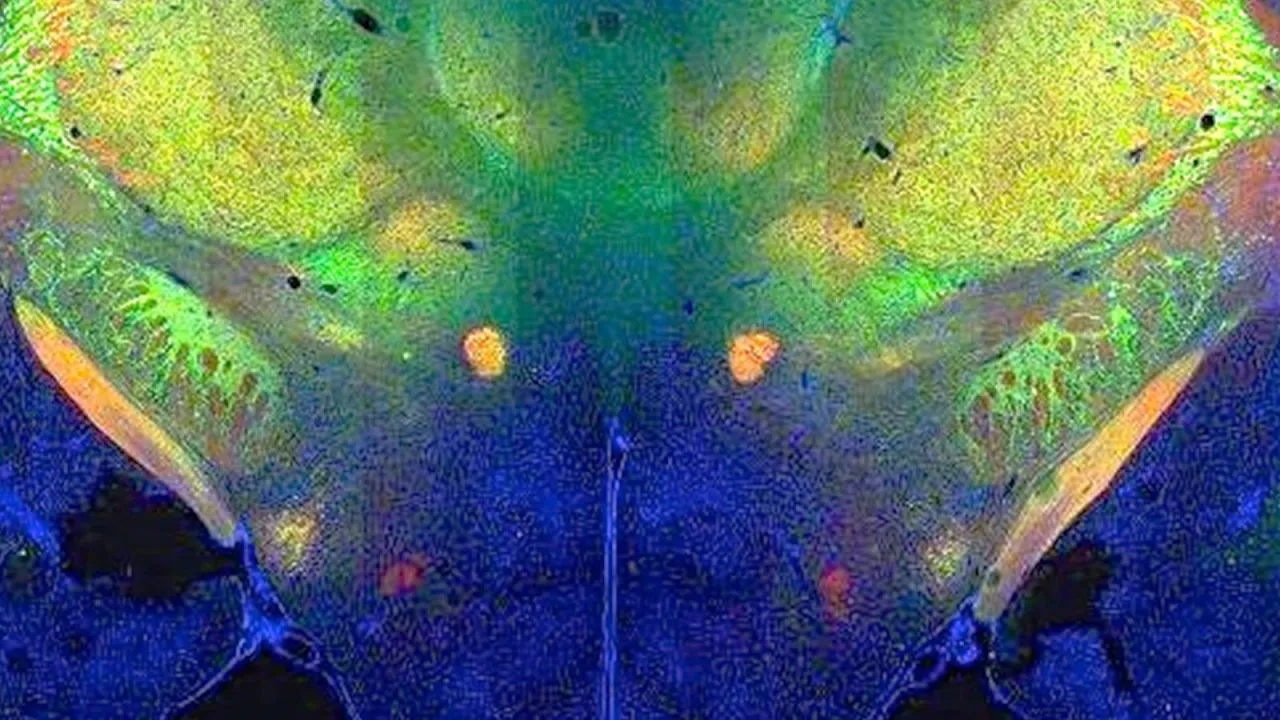
21:55
Deciphering Neural Circuits Controlling Anorexia in Mice | Richard Palmiter
@AllenInstitute
2.3K views•2011-10-10
105:38
Dreams, Nightmares, and Neuroscience: Dr. Baland Jalal
@JordanBPeterson
235.3K views•2025-03-27
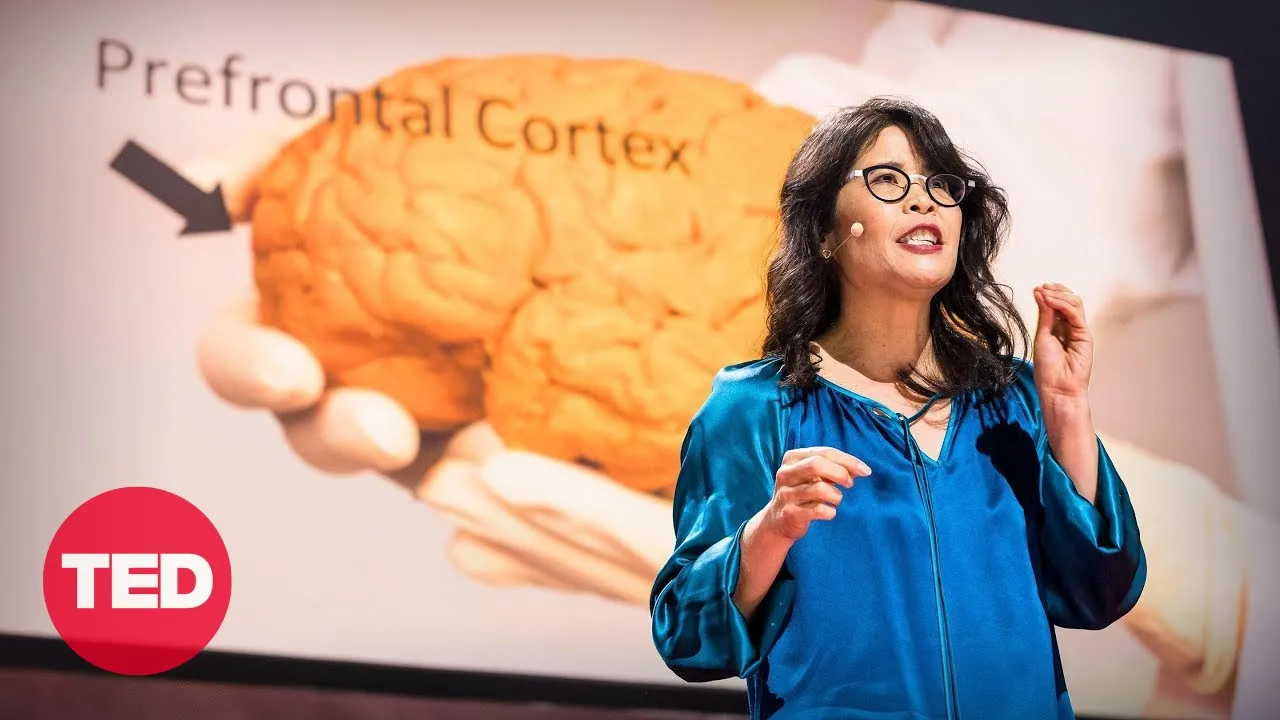
13:03
How Exercise Benefits Your Brain: Science Explained
@TED
11.4M views•2018-03-21
Related Study Plans & Knowledge Roadmaps
Structured learning paths in Neuroscience
neuroscience
Appetite Regulation: Brain Circuits & Hormones
01Foundations of Endocrinology and Brain Anatomy
02Introduction to Energy Homeostasis
03Peripheral Signals: Leptin, Ghrelin, and Insulin
+ 2 more learning modules
14h5 modules
Explore Roadmap
neuroscience
Neuroeconomics: Value, Risk & Brain Mechanisms
01Foundations of Neuroscience and Brain Anatomy
02Introduction to Neuroeconomics and Subjective Value
03Dopaminergic Prediction Errors & Reinforcement Learning
+ 3 more learning modules
18h6 modules
Explore Roadmap
neuroscience
Spatial Navigation: Cells, Grids & Brain Maps
01Foundations of Brain Anatomy and Memory
02Place Cells and Head-Direction Cells
03Grid Cells: The Brain's Coordinate System
+ 2 more learning modules
12h5 modules
Explore Roadmap
neuroscience
BCIs: Neural Decoding & Prosthetic Control
01Neuroscience Foundations: How the Brain Signals Intent
02Signal Acquisition: Recording the Brain's Activity
03Neural Decoding: Translating Brain Waves into Data
+ 2 more learning modules
25h5 modules
Explore Roadmap