



![(M8E12) [Microeconomics] First and Second Fundamental Theorem of Welfare Economics.](https://i.ytimg.com/vi/IrSgLJBqCSo/maxresdefault.jpg)

















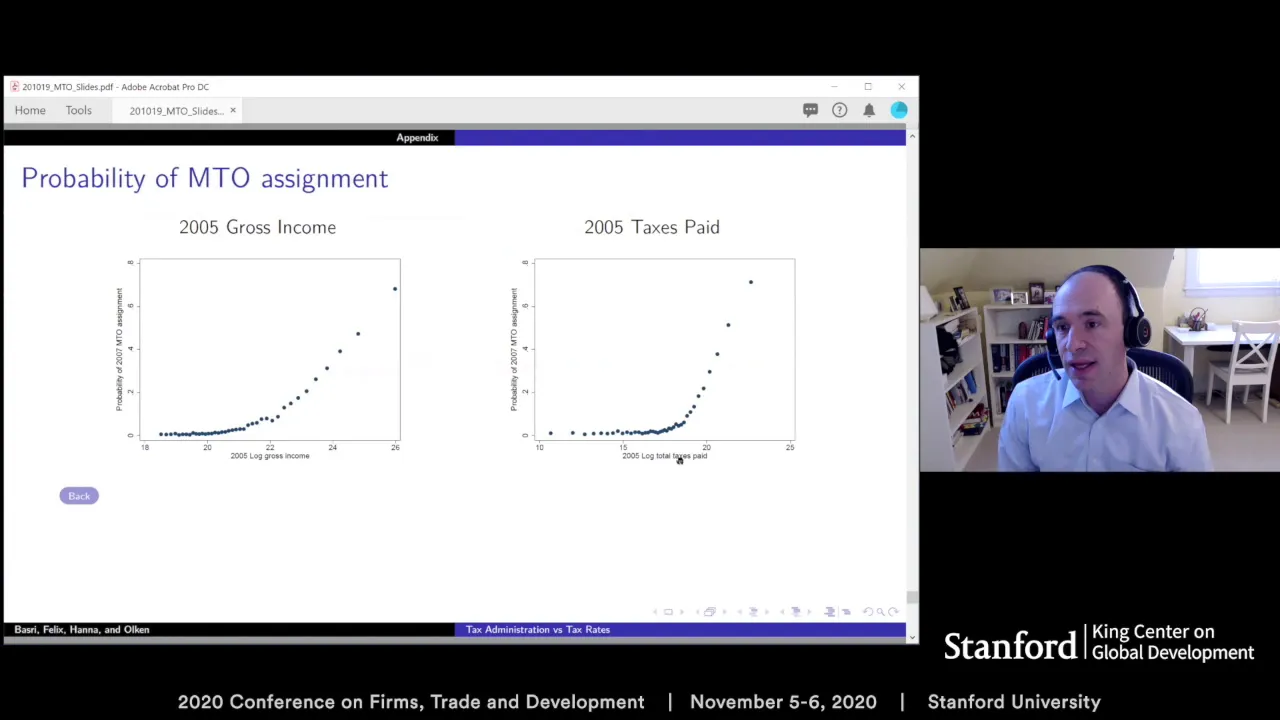


Optimal taxation theory reveals that lump sum taxes minimize deadweight loss but are impractical due to fairness concerns; instead, governments must balance efficiency and equity through progressive income taxes and differential commodity taxes, with Ramsey taxes suggesting that optimal commodity taxation depends on demand and supply elasticities, while producer taxes should generally be avoided in favor of consumer taxes to maintain productive efficiency.
Optimal Taxation Principles | Lecture 17
Added:Fundamental microeconomic concepts, particularly price elasticity of demand and supply, which determine tax incidence.
The concept of Pareto efficiency and the First and Second Fundamental Theorems of Welfare Economics.
The measurement and graphical representation of deadweight loss (excess burden) resulting from market distortions.
Basic consumer choice theory, including utility maximization, budget constraints, and the distinction between income and substitution effects.
The Mirrlees formulation of optimal non-linear income taxation under asymmetric information.
Optimal taxation design within imperfectly competitive markets, such as monopolies and oligopolies.
Behavioral public finance, exploring how bounded rationality and cognitive biases alter traditional optimal tax models.
Empirical estimation of the elasticity of taxable income (ETI) and its application to modern fiscal policy reform.
4K views57likes26:27Original Release: 2020-11-20
good afternoon uh welcome to lecture 17 and the topic of this lecture is optimal taxation the recommended readings or specifically the prescribed readings are stiglitz and rosengard chapter 20.
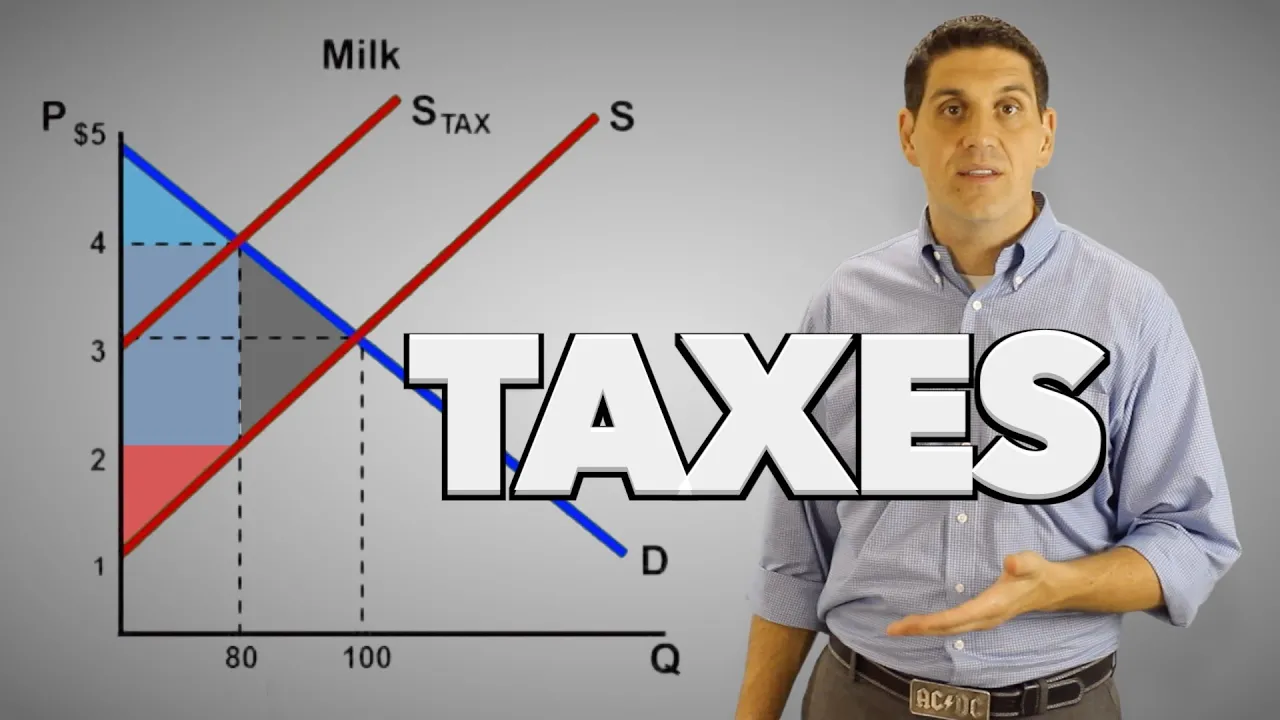
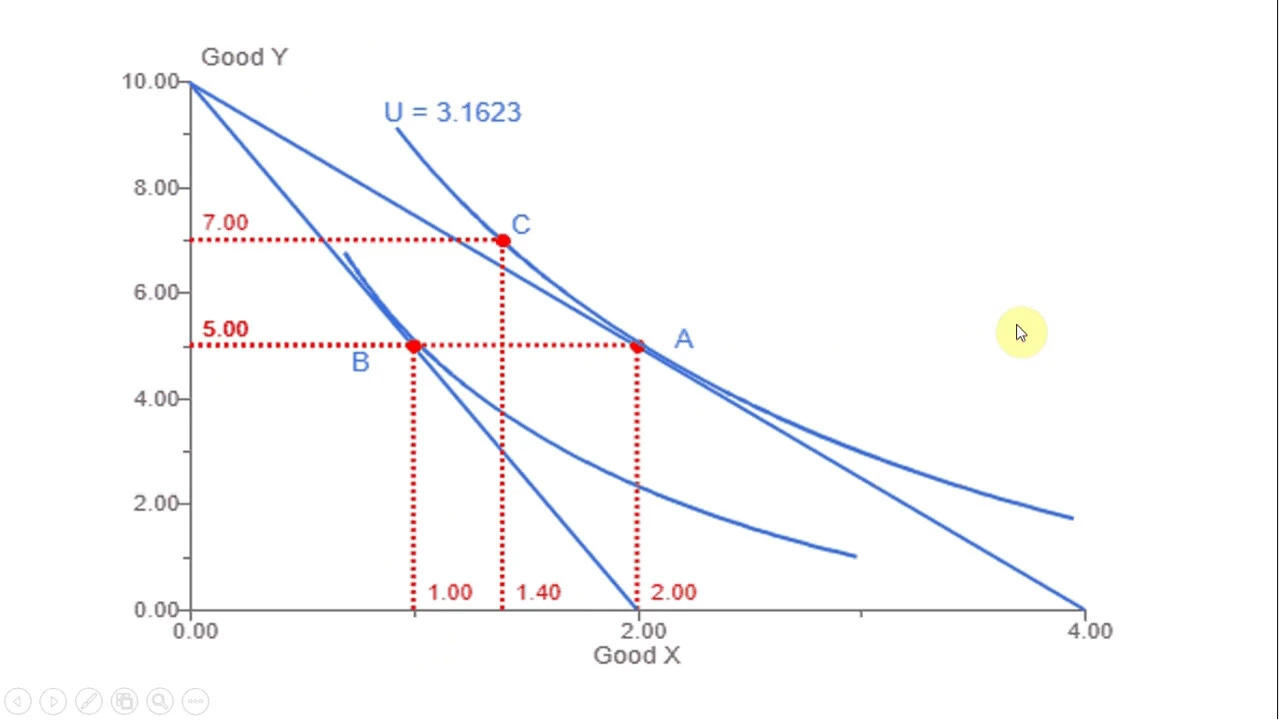
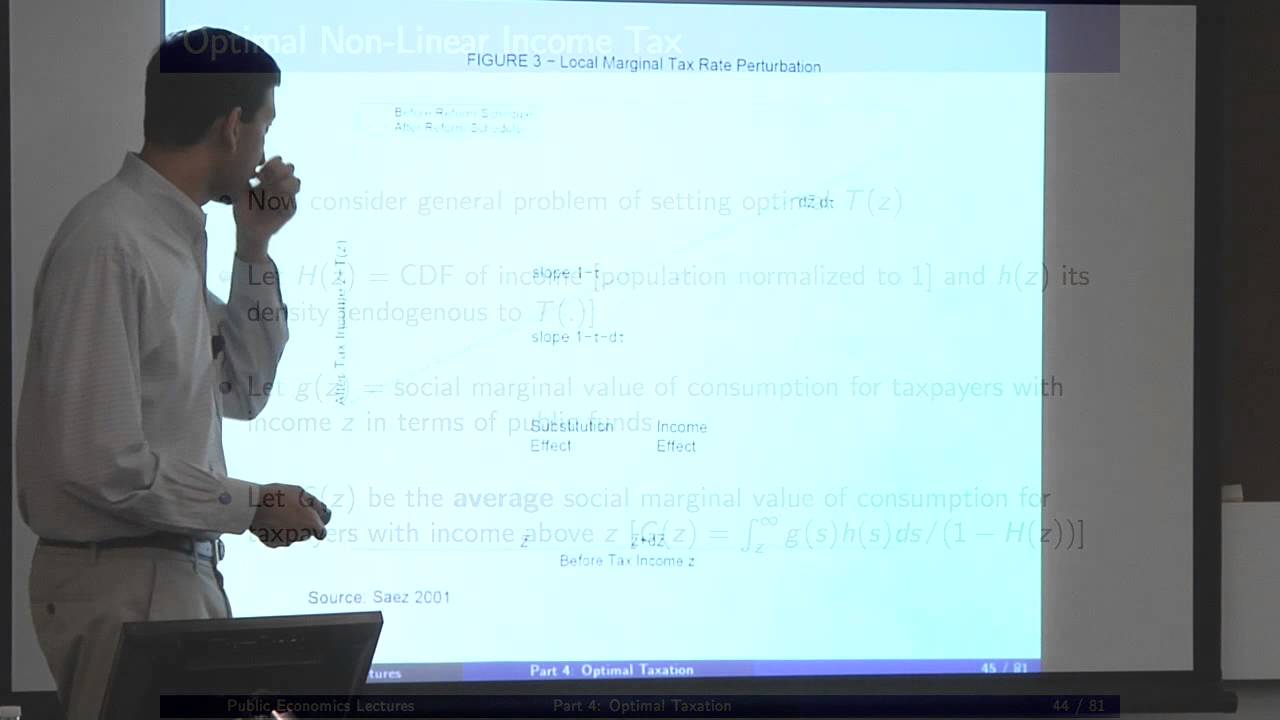
the topics that we'll cover in this lecture are two fallacies on optimal taxation the optimal and pareto efficient levels of taxation differential taxation and also taxation on producers so we need to start with chapter 19 the previous lecture so what did we cover in chapter 19 we introduced the concept of taxation and how taxes work what we found that unless we use a lump sum tax what happens is that there is a deadweight losses associated with a tax rate so the question then becomes if lump sum taxes do not result in a deadweight loss then why do we not just impose lump sum taxes and not worry about a loss of efficiency in other words why do we not worry about in the deadweight loss by simply imposing a lump sum tax then if we were to impose the straight distortionary taxes uh is there some way they can be designed to minimize their deadweight loss specifically if we impose some kind of tax rate that is what results in a distortion so how do we impose these taxes in such a way that we minimize the deadweight loss that is what we cover in this lecture and these are questions that have been central to theoretical research in taxation and such research has produced some simple yet insightful answers such answers that may help us to design better tax systems in the future by reducing or eliminating deadweight loss there are two fallacies of optimal taxation the one deals with a very simplified approach specifically simplicity is a limitation and the other fallacy is that the world is so complex that nothing can really be said and done so first of all we start with the first fallacy which says we should simply have a tax on wage income and any additional taxes let's say such as the value added tax or specific taxes on goods such as alcohol or cigarettes in other words syntaxes are just a contributor to the distortions and therefore distort economic efficiency what we would rather do is one simple tax one single tax and that is a wage tax both simple and a single tax and we will have one distortion as a result of that and not several distortions which arise within position of numerous other taxes this does make sense if there were no distortions associated with that type of tax because then that type of tax would be the equivalent of a lump sum tax the reality is there are other distortions associated with attacks so first of all as you recall what would happen is that individuals decisions to work are distorted uh in other words you might start working less beyond a certain level of income so the labor supply curve is backward sloping or backward bending and not upward sloping and the reason why is that because a certain beyond a certain level of income you are taxed so much that makes no sense to work more you'd rather consume more leisure additionally the idea is that if you count distortions you are simply thinking that each tax introduces a new distortion yet it is not necessarily the case that one large distortion is better than several smaller distortions so in other words having a single wage tax might not result in less of a distortion than having several smaller distortions to demonstrate the recall from the previous lecture what we showed is using that formula is that the date weight loss from a tax is proportional to the square of the tax rate therefore the larger the tax rate the larger the deadweight loss so it might make sense to have a number of small taxes as opposed to a single large tax because the deadweight loss the total dead weight loss arising from those small taxes might be lower than that arising from a single large tax next what we have is the so-called theory of the second best and this theory is concerned with the design of government policy and situations in which the economy is characterized by some important distortions that cannot be removed this contrasts with this idea of first best economies where all conditions for perito efficiency can be satisfied now the problem with the theory of second best is that it's often interpreted fallaciously as stating that as long as there are some distortions economic theory has nothing to say in other words if they are distortions we cannot do anything about them this is not correct because economic theory tells us under what circumstances too small distortions are preferable to a large one in other words when is it better to have inefficiency in both consumption production and when is it better not to have efficiencies in production so the message is that unlike proposed by the theory of the second best that we can't do anything about distortions which is a fallacy the message is that it's not easy to determine what distortions exist and it but it is not impossible it is also not impossible to determine once it has been determined the distortion exists as to what to do about these distortions now we need to extend the concept of pareto efficiency a little bit further recall in chapter 3 that we discussed this idea that a resource allocation is pareto efficient when no one can be made better off without someone else being made worse off the reason that i'm restating this is because we go to extend this concept a little bit further we can also have a pareto efficient tax structure so what is a pareto efficient tax structure it is one that exists such that no alternative tax structure can make some individuals better off without making under the individuals worse off in other words if there are alternative tax systems that exist that can make individuals better off then the current tax system that is being instituted and applied is not pareto efficient it is clearly inefficient so therefore there may be a number of perito efficient tax structures just as there are many pareto efficient resource allocations without taxes now how did we choose amongst pareto efficient allocations well what we looked at is we looked at the social welfare function and these social welfare functions can also be used to choose among pareto efficient text structures so the idea as with resource allocation is to choose a set of tax or a tax structure that will maximize the social welfare function and what that will yield is or what that will result is in an optimal tax system let us begin with our base case the base case is our pareto efficient tax and that is a lump sum tax so all individuals regardless of how much they earn pay the same amount now the problem is that any other tax would introduce distortions so it seems that we should essentially go with a lump sum tax now a lump sum tax requires that everyone is the same that they earn as much in order to be able to pay and bear those taxes and if everyone is the same that there is no reason to redistribute income however the reality is a little bit more complicated individuals differ and governments wish to redistribute income and this requires that those who pay are able to pay taxes more easily should pay more taxes than those who cannot pay taxes this is something that lump sum tax does not do because it requires the rich and the poor to pay exactly the same amount if lump sum taxes are non-destroyed extortionary why is it that we go on to impose distraught free taxes nevertheless well the reason why is that because government can only tax observed variables such as income and expenditure so government can choose to impose a uniform lump sum tax regardless of income in other words everyone pays an equal amount regardless of what their abilities are but not everyone is equal so from that perspective this is not a fair tax some people are not working so they shouldn't be paying tax and others are working earning little and paying a lump sum tax will impact them and some are earning a lot and a lump sum tax doesn't really impact them so what governments choose to do is they choose to impose taxes on easily measured variables so what is it that we can measure well we can measure expenditure how much something costs that's why you get value-added tax so that is one type of tax we could impose as an example or alternative income so everyone earns something and that is easy to be measured but the drawback is that imposing such taxes on measurable variables is distortionary so a distortion nevertheless arises these taxes are not perfect either aside from the distortory aspect so for example an income tax may not always succeed in texting those who we think ought to be taxed it treats equally an individual who has low ability but works extremely hard and the individual who has high ability and takes it easy provided that the two individuals have the same level of income so two people might be earning as much except one is working a lot one is working hard in order to earn that income and another is not because of ability yet they still have to pay the same amount if we impose an income tax so one could argue this is not exactly fair nevertheless the belief is still that those who have a high ability to pay in other words a higher income are to pay a higher share of government costs so they should contribute more to the fiscals furthermore there is also another consideration in other words society may value the loss of income by the rich less then it values the loss of income to lower income individuals specifically if someone is earning a lot they suffer less from being taxed and those are earning very little and are still being taxed so this is what that statement implies so the reason why we use the sorcery taxes is because of our desire to redistribute income in a world in which the government can observe the characteristics of individuals only imperfectly nevertheless some tax system are less distortery than others this brings us to the question of how is it that we design an income tax system in order to investigate this question what we need to do is we need to make a few assumptions so first of all we assume that individuals do not have any savings and that the only income that they have comes from what they work in other words it is the form of wages and the only type of tax is an income tax and the question this leads us to how progressive should a tax system be there is a trade-off that we have to accept so that the more progressive a tax system the larger is the dead weight loss and the larger the inefficiencies from the tax however the more progressive it is the less of a degree of inequality arises recall that the idea of progressive taxes that those who can pay more do pay more in terms of taxes so that is what a progressive tax system is now if we use our tax system to attain greater quality the deadweight loss increases why because with increasing quality comes a greater level of progressiveness in terms of the tax system so how we can quantify the increase in the dead weight loss is as follows using the marginal tax rate which is simply the ratio of the change in the tax rate relative to the change in the income so it is related to the the dead weight loss that is related to a substitution effect and the magnitude of the substitution effect is related to the module tax rate so more progressive taxes have higher marginal tax rate and thus a greater deadweight loss that is the idea of progressive taxes that as you earn more you pay more so hence the marginal tax rate rises by more in a more progressive tax or is greater in a progressive tax system as those are in an additional income bracket or higher income bracket pay more in terms of taxes so for example those earning uh let's say a thousand pounds will pay 10 but those earning 2 000 pounds will be charged an additional 10 in total 20 on the next one thousand pounds from a thousand and one pounds to two thousand pounds so that is where the marginal tax rate comes in and hence the greater these marginal tax rates the greater the deadweight loss now the government uses different types of taxes and we can't call these so-called differential taxes which means that taxes are imposed a different rate on different commodities so for example the taxes are imposed on your fuel are different than the taxes that are imposed for example on normal purchases of food which would be the value added added tax that would apply so these rates would be different and this is an example of two types of taxes but of course there is a multitude of taxes that is imposed so for example what we would have is something called benefit taxes and these would be applied when we are buying airline tickets so they would be reflected in airline tickets so why would such a tax be imposed well somebody has to pay for track air traffic control so when you buy a ticket which includes a benefit tax so pay a portion of that uh price in terms of taxes that goes to fund the air control and also to fund potentially the airport and other aspects are related to your flight which are not directly associated with the airline itself other taxes are such as taxes on gasoline so for example or gas specifically petrol these are taxes that we can see as being corrective taxes to ameliorate some of the negative externalities that they generate in other words to deal and address some of the negative externalities such as pollution that they generate and such as traffic congestion that is associated with driving there are also luxury taxes so you have taxes on luxury goods such as perfume such as luxury cars and the idea here is to increase the redistributive nature of our tax system so the thinking here is that if you have money to buy luxuries you should part with some of your money in order to fund equality other types of taxes there's also something called the syntax so these are taxes are charged on cigarettes and beer and they could potentially be used to fund the healthcare system of course um drinking alcohol and smoking in excessive amounts can be associated with ill health you are treated at a hospital so hence that's why syntax might be opposed to fund these services and also to again correct externalities and also to discourage you from smoking so now that leads us to an additional two questions that we try to answer first of all if the government cannot impose an income tax to redistribute income what rates should impose on different commodities and second of all if the government can impose an income tax on redistributable income should it also impose on taxes on different commodities at different rates so this leads us to something called ramsey taxes and the proposition here is that there are commodity taxes that minimize the deadweight loss and these taxes are such that they are proportional to the sum of the reciprocals of the elasticities of demand and supply recall what was the elasticity of the mountain supply it was the change in quantity with respect to the change in the price level so this is the elasticity of demand this is the elasticity of supply and how we define the so-called ramsey taxes as is as the ratio of the tax per unit to the off the price that is received after a tax so this is this ratio here and this is proportional in other words directly related to the total amount of revenue that a government is attempting to raise but it is inversely related to the elasticity of the compensated demand curve and also the elasticity of supply so these two terms here the sum of these two terms so note the k is now in the numerator and these elasticities would be reflected in a denominator assuming that we are using values instead of notation what ramsay showed is that in the absence of an income tax different commodities should be taxed at different rates only on the elasticities of demand and however the reality is in all industrialized nations now what we view or what we see is progressive income taxes so the issue is a little bit different what we need to worry about is an optimally designed tax and such a tax ensures that the marginal benefit of the extra redistribution that comes with that income tax exceeds taxes on commodities let's say a tax on luxuries where the marginal cost is measured by an excess dead weight so it goes on to state or be argued that differential commodity taxation is undesirable and that if an income tax is well designed adding differential commodity taxation is likely to increase the ability to redistribute income little if at all therefore it makes no sense from this perspective on the basis of this statement to tax commodities at a different rate specifically what we should do only is then tax income so that leads us to a specific argument and that argument is that if the objective of taxation is to redistribute income what then should happen is that we should tax income and the focus of taxation should be what we are therefore really interested in specifically that is income so we redistribute from those are able to pay to those that are less able to pay taxes what about taxing producers and not just tax and income so does perito efficient taxation imply that taxes should be imposed on production processes and not only income that's the question we investigate now so in chapter three what we suggested is that imposing taxes on production impacts production efficiency in other words the economy is no longer able to produce on its production possibilities schedule there is an inward rotation on the top and bottom of our production possibilities curve so if you recall this is the production possibilities curve assuming that we have good a here and good b and what happens is if we introduce a distortion we have an inward rotation of these elements from here to here from here to here inwards that is so that is the result of a distortion now let's assume that we have a perfectly competitive economy and in such an economy all firms face the same prices so all firms will set the marginal rate of technical substitution equal to the same price ratio because all firms are say are facing the same price ratio so hence all will have the marginal rate of technical substitution remember there's many firms in economy and they're identical and that is why we can make this assumption and that is an assumption that occurs under that of perfect competition thus if we tax firms differently so we deviate from this idea that um we are applying one single tax if a tax on inputs is not uniform across all firms what this will result in is an economy not being productively efficient so for example let's say one of our inputs is gasoline and all firms use gasoline and two of those or two types of businesses that exist in our perfectly competitive economy are businesses and also farming and both of them use gasoline in other words petrol so let's say that we now tax this input the same input for businesses but not for farming so therefore there is a non-uniform tax that is charged on petrol so for businesses pay a tax on petrol whereas farmers do not pay a tax on petrol what is a result of that the result is a deviation from productive efficiency so let's say we now impose a tax on intermediate goods and what we will arrive at or the conclusion we will see is that a tax on intermediate goods is distorted think about it this way where does the distortion arise we need to make a few assumptions so let's say we have a firm that produces computers and in a competitive economy what we'll do is we will sell those computers at the cost which is or cost of production which is the cost of factors that go into producing that computer or using the production of that computer now that computer can be sold to other firms at cost who would use that computer in their production process now let's say we introduce a sales tax what happens then the sales tax is then reflected in the cost of producing that computer in other words there's the cost of producing that computer plus the tax so anyone that purchases that computer now and uses that in their production process has a higher cost that they have to pay then that computer was originally manufactured at because of that tax so what happens whoever is using that computer in their production process and purchased it subject to attacks now has high costs of production that reflect that tax so whatever they are using that computer to produce is no longer the sum of the cost of its factors and hence what we have is a distortion so the question is this should the government impose such distortion taxes if it wishes to minimize the deadweight loss of the tax system well the answer is that the government should impose no distortion taxes on business whatever the government could do with a distortion tax on producers it can do better with a direct tax on consumers that maintains the economy on the production possibility schedule so the argument when it comes to taxing producers is that no we should not tax producers instead if we want to minimize a dead weight loss and achieve redistribution and hence contribute to efficiency we should instead tax consumers and the result is that we can stay on the production possibilities schedule
Up Next

7:25
Economics Introduction: Scarcity, Trade-Offs, and Micro vs Macro
@KGuffs
654 views•2020-05-30
5:07
Impact of Yuan in Indo-Russian Trade Amid Sanctions
@WION
261.9K views•2022-07-01
10:33
Behavioral Economics Explained: Rationality, Nudges, and Risk
@crashcourse
1.1M views•2016-03-12

113:18
The Age of Easy Money: Fed & Inflation | Full Documentary
@frontline
21.2M views•2023-03-15
Related Study Plans & Knowledge Roadmaps
Structured learning paths in Economics
economics
Sovereign Debt: Defaults, IMF & Restructuring
01Introduction to Sovereign Debt & Government Bonds
02Debt Sustainability & Credit Ratings
03Anatomy and History of Debt Crises
+ 2 more learning modules
12h5 modules
Explore Roadmap
economics
Market Design: Matching Theory & Gale-Shapley
01Introduction to Market Design and Price-Free Markets
02Two-Sided Matching & The Gale-Shapley Algorithm
03School Choice Systems and Mechanism Design
+ 2 more learning modules
10h5 modules
Explore Roadmap
economics
Impossible Trinity: Forex, Capital & Policy
01Introduction to Monetary Policy and Central Banking
02Exchange Rates and International Capital Flows
03The Mundell-Fleming Model
+ 2 more learning modules
8h5 modules
Explore Roadmap
economics
Healthcare Economics: Market Failures & Systems
01Introduction to Healthcare Markets and Market Failure
02Asymmetric Information and Adverse Selection
03Moral Hazard and Insurance Design
+ 2 more learning modules
12h5 modules
Explore Roadmap