















![[ TIẾP CẬN CHẨN ĐOÁN BỆNH LÝ HUYẾT HỌC ÁC TÍNH]](https://i.ytimg.com/vi/goHKEiujPbM/maxresdefault.jpg)

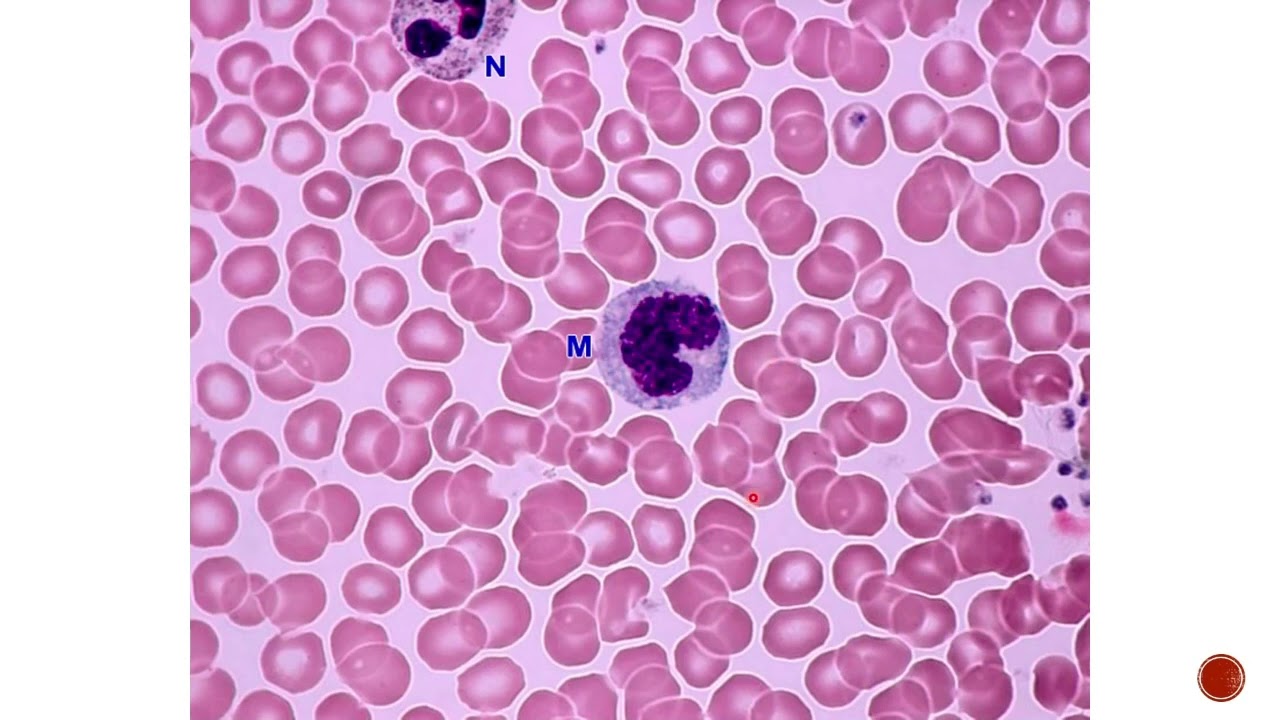
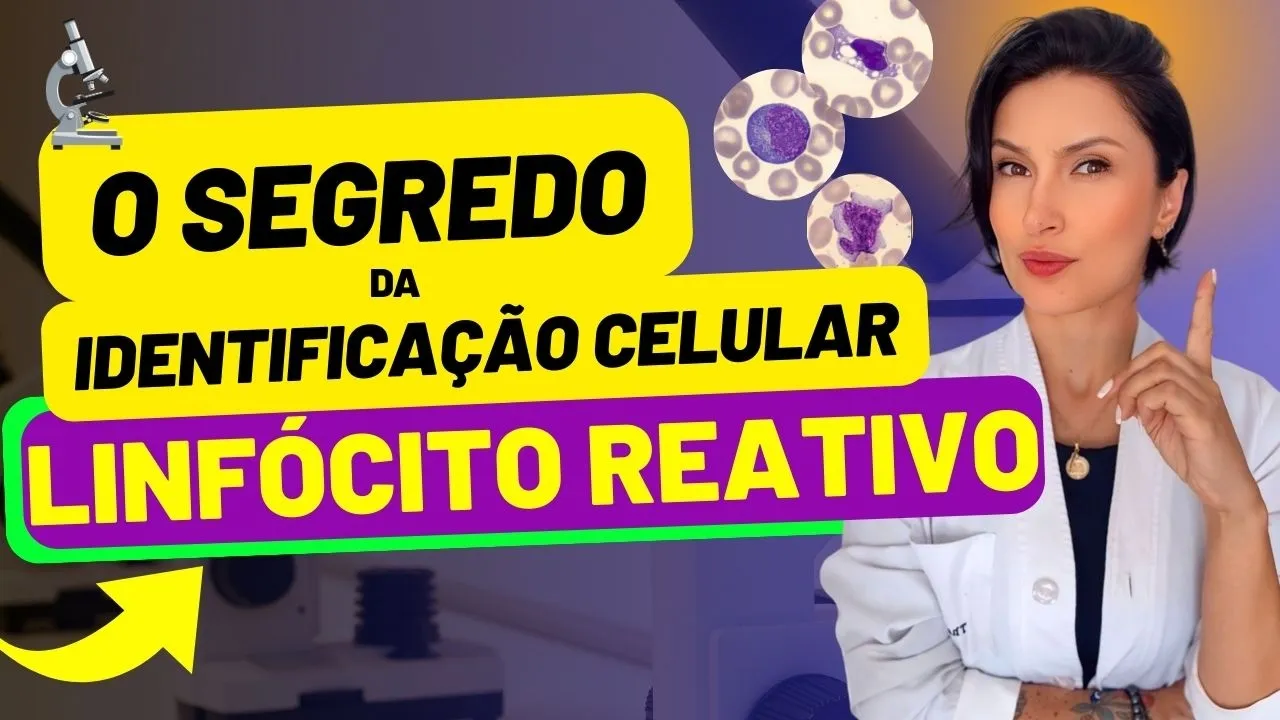
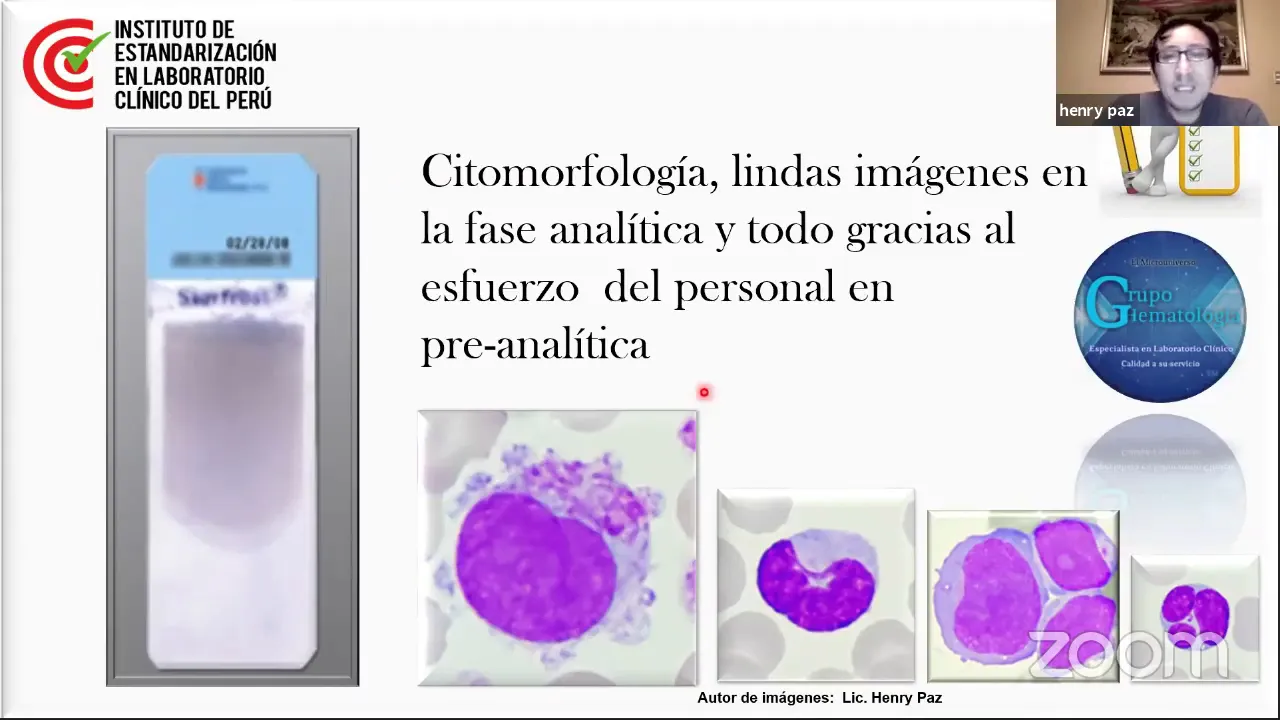
To differentiate lymphocytes, monocytes, and blasts on a peripheral blood smear: (1) Lymphocytes are small cells with a very dark, opaque purple nucleus and minimal cytoplasm; (2) Monocytes are large cells with bluish-gray granular cytoplasm, an elongated nucleus, and a vacuolated appearance; (3) Reactive lymphocytes have increased cytoplasm with peripheral darkening (skirting) but maintain a dark, round nucleus without granulation; (4) Blasts are distinguished by their extremely high nucleus-to-cytoplasm ratio, very light purple chromatin, visible nucleoli, and minimal cytoplasm.
How to Differentiate Lymphocytes vs Monocytes on Blood Smears
Added:Understanding the basic components of blood, specifically the division of white blood cells into granulocytes and agranulocytes.
Familiarity with the preparation and staining techniques of a peripheral blood smear, such as Wright-Giemsa staining.
Basic cellular biology terminology, particularly concepts related to cell organelles, chromatin structure (fine vs. clumped), and the cytoplasm-to-nucleus ratio.
The general physiological roles of the immune system's mononuclear cells, specifically lymphocytes and monocytes.
Correlating abnormal cell morphology with clinical pathologies, such as identifying infectious mononucleosis from reactive lymphocytes.
Recognizing the clinical significance of blasts on a peripheral smear and their association with acute leukemias (AML and ALL).
Understanding how automated hematology analyzers perform a 5-part differential and the criteria that trigger a manual slide review.
Exploring advanced confirmatory diagnostic tools like flow cytometry, cytochemistry, and immunophenotyping to classify atypical cells.
119K views3.4Klikes8:02Original Release: 2019-11-19
hi so today we are going to go over the differences between Manos and lymphs this video should be able to help you see the differences between them and the reactor forms of the lymphs - you know when you look at the scope you don't really know what you're gonna get but hopefully just can help you okay let's start with the monocytes so immediately you can see that it's a large cell the RBC's around it are much smaller than a regular and monocyte and then as you can see we'll talk about the cytoplasm first the cytoplasm is bluish gray it's pretty large compared to the nucleus the nc ratio is really really kind of like equal so there's a large nucleus inside a nurse large cytoplasm outside and there's a vacuole ation as you can see there's vacuole straightest guy doesn't have it so it can have vacuoles it it wouldn't have it sometimes - and that's it the nucleus on the monos are more elongated shape and the colouring of it is not s opaque as a live and you'll see it later so they have a lighter colored nucleus compared to the lips okay so these are the normal limbs these are easy to pick out on the microscope as you can see they're small they're not that large compared to an RBC and the nucleus is so compact and really really dark and opaque and purple so that's easy to see and it's easy to spot you would know immediately that's a lymph now let's make it a little harder so the reactive limbs are the reactive form of a regular lymph and this time that's when the lines get blurred and you're like is that a mono it's at a blast is that what is that so so hopefully this video can help you okay so this one's not that tricky you can see that it's still very limp fee that the nucleus is still really dark really opaque and the cytoplasm is just the difference here the cytoplasm is pretty large now but it's still like you can see it's not like the mono earlier you can see that it's clear in them in inside and in the outside when it touches the RBC's it starts to darken okay there's the skirting and a darkening that's happening like this guy so this these are all just reactive limps and as you can see the nucleus is not elongated it's still pretty around it's just larger then more reactive limbs so this guy is still a lymph it definitely isn't a mono as you can see a mono does not look like this earlier we covered how it's supposed to look like and it's not so there's this guy and this guy kind of similar they're probably plasma cells because they have the very nuclear half right here the Lightning right here like this guy so they're just reactive limbs as well this guy is what we saw earlier too with the skirting and the darkening of the cytoplasm as it touches the RBC and it's still pretty around a nucleus is still pretty round and a very opaque and dark purple that means that's a reactive lymph this guy is definitely not a mono so you can see there's granulation here monos on have that granulation that's found in reactive lengths so this is another form of reactive lymph so these guys all here on this slide are all just reactive leaves how about blasts okay so let's include them on this topic there's a lot of people get confused about that too but blasts are pretty tricky some of them could look like limbs sometimes they're smaller than how they're supposed to be but in general this is how they should look like most of the time hopefully they're big they're large larger than the regular limbs but the giveaway the difference between a blast reactive and Amano you have to look at the NC ratio the nucleus is so much larger see that and then the the cytoplasm around it it's really really small like it's just a sliver of a cytoplasm and there's also darkening but they don't wrap around like nucleus I mean RBC's they're just there but there's a thin layer and you can see the nucleoli like just staring at you right here okay so that makes it a blast and then the chromatin inside it's very loose and that's why it's very light purple like it's a very light purple compared to this so you can see the difference right so let's put them all side by side so you can see the difference okay so in this slide you can see you can really see that there's a difference between a reactive live a mono and a blast so these are all like conventional shapes of what you would you know and I sculpt on the slide so here it's a blast a mono and ellipse so you can see the skirting here on the live really dark really dark nucleus compared to the blast and a mono and we can see that the cytoplasm expanded but it's pretty clear inside and then the mono has still has that grayish blue granular granulation inside and then you can see the skirt thing here and then Amano's don't care about the RBC's it's just doing its own thing whereas the blast has the largest and C ratio the nucleus is just huge you can see the nucleoli I was staring at you and the cytoplasm super thing I know you got this already you should be able to do the next slide okay so then it's pretty straightforward - these are all like you can pick up right away which ones which so which one has a darkest nucleus it's this guy so that must be a lymphocyte and then this one's the blast this one's the mono and that's pretty straightforward you guys should be able to know your morphologies now and you should be able to pick up which was switch but you know it's not always this easy there's always gonna be great area but anyway hopefully this video helps you identify these stuffs much easier much faster and you can see that the blast staring at me right here with its nucleoli lymphocyte spread out cytoplasm right here and a little bit of skirting but it's still not a mono because the mono has a greyish blue granulation here like really really fine granulation and with an elongated lacy patterned coloring on the nucleus now like this guy which is really really opaque and dark and even if it has any elongated nucleus it's still really very different from a classic monocyte right here and so that's it that ends my lecture on the differences between the morphologies of monocytes emphasize and blasts and hopefully that helps you learning hematology and here I'm ending it with a picture of Hawaii hopefully this relaxes you and I know you got it good luck and have fun bye
Up Next
1:36
Blood Cell Functions Explained | Red & White Cells & Platelets Science
@priyakumar.O
783 views•2026-01-19

50:12
Bacterial Communication: Quorum Sensing and Biofilm Formation Explained
@JHUAAP
12.6K views•2011-06-28

5:35
Enteric Nervous System Explained: The Gut's Brain | Neurobiology Lecture
@alumniu6029
438 views•2018-09-12
7:08
Bacteriophages: Earth's Deadliest Killers and Future Antibiotics
@kurzgesagt
34.6M views•2018-05-13
Related Study Plans & Knowledge Roadmaps
Structured learning paths in Biology
biology
RNAi: Biogenesis, RISC & Gene Silencing
01Molecular Biology Foundations: DNA to Protein
02Introduction to RNA Interference (RNAi)
03Molecular Biogenesis of miRNA and siRNA
+ 2 more learning modules
10h5 modules
Explore Roadmap
biology
Mycorrhizae: Signaling, Biophysics & Ecology
01Foundations of Mycorrhizal Symbiosis
02Molecular Signaling and Root Colonization
03Biophysics and Bioenergetics of Nutrient Exchange
+ 1 more learning modules
11h4 modules
Explore Roadmap
biology
Circadian Clocks: TTFL, SCN & Periphery
01Foundations of Molecular Biology & Gene Expression
02Introduction to Chronobiology and Actograms
03The Core TTFL: Molecular Architecture of the Clock
+ 3 more learning modules
14h6 modules
Explore Roadmap
biology
Population Genetics: Math, Drift & Selection
01Genetic & Probability Foundations
02The Hardy-Weinberg Principle and Baseline Models
03Mathematical Modeling of Natural Selection
+ 3 more learning modules
18h6 modules
Explore Roadmap