



















The video explains how colonial-era borders drawn at the Berlin Conference continue to fuel conflicts in Africa, using the Guinea-Sierra Leone border dispute over the town of Yanga as a case study. Despite multiple diplomatic agreements confirming Yanga's sovereignty to Sierra Leone since 2005, Guinean military forces have maintained occupation for over two decades, demonstrating how unresolved colonial legacies create persistent tensions that threaten regional stability and undermine African unity.
Guinea-Sierra Leone Border Dispute: Colonial Legacy and Regional Security
Added:The Berlin Conference of 1884-1885 and the concept of 'artificial borders' in Africa.
The historical difference between British colonial administration in Sierra Leone and French colonial rule in Guinea.
The principle of 'uti possidetis juris' in international law, which dictates that newly sovereign states retain the borders they had as colonies.
An overview of the Sierra Leone Civil War (1991–2002) and its spillover effects into neighboring Guinea and Liberia.
Comparative analysis of other West African border disputes, such as the Bakassi Peninsula conflict between Cameroon and Nigeria.
The role and efficacy of the African Union Border Programme (AUBP) in resolving boundary disputes across the continent.
The security dynamics of the Mano River Union (MRU) and its efforts to foster sub-regional stability and economic integration.
The intersection of cross-border resource management, local livelihoods, and state sovereignty in the Makona/Mano River basin.
219.6K views8.1Klikes31:05Original Release: 2025-05-07
[Music] Hey, breakdown family. You know, when European powers sat around a table and carved up Africa like a piece of cake, they drew borders with no regard for the people, cultures, languages, or histories they were dividing. They split kingdoms. They merged rivals. They created nations on maps without ever setting foot on the ground. And one of the most destructive legacies of that Berlin conference, the borders. Artificial lines that never made sense then or now. For decades, those borders have been more than just political boundaries. They've been a source of economic fragmentation, identity crisis, and violent conflict.
from Eritrea to Ethiopia, Sudan to South Sudan, Congo to Rwanda, and today they're still haunting us. Today's episode was inspired by a powerful comment from one of you, Abdullah Nyani 6234, who wrote, "Hi, I really appreciate your coverage of African affairs, but I noticed there hasn't been any discussion about the recent tensions between Guinea and Seron, especially the reports of Ginian military entering Cerillion territory like Yanga and Colombia. This is a serious issue affecting national sovereignty and people on the ground are witnessing it.
I would love to hear your thoughts or even a dedicated video breaking down the facts and the regional implications. Thank you, Abdul. And you know what? You're absolutely right.
Because we talk a lot about coups and corruption and power struggles, but this this is deeper. It's about sovereignty.
It's about trust. It's about what happens when colonial borders meet postc colonial silence. As of May 1st, 2025, tensions between Guinea and Seron have flared up again. And at the center, a small border town called Yena, caught in a decadesl long tug of war. Reports say Ginian troops have entered Cerillionian territory, not just Yanga, but Colombia as well. And while it's not dominating international headlines on the ground, it's sparking fear. It's threatening livelihoods and it's raising urgent questions about regional peace, diplomacy, and the ghosts of history. So yes, today on the breakdown, we're asking what's really going on in Yanga? Why has this border dispute lasted more than 20 years? And what does it reveal about the long road ahead to African unity? Because no, this isn't just about one village. It's about how fragile peace and unity can be when history is ignored and why we can't afford to stay silent when the cracks begin to show as they are now. Now, before we dive in, a big welcome to all our new subscribers and members here at Panet Juniors TV. We're so thrilled you're here. And if you're watching and haven't joined us yet, what are you waiting for? Please consider this your personal invitation. Because here at Pan Genius TV, we're building more than just a channel. We're creating a global home for black stories that are told with truth, with intention, and power. And if that speaks to you, and I hope it does, please hit subscribe, tap the bell, drop a super thanks, and consider joining our membership community where you get exclusive videos, behind the scenes conversations, and the chance to be a part of the dialogue shaping our future. I've actually got a bonus segment on this episode for you there. Something to get us thinking beyond the headlines here.
This isn't just content. It's a movement, and I'd love for you to be a part of it.
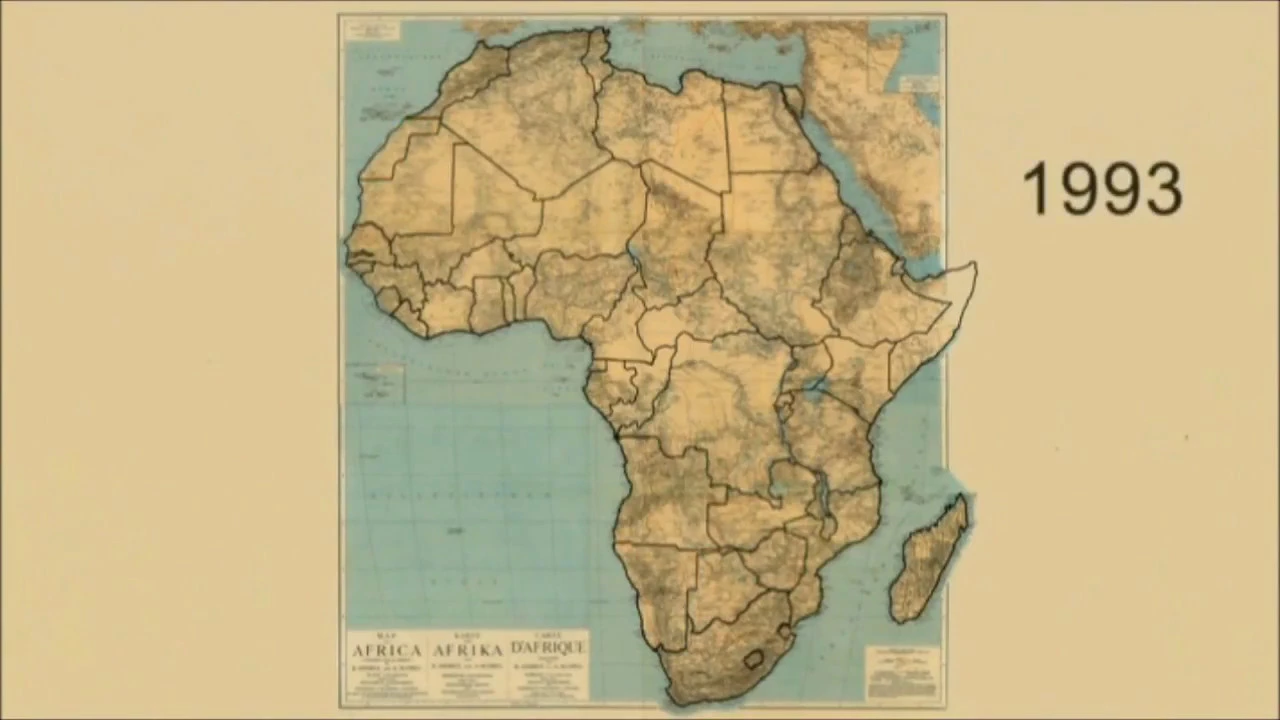
All right, now let's break it down. Now, before we dive deeper into the current tensions, let's take a moment to understand the historical context behind all of this. Because to really grasp what's happening in Yanga today, we need to go back way back to how African borders were even created in the first place. When the Europeans colonized Africa, they cared about one thing above all else, profit. Whether it was gold from Guinea, rubber from the Congo, or diamonds from South Africa, the goal was to extract resources and send them back home. This focus on profitability led the European powers to hold the Berlin Conference, where Africa was divided between new and old colonial powers diplomatically to avoid any conflict between Europeans. After all, conflicts cost money, which at the end of the day threatened the profitability of the colonies. What wasn't taken into account were the divisions among the Africans themselves. What this resulted in was cohesive nations like the Messiah being divided between English Kenya and German East Africa, what later became Tanzania. And the bigger the nation was, the more divided it often became. The Yoruba nation, for example, with a population today of 44 million people were split between English Nigeria, French West Africa, German Togoand, and the English Gold Coast. Directly north, the House nation with a population of 75 million today were divided in half by English Nigeria and French West Africa, what eventually became Niger, both of which were partially included within the borders of modern-day Nigeria, alongside the Ibu, another tribe of around 49 million people whose traditional lands lie entirely within the country's borders. And that's not to mention all the smaller tribes crammed in between them, often leading to intense competition over the lands collectively deemed as theirs. For some perspective, Spain today has nearly the same population as the Yoruba. France has slightly fewer people than the Housea and the Ibu have a population greater than Portugal, Belgium, and the Netherlands combined. So imagine someone coming into Europe drawing a country that included only half of Spain, half of France, and also all those other guys. That is a simplified version of what Nigeria and many many other African nations are. In the worst cases, these borders created a mess of civil wars, revolutions, and genocides within and between many African nations as the people tried to better align their countries to their nations. These events serve as reminders of just how impactful lines on a map can be.
Now when most people hear the word border, they think of a clear line, something fixed and legally defined, separating one country from another. Now it seems logical, right? A boundary to avoid confusion, establish sovereignty, mark identity. But what if I told you that before colonization, Africa didn't have borders? At least not in the rigid artificial way we understand them today.
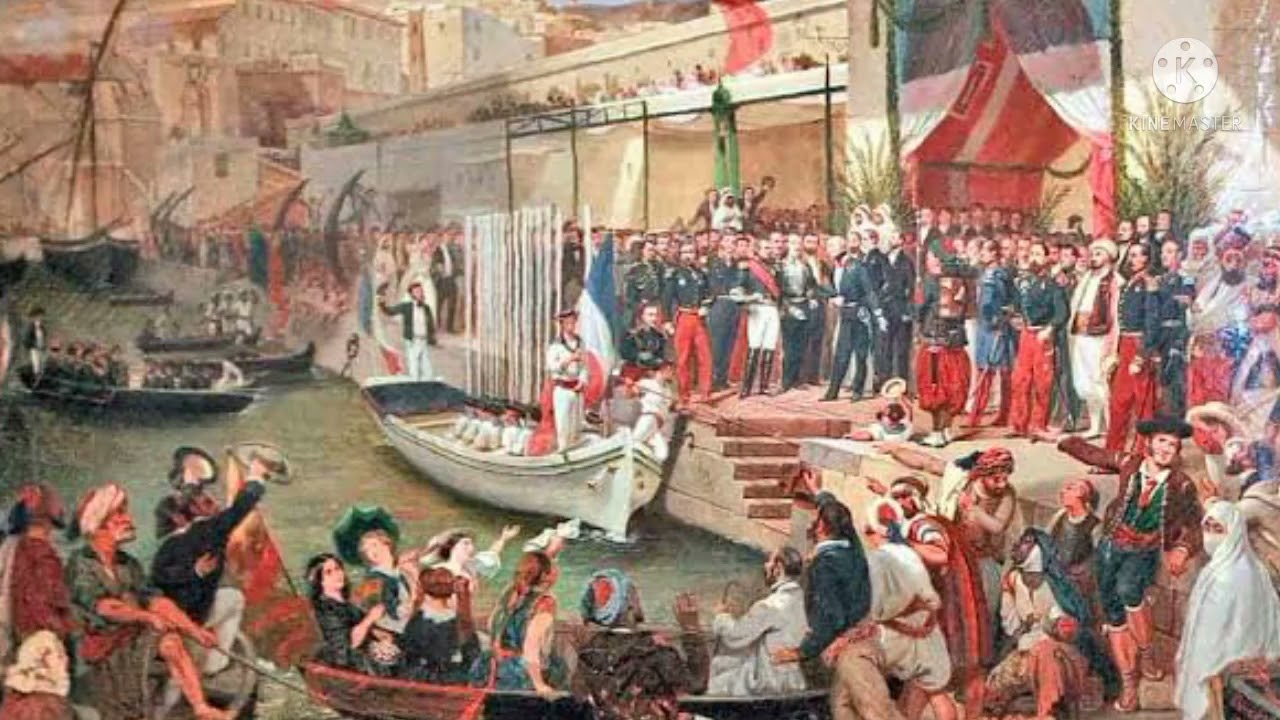
According to historians, pre-colonial Africa functioned with what they call zones of interaction, fluid boundaries where different ethnic groups lived side by side, traded, coexisted, and even intermarried. There were areas of contact and areas of separation, but nothing like the straight lines you see on today's maps. Then came the Berlin Conference of 1884 to 1885. We broke it down here on the breakdown. That's when European powers saying, "Yes, even the United States gathered in Berlin to divide the African continent like a pie." With zero African voices at the table, they drew lines on maps to suit their interest. This part is mine. That's yours. Oh, and that river will split it down the middle. They gave no thought to the people actually living there. no regard for ethnic ties, language, trade roots, or ancestral lands. Entire communities were cut in half. Enemies were forced into the same country. Families were separated by artificial lines they didn't create and never agreed to. Today, get this, Africa has 110 borders, dividing its 54 countries. And many of those lines, they're still the same ones drawn by Britain, France, Belgium, and others over a hundred years ago. Some historians argue this was intentional, a strategy to prevent African unity by keeping us fragmented and divided. Whether by design or accident, these colonial borders have become flash points for conflict, civil wars, and long-standing disputes across the continent.
And that brings us to the case of Yanga.
A small but symbolically powerful piece of land between Guinea and Seron. A place where colonial legacy and modern sovereignty collide. This border like many others was drawn by European hands, specifically Britain and France. In 1911 they agreed to fix the boundary between French Guinea and British Cerillion.
That agreement was formalized in a 1913 treaty. A treaty negotiated by colonial powers, not by the people who lived on the land. And today, that old line is fueling new tensions. So, now that we understand how the borders were drawn, let's fast forward to Yanga, a tiny town with a long memory.
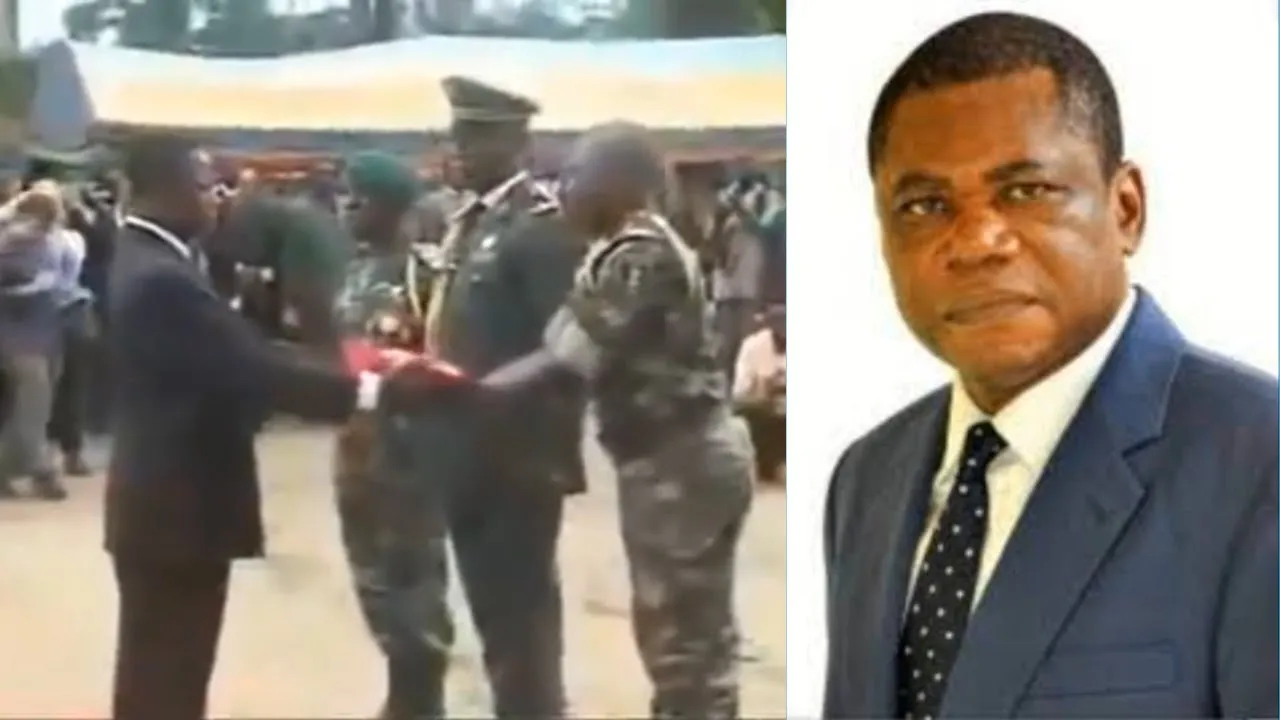
These videos of people fleeing Yanga town and its environs in the late hours of the 30th April flooded the online community thereby sending a shock wave as to the deteriorating situation in Yenga. They left their homes of fear of losing their lives as there was alleged life rounds fired by the Ginian soldiers in that area. Those who flee are now refugees in their own land. I'm currently standing on top of a rock in Sukuma village. Yeah. In Kylan district and right at my back over there is Nonga town in Guinea. And in be before from Nonga town to Sukoma village you have to cross a stream and that stream is what's supposed to be the boundary between Celon and that of Guinea. But the Ginian soldiers are currently in Yenga. They're currently in Yanga town which is inside the Selonian soil. They've captured the town and they've held the town hostage.
Yanga sits on the eastern edge of Serillion along the border with Guinea.
It's not a sprawling metropolis. It's not rich in oil or diamonds, but it holds strategic and symbolic value. And over the past two decades, it's become the center of a tugof-war between two neighbors, Guinea and Cerillion. Here's what happened. Back in the early 2000s, Cerillion was emerging from a brutal civil war. As part of a regional peacekeeping effort, Ginian troops were allowed into Yanga to help stabilize the area and protect the border. But here's the problem. They never left.
Years passed, the war ended, but Ginian military forces stayed in Yanga, slowly tightening their control over the area. They set up camps, flew their flag, and began operating as if the territory belonged to Guinea, not Serion.
Now, Yanga is officially part of Seer Leon, internationally recognized, culturally rooted. But for over two decades now, Guinea has maintained a military presence there. On paper, both countries have agreed multiple times that Yanga is indeed part of Seron. In fact, in 2005, 2013, and as recently as 2021, there have been diplomatic meetings and signed statements confirming Sarah Leon's ownership of the town. But time and time again, Guinea keeps breaking that promise.
But the Selonian soldiers currently occupy an mounted checkpoint at Pangu Bengu village which is about 300 m from Yanga. Sukoma village which is closer to Yena is alleged to be the next capture target of the Ginian side. The town has been transformed into a ghost town.
The people complained of being beaten and prevented from accessing their farmlands and said the presence of the Sriian soldiers got the Ginian soldiers agitated. The reason they fired live rounds of deploy too much and all come with arm and not been with arm but now they don't come with arm likewise I believe don't come even younger town in Kit tank chieftdom kan district dispute has been around for decades as both selon and guinea are claiming ownership of the said territory but the inhabitant in Yanga town who are Syrian have for a long time suffered molestation and intimidation from Ginanian military forces. So fast forward to 2025 and the younger dispute is back louder, sharper and more unsettling than ever. Despite the multiple diplomatic agreements over the years, Ginian troops have increased their presence not just in Yanga, but now reportedly in Colombia district, another sensitive area along Cerillion's northern border. Several credible reports have surfaced. Gina military personnel have been spotted patrolling deep inside Cerillionian territory, including in areas that were never part of any historical dispute. Now, farmers in both Yanga and Cambia say they've been blocked from accessing their land with some reportedly harassed or detained by Ginian forces. Local leaders have described the situation as a slowm moving invasion, one that's escalating tensions while remaining largely under reportported by international media.
Craonian MPs have publicly called on the government to escalate this issue to the African Union and United Nations, citing a violation of national sovereignty. And while the Seronian government says it's engaging diplomatically, for those on the ground, those words feel hollow.
[Applause] We want you free. We need ya president buo give us ya we are celeronians too where the messages on plaque mounted by the displaced yanga resident at the arrival of the iPad government delegation in coindu town on the 3rd May. John Tamba Fuko who represented youth in Yanga in a bitter tone explained their orals and asked for answers on who owns.
[Laughter] Nana Jabi who represented the women asked for you to be handed over to them because they are currently suffering.
Because how do you talk peace when people are being pushed off their land? What makes this even more troubling is that Guinea is currently under military rule. a transitional government with a fragile hold on power and a complicated relationship with its neighbors. So, this isn't just a territorial misunderstanding. It's a delicate geopolitical powder keg. And in a region already rocked by coups, rising authoritarianism, and shifting alliances, this dispute, if left unchecked, could unravel much more than just a few villages.
It could damage diplomatic ties between two echoas nations, crossber trade and security, the fragile trust that holds West Africa's postconlict architecture together, and the silence from the broader African and international community. That's the loudest part.
Because sovereignty doesn't erode all at once. It's chipped away checkpoints by checkpoint, patrol by patrol until one day the line is gone and so is the land. So the big question is this. Why is Guinea doing this? What does it gain from occupying a small but strategic piece of Craonian land, especially after decades of saying it would withdraw?
Now to answer that, we need to look at what's happening inside Guinea right now. Since 2021, Guinea has been under military rule. That year, Colonel Madi Dumbuya, a former French legionaire, led a coup that outstand citing corruption, constitutional manipulation, and bad governance. Dumbuya promised a transition, promised reform. But fast forward to today, Guinea still in military hands with elections postponed multiple times and growing concerns about the Juna's long-term intentions. So what does that have to do with Yanga? Well, when military regimes face in internal pressure, they often look outside for a unifying distraction.
And a longunning territorial dispute like Yanga is the perfect tool.
It rallies nationalist sentiment at home. We're protecting what's rightfully ours. It projects strength, showing that Jantaa is in control, not just of Guinea, but of the region. And it buys time by shifting the public conversation away from delayed elections, unrest, and economic stagnation. Let's also not forget Yanga is more than symbolic.
It sits near the Makona River, a resourcerich area with implications for trade, farming, and strategic control. Control over this territory means leverage politically, economically, and militarily. And for a juna that's already on shaky ground, that leverage might be too valuable to give up. In fact, some analysts believe that what we're seeing in Yanga is part of a broader trend among West Africa's military regimes like in Burkina Faso, Mali and Nijair, where national sovereignty becomes both a rallying cry and a political shield. But here's the difference. Burkina Faso and Mali are standing up to external powers. Guinea, it's asserting power over a fellow African state. And that raises serious questions not just about Guiney's motives but about the kind of regional politics we're walking into because if sovereignty is being used as an excuse to occupy another country's land then what kind of sovereignty is that really? Now let's talk about the bigger picture because what's happening in Yanga and Cambia isn't just a local land issue. It's a stress test for West Africa's political future. Let's start with sovereignty.
One of the most sacred principles in international law is that borders must be respected. No matter how you feel about where the lines were drawn, once they're set, they're not supposed to be violated. And if that principle breaks down, so does everything else. What Guinea is doing by continuing to occupy parts of Serillion land despite multiple agreements is more than just a provocation. It's a direct challenge to the rules that hold African diplomacy together. Then there's the issue of trust. Guinea and Sarah Leon are both members of Echoas, a block that's supposed to promote peace, cooperation, and unity.
But what happens when one echo state is quietly encroaching on another? How do you build a regional economy or fight terrorism or integrate trade when you can't even guarantee respect for your borders? Let's also not forget the human cost for the people living in Yanga in Colombia. This isn't just about flags and patrols. It's about whether they can farm, whether they feel safe, whether their government will protect them or abandon them. And finally, there's the regional instability. West Africa is already under pressure. Military regimes are growing more defiant. Echoas is losing credibility and external actors like Russia and China are watching, looking for openings.
Just look at what's happening right now in the Democratic Republic of Congo. For years, Rwanda has been accused of backing the M23 rebel group, a violent insurgency that's displaced thousands and destabilized eastern Congo. And what did it lead to? A leadership crisis, a security vacuum, and an open invitation for outside intervention.
Just a few weeks ago, the Congolese president, overwhelmed, cornered, and desperate, did something extraordinary.
He cried out to President Trump, offering a mineral deal in exchange for military support to push back M23. Let that sink in. a sovereign African leader offering up the country's mineral wealth not to empower his people but to bring in a foreign power to solve the conflict that started between African neighbors. This is how Africa stays behind. Not just because of coups or corruption but because internal divisions become external opportunities. because we failed to resolve our disputes as a continent and instead invite others in to clean up the mess on their terms. President Chuchiki was desperate.
He needed help. And it's sad, frustrating, and unfortunate that the only solution he saw, the only viable solution he imagined, he saw possible was reaching out to President Trump. So when we say Yanga matters, this is what we mean. Because if Guinea and Sirillion can't resolve a decad's old land dispute, if Echoas can't hold its members accountable, then sooner or later someone else will step in with their own agenda and their own price. And history shows us that price is never in Africa's favor. So the question is where do we go from here? Because this doesn't have to end in escalation. No, it doesn't have to become the next DRC Rwanda situation, but it will if we don't take it seriously. Here's what a real path forward could look like. First, Guinea must honor its past agreements. The 2005, 2012, and 2021 agreements were clear. Yanga belongs to Sarah Leon. It's time to stop stalling and start acting on these words.
Second, EchoAs needs to show up before it loses whole credibility. This is exactly what regional bodies were created for. If Echoas can impose sanctions over coups, it can certainly mediate a border crisis between two of its member states. I mean, if not this, then what? And third, Ser Leon must raise the stakes diplomatically. It looks like they're already escalating this to the AU and the UN. But before we involve international bodies who may come there with their own interests, making matters even worse, what else can we do? Because this continent is not short on wisdom.
No, we have our own frameworks for peace. And if we're serious about solving African problems with African solutions, then here's what Sarah Leon could do right now.
First call the elders. In African tradition, when land is in dispute, it's not presidents who fix it. It's the elders. Cerelion could organize a council of chiefs and religious leaders from both sides of the border to meet in Yanga or Colombia, not for political theater, but for restorative truthtelling face to face under the bowab tree like we've always done. And let's resolve this once and for all.
Second, build something together.
Instead of just contesting land, Cerillion could propose a joint peace and development committee with Guinea.
Equal representation, local stakeholders, real power to implement, invest in affected communities, and rebuild trust. And finally, reframe the conflict through economic cooperation.
Offer Guinea a pathway to partnership.
Perhaps joint infrastructure in Yanga, crossber trade zones, shared customs revenue, let corporation be more profitable than occupation. Let's come to the table and say, okay, how can we make this a win-win for both of us?
Because that's the real vision here. not just to avoid war, but to create a new model of peace and prosperity for us and our neighbors. One that doesn't depend on Paris or Washington. One that doesn't wait for foreign troops or foreign mediation. One that says, "We are African nations. We are sovereign states and we will resolve this like family, firmly, fairly, and together." Finally, we the people must stay engaged. We can't wait for CNN or BBC to break the story. We can only react when it turns into full-blown conflict. This is our moment to say Africa must resolve African conflicts with African solutions. Because peace isn't passive.
It takes pressure. It takes clarity. And it takes leaders who understand that sovereignty is sacred, especially between neighbors.
So, we've got a disputed border, a military regime that won't back down, and a silence that's growing louder by the day. But here's the truth. This isn't just a story about Guinea and Serillion. It's a story about us, about how far we've come since independence and how much further we still have to go. Because if we can protect each other's borders, if we can resolve disputes without begging the West to referee, if we keep repeating the same mistakes that divided us in the first place, it was a shame to witness that after years of trying to resolve the Rwanda DRC conflict, President Trump, the US stepped in and within days of striking a mineral deal with DRC. They were able to get the two countries, Rwanda and um DRC in the same room in Washington. They flew all the way to Washington to strike some sort of a deal, a peace agreement, negotiated, facilitated by the US just within a few weeks. Why can't we do that on our own continent?
What is broken here that needs to be fixed? And yet I still believe in Africa. I believe in our ability to resolve conflict without tangs, to protect sovereignty without bloodshed, to lead, not just react. So here's my question to you, my people. If two African nations can't resolve a border dispute peacefully after 20 years, what does that say about the strength of our unity? And what role can we the people play in holding our leaders accountable?
What should Guinea and Sarah Leon be doing right now? Let me know in the comments. You know, I read them all and I can't wait to hear your thoughts. And hey, if this episode brought something into focus for you, you learned something new, don't just scroll away. Tap the like button. Share this video with someone who needs to see it. Subscribe if you haven't already.
And if you want to go even deeper, consider joining our membership community where we go deeper together, turning these stories into action. Because here at the breakdown, we don't just ask questions, we build the future, one conversation at a time. That's it for today's show. Thanks so much for watching. I'm Sandra Babuing. Until next time, take care. Hey you. Thanks so much for watching this episode. I hope you enjoyed it and if you did, don't forget to subscribe and join the family. Also visit facetofaceaffrica.com for your daily news and updates on what's going on within the global black community so you can stay informed.
Up Next

29:53
Borderless Africa Alliance: Namibia, Zambia, and Botswana Unite Against Colonial Borders
@MakeAfrikaGreat
206.4K views•2025-08-15

24:30
BRICS Pay and de-dollarization: A New Financial Order Emerges? | 55 chars
@DannyHaiphongYT
164.6K views•2024-10-22

7:33
Government Surveillance Methods: 10 Ways You May Be Watched
@BeAmazed
1.6M views•2017-04-09
10:19
Explaining the Saudi-Iranian Proxy Conflict in the Middle East
@Vox
18.2M views•2017-07-17
Related Study Plans & Knowledge Roadmaps
Structured learning paths in Political Science
political-science
Economic Statecraft: Sanctions & Chokepoints
01Foundations of Geoeconomics and Economic Statecraft
02The Mechanics of Weaponized Interdependence
03International Sanctions: Types, Implementation, and Efficacy
+ 2 more learning modules
12h5 modules
Explore Roadmap
political-science
Central Bank Independence: Politics & Policy
01Foundations of Central Banking and Monetary Policy
02The Time Inconsistency Problem & Inflation Bias
03The Delegation Model and Designing Independence
+ 2 more learning modules
12h5 modules
Explore Roadmap
political-science
Consociationalism: Power-Sharing & Stability
01Democratic Dilemmas in Divided Societies
02Introduction to Consociational Democracy
03The Four Pillars of Consociational Design
+ 2 more learning modules
12h5 modules
Explore Roadmap
political-science
Rebel Governance: Legitimacy, Economy & State
01Foundations of Rebel Governance and Statehood
02Establishing Political Legitimacy and the Rebel Social Contract
03Wartime Economies and Rebel Resource Management
+ 2 more learning modules
14h5 modules
Explore Roadmap