






























![X-ray diffraction used for operando/in situ studies of batteries and fuel cells [WEBINAR]](https://i.ytimg.com/vi/b0XeV1W7Li0/maxresdefault.jpg)



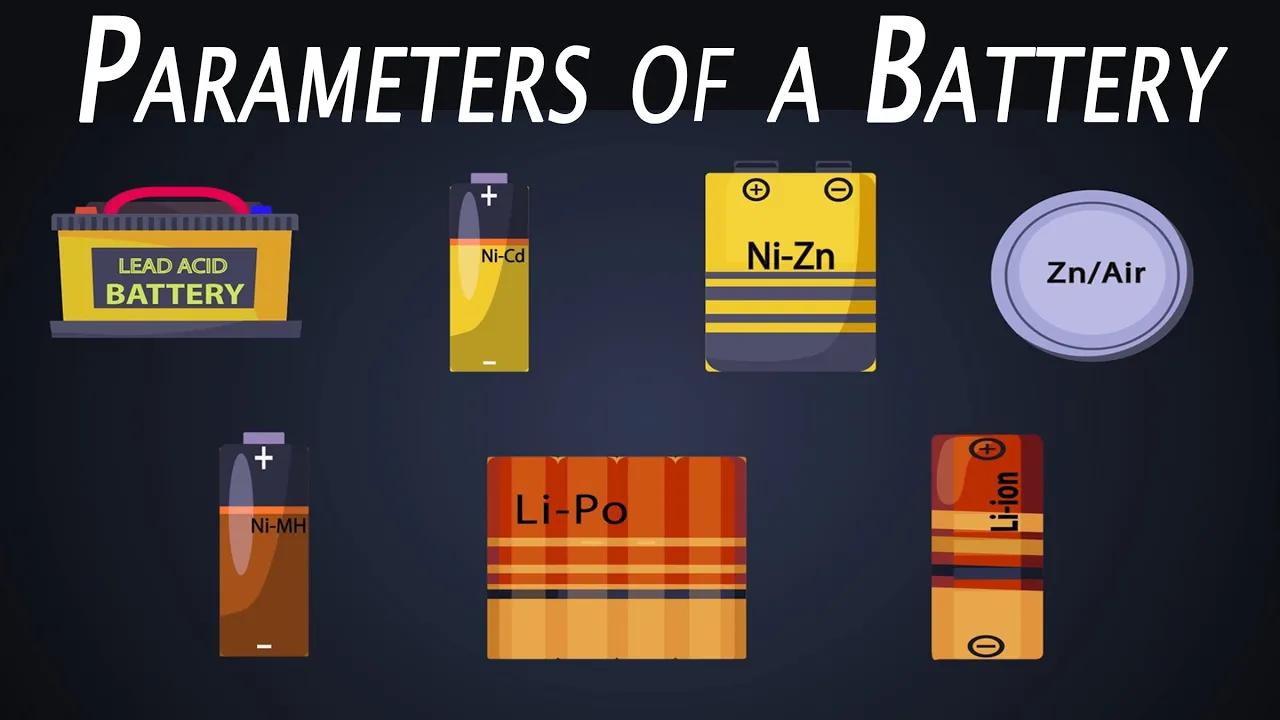
Battery research employs various electrochemical cycling techniques to characterize battery materials and performance: (1) Swagelok cells allow easy disassembly for in-situ measurements; (2) Coin cells offer better sealing but are harder to disassemble; (3) Bag cells enable operando experiments with X-ray/NMR/EPR penetration; (4) T-cells support three-electrode setups for full-cell studies. Two main control modes exist: potentiostatic techniques (controlling potential) include cyclic voltammetry for reaction identification and the Bruce-Vincent method for measuring transference numbers in electrolytes; galvanostatic cycling (controlling current) is the primary method for determining rate capability, where voltage profiles reveal reaction mechanisms—solid solution reactions show sloping profiles while two-phase reactions exhibit flat plateaus. Coulombic efficiency tracks capacity retention over cycles, with even small losses compounding significantly over time. Advanced techniques like intermittent current interruption (GIT) enable measurement of equilibrium potentials and lithium diffusivity at different states of charge.
Battery Cycling Techniques for Research | UCSB Materials Science
Added:uh yeah so my name is howie um i'm in the clement group at ucsb uh which is the same group that elias is in and today i'll just be going over some different uh some different battery cycling techniques and yeah it's kind of not really like i'm kind of focusing more on breath over depth so i'm just kind of trying to go through like a lot of different things rather than going to specifics too much um [Music] so yeah so here here are some recommended readings that i took like a lot of the figures from these two papers on electrochemical techniques by uh linda nazar and android i don't know i don't know this group but yeah this is pretty good paper too um so yeah i'm pretty sure alias would upload these slides somewhere right yep yeah so yeah so you guys will have this link later on then um okay yeah so i guess at this point when you would do battery segment techniques is when you already have like your cathode anode that you want to study right and then you want to build batteries out of them and then study them so there are a couple of different um lab scale battery formats that are commonly used so this top one on the left is called a swagelok cell this is what we personally use the most in our lab i feel like it it's a nicer format just because the the parts are reusable so it's a lot more like environmentally friendly um but it's also it's also very useful for x-situ measurements um which is when you cycle a battery to a certain to like a certain percentage of charge or discharge and then you you want to take apart the battery and you want to look study the cathode and see how it changes right so this cell makes it very easy to uh to take to take it apart and then collect the cathode and do whatever measurement you want another common format are the coin cells which is what you see over here um i think these ones are a little better in terms of their seal so they're uh they're better or they're more airtight than the sewage lock cells are but these are also harder to um take apart you need like a decrimper and even when you decrimp it it kind of makes a mess because the electrolyte goes everywhere so i don't really like this one um and also like the parts aren't really reusable either so it's kind of like a lot of waste and you have to buy a lot of different parts um another common format that people like to use are bag cells and what i've seen them personally use most is for like operando experiments because the um the bag sell it's easy for like x-rays and stuff to penetrate through so they tend to use this format and it's just it's easy to like assemble this kind so they use it for like nmr and epr operando experiments too and operando experiments or when you cycle the battery inside the spectrometer or whatever instrument that you're you're using and then so you you cycle the battery while you take measurements of it and since it's like still operating in the battery you get like a a better picture of what's going on inside the battery because in exitus methods when you take it apart you it's subjected to like relaxation so it relaxes after you stop cycling and also when you take apart the cell and collect the cell and clean it it might also like you can do some changes into the cathode so you're never really sure if it's like actually what's going on in the cathode um yeah and also this okay so last one that i want to show is this this t cell which i don't think we really use in our lab so far but um this is useful for three electrode setups and usually with three electrode setups you they tend to be used for like studies of full cells and so all these other ones that i showed the switch lock the coin cell and the uh the bag cell those are all two electrode formats and in those the the uh the counter electrode is also your reference electrode so those work well for cells for half cells so if you use lithium and sodium as your anode and you're studying a cathode or anode then those work well because the the lithium and the sodium they don't change their potential as you um like pull current through it and so they make a good reference and counter electrode but for something like a full cell where let's say you have some some cathode and graphite anode as you like as you cycle the battery the the graphite is going to change so you can't use that as a reference electrode anymore um because the potential is going to change and so your readings are going to be like not standardized um so this sort of like setup is good for these full cells uh okay yeah so once you have your battery uh you we want to cycle them or do our tests um and so there's two uh two things that we can basically do we can either control the potential or we can control the current and then measure the current or measure the potential um and so we do that with these gamma or potentio stats and some common ones that we have on campus are the the biologic so i think this is the one in the mrl the vmp3 um and in our lab we have an urban cycler so personally i like the the biologics a lot more i think they're a lot more user friendly in terms of like the software that they have and they also include a calibration board so it makes it really easy to calibrate the channels when it's like yeah when like the reading's off whereas the arbonne yes like do this whole process of um calibrating it with like a keith lee and like a multimeter and stuff it's just a pain in the ass but yeah this is so much better um so yeah so so with these potential organostats you can either control the potential or the current so i'm gonna go through uh potential techniques first where you control the potential uh just because i don't really know that much about it so i'm trying to like get it out of the way um [Music] yeah and i also have the least amount on it so okay so one of the the main experiments that you can do where you can show the potential are these cyclic photometry uh experiments and this is when we're um we're controlling the the potential so we're sweeping uh through the potential usually with the linear sweep so if you look on this plot like over time we're changing the potential so at first and in this particular plot it's decreasing first and then increasing um and when you control the cell potential like this the you track the current and it could change um so it increases once you reach like a peak where a uh like a potential reaction is occurring um and then based on the scan direction you either get a positive current or a negative current um and from this like cv looking thing um you can you can convert this to what you typically see for like for uh voltage profiles when you cycle batteries if you integrate under the curve so you can convert it to like what you would normally see so in this particular example this this is like a very well well-behaving system where you get like these two well-defined peaks but it doesn't always look like this in um like real systems or sometimes you get like some ugly shapes um yeah so this is a cv and one one useful thing that you can do with the cv is alter the or change the rate of that you're scanning through the voltage and so when you do that you get like these different shapes in the um in your cv profile and then you can derive the diffusivity of your uh your ions with this equation uh i'm not going to go over it too much but it's up here if you guys ever want to use it so i i've never actually really used cv for anything but i know they're more important for like um for for people that want to study like full systems rather than looking at just the catheter and anode usually people use cvs to study like electrolytes or separators and stuff like that they're um they're very useful in solid electrolyte studies where you're trying to understand sort of the potential range where your material is stable and i actually have a slide on this and how it's like it's actually not a very good way to look at it but yeah i should i'll go over that like this like electrolyte stability um later on thanks for bringing that up yeah so so this is one technique that you can use with um by controlling potential but another one is this uh what's called a bruce vincent method um and so in this particular technique you can measure the transference numbers in electrolytes and the transference number is basically the like the percentage of charge that's carried by your um so in this deposit would be like carried by the cation then if it's like t sub minus then it'll be like the the charge carried by the anion and so this is an important value in electrolytes in like lithium-ion batteries because we want to know how much of the charge is being carried out by the lithium ion since that's the the species that we're most interested in it's because it's the species that's diffusing between the kepler and anode which like which is based on the function of the uh the battery right so that's the most important um so in this particular method you would make a um a symmetric cell with uh so in this example we use two two lithium electrodes and then you have your um your electrolyte in the center it could be a polymer electrode or solid steady electrode or whatever right um and so at the beginning we have like this and at the beginning when everything's under equilibrium um there should be like an even distribution of all the lithium ions right um but in this technique we apply a small potential between the two lithium electrodes and then you'll see that the uh the lithium ions start to diffuse and the cations and the anions start to diffuse in opposite ends so at the beginning you have like a little uh a small difference in the concentrations but over time eventually you'll reach a steady state where there's a a linear difference and that's this is just based on the potential that you apply right so we look at the the current response in this at the beginning as soon as you apply your uh your your voltage potential or your voltage difference you get a sharp increase in the current and then over time this will flatten out until you reach an equilibrium current which is uh demonstrated about this here um and then based on this you can in an ideal case you can get the transference number just by dividing the um the steady state current by the initial current uh but in real systems we have to correct for interfacial resistances at the initial and steady state so you have to use eis which is something a technique that elias will go over later on in a different mix different presentation and so you use eis to measure the interfacial resistance at yeah the initial and the steady state so that goes over here and then you use this equation to measure the transference number um so this is one way to you know get transfer cation transference numbers which is kind of useful because then i think in eis you only get the you can't get transfer specific transference numbers since you measure the diffusion of both the cation and the anion is that right yeah you're i mean you're really only just measuring a total current response um whereas we know that a lot of the current here is due um to that lithium yeah yeah yeah so this is uh one one benefit of this method um so yeah so this is commonly used in like polymer electrolytes uh that's where i know it from um okay yeah so i think that's all i had on the potential techniques um and so i'm gonna move on to galvano techniques which is uh like controlling the current right and so this is like the the bread and butter of uh battery research this mostly what a lot of us look for when we look at like studies of uh electrodes um so governance static cycling is just when we control uh the constant a constant current and we set a a cutoff for the um the cycling yeah so so when you when you pull a constant current on your cell um if you're pulling a positive current it's going to increase the potential and then we set a cutoff potential so in this particular case i set the cutoff potential to like 4.8 volts so once it's reached once it reaches this point it goes to the discharge step and then it will pull a a negative current and this would decrease the potential until you reach a lower cut off and then it will repeat and so in this particular technique we first decide on you know what rate we want to do and so a common way that people do this is by using c rates which is just the theoretical capacity divided by the number of hours you want to finish charging so if we have a a theoretical capacity of 100 milliamp hours per gram and we want to cycle it in 10 hours so our rate would be 10 milliamp per gram right and this would correspond to a c10 rate a c by 10 rate um and if you want to do like you know cycle in 30 minutes it would be like a 2c rate right um so yeah so so this is a commonly used way uh or a common way that people determine the rate for how they uh they cycle their batteries um i yeah i don't think it's it's too useful for comparing catholics like different derivative capacities though say like i guess i didn't finish this sentence but say like if i have a cathode that has like 300 milliamp hours per gram and one that has you know 100 milliamp hour per gram a c by 10 rate for the other one would be like three times that c by 10 rate for the the smaller one and so you kind of you're kind of charging one a lot faster than the other so i i tend to just use to stick to like 10 by milliamp gram per for like all of the experiments rather than basing it on the theoretical capacity this also makes it easier for you to calculate the rate because you just get your active material weight and then you multiply it right instead of having to figure out theoretical capacity and then dividing it and all that um yeah so yeah but either way whatever you choose to do it's just it doesn't really matter as long as you like report how you did it um [Music] yeah uh okay so this is a common plot that people tend to make to to compare or to show the rate capability of their catheter anode and so they'll they'll cycle the batteries like and each point is representing the uh the discharge capacity so usually they'll start with a very low uh rate and they'll cycle it for a couple cycles and they'll um report the discharge capacity and then they increase the rate and it goes down and then they'll report the discharge capacity and so they do this for a couple different rates and then they go back to the initial slow rate um and i think this initial uh like going back to this is just to show that the material doesn't degrade with fast rates if if you like recover all your capacity so you'll notice that like at fast rates you kind of just lose a lot of capacity but uh yeah so this is a common plot that people make um you'll probably see it in a lot of papers uh could you talk potentially about why galvanostatic cycling is the bread and butter for for battery testing uh yeah so give antistatic it's um okay let's see so in potential step uh potential techniques you're you're sweeping through the potential um and this is a like this is really it's kind of like uh it's the right word like you're pushing it really you're you're pushing your system really far away from equilibrium because you're scanning through potential so fast um and it doesn't really give time for the reactions to occur whereas in anaesthetic you're like usually cycling by a small current and then this this kind of gives you time for the like all the cathodes to react before it changes potential and so you'll you'll get like your full capacity using this technique whereas the the potential techniques you you only kind of get the shapes of where or you get indications of where the reactions occur but you don't have an idea of how much um capacity you really get out of it yeah yeah um one other point to add to is that in in real devices real devices are usually operating with a relatively constant current um like let's say you know the the my my laptop battery is usually basically giving me a relatively constant current uh throughout uh operation and while there might be times where you know i might need a a higher rate in order to supply all the power required to you know power all the ram being used um overall it's applying a relatively constant uh current and that's why in in battery research we're more interested also in these these constant current methods relative to just a constant applied voltage that like how we said is going to very much limit the capacity of our battery and is not going to be as useful in a real device because our our real device can't be applying a constant voltage yeah yeah it's very true yeah thanks for adding that um [Music] yeah yeah i think the last point i want to talk about on this slide is that uh so there are actually like different ways that people tend to plot these voltage profiles so you'll tend to see these two different ways uh and this is this is the same plot on the material so one is just showing that and once i charge it um instead of going so in this one instead of going back to zero i'll go in the negative direction for the discharge what is this it's just like the discharge and so i i i prefer this way of plotting it just because you can see the the hysteresis or like the irreversibility between your um your charge and your discharge uh curves so you can see like this you know this difference in them and so the the greater the difference like the larger the hysteresis which just means that your your cell is less efficient the the bigger this gap is right and so you can't really get an idea of that from this sort of um plotting you know you can't really tell the difference i would say though that this this way of plotting is kind of useful if you're comparing um like cells or like if you're comparing the discharge plots of like different cells uh it makes the overlap easier when you see it like this um but so yeah there's like different ways to see it um and and this red line that i drew this is just representing like the the equilibrium potential that you get when you uh are like of systems and so when you cycle battery the the potential that you're reading is actually higher than the the equilibrium potential and when you're discharging it it's lower than the the then the equilibrium potential so if you do like something like jitt which i'll show in a bit you actually see like the equilibrium potential of your system and so i mean some contributions to why you don't see the equilibrium it's just due to like um like interfacial resistances or contact resistances in your in your cell and so it'll lead to like a higher potential needed to to draw current than what what like the actual equilibrium potential is uh yeah um to add a a quick point on that front it's very much how um for example with respect to like water freezing uh the freezing point of water is zero degrees celsius but you kind of need to go below zero degrees celsius to really force the system to to freeze here similarly we need to go either above uh slightly above that equilibrium potential to really extract the lithium out of the structure or slightly below to put it back in and it's those sort of just slightly above the thermodynamic equilibrium where we have to apply these sort of overpotentials these inefficiencies and those inefficiencies basically cost our battery over time yeah yeah cool yeah thanks for adding that um okay okay yeah and so the in these voltage curves you can get an idea of um like what sort of reaction is going on based on like the the shape of it so in something like a an intercalation cathode or i guess not really just intercalation but like um when you see like uh your voltage profile has a slope potential you have something uh you have a solid solution reaction going on um and this is just the potential is just based on the the slope of the free energy curve so as you change the uh the lithium concentration so as you're pulling out lithium this the slope is going to change right as you go along this so it'll be like straight down here like up here like that and so this leads to a change like a smooth change in the uh the voltage profile but if you have something like a a two phase reaction um if you look at the gibbs free energy curve so if you're at this point you'll have a certain slope right and it'll lead to certain potential but if you move over to say like the 0.5 uh 0.5 uh amounts then on your gibbs free energy you'll you'll kind of just phase separate into these two phases and so so throughout this point you get like a flat slope and so this is called a two-phase reaction um and so you see this in like something like lithium-ion phosphate and you see this in like the the the layered compounds pretty much um you also get a case where if you have like two different phase transitions then you'll you know you'll get like a change in slope but you'll get uh flat plateaus um so this yes this is just giving you an idea of like why the vulture prop voltage profiles has different shapes throughout them um it's just based on like the the reactions that are going on in like the system um sorry can i add one more thing here yeah um just a way of thinking about the that flat profile for the for the two phase system is um when we when we talk about like going back to water water boiling um the water water will boil at 100 degrees celsius but we need to basically keep adding heat to it and we can remain at that 100 degrees celsius but because of the latent heat of transformation we're going to keep adding heat to the system here you can think about that constant voltage between the alpha and the beta phase as the we keep adding heat to this as uh we actually make our phase transformation occur as we hold that constant potential and then once we get to that potential then we start to access another part of the free energy curve that allows us to basically see our voltage profile change we have a question already that so like generally would we not want these phase transitions then because like if we're like keep adding heat to access like the other part of the free energy like wouldn't that just make the battery more inefficient or something like that so i actually think the the plateaus are actually better for the batteries oh yeah so these two face it's because uh in in like the battery management systems um it wants to track like what state of charge you are at using your uh using the potential right or using like buying this case it's hard to track right since we have flat voltage i think that's the why people having problem with lfp batteries right i thought it was preferred to have um like not changing voltages that's why people don't like um like voltage decay and batteries that's why at least that's what i've read isn't it i think it's easier for the people who actually make the electronics when it's a constant voltage during discharge the only thing it's harder to do is predict the amount of charge left so maybe the software people who are trying to predict how much charge is left get more annoyed but or it's a little less accurate because they have to sort of make a model of how fast the capacity decays over different um cycles but yeah i guess different people look at it as an advantage or disadvantage yeah okay oh yeah yeah that's true um yeah did that answer your question andrew uh i'm still kind of confused but uh like how does this affect like the performance of the battery or the different phase transitions or like does it i don't know um i mean i wouldn't say it's like a a bad thing to have a slope profile if i can comment on that uh i feel like the slope profile really depends on the type of materials that you are interested in for some materials it would be uh preferential to have like a that type of plateau that you know what happened but for different system that's not a big deal if you have a slope profile so i i don't think there is a good or bad answer it really depends on the chemistry and and that's it yeah well like whether it's sloped or plateau it doesn't really change the efficiency that like that's not the thing that affects efficiency it's more so like you know because because it'll it'll be plateaued on the discharge but it'll also be plateaued on the um the charge and so it's just the difference between the potentials between the two that's what your inefficiencies are i see so yeah so if it's like plateau on charge but platform just charge them like it doesn't really affect your inefficiency okay okay yeah thank you yeah okay um and another important parameter or like an important value that we look at is the the columnic efficiencies which is um so this is basically this is just looking at the charge and the discharge capacity and so it's not really considering the um the voltage contributions to energy um saying it's just coulomb um and so in this to get the kilometer efficiency you just divide the the discharge capacity by the charge capacity um and then so people tend to plot this this sort of thing where you you show the coulombic efficiencies over like uh some number of cycles and then you'll see how the column efficiency decays over time or sorry not the kilometers that your your specific capacity decays over time um and it's kind of crazy to see that like you know even though the columnic efficiency is kind of like a straight line but you'll still get these large like decreases in uh discharge capacity over time um and so it's like to kind of like give you an idea for the numbers so if if we have a cell that has like a 99.98 kilometer efficiency after a thousand cycles it'll be like at 82 percent of the original discharge capacity just because these like inefficiencies propagate over time um and so if we have something like 99.90 which doesn't seem like that much off from like 99.98 right it will be yeah um so after a sec a thousand cycles for this you only have like 37 of the original capacity so that's kind of crazy like how much um how well engineered these batteries have to be to like last this long um oh yeah and one important point that elias brought up the other day was that like it's kind of bad to plop these kilometer efficiencies on a scale bar from like zero to 100 because you don't really get an idea of how it's changing and so it's better to like kind of zoom in on it and so that's what they're showing here uh so it's just going from like 100 to like 94 so you can see the change in it over time um [Music] yeah and and so one common thing that's like left out um or that's not considered when people look at these like columnar deficiencies is the contribution of electrolyte evaporation and so you don't really know if this is uh this like decrease in capacity is inherent to your system or it's due to just electrolyte leaking through the cells and so one way you can like rule that out is to weigh your battery before and after and so if the electrolyte is evaporating you'll you'll notice a decrease in the the mass of your cell [Music] yeah okay so one more thing uh so from your galvanic static cycling profiles there's one thing that you can do to um to kind of like examine it better so there's like hidden data in it right so if you do something called a dqdv where you take the the change in the um the capacity versus the change in the uh the potential and you plot that versus versus uh just the potential you get something that looks like this black curve and you know you'll notice that it looks very similar to cv except that the um the features a lot more distinct whereas in the cv they're like a lot broader right and this this goes back to the um the point about cvs scanning through things way too fast so it doesn't give time for the the rash reactions to actually occur so you won't see like these distinct peaks um but from this like the qdb plot you can kind of see point out the distinct features in the voltage profile so around like 4.1 or whatever you get you see like this change in the slope right it's like these little bumps and stuff like that um and so this is something in a in addition that you can uh there's something another way to like analyze your uh bolsters profiles um to scale like specific potentials that these reactions are occurring at and like uh transitions and phase changes uh yeah okay yeah so this is going back to um elias's point about cds being commonly used to to measure electrolyte stability so it turns out that this might not actually be the best way to um to measure the stability because it's you know it's not in equilibrium in these cv scans because of the fast scan rate and um in the in the cvs experiments usually the electrolyte is just sandwiched between like say lithium metal and some some other metal electrode and then so the contact between the um the metal electrode and the electrolyte might not be perfect and so this can lead to like um like slow decompos slow decomposition with uh the electrolyte of the electrolyte right and so a better way to do this is to actually mix your electrolyte with um carbon it's mixed with carbon and if if it if needed you mix it with the binder as well and so you you pretty much make like a cathode out of your your solid electrolyte and then you cycle that versus lithium in with um with liquid electrolyte in a separator and so in in this sort of experiment you can see when the uh your cathode is starting to decompose yeah the potentials that are starting to decompose that is like where you're starting to get a lot of current so in this specific example of uh na3ps4 um they they calculated the stability window to be like 2.3 like 1.5 and in their actual experiment they get a closer value to it so in the charge which is the red curve you see that as soon as they start cycling the battery the potential shoots up to the second two point seven or something two or six or something like that and then it like dips down so um so there's a little dip that you see it's due to uh like a nucleating event which decreases the potential and so at this point it starts to decompose because you can you can draw out current from the uh the cathode so if it was stable then you wouldn't get any potential here or you wouldn't get any current for it and then the potential would keep increasing and so this gives them the um the the upper limit of their voltage stability which is like around 2.5 which is you know kind of similar to what they see here um then in discharge at low potentials you can do the same thing where you uh discharge with the negative current and then you see um like you get nickel negligible uh current up to like point nine um and so that's that's the stability window that they got using this of an aesthetic technique which is a lot uh narrower than something you would see in like a cv because cds uh yeah it's just like they overestimate the stability windows um so uh yeah that that that's a great explanation um also on the um the the side the the left side that's gonna come from a dft calculation a dft calculation where basically you're you're calculating the energies and energy of formation of a bunch of different phases and then as you sweep potential you can basically apply that voltage uh to the charge of your lithium and that will tell you about the chemical potential of of or in this case sodium the chemical potential of sodium in your structure and it will tell you basically at a certain point there will be like a crossover with a different phase and at that crossover the chemical potential of sodium gets reduced if you go into some sort of different phase and so that's why outside of that stability window your your na3ps4 is going to break down into something like an a2 ps3 and sulfur or um or some of these other phases um but yeah uh cv will will really just overestimate and tell you yeah my materials stable up to five volts but in actuality it's it's really not it's stable only up to like 2.6 you know yeah yeah yeah i kind of just like gloss over like theoretical stuff because i don't really understand it yes i just get what i want window but yeah thanks for that explanation um yeah so okay there's that um and then i think the last thing i wanted to go over was uh gitz i actually don't know like that much about it so it's just kind of like a short introduction because i've never really done this before um but gitc is a technique where you you implement these um current pulses into your system um so you'll do an initial current pulse and then the the potential will rise if you're like charging and then you let the the cell rest so you introduce the rest period first number time and then your um your cell should drop to the the equilibrium potential over time and then you keep repeating this and so you keep doing this until you hit like that certain cutoff voltage that you determine and then on discharge you like reach your lower limit um and so what this does is one it gives you the the equilibrium potential um which is like the the bottom so if you draw like a bottom line that connects all the bottom points this should ideally be what your um your equilibrium potential is on charge and then for the discharge it would be all the the top line um and i mean in theory it should overlap your these two lines should overlap but that's also dependent on how long you let it rest so the longer you let it rest the more representative it is of your equilibrium potential um so that's that's one thing you can see from this but another thing you can do is calculate the diffusivity of the uh the lithium ions and so to do that you use this equation over here um where it has like all these parameters here and so basically the the values that you're getting from this experiment is the delta e s of delta e t which is these two values uh and from that you can calculate the um the diffusive sorry the diffusivity of the uh the lithium ions at different points in the um you know different states of charge so you get like one calculation for this point and this point this one and so on so forth right um but one downside about this technique is that it takes a very long time you know depending on how long you want to wait for and like how long you do your current pulses um it could take like months for an experiment and so i saw this one paper on the archive on the chem archives um it's called like an intermittent current interruption technique it's really cool if you want to read into it and so it's just like a fast alternative to git um and they show that they can do this with with operando experiments where it's like more it's like an expensive experiment so you want to do like these faster experiments and so they they did this with um with operando xrd and they can show that they can show the different uh diffusivities at different like states of charge and how that corresponds to like changes in the um the crystal structure um yeah so i thought that was pretty cool but i didn't really understand it too much so i'm just throw it up here if you want to read into it more uh yeah i think that's the end of my presentation um i don't know you guys have any questions thank you howie questions hi howie so in this equation for the diffusion constant you have here so you say n sub m is the number of moles is that the number of moles of your charge carrier or of something else i believe that's the number of moles of yeah your charge carrier in in your uh electrode more questions i um so becca added something very nice to the to the chat describing um the how voltage plateaus behave and and how they're not an indication of long-term stability um there is one thing i wanted to mention on the on that side of things um and it's sort of goes again towards the advantages of that constant sloping behavior or the the two the the flat voltage plateaus um there is a sort of difference uh often on the longevity uh based on repeatedly transforming your material so in some ways you can have a two-phase reaction let's say especially if you have sort of different molar volumes for those different phases can lead to uh expansion and contraction of particles in a two phase when you have a two phase reaction where and and that that um again that might be occurring uh discontinuously or heterogeneously uh in a particle so you might have like on one side of the particle some nucleating part that that is this this new phase that exists at lower potentials uh and and it might be nucleating on the opposite side of your your particle simultaneously and if you have different molar volumes those are going to cause a lot of stress within the initial initial particle which can cause cracking in which basically once it cracks it exposes new parts of your actual particle to the electrolyte which can then basically consume part of your electrolyte and start to make your your over potential start to increase because it's harder to move all the lithium through your structure or through your battery when when you have what don't have as much electrolyte on the solid solution side of things uh you have it's usually a much more steady uh change and just sort of um you can think of particles just as like breathing and and expirating because they're they're sort of volume uh their their molar volume is slowly increasing as you stick lithium into there and then slowly decreasing as you uh pull the lithium back out so it can be kind of a more steady change in that way so on the longevity side it's not really about specifically the the voltage profiles as much as it is about um having a microstructure that's just not going to uh fatigue and and actually like fracture throughout the cycling process yeah i guess i'd consider that one of the difference between um an intercalation compound compared to a conversion compound so usually for us folks who work on um electrodes where we're trying to get the lithium to insert and then come out um reversibly uh we yeah we're looking for one where the the structure doesn't change that much usually it expands by about 10 when you put the lithium in um and decrease by 10 when you take it out um and for something like lithium cobalt oxide which is like the first successful lithium-ion battery cathode that that 10 change did not um impact long-term cycling you get really stable um cycling at long terms but if you look at something like a conversion compound which is um even more distinct phase change between lithiated and unlithiated you get exactly what elias is talking about like the um certain particles getting uh isolated from the rest of the material and your and your capacity drops a lot um one one thing though um a a two-phase reaction doesn't necessarily i think imply that something is not an intercalation compound oh totally because yeah lithium cobalt oxide is an intercalation mechanism which still has the really flat uh voltage plateau um so i don't know can you tell if it's a conversion reaction by looking at the voltage plateau i don't know if you can yeah i'm not i i i'm not sure i'm not sure it might be a little bit howie can you go back to that that slide i think all um conversion cathodes are have platzos but just because it has a plateau doesn't mean it's a conversion that type of thing that would make sense yeah yeah because i think it'll probably look something a little bit more like panel f um where uh you'll you'll be going undergoing a few different uh phase changes throughout your your system right like if you if you look at uh c c we're dealing with a a miscibility gap uh which is just basically when we have one single free energy curve that where you can draw a common tangent between two points that alpha and that beta point at x1 and x2 respectively whereas on a uh that still represents sort of a two-phase reaction but really it's it's a miscibility gap it's the same phase that just has different like lithium content within it so it'll it'll be the same structure um if you look at e e you're looking at now different gibbs free energy curves which will uh really correspond to usually um like genuine structural changes within your your material because you're looking at a different crystal structure that that is more stable at different uh ranges of lithium concentration so um i think that you're probably in a conversion material dealing with uh different uh different gibbs free energy curves um but in in in the intercalation compounds where you have a two phase reaction i think you're still dealing with a single gibbs free energy curve though a lot of the um multi-electron redox materials do show the multiple plateaus at whatever we could look at a lithium sulfur batteries to look at the conversion one but i'm not an expert yeah neither i just do solid electrolytes um cool uh any more questions nobody all right all right well i'm going to stop the recording there
Up Next

How to Identify Redox Reactions: Oxidation Numbers Explained
@melissamaribel
559.1K views•2018-04-23

Biocatalysis and Catalysis in Islatravir Synthesis | Merck Webinar
@SCIwheresciencemeetsbusiness
675 views•2020-10-08

1H NMR: Determining Number of Peaks from Structure
@MSJChem
59.2K views•2017-04-06

Edible Water Bottles: A DIY Guide to Sodium Alginate Spherification
@ryan
10.5M views•2019-06-21
Related Study Plans & Knowledge Roadmaps
Structured learning paths in Chemistry