






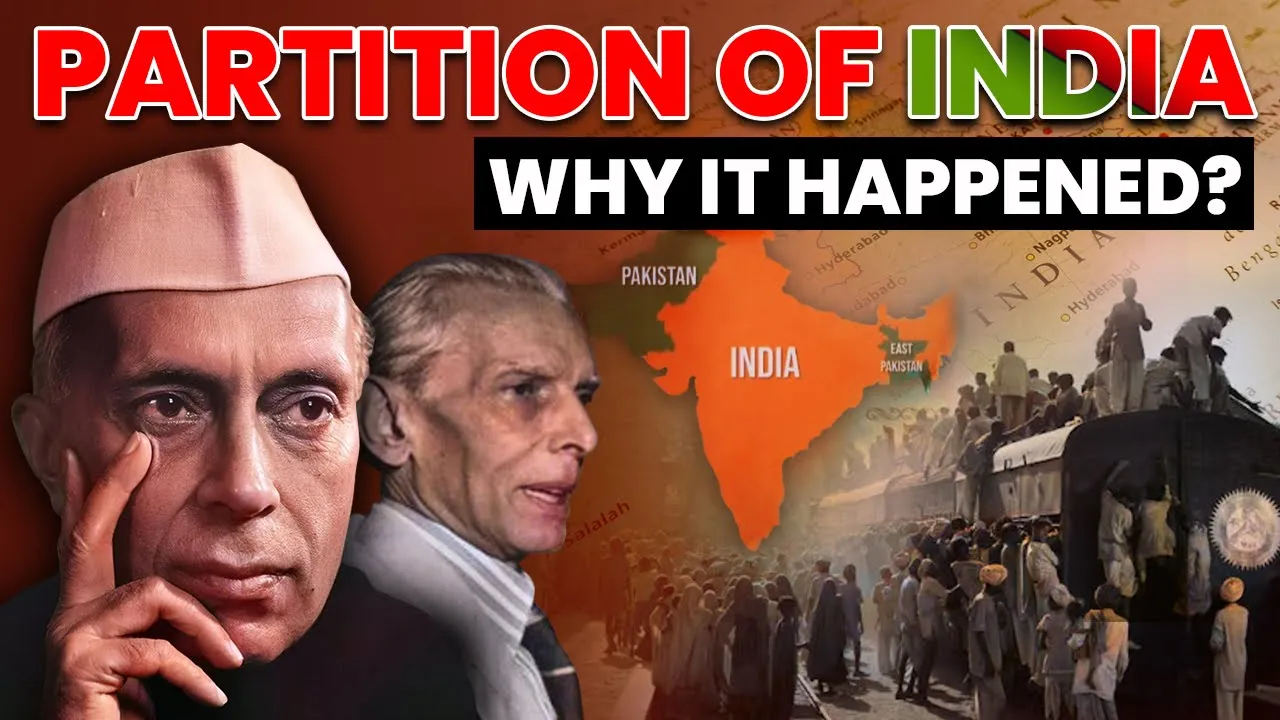


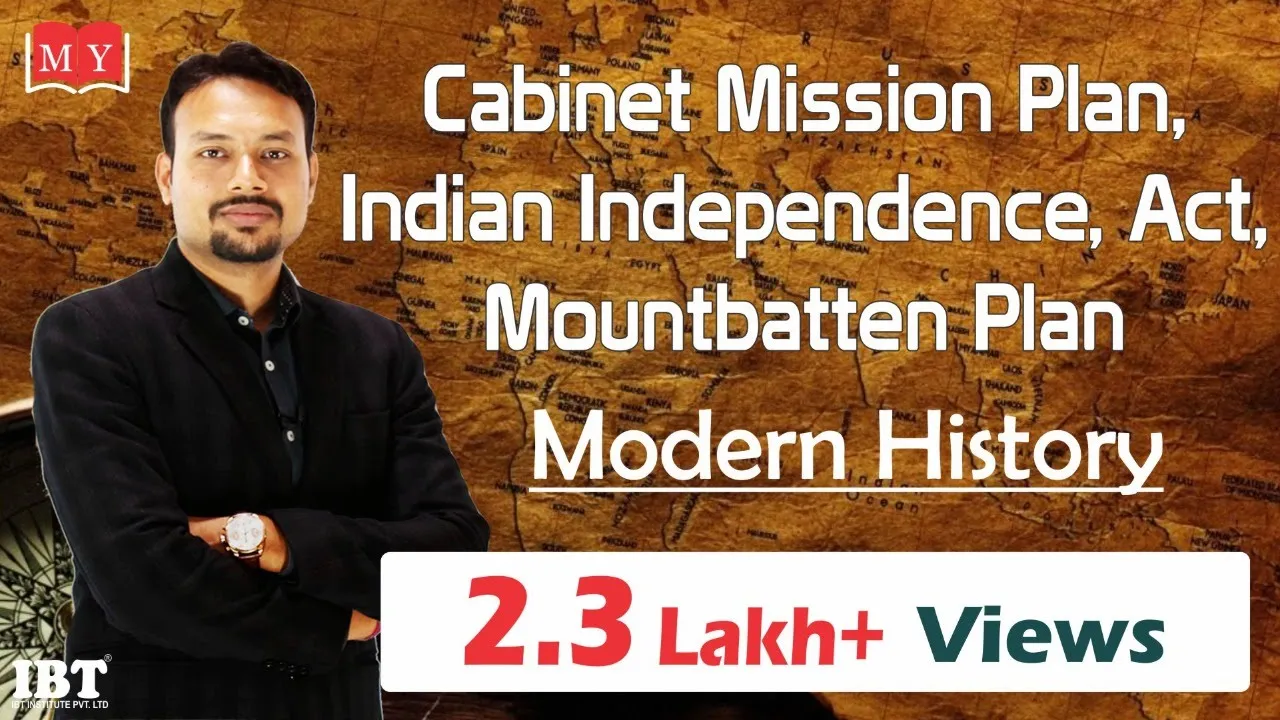



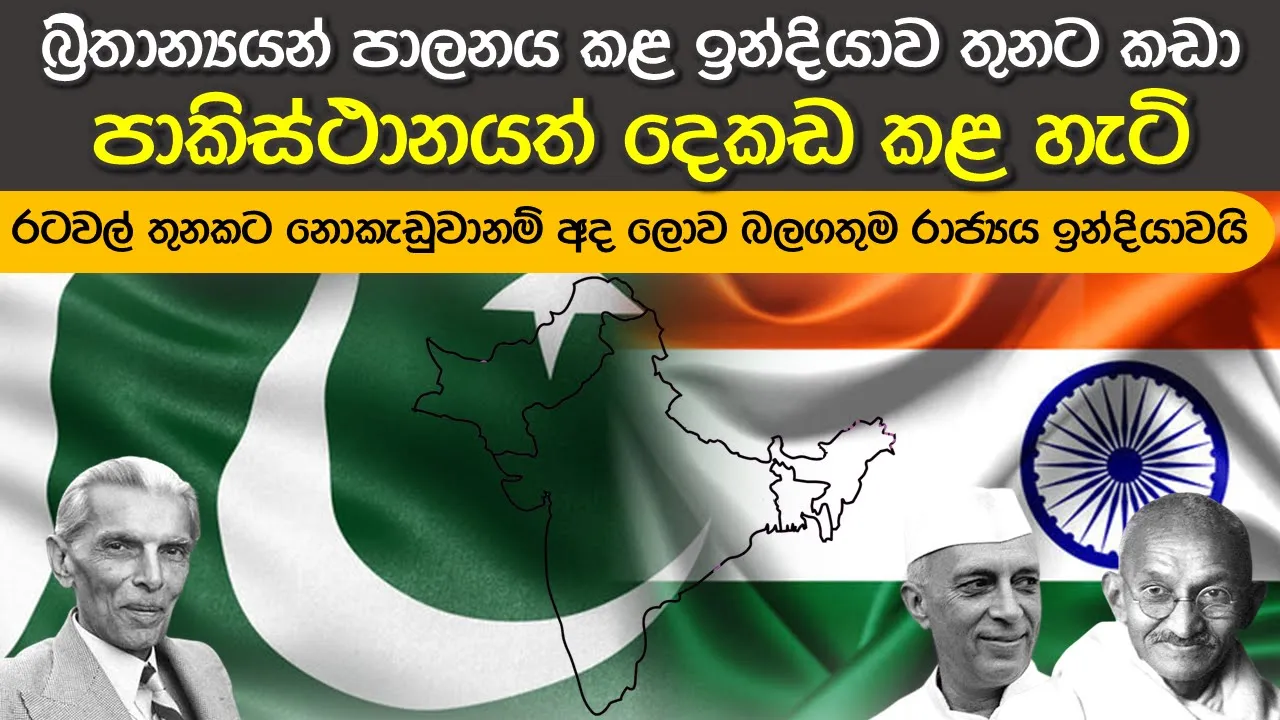






The Mountbatten Plan, announced by Viceroy Lord Mountbatten on June 3, 1947, established that British power would be transferred to India through partition into two independent dominions—India and Pakistan—rather than maintaining a unified nation; the plan allowed the people of Punjab, Bengal, and Sindh to decide their own futures through a Boundary Commission, while ensuring immediate transfer of power before the Constituent Assembly completed its constitutional work, thereby enabling independence earlier than expected.
Lord Mountbatten's Partition Broadcast: June 3, 1947 Plan
Added:The history of the British Raj and the administrative structure of colonial India in the first half of the 20th century.
The political rivalry and differing visions of the Indian National Congress (under leaders like Mahatma Gandhi and Jawaharlal Nehru) and the All-India Muslim League (led by Muhammad Ali Jinnah).
The ideological origins of the 'Two-Nation Theory' and the growing demand for a sovereign state of Pakistan.
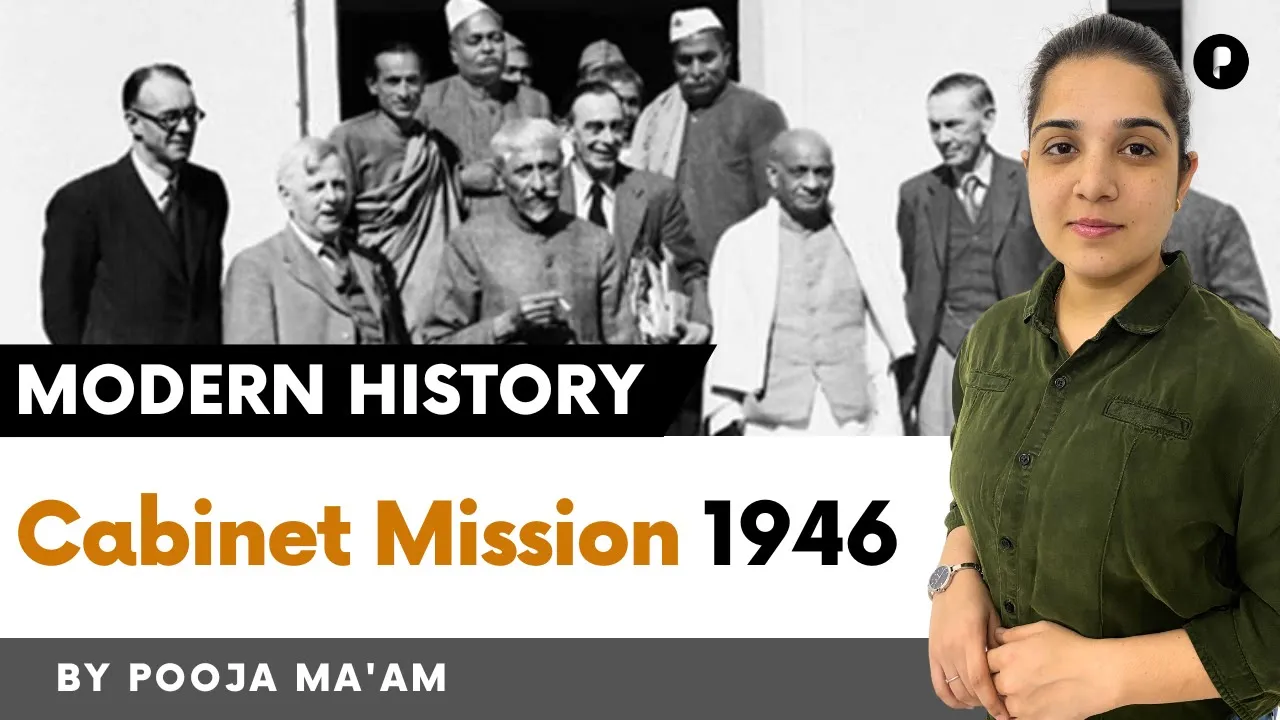
The failure of the 1946 Cabinet Mission Plan to establish a decentralized, united Indian federation, which set the stage for partition.
The legislative enactment of the Indian Independence Act 1947 by the British Parliament.
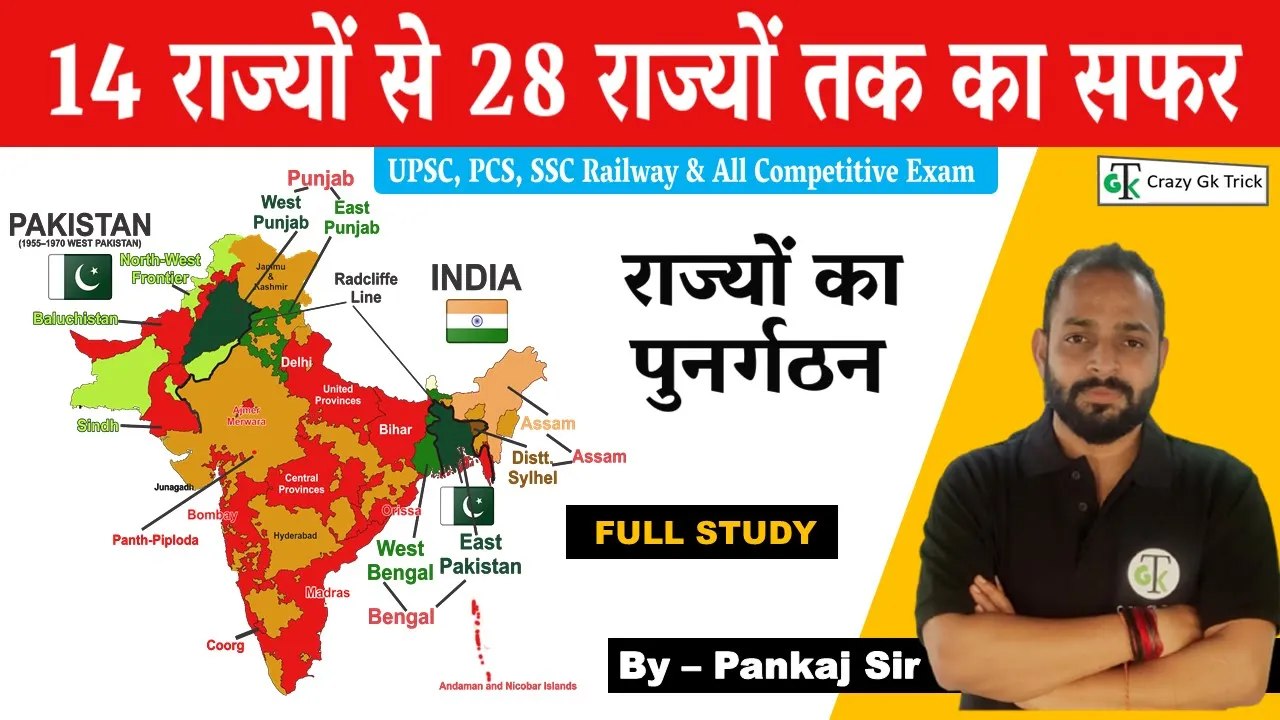
The creation of the Boundary Commissions and the controversial drawing of the Radcliffe Line, which demarcated the new borders.
The immediate humanitarian catastrophe of Partition, involving the displacement of over 14 million people and widespread sectarian violence.
The complex process of integrating the autonomous Princely States (such as Kashmir, Hyderabad, and Junagadh) into the new dominions of India and Pakistan.
The long-term geopolitical legacy of Partition, including the Indo-Pakistani wars and the ongoing regional tensions in South Asia.
21K views266likes8:48Original Release: 2016-06-05
a statement will be read to you tonight giving the final decision of His Majesty's Government as to the method by which power will be transferred from British to Indian hand but before this happens I want to give a personal message to the people of India as well as a short account of the discussions which I have held with the leaders of the political parties and which have led up to the advice I attended to His Majesty's Government during my recent visit to London since my arrival in India at the end of March I have spent almost every day in consultation with as many of the leaders and representatives of as many communities and interests as possible I wish to say how grateful I am for all the information and helpful advice they have given me nothing I have seen or heard in the past few weeks has shaken my firm opinion there was a reasonable measure of goodwill between the communities a unified India would be by far the best solution of the problem for more than a hundred years 400 millions of you have lived together and this country has been administered as a single entity this has resulted in unified communications defence postal services and currency an absence of tariffs and customs barriers and the basis for an integrated political economy my great hope was that communal differences would not destroy all this my first course in all my discussions was therefore to urge the political leaders to accept unreservedly the Cabinet mission town of the 16th of May 1946 in my opinion that plan provides the best arrangement there can be devised to meet the interests of all the communities of India my great regret it has been impossible to obtain agreement either on the cabinet mission plan or on any other plan that would preserve the unity of India but there can be no question of coercing any large areas in which one community has a majority to live against their will under a government in which another community has a majority the only alternative to coercion is partition but when the Muslim League demanded the partition of India Congress used the same arguments but demanding in that event the partition of certain provinces my mind this argument is unassailable in fact neither side proved willing to leave a substantial area in which their community have a majority under the government of the other I am of course just as much opposed to partition with provinces as I am the partition of India herself and for the same basic reasons for just as I feel there isn't Indian consciousness which should transcend communal differences so I feel there is at Punjabi and Bengali consciousness which has evoke the larger to their product and so I felt it was essential that the people of India themselves to decide this question the partition the procedure been able in them to decide themselves whether they want the British to hand over power to one or two governments it's set out in the statement which will be read here but there are one or two points on which I should like to add a note of explanation it was necessary in order to ascertain the will of the people of the punjab bengal and part of SM the lay down boundaries between the muslim-majority areas and the remaining areas but I want to make it clear that the ultimate boundaries will be settled by a Boundary Commission and will almost certainly not be identical with those which have been provisionally adopted we have given careful consideration to the position of the six this valiant community forms about an eighth of the population of the Punjab but they are so distributed that in a partition of this province will inevitably divide it all of us who have the good of the Sikh community apart are very sorry to think that the partition of the Punjab which they themselves desire cannot avoid splitting them their greater or lesser extent the exact degree of the split will be left to the Boundary Commission on which they will of course be represented the whole plan may not be petty but like all plans its success will depend on the spirit of goodwill with which it is carried out I've always felt that once it was decided in what way to transfer power the transfer should take place at the earliest possible month but the dilemma was but if we waited until a constitutional set up for all in done with agreed we should have to wait a long time particularly a partition where decided on whereas if we hand it over power before the Constituent Assembly's have finished their work we should leave the country without a constitution the solution to this dilemma which I put forward is that is Majesty's government should transfer power now to one or two governments of British India each having Dominion status as soon as the necessary arrangements can be made this I hope will be within the next few months I am glad to announce these Majesty's Government have accepted this proposal and are already having legislation prepared for introduction in Parliament this session as a result of these decision the special function of the India office will no longer have to be carried out and some other machinery will be set up to conduct future relations between his majesty's government and in them i wish to emphasize that this legislation will not impose any restriction on the power of India as a herb all the two states if it is partitioned to decide in the future their relationship to each other and to other member states of the British combo thus the way is now open to an arrangement by which power can be transferred many months earlier than the most optimistic of us thought possible and at the same time leave it to the people of British India to decide for themselves on their future which is the declared policy of His Majesty's Government I have made no mention of the Indian states since the new decisions of His Majesty's Government are concerned with the transfer of power in British India if the transfer of power is to be effected in a peaceful and orderly manner every single one of us must Bend all his efforts to the top this is no time for bickering much less for the continuation in any shape or form of the disorders and lawlessness of the past two months do not forget what a narrow margin of food we are all working on we cannot afford any toleration of violence all of us have agreed on them whichever way the decision of the Indian people may go I feel sure any British officials or officers who may be asked to remain for a while will do everything in their power to help implement that decision his majesty as well as his government have asked me to convey to all of you in India there are sincere good wishes for your future and the assurance of their continued goodwill I have faith in the future of India and I'm proud to be with you all at this momentous time Maor decisions be wisely guided and made ad carried out in the peaceful and friendly spirit of the Gandhi Jinnah epi [Music]
Up Next
5:49
The 1947 Partition of India: Causes and Lasting Legacies
@TEDEd
4.6M views•2021-06-21

33:02
The Great Schism of 1054: Causes and Consequences
@SacredCathedrals
113.5K views•2026-02-19
91:57
The Geopolitics of the Ukraine War and the Rise of Global Autocracy
@JordanHarbingerShow
468K views•2025-04-19
17:05
Understanding the Cold War: Superpower Conflicts and the Road to Détente
@OverSimplified
46.1M views•2019-01-24
Related Study Plans & Knowledge Roadmaps
Structured learning paths in History
history
Byzantine Iconoclasm: Theology, Art & Politics
01Foundations of Byzantium and Early Christian Images
02The First Iconoclasm: Leo III and the Crisis of Images
03Empress Irene, Nicaea II, and the Second Iconoclasm
+ 2 more learning modules
9h5 modules
Explore Roadmap
history
Iranian Revolution (Causes, Events & Legacy)
01The Pahlavi Dynasty and the Roots of Discontent
02The Spark of Rebellion and the Rise of Khomeini
031979: The Fall of the Shah and the Climax of the Revolution
+ 2 more learning modules
8h5 modules
Explore Roadmap
history
Mali Empire: Mansa Musa, Trade & Timbuktu
01Foundations of the Mali Empire
02The Trans-Saharan Gold and Salt Trade
03The Reign and Pilgrimage of Mansa Musa
+ 1 more learning modules
6h4 modules
Explore Roadmap
history
1947 Partition: Politics, Borders & Legacies
01Foundations of British India and the Divide
02The Political Negotiations and the Mountbatten Plan
03Drawing the Boundary: The Radcliffe Line
+ 2 more learning modules
8h5 modules
Explore Roadmap