















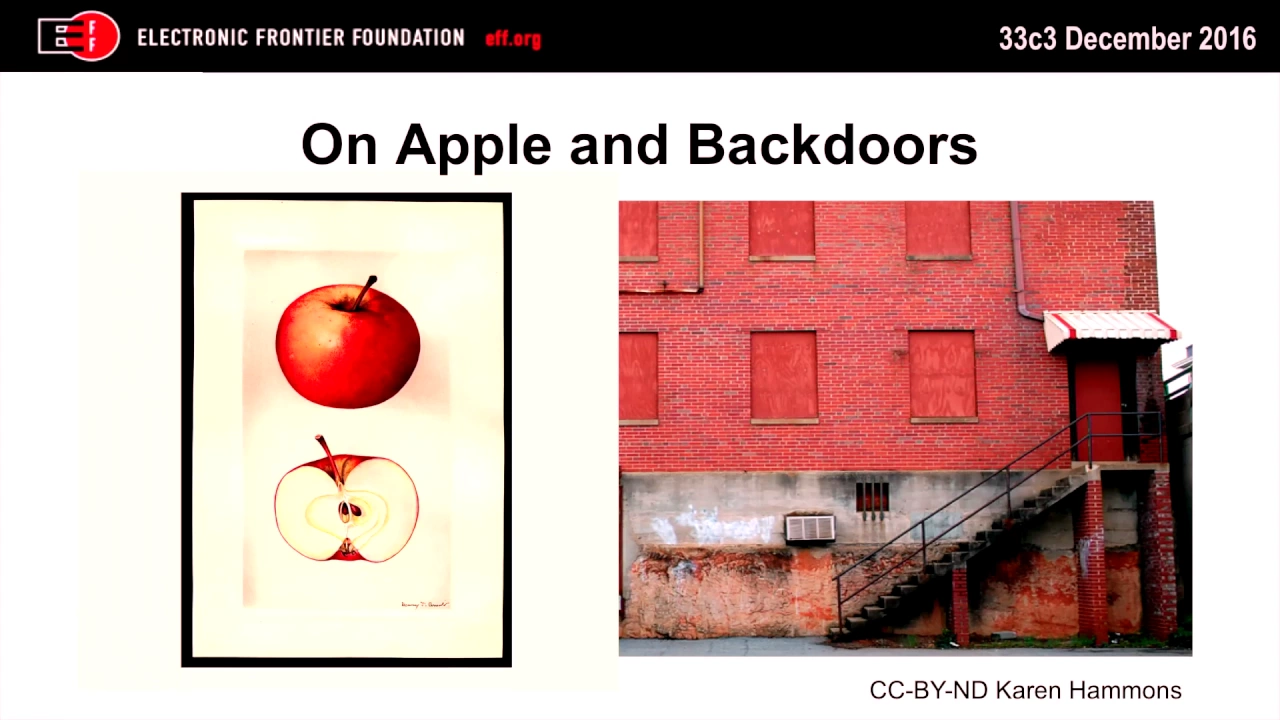









Strong encryption protects users' sensitive data but creates challenges for law enforcement investigations, as demonstrated by the FBI's inability to access an iPhone belonging to a terrorist without weakening Apple's security features; this debate involves complex trade-offs between individual privacy rights and public safety concerns, with experts warning that creating backdoors could compromise all users' data and set dangerous precedents for government surveillance.
Encryption Policy, Privacy, and Law Enforcement: The Going Dark Debate
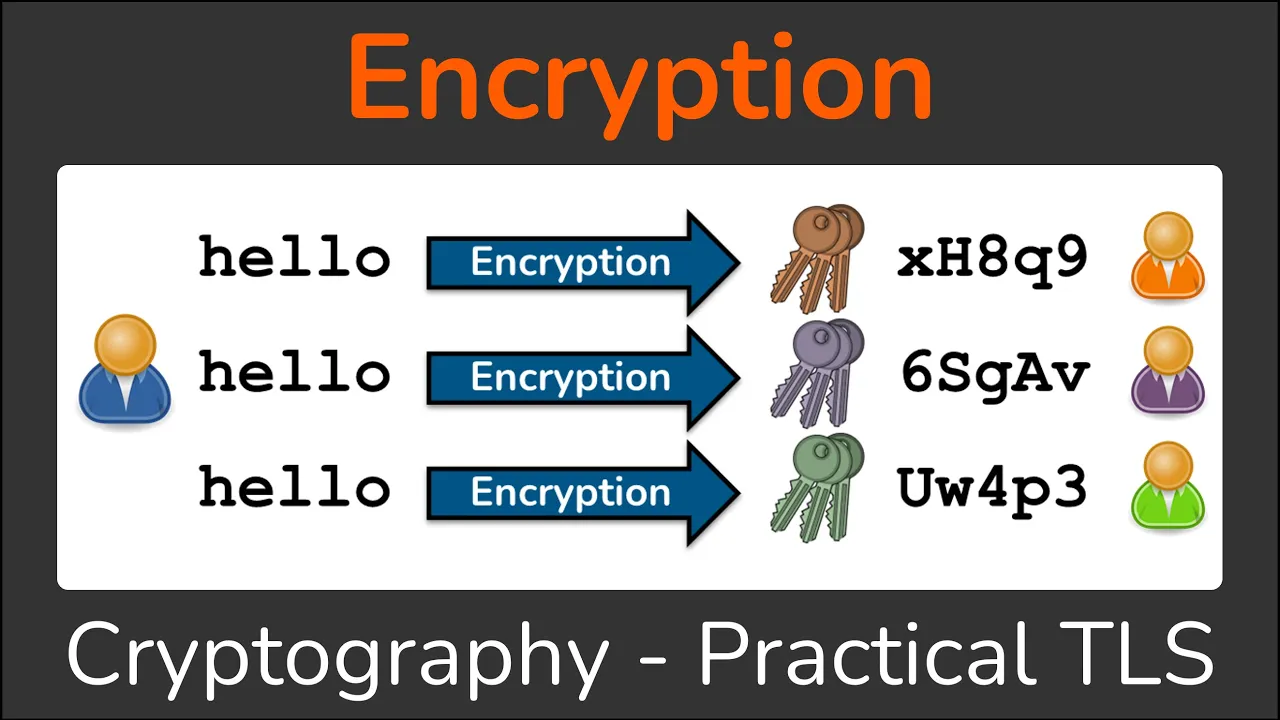
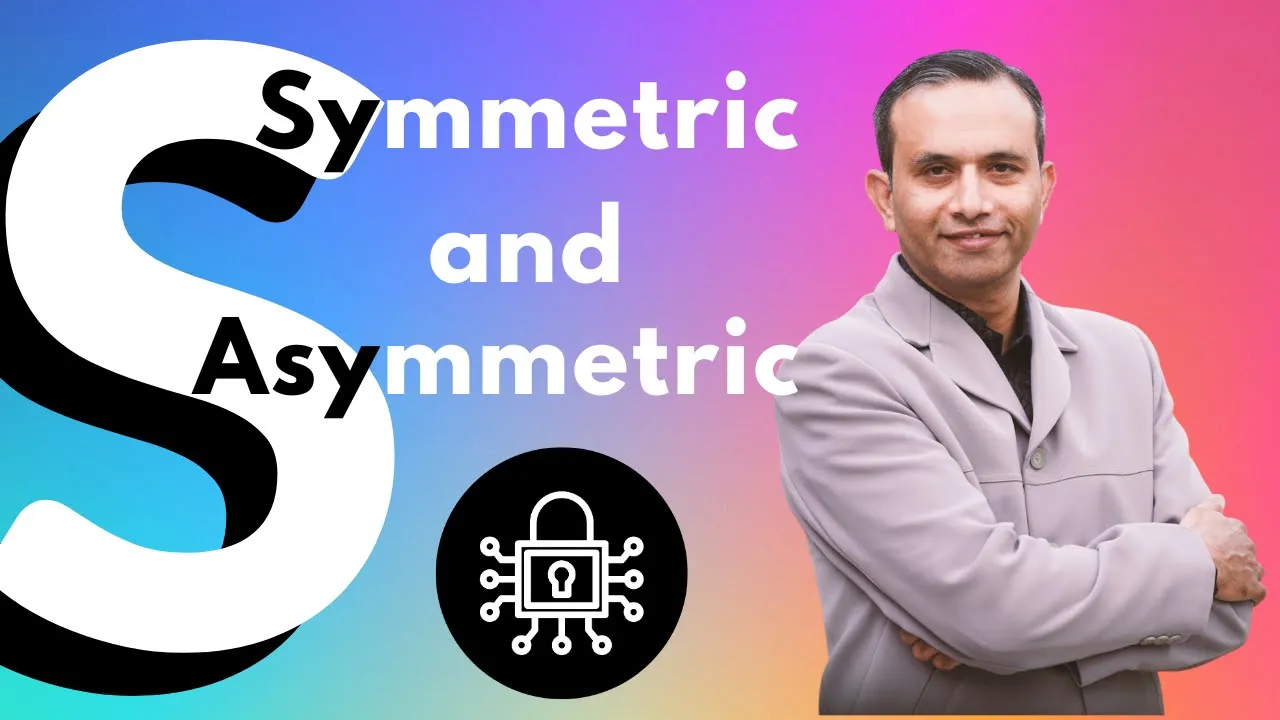
Added:Basic principles of cryptography, specifically the difference between symmetric and asymmetric encryption, and how data is secured at rest versus in transit.
The legal frameworks governing privacy and surveillance, such as the Fourth Amendment in the United States, which regulates search warrants and digital evidence collection.
The concept of 'end-to-end encryption' (E2EE) and why it technically prevents third parties—including the service providers themselves—from accessing plaintext communication.
The fundamental tension in cybersecurity between system security (preventing unauthorized access) and national security/law enforcement access.
The technical feasibility and security risks of 'exceptional access' mechanisms, such as key escrow or escrowed decryption systems.
Comparative international policies and legislation on encryption, such as Australia's Assistance and Access Act or the UK's Investigatory Powers Act.
The mechanics of client-side scanning and other modern proposals aimed at detecting illegal content without breaking end-to-end encryption.
The role of corporate ethics and digital governance in tech companies when navigating government demands, user trust, and global privacy standards.
14.3M views151.8Klikes18:00Original Release: 2016-03-14
Encryption. The best way to keep people from reading your email short of making the subject line forward forward forward forward hilarious joke from Uncle Walter. No one's reading that. You may not think about encryption much, but it is pretty fundamental to all our lives.
Almost everything you do today uses a code. Every time you log on to an internet service like Twitter or Facebook and send your password, every time you log into internet banking, all of that information is protected using encryption code.
That's right.
Encryption can protect the things most important to us. Uh our financial information, health records, dickpicks, trade secrets, classified government records, dickpicks, our physical location, the physical location of our dicks, credit card information, dickpicks, and pictures of our dicks.
And and it's not just our data. Lots of things have computers in them now, even cars. And last year, two hackers showed a writer from Wired how they could disable his car on the interstate.
Do it. Kill the engine.
So, we're killing the engine right now.
Actually can't accelerate.
I turned on my hazard lights, but I was still stuck in the right lane with no shoulder to escape onto.
Guys, I'm stuck on the highway.
What he say?
I don't know. I think he's panicking.
Yeah, no He's panicking. You killed his engine on the freeway. Those hackers seem like they've played so many video games, they've forgotten that cars are actual objects carrying living people. But but while it can keep us safe, it's important to note encryption also has a downside. It's become so ubiquitous, it's making it impossible for law enforcement to gain access to certain information. Or as FBI director James Comey puts it, technology has become a tool of choice for some very dangerous people. And unfortunately, the law has not kept pace with technology. And this disconnect has created the significant public safety problem we have long described as going dark. Yes, going dark. It's a deliberately ominous sounding term because you wouldn't get so scared if they just called it bad guy go bye-bye.
And and you may have heard about this going dark problem recently related to one particular work iPhone belonging to Sed Farooq, the San Bernardino gunman who with his wife killed 14 people last December.
The FBI needs Apple's help because the security settings on the phone lock the device if a password is entered incorrectly too many times. It may even erase all the data on the phone. The FBI wants Apple to upload software that lets its analysts get around the security features and take as many shots at the passcode as necessary.
Yes, the FBI has a dead terrorist cell phone that they cannot get into. It's running a newer version of Apple's operating system where the data is fully encrypted and can only be accessed by unlocking the passcode. Even Apple can't currently get into the phone. So, the government is essentially demanding that they come up with a cheat code for their top selling iPhone game, what's my passcode? Rated E for everyone. Apple is currently fighting that order in court, arguing it shouldn't be forced to undermine the security features that protect its encryption. An argument which some have found troubling.
I think Apple leadership risks having blood on their hands. How in the hell you can't access a phone, I just find baffling. Any system that would allow a terrorist to communicate with somebody in our country and we can't find out what they're saying is stupid.
That is the angriest Lindsey Graeme has been about a cell phone since his name got autocorrected to linty grandma.
Stupid phone. Learn my name. I am your boss.
Stupid. So dumb.
This this issue has even been brought up on the campaign trail with predictable results.
What I think you ought to do is boycott Apple until such time as they give that security number. How do you like I just thought of it. Boycott Apple.
I just thought of it. I just thought Give me another one. Israel Palestine.
Make him wrestle in those fake sumo costumes. Done. Done. Being president is easy.
But I will say this is a rare case where Donald Trump's outrage is almost understandable because Apple's refusal to help crack a terrorist phone can seem hard to defend, especially when, like John Miller of the NYPD, you think about it incredibly simplistically.
There's no bank, there's no safe company, there's no vault, there is no apartment, there's no door that can't be penetrated with a lawful order from a US court.
Okay, point taken. But was penetrated the best word choice there? The government needs to be able to penetrate you at any time. If we feel you need penetration, we have to be able to penetrate you quickly and effectively here and now. Why is everyone getting so uptight about this?
But this is not simple. It's a hugely complicated story with massive implications. And once we get to the end of it, you may not feel the same way that you do now. Because to that man's point, an encrypted phone is not really like a bank or a safe. If you penetrate a safe, you've only penetrated that safe. But a code to open a phone could be modified to open many, many more phones. A fact that does not escape Apple CEO Tim Cook.
No one, I don't believe, would want a master key built that would turn hundreds of millions of locks. Even if that key were in the possession of the person that you trust the most, that key could be stolen. The only way we know to get additional information is to write a piece of software that is the software equivalent of cancer.
Okay? Now, on one hand, giving your phone cancer sounds bad. But on the other hand, the fault in our stars would have been amazing if Shayen Woodley was playing a terminally ill iPhone 6S. No, god damn it. I won't let you go, Hazel.
I'll hold down the power button and the home button simultaneously forever.
And to be clear, Apple hasn't been completely uncooperative. They've already given the FBI the information they could access, including Farooq's iCloud backups from about 6 weeks before the attacks. But they are refusing to create the cancerous program the FBI wants. Not because it can't be done.
They say it would take six to 10 engineers up to four weeks to do it or you know a standard genius bar appointment. But but Apple worries that once they make that program they can't keep it 100% safe. And the FBI and its supporters can be weirdly dismissive of that issue in ways that indicate they either don't fully understand how technology works or are pretending not to. What the government is asking Tim Cook is, you designed it. You can design your way out of it for this one time. If you figure out the formula and crack open this phone to the point that we can then try codes against it, you can tear that formula up to toss it in a fireplace and throw it away.
Oh, come on. You know, Apple is not writing its code on paper next to a fireplace. They're a cuttingedge technology company, not Lord Granthm.
And and as for the notion Apple can throw the formula away after the FBI uses it once, nobody seriously thinks that is going to happen.
Apple says if it complies, requests from law enforcement could come for another phone an hour later, opening a Pandora's box. Apple officials pointed to the Manhattan District Attorney who says he has 175 iPhones with potential evidence from serious crimes, including murder, that he cannot open.
Exactly. There are over 175 other phones in line just in New York. So, this is bound to set a precedent. Think of the government as your dad. If he asks you to help him with his iPhone, be careful because if you do it once, you're going to be doing it 14 times a day. and and whatever happens in this case will have ramifications because the FBI ultimately wants Apple and the entire tech industry to have its encryption always be weak enough that a company can access customers data if law enforcement needs it. So it might be the iPhone today, uh an Android phone tomorrow, and a Blackberry the day after that, assuming that the day after that is in 1998.
And and you might be wondering, but look, if there's a warrant, do these companies really have a choice? To which the answer, surprisingly, might be yes, they do. The government is currently citing the All Ritz Act of 1789, which essentially mandates you must cooperate with investigators if they ask you to do something. But courts are split over whether it applies in cases like these.
And there's not really any more recent law covering this area, which is not entirely an accident because we have been down this road before. The government grappled with encryption two decades ago, and in the early '9s, they even came up with what they thought would be the ideal solution. The government will press private companies to use a so-called Clipper chip in their computers, which would allow authorities to monitor coded messages.
Now, that Clipper chip was theoretically perfect. Your information could be encrypted, but the government would have an access point when it needed it. It was like giving your house key to a trusted neighbor. You can trust Mike.
He's only going to try on your underwear if it's absolutely necessary.
There was just one problem with that chip. A computer scientist and hacker named Matt Blaze figured out a way to disable the government access feature of the chip, and the whole project was eventually abandoned. And by the way, is there a more 90s series of words than a hacker named Matt Blae? It's got to be right up there with talk to the hand, Furby, and Grammy award winners Millie Vanilli.
But thanks to the Clipper Chip fiasco and strong pressure from tech companies, the government backed off, eventually abandoning the push for a perfect backdoor. But decades later, they seem to have convinced themselves that it can be done. I believe that Apple's capabilities are remarkable when it is their desire.
I think Silicon Valley is full of great people who when they were younger were told, "Your dreams are too hard." They were standing in a garage someplace.
They were told can't be done. Thank goodness they didn't listen.
I hate to hear talk like that cannot be done. I mean, think about if Jack Kennedy said we can't go to the moon.
That cannot be done. He said something else. We're going to get there in the next decade.
Okay, listen. I love that optimism. But for the record, there are lots of things we can't do even though we've been to the moon. For example, we are yet to master time travel or figure out why Hulk Hogan dresses for court like he's a pawbearer at a boa constrictor's funeral.
Those still elude human understanding.
And to some extent, the government's faith in Apple's magic powers is the company's own fault. After all, their ads have linked them to Einstein and Gandandy, and they sell the most mundane aspects of their products as world changers.
This is iPhone 6S. Not much has changed except it responds to the pressure of your finger. Now you can change apps like this, pay it more places like this, and the new color looks like this. It's rose gold. It's awesome.
No, it is not.
Rose gold looks like someone vomited a salmon dinner onto a pair of dirty ballet shoes.
But ads like those obscure the real truth about Apple, which is that beneath their shiny rose gold surface. They, like any other software company, are incredibly susceptible to hackers who are constantly finding flaws in their security features. Right now, you can buy boxes like this one on eBay that can hack you into an iPhone running some versions of iOS 8 or lower. Just watch this YouTube video showing you how they work. You just attach the wire to the screen, adjust a few settings, let it cycle through passcodes, and eventually you are in. And Apple, understandably, do not want us thinking too much about that. Scary security flaws is one of those three-word phrases they absolutely hate to be associated with, like corporate tax avoidance or factory suicide nets. Also, when Apple argues that if it's forced to have access to all its customers encrypted data, it can't 100% guarantee its safety, most computer scientists agree, or as Matt Blae, the guy who hacked the Clipper chip puts it.
When I hear the it's if we can put a man on the moon, we can do this. I'm hearing an analogy almost as if we're saying if we can put a man on the moon, well, surely we can put a man on the sun. And that is a rational scientific view. Just because a man can walk on the moon does not mean he might as well be walking on the sun. A point summarized recently in the New England Journal of Smashmouth.
But but look, but look, for the sake of argument, let's assume Apple could have access to your encrypted data, repeatedly help law enforcement, and always keep the bad guys out, which again is widely thought by experts to be impossible. That still won't solve the FBI's going dark problem. Because if you really want to keep your communication secret, there's an app for that.
The encryption debate is proven to be good business for one startup. Telegram, a messaging app that encrypts messages end to end, has surpassed 100 million users.
And that's the point. People who want encryption will always be able to find it. If it's not Telegram or WhatsApp, it could be one of the more than 800 other encryption products out there, almost 2/3 of which are made by companies not easily covered by US law, like Silent Phone or Threma or Snicketty Snack or Mail Grub. Now, granted, those last two aren't real, but the point is they will be in 5 minutes if the government forces the other ones to weaken their encryption. And that might not be the only unintended consequence of the FBI's actions. Many countries around the world, including Russia and China, are watching this debate and will presumably expect similar access because, as you know, Russia and China have as much respect for privacy as horny teenagers in ' 80s comedies.
And when you consider all this, the legal tenuousness of the FBI's case, the security risks of creating a key, the borderline impossibility of perfectly securing the key, the international fallout of creating a president, and the fact that a terrorist could circumvent all of this by downloading whatever the fuckmer is. It's enough to sway the most strident opinion. Case in point, remember Lindsey Graham, Mr. This is stupid.
Just this week, 3 months after he said that, he was in a hearing with the attorney general, Loretta Lynch, about this subject, and this happened.
I think that for us, the issue is about a a criminal investigation into a terrorist act and the need to obtain evidence.
And but it's just not so simple. And I'll end with this. I thought it was that simple. I was all with you until I actually started getting briefed by people in the intel community. And I will say I'm a person who's been moved by the arguments of the president we set and the damage we may be doing to our own national security.
It's a miracle Lindsey Graham has met the concept of nuance.
And this is a man who once warned the world is literally about to blow up. So you're not dealing with someone who likes to dabble with gray areas. And look, there is no easy side to be on in this debate. Strong encryption has its costs from protecting terrorists to drug dealers to child pornographers. But I happen to feel that the risks of weakening encryption even a little bit, even just for the government, are potentially much worse. And even though I'm on Apple's side in this case, I do think they would help both their customers and the government understand this a lot better if they were a little more honest regarding security in their ads.
Hi, we're Apple. This is an Apple iPhone. It comes in rose gold. It's awesome. This is an Apple customer.
Hey Siri, find vegan sushi.
M. Sounds good. And these are the engineers who make our products.
Hey.
Hey guys, we can help you communicate, celebrate, pay for stuff, everything.
But here's something you should know.
We're barely one step ahead of hackers at all times. So that when you idiots lose your phone, your information doesn't wind up the hands of guys like Gary.
Hey, I'm Gary. Thanks for losing your phone, Hey, Gary. Because if Gary can get in, he has access to pictures of your food, your bank account, pretty much everything.
Now I can masturbate to photos of your family.
Okay, Gary. And when we find out there's a security flaw, this is how we react.
Yeah, that's about right. So, when the FBI comes to us and asks if we can undermine our encryption without compromising everyone else's emails, texts, and skateboarding videos, this is our response.
Are youing kidding me? We're engineers, not wizards.
Are you sure you're not wizards?
Yeah, pretty sure.
Okay, listen. Apple's not perfect. You need proof? We made the Newton. We made that one Mac that looks like a toaster.
We actually thought the Apple Watch was cool.
Wait, this isn't cool.
Oh, no.
We put a YouTube album on your phones.
You know, the one you've been struggling to delete. That thing keeps coming back, huh? And we can't even make our battery last more than like a day. Why is that exactly? Have you tried turning off location services and push emails and um adjusting your screen brightness so that you can uh Okay, forget we asked. The point is best case scenario, we can keep hackers out of your stuff for about 6 months before this happens again.
I'm back. I see someone's been to the beach.
[Applause] So, please keep enjoying our products.
Just know this shaky edifice could crumble at any moment. Apple, join us as we dance madly in the lip of the volcano.
[Applause]
Up Next

4:02
Urban Design Explained: Shaping Cities for People
@nycdepartmentofcityplanning
79.8K views•2021-09-15

12:54
Triumph of Orthodoxy Icon: Byzantine Art & History Explained
@BenCallan
2.1K views•2024-08-06
19:18
Stand Your Ground Laws: History, Disparities, and Impact on Violence
@LastWeekTonight
6.7M views•2021-05-17

1:42
Game of Thrones Opening Credits: A Cinematic Analysis
@gameofthrones
46.3M views•2011-04-18
Related Study Plans & Knowledge Roadmaps
Structured learning paths in General & Interdisciplinary Studies
general-studies
Elevator Engineering: History, Physics & Cities
01From Hoists to Safety Brakes: The Dawn of Vertical Lift
02Hydraulic vs. Traction: The Engineering Physics of Elevators
03Modern Speed, Safety, and Algorithms
+ 2 more learning modules
12h5 modules
Explore Roadmap
general-studies
Rubber: Material Science, History & Geopolitics
01Origins of Natural Rubber & Mesoamerican History
02The Chemistry of Natural Rubber & Vulcanization
03The Geopolitics of the Rubber Boom & Colonization
+ 2 more learning modules
12h5 modules
Explore Roadmap
general-studies
Containerization: Evolution, Logistics & Trade
01Ancient Trade & Bulk Cargo: Amphorae to Barrels
02The Industrial Revolution & Cardboard Packaging
03The Containerization Revolution: Malcom McLean
+ 2 more learning modules
12h5 modules
Explore Roadmap
general-studies
Textile Tech: Evolution, Labor & Global Impact
01Pre-Industrial Textiles: Handloom & Cottage Industry
02Mechanization: The Spinning Jenny to the Power Loom
03The Factory System & Global Labor Transformation
+ 2 more learning modules
10h5 modules
Explore Roadmap