![[ติวพิชิต A-Level พร้อมสอบ] เฉลยข้อสอบ ชีวะ A-level 65 ข้อ 40 ถึง 50 ติวฟรีชีวะ เฉลยละเอียด](https://i.ytimg.com/vi/aSOugHUJn_U/maxresdefault.jpg)























Hans Spemann and his student Hilde Mangold discovered that the dorsal lip of the blastopore acts as an organizer, earning them the 1935 Nobel Prize; this region induces neighboring cells to form specific structures like the neural plate through secreted proteins including chordin, noggin, and follistatin that inhibit BMP4 activity, thereby establishing the dorsal-ventral axis and triggering gastrulation movements that form the three germ layers.
Spemann-Mangold Organizer & Chemistry of Organizers | Developmental Biology
Added:Basic stages of early vertebrate embryonic development, particularly cleavage, blastula formation, and the morphological movements of gastrulation.
The concept of the three primary germ layers (ectoderm, mesoderm, and endoderm) and their respective default tissue fates.
Fundamental principles of cellular commitment, specifically the developmental distinctions between cell specification, determination, and differentiation.
An introductory understanding of cell-to-cell communication, signal transduction, and the concept of morphogen gradients in tissues.
The molecular pathways of neural induction, detailing how BMP antagonists (such as Chordin, Noggin, and Follistatin) block default epidermal pathways to specify neural tissue.
Comparative analysis of vertebrate organizers, examining homologous signaling centers like Hensen's node in chicks and the embryonic shield in teleost fish.
The genetic cascades and signaling networks that establish the primary embryonic body axes (anterior-posterior and dorsal-ventral).
Modern applications of organizer-secreted factors in stem cell research and regenerative medicine, specifically for directing the differentiation of pluripotent stem cells in vitro.
2.8K views64likes39:27Original Release: 2021-08-17
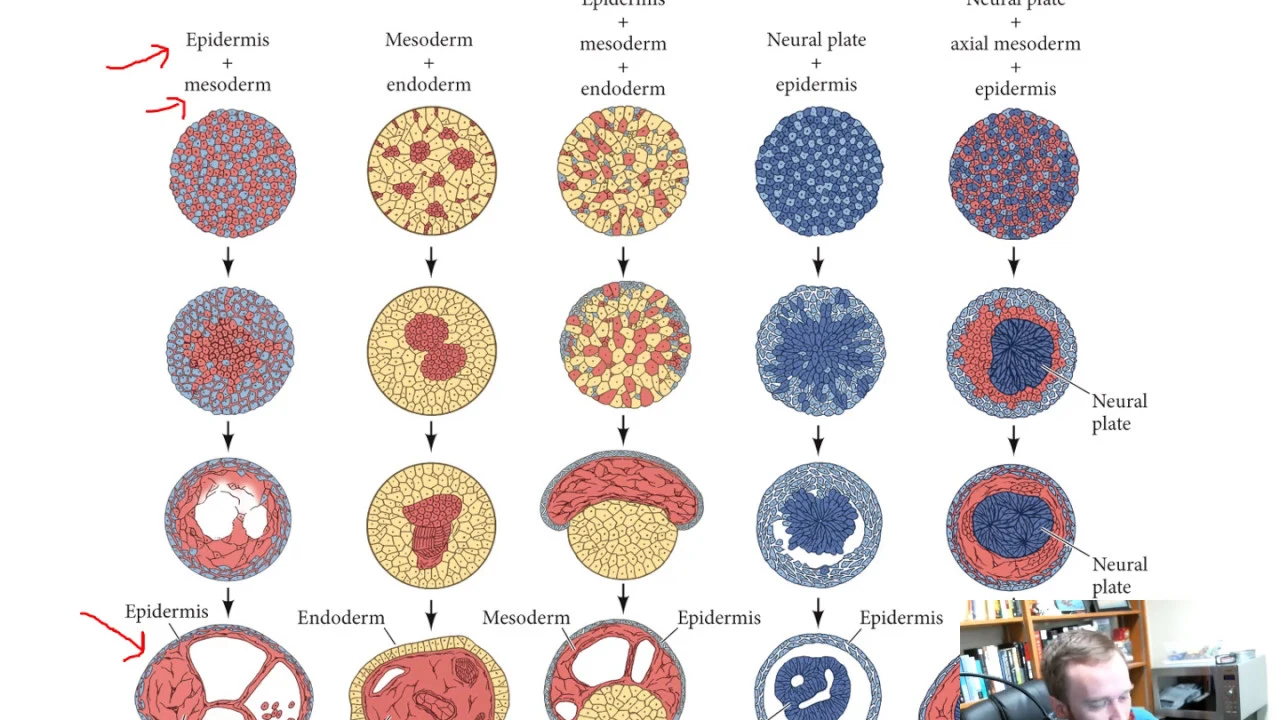
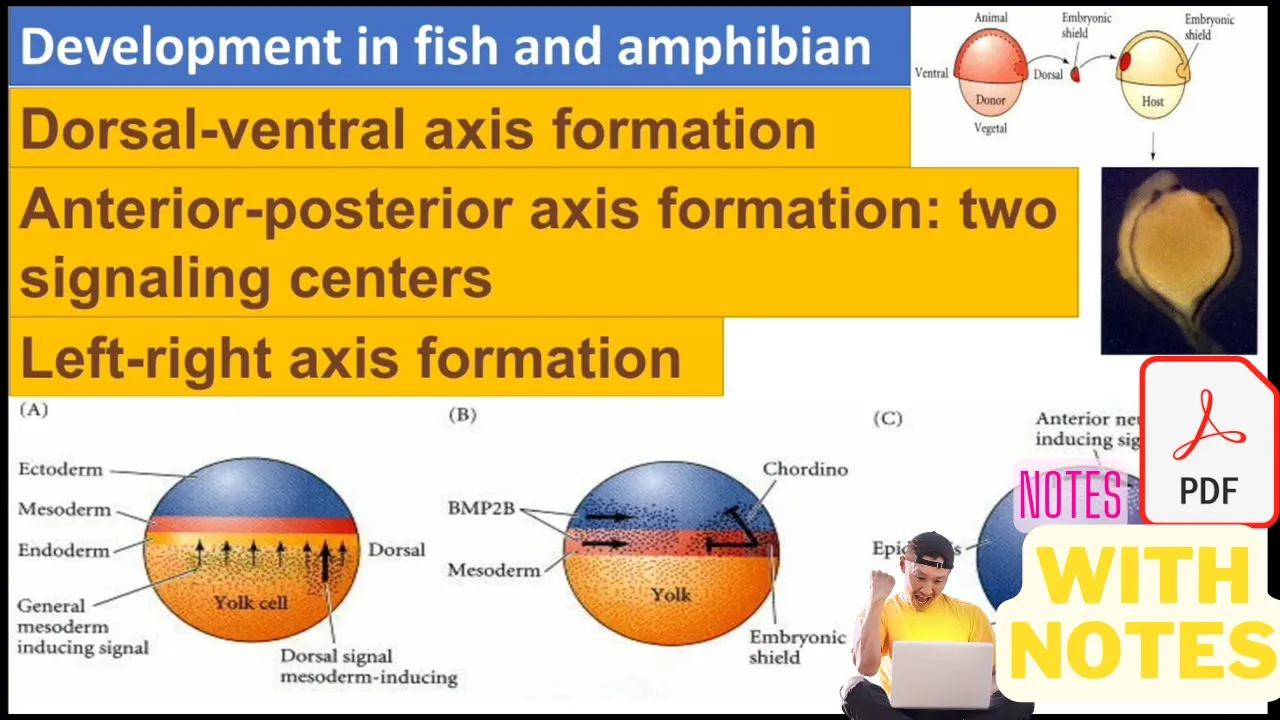
hello all welcome back in this session we will learn about transplantation experiments of spamen and man code and we will also learn about the chemistry of organizers now these two german zoologists a spaman and mankold they worked on these nudes embryo to show the inducing effect of or the how this dorsal lip of blastopore works as organizer so this is a kind of landmark experiment in the field of developmental biology and with recent advancement in research and technology now we understand how these cells can act as organizers and we know their chemistry as well as to what kind of proteins they produce and how they in turn uh trigger their neighboring cells or the neighboring blastomeres to po to form the concert uh structures i am dr lata assistant professor department of zoology maharani science college for women bengaluru now let us learn these what are the experiments that were this women and man called they conducted series of experiments to understand this concept of organizers and let us understand like how they conducted and what are their interpretation now the person whom you see towards your left hand side is hans spamman a german zoologist and he uh he was working with these nudes and he won nobel prize in 1935 for his discovery of organizer affected embryonic development now the lady that you see onto your right is man gold she was a research assistant or a phd student of hans speman so she was very curious to know like how this kind of how this dorsal dorsal lip of blastopores triggers the process of gastrulation and how they invaginate what makes them do so and all that so she has contributed significantly and her uh phd thesis is completely about this organizing effect of this dorsal lip of blastopore and this dorsal lip of blastopore also we call it as spiman organizer named against spamen and this became this experiment became such a landmark experiment that it won them a nobel prize in the year 1935 till then the effect the concept of organizer and how it can affect uh the induction or how it can induce its neighboring cells was in to differentiate into a particular organ was not at all known now uh the main experiments of these people were prefer i mean they worked or they preferred this newt eggs for transplantation experiment because they found that newt ex better than the frog sec for surgery and in newt x the animal half is colorless whereas the vegetal half is darker so that they can see like which blastomere has moved where and how it has differentiated and also the gray crescent area is green color and lies between the two and the elements of each area can easily be followed during development and differentiation and their future can easily be asserted these are few reasons why they chose this new eggs over frogs egg and of all the experiments the most famous experiment work of this uh spamen and mangold were to discover the mechanism of differentiation of nervous system so now let us learn like how they started and what are the experiments that they conducted now generally we all know that during emptyogenesis of these multicellular organisms some cells are induced to differentiate into a specific organs or tissues by the presence of other cells so this process of inducement of cells is called embryonic induction or dependent differentiation now this embryonic induction it is a morphogenetic effect in which one embryonic tissue transmits a chemical stimulus that influences another embryonic part to produce a structure that otherwise would have come into existence so in this concept the embryonic tissue that exerts the inductive influence that means the tissue that has this inducing kind of an influence is termed as inductor and the chemical substance given off by the inductor is called evocator and the tissue or the cells that react to this chemical stimulus is said to be a responsive tissue or a competent tissue now this picture you must be familiar by now because this we have referred in couple of our previous lectures while discussing about gastrulation also we have learned and seen this picture now here why i put this diagram is to show you that whatever we are discussing now it's all focused on this dorsal lip of blastopore because it is in this region the process of invasion takes place and once these blastomeres invaginate they form this bottle cells and they in turn trigger its neighboring cells to follow them now the big question is what triggers this dorsal lip of blastopore or the dorsal blastoporal lip to invaginate like who sends them the signal to undergo this or to start this process of invasion is what we have to learn and this we will discuss when it comes to chemistry of organizer like what all chemical changes or what defines this particular cluster of blastomere in this gray crescent region to undergo invagination see somewhere one blastomere has to start this process right but who gives the signal to this particular blastomere to invaginate there should be some kind of stimulus to it so that stimulus comes from where and what happens to this that we will understand when it comes to chemistry of organizers in detail okay right now here this is one of the basic experiment that hands spamming conducted in 1903 okay and in this he wanted to demonstrate the concept of nuclear equivalence uh in this experiment wherein he took a a fertilized egg and he constructed them at a eight cell stage okay when it is in eighth cell stage he ties this uh embryo with a with a baby's hair he had a baby by then and uh he took this baby's hair and he tried to not this developing embryo okay the reason why he took that air is because of his thin and it is strong also so he put a knot around this developing cycle so that all the nucleus the nuclei of all the dividing cells are come to one end and the other end will just show the presence of cytoplasm and then when it come to 16 cell stage what he did he just loosened this knot slightly so that one of the nucleus migrate towards the other side now then when we allow these two to develop very surprisingly both the ones that is the one with multi-cellular or which contains more number of blastomeres also developed into a complete a newt and the second one which has got only one nucleus which was migrated to the cytoplasm that also developed into a new individual but the only difference that he saw was it was slightly uh you know smaller in size apart from that he didn't find anything anything which was changed in the process of development so each one of them developed into a full-fledged larper now in the other experiment what he did he took this newt egg and the egg was constricted in such a fashion that the construction was laid parallel to the gray crescent okay parallel to the gray crescent in such a way that one half of it is without gray crescent whereas the other half contains gray crescent i'll just try to show you here yeah if you see here he has taken the egg here and you can see that gray crescent is concentrated towards one end whereas here you don't find any kind of gray crescent okay so when such embryo developed the half of which has a gray crescent developed into a complete embryo whereas the one without gray crescent it just developed into an unorganized cell mass so this was just called as a it just developed into a piece of muscle uh it just developed into a belly piece that means just a congregation of cell moss there was no differentiation of organs that were seen okay but when a normal egg developed and when it cleaved when the gray crescent was distributed to both the sides the both developed into a normal in normal newts so by this what he concluded that this experiment clearly showed that the gray crescent is very much essential for the formation of or for the proper development of embryo this is a conclusion from this experiment and then in one of the other experiment in the other experiment of speyman he studied the importance of gray crescent in both early gastrula stage and a late gastrular stage also so here what he did so in the other experiment what he did he tried to remove this dorsal lip of blastopore and he transplanted from an early gastrula and he transplanted onto this presumptive epidermis okay so when such uh thing happened when he transplanted this onto the event other side of this developing gastrula in its early stage that tissue that it transplanted it did not develop into the neural plate rather it developed into the epidermis form only you can observe for this red color transplanted tissue in the first where it is taken from an early gastrula it did not induce any change so rather whatever was transplanted it was transplanted to the region of presumptive epidermis and it gave rise to epidermis only okay but when the same experiment when it was repeated in the late gastrula stage when this presumptive neural ectoderm cells were transplanted onto the uh a ventral region of the other embry other newt uh embryo this transplanted tissue differentiates into the neural plate tissue that means it forms the neural plate tissue which further differentiates into nervous system so this shows that this transplanted tissue has some information in it to form or to send signals to form this neural plate and which later differentiates into nervous system of the newt but then why it did not happen in the early gastrula stage because the fate of these cells were not determined at the early gastrula stage by the when the gastrula gastrulation process proceeds and during late gastrula stage these uh uh these blastomeres would have acquired that fate or what these blastomeres has to become the fate of this blastomere is determined due by the time the gastrulation completes okay so when he transplanted this tissue uh from the late gastrula stage that has an inducing effect and that formed a neural plate along with the original one now this dorsal lip of blastopore this region also gives rise to neural plate when this transplanted tissue was taken that also induces the formation of neural plate and that resulted in the formation of two embryo two nudes with complete structures okay both the transplanted tissue also induced the graft that was uh induced that also got invaginated inside the host embryo and it developed into a secondary embryo with complete system of all organs such as nautical nerve chord somites kidney tubules eyes ears etc and this graft became self differentiated and formed all those structures which it would would have given rise to in its normal position so it also induced the adjoining host tissue to participate in the formation of this induced embryo as a result uh you know it resulted in embryo with double body here i forgot to mention the name of the species they used two new species one is a triturus one is uh triturus uh teeniatus and the other species is triturus crystatis these are the two species of nudes that spaman and mangold used for their transplantation experiments now let us understand what are the conclusion of this feminine man called experiments after performing all these experiments spaman arrived on these following conclusions one is they said this dorsal lip of blastopore it induces and organizes the normal gastrulation and embryonic ectoderm is uncommitted or unspecialized it may be directed by the other tissues to take different parts of differentiation like we saw in this one of his experiments and this neural differentiation is triggered by the activity of the underlying tissue the presumptive notochord and the presumptive mesoderm which we called as cardamomisodum and the third interpretation conclusion was this dorsal lip of blastopore has a high capacity of self differentiation it also serves as an organization center hence the name organizer and the inductor tissue must be in virtual contact with the responsive tissue the chemical substance that is the chemical stimulus which we referred as evocator that passes to the target tissue by diffusion and becomes less effective over a distance so whatever the chemical stimulus is uh or you know the chemical compound it could be in terms of protein or whatever when it is secreted and when it is diffused till whatever distance it can travel those many blastomeres will be instructed or induced to differentiate into a particular structure and as and when this chemical is being diffused its effect also will reduce over a distance and an inductor acquires inductive power for a limited time it cannot be forever like till the complete development of an embryo no only for certain period of time this can induce its neighboring cell to differentiate into a particular organ now the target region of the embryo responds to a particular inductor for a limited period when the tissue is non-committed and the target tissue has this competence so the inductor tissue induces it to differentiate and the organs developed from the graft are usually supplemented by the parts from the host tissue therefore by looking at all these observations the dorsal lip of blast the dorsal lip of this embryo as an organizer it has following important characteristic features which makes it the most indispensable part of the developing embryo like it can induce and influence the surrounding cells to undergo changes to make them from structures and make them form these structures like neural tube it has the capacity for self organization it behaves as if it carries a particular mission in the development of the embryo and acts as a chief architect of the embryo because it is this dorsal lip of blastopore which triggers the morphogenetic movements which in turn results in the formation of three germ layers so it is in this process that the ectoderm endoderm and the mesoderm all these three germ layers will take a form you know ectoderm will be formed outside mesoderm will come and sit in between ectoderm and endoderm and endoderm will come towards the inside of this archanteron so all this design is triggered by the dorsal lip of blastopore hence it can also be called as the chief architect of this developing embryo it has the capability of self-differentiation that means to say it not only induce the other cells to form certain structures but it also takes part in the formation of that organ okay and then the primary organizer it determines the main features of axiation and the organization of the embryo axiation here refers to the dorsal ventral axis axis formation and the organization of the embryo so it directs the development of an axiated gastrolog or axial blastula and normally organizers does not interfere with the work of the another organizer when two such organizers are present in an embryo so it is this because of this main reason when uh this spiman transplanted a portion of the tissue into the other nude both of them individually developed into two different embryos because both organizers the original one and the transplanted one they just look into their own business so each one of them was trying to induce this neural plate on their own and hence it resulted in the formation of fully formed two diff two embryos and based on this inducting ability diff of different parts of this archeneterone roof are in in anterior posterior direction are classified by lemon they are like arcane cephalic inductor which can induce the formation of four brain eyes and the nose rudiments then deuteron cephalic inductor which tends to induce the formation of hind brain and ear vesicles and spinal cord inductor which induces posterior part of the embryo including the tail bud and again based on the nature of induction it is of two types endogenous induction and exogenous induction endogenous induction where the inductors are produced within the cells or the tissues and cause self transformation as a result of self diversification new types of cells and tissues are formed example like this dorsal lip of amphibian blastopore whereas exogenous induction here what happens the differentiation and diversification of cells or tissues is caused by the influence of neighboring cells through the process of contact induction so this kind of exogenous induction may be of again two types homotypic and heterotypic in homotypic the inductor it provokes the formation of tissue of its own kind whereas heterotypic it induces the formation of different type of tissue now so far whatever we have discussed this experiment transplantation experiments of spamming and mango that can be asked as a 10 marker question wherein you have to write the diagrammatic representation of this whole experiment that he conducted resulted in the formation of two fused uh embryos and then you have to write about like what organizer is like what is the uh what does this dorsal lip of blastopore do and why it is so important and what are its conclusions now whatever we are discussing is about different types of organizers so be and also there is like you know based on how these organizers react you have secondary tertiary and quaternary organizers i will give you one example of this sequential induction if you consider this corda misoda which is a primary organizer it induces the formation of forebrain and the optic area in the anterior part of the embryo once this optic area imaginates forming optic vesicle now by invagination it changes into a walled double cup like optic cup so here optic cup acts as a secondary organizer it induces the formation of lens from the ectoderm overlying the optic cup then this lens acts as a tertiary organizer and induces the formation of cornea so this is how sequential in induction takes place in order to form a particular organ so here you can see the formation of optic vesicle and then formation of optic cup and from the optic cup it induces the formation of lens and once lens is formed it induces the formation of cornea and that's how the organ differentiation takes place so this table gives you a different kind of examples like what all organs can acts as an inductor and what kind of induction they are and the organ induced this is for your reference so this is with respect to induction and uh the experiments conducted by sperman and mangold now next we will try to understand so far we have been talking about organizer and how it helps in the rearrangement of the blastomeres and formation of different kind of germ layers and how it organizes the whole embryo as such now we will try to understand what is its chemistry or why only that particular few cells of this gray crescent turns into an organizer so this diagram gives you an overview as to how different kind of signals are formed in the late blastula stage now here if you observe there are few arrows which are pointing upwards that indicates that there will be some kind of general mesoderm inducing signals being formed at the vegetal pole region so these signals are formed generally and commonly in all the embryos and you have this region which is marked in peach color which is turned as the new cube center okay now certain signals are formed from the vegetal pole which are called as mesoderm inducing signals and you also have certain dorsal mesoderm-inducing signals being formed at one portion of the blastula so when these two signals overlap you have this new cube center being formed and what is this new cube center it has both dorsal mesoderm inducing signals and the general mesoderm inducing signals okay when these two overlap they form this cluster called as new cube center and it is this new cube center that stimulates or that induces or that is the one which sends signals to these blastomeres that are present in the gray crescent region which is shown in red to become or to form and organizer so what do you mean by this it is these blastomeres become determined or they become destined to form the organizer meaning to say they are the blastomeres which trigger the process of invagination now from where did it get the signal it got the signals from the new cube center now how this new cube centers were formed they were formed where the signals from both this mesoderm inducing general signals from the vegetal pole they overlapped with the dorsal mesoderm-inducing signals so they together stimulated or induced the neighboring blastomeres to become the organizer which in turn form the dorsal lip of the blastopore and hence they are the ones which triggers this process of invagination i understood this is how these organizers are formed so like this you will have the formation of organizer now in the formation of this new cube center there's one more protein that plays a very significant role that is beta catalynin and you have this tgf beta ligand which are produced at the vegetal pole i will not get into the details or the chemistry of all these proteins here but for you people it's good enough if you understand like how this organizer gets its ability to organize the different regions of the developing embryo now when we talk about these proteins you have so many proteins that are formed from these dorsal lip of blastopore that is from the organizer region in that the important ones are this cordon noggin polystartin cerebrus and frzb now what these proteins do for example if you take this card in noggin follistatin and cerebrus they induce the neighboring cells to form the head region okay and at the same time or this cardinal again and follow statin in the cardamosodum region they induce to form the structures of the trunk and all these will have one common feature to inhibit this protein known as bmp now bmp stands for bone morphogenetic protein there are many uh kinds of it like bmp4 bmp7 and bmp5 and all that so here what they do actually this bmp4 protein is very important wherein this will be secreted or this is seen in all the cells of all the blastomeres of the ectoderm and also towards the vegetal pole in the whole animal hemisphere and towards the vegetable pool but till wherever it extends if you remember in the animal poll we have this two different kinds of epidermis being formed that is epidermal ectoderm that differentiates into skin and then we label it as neural ectoderm now how this blastomeres are divided into epidermal ectoderm and neural ectoderm in epidermal ectoderm you find these bmp proteins which stimulates these blastomeres to form or differentiate into ectoderm and its derivatives but all these proteins like this cardine noggin and follistatin that are secreted by this organizer that will diffuse into its surrounding i think this picture will help you to understand better so here if you see the bmp4 protein it is secreted in the animal pole region here if you see this is uh secreted from the animal pole region here it is covering here and also it is here so till wherever this effects is there here if you consider in the animal pole it will all this will form the epidermal ectoderm whereas from this organizer region this cardinal noggin and folly statin when they are formed their effect will be seen till here till here and till here okay so wherever this effect of cardin and noggin are seen this ref this portion of the embryo develop into the neural ectoderm okay whereas here it develops into mesoderm and and uh here down it develops into dorsal end order so here what you can see the effect of this bmp4 is been stopped or there is an antagonizing effect of this bmp4 protein and because of the secretion of this cardinal noggin and the polystatic so this organizer will secrete these molecules until wherever it can induce or till wherever it can release its chemical stimulus till that last until that region the blastomeres will differentiate into neural ectoderm that means this organizer is giving signals to these blastomeres to form the neural plate and further differentiate into the nervous system whereas till wherever the effect of bmp4 is there that portion of the animal pole will form the epidermal ectoderm okay so there is one more aspect to it it also means that this bmp4 can you know it can diffuse to come cover the whole embryo but its activity has been stopped or it has been prevented by this cardine noggin and follistatin which is secreted by the organizer and hence that portion of the developing embryo will differentiate into different structures so this is how the organizer gain its ability to organize and instruct it neighboring cells to differentiate into different structures now this table will give you a clear idea as to what each kind of protein will do for example if you consider this beta catenin it causes dorsal regionalization that is it determines the dorsal side of the embryo and the absence of this beta-ketone it results in the failure of establishment of this dorsal ventral axis in the developing embryo and vg1 protein it induces the formation of dorsal mesoderm then this fibroblast growth factor that is tgf it enables the marginal cells to respond to this vg1 and induces the formation of ventral mesoderm whereas bmp4 that is born morphogenetic protein it is responsible for the differentiation of ventrolateral mesoderm and the cordin it interferes with the activity of bmp4 and prevents the ventralization of the organizer whereas noggin again it inhibits the activity of bmp4 and it is responsible for induction of this neural tissue from the ectoderm and it also brings in the dorsalisation of mesoderm cells and polystartin it is present in the blastopore lip and in the total cord it inhibits the activity of this bmp7 which is essential for the activation of this bmp4 protein thus it resists the ventralization of mesoderm whereas there is one more proteins called as sonic hedgehog which induces the formation of motor neurons at the sides and you have the cerebrus protein which induces the head structure like the cement gland ice and the olfactory organs it suppresses the formation of dorsal mesoderm and induction of cardiac mesoderm and liver so if you are asked to write about the chemistry of organizer if you can represent it in this kind of pictorial representation and if you write this table sorry this will suffice your answer so this explains the chemistry of organizers so i hope i made this concept clear to you and you have understood what are the experiments conducted by spaman and mangold to prove how this dorsal lip of blastopore has an ability to differentiate into a neural plate and further differentiate into nervous tissue and we have also learned as to what determines or what makes this blastomeres into organizer how they get this ability to induce its neighboring cells into a specific structures and we have learnt like what are the different kind of proteins that are produced by these organizer there is much more into it you can learn like how this cell signaling takes place and how each formation of protein is formed and controlled in a particular blastomere so if you are interested you can refer to this textbook of developmental biology by gilbert there you can learn in detail and much more clearly according to cell signaling and how these proteins are formed and how they control this process of induction and other things thank you for listening have a nice day
Up Next

28:35
Edward De Robertis: 2021 SDB Lifetime Achievement Award
@SocietyforDevelopmentalBiology
648 views•2021-08-20
50:12
Bacterial Communication: Quorum Sensing and Biofilm Formation Explained
@JHUAAP
12.6K views•2011-06-28

5:35
Enteric Nervous System Explained: The Gut's Brain | Neurobiology Lecture
@alumniu6029
438 views•2018-09-12
7:08
Bacteriophages: Earth's Deadliest Killers and Future Antibiotics
@kurzgesagt
34.6M views•2018-05-13
Related Study Plans & Knowledge Roadmaps
Structured learning paths in Biology
biology
RNAi: Biogenesis, RISC & Gene Silencing
01Molecular Biology Foundations: DNA to Protein
02Introduction to RNA Interference (RNAi)
03Molecular Biogenesis of miRNA and siRNA
+ 2 more learning modules
10h5 modules
Explore Roadmap
biology
Mycorrhizae: Signaling, Biophysics & Ecology
01Foundations of Mycorrhizal Symbiosis
02Molecular Signaling and Root Colonization
03Biophysics and Bioenergetics of Nutrient Exchange
+ 1 more learning modules
11h4 modules
Explore Roadmap
biology
Circadian Clocks: TTFL, SCN & Periphery
01Foundations of Molecular Biology & Gene Expression
02Introduction to Chronobiology and Actograms
03The Core TTFL: Molecular Architecture of the Clock
+ 3 more learning modules
14h6 modules
Explore Roadmap
biology
Population Genetics: Math, Drift & Selection
01Genetic & Probability Foundations
02The Hardy-Weinberg Principle and Baseline Models
03Mathematical Modeling of Natural Selection
+ 3 more learning modules
18h6 modules
Explore Roadmap