



















![[김영편입 | 부산 의약대전문관] 이재형P 생물 PEET 문풀 15강](https://i.ytimg.com/vi/fsISdUyf2UE/maxresdefault.jpg)
In vertebrate embryogenesis, the Spemann-Mangold organizer produces BMP antagonists (such as noggin, follistatin, and chordin) that inhibit BMP signaling to induce neural plate formation; these antagonists are essential for dorsal development and neural induction, as demonstrated by experiments showing that knocking down multiple BMP antagonists eliminates the neural plate while leaving early mesodermal specification intact.
Frog Embryology: From Egg to Neural Plate Formation
Added:Basic cell division and cleavage patterns, including the distinction between the animal and vegetal poles in an egg.
The definition and eventual developmental fates of the three primary embryonic germ layers: ectoderm, mesoderm, and endoderm.
Fundamentals of cell-to-cell signaling, receptor-ligand interactions, and the concept of morphogen gradients.
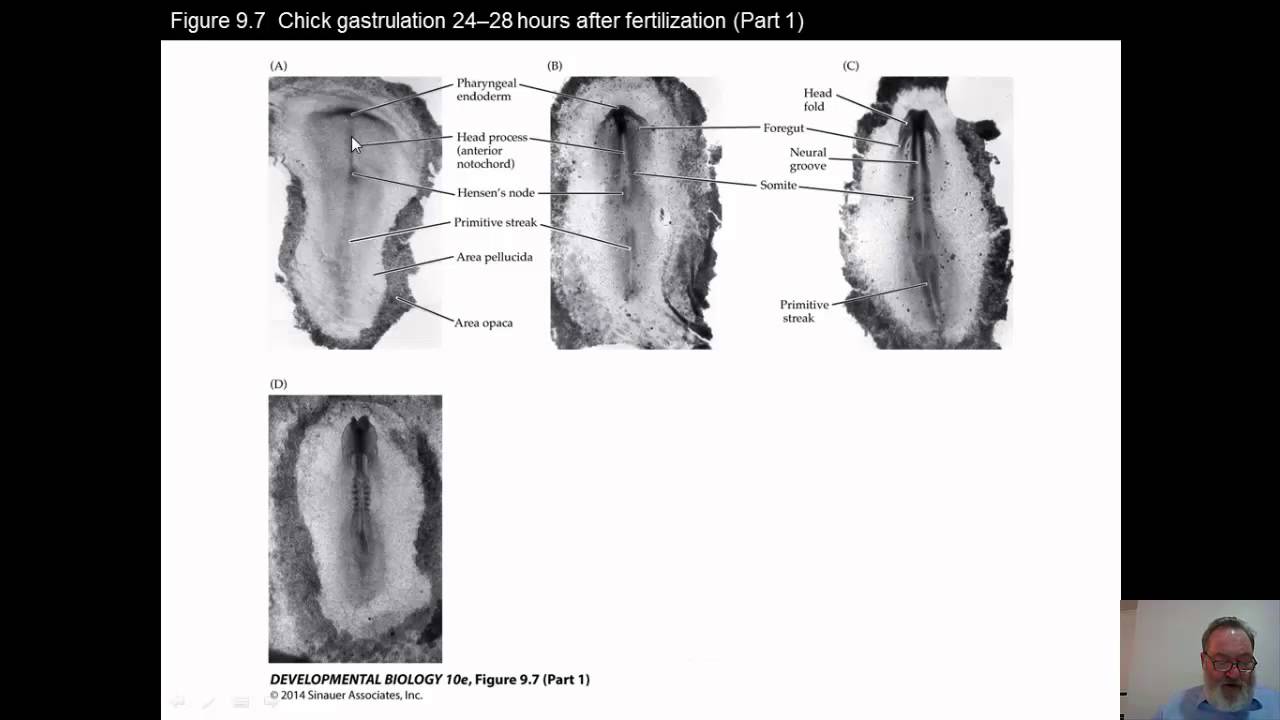
The structure of the blastula and the mechanical movements of cells during gastrulation.
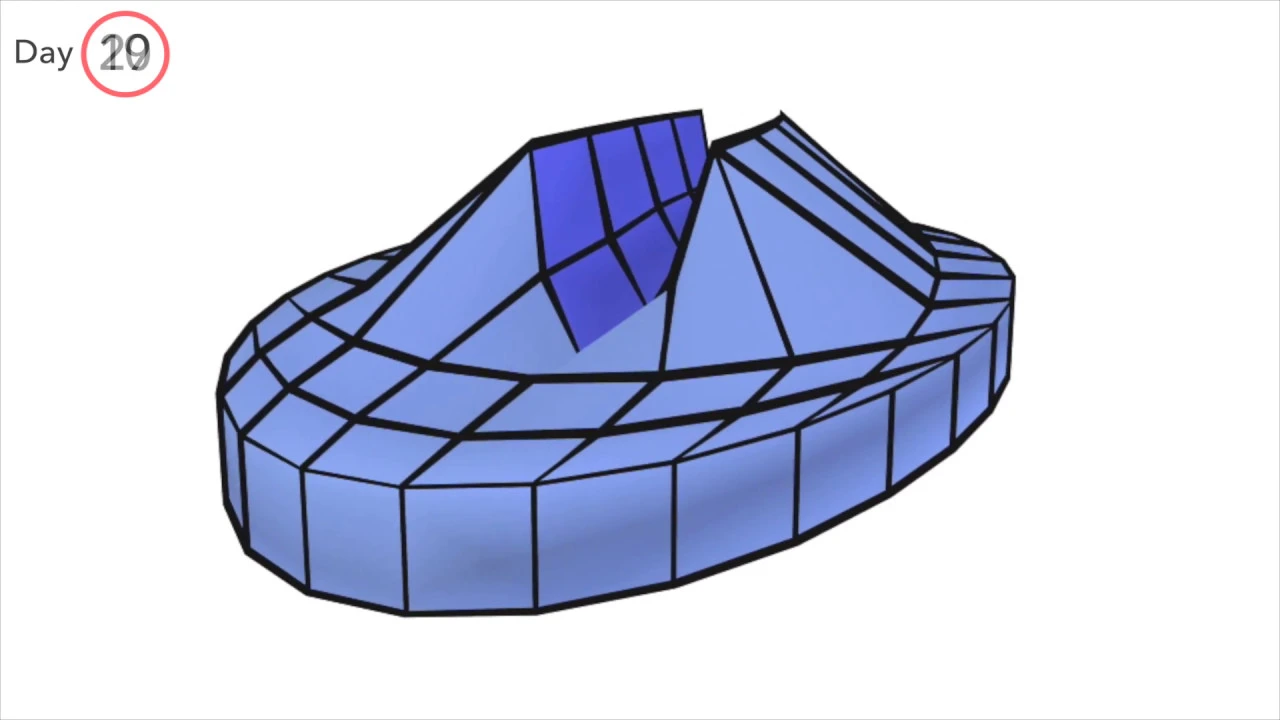
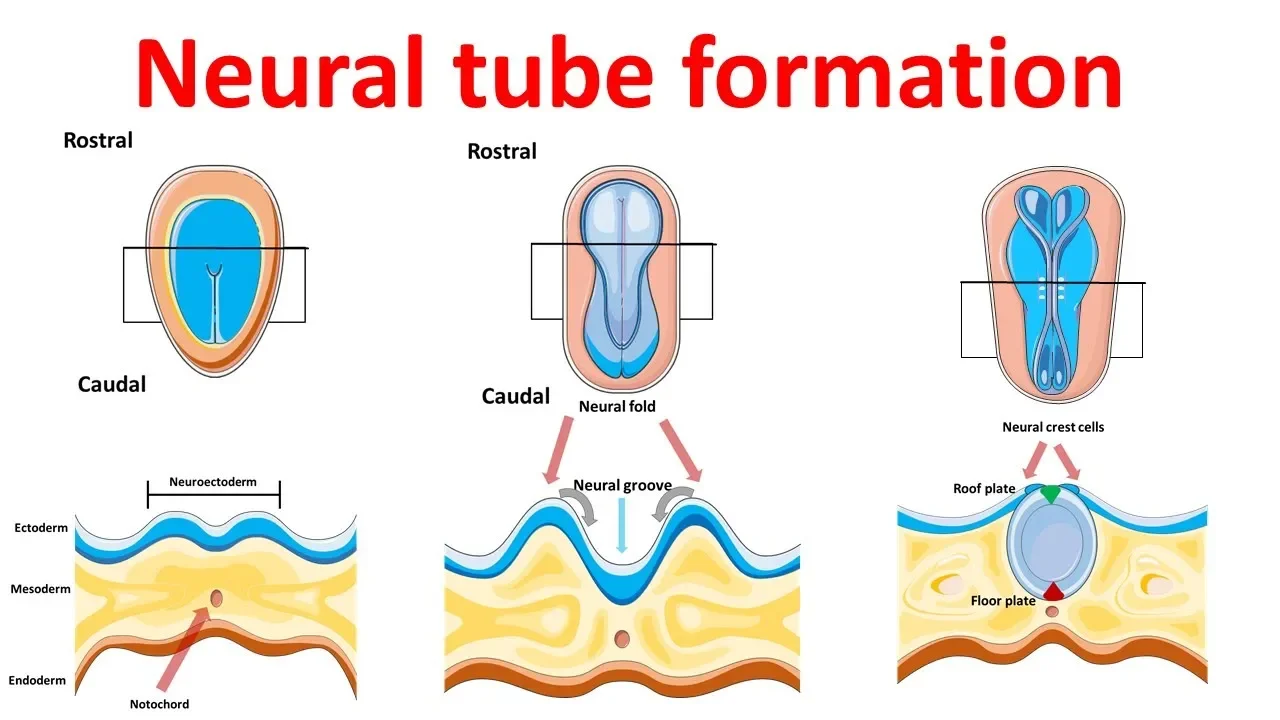
The physical mechanics of neurulation, specifically how the flat neural plate folds and fuses to form the neural tube.
The molecular biology of the Spemann-Mangold organizer, focusing on specific signal antagonists like Noggin, Chordin, and Follistatin.
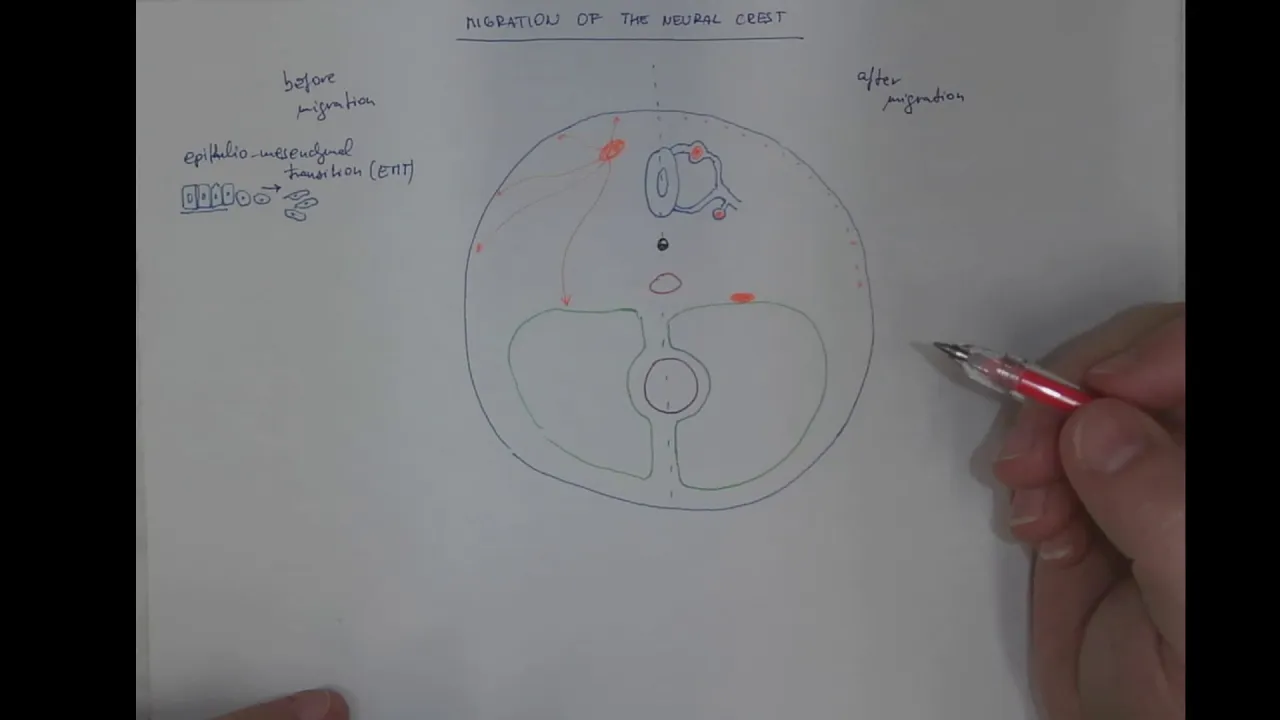
Neural crest cell specification, their epithelial-to-mesenchymal transition (EMT), and subsequent migration to form diverse tissues.
Comparative embryology, analyzing how neural induction and early patterning in Xenopus relate to amniotes and mammalian development.
14.9K views211likes35:03Original Release: 2018-04-18
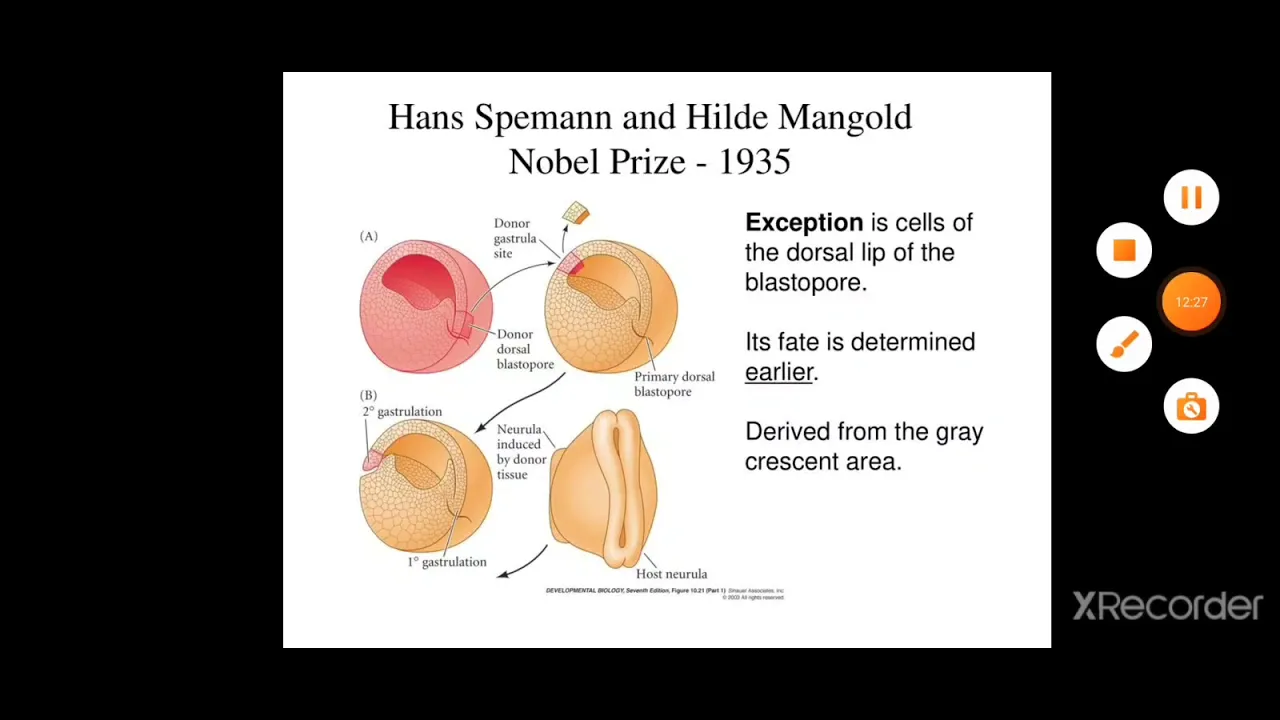
I'm Richard Holland I'm at UC Berkeley and today I'm going to tell you about the signaling activities that give rise to the neural plate the forerunner of the spinal cord and brain in vertebrate embryos in previous talks I've talked about the introduction to the Xenopus embryo why it has some advantages for experiments I talked about the cell shape changes that have happened in the in the embryo that lead to the three-layered acted on mesoderm and the dome structure that is the case the the state at which neural tissue formation happens let's initially start by just reviewing the classic experiment the organiser experiment done by Hilda mangled and Hanish Bayman and this is the one that really set the stage for what I'm going to talk about in this experiment they used marked embryos they used newts of different colors a dark colored pigmented Newt and the light colored Newt and they were asking the question what happens if we move pieces of the embryo around do they differentiate according to how they normally were set up in the embryo itself differentiating according to their original fate or did they adopt the fate of their surroundings are they told to become the place of their surroundings but there was one particular experiment that was quite spectacular where not only did the cells self differentiate but they're recruited cells from the rest of the embryo to make new structures the phenomenon of embryonic induction so here what they did was to take this embryo here the dark embryo is the host and there's paler donor and what they did was to cut out this dorsal lip region from the pale embryo flip it around and grafted in to the ventral side of the host so not only does this have its normal organiser side but it has a new piece of dorsal mesoderm stuck in the ventral side and what they found was that this was enough to make the embryo twin and that's shown down here in a representation this particular one done by Andrea wills who was a student with me so you can see that there's a normal primary axis with a head with two eyes then down here there's a secondary axis is fused down at the tail but it's a complete proper organized secondary axis now the important thing was since they were using marked tissues they could tell what is the contribution of the graft and the host and so here's a representation of a section that was made by hilda man gold is the primary axis with the tissues that should be familiar to us by now the nervous system the nose cord and the muscle and here's the secondary axis and here's the pale grass the pale graft invariably contributes just to the midline tissues here it's contributing to the notes cord and a little bit of the somites sometimes it would contribute so a bit of the spinal cord where the consistent observation is that it contributes to the midline tissues whereas the bulk of these tissues are recruited from the host most of the nervous system the muscle and so on so this graft really must be instructing the surroundings to make the second axis and organize it properly here's a modern equivalent of the experiment also done by Andrea wills where she's labeled the donor embryo with a red stain and you can see in this twin where the two axes have arranged themselves conveniently next to each other here is the red labeled graft and you can see above it the induced neural tissue so it's not a phenomenon just of the 1920s but can be done in the current times now I'm really gonna emphasize that this induction mechanism was not obvious and in fact Warren Lewis who is not as famous as schmayman and Mangold tried a similar experiment earlier than they did but what he concluded largely because the embryos were not marked was that the results he was getting was exclusively the result of self differentiation of the grafted tissue and he couldn't see any induction because the tissues were not marked and so the bottom line is that he'd because of this assumption of self differentiation he missed on the phenomenon of induction so we remember schmayman and mangled and less so Lewis okay let's go back to the whole embryo and remind ourselves what we're looking at so we know from molecular mapping that the organizer is going to be on the top this when it loops around again we're going through gastrulation and near relation and when we loop around again here's the organizer up here it's going inside the embryo and is opposed to this neural plate and is able to instruct it to make the neural tissue so again if we look at this MRI movie we can see that dorsal mesoderm moving up against this overlying neural plate and during this process where it's opposed to the neural plate it's in the right place to be inducing the neural tissue so that's the normal organizer that's going up there and is thought to be signaling to induce the neural plate okay so we're going to discuss this more but we reverse need to understand how we get to that position I'm not going to go through this in detail but I'm going to give a brief summary of the initial events that happen to set up the organizer and it comes down largely to the activity of two different signaling pathways the nodal SMAT two pathway and the wint beta-catenin pathway we don't need to know about these pathways in detail but what we do know is the way they're turned on in the embryo so initially when the egg is laid it's got this axis from animal to vegetal from the pigmented to the oki side and subsequently it has found that there are a number of pre localized components in that polarized egg and I'm going to talk about this red mRNA messenger RNA that's pre localized it's called veg T first described by Mary Lou King's group and there's also slightly less well characterized activators of the wint beta-catenin pathway down here so initially this is cylindrical II symmetrical about the animal vegetable axis and an important process here is is widespread in embryology is the symmetry breaking so you have to go from a cylinder to a bilaterally symmetrical egg and this is achieved during normal development because the sperm is going to enter on one side there makes this giant aster so these astral microtubules extend throughout the egg cytoplasm during the first cell cycle and not only do they serve to pull the maternal pronucleus towards it but they also serve to bias the way that microtubules polymer polymerize in the outside cortex the outer 10 micron layer so as a result of this bias there but there's an oriented array of microtubules that go around the embryo here and they act as tracts for carriage by a kinesins of some of these purple components and as a selectivity the purple components that activate the WIMP beta-catenin pathway get smeared out along the entire dorsal side of the embryo whereas the red do not do this they're sort of passively released from the vegetal cortex and spread in a graded way through the egg so we now have a broken symmetry where we have the red going from vegetal to animal and the went beta-catenin concentrated from dorsal to ventral now these two molecules get together and turn on that at the nodal genes the nodal genes are signaling proteins and the tgf-beta superfamily and they're turned on in the margin in normal development there's a cooperativity between the purple wint signal and now this yellow protein produced from the veg ta and turn on these nodal genes and they turn them on at a higher level on the dorsal side than the ventral side but they do turn them on everywhere and these nodal genes induce me sodam so the cells that are initially naive get told in this marginal zone to become the respective museum but where this interaction is the strongest the strongest interaction of beta-catenin and the nodal gene expression that converges on the promoters of organiser gene and turns them on specially in this dorsal region here so the marginals and the mesoderm goes all the way across in the equator but the organizer is special in that it's only turned on at the convergence the strongest convergence of these signals okay so we've discussed that and let's just contrast that with what happens if this cortical rotation doesn't occur and so you can see here what there are various tricks to to cause us to happen one is to irradiated all side of the embryo with ultraviolet light and that prevents the polymerization of microtubules the alternative is to eliminate beta catenin production by using a reagent that blocks beta-catenin production we'll come back to that either way what happens is that we get the release of the veg T and we get the great adventure team protein which turns on knodel but in the case of the lack of cortical rotation then this purple signal stays down here and so as a result there is no synergy on this side there's no overlap between the signals and so this whole marginal zone behaves like the ventral marginal zone you get a vent relized type of embryo with no organiser okay so that symmetry breaking event back here was important but we're going to use this trick in the next experiment that proves that we need organize a signal to get the neural plate to be formed before we go into that we're just going to discuss a little bit more about the graded nodal signaling because they're quite widespread view in the field is that this graded nodal signaling is important in setting out the pattern of the marginal zone it seems quite obvious that if there's going to be a graded signal with more on this side than that side it should be used for something so we're going to get a graded response and the phosphorous mad 2 is the intracellular effector which is known to be distributed like lists there really is graded Expressionists bad - going from dorsal to ventral and then this proceeds as a wave across the embryo so it seems perfectly reasonable to think that in normal development what ought to be happening is that that signal will tell the embryo to make different kinds of mesoderm and indeed that whole idea is supported by this experiment where we can take from the blastula stage naive ectoderm from this so-called animal cow and put it in culture by itself it will self differentiate into epidermis but if we add a signal we can use either knodel or more conveniently active in another member of the tgf-beta super family if one adds increasing doses of that active in signal the mesoderm inducing signal one can get caps that develop in a more ventral way making me think i'm or is that as one dose is in the signal more and more dorsal tissues like muscle and ultimately a lot of notochord so those kinds of experiments the description of the graded expression as well as this result where one's reconstructing what may be going on in the embryo suggest that that graded signal may cause pattern but I'm going to argue that's not true so just to sum up this normal pattern in the marginal zone from notochord through muscle kidney and blood could in principle be set up by that graded nodal signaling but this was explicitly tested in a series of experiments by Ron Stewart and John Gerhard and other set very similar experiments by Jonathan slack and so what I want to review briefly is this experiment that shows that there's not enough information imparted by that early signal to give substantial pattern in the marginal zone now what they did they wanted to assess the effectiveness of organiser grafts and they did this at the late blastula stage there's a really early stage before gastrulation goes on in that before there's much to certainly as passing in the marginal zone later on so they took normal embryos and cut them in half vertically so they got two hemispheres and they used that UV radiation trick so they had a gret they were able to graft these labeled grafts of course on to UV irradiated hosts so they made this recombinant in this case the organizer is schematically illustrated in red so you've got a half organizer here one of their first questions was if you only put in a right organizer do you only get a right embryo and there the answer was no you get a bilaterally symmetrical embryo but also in many cases this graft will give you a normal tadpole so you rescue develop also as shown by the lineage tracing experiment from this vent relized half but this is really the key one in Mike's in my view so here they've cut just thirty degrees off the dorsal midline axis so cut the organizer into the right piece and this piece has no organizer now by the model I was discussing earlier there should be some graded active in signaling or Gradle graded nodal signaling in here that's inducing things like muscle we're going to that question we're going to take this side and again fuse it to a naive vent relized piece put them together and ask what happens and the result in most cases is this absolutely no dorsal pattern in the EM view and just to nail this home I want to stress that so they're taking this vent relized piece and putting on this piece from a normal embryo that lacks just the organizer but still has that dorsolateral perspective museum that would make muscle if it were left alone but in the context of this recombinant you just get this completely vent relized embryo as opposed to something that would make a little muscle and so on so this experiment shows I think quite well that the pattern that's induced by that graded active in nodal signaling is not enough to have any permanent effect on this tissue and that you actually need the organizer signaling so that sort of loss of organiser function proves that you need organizer signaling in normal development another is a sort of descriptive view where we've looked at gene expression at different phases and here's a case where we see two expression of two different genes this is noggin expressed in the organizer we'll come back to that and as prospective muscle gene my OD there's expressed in a complimentary way in the non organizer tissue when it's first turned on its turned on fairly uniformly around the rest of the modules and later on this expression turns off and this gets enhanced by signaling from the organizer but when it first turns on it looks like the marginal zone is organized in a binary way now this very rapidly changes we see expression of genes such as this one LH x one that's high in the dorsal marginals out and then grade it off to the side so that's a later stage we also see that with this split where the blue and the brown genes are expressed in complimentary domains in the end of the blastula stage but very quickly become elaborated so that the brown gene when Tate is restricted away from the organizer and just in the margins and so things are very dynamic and one really has to look at this early stage to see this binary difference by this stage this tissue has already been instructed by the organizer to make muscle but anyway this descriptive experiment does support the idea that initially the marginal zone is split in a binary way and is not greater than this induction so again arguing that you need a signal from the organiser and it's not enough to have that graded nodal signal this just reinforces that and as that slides up I'll say that we knew need now to figure out what are these other signals and at the time there was a lot of experiments that were done using both cell biology using secreted signals from cells and a saying them in embryos and many of these signals do have important embryonic functions fibroblast growth factors knodel's active ins and so on but the dorsal Ising molecules that are made from the organizer were not understood so how do we find those and here I give much credit to Bill Smith who's now a professor at UC Santa Barbara who in the early 90s joined me and decided to use an expression cloning approach to try to find these molecules and again here's this trick of ventral izing embryos but at the four cell stage he then took synthetic at messenger RNA is made from a library this library was a library of gastrula specific RNAs in a plasmid that could be transcribed with this synthetic phage polymerase sp6 polymerase so that we could get a library of in the first instance a hundred thousand colonies extract the DNA and then transcribe that whole library of plasmids to make a complex mixture of synthetic RNA that we hoped mimicked what was in the embryo remarkably that first injection of the synthetic RNA when it was injected back at the full cell stage instead of these embryos looking like this complete belly pieces as Feynman would have called them they looked more like this they had some tail structures some muscle and spinal cord so that RNA conferred a morphological rescue at that point we knew there was an active ingredient in the library and it was just a question of SIP selection where we would split the library into smaller and smaller pools a saying those pools as we go along and ask is there a pool in there that confers this ability to dorsal eyes embryos and sure enough we he did this a couple of times the time he isolated a wint signal which I won't discuss but is thought to mimic that early went signal indoor slicing the embryos but for the purposes of this presentation the second one he isolated was really exciting because it was completely new and as a single RNA as you can see in this picture with increasing dose of a gene we called Nagin RNA you get this progressive rescue of structures to the normal state and then when one overdoses the embryo ultimately you end up with these little noggins these little heads alone so that the single RNA is able to transform from the four cell stage event relized embryo and if it's put in enough dose you get just a big head this has been a very useful assets who isolates activities but that's the one I want to concentrate on noggin and so this is an in situ hybridization where we're looking at the messenger RNA that's expressed from the noggin gene and early development and so let's look at this stage this is a late blastula noggin has already turned on and as you can see it's turned on in just one side of the embryo and we know this is the dorsal side so this gene is expressed not only has the right activity in these message RNA injections but it's also expressed in the right place is a vegetal pole view remarkably it's a 60-degree sector just the same as the sector that Ron Stewart identified in his activity assay and then in the gastrula stage it continues to be expressed in the dorsal marginal zone in this involute ongdalsem mesoderm that is lying just underneath the neural plate and in the right place to induce neural plate here's an Uriel a stage where it continues to be expressed in the head meezerman notochord again in the right place to continue inducing the neural plate so the activity's promising the extra expression is promising but could we show that it had the right properties so we initially used a protein that we made in choice ELLs that theresa lamb had transformed with noggin plasmids later in the collaboration with Regeneron pharmaceuticals they made a human noggin particularly our economy tease and gave us that recombinant human noggin for our experiments so we were able to ask now can noggin protein mimic what we know are the am biological effects of drafting this tissue so again this is the normal case where noggin is expressed in this red dorsal mesoderm and potentially instructing this overlying acted own to become neural plate but how do we assay that activity well again we turn to our animal capaci actually we can turn to that a say in the gastrula stage where the sensitivity of these cells up here has changed and they're no longer responsive to the active and nodal signal but we know from a recombination experiments that if we graft an organiser onto here neural induction will occur so now we can replace a graft of organizer by soaking this tissue in nagin protein and so this is a schematic which we can do in the lake blaster or the gastrula where we take this prospective ectoderm off into culture normally just makes a hollow bowl of epidermis when left alone as i mentioned before with with active in or nodal you get a complex induction of dorsal mesoderm all cell types and those in turn can secondarily induce neural tissue but the induction is not direct the important thing for our purposes is that when we treat this just with a recombinant noggin we get a clean neural induction there's a little epidermis that's on the outside and an epithelial layer that's not so responsive but all of the underlying cells here are trans transformed into neural cells so we get a cleaner clean neural tissue and that can't be induced by any methadone because there's no Museum in this ex plant we can also do this as at a time when the mesoderm can no longer be induced so if we do this at the gastrula stage instead of a like lassiter stage this experiment wouldn't work activin would have no effect and yet noggin can still induce neural tissue so this then really and identified noggin as an authentic neural inducer that it's expressed in the right place and time and has the right activity to be doing the job in the normal embryo here are some pictures of the kind of results that we get is these the work these are done by an kinect in the lab and so here we have a molecular assay for neural tissue this is a gene that's expressed throughout the nervous system and here are some of these ex plants ex plants that lack noggin and they don't stain for this gene but the parallel ex plants that we're at soaked in noggin protein as you can see are robustly induced to make this marker gene and so we can say they're neural and that contrasts again I'll draw the contrast with the active and mesoderm inducer here we're looking down on the top of the embryo the muscle and note scored in the middle is a meas a dermal structures that we've lit up with this collagen probe if we take X plants just like these ones but treat them with active in at the late blastula stage we get lots of this mesoderm induced but down here we see that noggin induces no meter do so we do get neural tissue in the absence of mesoderm and hence a clean neural induction just as an interesting side point I won't be discussing this much today that we also have to account for production of the entire neural plate from brain to spinal cord so what kind of tissue does noggin induce here we can use regional markers like this cement land this very anterior marker or this forebrain midbrain marker otx 2 and then this and Grail 2 is expressed just at the border of the hind brain and the noggin treated X plants will make these very anterior market genes they'll turn them on but they don't turn on the more posterior ones and so now again exclusively in this X plant situation induces anterior brain like tissue so we have a molecule that works very well but of course we then have to figure out how it works and so for this experiment we for a long time labored under the delusion that we may have invented a new kind of signal transducer at the time it wasn't really appreciated the department gets by with a remarkably limited number of pathways and so here what eventually turned out with some very useful information from Chip Ferguson's lab it was suggested that it may be impacting the BMP pathway and Lyle Zimmerman was able to show that because we had all these reagents in the land of thee at the time and the way that noggin actually works is not by activating any new signal transduction pathway but rather by interfering with the BMP signaling pathway normally BMP binds to its two receptors brings them together and that has the consequence of ventral izing the embryo in this case when noggin is present it binds tightly to BMP prevents this interaction and then by default instead of being vent relized the embryo is dorsal eyes so I'll stress that that it's the absence of this bmzp signal that is instructive to the embryo and allows the embryonic structures to make dorsal structures rather than BMP induced ventral structures and satisfyingly this crystal structure from je grappa shows that noggin is a dimer sort of embraces the dimer of BMP so it's not surprising that it as Lyle Zimmerman showed prevents the BMP from binding their receptors it's a very high affinity reaction as was shown by this competition experiment and this was done again by Lyle Zimmerman he took AI ordinated BMP 4 and was able to bind it to a chimeric human noggin which has a immunoglobulin tail which makes it easy to precipitate and so if one simply mixes these together you get a very active binding and precipitation but by mixing in different doses of different kinds of other tgf-beta x' we could work out the affinity of this interaction and so notably if we take BMP for the red one and plot how that interferes with the binding of iodinated BMP 4 we get this nice curve and if we plot the half maximal inhibition it comes out that the interaction there is it has a remarkably of tight KD of about 20 P qumola other BMPs like BMP 7 and blue here have a lower affinity and then yet other tgf-beta family members like tgf-beta itself have no measurable affinity so there is a variation in affinity but very tight affinity for the BMP - and for class so we come up with this general model that in normal development you set up the mesoderm with a special dorsal territory this naive and fel the uniform ventral lateral territory and the rest of the patterning is mediated during at halation by dorsal izing signals like loggin that come from the dorsal marginal zone instruct the overlying epidermis to instead become nervous system and instruct this ventral mesoderm to become things like muscle so is that it really we've done this by add back but what about loss of function and in the interim a large number of other antagonists were discovered and a lot of these were discovered by editor reverses lab so cordon and Cerberus noggin we discard bill Smith discovered as well as this nodal three molecule and fall estaphan had already been known about but its activity as a dorsal Ising molecule was worked out by a Libra and Lou and don't medicines lab so in looking at all these they're all expressed in the organizer and they all have some similar anti BNP activities you can see that they turn on at different times this is the early stage so some are turned on very early and then some are turned on in slightly different territories and perhaps that's important in how they work in detail but so far as far as we can tell they all work essentially the same way but there are a lot of them and they probably have overlapping activity and so if we try to knock down their activity do we can we knock down one and get a result or do we have to knock down many to do this experiment we use morpholino oligonucleotides these are synthetic uncharged and very stable oligonucleotides that can hybridize to the messenger RNA and interfere with translation in this case so we can specifically use the information from base pairing to specifically knock down these individual rnas so most of our coca when he was in the lab did this experiment using mixtures of morpholino x' against Palestine coordinate noggin and just as a side note to make this simpler we did it in the related species to Xenopus laevis xenoverse tropicalis which now had a sequenced genome and so we could identify and design these oligonucleotide easily to target just single genes rather than two genes in the Paleo tetraploid Xenopus laevis genome so we can inject these morpholino x' and then ask what happens and we're going to use for example in the neuro stage this neural marker which at the mid Niroula stage has this nice ability to light up the neural plate because of worries about specificity of these reagents which always become toxic if you put enough of them in we do a specificity assay of rescuing so by cloning the puffer fish noggin we could use that different sequence to put back the MP antagonist activity as we'll find out and rescue the whole process so these are the kinds of results so we're going to do single double and triple knock downs and the results are pretty simple when comparing the uninjected to the morpholino injected when we knocked down Nagin we see no effect essentially no effect with follow statin some mild effect as reported by dear Bertha's history of recording but then when we'd knocked down to follow Stefan Nagin court in Nagano court in folly statin we see a more extreme effect there's a smaller neural plate where we knock down all three there's a spectacular result where now instead of making the neural plate the neural plate is eliminate eliminated not only is the neural plate eliminated but the underlying muscle is almost completely gone and by this Hedgehog control the notochord and floor plates are also gone so this is important to rescue we can rescue it with this mixture of morpholino 'z rescuing it with the puffer fish noggin and as you see we get back all of these tissues demonstrating specificity we can also rescue it by knocking down additional BMP so instead of this horrendously high mixture of morpholino as we're putting in even more morpholino x' but also knocking down BMPs and again you can see that rescue so we're pretty satisfied that this is a specific manipulation so knocking down the BMP antagonists eliminates the neural plate you need the antagonists to make the neural plate as we would expect as you can see on the right of this picture the loss of those dorsal structures is accompanied by a gain in ventral lateral structures so here for instance let's look at MSX one it's expressed just in the flank but in this manipulated embryo there's just a narrow stripe left of Nan expressing tissue so all these ventral tissues are expanded we can also ask when does this dorsal identity fail when we knock down there's a antagonist we clearly lose dorsal structures but at what step does this happen and of course we would predict but it should fail at the time the normal genes are expressed that they like blastula steak we can start to look at that and contrast the situation where we interfere with antagonist function in normal development with what happens when we ventral eyes the embryo from the get-go either with UV light or by depleting beta catenin actually also with a beta catenin specific morpholino so in that case we lose the beta catenin purple signal and we get just this vent relized embryo okay so in looking at those we can see that in in the in the morpholino knockdown cases where we've knocked down follow stat in court in an noggin we have normal mesoderm as marked by this brakiri gene but in the case where we look for dorsal identity with the goose code marker is the control is the follow stat in court in noggin knockdown there's still dorsal identity whereas if we contrast that with the beta catenin knockdown where we've knocked down the early dorsal signal and of course we never get a dorsal identity so there's a contrast here showing that in the absence of the antagonists we still get a dorsal identity but then that dorsal identity fails to execute execute its function and indeed we can also look at these embryos to ask what happens to be MP signaling and in particular we can use this useful marker vent to is that's normally expressed everywhere except the organizer we also know it's a direct target of BMP signaling so again when we knock down the follow stats in coordinate noggin we see that that gap is filled in so in other words in the absence of the antagonists there's a sign pretty early on of excess BMP signaling which is going to mess up dorsal developments and lead to evangelized embryo and again we get the similar effect as we would expect if we eliminate the organizer completely with beta catenin the same result is found with this early muscle marker which muscle of development used to be thought to be development mostly on the graded signal from nodal you can see here clearly that we need that BMP antagonist in order to amplify the expression of this muscle determinant in the early embryo so overall we conclude now that this pathway of knockdown of BMP activity by these BMP antagonists by cocktailed BMP antagonists is crucial to get dorsal development and in order to get neural induction to occur we can show that these molecules by themselves as protein induced neural tissue we can show that the combination is essential and there are expressed in the right time and the right place to be executing this function so all in all it's a comprehensive statement that these are crucial for neural induction and dorsal development we can add on the additional observation from the end that even in the absence of well in the absence of these antagonists the early events go by perfectly normal normally and we get dorsal specification in the marginal zone but in the absence of the antagonists that organizer can no longer execute its function so all in all we can conclude then that BMP antagonists are essential for the schmayman organiser phenomenon thank you you
Up Next
54:27
The Spemann-Mangold Organizer: 100 Years of Neural Induction
@mblwoodshole
917 views•2019-08-09
50:12
Bacterial Communication: Quorum Sensing and Biofilm Formation Explained
@JHUAAP
12.6K views•2011-06-28

42:45
MicroRNAs: Gene Regulation Explained by David Bartel | iBiology
@scicommlab
233.1K views•2014-03-24

7:08
Bacteriophages: Earth's Deadliest Killers and Future Antibiotics
@kurzgesagt
34.6M views•2018-05-13
Related Study Plans & Knowledge Roadmaps
Structured learning paths in Biology
biology
RNAi: Biogenesis, RISC & Gene Silencing
01Molecular Biology Foundations: DNA to Protein
02Introduction to RNA Interference (RNAi)
03Molecular Biogenesis of miRNA and siRNA
+ 2 more learning modules
10h5 modules
Explore Roadmap
biology
Mycorrhizae: Signaling, Biophysics & Ecology
01Foundations of Mycorrhizal Symbiosis
02Molecular Signaling and Root Colonization
03Biophysics and Bioenergetics of Nutrient Exchange
+ 1 more learning modules
11h4 modules
Explore Roadmap
biology
Circadian Clocks: TTFL, SCN & Periphery
01Foundations of Molecular Biology & Gene Expression
02Introduction to Chronobiology and Actograms
03The Core TTFL: Molecular Architecture of the Clock
+ 3 more learning modules
14h6 modules
Explore Roadmap
biology
Population Genetics: Math, Drift & Selection
01Genetic & Probability Foundations
02The Hardy-Weinberg Principle and Baseline Models
03Mathematical Modeling of Natural Selection
+ 3 more learning modules
18h6 modules
Explore Roadmap