









![C2.1 HL Signalling Mechanisms [IB Biology HL]](https://i.ytimg.com/vi_webp/gU9pamT_Y48/maxresdefault.webp)











The Spemann-Mangold organizer is a specialized region of the early amphibian embryo (dorsal lip) that can induce the formation of an entire secondary body axis when transplanted to a different location; this organizer produces BMP antagonists like noggin that block BMP signaling, thereby inducing neural tissue and establishing the dorsal-ventral axis of the embryo.
The Spemann-Mangold Organizer: 100 Years of Neural Induction
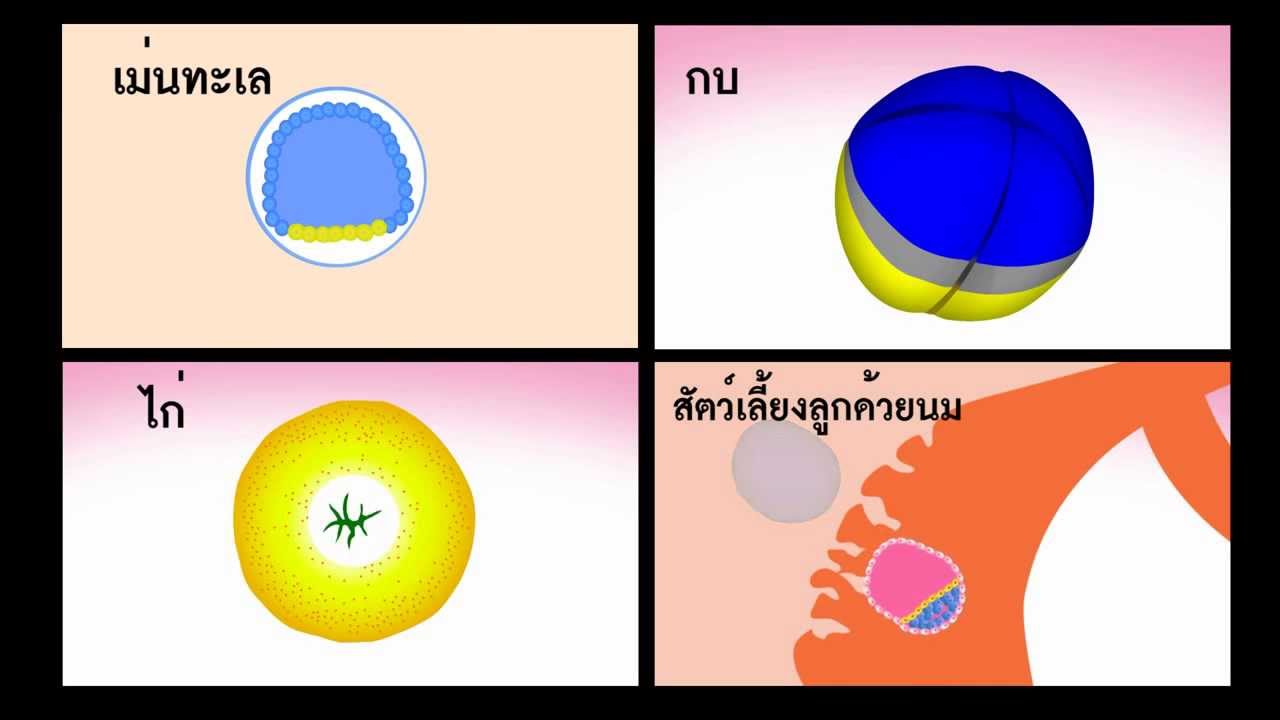
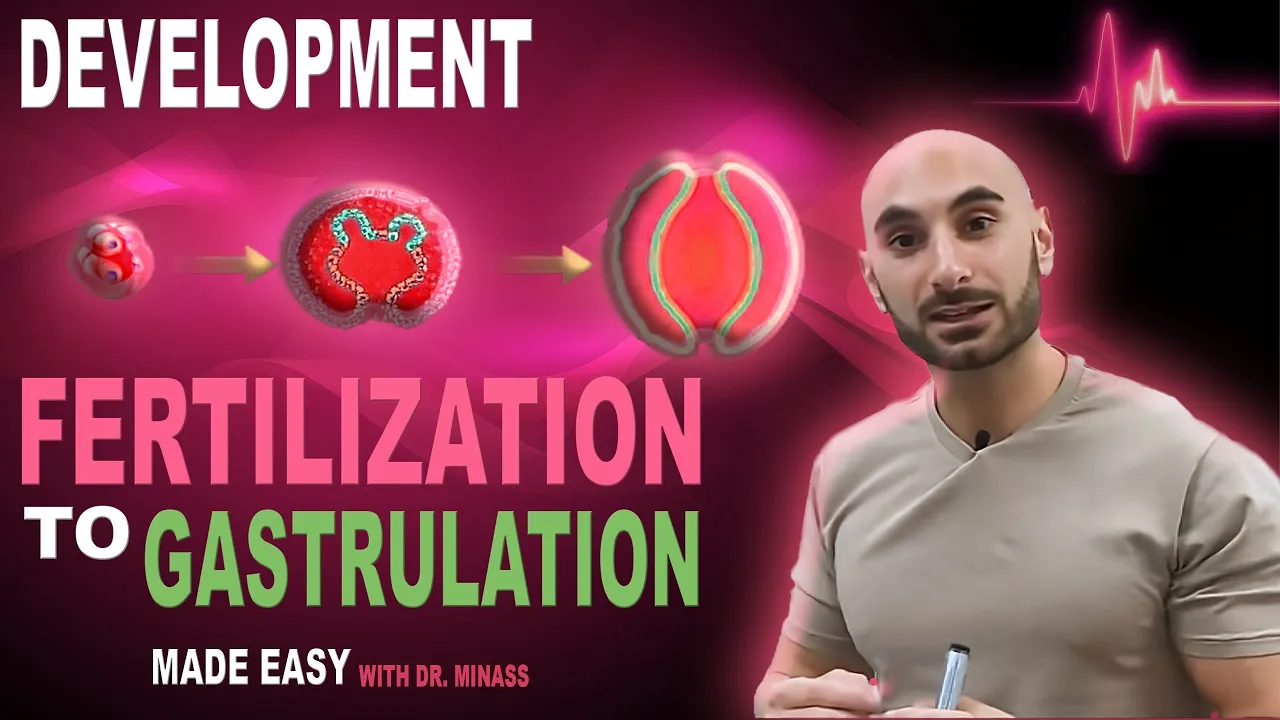
Added:The stages of early embryonic development, specifically cleavage, blastulation, and the morphogenetic movements of gastrulation.
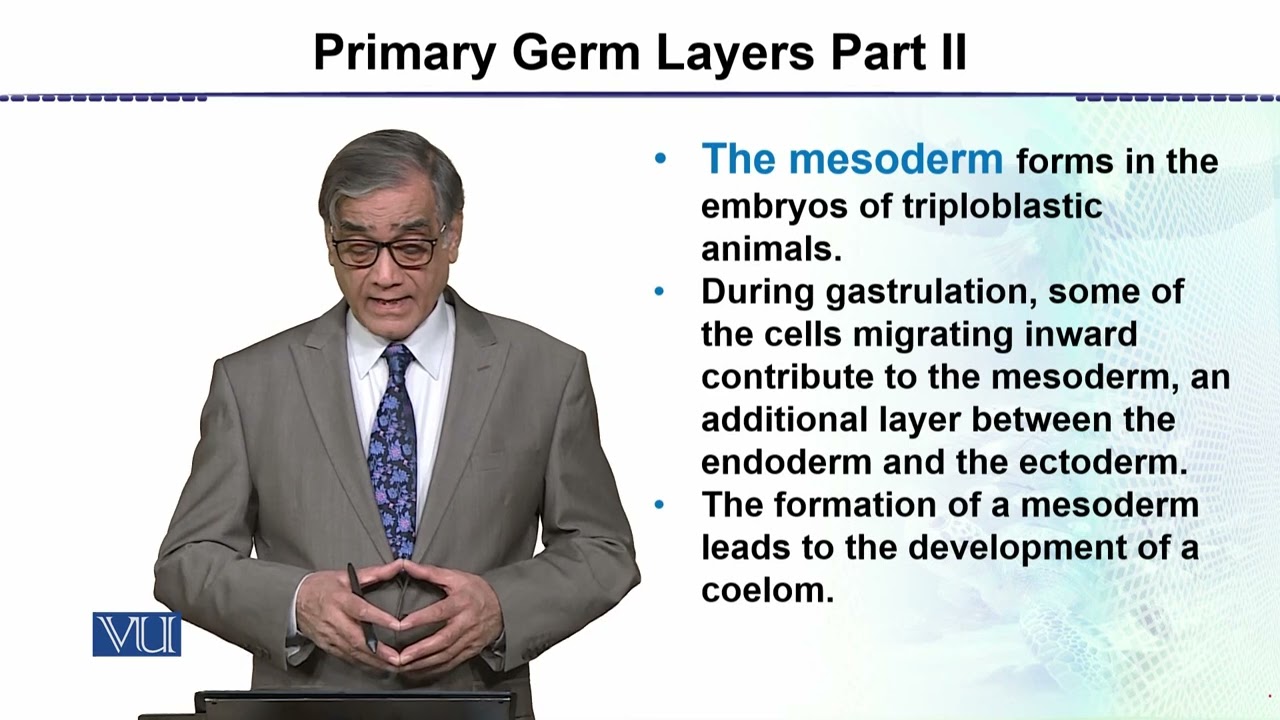
The establishment and identity of the three primary germ layers: ectoderm, mesoderm, and endoderm.
The fundamental concept of embryonic induction, where one tissue signals to adjacent cells to direct their developmental fate.
Basic principles of cell signaling, specifically ligand-receptor interactions and signal transduction cascades.
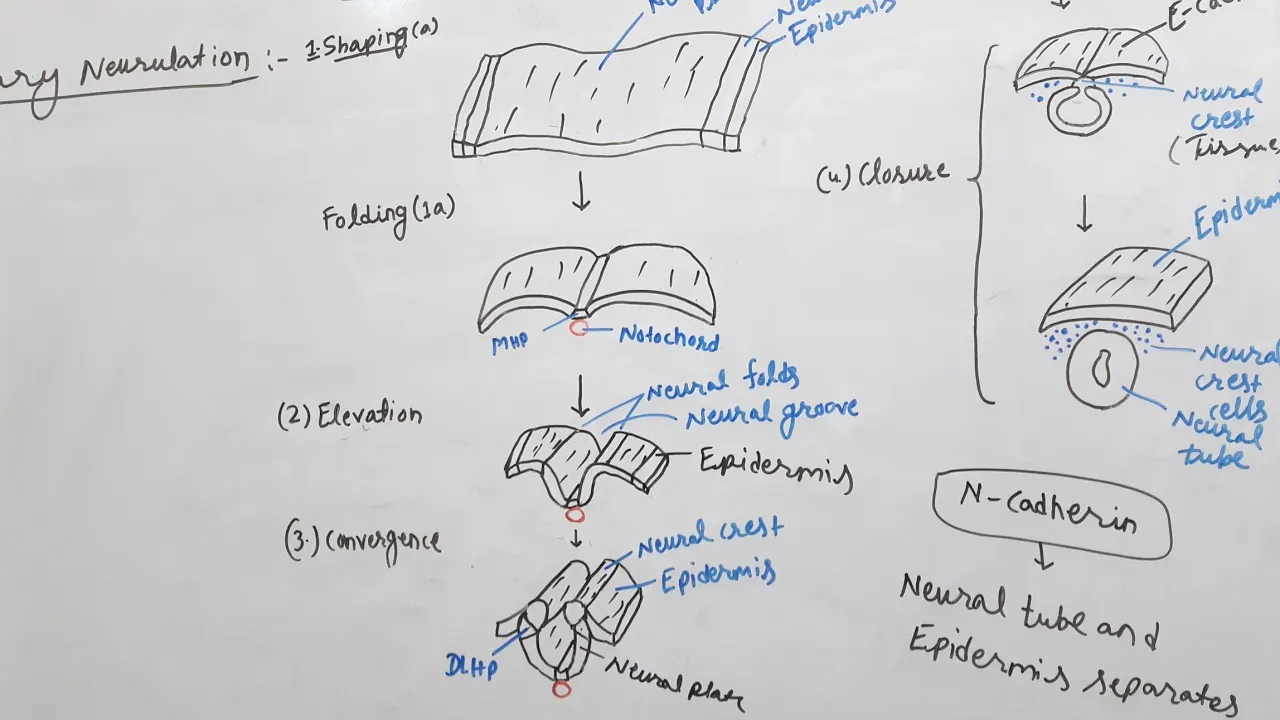
The process of neurulation, including how the neural plate folds to form the neural tube and the subsequent regional patterning along the anterior-posterior and dorsal-ventral axes.
The specific molecular biochemistry of organizer-secreted factors, such as Noggin, Chordin, and Follistatin, and how they physically inhibit BMP signaling.
Comparative embryology and the evolutionary conservation of neural induction mechanisms across different taxa, such as the homologous Sog/Dpp system in Drosophila.
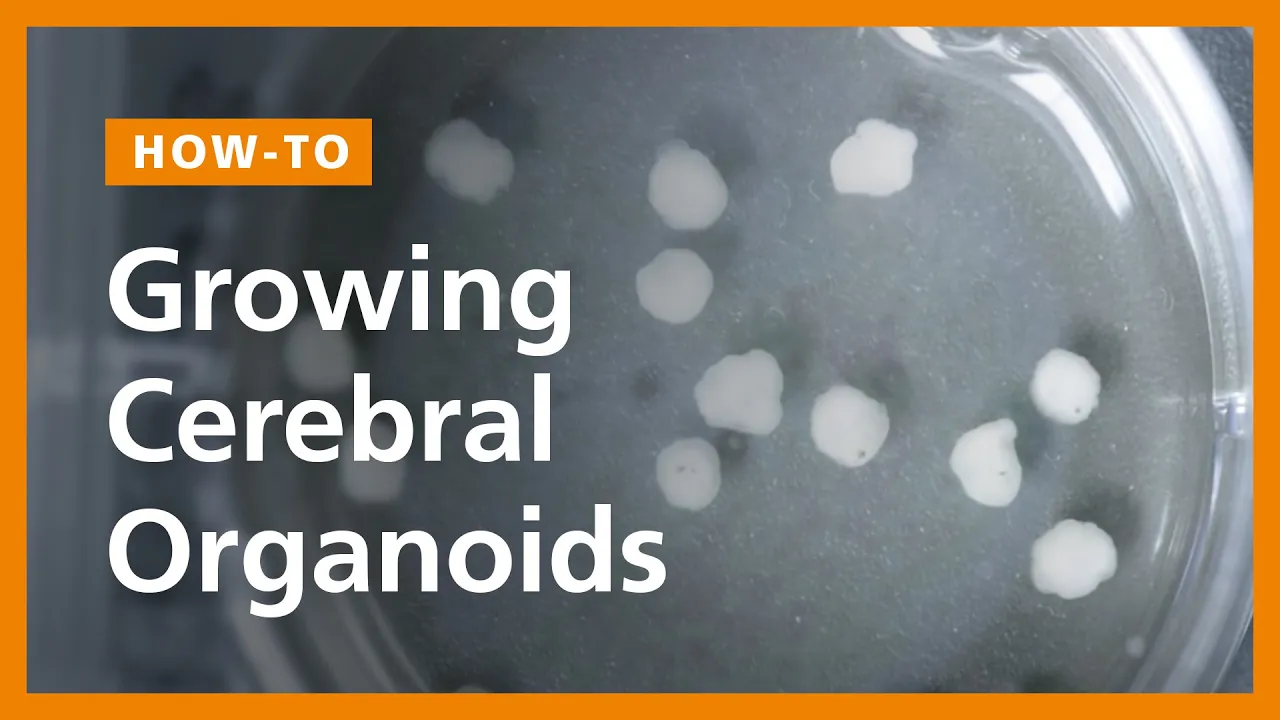
Applications in stem cell biology and regenerative medicine, particularly how neural induction pathways are manipulated in vitro to generate neural progenitors and brain organoids from pluripotent stem cells.
917 views13likes54:27Original Release: 2019-08-09
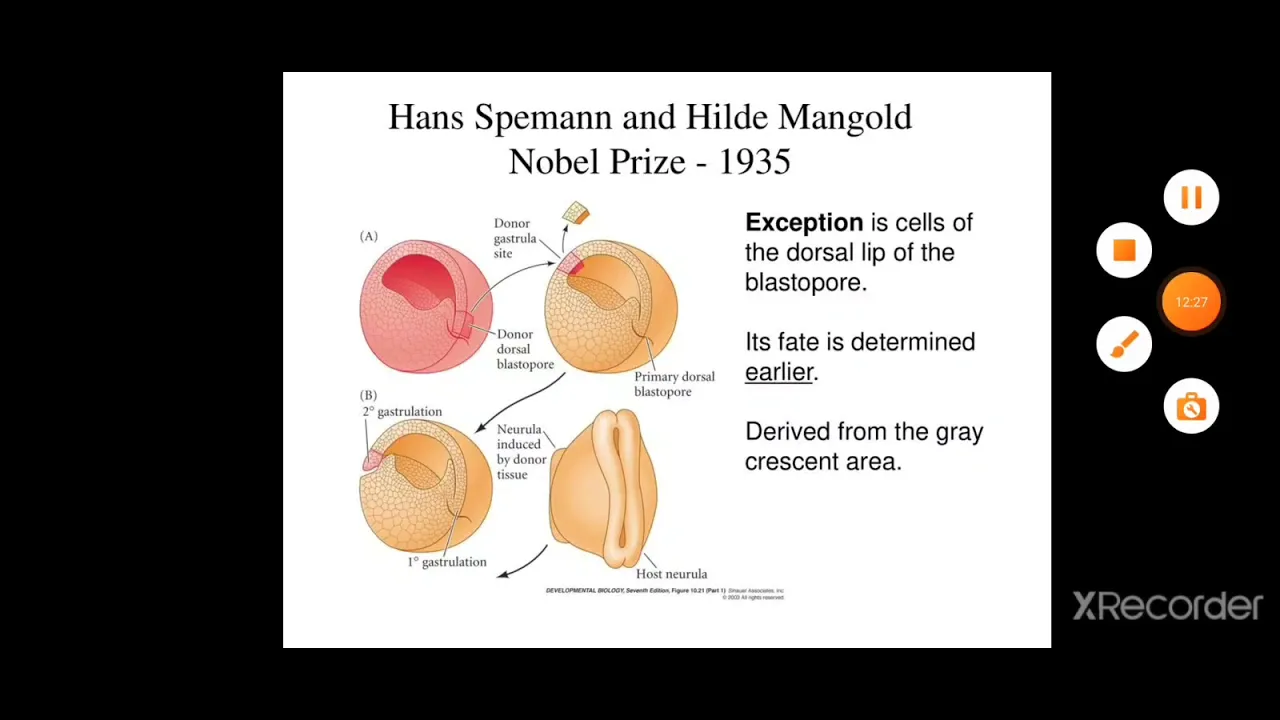
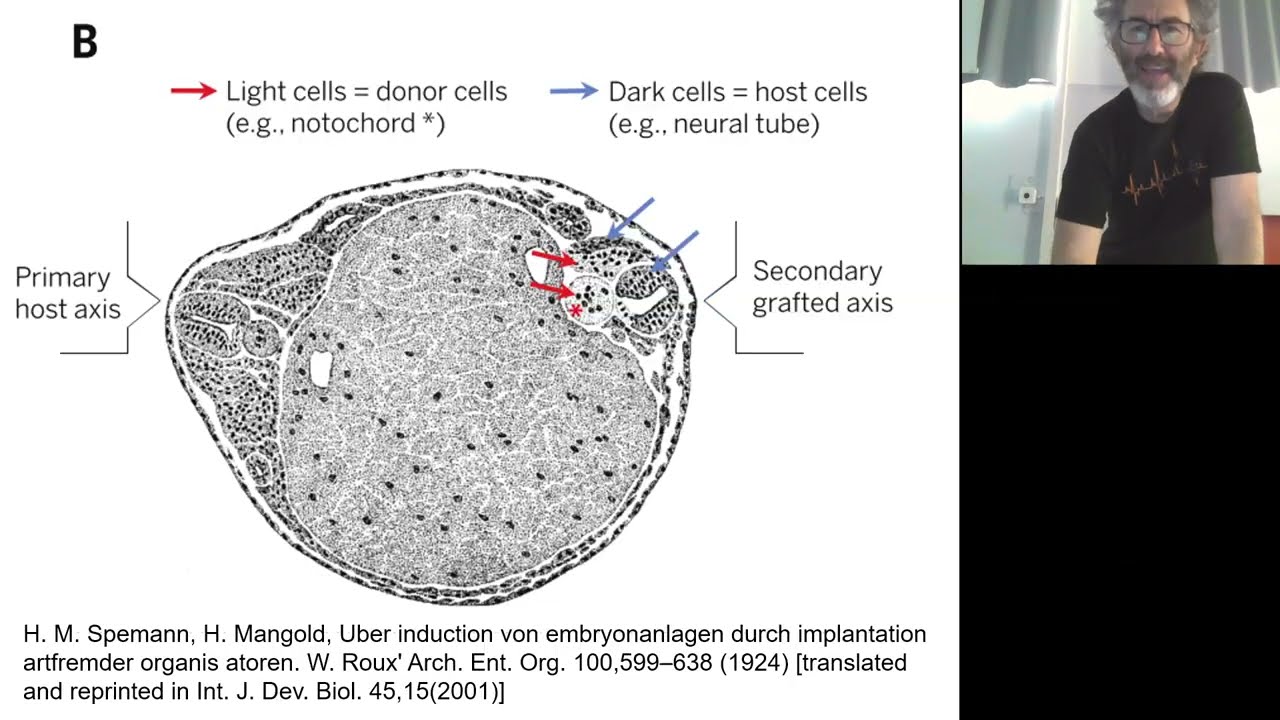
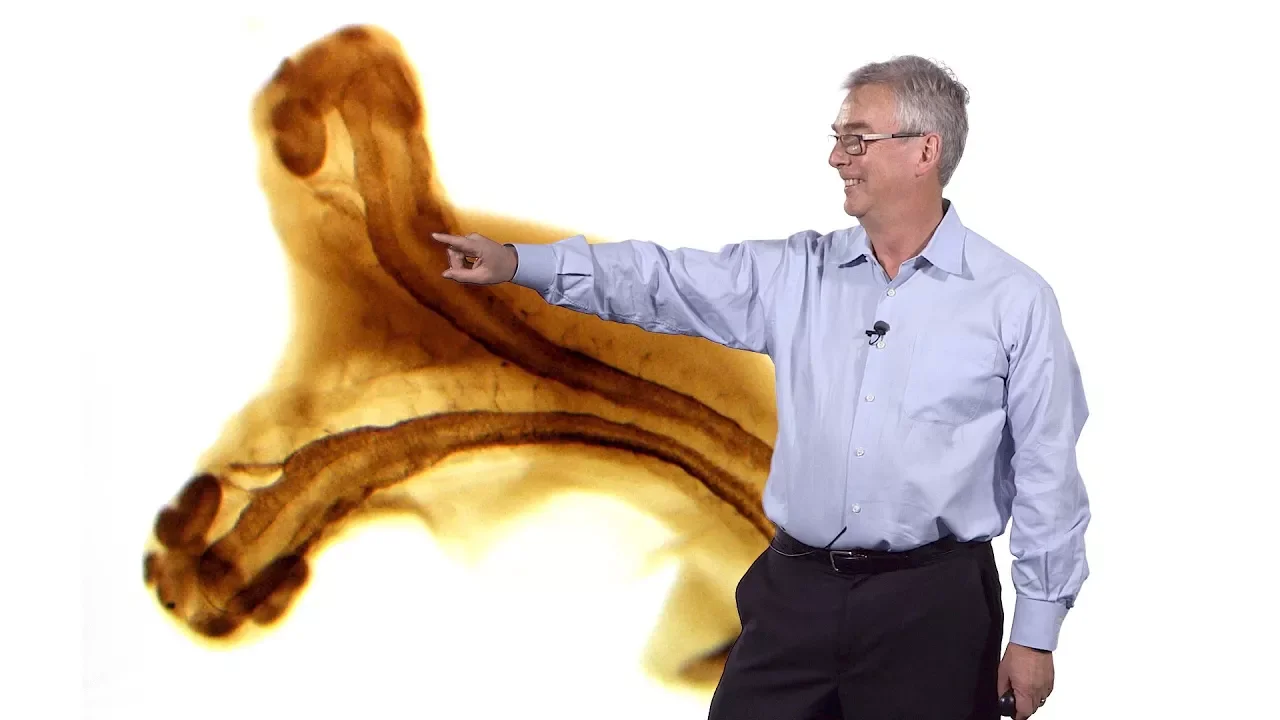
hi there can I get everyone's attention Thanks welcome to the Friday evening lecture it's my pleasure to have you all here so I'll go ahead and Sebastian's not here at the moment so I'll go ahead and do the normal requests that you go ahead and take a moment to silence your cellphone's okay and then to remind you all that the lectures are webcast and recorded so that you can also listen to them on the web after later on and tell your friends about them and finally after the question and answer session at the end of the lecture remember there's a reception in the MiGs room in Swope and if you don't know where it is you can follow the crowds as they go over there so I can say it's really an amazing pleasure to introduce tonight's speaker Richard Harlan so Richards been to me mentor and a role model a colleague and a friend for many many years and so it's wonderful that he's able to come here and give this lecture so Richard he did his undergraduate graduate even an initial postdoc in that other proper Cambridge over the pond and then well I came to the United States and finished did another postdoc and he ended up at UC Berkeley in 1984 and he's been there since then and Richard has worked in the field of developmental biology and he's no stranger to the MBL he's been coming here for many many years and he was a co-director of the embryology course and is continuing to come in fact starting on Monday he's going to be teaching in the embryology course again so Richard's lab is done and himself have done really fundamental work and understanding early events in developmental biology and his main research organism has been the Frog Xenopus laevis and one of the things that he's responsible for us understanding is the phenomena of setting up the axis and inducing particular tissues and I think in in his lecture today he's going to give you a bit of a historical perspective about how experimental embryologists first began to understand some of the events in embryogenesis but they didn't really understand the molecular nature of the mechanisms that were actually going on and that's where Richard did pioneering studies to be able to really understand what those molecules are and how they worked and so and Richard is you know one quite a number of accolades since then including membership for the National Academy and Royal Society and he's and I think it's a a great opportunity to hear first-hand from someone who's really been at the forefront of this kind of work now I have to say I also had planned on showing a lot of embarrassing slides of Richard and in fact I had gathered some I sent down an email and people kindly sent them and then I realized like I am actually talking next Friday and Richard will still be in town and he's not introducing me but you know Richard I think would there'd be payback if I were to do that so I have not done that but but I do want to tell you a little bit about you know the other thing that I think is really amazing about Richard one is he's an amazing educator so I've had the opportunity to teach with him so for many years Richard John Gerhart and I taught a developmental biology class at Berkeley and Richard was a he's very no-nonsense guy when he's teaching those classes and he demands a lot of the students but he's really got a soft heart because every every time we would sit at the end of the course and sum up all the grades and graph them out and I'd start to draw lines of where the different grades were and Richard would always move everything over and he said oh these students worked hard you know and so so he was kind of a softie at heart in that regard but the other thing I really want to say about Richard is is that in terms of what he's done for the field because he's been really selfless and so many of the things he's done so for example he took to five years stints as chair of the department of molecular cell biology at Berkley and so it's bad enough to take one stick doing that but Richard took it upon himself to do that and he served an incredible number of roles on committees in the Society for developmental biology and I think he invaluable role model to many people in that regard because he really sort of you know promotes this idea that you really also have to support the community and be selfless and and and somewhat self-sacrificing in that regard so I think that makes it even more of a pleasure to introduce Richard so I'll let him get on with his talk now thank you well thank you very much niebaum for that very generous introduction we were of course very sorry to lose Newtown from Berkeley at least last semester when I had to teach twice as much as usual but our loss is clearly MBL's gain and I wish him well and after a good start here okay so I'm giving the Keith Porter lecture and I didn't know Keith Porter but he was a Giants in cell biology and I'm going to try and make some links to cell biology animals have cells after all but of course in developing animals there's a lot of signaling that goes on so cells have to send out signals to their neighbors to tell them what to do and so this of course in a matter zone animal or any multicellular organism is an important role and so I'll I'll accept this job of being the Keith Porter lecturer with gratitude and I hope appropriateness so I'm going to talk about the organizer the schmayman and mangled organizer and how it works and I'm jumping the gun a little bit because the classic paper came out in 1924 shortly after one of the authors had unfortunately died in a domestic stove accident Hilda mangled but in 1924 so it's not yet time for the hundred year celebration but I thought I'd get in first this picture shows Jimmy Carter but also Keith Porter receiving the Presidential Medal so I also want to acknowledge that two weeks ago there was an excellent and interesting lecture from Michael Detrick but I hope you all had the chance to go in here about the politics of embryology and hold phrases flight from Nazi Germany I think it's it was it was it's always fascinating to hear insights into how these people thought and worked and although we may not all agree with the thesis that the politics of the Nazi regime effected the experiments that hold Frazer did Sean that there was no nonetheless a a great thesis advanced and a lot of back up material to support that and so I found it really fascinating and I won't say much about this kind of cellular basis of gastrulation but that's something that I and my colleagues have continued to be interested in and these students in the embryology class will be working directly with with some of the Giants in the field at Ray Keller John Wallingford and others okay so now we start so the organizer experiment came about as a result of trying to find out how the vertebrates body axes were laid down how is the vertebrate body plan defined and so there had been some experiments done in the early part of the 20th century particularly by Hans Feynman that illustrated some of the principles by which this worked there did appear to be some determinants that was involved that was segregated early between cells and was responsible for setting up dorsal tissues versus ventral tissues but once it got on to the movements and the nature of gastrulation things were pretty mysterious when Hilde Mangal joined his lab as a student she first worked on Hydra but she found those particular experiments too technically difficult and so instead she was assigned by schmayman who was always described as a stern character too study the the nature of the dorsal lip so here are some diagrams of new to embryos and during gastrulation which I'll go into later and show some movies there is this special part the dorsal neck of the gas flow is about 10,000 cells at this stage maybe 20,000 cells and so the question was if you moved pieces around did they continue to differentiate according to their original fate or did they change their fate and actually I probably should have illustrated another experiment one of the early experiments that was done was to move a piece from up here into the corresponding location or over here if you move this piece from over here into this region instead of developing as epidermis it will develop as neural tissue so it adopted the fate of its surroundings that told you something about the nature of the fate of these cells but the killer experiment was this one where the dorsal lip was transplanted from a donor and briault into this host and the remarkable result was that held of a mangled or held approached shelter she was then got twinned embryos so this is looking at an eerie lighting stage this is when the neural folds are coming up and closing as I'll show later so this is the normal neural folds but round the back where this graft had been put there's a second set of neural folds in neural plate and you can see this white tissue the crucial thing about this experiment the thing that had not been done earlier was to use different species this was something introduced by Ross herons Harrison in the early classes at the 20th century and he had successfully grafted from one species to another in this case is allowed marking because they drafted from a fairly unpigmented newt into a darkly pigmented news so they could track the fate of the tissues after the experiment you can already see here that the graft has gone and made part of the middle of the neural plate so when this is a drawing of Hilde bangles that she shows of a section of an embryo like this down here is the uninteresting normal neural tube that is made but over here is the new neural tube that arises from this this ectopic neural plate and the striking thing about this was that the graft only populated these midline tissues you can see here the light tissue whereas all of the rest of this axis in this case the Semites which will make muscle and the neural tube were recruited from the host and that was an ambiguous because of using this marker now I'll say that this was initially accepted very well a man went on to win the Nobel Prize for his work on this it did come in final criticism because there was an expectation actually by many people that the results the second axis that was specified by this graft might be the result of self differentiation of the graft rather than recruitment of tissues and this reached its nadir probably with the work of Marcus Jacobson who claimed that there was already neural tissue in the graft what are what what happened subsequently though is the really authoritative experiments were done with lineage traces both in Berkeley by Bob Gimlin and John Gerhart and in Cambridge or maybe it was London then by Jim Smith and Jonathan slack showed unequivocally that this what the Feynman and mangled were right that the graft actually induces and organizes the second axis and just to nail that I'm going to show an experiment done by my former student andrea wells in 2009 this is an equivalent experiment done now with Xenopus the frog that we use and you can see here this twin so here's the primary axis here's the induced secondary axis how do we know this is induced of course it may have old self itself differentiated from the graft and here's the proof she used a lineage trace so that was read here and you can see the graft is only given rise to these midline tissues and a little bit of spillover into the muscle but the neural tube is almost completely unlabeled in other words this was recruited and induced by the by the graph so this is an experiment that stood the test of time just to illustrate that it was not completely expected it was really a new thing earlier than the spam and mangled experiment Warren Lewis had done great things elsewhere in embryology had done essentially the same experiment in 1900 for 1907 sorry and he very strongly expected this result because people at that time thought that the region of the dorsal lip gave rise to the nervous system this was before the classic lineage tracing fate mapping done by vote in the 30s that showed really where tissues came from at that time it was surmised that the neural tissue came from the dorsal lip and so when Lewis did the experiment he did the graft and he got the results he expected namely that the graft had self differentiated into neural tissue but when Lewis did not use a lineage tracer he could not distinguish the graft from the host and so as I say here if he uses no marker and I always tell the students this less immortality so crucial to use the marker so you can really interpret the experiment now since I'm here at the NBL I should also give direct credit to a woman who worked here at MBL Ethel Brown because she actually anticipated this experiment working with Hydra and she did indeed use marked Hydra she used Hydra that have lost the symbionts so they were not green and then normal Hydra that were green so these simians provided a green lineage tracer and she could tell that when she grafted in a tentacle from one Hydra to another it would induce an ectopic Hydra an ectopic hydrant and so in many ways you could say that she was really the one that deserved the credit for discovering the organizer and we can speculate about why she didn't get that credit maybe it's because she was a female graduate student maybe it's because Hydra was not considered as elevated as the fine Newt but times have moved on and we will never know okay so I hope I've made the point then that this was an important experiment and showing that this organizer of the early embryo the gas releasing embryo has the ability to induce an ectopic axis I actually just took out a couple of slides because I thought I would inevitably run over time I was going to discuss some classic experiment as shows that not only has the organizer the ability to induce the ectopic axis but it's also necessary so experimental embryology experiments done most clearly again in the lab of John Gerhart show that if you delete the organizer region early then you get no dorsal structures whatsoever in the tadpoles so not only is it able to do it but it's needed to do it you know for some reason I think I have to talk into this microphone but apparently I haven't microphone strap to my face so I'll try and break that habit okay so I want to show you some movies and who better to make movies than me Pam Patel and so rather than share one of the many other movies that I could have I want to give proper credit and a basin's to fearless leader and show this movie to be made in the embryology class with the help of Jimbo Chang so you can see this on on vivid Vimeo okay so this is the normal development so that we can all see what the egg and embryo looks like it's gone through blastula now it's gassed relating it's going to go into near ulation this is a pretty fast 10 past time life certainly fun it's already making anterior structures and then it forms a tadpole that hatches and you can see now the structure of the tadpole I'm not sure if it comes out comes out very nicely on the screen but what you probably can't see and I can't point to it as there's an eye bud here there's a sucker down here these anterior structures this is the brain and the tail so it makes these anterior posterior structures and then the dorsal ventral structures I'm not sure if this is going to last if there's anyone there with another one okay so since we're never allowed to show a movie just once and now you can see what you can enjoy so even if you learn nothing else we can be entertained so there we go we're going through early development this is about two days of development depending on the temperature maybe one day of development and sped up so that we can see the whole process in the hatching so this is one of the reasons that we use these embryos they're big they're yoki the food is inherited by all the blastomeres it's not like a bony fish that stuffs all the food the yolk into an extra yolk cell and develops on top here the embryo Cleaves completely all the cells have some food and so now you can cut them and paste them or isolate them and culture them and so this has been traditionally the amphibian has been a very strong candidate for working experimental embryology if we flip those previous embryos over we see gastrulation happening from the outside and so this is a movie made by Dave shook and Rae Keller and you see here what's going on that during gastrulation which means the formation of the primitive gut the job of the future ectoderm the outside is to cover up the entire animal the mesoderm the meat of the animal goes inside so I can make things like the spine the muscles the kidneys and so on and the endoderm which is largely food at this point all get so enveloped okay so if we just play this through and then stop it we will get back to here okay so this is the onset of gastrulation from there outside and so you can see here this is the dorsal lip that was transplanted in its prey man and mangles experiments it spans about a sixth well it's probably a little less than 60 degrees now but it spans this sector of the tissue so if we cut this out and graft it over into the ventral side it will induce an ectopic access and if we mark it will see that it induced that axis let's continue on what happens is this blastopore spreads around so they eat the yoki food the vegetal cells all go inside and this continues these cells you can see were rolling over the lip and now there's this long process of convergence and extension that elongates the axes brings the neural folds close together so that they can close and so many insights have been brought in recent years into the process of gastrulation and you tube closure neural tube defects in humans from work with this terrific animal if we fix it at this stage and stain it for different RNAs we can see that we can see the organizer by virtue of the genes that expresses so this anticipates what I'll be talking about in a few minutes but here's a nodal three transcript lit up by in situ hybridization in blue and the winter transcript lit up in brown you can see that this dorsal side just at the onset of gastrulation occupies this region where the lip is forming and so this is that special region that we know is we can cut and graft as you probably notice the Xenopus embryo is not famous for its optical clarity we can get around a lot of that by using ex plants which we can image at high resolution but one can image the entire embryo with high-resolution magnetic resonance imaging as done here by Cyrus Pepin working with Scott Fraser and Russel Jacobs so you can see this is a little blurry but you can make out these cells early on and you can see the cleavages that give rise to the holo blaster seal and we go through the process of gastrulation and knee relation so let's watch that again and we'll stop it right here so this is the blast chiller stage about four thousand cells this is where gene expression really turns on in earnest and so already when it turns on there's going to be a difference between the dorsal and the ventral side the dorsal the future back and the future belly to a first approximation and what we know is that it's this region here that has the organizing activity by these kinds of experimental embryology tools the normal fate of this organizer is to track inside so it rolls over the edge as you saw in the previous movie it'll go inside and then this tissue will crawl over the blast seal roof as the blaster seal fins and spreads over the entire animal so now we have this piece of dorsal mesoderm and Amis atom closely opposed to this overlying tissue this is tissue that in the absence of this contact would not make any nervous and that there are signals coming from here that tell this overlying accident to make the to make the nervous system so this is a fascinating process of gastrulation but when I'm not going to talk about much further but I hope you might be one-hundredth is captivated as I am by these kinds of movies okay so we're really starting at gastrulation about 10 hours into development and I'm not I'm assuming that we don't need to talk about earlier events but I I do just want to say that we do know a lot about the earlier signaling events and the breaking of symmetry that give rise to this organizer and non organizer tissue just very briefly it involves a pre localized determinant veg tea messenger RNA which is released at fertilization the protein now turns on these nodal genes which are secreted thank you very much Newcomb that secreted tgf-beta that activates mad - so this is activated but at the same time there's a symmetry breaking event where the beta catenin the wynt signaling pathway activators are shared they're moved on microtubules over to the prospective dorsal side so initially this is cylindrically symmetrical after this rotation the veg T and the beta catenin are different and that gives rise to this overlap on this side where they're stabilized beta-catenin activating wind targets in concert with the knodel's mad - that is activating and by this synergy one generates the organizer so that's a very brief primer on the early events but we're really concentrating on this stage where the organize has already been made there's just one more point that I want to make which is that we can block part of this process if we zap this vegetal pole of the embryo with UV light it prevents the microtubules from forming these determinants do not move and as a result you get this nodal signaling which is radially symmetrical and the beta-catenin even though it at tries to activate genes it's not going to do anything useful form there so it makes an embryo that is completely vandalized and so we'll be using this trick later so I wanted to introduce that here the UV vent relized embryo okay so let's just go back to here I want to make the point and I was going to put in slides to illustrate this that the organizer was required and that the organizer is specified with dorsal identity and there had been many in fact that continue to be many people who argue that this rest of this margin this marginal zone already has patent as a result of different signaling from knodel and although there is definitely different signaling from knodel it doesn't seem to do much because the experimental embryology tells us that at the early of this blastula stage there's no difference between this tissue here and this issue that whereas if we leave this alone and let it be subjected to the normal signals the tissue here well a lot of it will make muscle so this difference between how these cells are initially specified and how they're in rigid have they are ultimately fated it's clear that this region is all sort of bland ventral needs of them and it's only the organizer that's special so I want to illustrate that with a few in situ hybridisation x' if one looks at the light blastula stage not during gastrulation but at the light blaster stage we can find many genes that are expressed in this narrow dorsal sector and many genes that are expressed in the rest and so it looks both by gene expression as well as experimental embryology that there is essentially a binary fate in the initial but in the initial marginal zone of course in the normal embryo this changes very fast and so here we see a an allied checks one transcript that is strong in the organizer but is already spreading around that's the the result of signaling from the organizer the same with the picture I initially showed nodal in blue went 8 in brown very rapidly becomes different due to the signaling from the organizer so in this case the organizers turning off the wint transcripts right next door to it so the point there is that we start with a marginal zone that is split into two fates and we have to generate a lot of things from that ventral mesoderm not just mesenchyme you have to make muscle kidney heart all kinds of good things that we know and love okay so I've already said that I hope with emphasis and we'll get back to the question so what was the question that was approached now of course the importance and the interest of this experiment did not escape other embryologists and many embryologists as well as biochemists decided they would tackle this problem and identify the stuff in the organizer that was responsible for this activity but they were unlucky because the time was not yet right and really we had to wait for the age of molecular biology to make this issue tractable there are a lot of really good experiments done about the inherent fates and the likelihood that you can affect these by fairly nonspecific insults but using Xenopus and some molecular tools we were able to make progress on what it is about the organizer that is special so we thank hilda and Hance for their inspiration and we'll move right on to when Bill Smith joined my lab and I'd have to say that we were talking earlier about the role of chance in in biology and this wasn't chance the defect well it was chance that did affect me bill Smith went to work with pH Ambon in France who's a brilliant molecular biologist but he didn't like the hierarchical style of the grand fromage there so he he wrote to a few people in the Bay Area to escape back to his homeland and fortunately I was the only one that responded so I was lucky enough to attract bill to the lab and as I say it was a tremendously talented molecular biologist and he decided initially to try and identify proteins made by the organizer but very quickly realized that that was a ridiculous enterprise and instead turned to the tools of molecular biology I had actually tried this initially with Bob Gimlin in 1985 but we we were I always say ahead of our time I think we were just too presumptuous and it didn't work then but when Bill did it we knew a lot more and we were able to take RNA from gastrula stages he turned it into a really first-class cDNA library and laughter that has a bacteriophage promoter which is very faithful so we can get synthetic transcripts that run off at this restriction site in highly pure and functional form so we can make synthetic messenger RNA synthetic caps messenger RNA from these plasmids which of course is a very powerful technique initially developed for Xenopus by Paul Craig and Doug Melton and we can do that with a whole library so that we can take a library say of ten thousand clones on a plate scrape the bacteria off isolate the plasmids and then ideally when we transcribe it we'd have ten thousand different synthetic messenger rna's in there which we can assay so our assay goes back to this trick I told you about where we can ventral eyes embryo by irradiating the one cell stage with UV light if we then come back and inject these library RNAs into that four cell embryo we can get some effects that we can see and actually I don't once again I need to credit NEPA but at that time lille was wanting to isolate a neural inducer and napalm had developed an antibody against drosophila and grilled that cross reacted with Xenopus and grilled so our assay was going to be an immuno stained foreign grilled protein in these injected embryos because we thought we just get some kind of disorganized tissue in the in the embryo instead we got this remarkable result where the injection of the RNA was able to rescue normal development to different extents and I'll come back to that in a minute but first we cloned went ate and we realized that when Tate was not our prime candidate is not expressed in the organizer so bill went back to the library and cloned a gene we called noggin and it we call it not in because if we inject it at increasing doses then we can take these ventral eyes embryos go through a stage where they're completely normal and ultimately we could end up with a high dose of noggin with these little noggins down here that are just head so this was a initial and now we're used to it but so one gets used to everything it becomes trivial but at the time it was astonishing to us that one could inject the single RNA into the early embryo that would normally develop no axial structures and it could at the right dose become a completely normal tadpole but of course this is really mimicking some event that have been seen by earlier embryologists particularly Hulk freighter where if you have an embryo that's poised to respond and you give it the right kick the embryo will take that kick and interpret it as a specific signal and develop normally from there on it will make the normal signals and the normal pattern so I think in retrospect it's a reasonable result this certainly is the result so we don't need to argue about that so this is an assay that bill started a whole number of different genes were cloned as a result of this and several of them were not identified first in drosophila certainly at that time which they were talking the early 90s most genes that were important in vertebral vertebrate development were cloned by their sequence similarity from interesting genes in Drosophila but of course Drosophila has been a little careless over the millennia and has lost some genes that are otherwise very widely conserved so genes like noggin or DKK cloned by Christoph newsgroup these are genes that are not present in Drosophila but which we could access by this functional expression cloning method okay so now again I already shown this once this is an in situ hybridization done back then to embryos and if this is the blastula stage about probably about 8,000 cells you can see noggin expressed this is the dorsal side this is the region that we know has organizing activity if we look up on it from the bottom we can see that 60-degree sector that had been defined actually by Ron Stewart as having organizer activity and this continues noggin is expressed in the in the gastrula and then during neural plate stage expressed in the notes cord and the head Museum so it was exciting because it is expressed in the organizer and the sequence immediately predicted it was a secreted protein and indeed it is a secreted it's a very well-behaved one we were very lucky compared to those who work on winter proteins which are biochemically ugly that noggin is very well behaved and we could make it as a reagent by either injecting RNA and frog other sites and collecting the secreted protein which we did initially with mike wu or later on making cell lines that express it so we could prepare noggin as a reagent and that allowed us to test more directly what aspects of organiser activity noggin might be able to substitute for might it be the only protein that does this or is it only a partial answer the two simple assays that were employed with this one here where here's the schematic lake gastrula with the organize in this bland uniform ventral mesoderm we knew from earlier experiments that if you cut out the organizer and cut out the ventral mesoderm and put them together the organizer would induce muscle in that ventral museum otherwise this would just develop as blood and Reason crime so it's simple answer simple experiment we cut out the ventral mesoderm soaked it in nog in protein and sure enough those ex plants made muscle and other tissues so this signal the axon the mesoderm this so called dorsal izing signal from the organizer that that patterns the mesoderm induces muscle and other structures nagin can mimic that this was a little more challenging this is the question of whether noggin could induce neural structures and partly because we didn't really understand the importance of timing at the time but we did an experiment at the gastrula stage and this is a cutaway view of the gastrula again this is the dorsal mesoderm that's gone inside the overlying dark blue prospective neural plate that will develop if we leave things alone and over here is the prospective epidermis that are wood so this will all come to cover the embryo this blue tissue but over here the important thing is we can cut out this piece of tissue and put it in culture in a simple balanced Saltz medium and it will make epidermis so the question was could we take it at this stage and ask what noggin could do and so that's what was done by Teresa Lam and and connect and others in the lab and so this is the design of the experiment this shows it done a little bit earlier and so this earlier stage we can cut off this prospective ACTU d'oeuvre or animal cap leave it alone it will roll up and become epidermis by now there's a lot of people who had had identified the authentic mesoderm induces in the embryo active in as good mimic of these and so many people the Smith group the Melting group and others show the active in could act on this this animal cap tissue to induce all kinds of tissues muscle notes cord blood and so on however this is a mixed bag of tissues and the neural tissue that was in there we believe and actually Chris Kenton approved that neural tissue that's found in the sex plant is secondary to the formation of these tissues which are the descendants of the organizers so this is inducing some organizing so that was the mesoderm inducer doing as what as advertised but when we treated noggin we've got a very different result we got no Me's Adam induced we just got epidermis and neural tissue a little slice of epidermis around the edge neural tissue in the middle and so noggin was able to induce this naive ectoderm to become neural tissue without enemies a dermal intermediary and so we argued it was a direct neural induction the other experiment that argued it was a direct neural induction goes back to this previous slide by now these cells have lost their ability to respond to active in they're no longer competent to respond to active and you can put on as much as you like and they pay no attention okay but we knew that the organizer was still able to induce neural tissues so taking animal caps off these cells and doing the same experiment we were able to show that noggin and not act event was able to divert the face of these cells into neural tissue so by those two criteria we argued that noggin was acting as an authentic neural inducer in the animal this is some supporting data these are control inserts you hybridizations for neural tube in this case we could explants in the absence of noggin or we can treat them with noggin by now we had access to some extremely fine human noggin a a very fine vintage made by Eris economy teased at Regeneron pharmaceuticals and so we could really dose these guys up with noggin and you as you can see they potently turn on this neural marker if they do so in the absence of mesoderm here this is looking down on an embryo like this staining for a mesa dome particularly the muscle of notochord active in the mesoderm inducer works as advertised Nagin doesn't induce any of this tissue so again Nagin is inducing neural tissue in the absence of any of these potential intermediaries and so it's a an authentic neural inducer in this case the icing on the cake I think was to ask what kind of neural tissue is made it's sort of pretentious to think that noggin could be the sole protein that's mimicking the organizer and so actually it's reassuring to find that it can't do everything it only induces anterior tissues in these X plans so here's a cement gland marker is turned on by noggin this is a forebrain a midbrain marker you can see in the tadpole turned on by noggin but even a little bit behind this where an grail is expressed that's not turned on so noggin only turns on these extreme anterior fates and not anything posterior so that raises the issue of what else is there that is mediating the full anterior posterior array of tissues from brain to spinal cord although the brain may be Woody Allen's what was that I forget which favorite organ it was but it's not enough you need that spinal cord okay so noggin was a new molecule and in the pretentiousness of the time when people were discovering new signal transduction pathways we wasted a year trying to find a signal transduction pathway activated by noggin but thanks to some excellent work done by Chip Ferguson's group that there was a clue that noggin might not be acting on a signal transduction pathway but rather acting what this was done in flies it could actually lock the fly equivalent bmp4 de Capone's pleasure and so we'd been a assembling all sorts of reagents to test how it worked we were very quickly able to show that Nagin works by blocking the mp4 and so at the same time we've been doing these experiments with Nagin and sharing that it could dorsal eyes embryos an induced neural tissue there were other groups who had taken the cue from the importance of the tgf-beta family and look for tgf-beta family members in Xenopus and mouse and others so Brigitte Hogan's group Chris Wright Jim Smith's group and other groups had been looking for genes related to the tgf-beta and the bone morphogenetic proteins all popped up these are the course that have initially been identified by Marshall Urist in the 1950s as something that's present in bone matrix that when transferred into another organism into the muscle would cause the aggregation of chondrocytes formation of cartilage followed by ossification and even bone marrow formation so there's some essence in the Catholic in the bone that was there was acting like this and genetics Institute did the experiment of extracting from 60 kilograms of cow bones 6 micrograms of active protein and they can most of the ingredients of that were related to tgf-beta x' so they were the bone morphogenetic proteins identified first by marshal Urist s-- assay but now found ubiquitously indeed the bmp4 pathway is one of the most ancient it's found in all animals and so it's a really basal pathway that is as evolution likes to use useful pathways is used over and over again in the development so noggin induces dorsal structures BMPs induced ventral structures so it certainly made sense that there would be an antagonism between them and it's a very simple antagonism this was the peak of my biochemist career working with Lyle Zimmerman and getting advice from none other than Michael Chamberlain on what is a KD he actually said that you have to use molar concentrations of reactants to the terminal KD which i think is wrong but anyways it wouldn't have worked for us because logging is so active we wouldn't have been able to measure the KD but this is the simple way it works normally the BMP will bind to its two receptors bring them together and that will cause a downstream signaling pathway noggin binds directly to the BMP with extremely high affinity and basically takes it out of the picture so these do not come together and there's no pathway that is activated there and so to state it simply then the way that noggin works is by blocking a signaling pathway rather than activating it and as many people have made the point this shows the neural induction and this was first advanced by a Libra van Lew and Doug Melton in blocking the active in receptor are actually blocking the BMP and active in receptor that blocking a signaling pathway can be just as informative to the Ambria as activating it this is a case where blocking a signaling pathway there's something real it's near Eliza's tissue makes the nervous system and authorizes the needs of them so that's one of the important principles that emerge from finding these authentic neural inducers that block they block the pathway and then Jake Rafi's work this is not our work a nice crystal structure between noggin and BMP seven shows that this is exactly how the crystal looks noggin is a dimer and you can see these arms embrace the BMP dimer and so it's not surprising that when the BMP pieces of BMP that normally bind the receptor are covered up with this blue protein they're not going to bind and indeed we showed that noggin could completely block the binding of BMPs to its receptor so a nice simple mechanism so that leaves us with the idea that during normal development we have these initial territories laid down the epidermis up here prospective epidermis the mesoderm with a sector of organizer and the endoderm which we always ignored at that time because it's too complicated and the idea would be that these are all producing BMPs but locally the organizer is producing an anti BMP making a BMP free zone and this would lead to neural induction and the ectoderm and dorsal ization in the mesoderm so is this an adequate explanation of the organiser function certainly in these gain-of-function experiments where we add RNA encoding noggin or add the noggin protein we can see that that is enough to activate the pathway but if we do a loss of function does it show that this is actually a required mechanism and this is this is an important question because there's a pesky guy somewhere in the audience Claudio Stern who with experiments on the chicken advocated the view that noggin and other BMP antagonists were modifying where the neural folds would form and not necessarily a priority inducing neural structures and so that it was important to ask is this actually a useful mechanism in normal development by loss of function experiments because in the meantime we discovered as with many vertebrate pathways that this is not a simple pathway with one protein Ali brevin lil showed the Fowler Staffing could induce neural tissue and you can see over the course of development it turns on in the organizer editor reverses group yeah shiki societally an editor but clone gordon you can see that's expressed through gastrulation in the organizer his noggin Bill Smith also clothes nodal three another BMP antagonist that also is expressed in the organizer and then Cerberus was also cloned in a Dedra versus lab and it was more widespread but certainly initiates in the organizer so this is sort of a conundrum that and how often happens with vertebrates you've got in this case five different genes that essentially do the same thing why are the five genes are they all doing something subtly different or are they just the way it is because after all evolution uses what works doesn't necessarily have to design it to be optimized so this was also a problem because of who answered to do the loss-of-function experiment it will be hard to do for all these five genes fortunately we were able to use morpholino oligonucleotides these are translation and we use them as translation blocking reagents they work by hybridizing to the messenger RNA they're extremely stable they're uncharged and extremely non-toxic so you can put them in cells at a concentration that will block translation so this is our loss-of-function experiment where we would inject poly stats in court in a noggin morpholino x' into the egg and then ask what happened as i'll show this lit resulted in lots of axial structures we're injecting a lot of material so we worry a lot about a specificity of the of this experiment so we have to do it an SQL organ from a pufferfish which is not touched by these morpholino x' and then we can assay them at later stages for what happened so here we have single and double knockdowns as we've previously found with a injecting antibody to noggin blocking noggin does really nothing similarly for follow statin as editor reverses group first reported blocking Corden does have an effect on the size of the head but maybe this is because they have overlapping activities so here we're doing pairs and we can see now we're getting more extreme effects they were caught in an agonal cord and the false statin but ultimately of course we had to do all three so here's the control this is the neural plate lit up by in situ hybridisation and that is completely eliminated by this cocktail of poly satin cording and noggin reagents and we can rescue this with the pufferfish noggin so this demonstrates that we're not just killing off tissue with a horrible concentration of morph Alina's but we can rescue it similarly other dorsal tissues are eliminated here's the muscle and this is rescued and the midline notes called tissue at this stage also lost and rescues so the triple knockdown does seem to do the job and satisfies this criteria in the loss of function that this is a mechanism that is important in normal development normal formation of dorsal tissues we did this other experiment also because we were really nervous about the potential toxicity of these morpholino x' where we decided to rescue the phenotype with even more morpholino so here we're blocking the BMP antagonist but of course if we block the BMPs that should rescue so we're we're now putting in a 100 nanograms of reagents when the poor Embree only has a nanogram of total RNA so here's control we eliminate the neural plate with the cocktail and we get it back with these more morpholino so those are our controls at the time now we've verified this with genetic knockouts using CRISPR cows so my confidence in that result I'm gonna skip these slides and summarize and finish here so I was hoping to talk a little bit about formation of the post anterior-posterior axis but I usually miss time things and so I'll just say that although noggin is and inducing anterior structures we now know and we're continuing to study the mechanism whereby fibroblast growth factor and wynt signaling induce posterior tissues interestingly they act together and now we know that they converge on enhancers together to activate these genes and so we're studying now whether they work in response to a graded activity of fgf and went in their response or whether it's a temporal dependence the jury's still out but that's that's the topic that is open and is under study so with that I will skip forward and embarrassing numbers lights and thank those who did the work over the years I've acknowledged them I think as I go along and so I'll stop and take any questions thank you very much and napalm is in charge here and I'm not a microbiologist but what what happens if you go upstream and look for what causes Nagin to be released what causes noggins to be expressed I'll be telling the embryology students that on Tuesday afternoons they come to me it is a mixture of it so it's a mixture of pre localized detergents detergents pretty localized determinants and induction so there are determinants down in the vegetal hemisphere that induce meas atom is the beta-catenin activating determinant that is rotated to the dorsal side so it's that convergence of those two signaling pathways that synergizes to activate organiser genes that answer the question so I was wondering what would happen if you down regulate BMP in a normal embryo would that actually have the same effect as sort of a breeding noggin yes and that experiment was done by Eddie durables his lab particularly Breda Revis I did beautiful experiments along those lines there's a lot of BMPs in the embryo just as there are a lot of antagonists and there are some expressed even on the dorsal side so it becomes a little hairy what happens but sure enough if you knock down enough the BMPs the entire accident is neuralyzed also so it's pretty remarkable that injecting an RNA into the embryo can in of a thing that's whose expression is very local and that should be important and you inject it into the whole embryo and now you rescue the pattern so how does that work I mean where does the now the localized activity right that works in a way that I should have explained that is that we're not injecting at the RNA so that it's diffused through the whole embryo we put it in locally you actually put it in a four cell stage usually into one blast Amir and so it does get a localized expression which rescues normal development we have put it in radially and sure enough you get a radially neuralyzed embryo with no posterior structures so you can do that experiment but putting it locally is more informative thank you need [Applause] [Music] [Applause] you want to do the reminder about the bank group I think everyone knows speaker this game is very anything you know I was I was about to go tell somebody and then I think it I think it's fireworks yeah I was I was about to get up and then the sizzle thank you she's a ton of a bit better artist name
Up Next
82:58
Neuronal Migration Disorders: Embryology & Pathology Explained
@NeuroscIQ
6.2K views•2020-02-22
50:12
Bacterial Communication: Quorum Sensing and Biofilm Formation Explained
@JHUAAP
12.6K views•2011-06-28

5:35
Enteric Nervous System Explained: The Gut's Brain | Neurobiology Lecture
@alumniu6029
438 views•2018-09-12

7:08
Bacteriophages: Earth's Deadliest Killers and Future Antibiotics
@kurzgesagt
34.6M views•2018-05-13
Related Study Plans & Knowledge Roadmaps
Structured learning paths in Biology
biology
RNAi: Biogenesis, RISC & Gene Silencing
01Molecular Biology Foundations: DNA to Protein
02Introduction to RNA Interference (RNAi)
03Molecular Biogenesis of miRNA and siRNA
+ 2 more learning modules
10h5 modules
Explore Roadmap
biology
Mycorrhizae: Signaling, Biophysics & Ecology
01Foundations of Mycorrhizal Symbiosis
02Molecular Signaling and Root Colonization
03Biophysics and Bioenergetics of Nutrient Exchange
+ 1 more learning modules
11h4 modules
Explore Roadmap
biology
Circadian Clocks: TTFL, SCN & Periphery
01Foundations of Molecular Biology & Gene Expression
02Introduction to Chronobiology and Actograms
03The Core TTFL: Molecular Architecture of the Clock
+ 3 more learning modules
14h6 modules
Explore Roadmap
biology
Population Genetics: Math, Drift & Selection
01Genetic & Probability Foundations
02The Hardy-Weinberg Principle and Baseline Models
03Mathematical Modeling of Natural Selection
+ 3 more learning modules
18h6 modules
Explore Roadmap