












![[2027 수능특강 독서] #인문예술11 #기원본질주의 #수능특강 #비문학 #국어한방에끝내자](https://i.ytimg.com/vi/ZMGiPhcHC04/maxresdefault.jpg)


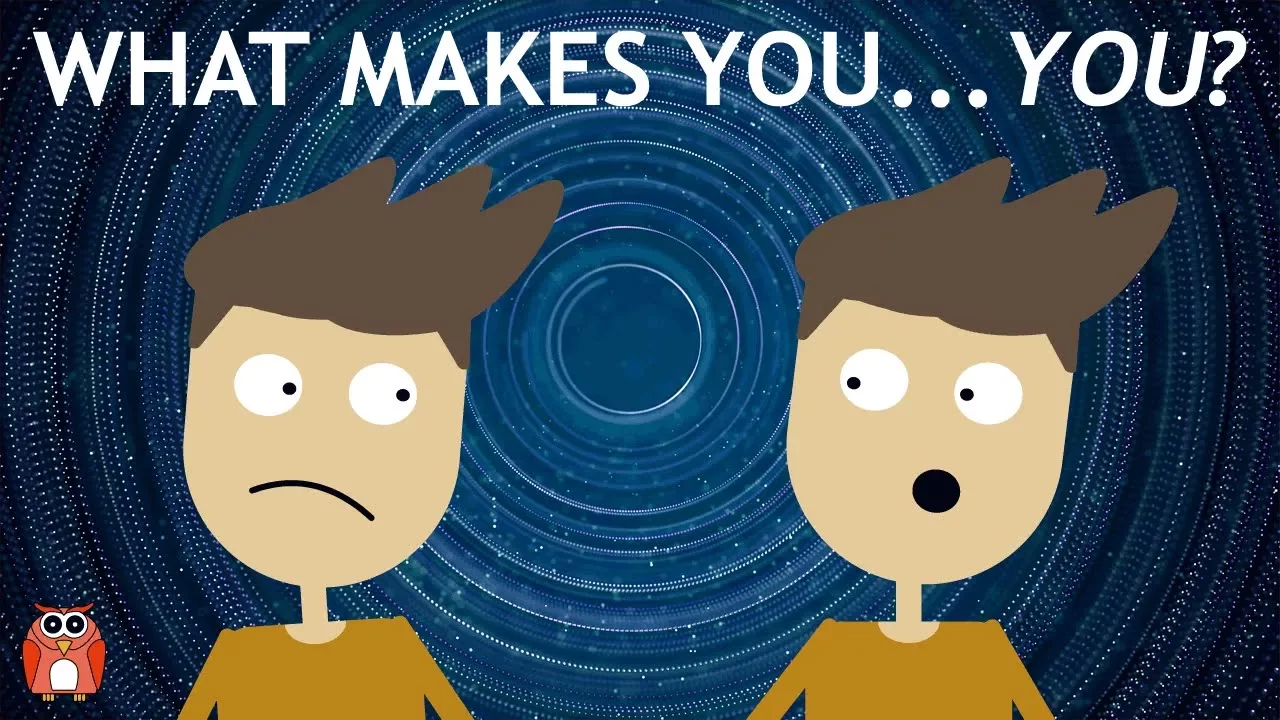
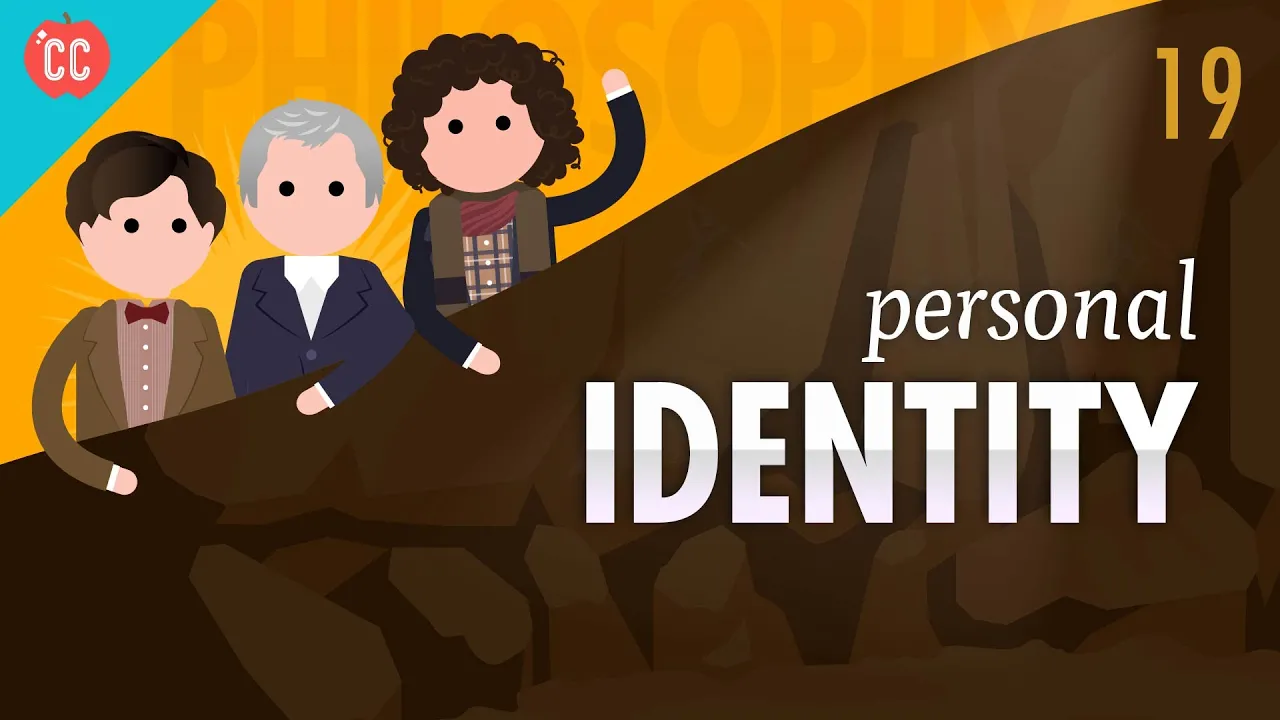
Identity refers to what makes a thing uniquely itself, and philosophers analyze how objects persist over time through concepts like essential properties (core characteristics that define what something fundamentally is) versus accidental properties (traits that can change without altering the thing's fundamental nature); for example, a ship or person can undergo gradual replacement of parts or roles while maintaining identity if essential properties remain intact, but complete transformation into a different category (like turning a tree into notebooks) would constitute a loss of identity.
Philosophy of Identity: Essential and Accidental Properties
Added:Introduction to Metaphysics: A basic understanding of the branch of philosophy that examines the fundamental nature of reality, existence, and being.
Qualitative vs. Numerical Identity: The distinction between two things sharing the exact same properties (qualitative) versus being the literally identical single entity (numerical).
The Philosophical Problem of Change: Understanding the ancient paradox of how an object can change its parts or attributes over time and still remain the same object.
Aristotelian Substance and Attributes: Familiarity with the foundational concept that objects consist of an underlying substance decorated by various attributes.
Theories of Personal Identity: Exploring advanced views on what makes a human the same person over time, such as John Locke's psychological continuity theory versus bodily continuity theories.
Endurantism and Perdurantism: Examining temporal metaphysics, specifically whether objects exist wholly at any given moment (endurantism) or have 'temporal parts' spread across time (perdurantism).
Mereology and Composition: Investigating the philosophical study of parts and wholes, addressing questions of when a collection of parts constitutes a single new object.
Saul Kripke and Modern Essentialism: Exploring 'Naming and Necessity' to understand how essential properties function in modal logic and possible worlds theory.
1.6M views29.1Klikes9:09Original Release: 2016-06-20
Crash Course Philosophy is brought to you by Squarespace.
Squarespace: share your passion with the world.
There’s an ancient Greek legend about a ship that launched from the port of Theseus, and sailed around the world.
Probably not around the WHOLE world. Just AROUND the world.
During its journey, the ship encountered many dangers.
Storms ravaged its sails, which had to be replaced.
The floorboards gradually gave way, and had to be changed out, one by one.
Eventually, crew members decided that they liked the look of some island or another along the way, and stayed behind.
And as the ship sailed on, more and more of it – and its crew – was replaced, until finally, not a single original plank of wood, or hand on deck, remained.
Now here’s the question: When the ship finally returned to Theseus, was it the same ship that left?
The answer – whether we can find it or not – lies in the concept of identity.
Philosophers describe identity as the relation that a thing bears only to itself.
So, whatever makes a thing uniquely what it is defines its identity.
And if two things are identical, they’re said to share an identity relation.
Now, whether two things are the same might seem blindingly obvious.
But of course it isn’t. Because: philosophy.
The philosophy of identity can get pretty slippery, largely because, like the Ship of Theseus, things change.
And when they do, they eventually stop being what they are, and become something else.
This goes not just for mythological ships, but for all kinds of things.
Like, this mug can acquire a new identity. And this money.
And you. And even … Batman.
[Theme Music] So, riddle me this: Is Batman identical to Bruce Wayne?
And when I say “identical,” I don’t mean that they just look alike.
I mean that they share the same identity – they’re literally one and the same.
So, you might think the answer is yes – Bruce Wayne and Batman are identical because everyone knows that Bruce Wayne is the man behind the cowl.
Not only that, you might say: Bruce Wayne is the very essence of Batman.
He saw his parents get killed in that alley. He became the Dark Knight.
No one else could take his place.
But hold up. People have taken his place.
It turns out that Dick Grayson, the original Robin, has pinch-hit for Batman, donning the cape and cowl to protect the streets of Gotham in his boss’s absence.
And so has Police Commissioner Jim Gordon.
After Bruce Wayne was reported dead, he reluctantly accepted the role himself.
Both of those guys have been Batman.
So if the person inside the costume doesn’t make Batman Batman, then what does?
17th century German philosopher Gottfried Wilhelm Leibniz came up with a principle that might help us solve the puzzle of Who Batman Is.
He called it the Indiscernibility of Identicals.
The idea is that, if any two things are identical, then they must share all the same properties.
If Leibniz is right, then the Ship of Theseus became a new ship as soon as that first plank of wood was replaced.
As soon as its parts were not all original, then the ship suddenly acquired a new property.
And with a new property came a new identity.
So likewise, Bruce Wayne and Batman can’t be identical, because they have different properties.
Bruce Wayne, for example, has the property of being a millionaire playboy, but Batman doesn’t.
That guy is all business.
Meanwhile, Batman has the property of having fought the Joker, but Bruce Wayne doesn’t.
And the different versions of Batman aren’t identical to each other either.
Because the person wearing the costume, even if it’s the exact same costume – which it usually isn’t – is going to have different combat techniques, and even, say, a different moral code.
So, is there a limit to how much something can change, and still be the same thing?
Let’s head over to the Thought Bubble for some Flash Philosophy.
Think about this little puzzler, originally offered by contemporary American philosopher Alan Gibbard.
A sculptor takes a lump of clay, and names it Lumpl.
She then forms Lumpl into a statue, which she names Goliath.
Are Lumpl and Goliath identical?
Our intuition might say yes, because they’re composed of exactly the same amount of the same physical stuff.
It’s been kneaded and molded into a different shape, but still: No part of Lumpl is not Goliath, and no part of Goliath is not Lumpl.
But consider this: If we wreck the statue, and smush into into a big blob, Goliath is gone, because part of what it means to be Goliath is to be shaped like a statue.
But, Lumpl, being a lump, doesn’t have a set shape.
So it will remain, after Goliath has been destroyed.
So on one hand, Gibbard observed, Lumpl and Goliath seem to be identical, because they’re the same exact thing, just in different shapes.
But on the other hand, how can Lumpl and Goliath be identical, if one can exist while the other does not?
Thanks, Thought Bubble! One way to try and make sense of identity, and explain how an object endures over time, is by making a distinction between what we call essential and accidental properties.
Essential properties are the core elements needed for a thing to be the thing that it is.
Accidental properties are traits that could be taken away from an object without making it a different thing.
Think about a dog. A dog without a tail is still a dog.
Give him a shave, or a silly poodle doo, don’t let it bark – you still have a dog.
So all those things are all accidental properties, and they’re pretty easy to pick out.
But it can be really tough to find its essential properties, the things that, if they were absent, would make the dog not a dog anymore.
And the more something changes, the harder it can be to determine its identity.
A tree can lose its leaves and still be a tree.
But if you cut the tree up and make it into a bunch of notebooks, is it still a tree?
And if you think a notebook is not a tree, then at what point in the process did the tree lose its tree-ness?
Was it when it was cut down, and thus no longer living?
Maybe. But isn’t a dead tree still a tree?
Or did it happen when the dead tree was cut into pieces, and was lying on the ground?
Did it make a difference when those pieces were collected?
How about when they were ground up into pulp?
The tree stopped being a tree when its essential property was lost.
But when exactly that happened depends on your perspective.
Plus, many thinkers reject the concept of essential properties altogether.
Existentialists, for example, deny the very existence of essential properties.
And ancient Greek philosopher Heraclitus famously said that you can’t step in the same river twice.
What he meant was: Nothing is identical to itself because everything – including both you and the river – is changing all the time.
So not only is the Ship of Theseus a new ship by the time it gets to Theseus, but it was a new ship the first time anything about it changed!
Now, it’s amusing enough to think about whether ships and trees endure over time, or what makes Batman Batman.
But, ultimately, why should you care? How does this affect your life?
Well, if objects are important to you, then you’ll want to know whether you have the same object that you think you have.
And, when it comes to tangible stuff, we tend to value persistent identity.
If you take $20 out of my wallet to buy lunch and then stop at an ATM and replace it, is the money you gave me identical to what I had this morning?
If Nick breaks my favorite coffee mug here, and replaces it with a new one and I can’t tell the difference, do I still have the same mug I started with?
What if your dog runs away while I’m house-sitting for you, and I replace your dog with a new dog so similar that you can’t tell? Is it the same dog?
What’s the difference between the money and the cups and the dogs?
Philosophers actually have a word that explains why we think one $20 bill is the same as another, but one corgi isn’t the same as her cosmetically identical sister.
It’s fungibility – the property of being interchangeable with other objects of the same kind.
Most people think that money is fungible, because it’s just a place-holder for the value it represents – and it’s the value that we really care about.
As long as there’s a $20 bill in my wallet to buy me some nice Thai drunken noodles, I really don’t care whether it’s the same one I put there or not – although I would like to know why you’re digging around in my wallet.
Now the coffee mug … this one is interesting.
It seems like what matters here is why that mug that Nick broke was my favorite.
If I loved it because it’s the perfect size and shape to fit in my hands, and it keeps my coffee warm, then I’d probably be just as happy with a new one.
So in that case, the mug appears to be fungible.
But if I love the mug for personal reasons – like, say it was the first Crash Course Philosophy mug ever manufactured, or it was a gift from my Dad.
Then a new one, even if it’s cosmetically the same, wouldn’t mean the same thing to me.
Because it might be that what I care about isn’t the mug at all, but some sort of abstract idea behind the mug – like my love for Crash Course, or the connection between Dad and me.
In any case, I gotta ask, Nick just be more careful when you’re around my stuff.
Today we’ve learned about different ways of understanding identity – including the Indiscernibility of Identicals, and essential and accidental properties.
We thought about how change does and doesn’t affect identity, and what it means for a thing to persist over time.
And next time, we’re going to take what we’ve learned about identity, and apply it to personal identity – thinking about what connects this guy to me.
This episode of Crash Course Philosophy is made possible by Squarespace.
Squarespace is a way to create a website, blog or online store for you and your ideas.
Squarespace features a user-friendly interface, custom templates and a 24/7 customer support team.
Try Squarespace at squarespace.com/crashcourse for a special offer.
Squarespace: share your passion with the world.
Crash Course Philosophy is produced in association with PBS Digital Studios.
You can head over to their channel to check out some amazing shows like The Art Assignment, Blank on Blank, and Braincraft.
This episode of Crash Course was filmed in the Doctor Cheryl C. Kinney Crash Course Studio with the help of all of these awesome people and our equally fantastic graphics team is Thought Cafe.
Up Next

51:50
Personal Identity: Objections to Personality Theory
@YaleCourses
90.3K views•2008-09-30

164:01
John of Damascus on Holy Images: A Theological Defense
@BannedBooks
139 views•2026-04-25
9:20
How Can We Talk About Nonexistent Objects? | Philosophy
@crashcourse
872.8K views•2016-09-27
4:57
The Myth of Sisyphus: A Greek Legend of Eternal Punishment
@TEDEd
8.6M views•2018-11-13
Related Study Plans & Knowledge Roadmaps
Structured learning paths in Philosophy
philosophy
Frankfurt School: Critical Theory & Culture
01Foundations of the Frankfurt School and Critical Theory
02Horkheimer & Adorno: The Critique of Instrumental Reason
03The Culture Industry and Mass Deception
+ 2 more learning modules
12h5 modules
Explore Roadmap
philosophy
Philosophy of Language: From Frege to Austin
01The Linguistic Turn: An Introduction to Language in Philosophy
02Gottlob Frege: Sense and Reference
03Early Wittgenstein: The Picture Theory of Meaning
+ 3 more learning modules
15h6 modules
Explore Roadmap
philosophy
Feminist Epistemology: Standpoint & Injustice
01Introduction to Epistemology and Feminist Critiques
02Sandra Harding and Standpoint Theory
03Donna Haraway and Situated Knowledges
+ 2 more learning modules
12h5 modules
Explore Roadmap
philosophy
Environmental Philosophy: Ethics & Deep Ecology
01Foundations of Environmental Ethics & Anthropocentrism
02Biocentric Individualism and Animal Liberation
03Ecocentric Holism and Deep Ecology
+ 1 more learning modules
10h4 modules
Explore Roadmap