




























The repatriation of historical artefacts involves complex ethical considerations that vary by case, as demonstrated by three controversial items in the British Museum: the Benin Bronzes (clearly stolen during colonial invasion, should be returned to Nigeria), the Elgin Marbles (legally acquired from Ottoman rulers but culturally significant to Greece, requiring moral consideration), and the Rosetta Stone (found accidentally and studied by multiple nations, with its history spanning multiple cultures and time periods).
Should the UK Return Stolen Artefacts? | English Vocabulary Lesson
Added:Basic historical context of European imperialism and colonialism, which explains how many foreign artifacts were originally acquired by Western nations.
Familiarity with the concepts of 'cultural heritage' and 'provenance' (the history of ownership of a valued object).
Awareness of the specific controversies surrounding highly publicized artifacts, such as the Parthenon (Elgin) Marbles and the Rosetta Stone.
An intermediate level of English language proficiency (B1/B2) to successfully process vocabulary lessons centered on debate, ethics, and politics.
In-depth study of international legal frameworks governing cultural property, such as the 1970 UNESCO Convention.
Critical analysis of the philosophical debate between 'cultural nationalism' (repatriation) and 'cultural internationalism' (the concept of the universal museum).
Case studies of modern repatriation efforts and successful returns, such as the Benin Bronzes to Nigeria.
Application of advanced English vocabulary and rhetorical strategies to write persuasive essays or participate in formal debates on ethics and heritage.
1.4K views38likes27:53Original Release: 2022-12-13
Thinking in English now has a Patreon.
If you love listening to my podcast and you want to help and support the podcast to grow, please consider subscribing.
We run Weekly Conversation Clubs exclusive to Patreon subscribers.
Where you can practice speaking with other learners and other native ESL tutors.
They take place every Tuesday at 12 p.m.
and 6 p.m. UK time.
So work out your own time zones.
There's also bonus episodes, one on one classes with myself and much more.
So click the link in the description or head over to <patreon.com/thinkinginenglish> Hello, my name is Tom Wilkinson and welcome to The Thinking in English podcast, a podcast for intermediate to advanced level English learners.
The British Museum in London is full of controversial artefacts.
Should the UK return these historical objects?
Let's discuss this question today on this episode of Thinking in English.
You can find a full transcript for free over on the Thinking in English blog.
Leave a like, rating or review wherever you are listening now and check out my Instagram and YouTube pages @thinkinginenglishpodcast on both.
Here is today's vocabulary list.
As always, the written list is available in the description of the podcast and also on my blog, <thinkinginenglish.blog> Artefact.
Artefact.
An object that has been made by a person such as a tool or decoration, especially one that is of historical interest.
For example, the museum's collection includes artefacts dating back to prehistoric times.
Exhibit.
Exhibit.
An object that is shown to the public in a museum.
For example, let's go to see the new dinosaur exhibit.
To repatriate.
To repatriate.
To send, or bring something back to the country it came from.
As in, the government repatriated him because he had no visa.
Plaque.
Plaque.
A flat piece of metal, stone, wood or plastic with writing on it that is attached to a wall.
For example, there was a brass plaque outside the door listing the owners names.
To loot.
To loot.To steal from shops and houses.
As in, during the riots, shops were looted.
Collection.
Collection. A group of objects that someone has collected.
For instance, that museum has a great collection of stamps.
Hieroglyph.
Hieroglyph.
A picture or symbol that represents a word used in some writing systems, such as one used by ancient Egyptians.
For instance, hieroglyphs cover the walls of pyramids in ancient Egypt.
Sculpture.
Sculpture.
A work of art made by creating objects out of materials such as wood, clay, metal or stone, as in in the ruins they found ancient stone sculptures.
The British Museum has one of the greatest collections of historical artefacts in the world from ancient Greek statues, Egyptian mummies and African sculptures to an Easter island head, Native American totem poles and Chinese Pottery.
Visiting the British Museum is one of the major reasons I became interested in history and cultures from around the globe.
And even as I'm writing this episode now, there is a book from the British Museum on the bookcase behind me.
You may have noticed something when I was listing the objects in the museum.
They came from Greece, Egypt, Africa, China, the Pacific Islands and the Americas, but not the UK.
While there are some exhibits from Britain, the vast majority of artefacts displayed in the British Museum come from other countries.
The British Museum is a leftover from British Empire and Britain's history of colonialism.
The origins of some of the collection is highly controversial.
Some items were fairly purchased or donated to the museum.
Others were purchased and gathered in mysterious or unknown circumstances.
Some objects had been traded for centuries and eventually found their way into the museum, and some artefacts were found by British sponsored archeologists and historians.
However, some of the objects in the British Museum were illegally stolen or taken against the will of their original owners.
The Gweagal Shield from Australia, the Akan Drum from Ghana, items from China's Summer Palace, the Ashurbanipal reliefs from Iraq, the Moai from Rapa Nui.
These are just some of the disputed artefacts that countries have requested to be repatriated.
These items are some of the most historically and culturally important items in the world.
Irreplaceable and unique treasures that tell stories about life in the past.
Of course, the countries they were taken from want them back.
So should Britain return these stolen items?
Yes? No?
The answer is not as clear as you first think.
In fact, I would argue that it is impossible to give a general answer to this question.
Every artefact in the British Museum has a unique history, story and context that needs to be discussed.
I want to look at three of the most controversial artefacts in the museum's collection: the Benin Bronzes, the Elgin or Parthenon Marbles, and the Rosetta Stone.
The reason I've chosen these three artifacts is that they have all been in the news in the last few weeks and are maybe the three most famous disputed items in the British Museum.
The Benin Bronzes.
Let's start with some of the most controversial objects that can be found in museums across Europe and the USA.
The Benin Bronzes.
The Benin Bronzes is the collective name given to a large group of sculptures made of brass and bronze metal.
The sculptures include animal and human figures, symbols of the royal family of Benin, and highly decorated plaques and displays.
The bronzes were created by master craftsman from the West African kingdom of Benin.
The kingdom of Benin was in modern day southern Nigeria and shouldn't be confused with the modern country called Benin.
From the 16th century onwards, these objects were created for a variety of purposes.
Some of the bronzes were made to remember past Obas or kings of the kingdom and their families.
Others were used in rituals and religious ceremonies, while the famous plaques decorated the palaces in the capital city and recorded historical events.
The British Museum has nearly 1000 items from the Kingdom of Benin in its collection and displays around 100 in the museum at the time.
Other museums in the UK, Europe and the U.S.
also have collections of Benin bronzes.
The Kingdom of Benin was one of the most developed and wealthy kingdoms in West Africa in the 19th century.
European countries began to dominate the continent using more advanced technology to colonize large parts of Africa and control trade.
Great Britain had been involved in Africa for years and was especially active around the southern coast of Nigeria, which is the location of the Kingdom of Benin.
Known as ‘the scramble for Africa’, European countries rushed to take over and control as much of the continent as possible, and the result was often brutal and violent.
Britain, in an attempt to gain more power and control in West Africa, began to expand their influence into Benin's neighboring kingdoms.
At the same time, Britain refused to accept Benin's trade requests and conditions.
In January 1897, a group of British officials and African servants were attacked on a trade mission to Benin City.
Seven British diplomats and 230 Africans working for the British were killed.
Britain responded with violence.
A large scale military force invaded the kingdom of Benin and the capital city was taken over in February 1897.
The occupation of Benin was brutal and devastating.
Figures are unknown, but thousands of citizens of Benin are likely have likely to have died during the invasion.
The British forces destroyed the city buildings.
Palaces and monuments were burned to the ground.
The British soldiers looted the city.
They ripped ancient bronze plaques off the walls of the palaces.
As the men, women and children of the city died.
The soldiers entered religious and royal shrines, taking bronze statues of former kings and other objects.
The Obas of Benin, the Kings were exiled and other chiefs in the country were executed by the British.
The kingdom of Benin had been completely destroyed.
Their royal family removed palaces and buildings demolished, independence taken by the British and history looted by soldiers.
The British Museum were given a large number of Benin bronzes by the government in 1897.
Other bronzes were sold to museums around the world, and the British Museum increased their collection by buying from private collectors in the 1940s and 1950s.
For decades, requests have been made to return stolen artefacts to their place of origin.
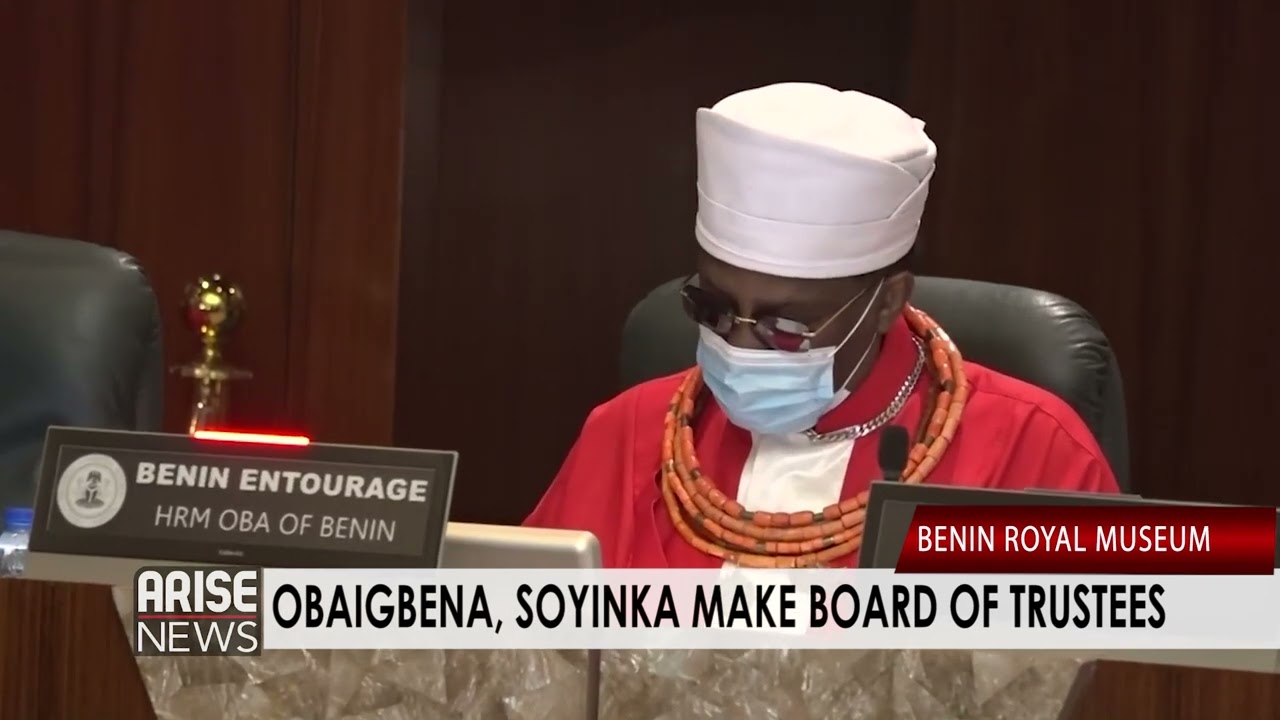
Now, part of Nigeria, the city of Benin and the descendants of the royal family have publicly asked the British Museum to repatriate the objects.
And in October 2021, the government of Nigeria formally requested the return of Nigerian antiquities.
Some museums have already begun to return their collections of Benin bronzes.
Just a few weeks ago, London's Hahnemann Museum announced they would be returning 72 items to Nigeria.
The first UK museum to do so, according to the director of the Hahnemann Museum.
After researching claims in detail there was no doubt they'd been looted.
So there was a moral argument for their return.
Such a decision by a London museum has obviously put pressure on the British Museum to follow similar steps.
Nigeria is currently building a new museum in Benin City with the intention of housing the largest collection of Benin bronzes in the world.
Germany has signed an agreement with Nigeria to return 1000 items stolen from Benin.
France is also returning items and museums in Scotland, Oxford and Cambridge are all negotiating the return of their Benin bronzes.
The artefacts were clearly and obviously stolen by British soldiers during an attack on the city of Benin.
The original owner is known, how they were stolen is known and there is no moral reason for them not to be returned.
I think the Benin bronzes should be returned to Nigeria, perhaps with an agreement to loan some of the collection to the British Museum.
What do you think?
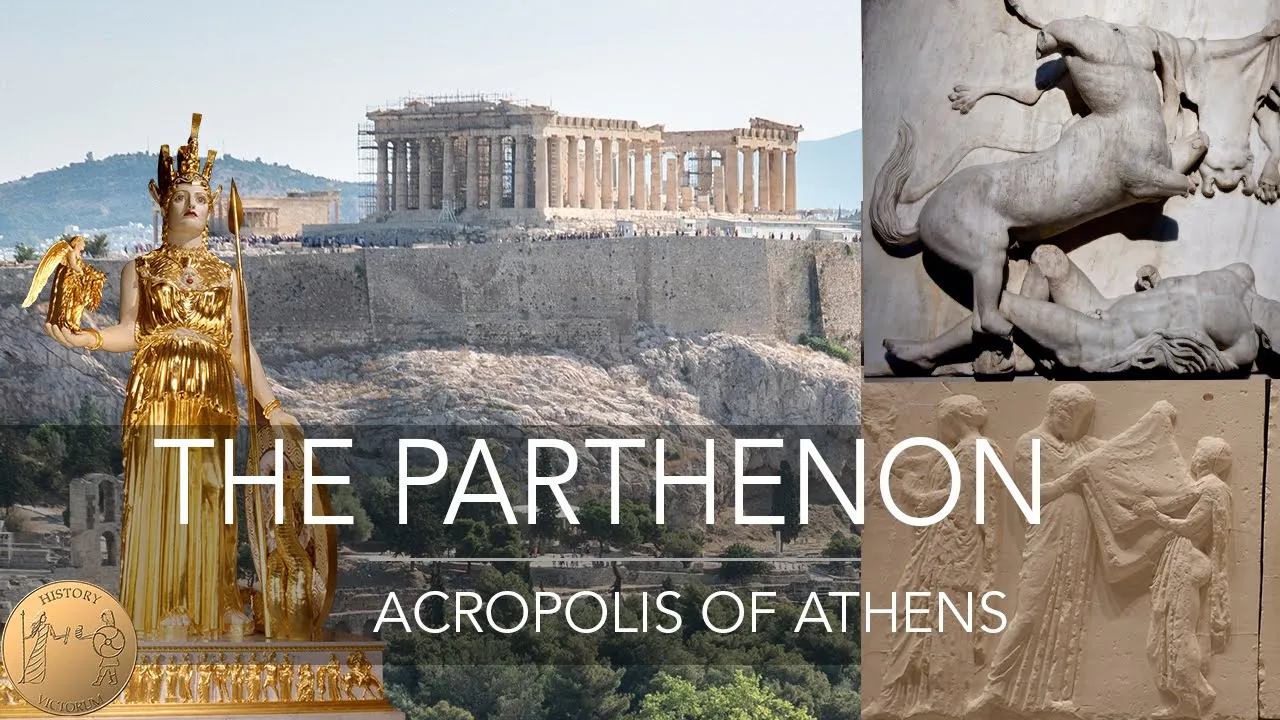
The Elgin or Parthenon Marbles, known as the Elgin Marbles in the UK.
The Parthenon sculptures are another highly controversial item in the British Museum's collection.
The Parthenon is a temple of Athena, located on the Acropolis in Athens, Greece.
The Parthenon sculptures refer to a collection of marble decorations from the temple made almost want 2500 years ago by the ancient Greeks.
The sculptures depict the myths and stories of the gods, goddesses and legends of ancient Greece.
The Parthenon has had a diverse history in the past.
It has been used as a church and a mosque, and today is a popular tourist attraction for visitors to Athens.
The building is now in ruins after it was partly destroyed in an explosion in the 17th century.
And around 50% of the marble decorations have been damaged or lost over the past centuries.
Greece was controlled by the Ottoman Empire from the 15th century until the 1820s.
The Ottomans, based in modern day Turkey, controlled a diverse and large empire stretching from North Africa to Western Asia.
Lord Elgin was the British ambassador to the Ottoman Empire in the early 19th century and was given permission by the Ottoman government to examine and remove some of the marble sculptures found on the Parthenon.
Elgin received a permit from the Ottoman leaders.
Using this permit, he removed half of the remaining sculptures from the Parthenon.
Between the years 1801 and 1805 and took other items from buildings on the Acropolis.
The Elgin Marbles, as they became known, were transported to the UK and after a government investigation into their origins was sold to the British Museum in 1816.
The case of the Parthenon sculptures is a little more complicated than the Benin bronzes.
While the bronzes were obviously stolen by the British, the marbles are different.
Elgin had official government permission to take the objects from the Ottoman Empire.
The Ottoman Empire had controlled Athens for over 300 years.
Therefore, the Elgin Marbles were legally purchased by the museum from Elgin, who had legal permission to take them.
At the time, they were not stolen in the same way as the Benin bronzes were stolen.
However, Greece fought a war of independence only a few decades after the removal of the sculptures and once again became an independent country.
The Greek government has repeatedly claimed that the marbles were taken without the permission of the Greek people.
It should have been the Greeks, not the Ottomans, who decided the fate of their historic objects.
The Greek government first formally requested the objects return in 1983 and have constantly campaigned for them to be moved back to Athens.
While the British Museum and the UK Government have repeatedly denied they will ever return the items to Greece, the Elgin Marbles have been back in the news recently.
Reports emerged that the chair of the British Museum has secretly been meeting with the Greek Prime Minister to negotiate the return of the Parthenon sculptures.
But what do you think?
Should the Elgin Marbles be returned to Greece?
The Rosetta Stone.
The final artefact I want to briefly mention is the Rosetta Stone.
The Rosetta Stone is maybe the most famous item in the British Museum, and it is definitely the most visited.
Around 2200 years ago, the Egyptian king issued an official message.
This message was written on a large stone, which was then put into temples across Egypt.
Importantly, this message was written in three different languages or alphabets.
Egyptian hieroglyphs, demotic and ancient Greek.
For centuries, the world had no idea how to read Egyptian hieroglyphs.
The meaning of the symbols had been forgotten long ago.
However, the Discover of the Rosetta Stone offered the first real possibility at understanding the language.
Why? Well, the same message had been written in three different languages.
While ancient Egyptian had been forgotten, people still knew how to read and write in ancient Greek.
Scholars in the 19th century quickly began to study the stone.
An English scientist called Thomas Young was the first to find the name of an Egyptian king written in hieroglyphs.
While Jean-Francois Champollion from France managed to fully read the message.
The Rosetta Stone is so important as it allowed us to read and understand the thousands of symbols left behind by the ancient Egyptians.
It opened our world to the world of the ancient Egyptians.
While the story of how the stone was found is not known for certain, it was likely discovered by accident by French soldiers in the 19th century.
The French had been active in Egypt, but once Napoleon was defeated, all of France, his possessions were given to the British, including the Rosetta Stone.
The stone was shipped from Egypt to Britain in 1802 and was given to the British Museum by King George the Third.
That same year since 1802, the British Museum has displayed the Rosetta Stone every single day.
Apart from two years during World War One, when it was moved to a train station, it is now 200 years since the British Museum was gifted Rosetta Stone and some Egyptians want it back.
Over 100,000 people have signed a petition for it to be sent back to Egypt.
So should it?
Well, compared to the other two objects I've mentioned today, I think the Rosetta Stone is the most complicated. Why?
Its history is not entirely Egyptian.
At least Egyptian in the modern sense.
The Rosetta Stone was created over 2000 years ago and in a very different Egypt.
The country was not ruled by African Egyptians but by Greeks.
The king who issued the message was part of a Greek dynasty which had mixed ancient Egyptian and Greek cultures.
The stone ended up being used to build a wall during the late medieval period when Egypt was ruled by a group of former Circassian slaves, a people originally from the Black Sea, not from Africa.
It was discovered by the French and the meaning found by the work of British and French scholars.
The Rosetta stone was lost for centuries.
It was not a famous object from a royal palace.
It was a piece of rubbish used to build a wall which somehow ended up in European hands.
Egyptians want the Rosetta Stone to be returned to a new museum which will focus on ancient Egypt.
But the ancient Egypt of the Rosetta Stone is different.
It is more Greek than African, and modern day Egyptians are very different from the Greek speaking kings of 2200 years ago.
But what you think?
Should the Rosetta Stone be returned to Egypt?
So here is today's final thought.
Today, I have tried to introduce the stories of three of the most controversial items in the British Museum, the Benin Bronzes, the Parthenon sculptures and the Rosetta Stone.
The case for the Benin bronzes is clear, in my opinion.
We know when they were stolen, how they were stolen, the violence used, and how the British Museum received them.
I believe they should be returned to Nigeria or a museum in Benin.
The Parthenon sculptures are a little more complicated.
They were taken with permission from the rulers of Greece, the rulers who had been ruling Greece for centuries.
The question here is more of a moral problem than a legal one.
As half of the sculptures are still in Greece.
I think it would be fair to return or maybe even sell the other half to a Greek museum so the sculptures can be exhibited together.
The Rosetta Stone is the most complicated artefact, in my opinion.
Did it come from Egypt?
Yes, but it was a very different Egypt than the Egypt today.
It was not a highly prized object that had been stolen.
It was found by accident by some French soldiers.
The history of the Rosetta Stone is international.
It was created by Egyptians on the command of a Greek king used by Circassians to build a wall, found by Europeans and studied by the French and British.
But what do you think?
Should these objects be returned to their original countries?
Should the Rosetta Stone be given back to Egypt?
The Benin bronzes to Nigeria?
The Elgin or Parthenon marbles back to Greece?
Let me know what you think.
Why or why they shouldn't be [returned].
You can leave a comment on the blog, on the Thinking in English blog, a comment on Spotify or send me a message on Instagram @thinkinginenglish over on Instagram and actually @thinkinginenglish over on YouTube as well.
We are almost at 1000 YouTube subscribers.
I think as I'm writing this episode now is around 840.
So can we get to 1000 YouTube subscribers by the end of December?
I can only have your support, so please go over to YouTube.
Subscribe.
Watch a few of the podcast transcripts over there and let me know what you think.
Let me know what kind of content you want to see on YouTube.
And if you love listening to Thinking in English, you're going to love the Patreon.
We do a weekly conversation club every Tuesday.
And right now it is just $5 a month, $10 if you want bonus episodes as well.
Why am I telling you this?
It's the best deal ever.
Join the Conversation Club today.
Do it. Go and join now.
It's just $5.
Why should you join today?
Well, in 2023, probably middle of January, I'm increasing the price.
If you join today, it's just $5 forever.
If you join in January, you might be paying more.
So join now. Join while it's $5.
Even if you can't join until January or February.
Go and join now because it's going to be cheaper if you join now than if you join next month.
In fact, all of the levels of the Patreon will increase slightly in price.
So join the $10 tier, Join the $40 now because if you don't, it will be more expensive in the future.
Up Next

5:00
Miranda v. Arizona Case Brief | Fifth Amendment Rights
@QuimbeeDotCom
231.7K views•2017-10-13

4:27
US Secondary Sanctions Impact on EU Businesses and Blocking Legislation
@Bureauvandijk
1.6K views•2019-03-20
5:27
Forensic Phonetics: Speaker Identification in Legal Cases
@nptel-nociitm9240
539 views•2025-03-19

24:42
Police Interrogation Tactics: False Confessions & Legal Reform
@LastWeekTonight
7M views•2022-04-18
Related Study Plans & Knowledge Roadmaps
Structured learning paths in Law
law
Self-Defense Law: Imminence & Castle Doctrine
01Foundations of Self-Defense Law
02Imminent Threat & Reasonable Belief
03The Principle of Proportionality
+ 3 more learning modules
12h6 modules
Explore Roadmap
law
Defamation Law: First Amendment & Actual Malice
01Introduction to civil torts and the First Amendment
02Elements of Defamation: Libel and Slander
03Public Figures vs. Private Individuals
+ 2 more learning modules
8h5 modules
Explore Roadmap
law
Hearsay Rule: Trial Evidence & Exceptions
01Introduction to Trial Evidence & Courtroom Basics
02Demystifying Hearsay: The Core Definition
03Non-Hearsay: Exclusions Under FRE 801(d)
+ 3 more learning modules
14h6 modules
Explore Roadmap
law
Medical Malpractice: Law, Liability & Care
01Foundations of Tort Law and Civil Liability
02The Four Elements of Medical Malpractice
03Defining and Proving the Standard of Care
+ 2 more learning modules
12h5 modules
Explore Roadmap